Managing people sucks, here's how to make it EASY
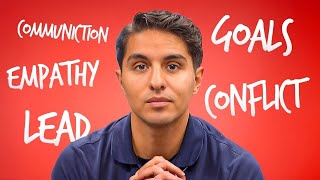
Brian Moncada shares what he learned growing agencies and education companies to seven figures. He covers communication, alignment, conflict resolution, and empowerment. The core idea: managing people gets easier when you stop making it harder than it needs to be.
In this video, I'm going to share with you the five steps that I've learned to becoming a good leader. From starting my agency from zero to seven figures per year in revenue and now scaling our education company to multiple seven figures per year in revenue, including the toughest moments I've ever faced. So the first step to becoming a good leader is effective communication. I've read in many books that the highest paid people in this world are effective communicators. People that are good at public speaking, inspiring others, and communicating and delivering a message to their team. If you don't know how to do that as a leader, you'll always fall short of building a solid team and inspiring them to actually show up to work every day. And so one of the biggest pieces of advice that I can give you on this video is, number one, becoming an effective communicator. The way you do that is you practice. Okay? I've been practicing communication for 10 plus years now on videos through YouTube just like this. You can go on my channel if you, if you don't feel like you're good on camera, you don't feel like you're good public speaking practice, rehearse, drill, and make sure you step up to your team. Because if you can't communicate to them and set clear, proper expectations and show them where you're going, why you're going, and how they play a part in that vision with you, you're never going to be able to be a good leader and help them achieve their dreams within your dreams too. So one example of this would be if you have a team, for example, who's selling, the sales team and the fulfillment team. This is always a good topic of discussion. So for us, we had a sales rep that came in and started closing deals very rapidly. The problem was he was saying things on the sales call that the fulfillment team couldn't deliver on. And that's a really big issue because the client is ultimately the one who gets screwed or promised something that they can actually get in the program. And so to solve this communication gap, I got both of them on a call on a quick huddle for 30 minutes where they talked about the different issues. They both apologized for setting improper expectations, they got aligned, and as a result, we started communicating better as a team, more effectively as a team. That's one simple example of how you can obviously become a better leader and more importantly, have more effective communication by having your team communicate together, right? Not going back behind each other's backs and saying, well, you do that or you do this like, get them on the same page, have a quick meeting, have them hash it out, have them talk about it. I guarantee you they'll have stronger relationships with each other and more importantly, they'll better communication as well. Second thing is making sure your team is aligned on the goal. A lot of you have goals, just like we do at our company too. But the problem is you don't communicate those goals effectively to your team and you don't do it often enough. To know that everyone's aligned on those goals, you have to be in alignment. Imagine your company is a ship all rowing in one direction. If people are rowing this way, but the other people are rowing the other way, your ship's never going to go very far because people are going in different directions. You have to be all aligned on the same goals. It's very important because if you, your fulfillment team's operating on this goal, but your sales team's operating on another goal, it's going to be completely out of whack and you're never going to be in sync. And so as a leader, your job is to effectively communicate the vision, the mission, the values, and more importantly, the goals you have as a company. And make sure everyone's crystal clear on those goals. Review them weekly, see if you're on track or off track, measure them and hold people accountable. That way they know what the goal is and they have a scorecard they can follow to see if they're winning or if they're losing. One easy way to make sure your team is actually incentivized to achieve the goals you have as a company is through crystal clear understanding of their personal, professional and financial goals. You as the leader. When you onboard a new team member, you gotta make sure you ask them these three questions. What are your personal goals? What are your professional goals? What are your financial goals? Personal goals are, hey dude, what do you want to do? Like what's your ultimate goal as a person? And then what are your professional goals? Where do you want to be in this company? What's your ultimate goal? If you could wave a magic wand, it's a year from today. Where do you actually want to be in this company? What role do you want to play? Where do you want to be actually earning as well? Which leads me to financial goals. How much money do you really want to make? And so if your accountant says they want to make 300k a year, but you know the highest person in your company that makes that is the sales rep, you're probably in the wrong seat and so at least you know that when you onboard them. Because then after you hear their financial goals, you can tell them this might not be the right seat for you because this position just can't make that amount. But if you want to do that, this might be a better option for you if that makes sense for them and their skill set. And so personal goals, professional goals, financial goals, you got to get crystal clear on those. Write them down when you onboard a new person. That way you can align their incentives to the incentives of the company and you have to fit their vision within your vision. Okay? Your vision has to be so big as a leader that you can fit this person's vision and your vision, they can achieve it within your company. Number three to becoming a good leader is you have to know how to handle conflict. And this is something that was very hard for me when I first started managing people having team members. I didn't know how to approach them, how to have hard conversations with them. And that's the number one thing I can teach you right now is hard conversations. Do it early and do it fast. Do not wait to have a hard conversation with someone who you need to have it with. And this is in anything in life, whether it's with your team or your family or your friends or even your significant other, you have to address it head on. Because then what happens if you don't? It simmers in you, right? It starts festering and it starts making you feel some type of way to that specific person. So immediately address it, have that hard conversation and handle it well. How do you handle it? Well, you just tell them what they did, what was wrong about it and make it about the action, not about them. That's the thing. As a leader, you should attack the action, not the person. That's how you best handle conflict. Now if two people are having conflict with each other on your team, do what I said earlier. Bring them together, make them sit in a room and make them talk about it, right? Be the person that helps support them to get to the resolution of the conflict. Because if the interests of both of them are in the best interest of the company, then they will come to a resolution in the best interest of the company and make sure you support them to find that resolution for, for them and for you. A perfect example of handling conflict is this video right here that you're going to see pop up on the screen in the top right hand corner. Okay? If you want to watch that video, it's going to show you a behind the scenes meeting of me and my team setting our yearly and quarterly goals as a company for 2024. So that way you can see the issues we discuss, the conflicts we have and the heated discussions that take place to show you how you can handle conflict and come to a resolution as a team. Because in that video we have a back and forth about whether or not the we should get an in person office. And obviously we're filming this in our in person office. I was very much against it. I didn't think we needed it. In fact, I was advocating not for it. But we're here. How did that happen? Well, if you want to learn how to handle conflict and come to a resolution that's in the best interest of the company, the team, and then yourself, you can click that video and watch it for yourself. The fourth step is you need to empower others. Okay? You need to inspire others, empower others, lift others up and help others. Others see their potential in your company. After all, if you want to build a business and a company and manage people, you have to be able to get people to step up and become the best versions of themselves. You have to inspire them, help them, pour into them, give them the course, give them the online coaching program, invest money and resources into them to become the best version of a team member for your company. And so how do you do that? Well, again, you keep painting the vision and you keep painting the vision for them in your company as the highest versions of themselves. And so one thing that I always do really well is I always invest in my team. For example, we have a closer on our team who hit record breaking month after record breaking month after record breaking month and has made a lot of money. And as a result, I've rewarded him by actually paying a ticket for him to come out with us to a in person event, which is very, very special, to be in person with the team for the first time ever in his history of working with the company. Why? Because I want to empower him to be more close with the company, to be more bought in as a team, and to ultimately be able to want to continue working with us and hitting those record breaking goals. And I'm empowering him to become the best version of himself by also investing in his personal development as well. Kills two birds with one stone. I get him a ticket, he can be in person with us. He's more bought into the mission and he gets to have an excuse to meet us in person and hang out with us. So I'm empowering him to become the best version. Last but not least the fifth and final thing I've learned on the road to becoming a good leader, because again, I am not the best leader that I can be. But I'm just sharing with you what's worked for me up until this point in our journey. Leading by example. Now, I know what you're thinking. Of course I have to lead by example. But what does that actually mean? Well, it means if you want your team to step up just like you would to handle your clients just like how you would, you got to show them how to do that. And sometimes even if you show them how to do it, you gotta remind them how they should be doing it. So I still sometimes, for better or for worse, jump into slack and communicate with the clients and show them how I would be servicing them and helping them, because I want to be always on top of everything. I'm very, very picky about how our team handles and interacts with our clients because I'm always playing offense, not defense. And so I have to remind my team, guys, we always update the client before they message us. We always message them before they ever respond to us. Why? Because we want to be the team that delivers a red carpet customer experience. And so I'll go first. I'll lead by example, and I'll still lead by example. And so, for example, if I want my team to be able to step up and hit a workout every single morning and get their body in shape, I'll post those pictures of myself and my wife in the gym early up in the morning, working out, getting our mind right, getting our body right, and I'll post it in the fun channel in our Slack channel so they can see it and show them exactly how I expect them to be operating in their lives as well. You got to lead by example. I always use the example of a cold plunge. Right? My team knows I like doing the cold plunge because it's a mental battle. But I can't expect my team to do the cold plunge if they've never done it before, unless they see me do it first. You, as a leader, you got to jump in first. I always think about our mastermind in New Year's Eve in Miami. It was December and the water was super cold in Miami. No one really wanted to go in. I ran out first, jumped in, dove headfirst, swam and, and said, come in, the water's great. And sure enough, one by one, everyone in our mastermind started jumping in as well. We were all in there having a good time, celebrating, but I had to lead by example. And you gotta do the same for your team. You gotta close that deal first to show them how to close a deal. Cause if they don't see you do it, they're never gonna do it too. Lead by example. In everything you do. Step up first, go first. Message the client first. Do whatever it takes. Lead by example. And if you really wanna become a good leader, you wanna embody radical transparency. You wanna empower them and ultimately get them aligned on the goals you have as a leader and as a company. Watch this video. It'll show you how to set your morning formula as a leader so you know you're crystal clear on your goals. And then I would encourage you to do the same with your team, too. Have them build this thing. It's very powerful. I used to tell myself I was rich before it became true. But it was because of this morning formula right here. Do it. Watch it. And then give it to your team to do it, too. I promise you, they'll wake up fired, ready and motivated to attack the world, just like you.
More from Brian








CASE STUDY: How Usman scaled to $200k+/month after joining The Ad Men Mastermind


