The Ad Men Mastermind Miami (DAY 1)
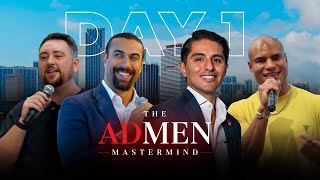
Brian Moncada hosts a Miami mastermind with digital marketers including Jeremy Haynes, Brandon Carter, Mark Dahmer, and Wolf. They cover goal setting, business scaling, advertising strategies, and peak performance through talks and group discussions.
There's so much terrible things happening in the media right now where they're programming us to believe certain things, and the way we can fight that war is through advertising. We create entertaining ads that educate the world to make better decisions. Admin control what the world sees.
The day before.
The day has finally arrived. We are setting up, finishing the last two touches of the very first in person New Year's Eve celebration. The Admin Mastermind is a exclusive club of digital marketers, copywriters, media buyers, and offer owners who want to learn how to use the power of paid ads. We're here day one at the Advent Mastermind. The members are doing their introductions, their homework to set the tone, introduce themselves to the rest of the group. And now we're about to head in and show them exactly how we grow at the Admin Master.
Let's go.
All right, this thing's live. We're hot. Hot and spicy. The sun's out. Miami, Florida. We're here. First Admin Mastermind on time, too. Look at this. We're doing good. You guys feeling good? Yeah. Everyone having a good time? Beautiful. Beautiful. Brandon Carter is the best person I could ever imagine bringing to this mastermind to speak to you guys about discipline, hard work, and more importantly, making some baller money. All right. He's a good client of ours, one of the best clients I've ever had, and I love working with Brandon Carter.
Dude.
Thank you so much, Brandon. Come on and give big round of applause for Brandon Carter. King Keto, baby. Let's go.
Thank you.
Hey, what's going on, guys? It sounds like you guys will. This year would be the year where you guys want to get to over a million.
All right.
All right, cool. So to get from six figures to seven figures, it's almost like a. It feels like it's a different game. It's not always exactly what people think. A lot of times people think that you have to do something, like, totally different. I see a lot of people start other businesses or fucking second and third businesses. Don't do that. That's not what you want to do. That's the biggest mistake. What you want to do is really dial in your process. That's kind of what I want to talk about today is like, how to dial in what you're doing to really perfect what you're doing, because you probably don't have to do anything super extreme to get past where you are to where you want to go. But almost nobody does the stuff that I'm about to lay out. And it's not the only way to make a million a year, but this is the way I feel is most applicable in what I did to get there. So when you're planning your goals like that, you immediately start to understand that you can't have that many goals, right? Because how many things can you put that much effort into? So you guys probably have a lot of goals for the New Year's and shit, you know, and people say, oh, have a family, go have this goal, have this, go. A bunch of different goals, but fuck that shit. Pick like one main goal. Because you got to put in the kind of effort to make failure impossible. You can't do that with like 20 different things. One main goal, right?
However.
You'Re going to have what I call support goals and result goals. So a support goal would be things that you need to accomplish to accomplish the main goal. That makes sense. So if your goal is to build a big agency, right, you probably need to get more clients. So maybe that's a support goal and a result goal. A result goal would be something that you can accomplish as a result of accomplishing your main goal. So if you want, you know, a Richard Millay watch or some shit like that, right? If you accomplish your main goal, it'll be easy for you to. To make that purchase. Then there's offensive support goals and defensive support goals. What do I mean by that? So in the example of going to get more clients for an agency, right? Once you figure out how many clients you need, that would be offensive goal, something you're in pursuit. A defensive goal may be. Maybe it's like health related, right? Because if you get sick, you get the COVID or the flu or the cancer or some shit, it's going to be difficult for you to really pursue your goals with the same sort of intensity if you get sick. So maybe the defensive goal can be health, health related. You had. You can have altruistic result goals like you want to do for other people. Maybe you want to do some for your mom, you make some money. And then there's selfish result goals, right? Like if you want to get, you know, maybe you like Jeremy, man, you want to buy like two Ferraris, Rolls Royce and all that other shit he did this year. You know, maybe that's. That's a selfish. That's just for you, when you do it like this, everything is congruent, right? You make the main thing your main thing, right? This way, all your goals are in congruence with each other and they work together. But you have one main goal that you really focus on and everything is a support or a result of that. So when you're planning the shit out, I promise you, you guys do the shit. I'm about to tell you it's going to get more sophisticated, right? But if you do all, all three of these steps, your success is inevitable. Like real shit. All right, so you're gonna have like one time goals and then recurring goals, right? One time goals and recurring. What's like some, if you're starting, if you're trying to build your ad agency, what's something you have to do? Like once. Yeah, build a sop, right? There's gonna be a bunch of, you know what your one time goals are? If this is, if this was a fitness goal, like one of them would be something like get gym membership, hire trainer. You know, these are things that you do maybe once. But those are kind of the easy parts where the difficulty arises is in the recurring goals, right? What's something you guys have to do every, what's something you have to do every day in your business? Yeah, check the ad ads. Shit. You know, once you have it all listed out, remember, it's gotta be, it's gotta look insane, right? It's gotta look insane. It's gotta, you gotta look at it and be like, damn, I know all cops go, if I do this, right? That's the easy part. The difficult part is doing it, you know? So then you take this shit and the one time goals, what I do is I put them all in a board. Like things that, to do, doing, doing and done. And it's more sophisticated than that on my board. But those, that's exactly, that's what you need in, in this most simplest form, right? And then I put due dates on all of these. They all have to have due dates. Here's where it gets, here's where the sophistication comes in. Then I go to Google Calendar and I've been doing. I was doing this ever since I was broke, right? Because I was working so much, I had to really plan my time so I can get the most out of each day. You know, squeeze as much victory out of each day as possible. So you got a plan? Plan. So I'll go on Google Calendar and, and I put, we had the due dates, but then I put when I'm going to do the thing because a due date is kind of worthless unless you plan out when you're going to fucking do it. That's where people, people miss that step. And then the, the, the recurring task, you plan those in the calendar too, right? And you, you know, with Google Calendar, you can set up recurring events, you can schedule it any cadence you want, weekly, bi weekly, three days a week. Now you got your whole shit planned out. Now you took your plan and planned it in your calendar. Now your whole life though, has to be in your calendar because this is going to take up a whole bunch of time. Now you got to make sure you get the other shit done. So if you still got to work out, then you put that in your calendar. Everything is planned out. I know when my workouts are going to be and I'm not afraid to move it around because shit happens. I'll move around in the calendar, but I won't take it off the calendar, right? Still gets done. So I might move it to another day or another time, but I still do everything on the count, especially this shit. Like no matter what, this shit happens. And I don't give myself no excuses because if you're inconsistent, it's like you do just enough to fail. When people try to do shit or they do shit inconsistently, they do just enough to fail. Because if you didn't try, you can't, you can't fail, right? You just didn't try. But if you tried and you failed, that fucking feels bad. It like with your self esteem and if with your, your self concept and people will try to make themselves feel better, oh, it's better than nothing. Oh, it's not that bad. Like, don't, don't say that shit to yourself. You, you know, if I, if I up what's on my calendar, like, I hate myself a little bit that day. Can you see if you were able to do all that and plan it out, can you see how success would kind of be inevitable? Does that make sense, you guys? Where you might fuck up is you might not have the discipline. You feel me, who here struggles with discipline at all? I know I do sometimes, right? Like, you know, I wish I was more. All right, I'm about to give y'. All this is like a pro tip. You got to make two lists. It's the list of hate and the list of great. The list of hate, the phone and go, fuck.
I need to level up. And even just after the first call with Brian, I already, like, I had an idea of where I wanted to take it to. I was at 50k a month around, around that. So since then we're heading. We've done a couple of hundred k months, sitting more around the 80k a month mark. Now what I would tell a Person who is on the fence about joining a Mastermind is that Brian is one of the only people that I've seen that actually and his whole team actually really over deliver and really care about you. So if you ask them questions, you really get an answer that is detailed. Like every single one in this company really cares about helping you. So that's, I think, the most valuable thing. Coming from Germany, I flew 11 hours to come here, obviously, because I've never been to the States and wanted to be to Miami. Awesome New Year's Eve party on a yacht. You obviously can't miss that and the network. So Brian is really great at communicating and he personally helped me with how to communicate. Communicate and frame my clients. This was a big changer in not leading just the team or people, but also leading your clients and really setting the expectations, realigning those. And this has been really transformational.
I want to bring the next speaker up as well. And, you know, I've met Jeremy. I joined Jeremy's Mastermind probably about a year over a year ago. And, you know, Jeremy's someone that, you know, like Brandon said, cars, he's got the mansion out 40 minutes away from here and agency owners, just like most of us here. What Jeremy helped us with the most was just being able to think about getting richer. Right. And I'm excited for him to speak on this today and for him coming out here. Jeremy Haynes. Thank you so much, bro. Give it up for Jeremy Haynes.
All right, real quick, everybody stand up. I got some simple questions for you. The instructions are rather simple. Okay, you're going to sit down. If you don't meet the criteria, what I'm going to ask. Okay, first of all, sit down. If you're making $50,000 a month or less. So once again, if you're making 50k a month or less, take a seat. Okay, making 100k a month or less. Take a seat. Anybody left standing? Okay. Got a long way to go, boys and girls. Here's my point. Most of you guys are pretty young. It seems like none of you are making more than 100k a month, which is just devastating. None of you have even 500 grand to your fucking names right now. Okay, all of you have a number in mind for when you claim you want to no longer work for active income. You all have pen and paper in front of you. Put on a scale of 0 to 100. What is the percentage of achievement in terms of your getting close to that? Act like you got to get to that number. Okay, you have a number in mind that you need to have invested. You have a number in terms of the age you want to be at. Put on that piece of paper right now in front of you. 0% progress, 100% progress. Where are you at in terms of progress on a percentage? Write it down. Be honest with yourself. Because this is what I did at 24 years old. I looked myself dead ass in the eyes in the mirror and I said, I gotta stop fucking around. All you guys are young right now. You have a lot of time in between where you are now and when you are at the age when you want to no longer work for active income and have the option to officially retire, a lot of you are going to focus on the short term. Week over week, month over month, maybe year over year cycles. Okay? You're going to focus on right now and how you're specifically living today. You're not going to keep a perspective in your head of what it's going to be like based on today's decisions for how it impacts you when you wake up at that age. When you claim you want to no longer work for active income, most of you guys are likely prioritizing things like lifestyle costs, going to nice restaurants, going out and spending money on apartments, spending money on cars. And I'm here to tell you can do both. You can ball out in the short term and you could ball out in the long term. But you have to be focused on the two. This makes sense so far. Most of you right now need to recondition yourselves financially to much bigger targets than what you currently have. That's the intention of what I'm trying to communicate to you here right now. I'm trying to tell you you are all clearly playing way too fucking small. If you're making less than 100k a month, you're at the age that you are and you have less than 500k that you're sitting on in terms of cash and investments. You need to be ashamed that you are at such a small number and you're just, you're 23 years old. How much better are you doing than your high schools? Your high school students, right? Do you compare yourself to those people often? Good. You never fucking should. Who are the people you're comparing yourselves to? Did you know here in the United States, if you're making less than $40 million a year, you're considered a small business? $40 million a year, what does that make you? Microscopic fucking businesses. Think about this. What are you comparing yourself to right now? What's the number that to you currently seems big. Think of it. Per month. A million a month seems big. And what are you at right now in revenue? To be clear, what we view as big is hard to achieve. We have to find a way to make that number, if that's what you claim you actually want. We have to make that number seem small to ourselves, okay? We have to diminish what we view as big currently. We have to make. Think about this. What you currently have accomplished, you've accomplished and maintained because you've normalized it. You've made it seem small and attainable. That's why you've obtained it. The things you view as hard are the things that you do not currently have, right? And you don't have those things because of your mental state, your framing on those. They're just numbers. It's just action and some time in between you and hitting those bigger numbers, right? Think about this with me real quick. Flashback to when you were a brokey, okay? In a worse state than you're in right now because, Jesus Christ, most of you have so much to go. But think about this. When you were a brokey, did you think the way you think now? Think about all the little mental tweaks you had to make just to start getting to this point today where you sit here right now and you earn what you earn a lot of changes mentally, right? Those differences that you. That you adjusted in your view, the actions that you consistently took, that's what got you here, right? Outside of the actions and the time, right? Is that fair to say? I have a simple question for you. What has to change in order for the number you currently want to hit to become small and attainable? Certainty, it's possible is what makes bigger number diminish a smaller number, right? As an example, when I first touched a million a month, that was my goal for five years. It was October 2017. I said to myself, tired of being fucking small, I want to hit a million dollars a month. I immediately went to my little whiteboard, started doing a bunch of fucking math, okay? Started looking at offers, you know, started considering the differences. I hired 12 new salespeople within a week of that decision, okay? Did all kinds of shit immediately to attempt to perpetuate that number being possible for myself. But it took me five years to touch a million a month. Once I finally hit it, do you think I broke through it? No. What did I tell you? What did I tell you I made at the beginning of this? 600 to a million a month. So it acts as a ceiling for Me now, you see. But here's what I've recently had to convince myself of. I've had to take something that I previously didn't believe that I could do. I wanted to focus on $5 million a month now, and honestly took about seven months for me to start to really believe that I even could do it. You know, I was like, what the fuck am I gonna sell? Make $5 million a month? You know, do I even want to do that? Okay, like I said, it took me about seven months to genuinely believe through a path of action that I found a way to make it possible. And after I believed it was possible, you know what happened to my revenue within the next two months? I started coming really fucking close to a million dollars every month. And some months I'd even break it. What happened? I lifted the ceiling and the number that previously I couldn't break through perceptually became like, okay, I got to normalize a million a month now. You know, I got to maintain this number and I've got to fucking hit 5 million a month. The obsession changed from focusing on the ceiling to. To focusing on something of excess that I now genuinely believed I needed to achieve. Does this make sense then? Things like the offers, the actions, the path to get there, those things all become super clear and obvious after you have genuine belief in the bigger number. We want to diminish what we view as expensive and large so our ceilings expand so we can operate at a greater level than what we currently are today. Because what changes when you do that? The plan of action, what you currently think is what you need to do is based on what you view as possible. No, that's it. What your current plan is. I don't need to tell you some fucking plan. I need to unlock your thinking. I need to push you to the point where you realize I just got to know more about what people are earning. So my belief in what I think is possible changes because then my plan will change. Does that make sense? Whatever plan you got right now, you likely need to scrap. It's likely a bullshit plan. You have less than 500k invested. You have less than 500k in cash. You're making less than 100k a month. That plan probably fucking sucks that you got right now, right? Not here to talk shit to you, okay? Make you feel bad about yourself. May help you understand. There's a version of you that got here. That's great, but just what got you here was an expanded version of yourself, right? To get to 50k a month, dude, that's fucking sweet. You're better than 99% of people. But I'm sure you're not just trying to do that, right? Okay, questions.
Do you not care about what the company is in? Like is it a coaching company or E Com, Whatever.
You don't care?
I have ethics.
Could be whatever.
I have ethics and integrity. I care about what they sell, but I don't care what niche they're in. That was one big limitation for me. I realized if I just stuck in the niches that I originated in, probably be making like a fourth of what I make today.
How do you structure the deals now?
I do 15k a month for the, for the service fee and we do 10% net rev share.
So it's a plus. Like 15 plus.
Yeah, 15k no matter what. 10% net rev share on top of that. So I have an incentive to grow the out of your company. Good.
Which number do you choose? Because with the, with the, the platforms.
And, and how they attribute the cash, like what do you look at? High rose, like what number at the end?
Yeah, we actually use a tool like Hyros for sure. But there's also simple simplified versions of what we do. We'll just have a unique version of a funnel for what we send our traffic to that's going to tag those people in a CRM. And then we can run a CRM report against tools like Hyros. We want to do what's called triangulating the truth. We don't want to have two different tools that are against one another. We want to have ideally like two to three, at least three. So if one of them's false, the other one's kind of disagreeing with that one. We have a third that can help. So as an example, like if I'm running a call funnel that's a unique click funnels or go high level pages and like that unique type, form, unique calendly. Those things pass unique tags into the, into the CRM that we run. Those things don't have traffic ran to them from anything else. If they do, they count as our revenue.
Never thought of that.
Yeah. What were like the biggest mindset things.
That you learned from Grant Cardone while you're working with them?
Good question. Yeah. First of all, you could do way more than what you think you can. Grant would come in like it. Okay, so. So there's a seven to nine person creative team. I was the digital marketer. We had two graphic designers, two web developers, a copywriter and a videographer. And you know, we Were like a very capable team. Grant would come in and he would encourage us to like do a specific big project that I'm sure most of you would think would take like a month. He would tell us we had until like Thursday. You know, if he came in on like a Tuesday, he'd be like, all right, you guys got like two days to get that shit done. All of us would like gripe and complain, and then Wednesday he would come in with like a whole nother one of those types of projects and he would put that on us too. And then we'd like gripe and complain even more. But then by Thursday, we probably had both done. And then we all kind of realized like, oh, we could do it. You know, we just didn't think that we could. So that was one big thing. And that happened all the time with like major, major marketing related projects. There's also just a big push to make more money all the time. Like, I'll give you a good example. How many emails do you guys send for brands on a day to day basis if you manage their email marketing? For me, it was like, I don't know, maybe like one a day was being too aggressive, right? Grant would tell us email like 15 times a day. And then after we got to that number, he'd be like, more, you know. Okay, cool. Give a round of applause, guys. Thank you.
Is that good or what? I mean, another round of applause for Jeremy.
Come on.
That was, that was good.
That was good. Beautiful. Yeah. So my experience with the Admin Mastermind so far has been fantastic. You know, first day we had some incredible speakers with, you know, Brandon, Jeremy and yeah, it was just the, the vibes, the energy was, you know, it was awesome.
I definitely learned a lot, gained more.
Than, you know, I probably got from.
Any other just online group coaching, group.
Mastermind sort of program. So this has definitely been one of the most valuable events, valuable experiences of my, you know, really my business life, my business journey. So far, Brian and Siem have given.
Me a lot of resources that I can leverage, extremely valuable resources that I can leverage not only for my own.
Business, but also for my clients businesses. And it's definitely helped me in terms.
Of, you know, getting more clients grow.
My business as well as helping my clients grow their business. The biggest thing for me from joining the Mastermind community has largely been around working with better clients and just thinking bigger. So seeing people doing much larger things and the capabilities of what is possible, having that community and having or being part of that community has allowed me to implement various sort of strategies and tactics, but it's mainly been the mindset and the shift in perspective and making it much more of a possibility to do those kind of things as opposed to not being in the community and not having exposure to that.
Now, the reason why I wanted to end it with Mark Dahmer specifically is because a little story. Mark and I met actually back in Sam Oven's Mastermind in Quantum. And although we didn't talk too much then, I knew who he was because he was the person that helped Sam Ovens with his peak performance. You know, one of the only testimonials I've ever seen Sam give to anybody in my entire life was to Mark Dahmer because of the work that Mark's helped him with. Not only has he worked with Sam Ovens, but he's also worked with Tai Lopez, Will Brown, who I'll be speaking at his Mastermind in Dubai in a few months, and then also Charlie Morgan, another client of ours who's doing close to a million a month. So he is the person when it comes to peak performance. Long story short, Mark's taught me a lot. That's why I brought him here to end the day, because he's going to teach you about what is opera here, how to skyrocket your energy, sharpen your focus. And without further ado, Mark Dahmer, please take the stage back.
All right, and hey, everybody, let's give Brian a huge round of applause and also Jennifer for putting this together. I mean, it takes a certain type of individual to come up with the amazing idea of, like, hey, let's spend New Year's Eve on a yacht in Miami. Like, that is cool. So round of applause for Brian and Jennifer. Thank you so much. The Daily Action Planner. So I was working with Tai Lopez before that, and I was at Tai's house in the Hollywood Hills almost every day for about six months. And this is. It was just before he dropped the hair in my garage ad. Has everyone seen the hair in my garage ad? It was just. He actually shot that here in my garage ad while I was there. When I say while I was there. I was working with him and his team, but he did it over a weekend when everyone was off. So when we came back on Monday, he shot the ad, which, by the way, I gotta say, is my favorite ad of all time. Sometimes. Sometimes I like to just watch the ad. Just. I do. Sometimes I have it on my phone, saved on my Dropbox. Sometimes I'll just watch the ad because that ad made millions of dollars. It made millions of dollars. Is one of the first proper ads on YouTube. Made millions of dollars. But it's. It's how well it is done. That ad has secret sauce, which 99% of ads don't have. I'm wondering if who knows what the secret sauce I'm talking about that that ad has that no other one does that most don't have. Exactly. Authenticity. Thank you so much. I kind of want to play the ad now. So watch. You should watch that ad, dude. I'm selling you. Tai Lopez in that ad is so damn authentic. That's what makes it special. When he's talking, he's not. He's got some type of script. He's not. It's not like he's not using a teleprompter or something. He does have. He does have a formula he's following, but he is being completely authentic. He is being so true. And his authenticity and caring for the person who's watching it is so palpable. If you study that ad, that's what makes that ad, for me, one of the most successful of all time. And you made millions of dollars. When I started working with Ty, Ty Lopez.com was making 100 grand a month. He wasn't a big name. Is making 100 grand a month. By the time I left, which was like nine months, they were doing 3 million a month. So sleep optimization. Who does stuff to sleep, to optimize the sleep. All right, let's shout out.
What.
What are you guys doing? Just shout out some of the things you're doing. Oura ring, blue light blockers, nasal strip. All right, so everybody knows all these sleep hacks. And these sleep hacks are great, but that's not the most important thing. None of these sleep hacks is the most important thing. Perhaps maybe avoiding the coffee. What's the most important thing? Yeah, going to bed at the same time and early. So it seems to be around 10pm or earlier. We get the best sleep quality around 10pm or earlier. And sleep time consistency is like 80% of it. All the little hacks that we like to do and all the little fads and like, yeah, they help a bit, but not as much as going to bed the same time every night. 10pm or earlier. Any questions on sleep? Yes, sir. 12pm, like 11pm to like 4 in the morning. I can just have flowing work, like blow work state suddenly out of nowhere. Yeah, like, why do you think this that? Well, we have different brain waves like different states, so probably got into adult estate or Theta state. It's really creative state and it does happen at certain times of the night. A lot of really creative artists and writers like to work at that time. Musicians even because they've got, they're really creative. So yeah, use it if you want, use it if you want. Or go back to sleep. Up to you. Blue light is a stimulating light. So when you start to pull away blue light, it goes to yellow, then it goes to orange and it goes to red. So red light has got the least amount of blue light. So yeah it does. You really want a red light. Red or dark orange. Which is why the blue light blocking glasses are dark orange. Driver red or dark orange because it cutting out more. What about like throughout the day in the morning? Like again in the uk it's you from the UK too? Yeah. Oh yeah. Where you from? Devon. All right, cool. Yeah. All right. UK in the house. So what in about in the morning you want to wake up just like throughout the day. Is it better to have like this kind of light or stimulating light? Lamps. More orange. But is it better to have. It's better to have mimic the sun. Bright, bright like the sun. Okay. One of the things that I think is really missing with entrepreneurs when they're looking at their diet particularly is I think you're really missing a focus on brain function. Because as a decision making athlete, which you are, if you're a business owner, you've got to make a lot of really high quality decisions over and over again. If you make poor decisions and you're out of business pretty fast, if you make great decisions, the more likely your business is to grow, then I really encourage you to see yourselves as a decision making athletes. Now if you're a decision making athlete then of course sleep quality is really important. But so are other things like what you're eating because it's all we're talking about, brain function, about making decisions. So what a lot of entrepreneurs doing these days to get more energy or because it's like a fat like thing to do is like low carb diet. Keto. I know we had king keto in earlier. Room juice cleanses. Intermittent fasting. Spending hundreds of thousands of dollars on random supplements. Energy boost is coffee, energy drinks, binge exercising, adopting short term fads. So our brains take up about 20% of our basal metabolic rate. So 20% of the calories you burn a day is from your brain. If you're engaged in high energy thinking, like you're doing a lot of strategic thinking, you're making a lot of decisions that day, you're having to think a lot, your brain will take up more calories than that. Whenever you're intermittent fasting, one of the difficult things to do is to make sure that you gain enough calories during the day. If you're, if you're intermittent fasting. And I see a lot of entrepreneurs these days doing intermittent fasting, not tracking the calories, so they don't know if they get enough calories in. And your brain demands a lot of energy. So even if you're trying to lose weight, you may take a mental performance hit by cutting your calories. It's one of those things as an entrepreneur, we don't really want to be cutting calories ever. Because less energy to your brain, less brain power, it makes it difficult. Has anyone been on like a diet, like a diet for a long time? How do you feel when you're on a diet? Feel good? How much calories are you cutting? Bottom line is if you're going to cut calories, then you're going to lose a little bit of processing power in your brain. So intermittent fasting is okay if you're having, if you're making sure you're eating enough calories. If you're not, you can cause problems. The other thing is keto is good too. And like, our brain does use ketones as fuel, but its preferred source of energy is carbohydrates. And if you're going on a low carb diet, that can affect your brain processing power too. So just be aware as an entrepreneur, you're really talking about optimizing brain function and that is making sure you have a lot of high quality calories. Yes, sir. Meat as like my first meal, I feel more focused than if I have.
Carbs and I go work out.
Is there a reason for that? Like focus and fats? It, it depends what you're eating. Like what carbs are you eating? If you, if you're working out, then you're burning calories. Depends on like, are you, do you have any food sensitivities to the stuff you're eating? It depends on a lot of things. So something I really recommend is a data driven strategy. So using your oura ring, for example, or your wutband to see how many calories do you actually burn a day? That's going to tell your oring or what band or your apple watch will tell you how many calories you do burn a day. You want to be making sure that you're eating that amount or maybe even slightly more. If you're working out and so forth. If you are gonna, if you are trying to lose weight, then 300 calories deficit a day probably get away with without having too much of a mental performance reduction. But anything more than that, it can affect your mental performance, your decision making. So it's something to be really aware of. So I like to use a data driven strategy. Use health trackers to analyze how many calories you need. Use genetic testing to determine what type of macronutrients are best for you. So some people do better on a higher carb diet, some on a higher fat diet, some on higher protein. Use genetic testing, you can find out what works best for you. All right. Productivity search scheduling. Implement secrets of peak performance and optimize your schedule to accomplish more in less time. So scheduling is really important to get things done. Okay. What we want to do is do something called needlework. So deep work, basically focusing on something that's going to move the needle forward in your business. Okay. It's easy to do deep work on stuff that is, that doesn't move the needle forward. So needlework is thinking about, all right, what is the thing that I can do this quarter, this week, today that's going to make have an exponential difference in my business Needlework. I Recommend you get 90 minutes to 3 hours of that in a day. 90 minutes to 3 hours a day of deep work. That's something that's going to be focused, interruptive and move your business forward. So it's crucial to schedule these needlework sessions during your peak performance hours. Many people find that in the early morning, but it's essential to identify when you are personally most alert and focused. Balanced scheduling. So this approach I'm going to show you really emphasizes the importance of balancing work with rest and recreation, taking breaks between work, engaging physical activity and making time for friends and family. So there's three scheduled template schedules. I'm making it easier. Three template schedules that I found work really well for entrepreneurs. Okay. One of them is what I call the early riser needlework schedule. This is really good if you've got kids. So you wake up at 4:45 for five and you do some type of prayer or you know, relax, some spiritual work or you know, whatever you like to do, just to wake up and get in the right space. Then you go to work 5am Till 6:30am you are doing focus needle work. You are getting work done. Focus stuff. The most important thing of the day, you're getting it done. I'm getting my kids ready to school between 6:30 and 7:30. I've already got half an hour and 90 minutes of needlework done. Getting kids to school. If you don't have kids, this is a nice time to meditate, relax, you know, wake up even further and then you get your next 90 minutes of needlework in. So you have done three hours of the stuff that's going to move your business forward before 9am Done. Then eat. I like to eat. Then 9:30 to 11 exercise. Take your time. And then 11 till 3 is the rest of the workday. So what's that? A seven hour work day. Seven hours of productive work. Now in order to do this schedule, you got to be in bed by eight or nine. All right? Monk mindset mastery. Who meditates here about. What's that? Just over half a third of the room? Kind of. Who does, who has a daily practice? Okay, great. Who's had a daily practice for over a year? Okay, somewhat. Okay, great. I don't know how people get by without meditating. Honestly, I know when I. Honestly, if business owners, I don't know how you do it without meditating. Seriously, if you've got a regular job, you can get by. I think you can get by without meditating. But if you're a business owner, you've got way more things going on, way more responsibility and way more like risk. If you've got a regular job and you get fired, well, you just get another job. But if your business goes under, that can have like massive financial consequences for you and your family. When you're meditating and there are different types of meditation, there's not a one size fits all. It's a bit like physical training. You can do cardio, you can do weight training, you can do cross training, you can do. There's all types of yoga, there's all types of ways you can exercise. The same with meditation, there's loads of different types, but you're essentially training your brain to focus and resist distractions. Helps you improve your ability to concentrate on tasks, making you more efficient and productive as an entrepreneur. Your main superpower is your ability to focus. There's so many distractions in the world. The ones who can focus get stuff done, done. You want to be able to focus. Meditation helps you do that, helps you reduce stress and anxiety, obviously boosts your emotional health, gives you an improved self image, a more positive outlook on life. I'm very proud to say I used to work with Jeremy who spoke earlier and I got Jeremy into meditating a lot and he, he saw I know I've done a good job when the people I work with years later are still doing the things I taught them. And Jeremy still meditates every day, he's more relaxed, just happier. He is generally a happier guy. And I think meditation helps with that a lot. Increases your creativity, so improves your decision making, increases productivity, enhances resilience, unleashes your creativity and gives you a better work life balance. You think that's important, being an entrepreneur, being a business owner. So thank you very much.
Mark Dahme, everybody. Huh? Was that valuable or what? Another round of applause for Mark as he heads out. Dude, what I took away from that as well is to learn ads from Mark. We just got to get him a cigar, huh? How about that? All right, Beautiful. So what we're going to do is for the last few minutes, I want you guys to just take a few minutes. Now that everyone's gone through the day, you've heard from, you know, you've heard from Brandon Carter, right? You've heard from Jeremy Haynes, you've heard from Mark Dahmer all around. What we talked about this morning is the biggest thing. The mindset, the habits, the routines. I want you guys to take two to three minutes right now and I want you guys to ask yourself this one question, okay? What is the one thing that I learned today that I can implement into my life and or my business right now that can make everything else easier or unnecessary.
Of my biggest bottlenecks is not having a clear goal. So, yeah, that one definitely, the speech from Brandon definitely helped out with that. And once I have that clear goal, I can set a clear routine, which I used to have, but I, yeah, just had slacking because I didn't have the clear goal. And then also, yeah, Ward finally moves the needle. Finally consistently posting for my personal brand. So, yeah, basically a trickle down of the one things in each department.
Congrats, man. Round of applause for Wolf.
For me, it's that I don't just set a goal, but that I actually believe that I can achieve that goal. And that ties back to just looking up to more people that are already there where I want to go and see that it's actually possible. So I truly believe it and I can follow through on the goal. I love it.
So just more clarity about looking up to the people who are already doing what you want to do. Making the goal more clear for you too.
Yeah.
And even diving deeper into finding people who have already done that. Not just like the obvious ones, but really diving deeper and seeing who else is there, what is possible.
Oh, yeah. Round of applause for Michael.
Okay. Two and a half hours before half seven on one thing. That's big for me. Like I don't know what I'm doing between five I'm working, I get up at work, one thing.
Yeah, but you're working but you're not doing the one thing.
Yeah, I'm probably doing like admin and I don't even know what I'm doing. I can't tell you.
That's huge. Yeah, that's huge.
That's big.
Really Congrats man, man. Round of applause for Chris.
One more, one more. Yeah. So playing the off days, like scheduling off days, the refreshments, I ended up just sit there on Saturday and Sunday and just binge watch TV cuz I don't know what to do with myself then feel like on Monday.
So yeah, plan some fun things to recharge. And you know what's interesting about the weekends too, like not just planning the weekends, which I think is tremendously smart. That's one of the things I learned today that I took away as well and being more consistent with. But everybody I've talked to, who I've been to masterminds with, Sam Ovens, you know, everybody that I've, you know, been mentored by in some way or form, they all work Saturdays, every single one of them all making multiple eight figures minimum eight figures. They all work Saturdays even if it's just till 12 or 2 o'.
Clock.
So like you know, the weekends are where you can truly get ahead and have some of that needlework as well if you plan it right. But just making sure you plan your weekends is a big thing too. So round of applause for Cameron. That's huge.
I was speaking to Greg Reese this week actually we're having a conversation and he was saying that in, in like running and triathlon there's something that they talk of, top athletes talk about something called junk miles. Right, Junk miles. So it's really, it's like running at an intensity that's past your threshold and you're not really getting the training response you want. And most athletes are doing this, they're running these junk miles. They could reduce the intensity or not run them at all and they'd still get the same training response. They'd still be faster, they'd still be fitter. But many athletes do hours and hours of what's known in sports science, a junk mile. And he brought it to me that entrepreneurs are doing the same and he calls it junk hours. He's managed to do all of that by in about selling his company, multiple figures, then I need to work again. Doing 25 hours a week. He said he did 25 hours a week following that schedule, the needlework schedule. He said, sure, there's been a couple of weeks or he's done more, but on the whole, he's doing 25 hours a week. And he said the rest of the time, when he's looking at other business owners, you know, just working, he said, they're doing a lot of junk hours. What are junk hours? Exactly what you were just describing, Chris. You don't even know what you were doing. You were doing something that. Junk hours.
Funny thing with Jeremy, I told somebody this when we first joined his inner circle, you know, this was after, I think we were doing like 150k a month at the the time. And he, you know, basically told me I wasn't doing shit. You know, like, oh. He's like. He's like, how much have you made for a client in one month? And I was like, over a million dollars. And he's like, how much did you get paid for that deal? And I was like, 15K. He's like, isn't that shitty? You made a client a million dollars and you got paid 15k. Doesn't that feel like shit? And I was like, I mean, I don't know. Like, my ego started coming up. Like, I was like, well, yeah, but, like, I started making excuses. And he's like, no, no, no, no. Don't justify it. It's shitty and you know it, and you fucking know it. He's like. He's like, you. You live in Miami making 150k a month. What's the average dinner cost here? I was like, I don't know, like, 100, 120 bucks, 150 bucks. He's like, I don't know where you're fucking eating, but dinner costs at least a grand every single night for me. And I was like, fuck this guy, man. But he was right. He was. He was. He was basically reframing my money mindset. And again, like, you know, again, it's not about the tactics, right? For him. He was just telling me, I haven't done shit yet. And it was. You kind of need that sometimes. You need somebody to tell you, yo, you're not playing big enough, as big as you could be. Which is why these rooms are so important, right? Because you're here. You travel all across the world to be here in this room to hear, hear these things. And it's very, very important for each and every one of you to not leave this weekend without getting clear on the one thing, the second thing, the third thing, as each day goes by. So that way you can actually get the benefits from this. Don't go back to wherever you live all across the world and do fucking nothing. That's the worst thing you can do. You're here. Let's have a good time. Right? Day one is officially wrapped up. So thank you guys for being here. But ultimately, now let your brain marinate it. Okay? You wrote your one thing down. Just let it simmer, right? Just that one thing is all you have to focus on for today and for moving forward. Tomorrow we'll do the same thing. What's the one thing from day two? Now you have two things. Day three, you might have three, but those are the only things you need to focus on in 2024. Basically the last thing we have on the agenda. If you guys see again on the event plan, cigars, seven o', clock, Empire Cigar Lounge. It's right down the street. You can walk there from here.
Sa how much calories are you cutting? Bottom line is, if you're going to cut calories, then you're going to lose a little bit of processing power in your brain. So intermittent fasting is okay if you're having, if you're making sure you're eating enough calories. If you're not, it can cause problems. The other thing is keto is good too. And like, our brain does use ketones as fuel, but its preferred source of energy is carbohydrates. And if you're going on a low carb diet, that can affect your brain processing power too. So just be aware as an entrepreneur, you're really talking about optimizing brain function and that is making sure you have a lot of high quality calories. Yes, sir.
Meat.
As my first meal, I feel more.
Focused than if I have carbs and go work out.
Is there a reason for that?
Like focus and fats?
It. It depends what you're eating. Like what carbs are you eating? If you, if you're working out, then you're burning calories. Depends on like, are you, I. Do you have any food sensitivities to the stuff you're eating? It depends on a lot of things. So something I really recommend is a data driven strategy. So using your oura ring, for example, or your wood band to see how many calories do you actually burn a day, that's going to tell your ring or what band or your apple watch will tell you how many calories you do Burn a day. You want to be making sure that you're eating that amount or maybe even slightly more if you're working out and so forth. If you are going to, if you are trying to lose weight then 300 calories deficit a day probably get away with without having too much of a mental performance reduction. But anything more than that, it can affect your mental performance, your decision making. So it's something to be really aware of. So I like to use a data driven strategy. Use health trackers to analyze how many calories you need. Use genetic testing to determine what type of macronutrients are best for you. So some people do better on a higher carb diet, some on a higher fat diet, someone you know, higher protein like use genetic testing, you can find out what works best for you. All right. Productivity search scheduling. Implement secrets of peak performance and optimize your schedule to accomplish more in less time. So scheduling is really important to get things done. Okay. What we want to do is do something called needlework. So deep work, basically focusing on something that's going to move the needle forward in your business. Okay. It's easy to do deep work on stuff that is, that doesn't move the needle forward. So needlework is thinking about, all right, what is the thing that I can do this quarter, this week, today that's gonna make have an exponential difference in my business needlework? I Recommend you get 90 minutes to 3 hours of that in a day. 90 minutes to 3 hours a day of deep work. That's something that's gonna be focused, interruptive and move your business forward. So it's crucial to schedule these needlework sessions during your peak performance hours. Many people find that in the early morning. But it's essential to identify when you are personally most alert and focused. Balanced scheduling. So this approach I'm going to show you really emphasizes the importance of balancing work with rest and recreation. Taking breaks between work, engaging physical activity and making time for friends and family. So there's three scheduled template schedules. I'm making it easier. Three template schedules that I found work really well for entrepreneurs. Okay. One of them is what I call the early riser needlework schedule. This is really good if you've got kids. So you wake up at 4:45 for five and you do some type of prayer or you know, relax, some spiritual work or you know, whatever you like to do, just to wake up and get in the right space. Then you go to work 5am Till 6:30am you are doing focus needle work. You are getting work done. Focus stuff the most important thing of the day, you're getting it done. I'm getting my kids ready to school between 6:30 and 7:30. I've already got half an hour and 90 minutes of needlework done. Getting kids to school. If you don't have kids, this is a nice time to meditate, relax, wake up even further. And then you get your next 90 minutes of needle working. So you have done three hours of the stuff that's going to move your business forward before 9am Done. Then eat. I like to eat. Then 9:30 to 11 exercise. Take your time. And then 11 till 3 is the rest of the workday. So what's that? Seven hour workday. Seven hours of productive work. Now, in order to do this schedule, you got to be in bed by eight or nine. All right? Monk mindset mastery. Who meditates here about. What's that? Just over half a third of the room, kind of. Who has a daily practice? Okay, great. Who's had a daily practice for over a year? Okay, somewhat. Okay, great. I don't know how people get by without meditating. Honestly, I know when I. Honestly, if business owners. I don't know how you do it without meditating. Seriously, if you've got a regular job, you can get by. I think you can get by without meditating. But if you're a business owner, you've got way more things going on, way more responsibility and way more like risk. If you got a regular job and you get fired, well, you just get another job. But if your business goes under, that can have like massive financial consequences for you and your family. When you're meditating and there are different types of meditation, there's not a one size fits all. It's a bit like physical training. You can do cardio, you can do weight training, you can do cross training, you can do. There's all types of yoga, there's all types of ways you can exercise. The same with meditation. There's loads of different types, but you're essentially training your brain to focus and resist distractions. Helps you improve your ability to concentrate on tasks, making you more efficient and productive. As an entrepreneur. Your main superpower is your ability to focus. There's so many distractions in the world. The ones who can focus get stuff done. You want to be able to focus. Meditation helps you do that, helps you reduce stress and anxiety, obviously boosts your emotional health, gives you an improved self image, a more positive outlook on life. I'm very proud to say I used to work with Jeremy who spoke earlier and I got Jeremy into meditating lot. And he saw, I know I've done a good job when the people I work with years later are still doing the things I taught them. And Jeremy still meditates every day. He's more relaxed, just happier. He is generally a happier guy. And I think meditation helps with that a lot. Increases your creativity, so improves your decision making, increases productivity, enhances resilience, unleashes your creativity and gives you a better work life balance. You think that's important, being an entrepreneur, being a business owner. So thank you very much.
Mark Dahme, everybody. Huh? Was that valuable or what? Another round of applause for Mark as he has audience. What I took away from that as well is to learn ads from Mark. We just got to get him a cigar, huh? How about that? All right, beautiful. So what we're gonna do is for the last few minutes, I want you guys to just take a few minutes. Now that everyone's gone through the day, you've heard from, you know, you've heard from Brandon Carter, right? You've heard from Jeremy Haynes, you've heard from Mark Dahmer all around. What we talked about this morning is the biggest thing, the mindset, the habits, routines. I want you guys to take two to three minutes right now, and I want you guys to ask yourself this one question, okay? What is the one thing that I learned today that I can implement into my life and or my business right now that can make everything else easier or unnecessary.
Of my biggest bottlenecks is not having a clear goal. So, yeah, that one definitely, the speech from Brandon definitely helped out with that. And once I have that clear goal, I can set a clear routine, which I used to have, but I just had slacking because I didn't have the clear goal. And then also, yeah, Ward finally moves the needle. Finally consistently posting for my personal brand. So, yeah, basically a trickle down of the one things in each department.
Congrats, man. Round of applause for Wolf.
For me, it's that I don't just set a goal, but that I actually believe that I can achieve that goal. And that ties back to just looking up to more people that are already there where I want to go and see that it's actually possible. So I truly believe it and I can follow through on the go. I love it.
So just more clarity about looking up to the people who are already doing what you want to do, making the.
Goal more clear for you, and even diving deeper into finding people who've already done that. Not just like the obvious ones, but really diving deeper and seeing who else is there. What, what is possible.
Oh, yeah. Round of applause for Mike.
Okay. Two and a half hours before half seven on one thing. That's big for me. Like I don't know what I'm doing between fact I'm working, I get up at work. One thing.
Yeah, but you're working, but you're not doing the one thing.
Yeah, I'm probably doing like admin and I don't know. I don't even know what I'm doing. Oh, I can't tell you.
That's huge. Yeah, that's huge.
That's big. Really?
Congrats, man. Round of applause for Chris.
Yeah. So playing the off days, like scheduling off days, the refreshments ended up just sit there Saturday and Sunday and just binge watch TV because I don't know what to do with myself then feel like on Monday.
So yeah, plant some fun things to recharge. And you know what's interesting about the weekends too, like not just planning the weekends, which I think is tremendously smart. That's, that's one of the things I learned today that I took away as well and being more consistent with. But everybody I've talked to, who I've been to masterminds with, Sam Ovens, you know, everybody that I've, you know, been events work by in some way or form, they all work Saturdays, every single one of them all making multiple eight figures minimum eight figures. They all work Saturdays even if it's just till 12 or 2 o'.
Clock.
So like, you know, the weekends are where you can truly get ahead and have some of that needlework as well if you plan it right. But just making sure you plan your weekends is a big thing too. So round of applause for Cameron. That's huge.
I was speaking to Greg Reese this week, actually we're having a conversation and he was saying that in like running and triathlon, there's something that they talk of. Top athletes talk about something called junk miles. Right, Junk miles. So it's really, it's like running at an intensity that's past your threshold and you're not really getting the training response you want. And most athletes, athletes are doing this, they're running these junk miles. They could reduce the intensity or not run them at all and they still get the same training response. They'd still be faster, they'd still be fitter, but many athletes do hours and hours of what's known in sports science, a junk mild. And he brought it to me that entrepreneurs are doing the same and he calls it Junk hours. He's managed to do all of that, selling his company multiple figures. Then I need to work again. Doing 25 hours a week. He said he did 25 hours a week following that schedule, the needlework schedule. He said, sure, there's been a couple of weeks where he has done more, but on the whole, he's doing 25 hours a week. And he said the rest of the time, when he's looking at other business owners he knows, just working, he said, they're doing a lot of junk hours. What are junk hours? Exactly what you were just describing, Chris. You don't even know what you were doing. You were doing something that. Junk hours.
Funny thing with Jeremy, I told somebody this when we first joined his inner circle, you know, this was after, I think we were doing like 150k a month at the time. And he, you know, basically told me I wasn't doing shit, you know, like, oh. He's like. He's like, how much have you made for a client in one month? And I was like, over a million dollars. And he's like, how much did you get paid for that deal? And I was like, 15K. He's like, isn't that shitty? You made a client a million dollars and you got paid 15 fucking K. Doesn't that feel like shit? And I was like, I mean, I don't know. Like, my ego started coming up. Like, I was like, well, yeah, but, like, I started making excuses. And he's like, no, no, no, no. Don't justify it. It's shitty and you know it, and you fucking know it. He's like, you live in Miami making 150k a month. What's the average dinner cost here? I was like, I don't know, like, 120 bucks, 150 bucks. He's like, I don't know where you're fucking eating, but dinner cost at least a grand every single night for me. And I was like, fuck this guy, man. But he was right. He was basically reframing my money mindset. And again, like, you know, again, it's not about the tactics, right? For him, he was just telling me, I haven't done shit yet. And it was, you kind of need that sometimes, or you need somebody to tell you, yo, you're not playing big enough, as big as you could be. Which is why these rooms are so important, right? Because you're here. You traveled all across the world to be here in this room to hear these things. And it's very, very important for each and every one of you to not leave this weekend without getting clear on the one thing, the second thing, the third thing, as each day goes by. So that way you can actually get the benefits from this.
This.
Don't go back to wherever you live all across the world and do nothing. That's the worst thing you can do. You're here. Let's have a good time. All right, day one is officially wrapped up. So thank you guys for being here. But ultimately, now let your brain marinate it. Okay? You wrote your one thing down. Just let it simmer, right? Just that one thing is all you have to focus on for today and for moving forward. Tomorrow we'll do the same thing. What's the one thing from day two? Now you have two things. Day three, you might have three, but those are the only things you need to focus on in 2024. Basically, the last thing we have on the agenda. If you guys see again on the event plan, cigars, seven o', clock, Empire Cigar Lounge. It's right down the street. You can walk there from here.
Sam.
Ra.
More from Brian








CASE STUDY: How Usman scaled to $200k+/month after joining The Ad Men Mastermind


