Brian Samson on Coffee Culture, Entrepreneurship & Global Business CTUT - 41

In this interview-style episode of "Coffee: The Ultimate Truth," host Speaker B sits down with Brian Samson, a seasoned entrepreneur with a background in staffing, Silicon Valley recruiting, and nearshoring Latin American talent for U.S. companies. Samson recounts his career trajectory—from early staffing work with giants like Pfizer, IBM, and Verizon, to a head‑of‑talent role in venture‑backed tech firms, and finally to building nearshore companies that connect U.S. businesses with talent in Latin America. He reflects on the pre‑remote‑work era, the freedom entrepreneurship offered, and how coffee culture in San Francisco served as a networking hub. Samson shares vivid experiences from living in Argentina, Costa Rica, Mexico City, and Hawaii, highlighting how differing café cultures shaped his perspective on work‑life balance and relationship building. Throughout the conversation he offers practical advice for early‑stage founders: prioritize getting a customer before polishing the business structure, leverage global labor arbitrage, establish clear standards and shared vision, and treat podcasts as a long‑term branding tool (commit to 100 episodes). He also discusses the value of travel to developing markets for entrepreneurs, the importance of leverage and outsourcing, and the mindset needed to persist through the “ugly years” of entrepreneurship. The episode concludes with pointers to his Nearshore Café Podcast and his consulting site plugg.tech.
Chapters
Dive into the world of flavors and delight. Every drop brings health and fuels our fight. Coffee, the ultimate treat. Cod Cats takes the lead. Where each brew inspires and plants the seed. And now let's explore curiously with our taste buds and ears with every delightful sip with the host. Coffee, the ultimate treat.
Welcome back everyone to Coffee: The Ultimate Truth. We have a special guest, Brian Samson. He has 10+ years connecting with US companies with Latin America. He's a founder and he has 3 Exit. Uh, he's a UCLA MBA, he's a family man, and he is host of Nearshore CAF Podcast. So make sure that you go ahead and, uh, have a look at, uh, what Brian is doing over there at his podcast. Uh, welcome, uh, Brian.
Hey, thank you.
Let's take a little bit of a deep dive with you and give us a little bit of your background and a little bit of a briefing, and we'll go ahead.
Yeah, sure, happy to. So I think there's maybe a couple overviews of my career, you know, started off in the Midwest in Chicago, Illinois, and Okay, got into the— right into the staffing world. So straight away from university, and I was working with the big— the biggest of the big accounts in the States, you know, all the names everybody probably knows worldwide, like Pfizer, the pharmaceutical company, IBM, Verizon. And, uh, it was a fun way to cut my teeth, you know. And I'm sure a lot of your listeners think back to their first jobs, you know, like their first kind of real jobs. And, um, so the nice thing about working with these massive companies is they were hiring a lot of people, so there was no shortage. And then, and if you ever work in staffing You know, there's two sides, you know, you need to be able to get jobs to work on and then you get good candidates. But a lot of staffing companies struggle to get jobs. Maybe their clients aren't hiring or they can't get clients. So I was lucky enough to walk into a business that had a million jobs to work on. Now, the downside to that is I had a lot of competition. So it's almost like if you're— I'm not a deep sea fisherman, but I kind of understand the concept. You know, you throw chum in the water and all the fish, your sharks or whatever you're trying to attract, you know, come up. So that was like how I cut my teeth. Uh, Pfizer would throw a a new job in the water, and me and all my competitors would come rushing, you know. So we would, you know, I would have, you know, 50, 60 other staffing agencies working on the same position. So that was a fun way to cut my teeth and learned a lot about competition. And, um, if you ever asked your boss for a raise they would say, yeah, just close a deal, you'll get a commission. So, you know, you kind of learn to eat what you kill and, you know, try to, try to outdo the other guy. And then I moved westward, spent, you know, 5 years or so in San Francisco, and that opened my eyes to the world of venture-funded tech companies, and I went inside. So I was, instead of being an agency guy, I was in-house. And, uh, you know, recruiting director is kind of the normal term, but in Silicon Valley, they all, they all have to have weird titles. So I was a head of talent, and, uh, just kind of running the playbook, you know. My tech companies would raise money, you know, because these tech companies all need VC, uh, investors to basically pay for you while you figure out how to make your business get money and, and profit. But there's this kind of gap, you know, for a few years before that. So yeah, we were— we couldn't use profits to hire because there were none. So we have to rely on VCs basically funding us. So I learned a lot about that world. And, you know, as soon as the VCs would write their big checks, you know, millions and millions of dollars, uh, then I was off to the races, you know, hunting down software developers in San Francisco. And then the, the third leg of my career is where I'm at right now, and I've spent the last 10 years, um, building what we call nearshore companies, uh, for—
interesting—
for people in the States, uh, nearshore is, uh, Latin America because it's the same time zone. Um, if you're in Australia, I'd imagine the Philippines, India, Vietnam, you know, similar time zone.
Yes.
And we'd like to think about it as like a developed versus developing countries. You know, developed countries are looking for labor arbitrage, efficient ways to do things. So just like, say, the U.S. with Mexico, Australia with Indonesia or the Philippines, you've got, you know, young, hungry people to do, you know, and a lot of times they could do a lot of amazing things. But we tend to think about it in terms of like leverage. So if they can do some of the lower leverage things, frees you up to do some of the high leverage things.
And in this time frame that you've given me, Brian, and in your starting is saying that you work with Pfizer and these other companies. Was there at any particular moment in any of these companies you had the greatest epiphany that you're, that you're pulling towards the career that you are now?
Yeah. So I don't think it's quite like this anymore, but, you know, my career kind of started in like that 2004 to 2010 you know, era.
And, okay.
Yeah. And what I remember about that era was there was no such thing as remote work. You know, I remember like having to beg my boss one day to like have 2 days I could work from home because I had some sort of medical thing. And I remember him like calling me every hour, like, what are you doing? What are you working on? You know? So, you know, remote work was a different thing back then. And so I was in the office all the time and it was very business hours. Now, I'm very thankful for that time because you're in this bullpen, you hear everybody, and I, I just learned so much through osmosis, you know, sitting next to people. And I look at, you know, grads that graduated in 2020 and they went straight— their first day is like this remote onboarding over Zoom. Like, this is crazy. And some people have never left that environment. You know, they've never been in an office. You know, a 5-year career of pure remote work. And I, you know, got to be in the energy of cities and go to lunch with people and But the downside to that was you kind of got to be at your desk from 8 AM to 5 PM every day, regardless of if you have a busy day or not. And when I think back, what was probably most frustrating— and I'm a like pretty naturally motivated person, I've got intrinsic motivation, I'm competitive, I want to win. But, you know, to be honest, like, there are just some days in, in almost every profession where it's busy, and there are some days where it's not. And the days where it was busy, I'm cranking till 8 o'clock at night, no problem. But the days that it was not busy, I just remember, like, I'm just kind of stuck at this chair. It's 1, 1 o'clock in the afternoon. I've got nothing to work on, but I'm stuck in this chair till 5 PM. And you do that enough. And I kind of had this epiphany, you know, to your question of, well, how do I kind of get out of this? Like, take some more control over my time. And, um, I didn't grow up in a family of entrepreneurs. That was all very new to me. But, um, I think I was like ready to Every day is a whiteboard. I get to decide what to work on. I could decide when to work. And the days that are busy, I'm all in. And the days that aren't, you know, I'm playing with my kids and picking them up and I'm there for them. And I think that was always kind of nudging me towards the role of entrepreneur.
Okay. And the— going back to that time period, particularly with Pfizer and all those big companies you're talking about there, Brian, how or what type of coffees were around there for you in your part of the woods?
Oh, uh, coffee-wise?
Yeah, coffee-wise.
Yeah, yeah. So You know, we had the kind of boring stuff of, you know, Starbucks, you know, on every corner. That's what we had. Now, I happen to live in Hawaii today and have lived there 7, 8 years now. So I've been very spoiled by— Hawaii has some excellent coffee. So You know, we, we can get this amazing coffee grown here from the grocery store and brew it up in our own pots at home. And it's, it's delicious.
So out of 10, how far do you think the coffee industry from your perspective of, you know, obviously drinking quality-wise and enjoying with your clients or customers or prospects has improved from your early days?
Yeah. Well, so just my, my enjoyment for coffee, if I understand the question properly.
Yeah. Your enjoyment and connecting with others. Yeah.
Yeah. Yeah. Well, I will say what I really enjoyed about living in San Francisco was the coffee culture. And you could kind of ask almost anybody out for coffee and they usually accept, and you get to meet a lot of people. Now San Francisco has Starbucks, but it also has a lot of these little boutique coffee shops and cool spots. And that was just a blast of getting to, you know, fill my schedule up almost every day with different people and conversations would, would go in a lot of different directions. But it was San Francisco, so to be fair, a lot of conversations about tech and the tech industry. And yeah, this is before AI, so it was probably more like SaaS, software as a service, was the big topic. And hiring engineers is always a thing and who's raising money was always a topic of conversation, but connected with a lot of great people there, um, and I just loved the, the thrill of being able to kind of fill my day bouncing from coffee shop to coffee shop, you know, in San Francisco.
And, uh, what was your— well, the, the pivotal— you may have had more than one pivotal moment getting to where you are now kind of thing, uh, that you were able to take away from your coffee shop type experience with, with connecting with your clients or customers?
Yeah, well, I do remember, um, Uh, something that was kind of fun in San Francisco was I worked at a tech company. Yeah, um, it was probably on like, you know, the 10th floor of a 30-story office tower, and the company wanted to find perks, you know, to attract the workforce. So Silicon Valley, you know, San Francisco is kind of part of the larger Silicon Valley area, which has Google and Facebook. And, you know, I was a contractor at Google way back in the day, kind of a, you know, year. And everybody kind of does that in that area, the Bay Area. They do their tour, you know, as a contractor. And, you know, you're riding your Google bike and going to the different 20 restaurants and it's all free and smoothies and everything. But, you know, they had this massive campus which was like a college campus, you know, spread out buildings everywhere. In the office towers of San Francisco, they don't quite have the land to do that. But I remember as they invested some money, they allocated it towards building our own in-house free coffee shop in the office with our full-time barista and comfy lounge chairs and a foosball table. And, uh, that was just a blast. So, you know, I would invite candidates up there colleagues, you know, hey, it's 10 o'clock in the morning, you ready for a coffee break? Right? And we didn't have to leave the building. We just go, go, you know, right over to the 10th floor. And that was, that was fantastic. And, you know, just met, met some really incredible people.
Okay. And was there any particular type of coffee that you're drinking in those times?
Oh, uh, you know, this is probably back when I was a little younger and had a faster metabolism, so I would drink the, the mochas, you know, the iced mochas. But now I don't think I can drink that stuff anymore. It's, uh, I'm too— getting too old.
And Okay, so particularly with what you're doing now and in— and starting your business and up until this point, what is the most bittersweet moment that you've had with your— with your coffee type of experiences of connecting with someone? It can be a bitter, it can be a joyful experience. With your clients or customers? Anything that kind of stands out to you mostly?
Yeah, well, you know what might be interesting for your audience? So I, you know, built and I'm still doing this, you know, building nearshore companies. So I ended up moving to Argentina for about a year. And if you've never been there, you know, it's world famous for steak, Malbec, you know, old Parisian European architecture, tree-lined streets, you know, beautiful spot. Now in America, especially in these cities, you know, you get your coffee and you're you know, off to the next place. Um, and you know, you've got— if you do go to a sit-down restaurant, even a coffee shop, the waitress or waiter is kind of always like, here's your bill, you know, okay, time to go. Um, yeah, in Argentina there's no pressure. Uh, you can just kind of park there with a newspaper or your phone or a colleague and be there for 4 or 5 hours if you want to and have your café con leche, you know, coffee with milk and maybe a cookie or two, you know, like a little, uh, bakery item and just relax. And that was, um, a beautiful time for me because I went from one extreme to the other, you know, the hustle and the phone stuck to my hand, you know, the whole time I was in San Francisco to phone down, just relax, slow down, be present, get to know the people there. And that was a revelation for me, and it was a really good thing for my life. I really needed that.
And how valuable would you say that is, that time period particularly for you, Brian? Uh, you know, how valuable would you say it is for— we're talking particularly for the small business, uh, coffee business startups who may be any part of the world, whether it's more, more the, the developed world for you?
Yeah, uh, so if I understood the question right, um, just like my, my time in Argentina, how that really shaped me, uh, it was excellent. You know, I had, um, uh, you know, not only the chance— Argentina, if you haven't been there, it's a big country. It takes up a lot of space. You've got the border with Brazil and, you know, this rainforest and falls to the north as you go closer to the equator. As you go further south, you've got Patagonia and the Ushuaia, the gateway to Antarctica with penguins and, you know, glaciers. And, uh, just having that year there where I got to feel it and experience, um, and just like every place in the world, there's ups and downs, you know, there's economic volatility and geopolitical chaos some days, but then you also have this energetic, flexible, adaptable population that is ready for anything, everything. And, um, it also puts things in perspective, you know. Uh, you could, you could get kind of high-strung living in a place like San Francisco where, you know, everything has to be immediate. You've got to be on Slack pings and email pings all day long. Um, and then you go to a place like Argentina where you know, there's a long queue for anything and the rules are kind of vague and service isn't clear. Uh, um, but it, it reminds you to kind of chill out a little bit, you know, like life is short. It's really about your relationships, not this, you know, random arbitrary deadline that you have to get the software product out or something. So, um, you know, it really put, put life in perspective for me. So I'm forever thankful for that year. And subsequently, you know, the last 10 years, I've been to the country now 9 times. I've been to Mexico, kind of all over Latin America. So I'm very grateful, you know, that I've been exposed to this part of the world. And it's, um, Taking somebody who is kind of high-strung and stressed to somebody that, um, I don't really get that freaked out anymore about things. So it allows me to stay calm in chaos, which is, um, I'm realizing is, is actually a pretty valuable skill.
And I believe, Brian, that you've been to Puerto Rico. Is that correct?
I have not been to Puerto Rico.
Oh, I don't know why. Uh, I thought it was. Maybe I've got it— sorry, sorry, I've got it mixed up. Sorry, listeners. Uh, Costa Rica, is that correct?
Costa Rica. Costa Rica. Yeah, I, uh I've done business there, but my first time there was special. It's actually where I proposed to my wife, and we, we celebrated 11 years of marriage this year. And, um, but it all started with the proposal in a rainforest in Costa Rica.
Awesome. And what was the first coffee experience with your fiancée or your girlfriend at that time that you can remember and the experience? Can you remember that, Brian?
I don't know if I can remember the first coffee, but, um, I will certainly tell you that the coffee is quite good in Costa Rica, right? You know, um, the conditions are just perfect because you've got this— of course, the beaches and the rainforest, but High up above is this cloud forest, which is perfect temperature for growing and cultivating coffee. So we had some terrific coffee there.
Awesome. And does your wife drink similar coffee styles to yourself?
Oh, I think I'm the coffee drinker in the family now.
Oh, she's okay.
Yeah, she's more of a tea, tea drinker.
Okay, interesting. And you've been to Mexico City, is that correct, Brian?
Uh, correct. Yeah, it's a fantastic, thriving, very green city.
And did you discover any, uh, hidden gem type of cafes there?
Uh, you know what I, what I really remember about Mexico City is, you know, New York is kind of known as like the alpha city for North America, but believe it or not, Mexico City is actually bigger in population. Um, and it's high above, it's got to be at least a mile. I forgot the exact in meters, maybe 6,000 meters, 7,000 meters, you know, I'm sure, uh, someone, someone can correct me, but, um, uh, so you're up high, it's kind of this eternal springtime weather, um, green everywhere, parks everywhere, and, um, that makes for a really nice quality of life. And you've got people from all over the place, expats from everywhere— Asia, the US, you know, they all come to Mexico City, and it's a thriving cosmopolitan expat city.
With all your experiences, Brian, how valuable do you think it is for particularly, uh, my listeners that, that are, uh, coffee lovers, uh, entrepreneurial, a lot of them are particularly, uh, in the coffee business industry, is for you, would you say, to get away to a developing country?
Yeah, I think, um, There's a lot of developing countries in the world, right? And, you know, if you're on your side of the world in Australia, you know, you've got Indonesia, the Philippines, Vietnam, Thailand, you know, and, um, but then you've also have seen, you know, the Asian Tigers, you know, like Singapore, South Korea, you know, really kind of in like the course of a generation go from developing to developed. And that's, that's really fascinating. You know, and Australia was lucky, I think, to have, you know, a very robust economy for 20, 30 years, you know, without recessions. But, you know, places like the States, you know, you— as your population ages, we see this in Japan, we see this in South Korea now, see this in China. As countries get more mature, their populations age, there's more strain on taxes and services and entitlements. But a lot of the developing countries, you have this young population that's eager for their turn, you know, and it's their country's turn, you know. So you see brand new glittering buildings, hungry workforce. Um, and you know, people are people. It doesn't matter if they're in Australia or Canada or France or the Philippines. They want to— they just want a chance. They want an opportunity. So I think it's, it's really nice to travel, period, but go to developed countries, go to developing countries, kind of see the difference, see the energy. And it's, you know, a really, really awesome opportunity. Highly recommend it.
Now, Brian, what's one unconventional hack that stands out to you Particularly those who are in the early stage, startup stage, maybe even bootstrapping in the— that can be very valuable for them starting out, particularly in the coffee industry, but it can be in any industry if you're a coffee lover and entrepreneurial that stands out to you.
Yeah, well, you know, as we talk about the labor arbitrage opportunity, you know, if you're in the coffee industry, of course there's going to be a lot of hands-on work. You get your hands dirty in that industry. But there's also a lot of office jobs, you know, everything from marketing, positioning, logo design, sales, lead generation. Building the software for transactions, all sorts of stuff. And my advice is, remember, whether you're in the coffee industry or the software industry or manufacturing or whatever, the world is flat. You know, there's people all over the world that you can access in your talent pool to build your company. And coffee companies have office jobs, front office, back office, just like any other company. So remember that, uh, there's a lot of hungry, well-educated labor outside of your country that you could tap into.
And if you could distill any advice to aspiring entrepreneurs into a single bold shot, what is that to you that stands out?
I'll share a hard lesson that I had to learn, you know, 10 years ago. You don't have a business until you have a customer. It's very easy to get sucked into editing your website at 2 o'clock in the morning, or, you know, what entity should I establish myself at, and the, the proper limited liability corporation or structure or whatever. Don't be dragged into that. Get a customer, service that customer, then you can worry about all the other stuff.
And in saying that, Brian, in your experiences with being an entrepreneur and working with others, when is— would you say the perfect time to pivot?
The perfect time to be an entrepreneur. Did I hear that correct?
Well, not necessarily perfect, but you know, when is the road signs or roadblocks?
Yeah, sure.
That you would, you know, pivot your operations, not necessarily the whole industry, but you know, in general.
Yeah, well, maybe I'll talk about I don't think entrepreneurship is for everyone, but yeah, I think some of the signals that people might recognize, you know, for that road are you want to control your own destiny. You know, in some cases you might take a pay cut. In many cases you might take a pay cut. And I think recognizing that if you plan to be an entrepreneur for a long time, it might be multiple businesses over that period of time, but it's all compounding. And I don't think people quite recognize that, that you're— all the learning is being compounded for you not for someone else, right? You're not— and I mean this like in the nicest way— like you're, you're not funding someone else's retirement with your labor. You're funding your own retirement with your own labor. And it's all compounding. So if you can get through those first couple of ugly years, you know, it's, it's a beautiful place to be for the rest of your life.
And, and how important for our coffee-loving entrepreneurs do you think it is to, to, to leverage your time and keep focus?
Yeah, well, I think when you look at Leverage is a really key word, you know, and I'm glad you said that, uh, because there's really like a, like a labor arbitrage and leverage that you could look at. Um, I think recognizing that in the first year you're probably going to have to do everything, but once you just get a little bit of traction, being able to figure out what your exceptional at, and then what's something you can outsource, what's something you can get leverage for. Um, and you start to realize like, hey, you know, for $5 or $8, you know, I can find people to do a lot of these things. Certainly my time is worth more than that. Um, so once you've kind of figured out the leverage angle you can make leaps and bounds acceleration with your business.
And Brian, as we get closer to the end, how important are standards, not just for yourself but for those who you may be directly employing or an agency you may be using as an entrepreneur or an established small business? Having standards. How do you look at that?
And yeah, yeah, I think you're, you're absolutely correct. And, um, for entrepreneurs, I think we can kind of like figure stuff out as we go, you know, no, no worries, right? But for those that, um, are on your team, They often, um, you know, no one wants a micromanager, right? Like, I've never seen somebody say, I really want to be micromanaged. Um, yeah, so the way around that is outcomes. You know, focus on outcomes, but flush out those outcomes with a clear standard, and you either reach the standard or you don't. So it takes a lot of the guesswork out of it. You know, like there's less opinion about how someone did and more objectivity, black and white. You know, did they exceed the standard, reach the standard, or miss the standard? And then it's either a training issue or a performance issue.
Okay. And how valuable Do you think it is for— in your type of business, for an entrepreneur or probably an established business even, to look at the type of industry that you do and your vision and that?
Yeah. Well, I think having a shared vision is extremely important, you know, as you bring in team members, leaders, investors, whether it's a coffee business or not, you know, you want to have a shared, clear, clear shared vision. And that will, you know, there's this, I think, quote of like, two people are building a— you know, they're like doing some work on a boat, you know, and you ask, you know, the first worker, you know, what are you doing? Oh, I'm, you know, hammering this nail into this, you know, piece of lumber. And you ask the second person, I'm building a ship that's going to sail the world, you know. So what you want to do is make sure your team and everybody else is thinking like the second person. They know what they're doing, why they're doing it, the impact, the vision. It can make a world of difference.
Okay. And I can see Nishal's podcast. Tell us a little bit about how did you come about putting that together and Yeah, and, and why the cafe type of thing? So yeah, our listeners can, um, get plugged in and have a look at what you're doing.
Yeah, thank you for the opportunity. Uh, the website is simply nearshorecafepodcast.com.
Yep.
Uh, we're about 70 episodes in, uh, just start— just kicked off season 4, and this is the place where we bring people that are either in the States working with Latin America or really interesting people in Latin America. They might be investors, they might be entrepreneurs, engineers, builders, CEOs. And, uh, we call it the Cafe because cafes are meant to be relaxed, conversational. So although we're We're usually doing this over video because people are in different parts of the world. There's still a cafe conversational element to it.
And with your experience with your podcast, how valuable do you think for a small business, a coffee business, entrepreneurial consider having a look at a podcast for their content creation and getting their word out there?
Yeah, well, I think what's important to recognize is podcasts are great, but a tiny, tiny percent of podcasts make it past 20 episodes. So I'd suggest if you're going to do it, plan for 100 episodes. And if you don't want to commit to 100, don't do it. Um, and you know, I think, I think you want to, because then it gets you into, um, a mode of how do I make a great show for my audience? How do I help them? How do I kind of grow my brand, my visibility without stressing over downloads and views and listens, you know, every episode, right? So you can have a broader longer-term think strategy instead of, oh, you know, only my mother listens to the episode, you and we're on the 8th one, and then you're more likely to throw the towel in and it was just kind of a waste of time. So I do think it can have huge benefits, but the caveat is be committed to doing 100 episodes and then I think it's gonna be hugely beneficial.
Now, Ryan, I notice looking at different groups, whether it's on Facebook or wherever, particularly those podcasting entrepreneurs, they're starting out and they think it's all about monetizing. Yeah. How would you address that?
Yeah.
And focusing on that.
Yeah. We haven't thought about that at all.
Yeah.
Yeah. I think, I think you're chasing the wrong thing. Things, you know, if you're doing that. And honestly, I mean, there's got to be millions of podcasts out there now. Like, you know, it's kind of like wealth distribution in the States, you know, like 1% of people control 50% or more of the wealth, you know, it's same thing with the podcast, like 1% of the podcasts make 80% of the money, you know, so it's I wish everyone the best that they can get in that top 1%, but it's like being a 5th grade basketball player and thinking you're going to play in the NBA someday. The odds are so small and minuscule. So don't bet your house that you're going to be a millionaire podcaster.
Awesome. So Brian, now that we get close to finishing up, please give the listeners where they can find you, your business, and, and, and get connected with— how's the best way about that?
Sure, thank you. Uh, my name is Brian Samson, S-A-M-S-O-N, and you can, uh, check our website out plug technologies, plugg.tech, and that website has all the information about nearshoring and Latin America, and it's easy to connect with me from that website as well.
Awesome. Well, thanks for your time today, Brian. It's been great to have you, and hopefully our Listeners will take, take some valuable lessons and, and some nuggets away. And make sure that you go over to Nearshore Cast Podcast and listen in to what Brian has got to share. It could be some great value there for you. And until next time, listeners, we'll catch us all later. And bye for now.
All right, thank you.
Thank you.
Thanks for tuning in, it's really sweet. Your ears too were quite the treat. Sipping knowledge in every beat, we hope you found it hard to retreat. Unity bonds we hold so tight in the dark roast or morning light, gathering stories brave and bold, every listener pure gold. Thank you from the Holtz Coffee, the intimate treat in the dark roast Morning life, gathering stories, brave and bold. Every listener, pure gold. Thank you from the host, Coffee the Ultimate Freak.
More from Brian

From BPO Agent to Client Experience Manager: Ana Rodriguez on Nicaragua's Nearshore Talent

From BPO Agent to Client Experience Manager: Ana Rodriguez on Nicaragua's Nearshore Talent

Building Sales Teams in Mexico: Mario Oliveros Figueroa on LATAM Talent & Cross-Border Selling

From Automation Engineer to Data Platform: Victor Fernandes on Brazil Tech Talent

H1B Crackdown & The Nearshore Shift: Robert Bouchard (H1B Guy) on LATAM Talent | 🎙 TNC

Nearshoring Yourself; step by step to building an expat life in Mexico |🎙 The Nearshore Cafe Podcast

Scaling high-performing teams in Costa Rica staffing legend Doug Firestone on growing to 225 LATAM

How to Scale in LATAM? Navigating Currency, Taxes, and Labor Laws | 🎙 The Nearshore Cafe Podcast


AI in LATAM: How to Break Into Mexico’s Tech Market |🎙The Nearshore Cafe Podcast
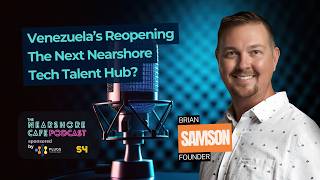
Venezuela’s Reopening: The Next Nearshore Tech Talent Hub? | 🎙 The Nearshore Cafe Podcast