5 Ways to Make Your Business Look Legit | Upgrade Your Hobby to Business (Red Flags)
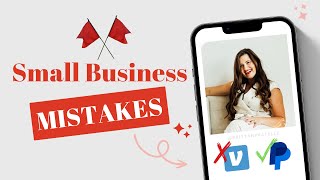
In this instructional video, attorney Brittany Ratelle guides online entrepreneurs—especially women‑owned, home‑based businesses—through five common “red flags” that make a business appear as a hobby rather than a legitimate operation. She explains why each red flag harms credibility, legal compliance, and customer trust, and offers concrete steps to fix them. The five red flags are: (1) mismatched payment details that cause chargebacks and confusion; (2) missing legal documents in the website footer (privacy policy, terms, disclaimer, copyright); (3) using a personal home address and unbranded email, which expose owners to privacy risks; (4) operating without formal contracts and onboarding procedures, leading to unclear expectations and payment issues; and (5) down‑playing the business with disqualifying language, which limits growth and client perception. Ratelle recommends practical solutions such as aligning payment processor names with the business name, adding a comprehensive legal footer, using a PO box or virtual mailbox and a domain‑based email, adopting clear contracts (with templates from her Creative Contracts shop), and speaking confidently about the business. She concludes by teasing a follow‑up video on choosing an LLC versus a sole proprietorship and encourages viewers to like, subscribe, and explore her resources.
Chapters
Hi, I'm Brittany Ratelle, attorney for online business owners, and I'm here to help you get legally legit and to help you show up as a more confident business owner. Today we're going to talk about the 5 red flags that might be making your business look like a hobby and that you need to stop doing right away to make sure that you can show up in the world the way you want to, to make sure you can help solve problems, deliver value, and to keep your business being productive and moving forward as big as your dreams are. So let's get into it. Tip number 1, make sure you don't have mismatched payment details. What do I mean by this? When you charge someone in your business, make sure it's very clear to somebody that the business name matches what they expect to see from you. The biggest thing that we want to avoid here are chargebacks and refunds and general customer and client confusion about who they're paying for and what they're getting on the backend. Where I see this happen a lot is that people use PayPal, especially for online businesses, or Venmo, and it may be connected to your name or to an old business name, even to a spouse's name or a spouse's business name. Trust me, ladies, just like Destiny's Child says, you gotta leave your fellas at home, and that includes your fellas' payment email address information. We want to make it really clear to the people that you're selling services and products to that you are a legit business and that you match, and they don't have any reason to be afraid that the payment transaction is sketchy or is fraudulent or scammed. And you certainly don't want to risk a chargeback because people don't recognize what they're seeing on a credit card statement and an email order form or on a bank invoice because it doesn't match the service that they decided to procure from you. So make sure that you're not screaming, "I'm new here!" by having payment details that don't match the rest of your business. The best way to do this is to make sure that the payment information that's linked to your online payment processor, whether that's Stripe, PayPal, business Venmo, or something else, matches your business or something close to it that people would expect to see when they're purchasing your goods and services. Red flag number 2, you don't have website documents and it looks like your website was built by you. Now there's no shame in having a homegrown website and certainly there's a lot more tools than there were 5, 10, 15 years ago when I started building my own websites. However, something that's critical that every website should have, especially one that might be selling anything or leading people down some sort of customer or business journey, is you need to have some things in your website footer. That is the block of text that's at the bottom of your website. I'm sure you've seen that there are usually tabs called that is the block of text that's at the bottom of your website. I'm sure you've seen that there are usually tabs called privacy, legal, terms, disclaimers, along with a couple icons. This is what we mean by a footer text, and it's a reverse navigation menu basically that should be accessible from every page on your website. There's a couple of things that need to be in this footer to make sure that you're being clear and upfront with your customers and clients and to make sure that you're being compliant with relative US internet and privacy law. So first thing you need to have in your website footer is a privacy policy. I don't care what website platform you're on, and if you think you collect information or not, I promise you that you do collect information from people on your website. That's no big deal, but you need to be upfront about it and need to make sure that you're being clear with people who wander onto your website. So you need a privacy policy that's compliant with the various states that now have privacy legislation. There's going to be 5 state laws by the end of 2023 that have privacy laws on their books. You also need to have terms and conditions, meaning, or terms, website terms, terms of use, terms of service. These things are all used interchangeably. Hint, they're the same thing that explain the rules of your website, kind of like your clubhouse rules. You know, the signs of no boys allowed that you used to have on your treehouse. The next thing that you're going to want to have is a disclaimer or legal tab for any necessary disclaimers or disclosures based on the information on your website. Now, this is likely going to change depending on your sales techniques. And if you have information about affiliate programs, links, if you are selling health and wellness services or content, or if you sell something related to business opportunities or tax or legal information or real estate. So this may be a little bit more dynamic depending on what you sell, but there are certain things in certain industries that you need to make clear and it needs to be available for everyone to click on. This is where that's going to live. And last but not least, you need to make sure that there's a copyright statement. Make sure that it's really clear that all the cool stuff that's on your website belongs to you and that people are not allowed to use that, whether it's photo, audio, or video, without permission from you. So make sure you're not running around the internet with the good footer. It may be funny for Will Ferrell in one of his movies, but it's not cute on you. Make sure that you have a footer that has all the information that you need to make your website legit. You can get all of these documents that I talked about in my contract shop called Creative Contracts. The website legal bundle is your all-in-one solution and it has everything you need to get your website legally legit and compliant. Red flag number 3, you are using your home address as your business address and you're using an email address that was likely set up in the 20th century. Look, we want to make sure because 'cause we're moving online, especially if you are a women-owned business and have some security or privacy concerns. And frankly, who's not concerned about that in an era of doxxing? You wanna make sure that you're putting some healthy distance between yourself and your business and that you're making it difficult for people to find out where you live, especially if you are home-based or virtual-based businesses like many of you are, like many of the hundreds of clients that I've served. And unfortunately, the law is not set up to make it easy to do this. And so you need to do some things on the front end so that you can run a business and have it be compliant, but also be able to have a little bit bit of distance between you so it's not as easily recognizable for people to find out your home address. I recommend, depending on where you live and what the rules are in your jurisdiction, setting up a PO box or a virtual mailbox. A PO box is obviously going to be at your local postal office. Virtual mailbox is going to be online-based. They will give you a real street address. It doesn't scream PO box, and the mail that it's sent there, they can scan and email it to you, and you can open at your leisure and decide if you need to shred it, recycle it, open scan the rest of it, or if you need it to be forwarded to your home address, which is obviously kept confidential. I really like virtual mailboxes because you can use them for a lot of different things in your business. In addition to having them in your formation documents as appropriate, you can also use them as the footer address that you need for CAN-SPAM compliancy, meaning that there's an address that needs to go in the bottom of your emails that you're sending out. Don't use your home address here, please. And so using one of these addresses can solve for that. Make sure you're compliant, but also make sure that you're giving yourself some healthy distance. There. Same with your email address. You know, make it easy for people to find you. Don't use some cute and clever name that's been set up for a while. Don't use one that's shared with a spouse. Make it really clear that you're running a professional business here and that you have a branded email to match. G Suite is super cheap. I like having one that's set up through your domain. If you are still shopping for domains and aren't clear on that yet, at least have one that's the name of your business at Gmail or Hotmail or whatever else, but make it really easy for people to find. And as they're clicking in their email for it to pop up, it look like it's legit and matches your business. What's the red flag number 4? Not using contracts in your business. We want to make sure that if you have successfully pitched somebody with your services, they say yes, they want to move forward. What comes next? You don't want to drop the ball or scream, I don't know what I'm doing here, by not knowing how to close the deal and move forward professionally and having a really clear and formulaic onboarding system of how you're going to be working with each other. And nothing says I got you more than a clear contract that says, Here are the clear expectations. I'm going to be doing this. You're going to be doing this. This is how we're going to handle confidentiality. This is how we're going to handle intellectual property and all the cool content that we're going to be creating together for this project and the delivery of services. This is how we're going to handle payment. I bet you're interested in payment, right? Who's not? Because you're running a professional business and that means that you care about payment being on time and being clear about the how and when you should be paid and how invoicing, late fees, delivery of materials, all of that is going to be contingent upon payment. It being kept aligned and on time and having some milestones with a larger project. So make sure all of that's in a contract. It's very clear. I get the question all the time. Hey, can I just use email? Is it better than nothing? Is it better than a phone conversation? Obviously, yes. But the problem with email is that it's likely in that chain, you maybe aren't as clear about what someone agreed to. It's also likely that you don't have some of the email legal boilerplate that you usually have at the back of contracts that protects you when the unexpected happens. And I know it seems cliché, to be like, well, that's just how you think, Brittany, because you're a lawyer. And you're right, I am a practicing business attorney, so this is the way that I'm trained to think. But I'm also the one who's the collector of horror stories when things go wrong. And so it's my job and my responsibility to collect those, look at those, and say, how can we make that and avoid headaches in the future? What kind of language can we put into place on the front end so that we're being proactive and that we're trying to solve problems before they happen, that we're trying to have clear communication and clear boundaries? Because a good boundary is not anything that you should be afraid of, not you and not the clients and customers that you want to be working with. And if you come across someone in your business that gives you a really hard time about a contract, that just is rolling their eyes or digging their feet or saying like, this is ridiculous, I thought we were on the same page, why would you make me sign a contract? That is a client or a customer who maybe doesn't appreciate your value or your process, doesn't understand that there are opportunity costs and money and resources and time being invested into this project. And so there should be nothing to fear from a fairly drafted drafted and executed and negotiated contract, and that's what you want to present to your clients. If you feel like it's time for you to have some real contracts in your business and you're not sure where to start, head over to creativecontracts.co. That's my digital template shop, and it's full of more than 35 different curated contracts and resources that I've put together, along with step-by-step guides to make sure it's really clear for you to have a solid contract so that you can keep stress out of your business and keep what needs to be in your wallet. Red flag number 5: you're playing small. You're using disqualified qualifiers, disclaimers, you are saying that you're running just a business. You have just a little shop or just a photography business. You may or may not be using air quotes, but you get the gist, right? You're unintentionally putting yourself in a smaller box because it's likely less scary. Maybe you're afraid of making other people feel bad who aren't running a business. You're maybe afraid that you could be bragging or that you have a little bit of imposter syndrome about calling yourself a real business owner because you're not an entrepreneur, you are just a YouTuber. You're just a podcaster, you're just an author, you're just a teacher, an educator, a TPT or an Etsy shop owner. Newsflash: all of these people are real business owners. So I don't care what your parents might think or what your high school classmates on Facebook might think. You're a real business owner, and you don't have to carry the weight of other people's opinions about you and your business, okay? You can set that down. You're not preaching to those people anyway. So make sure that you are taking up the space that you need to, because by doing that, you're allowing people to find you and make it clear of who you're serving and why, and what is the solution to the problem that they're having. And quit using disqualifiers in your business to make yourself small, because you're only making it harder for people to get the solutions that they really need. It's actually kind of selfish of you. I know that's some tough love, but I'm here for you, and I want to make sure that you quit playing small, because you need to be able to show up in the world. And that includes owning your legal and your admin and your accounting and all this unsexy side of your business so that you can show up and do the fun stuff, the amazing stuff that I know that you're capable of doing, and I know that you care about doing right. So let's review quickly. What are the 5 red flags that say, "I'm a hobby," that you're going to quit doing today? First one, mismatch payment. Make it clear this business is charging you. No website documents. Uh-uh, that naked footer is so 1995. We're out of here. Using your home address as your business address and using unbranded email addresses. Not today, Satan. Okay, we're gonna step into our power and make sure that we're showing up confidently. Number 4, not using contracts. I know shocker, the lawyer wants you to use contracts, but that's what we're here for. And number 5, you're playing small. You're using disqualifiers, you're putting yourself in your box, and you're going to quit it right now. If you're interested in learning about the next steps of how to get your business legit, specifically if it's time for you to start an LLC or to be a sole proprietorship, if you've been confused by the alphabet government soup on the internet or on Google or on Facebook groups, make sure you tune into my next video where I'm going to walk you through exactly what you should be doing to decide whether an LLC is right for you. Thanks for tuning in. And make sure that you like and subscribe to the channel so you can get more information about how to set up your business and make sure they help you get legally legit.
More from Brittany



174: Getting Legally Legit with Brittany Ratelle: Essential Legal Tips for Fitness Professionals...

New Freelancer Law Gives Superpowers to Small Service Providers | #freelancers #gigwork






