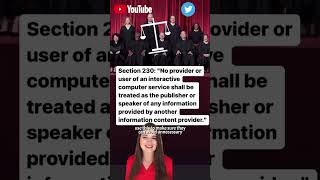
Attorney Brittany Ratelle explains Section 230, the 1996 law that shields platforms like YouTube and Twitter from liability for user posts. Two lawsuits from families of ISIS terror victims argue platforms didn't remove extremist content fast enough and shouldn't get that protection.
Chapters
What the heck is Section 230 and why was it on trial at the Supreme Court this week? Let's have an attorney breakdown. Now, Section 230 is part of the Communications Decency Act, a 1996 law above that basically says, hey, internet platforms and websites, if you are going to show up and distribute information, you are not a publisher of that information in terms of liability. You are just hosting it on your website and you have a shield of liability if there's bad acts or harm that results from that information. Obviously, websites and platforms like Google, YouTube, Twitter, Instagram, and lots of other modern-day websites use this to make sure that they can avoid unnecessary liability for all the yuck that happens to come on the internet. In these two cases, Gonzalez and Tamneh, the loved ones of people who were hurt in a terrorist attack, allege that these two companies didn't do enough to take down or moderate the content related to ISIS videos. They claim that 230, um, should not be a bar for them to be able to recover and to have some damages and change done to