How Creators Can Legally Protect Their Business with Brittany Ratelle - The Creator's Adventure #56
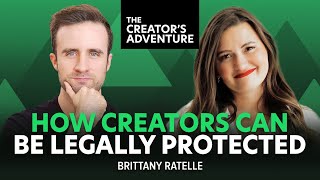
Brittany Ratelle, an IP attorney for creators, walks through forming an LLC, trademark clearance, and protecting your work with watermarks and copyright registration. She covers the DMCA takedown process for piracy, common mistakes like missing contracts and privacy policies, and how to hire contractors versus employees without legal risk.
Chapters
Welcome to The Creator's Adventure, where we interview creators from around the world, hearing their stories about growing a business. As a creator, when you have to deal with legal issues, it can range from not fun to extremely stressful. Today's guest is a lawyer who specializes in helping creators, and she's going to share how you can protect yourself and your creations so that you can focus on building. Hey everyone, I'm Brian McInulty, the founder of Heights Platform. Let's get into it. Hey everyone, we're here today with Brittany Rettell. She is a business and intellectual property attorney who helps creators and online business owners get legally legit and set to scale. She's based in Idaho with her husband and her 4 children, and Brittany helps her clients protect and grow their physical and digital offerings, diversify their revenue streams, and protect boundaries with co-founders, partners, collaborators, and vendors. Brittany is a believer in law and she wants to prove that the legal stuff can be approachable and fun. Brittany, welcome to the show.
Thanks so much for having me, Brian. Happy to be here.
Awesome. So my first question is, what would you say is the biggest thing either that you did or you are doing that's helped you achieve the freedom to do what you enjoy?
Ah, this is such a good question. I think the biggest thing for me, which I kind of fell into my practice, believe it or not, in law school there was not a list under practice areas of like social media media law or helping online course owners, right? This is all, this is all very new in terms of industry. Um, but for me, as I started to figure out what I wanted to do with my degree, with my skills and talents, um, some really good advice that I got and that I kind of made my own was if you are looking and want to be an entrepreneur and want to find a way to solve problems and kind of be your own boss, is you should really look at 3 circles and where they intersect. And one circle should be what are you good at, right? And kind of be introspective of your own skills. The other circle should be, um, what do you like to do, right? And what's enjoyable for you. And sometimes it's the same thing as that you're good at, but not necessarily. And what is a problem that people will pay to have solved? Um, and that third one is really important because there's a lot of people, um, I think who can go through those first two exercises and find an area where that Venn diagram overlaps. Um, but it's really important for us to be listening and talking and This is where it comes into the minimal viable product or your first offer or testing and validation is to figure out what, what problem do people want to have or that they have and they want a solution to. And it's something that they're willing to pay to solve. Um, cause there's a lot of problems that people have and they just vent about or complain about, but when it turns, you know, it's, it's time to swipe, they don't swipe. Um, and then people are surprised or disappointed, right? When their offer doesn't work. So, um, for me, that's where I found and built my practice and that's where my offers are and my most successful clients and entrepreneurs the solopreneurs that I'm helping with, that's what they figured out too, is the intersection of all three of those.
Awesome. So yeah, you've helped many creators, coaches, solopreneurs, everything like that get legally protected. What inspired you to kind of focus on this particular niche in your own business?
Yeah, for me, I kind of fell into the work. I had a lot of initial friends just in my peer group, and we were— I was living in Utah at the time, and there's a huge proliferation of mommy bloggers there. And there, they were people who were kind of the first influencers or waves of really mom lifestyle and parenting influencers, and they started having contracts, right? And they, um, I got a lot of friends who said, hey Brittany, I know you don't do this, but can you look this over, right? Um, because I'm about to sign this now legit contract for 5 figures, 6 figures, um, and I want someone to look over it. And no one really understood what it was, or they tried taking it to their dad's attorney, and, um, you know, he didn't even know what the Instagram was, let alone, you know, know how to advise. What do you need to be looking out for? And what are the big picture here? And how can you negotiate make sure you're protecting yourself. And so that's how my practice started. And then it just really grew really organically from there until I really intentionally, about 6, 6 and a half, 7 years ago, drew a line in the sand and said, this is actually exactly what I'm doing. I love helping creative online founders, people who are building really cool businesses, usually online, and social media is probably their main marketing tool among others. And I want to make sure they're getting really good information and that the legal stuff isn't a barrier to them from moving forward, you know, that where I'm helping support the scaffolding that they need instead of, yeah, either being underserved or overpaying, which I was seeing both, right, for legal.
Yeah, yeah, definitely. I think that it's one thing for the kind of persona of the course creator or the online entrepreneur. They kind of are already in business in a way where they have some, a little bit more understanding of legal potential things they need to know about. Whereas like the more influencer style creator who's like a blogger or YouTuber, that all the legal stuff is completely just something that they're not aware of. They're not, they're not sure how to handle. And it's complicated because you've learned this thing of how to, how to create and build this audience. And now when it comes down to these sponsorship deals, things like that, Um, there's all these things that you've never had to even think about before, um, that have to be considered. And there's things that are not presented to you when, when somebody presents you with a contract, there's things that you're not being presented with because they're trying to make it the way that they want. And you don't even know what maybe you're, you're potentially giving away or, or, uh, kind of offering to that potential sponsor without even knowing it. Maybe.
Yeah. You could totally be leaving money on the table because you don't even know the questions you should be asking. Let alone the terms in there that should be red flags to you, or at least yellow flags, things you should be paying attention to. And so that entry point is kind of where I started serving the online industry, and I've since expanded because I found that smart creators and influencers quickly add their own products to the mix, right? They don't usually just stay as full-time content creators because it's a risky business. There's always someone— I hate to say it, but like younger and hotter all the time, right? Who's coming on the scene. And so, and it's good to start looking at what What are you selling? And if you can sell and are building an audience, you should be selling your own products, whatever you can sell. And so a lot of my clients have now moved into the digital product space and are their own personal brands and sell their own physical products and online products, which is how I now have helped a lot of online course creators. And especially I found that there are some people who approach online course creation, especially those who might be leaving corporate and other jobs, they have a little bit more of a lens of like risk management and they're used to thinking like, oh, Well, yeah, I gotta have stuff on my website footer and I gotta make sure that everyone who's touching product development signs a contract. But that's, that's an assumption that I've learned not to make for everyone. And so my goal is always to make sure that I give people the information they need to make good choices and so that they can move forward, show up confidently, and have like that right level of legal risk. Because I don't like people to be nervous Nellies. They're so fearful of getting in trouble and doing it wrong that they never launch because that's not helping anyone. And it's not usually a reasonable position to take, right? There's It's not like some huge fear that everyone's going to sue you as soon as you launch your first course. Probably not going to happen. But then I also have some people and online business owners who are like base camp jump, like, you know, who basically they like, they launch without a parachute, right? These people, like, they're always making it up as they go. It's always reactive and it's always just putting out fires. There's no proactive planning. And I would rather have people take their vitamins and go to yoga instead of ending up at the ER. And so I like to be a yoga teacher. I like to help people. Here's some things, tools we can use to protect you along the way to save you all that drama and stress and headache because we don't need that. Being an entrepreneur is hard enough on its own.
Yeah. At the very least, make sure that you— helping to make sure that you have the parachute before you go and jumping off of things.
Exactly. Yeah. So before we're base jumping. Yeah.
Yeah. Okay. So yeah, our audience is composed mainly of online course creators, coaches, people who have already decided like, okay, I'm going to take this and start to sell my own products.— as you've said.
Right.
So with that said, what do you think are the most common legal mistakes that you see online course creators make?
Great question. I'd say probably the number one is not to get your foundation legit. I usually think of 3 different buckets when I think about people getting legit. And the first one is your foundation. And this is setting up your LLC, having a separate bank account for your business, knowing where your money is coming from and being able to track that. All your income, you know, your Stripe and your PayPal should be set up separate. Don't use this to buy stuff online, right, to do your online shopping. It should just be a business account and set up with a separate business EIN, a tax ID number, and it should all go into one account. And then all your expenses should be paid from that account with a business credit card linked back to that business bank account, um, you know. And it's not that hard, honestly, to just to do it on your own. Yes, there are like online companies that will sell you, you know, packages on how to do that, I have mixed feelings about that. On one hand, I want people to get it done, and if that means you gotta pay someone a couple extra hundred bucks and it gets done, fine, you know, I think that's okay. On the other hand, they're asking you the same questions that your state is going to ask you, and you can do this online. Like, it's not that hard, 'cause entrepreneurs are smart people and they can figure stuff out. So that's kind of getting your foundation legit. With that, I would say the other piece is getting the name of your company. If you are not launching under your name, like if you want a brand name or kind of a hybrid personal brand name, It's really important to just at least do an initial brand clearance search, trademark clearance search, and make sure that that is not something that someone else is already using online. And that means you should be doing a really thorough Google search and you should be checking the trademark registry, um, with the, with the caveat the trademark registry is kind of an old-school '90s Boolean operator database. And so people go on there and they, um, they make the mistake of doing a search and being like, oh, I, I put my name and nothing came up, I must be good to go. Um, If you, as a little trick, if you put in Starbucks with two S's at the end, it will show zero results, right? It's not like Google, it's not like our other search engines that are algorithmic and are trying to figure out, oh, is this, is this what you mean? And I will show you all the things that are related. It will show you exactly what you search for. And so people can get a false sense of confidence of like, oh, there's no trademark, I must be fine, when the law is very different. The law says if it's confusing to a consumer, it's too close. And I've been on way too many phone calls with people, um, of, you know, where they got the cease and desist and they're crying and they're like, is this real? Do I have to rebrand everything? And I have inventory and I have a beautiful website and branding and sign— you know, they've invested so much. Um, is this legit? Or bought a domain and, you know, do we have to redo everything? And I'm like, yeah, I'm so sorry, but we, we had to do this first. So, so that's kind of foundation. Um, the next piece would be your people legit, and that's your relationship with people who are helping you in your business, including people you're selling to, customers. And so this is making sure you have your website policies. Everyone has to have a privacy policy. Everyone has to have a privacy policy on their website. Doesn't matter what platform you're selling on. Um, and you know, you should have some digital terms. So if people are checking out, there should be something there that they're checking, you know, that they're checking the box to, you know, a clickwrap agreement. What are they agreeing to? Um, you should be really clear about your refund policies. If you're doing a payment plan, that should be really clear. Um, if you have a chargeback policy, that's where I see most of the grit come in terms of drama with digital course providers is that going wrong. Cause that's the first thing that someone's going to try to look to. And if you get in a payment dispute, um, and a chargeback, that's what your payment processor is going to ask for. They're like, hey, someone's disputing this payment. You know, they're getting cold feet, whatever. Um, do you have payment terms? Do you have a contract that governs terms and conditions that govern the sale? I've had my clients being able to win those because they were able to send something over and it's like, actually, yeah, Here's what they sign and agree to, and it's, uh, that's really great. So, um, and then the other part of people is anyone who touches your products, right? Your 1099 freelancers who are helping you, you need to make sure they're all covered by a contract. Um, making sure your video editor, your copy editor, your graphic designer— they're probably making cool stuff for your business, that's great, I love that. We want to make sure all of that is properly being assigned and put into that business pot. And through like a work-for-hire agreement, which is what kind of language should be in an independent contractor agreement. And then the last piece, um, is that you want to be brand legit. And this is where intellectual property protection comes into place. And you can use copyright and trademark to protect your stuff so that you have built a really nice boundary around your things and done as much as you can to control and deter people from copying you, from using your materials improperly and trying to make money off of them or just rip you off and share it in a Facebook group, right? There are some people who, um, you know, and there's a, there's a class of people for sure who are just ignorant and they don't, they don't get how online, you know, intellectual property works. They think if you find it on Google, it's in the public domain and then it must be free to use. And, you know, that's, that's not true. Please don't do that. Um, so, but there's, you know, another group of people who like to test the limits and see what they can get away with. And so It's good to use whatever tools are at your disposal and then also know that there's kind of a level of bless and release that you have to do, um, because there are going to be people who are going to use bits and pieces, and depending on how much they change or what they use, um, those are things you're likely not going to be able to protect. But the big stuff we can, and that's certainly a great investment if that's what you're selling, is your stuff, your curriculum, your content, your online materials.
Yeah, that's great advice. So I want to touch on the trademark search and things you talked about in the beginning, because I think that everything you're describing, it's not, it's not really that there's too much work involved to do this, um, but I agree it is important because you, you want to have these, these contracts in place and, and these terms, privacy policies, all that kind of thing, so you can avoid the potential of having to have these bad things happen, having to be paying a lawyer like yourself even more money because now you have this big problem. And so we want to avoid the problems from even happening. And, uh, but at the same time, we, we don't want to have to invest so much into setting all this up that it's like, wow, how can I even get started? Because there's all these different pieces in the, in the legal stuff that I have to do. And so for the trademark, I think what you're suggesting is that Everybody do the search and kind of be clear on if what, what you have could potentially be trademarked and isn't potentially infringing, but you don't actually have to go out and like apply to register those trademarks.
Yeah. I don't think, I think it's a mistake to think that everyone needs to get a trademark registration off the bat, especially for a new offer. But I do think it's at least worth doing a search. And if you're not confident that you know how to search, either learn how to search you know, go, go watch the trademark videos, go watch— there's videos online. I'm working on some more digital resources to help people do their own searches because I get this question so often. Or hire a trademark attorney, right? It's— yeah, it's $1,000 to do a search with me, and I get that that's a lot for a new entrepreneur, but because it can be so expensive otherwise— and, and the issue I see is that people don't make that investment, and instead I've seen people drop thousands on a domain, and they then they come to me and they're like, hey, this is my new brand, you know, I hope it's going to be okay. And I'm like, I hope it is too, because, you know, like the kind of like the, you know, the, you put the cart before the wagon here. And so it's an order of, I always tell people, if you would be heartbroken if you had to rebrand, if that's where the relationship is at with your name, like you love this, there's all kinds of reasons why it's meaningful to you and your audience, you've already launched some offers around and tested it and know that it's resonating, it's time to for sure do a search and possibly move forward with a full trademark, right? Because if you want other things that you want to be able to do with your brand, if you wanted license, you know, if you want to sell merch, if you want to do joint ventures with other people, if you want to do a co-branded product or a bundle, if you want to do a book deal, if you want, you know, um, you know, over-the-top television, other entertainment projects, like those all have to come after a trademark. Like that's step one of what it's going to list in the contract that they're going to ask you to represent and warranty, you know, that's Legal speak for I'm making a pinky promise that you want all the rights to this and that you are not stepping on someone else's toes because no one is going to want to get business married to someone who doesn't have their house in order, right?
Yeah. Yeah, exactly. Yeah. And I think it's easy for a creator or entrepreneur to get emotionally attached to this concept of a name or a brand that they come up with. Right. But at the same time, every entrepreneur has to be really good at managing risk. And realizing that the, the search in that step beforehand is just to make sure that you're not going to run into a problem. And then once you find that the, the brand really can take off and, and has potential, then you can say, okay, well now I'm gonna trademark this and then make sure everything is ready for me going forward, like you said, so that way you can make these deals with partners and sell different kinds of merchandise and all this kind of thing without worrying about Oh, well, is this going to get somebody or me in trouble?
Right. Yeah. What we want is a clear runway. We don't want to start investing in a brand name, in a course name, in an offer that immediately has roadblocks. And, you know, it's almost like you can envision this beautiful, like, room with all of these doors and some of the doors are already closing. Right. And so it's like, shoot, you're not going to be able to move into that. You're not going to be able to move into that. And so don't do that to yourself, especially at the beginning, because I— and it's a great point, is that A name is important, right? Like, I'm a brand attorney. Like, I get there's important power in symbols and names in our brand, but it becomes meaningful because it's a symbol, it's a shorthand for you and your offering and what you're bringing to the space. And so, as you're building all of that and investing in that and your connection with your audience, don't mistake that the name is what's most important. It's not. It's a way for people to find you because the brand is what's important. And the brand is way more than just a name.
So, yeah, definitely. So another aspect that I think people struggle with, especially course creators, is the idea of protecting their intellectual property and dealing with digital piracy. What would you say to somebody who wants to better protect their intellectual property when it comes to things like their videos, their slides of their presentation, their lesson content, things like that?
Right, yeah, great, great question. So I would really say there's kind of 3, 3 steps that you should take, um, kind of in order. Let's go in order from cheapest to most expensive, right? So cheapest thing that people can do, take action on, is, um, you should be putting a watermark on, like, uh, and that's, you know, should have a copyright statement, a logo. There's different versions of doing that, but you should have it on your materials. Um, I know some people really don't like having it on their photos or videos. They think it really messes up with the aesthetic. So I I understand there's different opinions about that, but it at least should be in the footer of your website. It should be on all of your handouts, anything that's especially— it's a downloadable resource that you're making available to people. I think that's a really good idea. And by the way, a copyright statement should properly say it's that C symbol that everyone has seen. It should be the date that it was either published or updated. So if it was initially published, like a website, in 2020, and it's updated, you know, every year, then it would be -2023. And then it should say either your name— if you are running the company under your name, then I would put Brittany Rettell. I have an LLC, so I'm gonna put— I have several LLCs, so I'm going to put Brittany Rettell LLC because that's the name of the company that holds the rights to this asset. And then the terms, uh, the terms: all rights reserved, which are the magic words that say, hey, any of the rights that are in this, I own these. If you want to— if you want to use any of these rights and having these rights, you chat with me. Um, so you don't have to say the statement for it to be protected by copyright law. It's automatic in the US, and that you, you own all the rights as a creator. However, it takes away the excuse of someone saying they didn't know, and it makes it harder. You know, people have to go through more work to remove it, to crop it, to get it out. And that's what we want to do, is we want to slow people's roll, right? We want them to slow down and think twice. So that would be my first step. Um, second step is that it's a really good idea, like I said, to have some sort of terms of use. Because if then you catch people doing something improperly with your content, you have more tools at your disposal to get them to stop. And so that's where having— you should have website policies, you should have digital terms of use when people purchase your online course that they have to check. You should have, you know, student contracts or participant contracts if it's something really high-touch and they're getting access to a lot of materials, especially if it's a course or a program that's front-loaded, right? And they're going to be able to download everything at once. That's what's going to kind of protect you there. And so that's a series of contracts. And by the way, I sell all these as templates in my shop, Creative Contracts, because these are usually not things you need to pay a lot of money to have custom drafted. They're going to be pretty, you know, formulaic in terms of here's where you need to change it color code-wise, and the rest is probably going to be very similar. So that's why I, I think digital resources are the better answer to this, and that's what I sell in my shop. And then the third thing is I think it's a good idea to register the copyright to your materials. Now, copyright law protects creative works in the US, and like I said, you get automatic rights when you create it. However, you get a lot of enforcement benefits if you actually take the step of registering the copyright with the US Copyright Office, the Library of Congress that's in DC. And what you can get are you can collect statutory damages and attorney's fees. Which, what does that mean? It means you can have people take you seriously and they will take your stuff down. It means you will get to the front of the line If you do a DMCA takedown, it means your cease and desist will be taken seriously. It means people will scramble and listen, and you can even get money and damages because you can say, instead of being like, knock it off, you have a little stick, which is what you have happen if you don't have a copyright registration. And some people will be like, yeah, go pound sand, like, yeah, go and prove it, because they know infringement lawsuits are very expensive. And so for most independent entrepreneurs, it's going to be cost prohibitive for you to launch a lawsuit, which sucks, right? That means like the law can't do its job. So the way to reverse that and even out the playing field is you need to register the copyright for your stuff. And then it turns into like a baseball bat. You say, hey, I have reason to believe, or I see some materials, or you use my photo or my video or my text copy or my downloadables or my workbook or any combination of your curriculum. I need you to stop. I need you to sign this agreement, and I want my licensing fee as if we work together. I want damages because I think you've been stealing sales, whatever. You've got all kinds of other options and you can actually get recovery from that. So I think, and I see it's a really underutilized tool that a lot of people aren't registering their copyright to their online course. And you can do one registration for a whole course, which is really helpful. You don't have to do every single handout have its own registration. And so it's really not that expensive. It costs $65 to register with the Copyright Office. And I think it's well worth it for any online course creator.
Yeah, yeah, definitely. That's great advice. So, um, I want to mention that, um, so I'm not a lawyer, of course, but I've had to deal with hearing so many questions about this, not only from course creators, but even earlier in my business as a, as a web design studio and dealing with licensing and even clients wondering how all that works and the difference between copyrights and trademarks. And I think we could get into a lot of spend time on a lot of that, but which I'm not really trying to do here. But the copyright, like you mentioned, you don't have to register for the copyright, it's automatically protected. But of course, the benefits of if you do— what I do want to talk about is the idea of sending these like DMCA takedown requests, and in the event that somebody does go out and try to steal your work and What I would say about that is that it's going to eventually be inevitable that someone's going to try to do that as you grow as a creator.
It's not— it's not an if, but when. Absolutely. Unfortunately.
Yeah. Yeah. And one thing that we like to tell creators to help themselves, not so much on the legal side, but even just to feel more confident in everything, is that when this does inevitably happen as they grow in popularity, The things to think about is that number one, the people who are going to go out there and try to get their content for free are most often people who would have not paid for it in the first place. So you're, you're usually not really losing too much revenue, but still you don't want somebody to go out there, find a way to get all your content and then go and spread it to everybody for free. It's not, it's definitely not helpful, right?
Yeah. Yeah. To rip you off and copycat it or throw it up on a, you know, distribute it in Facebook group or whatever. Yeah.
So yeah. Yeah. So, so what I would say about that is the other way that you can protect yourself as a creator with the way that you build your course is remembering that your course is not only the content of the downloads, the video lessons, the text, it's also the community, the interaction with you, the interaction with everybody else in the course. And those are things that can't really be stolen. So there's no way that somebody can replicate that. All they can do is, is give away the content parts, which even then the content parts, I think people in some ways overvalue that, that, um, the real value is all those other parts. The rest is similar. Like you could find that content somewhere on YouTube. Yeah. It's valuable. That's being put in order, but the interaction with yourself, with your community, the feedback, all of those other kinds of things, that's where the real value and power of comes from your course. But still, let's say we get into this situation, we find that somebody has stolen our course, they're going and trying to promote it, giving it to people for free somewhere, maybe they're even trying to sell it. What would you suggest about somebody to go and issue that kind of DMCA takedown? And maybe can you even give a little bit of an explanation of what that even is for people who aren't familiar?
Yeah, no, that's a, that's a great question. So Yeah, but I totally agree with you, Brian, in that you have to have a healthy level of, um, a kind of a thick skin about it, unfortunately, you know. And also remind yourself that people can take— they can rip off your captions or even your graphics or your chart or rename stuff, but like, they're not going to sell it like you, you know. And you're the secret sauce that you're bringing to your curriculum and how you teach it and your arrangement of those elements. And it's really important to have that pep talk and perspective because getting ripped off can be a really— just a real gut punch. And I've seen so many creators, and I will say this one tip: if, if and when it does happen to you, please take a beat and process privately before going online, because I've seen a lot of people who immediately want to go live and start like lighting the flamethrower, the blame thrower, live. And I understand because it's an emotional reaction, right? And you just feel like this is ridiculous. And there may come a point when you want to go public about it and talk about it and maybe bring awareness to your industry, whatnot, and that could be appropriate. But it probably— you don't want that to be your initial reaction. You want it to be not a place from anger or fear or betrayal, but from a different emotional place. So just as an advice, because we all know the internet doesn't forget, and once you, once you go and do that, you can't take it back. Um, but for a DMCA takedown, so any major website needs to have a procedure and it's part of the Section 230 and kind of the internet liability, is that you are responsible for the content on your website. And because you are responsible for copyright infringement and trademark infringement, if someone has reason to believe that you are hosting, distributing, publishing information that belongs to someone else, you have to make available like a support email or a web form or some other way that they can contact you and let you know, hey, that's my stuff, that's that's on Etsy, that's on Amazon, that's on, you know, any kind of other major marketplace or smaller website. And so major companies, including social media, all have their own DMCA takedown forms. And so there's usually a web form is how major companies do it because of course they're trying to manage a lot more volume. And it means you usually have to explain what is it that you think that someone stole, attach any certificates, and this is when it's really helpful to have a trademark certificate to protect branding, or copyright certificate to protect creative works, and then some screenshots, usually if you have them, and a short description of what happened and why you have reason to believe that it's infringing upon your work. And then most websites, after they process that DMCA takedown, will remove the content and then allow the other party— they'll basically like, 'Ball's in your court, what do you want to do?' And then there's usually a counter-notice period where someone can throw the ball back and be like, 'Actually, we think this is bogus. We have reason to believe this is our stuff. This person is just bullying us,' which This is a tactic that some people use is they get a lot of people to try to do and file a DMCA takedown and kind of almost have a witch hunt out for people. So that is something that can happen. It can happen to you where you're like innocent party and you're like, I swear this is my stuff and this all got taken down, which is why that counter notice is supposed to be there to kind of even it out. Because if someone says, no, come at me, this isn't real, the original party now has to basically file a lawsuit, make their threat real, or shut up and go home, right? Take their ball and go home. That's typically how those— those— that procedure goes. I will say that a lot of departments in— on major websites, like take Etsy, for example, because they're a major one that deals with a lot of takedown, you know, these are not all lawyers staffing these complaints, and they are not interested in walking into the weeds of your legal complaints. And so whether or not you have a legal standing or not, they might not always get it right in terms of, like, they're just trying to protect risk management-wise, okay? They don't want to get in trouble. It's not worth it to them. And so that's why having a certificate and having screenshots and proof— and that's something you should definitely do if you see that someone is taking your stuff— is go and screenshot, collect a little evidence file before you reach out to them. Because you may want to have proof if they take it down. Maybe that's all you wanted is for them to take it down, but maybe you wanted more so that they take it more seriously. Or maybe this has happened multiple times or whatever. And so I will say that's kind of a good rule of thumb in terms of using those tips tips if you find yourself kind of in a takedown situation.
Yeah, yeah, yeah, that's great. Because one of the, the benefits and why I think the DMCA is great is that what's happening when you go and send that request to a platform or marketplace, they have to comply with it and actually look into it. And because if they don't, then they can be held liable too, right? Because then they're going to be in trouble for their hosting the content, their they're enabling the person who stole your content to go and do it. So, right, that's why they want to respond to it and then usually take it down as the first step. And then, as you said, the ball's in the court of the, the person who was dealing with it to explain if they did really have a— believe they had a legitimate use for it, right?
Yeah. So, and there you— they're trying to kind of wade into that. And, um, I will say, you know, bigger, larger platforms that deal with a large volume of takedown requests, it usually takes longer. Sometimes it can seem like it's not happening at all. And so there is, um, I've had success with a lot of my clients of actually going and emailing the legal department and basically rounding out and buffing out everything we put in the web form and putting that in that form and making it more of like a legal complaint. Um, and that's taken more seriously and kind of cuts through probably some of their customer service queue, um, and where legal will take it more seriously, especially for those cases where we have registrations, we know we are in the right. This is clearly— we believe this is wanton or reckless behavior. You know, it's— we feel like we're justified in kind of trying to expedite it to make sure we're not stuck in some customer service queue for weeks.
So yeah. Yeah, definitely. Okay. So you mentioned a little bit about communicating. I think there could be some really interesting things that you might have to say about how creators and entrepreneurs communicate in general with partners, clients, customers. And to kind of protect themselves ahead of time before, when something, I guess, when tensions get high, when things seem like they might be going wrong, before they have to even get someone like yourself involved. And I guess my advice for that would be to start out and remove emotion from it. The emotion doesn't matter when it comes to a courtroom. The facts are all that's important. And you want to describe everything in the minimum amount of facts possible. You don't want to add all this extra wording in because all the extra wording is then open to more kinds of interpretation that you're potentially hurting yourself by saying too much.
Yeah.
Yeah.
You want to keep things really brief and concise.
Yeah. Yeah. I'd like to hear what are your recommendations for the creator or entrepreneur who is getting into a little bit of a sticky situation where they feel there could be some kind of conflict and they want to make sure they're communicating in the best way before they get someone like yourself involved.
Yeah, totally. And I would say I hope that people— like, that's my goal because I don't do litigation, I only do transactional law. And so my goal is to do all these things beforehand so that people never see the shadow of the courthouse, right? Because it's so much cheaper and easier to take care of that, and it's better customer service. And I would say that's probably my first tip, is to have— make sure that you are over-communicating. Like, you think, you know, this is passing the grandma test. My grandmother could see my offer, my sales page, my terms, and understand what is going on here. Um, you know, make sure that you're not falling prey to, you know, predatory marketing tactics or really pushy, you know, salespeople, you know. And just make sure that you're— there's a really balance there, because that's usually where you tend to see more issues on the back end and more drama is because people felt like, um, that wasn't clear what the offer was, what they were getting, what the timeline, what the payment terms were. And so yes, all of that should be in your fine print, right, in your contract. But it shouldn't only be there because we all know a lot of people are just checking the box, they're just signing it, they are not reading it, they are not digesting it. And so, and people forget. Um, so I would say over-communicate would be the tip one. Um, the second, like you said, is to, I think, be be civil and concise but firm. And so if you do find yourself getting that first email about a chargeback or refund of, I don't think this course is what it meant to be, or I— there's people acting out in this course and I have a different expectation, or any of that kind of starting to have some conflict, um, making sure that you're asking more questions than you're talking. I think it's always better to approach it with curiosity and kind of a neutral mind and find out if you can understand What's really going on? Is there an underlying feeling or motivation behind what the person is saying? Because a lot of times people just want to be understood. They want to be seen and understood, and if they can feel that and be validated in that, they might have their problem resolved. If it starts to escalate, I think it's great advice that you stay very on task, right, and on script to what have you already offered. Go take a look at your terms in your contract and attach those or highlight those or pull quotes from those if you need to. To substantiate your position and why you feel like you're in the right because of what's happened or what was on the screen or what was in the contract. And then if you get to the last point and start to need some help, then make sure you have someone, a trusted advisor that you can call, right, for backup and see, okay, is there any way we can try to de-escalate the situation? Can we still resolve this? And, you know, make sure you have good dispute resolution options. Hopefully you have either language about mediation or arbitration, because those are going to be way cheaper for you to resolve rather than having to go and even do, depending on the issue, small claims or having to litigate something. Especially you want to make sure that you're not open to a class action lawsuit. So yeah.
Yeah, yeah, that's excellent. And I think you make a good point because what many creators will deal with as a course creator is the things like the chargeback disputes, that kind of thing. And you're right, like you're not trying to scam anybody with your, your offer. So you want to make it as clear as possible. You don't, you don't want any chance for somebody to misunderstand it. And we actually, we actually say that we really believe it's good usually to have a really lenient refund policy. Of course you want to protect yourself, but you want to inspire confidence in the person purchasing as well, um, to make sure there's no doubts. But in the case where somebody shouldn't be getting a refund, where they're they've issued the chargeback or dispute against you and you have to defend yourself. You're right that when you have the information there really clear, you can just submit that to the payment processor, right? And then it's really obvious. But, but oftentimes you're right, asking the questions is so powerful, and I've experienced that so many times myself that it's also easy. You talk to all this about getting emotional with your brand, getting emotional with with all these things, it's also easy to get emotional when somebody has a dispute against you because you're saying, oh man, this person's trying to scam me. But there's so many reasons why that could happen. And a lot of them are not somebody trying to scam you. I've, I've had times when it's, it's as simple as the person forgetting that they purchased from you and forgetting that like—
Right. Or someone else does the bookkeeping or the invoices, right? Or the name that showed up on the invoice didn't match your name, which by the way, That's, that's something that hopefully you can try to check as you set up all those accounts. It's a better idea to keep those consistent because it makes that less of a risk that someone's like, what? I've had people who use like their, you know, Airbnb rental, the same thing for their online course, and it's called something completely different. So yeah, someone's going to see that on their QuickBooks and be like, what the heck is this? I don't know, dispute it. There you go. You know, so yeah.
Yeah. And so oftentimes communicating with the customer and asking some questions beforehand can you can even get them to go ahead and drop the dispute, right, before even having to prepare some kind of documentation to submit.
Yeah, yeah, exactly. So, yeah, and then there are, there are most people are reasonable people, right? And they want to win. They're, they're fair-minded. And, you know, and that's, that's good. And that's what we want to approach business with is we want to have, you know, come in with an abundance mindset and want to serve and deliver value. And That's what I hope that people get, even though I do talk about what goes wrong, because that's my training and that's my lens, right, is so that we can help it so that people are prepared, but I don't want them to be scared. I just want them to have their stuff ready so that they feel confident they can move forward and keep growing the way they want to. And then prepare against— there is a small, small minority subset of people that are boundary pushers that will try to take advantage. We want to try to do what we can to minimize their disruption on you, your bottom line, your mental health, your team members, right? Because that's just the cost of doing business. But if you have some good boundaries in place, it doesn't have to, you know, it's not going to sink you, it's not going to torpedo your business.
So yeah, definitely. Okay, so all that considered, I think that was all really helpful. What would you say to the creator who somebody is really more, they're growing, they're scaling their business, they kind of have all these things covered in some way, but they want to really work more on like building a team, hiring people. What are some legal considerations for somebody like that?
Yeah, great question. I think most people, the natural route is they usually hire 1099ers for, you know, to start and freelancers. And so these are people that are considered independent contractors. And they, uh, are usually running kind of their own mini businesses, which is what you need to be careful about, is that if you're calling someone independent contractor and they want to be an independent contractor, that's great. You need to make sure that to the state and to the IRS, what they're doing and how they're serving you still looks like an independent contractor, which means you can't be giving them hours, you can't be giving them a dress code, um, you should not be having them sign a non-compete. That's kind of a big no-no because a non-compete by its very nature says you can't be doing business with other people, and an independent contractor is very much supposed to be able to have other clients. They don't have to have other clients, but they have to be able to. It's all about the manner and means and of control that you have over their work. So that's kind of a biggie to watch out for, is that because a lot of times someone can start in a role and then grow in as they get to know better in their training and team, you know, skills up level. And so they become, you know, I hear people say like, they're my right-hand person, or my online business manager and I couldn't do it without them. It's probably time to make them an employee. If you catch yourself saying that kind of thing about someone on your team, it's not as scary as it used to be. Go get gusto and put them on, set up payroll and make it legit, get workers' comp, get unemployment insurance set up, kind of do those basic HR things, get that under control and then you're covered and you're doing things the right way. And you can run your payroll every month. And probably by that point, you've already running payroll on yourself because you've already probably already become an S corp because your accountant has told you that you should, because you'll save a bunch of taxes. Um, and that should be kind of the format. And so it's something that you need to have your eye on. And I've seen a lot of, um, online business owners that get in the weeds, um, I'm just getting in trouble because they don't talk to their accountant until the end of the year, right? And they've hired lots of people or grown or had an amazing launch and they realize like, oh shoot, all these people probably need to be employees, right? Because of what they're doing and the nature of their work and stuff. And so, and it also depends a little bit on where you live. If you live in California, I'd be much more concerned about this than if you lived in Texas or Idaho or Utah or something else, because yeah, those states are just way, way more bold and concerned with making sure that they're getting money for to support their payroll tax system.
So yeah. All right. All right.
Great.
All right. Well, I've got one more question for you, and that is if you have any questions that you would consider to ask our audience. We like to have every guest ask a question to the audience. It could be something that you're just genuinely curious about. It could be something that's more of like an introspective thing you want everybody to think about. So if you could ask our audience anything, what would that be?
Yeah. Uh, and I, I think this is really cool. I don't think I've ever had to do this for a podcast for any of my, uh, interviews that I've done before. So. I think my question that I would ask for people is, what do you feel called to do and to share that only you can, that only you can do? And so it is one of those introspective questions, but I think it's a great way to remind ourselves, going back to the beginning of like, what's special and unique about our talents and gifts, about what we're seeing and how we can add value to the world and how we can do that with our online course and what we're teaching and trying, and really the, the result that we want to get people. Because it's not about the content, it's about the result at the end of it, right? We want to take people from A and we want to help them turn into B. And so what do you feel called to do? And if so, then I hope people have the confidence to just get started on that path, knowing that we all learn and there's a lot to learn as an online business owner. I say if you want to stretch as a person, you should— you can become a parent or you can become an entrepreneur. They're like upper-level adulting classes. Like, you will learn more about yourself because it's this, this self-reflection mirror that will stretch you in some really cool and interesting ways. And so, um, I'm just excited and, uh, and so grateful to be in an industry where I get to see people be making that and making those investments in themselves and learning so much about themselves and about how they can better serve the world. And like, what an incredible time, right, where we have the options to do that. You know, the gatekeeping has been lowered so that there's so much more opportunities for people who have expertise and a gift and want to share and help other people learn how to do something can do that through online marketplaces. So, and online tools.
Awesome. That is so well said. One of the first things we tell creators as well is think about that result that you're going to provide your clients. And I really like also thinking about what is unique to you and your experiences, not only for what you're going to base your business around, but also to give yourself confidence that if you're really new to this, you're trying to come up with an idea and you're worried about saying like, oh, there's these competitors, everyone's doing something similar to me. Well, no one has had your experiences. And that alone is— that's something that's so amazing about course creation and community building is you're able to create something that is truly a unique product. Versus selling some kind of widget or, or physical product that is really just a rebranded version of something else that somebody is selling. Right. It's really easy to, in my opinion, not worry about the competition because you have something that's so unique.
Yeah. Yeah. Just, you know, try to keep your head down and, you know, I get you can be aware of who else is in your niche, in your industry, but that should only kind of, you know, lightly inform you. It shouldn't control you and it shouldn't hamstring you. From moving forward and offering what you need to, because no one is going to sell it and help people quite like you. You— there's only one you, right? And even if you're offering a similar type of education or result or skill, you're going to bring your own special sauce to it. And, you know, double down on that and make sure you're really exploring and doing the work for yourself so that you can bring that best confident self to the transition and to the results that you're going to get for your students.
Awesome. All right. Yeah. Well, I think great takeaway is, is don't let these, these doubts and worries keep you from moving forward. If you do have some doubts and worries, get in touch with Brittany about them. Brittany, where can people find you online?
Yeah, I'm @BrittanyRettell in all the places. So I'd love to hang out on Instagram because I'm like Ariel. I want to be where my creatives are and they're online on Instagram. So I'm always happy to connect with people on there and then you can find My contract templates that I sell are all connected from my Brittany Ratelle website. The shop's called Creative Contracts, but if you go to BrittanyRatelle.com, it'll lead you from there. So thank you so much for having me on. This has been such a fun conversation and I'm just, I'm excited for what's coming up next, right, for course creators and just the opportunities they have to really make a difference in their corners of the world wherever they are.
Awesome. Thanks so much, Brittany.
Okay.
More from Brittany



174: Getting Legally Legit with Brittany Ratelle: Essential Legal Tips for Fitness Professionals...

New Freelancer Law Gives Superpowers to Small Service Providers | #freelancers #gigwork






