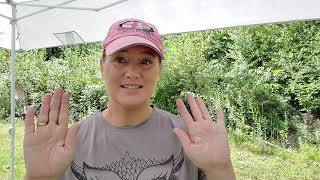
In this pre‑recorded “Suicide Prevention Saturday” livestream, Brooke Cheney—owner and instructor at A Great Start Shooting School— explains why she dedicates a weekly segment to suicide prevention and mental‑health awareness, especially for gun owners. She shares the origin of the series, noting it began around 2017 and has continued for several years. Brooke highlights that roughly 66% of gun‑related deaths are suicides, arguing that focusing on this majority can save many lives, including teens whose suicide rates are rising amid COVID‑era isolation. She critiques the mental‑health community’s limited response to masking and reduced face‑to‑face interaction, emphasizing the importance of body language and clear communication. Brooke offers practical, low‑cost tools—posture adjustments, breathing techniques, and eye‑direction exercises—drawn from her long‑time study of Tony Robbins, to help individuals improve mood instantly. She acknowledges she is not a counselor but stresses the value of professional help, dispelling stigma around therapy, and points viewers to free resources such as CDC webpages and general internet searches. Throughout, she maintains a conversational, informal tone, interspersed with humor, while delivering actionable advice and encouraging viewers to seek help and practice the demonstrated techniques.
Chapters
Hey everyone, it's Suicide Prevention Saturday and it's pre-recorded. Oh my goodness. Well, so here's the thing. This weekend I am with my family and we are away and I have house sitters. So all my friends are like, "Don't tell anyone you're not in your house." I'm like, "Yes, I know." So anyway, Suicide Prevention Saturday and it should be 9 o'clock if I set this up to go right. I don't know, it's my first time. We'll have to see. If you're watching it, it means it worked. So I've got that going for me. Maybe this is how I can make 9 o'clock every single Saturday is if some of them are live and some of them are this. So Suicide Prevention Saturday is why, uh, let's see, for those of you just checking in, my name is Brooke. I am the owner and instructor here at A Great Start Shooting School. I try to do these every Saturday. I have done it since 2000 and Uh, 18, 17, somewhere in there. Anyway, I started, I did one, and I'm like, hmm, will I ever do this again? Don't know. And that's how I started. And here I am like 3 later, 3-ish years later, and I am still doing them because suicide prevention and mental health awareness are super duper important. That being said, why as a gun owner would I be talking about suicide prevention? Well, because I am a gun owner and I am an informed gun owner, because I used to be a very uninformed gun owner. So one size never fits all. Remember, just because someone owns a gun doesn't mean they know anything about them. Or anyway, it's like someone being a sports car driver versus— or a race car driver versus just being a driver. So why am I rambling? Because it's Suicide Prevention Saturday and I'm pre-recording, which is so weird because normally I'm here chatting with you guys. So maybe I'll watch it. So if you say something in the chat, maybe I'm watching and maybe I can reply to you. I don't know. We'll have to see how this goes. So 2, 2 out of every 3 gun deaths that you hear about in the media when they're talking about gun violence, 66% of that, those are suicides. They're not gang violence. They're not muggings. They're not domestic violence. But 66% of the gun violence you hear about in the media, 66% of that is suicide. So I personally feel if we really want to save lives, that focusing on the 66% of the problem, not only can we save the lives of those people who die by suicide using a gun, but imagine how many other lives we could impact. Because you know that teen number, The teen number right now is skyrocketing. Preteen numbers are skyrocketing in suicide. All of this sequestering, all of this staying home, all of this being isolated from everyone else in the world, it is not good. We are social creatures. Even those of us who truly believe we are hermits, we're still social creatures. We need to see each other. We need to interact. So I am shocked and amazed the mental health community is not up in arms about all of this masking because you can't communicate well this way. In case you didn't hear what I said, you can't communicate well with something over your face. Um, and because your communication is all of this and all of this. So this is one of the things we talk about in Suicide Prevention Saturday is body language. All right. Oh, look, if I sit back, you can see the owl's eyes. How exciting. No, I'm not trying to make you look at my boobs, although that's what it feels like right now. So So I'm just gonna go like back like this. Okay, body language. Same with your face. It's like if you can't see me and all you can see is my hands, it's not the same. So COVID is its own problem. We're really actually not going to talk about that, but I just want you to understand the mental health impact of being covered up and being separated all the time is not generally good for mental health. I do have friends in the mental health industries. Oh yes, and that's the other thing I always forget. I am not a counselor. I am just someone who has dealt with lots of family members, including myself, who have had issues where we need to go to counseling. So, in talking with folks that are in the field, in the actual mental health field, there are families that are never going to leave their homes again. And this is not generally good. I mean, it is amazing, right? You can have everything delivered to your door, your groceries, your food, your furniture, all of it. Pick up the phone, go tappy-tappy on your phone or your, on your keyboard on your computer, and poof, everything is at home. So it's pretty amazing how we are living here in America these days. So that being said, reach out. Suicide prevention is about so many things. And mental health is one of them. And people are afraid to talk about mental health because so many people think if you're going to counseling that you're broken. Me personally, I think if you've never been to counseling, you're probably broken because we generally need that third party, non-friend, non-family member who will give it to us straight. Or maybe they have some tools that we can use that we didn't know about before. Because, you know, they're trained in that sort of stuff. So resources, it was like, ah, I don't have insurance, it's too expensive, all of that. There are free resources out there, folks. Honest to goodness, the mighty handy Google. My phone is there, so I can't show you my phone. Oh wait, wait, no, I really can't. So if you look up suicide prevention, the CDC has stuff. Oh gosh, there are so many different things, and I don't have my notes with me right now, but just go ahead, go to Google, go to Bing, go to whatever search engine you use because one size never fits all, and look up suicide prevention. Simple things like— see, my shoulders dropped again because I started slipping off the table I'm sitting on. So shoulders back, that's simple. Head up, chin up. Versus down, not only does it make it harder for me to talk to you like this, it immediately makes me more emotional. This is one of those things I learned from Tony Robbins many, many years ago. I've been a Tony Robbins student since the '80s, and he's part of the reason why I'm married to my husband, but that's another story for another time. If you want to know, click below, leave me a note. I promise I'll tell you the story sometime. Time. So if you look at just in my eyes, one of the things that I learned from Tony Robbins, because he does lots more studying than I do, so I just take what he already knows and then share it with you because you may never see a Tony Robbins in your life. So if my shoulders are back, my chest is open, which means my lungs can fully expand. Guess what? Your body really likes to have oxygen in it. So if we're allowing it to to get the oxygen-catching lung capacity here, that alone can make you happier. Now, another thing, if my chin is up and I'm looking straight ahead, I'm kind of in the middle. When I look down just with my eyes, I almost feel heavier. Go ahead, try it. I'll give you a sec. I wish I had Jeopardy music to play while you're trying that. So yeah, shoulders back, Look ahead, take that breath in, let it go. Now just look down. Not, not your whole head, just your eyeballs, right? And all of a sudden you're aware of your body more. And if you're not, I don't know. Sorry, I'm outdoors. I don't know if the bear or the deer are coming. I have to look from time to time. So that is one thing. So your eyeballs, guess what? You can go the other way. Go ahead, look up. You can actually feel lighter by looking up. Why do you think when we're praying, we're praying to God? Because if you really sit here on your own, shoulders back, sitting up straight or standing up straight— I just have to be sitting right now— and you look up, you can feel lighter. So for those of us who have dealt with anxiety, depression, I don't even know what else. There's so many different names for everything, but when you don't feel great, just try this: shoulders back, deep breath in, at least look forward, make sure your chin is up, maybe look up. Simple tools like this. And here's the thing: maybe you don't need the tool because, you know, life is awesome and nothing ever goes wrong in your life and you're never like this and, oh my god, I'm gonna— no, no, no, of course, because that never happens to me. Oh, it happens to me all the time. It was me this morning. So anyway, try these tools. It's one little tool, and I can't tell how long I've been doing this. All right, 9 minutes. So I'm gonna go 5 minutes more because there's so many tools. Oh my goodness, just that, right? This— go ahead, just try. Open your eyes super wide and smile. See what happens. Nothing? Really? Did you try? Is that just a fake smile? Why? Why do that? But that's okay, because honestly and truly, the fake it till you make it does work. See, now that whenever the shirt's wrinkly, I'm like, okay, I'm not practicing what I'm preaching. And it's true. So knowing is not doing. And that's another thing to know and understand, is that, like, I should not have started this sitting on the side of a table because I'm sliding down, I get smaller. So knowing is not always doing. I know how to be fit. I know how to be skinny. I know how to eat healthy. I know how to get all my work done. And— oh, son of a biscuit. Okay, so I'm being invited in, so hold on.