Mental Health Matters Mike and...

In this conversational interview, host Brooke Cheney talks with longtime friend Mike about his long‑term health challenges and the steps he’s taking to improve his life. Mike recounts smoking a pack a day for 44 years, the many failed quit attempts, and the recent leverage that pushed him to finally quit: the need to be healthy for his children, the looming L5‑S1 spinal fusion surgery, and the trauma of losing close friends. He describes the chronic back pain that has plagued him for over two decades, the surgeon’s requirement to quit smoking before the operation, and the financial pressures from both his smoking habit and the cost of surgery. Mike shares how he engaged an addiction psychologist, used medication (Xypam) and nicotine pouches (Zyn) to taper off cigarettes, and the importance of avoiding triggers like stores that sell tobacco. He also discusses habit‑replacement strategies such as daily walking, meditation, and a recent sugar‑reduction effort, as well as his work in landscaping and dog‑rescue, which give him purpose. The conversation touches on coping with grief, the role of therapy, and resources for mental‑health support (Walk to Talk America, 211, 988). The interview ends with a hopeful message about enjoying life, family, and nature despite uncertainty about the future.
Chapters
All right. Hey everybody, it's Brooke and Mike.
There you go.
All right. Welcome to this, uh, oh, Mental Health Matters, because we can't say the S word because we'll get canned. Um, so, uh, Mike and I have been talking for a while about getting him on here for various reasons, and it finally worked. So how long have we known each other? Over a decade.
Yes.
At least, give or take.
Yes.
I don't know. So met him through Boy Scouts.
Yes.
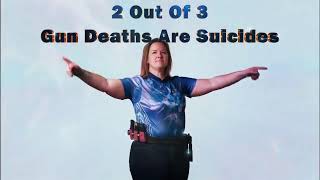
Yes. And my son has since moved on from Boy Scouts and into college. So it's been a while. All right. So Mental Health Matters, why are we here? Because 2 out of every 3 gun deaths we talk about are suicides. And if we want to help save lives, we need to talk about mental health. And y'all know the bonus is when we talk about mental health, we can also help prevent violence. So tonight Mike and I are going to talk about his journey.
I'm ready.
All right. And it's— there's lots of things. Oh, and GT3, I will tell you, if we were going to have a 3-hour conversation, this is the guy we could do the 3-hour conversation. But I have stuff to do after this, so it's only going to be Longer than 30 minutes, less than an hour. That's what we're going for. All right. So, hi Mike, how are you? Good.
How are you?
Thanks for coming.
Yeah.
Yeah. You're, I swear I'm not gonna kill you. He's a little nervous. We have to joke a little. All right. So short version, 60 seconds. Now we've talked a little bit on the show previously, just the idea that you are quitting smoking after smoking how much? 40 years. 44 years.
20 a day for 44 years.
Okay. 20 a day. Is that really a pack or is that more than a pack?
That's a pack.
Okay. So yeah, it's been a long time since I smoked anything, so I don't even know.
And I've tried every different way you can think of to quit.
Okay. Yeah. My mom did that. Like we, it was— Hypnosis.
No, that's not—
Oh, see, that's how my mom finally quit was hypnosis. Yeah. All right, so you're, you're known in the side chat on YouTube for this is Mike, have a nice day, or what is it?
Enjoy life.
Enjoy life. There we go.
All right, you have to enjoy life.
So, uh, enjoying life is sort of what got you here though. Yes. So the injuries that you sustained to your body, um, you're facing, uh, back surgery.
Yes.
But what was some of the fun stuff that you did to, to, to break things?
Quad and skiing, mountain biking, dirt bikes.
Lots of crashes, just a couple crashes, or just like some epic crashes?
Epic crashes, many, many of them. And working.
And working.
Okay, 30 cords of firewood a year.
All right, so swinging an axe?
No, wood splitter.
Okay, was that for your house or for a business?
For selling.
Okay, because, um, yeah, no, in our house when I was a kid, all we had was wood for heat. And so it's just like, yeah, we had to split it for the house together for the winter.
By hand?
Yes, with a maul and an axe.
And yeah, yeah, you're not doing 30 cord with that.
No, probably not. No, we— I don't even know. I didn't measure stuff when I was a child. It was not my thing. All right, so, all right, so I have my favorite story of when I crashed and burned and broke my helmet and all of those things. Of all of your crash and burns, what's your one, like, most epic one that you think of? Just one.
Oh, rolling down Mount Snow.
Rolling down. Okay.
Yeah, I shouldn't have went down that trail. Triple X or whatever it is.
Yeah, yeah, diamond, black diamonds. Yes, triple black diamond.
Yeah, I shouldn't have been on. Okay, but I started from the top and I rolled down to the bottom.
Okay, and which body parts, uh, were burned?
Every part. Okay, that was the ending, the ending date for that.
Was there an ambulance involved or just the, uh— No, no, just—
I'm a man, I can get down to the bottom and leave. I didn't, I didn't ski anymore that day.
No, no. Okay.
Yeah.
Um, have you ever been to Sundown in the spring when they have that giant puddle that everyone, uh—
oh no, no, I've never seen that one.
Yeah, so when I was a kid, they had, um, at the bottom of Gun Barrel, off to the, uh, right there where the chair is now— there wasn't a chair there when I was a kid— and, um, there's a giant puddle there and you come down as fast as you can, and then you just ski across it with your tips up.
Sounds like fun.
It is until your tips go down. So, um, all right, so enjoying life for the most part, something you've done all of your life?
No, I pretty much picked this up, uh, after one of my friends died and I had to pick him up.
Okay.
Changes a person.
Yeah. Yeah. I promised we wouldn't stay on that very long. I have tissues for him though if he needs them. So there is that. We're going to fast forward to last year. Now, like I said, you and I have known each other forever and enough. Yeah. And you've been in pain for a really, really long time, like physical pain in your back and your body.
Over 20 years now.
Okay. Yeah.
Just going on and on.
And then last year you finally decided time to get surgery.
I went forward in 2019. I had an MRI.
Okay.
And I just had a recent MRI just to— it's time.
Yeah.
The pain is just, you know, it puts me down for a couple weeks to a month and then it starts back up.
Yeah. So that's pain. Issues are there. All right. You go. All right. What do you think since you started this journey in 2019, it's now 2026, well, 2025 when you made the decision, it's time to do it. Was it just inconvenience of it all.
The flare— I get a flare once a year. It flares up if I do something wrong, like weed whacking or anything. It just flares once in a while. It puts me on the couch for a month, a couple months.
Yeah, that's no way to live.
No, you know, make sure—
well, my knee, my back. Yes.
Yeah, yeah, put you down. It's not good. We need our bodies to continue life and continue working and making money and yeah, so forth.
So, and plus movement is good. Yes, it's like sitting around all day, it's not good. No. All right. So when did you realize that? Like, so the surgeon gives you the ultimatum of you, you've just, you've made the decision that you want to get this done. And the surgeon's like, nope, not till you quit. How long did it take?
The doctor points his finger at the insurance company. Insurance company points his finger at the doctor and they say, you need to quit.
Okay.
We're not paying for it. We're not doing it. Unless you quit. So that was, that was my decision.
All right, when did that actually occur? Oh, when did you make that decision?
Uh, November.
November?
Yeah. Okay. And one of my friends died and—
oh yeah. Yeah. Oh, do you want to see?
Wasn't a good one.
All right, so his son murdered him. Yeah, it's awful. So, uh, Mike here is very good at being a mentor, hence the reason we found him at Boy Scouts is because he would always— his son was in Boy Scouts as well, but you know, he was a mentor to the other kids in troop and that sort of thing. And his friend whose child killed him, murdered him, was, uh, you know, somebody that you mentored.
I talked to, you know, my best friend come over every morning, and then, you know, his son would come on over and I would try to help him through things.
Yeah.
And he was addicted. He was addicted to every kind of drug you could think of, in rehab twice.
Yeah.
And he just never never recovered, I guess. Yeah, he just never straightened out. And my friend never told me what was going on in his house. He never mentioned that there was restraining orders against his son.
Yeah, so, well, yeah, and this is—
yeah, yeah, I tried.
You can't go backwards. No, but so it was awful.
It was an awful death. It was uncalled for. So, yeah, part of life.
It is.
Get over it.
Yeah, we get through it. I don't know that we ever get over stuff like that. Trauma is trauma. It's like, um, you know we go through it.
Am I supposed to look up now?
No, you can if you want. Yeah, so for those of you haven't been here, it's like my tip for if you don't want to cry, all you have to do is look up because with your eyeballs, like you can put your head up and that doesn't work, but the looking up with your eyeballs— no, so just do your eyeballs, not your head, um, because it, it attaches a different part of your brain because your eyeballs are the only part of your brain that's on the outside of your skull. So, um, so anyway, so there we go. A horrible, tragic thing that is gonna make your life better in the long run. Yeah, I know, right? It's horrible to look at it that way, but at the same time, it was just like, yeah, I went to the, went to the funeral and you can see his daughter get up and talk about him and just talk about his dad. Not—
she's talking about her dad that was murdered. By her brother. And just to see her up there, it's like, just picture my daughter being up there. So it's time for me to quit smoking.
Right. That's it. In that he would die, not that he'd be murdered by his kids. Just so we're clear on that one.
Yes. My son's awesome. My son Ben is awesome. Great guy.
So yeah, just to be clear. But yeah, so funerals can absolutely change us.
And definitely, and then I went to another one. Yeah, a month later, another friend died, and her daughter— his daughter got up there and talked about his dad, you know, her dad. Yeah, just it sets it in place.
And how many kids do you have?
I have two sons— or two, a daughter and a son.
Yeah, there you go. See? And how old are they? I actually don't know how old your daughter is, for real.
Jenny's 16.
Okay.
Yeah, Ben's 20, 21 right now.
Okay. Yeah. All right, very cool. Yeah, and Ben and I got to work together. Um, he came here to Great Lakes over here. Oh yeah, sometimes from time to time.
Yes.
Um, but yeah, so, um, living for your children is super important, and sometimes we have to have that, that stark, oh my gosh, wait a second, I'm too at my— and also, I'm not gonna ask how old you are because I don't care. Um, no, it's just like As you have children, as you get older, regardless of whether you have kids or not, it's that whole thing of as we lose friends and we see stuff like this, it does help be like, okay, what in the world?
The end is coming.
The end is coming. Every day we are one, one day closer to the last day.
Then it's coming for all of us. We just try to prolong it just a little bit more.
Yeah, or live the best life that we can while we are here, right? So, all right. So now that you've had that switch of, oh my gosh, I have to stay here for my kids, I have to make sure I'm here for my kids. Now you finally have that leverage you need to break the 20 cigarettes a day habit. What was like one of the first places you reached out to for help?
You.
Me? Oh, what did I do?
You told me to use my tools in my toolbox.
Okay.
So that's what I remember you mentioning that. So I got ahold of an addiction psychologist.
Okay.
Not afraid to say it.
Yeah.
When we need help, we need help.
Right, right.
And after 44 years, it's kind of, we need help. It's a big deal. Yeah.
And I don't know if I told you the story before or not, but it's like I smoked because all of my friends who smoked.
Yes.
Were just like, you don't understand, you don't understand, it's so hard. I'm like, ah, shut up. Because I'd been begging my mom for the same reason to quit smoking. Because back in the '70s and '80s when I was a little kid, all we heard about was it's gonna kill her, we're gonna kill her. And so it was like, I begged my mom to quit smoking. I begged my friends to quit smoking and they're all like, you don't understand, you don't understand. So for 6 months I smoked and to this day I'd be like, yeah, I could see having another cigarette. And I did.
I would still like to have it. I'm not gonna, but I still, yeah.
So I mean, I can't imagine it doesn't go away.
No, no. It's permanently, permanently addicted to it. You just have to say no.
We put the weights on the scale, right? It's like, Okay, take another nice deep breath or suck in that tar that's gonna make it so I can't have my surgery, so I can't function, and I still stay broken.
And I watched my dad, he suffocated at the end. Yeah, you know, he smoked for his whole life. You go into the hospital with pneumonia, as soon as he get home, he'd light up his pipe. And he eventually— I watched him suffocate. He was on oxygen and that was it. 73 years old and Yeah. I'm getting close.
Yeah. You're not there yet though.
No, I'm not there yet, but it's getting closer.
Yeah.
So it's time.
What, how did the, how did the therapist help you? How did the addiction specialist help you?
Well, I started up a week before I quit.
Okay.
I started talking with her and I got on some Xypam. This is a narcotic Okay, supposed to keep the— help you with addictions, like Chantix or any of that kind of stuff.
So is that like an anti-withdrawal kind of drug thing? Yes, because I don't know much.
Yeah, for some reason it just blocks the pleasure of the cigarettes in your brain. So somehow I'm not—
sort of like the Zepbound I wanted to get me to not eat all the time. Yeah, got it.
There's always something.
All right, all right.
I did, you know, I started taking that. I went down and I talked to a psychologist, and with all the funerals and deaths I've been going through, it kind of was nice to talk to Right, right.
That is the idea.
Yeah, so she was really nice and she explained, and I, you know, I had it in my mind I had to do it.
Yeah.
So I went from the cigarettes, I went to the Zyns, they're nicotine pouches.
Okay.
I put one in my mouth, they're 6 milligrams, and I started doing that, and I got down to 2 cigarettes a day. Then I started using the 3 milligrams, and then I quit.
Okay.
After my buddy's funeral. That was it. That was, you know, that was it. So, okay, nicotine-free since, uh, December 10th.
Okay.
And cigarette-free since— no, nicotine-free since December 19th.
Okay.
And cigarette-free since December 10th.
Okay.
So, all right, 10 months or 10 weeks this week.
Gotcha. High five.
Yep. And the cravings come and go really, really fast now.
Yeah, yeah, yeah, no, yeah, it's—
I think about it.
You said 40 years, right? I'm gonna write down 40 years. Oh, 44 years. All right, 44 years.
Hopefully the damage isn't too bad.
And— oh no, of course not, it's fine, you'll be great. But so what are some of the positive things that you're noticing? I mean, at the very least, I got to imagine you feel super proud.
Yes, I do. Yeah.
Right.
And I could smell again, I could taste again.
Ooh, new food is new and exciting. Now you're gonna get fat.
Yeah, I don't stink like a cigarette anymore.
Okay, well, but when you're a smoker, you don't notice though, do you?
No, my wife did.
Yeah. Yeah, well, I know, oh, when I was bartending back, back in the '80s and '90s when we still all could smoke in, in bars and whatnot, it's like I'd be in a bar all night, I'd come home, I I had no idea. But then the next morning I'm like, oh my God.
Clothes, everything.
Yeah. Hair.
Yeah.
I was just like, oof. It's lovely to let go of that. And yet at the same time, it's like sometimes you like that smell depending on the day. All right. So the, what is she? Addiction specialist?
Addiction psychologist.
Psychologist.
She's a psychologist. Yeah.
Okay.
Professional.
Did you, uh, are you seeing her in person or is it an online thing?
No, I go there once a week or every other week now since it's been so long. I go, I still, I'm still going.
Okay.
Well, yeah, I'm working on my Mountain Dew addiction now.
One thing at a time.
I don't want to go there.
One thing at a time.
Sugar withdrawals is not fun.
Um, well, but you know what's going to be really crazy is that you're going to be able to taste even more if you actually get to the end of that one. Because the sugar and the overload that we get in our day-to-day diet in America, it's like I did a 90-day no sugar thing. It changes what you taste. I did big. I didn't do all off sugar. Right. I wasn't— well, so right in front of us, we have Kit Kats and Hershey's. I have a real green room. No, just kidding. But no, so I did the big sugars. I'm like, no cookies, no candy, no cake, no added sugar to my drinks, no sugared sodas and candy and that sort of stuff. I didn't go as crazy as to look at every label of the bread. For those of you who don't know, there is sugar in so many of the breads. And there's sugar in so many things that you wouldn't know that there would be sugar in.
We grew up in the sugar age.
Yeah.
So parents doused us with Sugar cereal. Everything's sugar.
No, actually, I grew up in a granola family, uh, for one year.
You were sort of healthy.
Well, for one year my mom lived with our cousins, and our sugared cereal back then was Cheerios. Okay, plain Cheerios was the closest we had to a sugared cereal, but that was for third grade for one year. But it did teach me, like, eating whole grains and honey and all of that sort of stuff.
You opened up the sugar jar and added the sugar?
No, no, there was no sugar in the house. Like, there was legit no We had Carib and—
at my house it was a 2-liter bottle of Coke in the fridge.
Yeah, no, that was my friends that when I come home in the summertime, that, that's, that would— I go to my friend's house and they'd have the 2-liter Coke. But, and then I went to, let's see, 7th and 8th grade, we also went to, uh, I call it the granola school. Um, we did barn chores in the morning, uh, would have breakfast, we did KP, we had to work in the kitchen, all of that sort of stuff. And, um, honey was also like The big treat at North Country School was we got to— on Sundays we got honey on the table and we would make honey butter for our biscuits. Yeah, and that was—
sounds good.
Other than that, it was like granola and literally crunchy stuff. So yeah, I've been without sugar before. No, no, I don't— when it comes to the sugar thing, uh, at least everything was sugar. Lucky Charms is good though.
Yeah.
I like lucky charms. All right. So what are some of the key takeaways that you have for like, so first we got the leverage. So first you had the pain and suffering for a really long time, like the physical pain and suffering. Then you made a decision to have the surgery and then like, well, you gotta do this. And then you got the added leverage of all the pain and suffering and watching your friends die. And so now you're going and talking to a psychiatrist, psychologist, and it's just like, what are some of the best tips or tricks that have helped you like stay on point on top of the leverage of being, wanting to be there for your kids?
Stay away from people that smoke.
Okay.
That's the biggest one. Yeah. Now I can go near people now. It's been 10 weeks now. I can walk up to someone and go, it smells good. I can't, I'm not gonna do it though.
I understand.
I'm not going backwards.
Yeah.
You know, I can't do that. It took too long to get this far.
Yeah. Well, and I mean, and I mean, I know I've got lots of friends from Alcoholics Anonymous and it's like, yeah, don't go to a bar is probably one of the biggest things. Like there's no reason to expose yourself to the thing that is, you know, what your Achilles heel.
The hardest thing is to walk into a Daily Mart and not pick up a pack. And the cigarettes are there and the vapes are there and the zins are there and everything's in there. Drug pushers. Legal drugstore.
Oh yeah, yeah, yeah.
Where you walk up to the counter, your cigarettes are waiting for you, dude.
I, uh, yeah, I'm not a smoker, nor do I do the vaping thing, but I'm not gonna lie, I've considered the grape. Seems like a great flavor.
Maybe I should try it just, just for the head rush, right?
Well, no, just for the taste of it, because like, uh, I have a lot of friends and family who, who, uh, vape, and so it's just like he'll be vaping like bubble gum or, you know, all of these things. And it's just like, I'm like, that actually smells good. That seems like that could be yummy, so why wouldn't you? And then, um, I know from being with the Girl Scouts and Nadia in the, um, middle school, and they, they did a ton of stuff on the anti-vaping because of just how it's so much worse than actual cigarettes. And all of that. And it's just like now, you know, half a decade later, or, you know, maybe a decade later now, um, just like the, the stuff that's coming out of how, how dangerous it is to our youth, you know, all that sort of stuff.
Yeah, yeah, it's not good.
No, but I mean, it's like here in our little town, Harlington, Burlington, uh, next door is our city, our big city, Torrington. But it's just like, it's amazing how many vape and smoke shops have gone up. It's like it's the '70s again. Yeah, with head shops.
Yeah, and Bristol is loaded with the smoke shops now.
Yeah, I, I mean, it's just like everything all over the place.
Most kids are smart enough not to do it. My kids are smart enough. Ben will never— yeah, he watches me, he knows, he knows, he knows the struggle I'm going through.
I always tell him my kids, I'm like, here's the deal. We are all here for a reason, and we can either be an example of what to do or an example of what not to do.
A bad example.
And the reality of it is we're all here for both of those reasons. There are things we are super proud of that we have done, and there are things that's like, oh no, do not do the thing that I am doing. Yes, because it does— it hurts. It's like one of my, um, when we inherited my dad's car my— his truck, there was a Band-Aid sticker on the visor in the truck and it said, stupid hurts.
There you go.
And I'm like, and we don't have the truck anymore, but I actually kept the Band-Aid sticker and it's on our fridge right now, I think, as far as I know. But, um, what do you think some of the best things you've learned over the past couple months as far as how to change habits, because creating a habit is super hard, and then breaking that habit is also super hard. And in the Tony Robbins world, he always talks about how you have to replace something with something. And that's why, like, a lot of people will quit smoking and they'll gain weight, because they go from putting something in their mouth that they're smoking to putting something in their mouth they're going to eat. And, um, I kind of do believe in that. If I have a habit I'm probably not going to get rid of it. I need to replace it with something. And versus, because I am not good at the just don't do that, don't go there, don't go there. I'm like, ooh, what's over there when you tell me don't go there? So, um, what do you think has helped you?
Just not being around anyone that smokes.
Yeah.
And I stayed away from the Daily Mart for a while. At least a month I didn't go in that store.
Gotcha.
And I told them when I went in there, don't ask me, because they're good at asking you. Yeah, they gotta make all the money they can.
They kept on that customer service, man. Yeah, you know, I mean, and what was it? How much? I gotta ask because I, I see this and I'm like, I can't believe it.
$15 a pack.
$15 a pack. See, last time I looked, it was like $12, and I'm like, are you kidding me right now?
Times 30 days in a month, $460 a month.
Yeah, dude, we talked about the financial benefit of quitting smoking.
It's a big Um, and I have to come up with $5,300 to have surgery. So now the $500 a month is kind of going towards that.
That makes sense. Yeah, very cool.
I'm planning on doing it this fall time. Wait till fall. Yeah, I gotta do it during the slow season. Hopefully I can make it through this summer of weed whacking and lawn mowing.
And yeah, by the way, he does, uh, landscaping.
Yep, I own my own business. I do landscaping, so I take care of the property. Um, but yeah, if you want to show them the MRI, you can. I don't mind.
Oh dude, I am not that techie. I didn't pull that up. Uh, but I don't know how to get it from here to there. I can't share screen. Just hold it up. But then, yeah, it's all right. We, um, I'll put it— you know what, so here's the thing. After this plays, what happens is, uh, YouTube or StreamYard creates a bunch of shorts, and I can edit those, so I can actually put the thing in there.
So it's pretty interesting seeing what's inside of you.
Yeah, I'm like, he's— yeah, he texted me the picture of his back and I'm just like, okay, because, you know, the parts aren't supposed to be touching. They're supposed to be parts that, like, they're supposed to be squishy things.
Invertebrates are supposed to have some room.
Yes. And he's doing so much.
Um, it's an L5-S1 level, and they're supposed to lift it and put steel bars and fuse it. Yeah, it's only one level, so I'm doing good.
Yeah, yeah.
You know, most, most people get 2 or 3 or 4 levels done there.
Yeah. Oh, my brother has full rods all the way up and down his back.
Not that far yet.
And, uh, yeah, I have another one of my students who went and got all of that done as well.
So very painful.
Um, what are they looking at for your recovery and stuff like that? Would they tell you?
They're saying 8 weeks before I can start doing stuff.
Doing— like, are you 8 weeks in bed, or 8 weeks, uh, pretty much no bending, lifting, or twisting for 8 weeks.
Okay. So Not gonna be— not gonna be easy.
You're gonna talk to your psychiatrist about that, right? It's like, what do I need to keep myself entertained while I can't move?
Yeah, I'll be nervous getting it done. Oh well, yeah, any kind of surgery.
Oh yeah, for sure.
When you need your knee done eventually.
Yeah. Oh no, I got brain surgery come up before that. So much fun. Yeah, actually no, according to ChatGPT, it is not brain surgery because they're in my vascular system. They're not actually touching my brain. So it's not. So, but yeah, any surgery is kind of freaky. It's just like, no, no, no. But you know, we do what we can.
It'll be up to a year before the bone actually fuses, so it takes a long time for bone fusion to happen. Yeah, because they're just going to connect those two and bones are going to grow together and, um, you'll miss— you won't be using that level.
Do you have to change, like, do you have to eat more calcium or anything like that?
No, not that they said.
They're just happy to get the nicotine out of your system so that you can heal better.
Yes.
Right. Oh, and yeah, for those of you who don't know, and correct me if I'm wrong, but the main reason people who are smoking can't have surgery is because smoking puts down your ability to recover. Your healing factor is garbage when you're smoking. Yep.
Less oxygen level in your blood. Which you're always healing. And the nicotine help does not. Just, you can, like the Zynpak, it's still, it's nicotine. It's not gonna help your healing.
Right.
The nicotine itself, it just doesn't let stuff bind together.
Gotcha. So, so that's a whole lot of stuff. So how do you feel? We didn't even talk about that. Like what, what? Well, no, I mean like physically, like good days, bad days, but I mean like, do you notice, are you breathing any easier?
Yes, definitely. I can definitely breathe. I'm not gurgling when I lay down at night.
I'm sure your wife loves that.
Yeah, waking up coughing, coughing up stuff, it's not fun.
Okay, so did you go through that in the beginning, like when you're— when you cut yourself off, or was it just while you were smoking?
While I was smoking.
Okay.
Yeah, it was getting worse and worse and worse. I could feel myself at night when I should have laid down. It, you know, I had an inhaler next to me. Oh yeah, I'm not using it anymore.
So yeah, one less thing you got to pay for. I'm just saying, we gotta go with what else is great about this.
Yep.
All right. So good, bad, and ugly. We got through all of that. Enjoy life. Back pain, reality of surgery on the horizon. Oh, are you doing any prehab as far as like, are they trying to get you to build up your core or any of that stuff?
I walk a mile every day.
Yeah. But that's nothing for you, dude.
No. Sorry, um, in 2 feet of snow.
My sidebar, other thing Mike does, uh, I have put his dog up here. How was the dog training?
Year and a half now.
Okay. Oh yeah, this totally could go for 3 hours, but we're not, we're gonna stay on target a little bit. But, um, Mike also, uh, rescues dogs, or like goes, he'll literally go walk an entire forest looking for your dog.
Yes, I search for dogs. Part of the Dog Gone Recovery group in Connecticut. Yeah, we're always looking for lost dogs, and I'm training my bloodhound to track lost dogs. Yeah, and she's pretty good at it. Yeah, she's more of an emotional support dog. Okay, so the people that have lost their dogs, she helps with them.
Okay.
Yeah, especially when you find them. Yeah, not the proper way. Oh yeah, in the road. Oh no, they're sitting next to you.
Oh yeah.
Yeah. That wasn't good.
That's not fun and exciting in any way, shape, or form. All right. So I know when we talked before, you've got your professional that's helping you get through here, but then friends and family reaching out. Is there anybody else who is helping you out or that you're leaning on for this as well?
My wife's putting up with me. I'm a different person.
Okay.
I get aggravated a little bit easier.
Okay.
Just a different person.
Gotcha.
Yeah. Cigarettes were, it was like a meditation for me.
It is, it's that breathwork, whether you realize it or not.
It calms it down or it makes you relax. And it's like meditation. So I had to, I have to figure out a different way of doing it. Okay.
I, there, it's YouTube. There's 5 million ways that we can get you to meditate.
I know.
And I mean, yeah, back to that granola thing. When I— in third grade, that was where I learned to hug trees and thank them for the wood that they would give us. And, um, before we chopped them down, because we realized they are a living being and, um, they were about to give up their life so that we could stay warm for the winter. And we did meditation. And so it's like being introduced to sitting there and being quiet and all of that. And I guess what, you already know how to meditate because you shoot rifles. And even though I started when I was like in third grade about the meditation stuff, I didn't ever find that moment of zen until I started shooting firearms. It does bring you to a nice level because it's like you have something in your hand that can cause significant harm to yourself and those around you, and you must be fully present And it was just like having a firearm in your hand is when it's like, okay, you have to be fully here. It's not about the upcoming surgery. It's not about having not a cigarette right now. It's not about the kids. It's right now I have something in my hand that deserves all of my attention.
And just to get the accuracy, you have to be at that level.
And so it was just like, see, you already know how to meditate. You just didn't know you already knew how to meditate.
You have to breathe. You have to calm yourself down. Yeah, I mean, so a pile of caffeine in here.
Yeah, yeah, everyone jokes about that in the competitions. Like, if you missed your target, it's like, oh, I drank too much coffee this morning. I'm like, yeah, no, you didn't practice enough. We know better.
Yep.
But, um, so yeah, and that just is finding all those little things. I mean, you walk your mile every day, um, and you spend a fair amount of time that you can outdoors, plus you work outdoors.
Yes.
So that is luckier than most because a little bit less now.
So when I get my back fixed and get it fused, and a year later I asked the doctor if I could put a backpack on, he said yes, you could put on a 60-pound backpack when I get done, and I should be fine to go camping again. Yeah, that's what I'm kind of after.
Gotcha.
Be nice to be out in the woods camping.
Gotcha.
You know, right now I can't.
No, no, you can go glamping. Yeah, you can have someone drive you to the RV park and walk around.
I'm only 3 miles. I can only hike 3 miles right now. Yeah, I can't go further than that.
You already did Tuckermans.
Buckmurder Ravine? Yeah, that's New Hampshire, right?
Yeah.
No, not yet.
All right, that was, that was fun. Yeah, Duke with Todd. It's like, um, yeah, so let's see, 7th, 8th grade, we did a lot of hiking.
Yes, in that group. Yeah, just on my bucket list. I had to do it. Yeah, it hurt.
Oh yeah, well, it took me a few weeks to recover from that one. When did you do that?
6 years ago now.
Okay.
Yeah, came off the mountain limping.
But you came off the mountain, you know, it could be worse. Gonna just go find him.
People that don't make it off the mountain.
Yeah, yeah.
Quite a few.
Well, all right, sir. Well, we got to our 30 minutes, and, um, we got through all the things we talked about prior to, um— anything you want to say to all of our lovely people?
Enjoy life.
There you go.
Enjoy friends like Brooke. Enjoy your family.
Now when you read it, you can listen to it in his voice.
Enjoy animals. Enjoy the woods. Enjoy life. Everything, everything that's alive, enjoy it.
Yeah.
You don't know when it's going to be over. Just better enjoy it.
There is no day that is promised. No, because it's probably one of the few things I can quote out of the Bible, honestly.
So I try to enjoy it as much as I can.
All right.
It's not enjoyable all the time. No, you can't expect it to be. No, you can't expect it to be.
It's always going to be this. We're always swim, swim, swimming.
Um, but we can recover. We can get through stuff, make it to the next enjoyable thing.
Yeah, and, um, I will say I'm, I'm not catching up to you, but not that I'm trying to, um, but it's just like the harder something is that we go through, the stronger we are on the other side, as long as it doesn't crush us.
Yeah, it doesn't make you weaker.
It's just like, well, but it's like people want to avoid that pain and suffering. Occurring, right? It's, it's like we want to avoid it, and it's just like you have to go through because we don't have a choice sometimes.
You get professional help if you need it. There's nothing wrong with it, right? You know, insurance companies pay for this stuff for a reason.
And for those of you who don't have insurance companies, there's also stuff like Walk to Talk America, wtta.org, because there's a lot of free stuff there. Um, 211 and 988. Oh, son of Biscuit, let me click the thing. This is what happens when I do pre-record and I forget to have DJ do things like this for me.
My friend has called the number there. He's talked to them.
Yeah.
You know, for hours.
Yeah.
Yeah. He said, you know, I got a few friends that have problems.
Yeah. Well, I mean, this is just— it is knowing there's somewhere to reach out to. Yeah. And it's the hardest piece of information to get out because nobody wants to talk about pain and suffering. Yeah, so all right, there you go. There it is. All right, ladies and gentlemen, uh, thanks for tuning in. Leave comments. Mike and I will— well, I mean, you'll be there Saturday night. I might be passed out, honestly, because I will have just finished a 15-person RSO class on the Saturday night when this is gonna air for real. So I might be here in the side chat, I might not. I might just be lurking, you never know. But all right, well, thanks so much for coming. And, uh, but I finally made it. Yeah, there you go. We've been talking about it for years. We really have. So, um, all right, well, have a good night, everybody. I gotta hit the—