Mental Health Matters - The cup is half full
In this live‑style panel episode, host Brooke Cheney brings together two guests—Jen, a wheelchair‑bound woman living with multiple sclerosis who runs a wedding‑venue business, and Jonathan "Barbecue" Berger, a legally blind father and youth wrestling coach—to discuss how chronic physical conditions intersect with mental health, especially suicide risk. Brooke opens with stark statistics about gun‑related suicides, framing the conversation as a preventive effort. The trio shares personal stories: Brooke’s recent migraine, back pain, and a brain‑surgery‑related skull hole; Jen’s MS diagnosis, a wedding venue destroyed by a microburst, and daily pain management; Jonathan’s hydrocephalus‑related blindness, a past 72‑hour mental‑health hold, and adapting to life after losing vision. Throughout, they emphasize a core philosophy: acknowledge that "this sucks" while also affirming "I'm still here," rejecting pain‑competition, and holding two truths simultaneously. They discuss practical resilience tactics—taking naps, reading, humor, ritualized breaks, cancellation‑insurance, staying busy, and community support—while also highlighting the role of gallows humor, shared humanity, and the importance of not comparing one’s pain to another’s. The episode concludes with each panelist offering a personal coping tip and a reminder to reach out to friends and family, reinforcing the message that talking about mental health can save lives.
Chapters
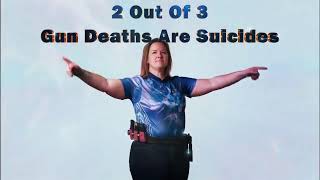
Hi everybody, welcome to Mental Health Matters on Saturday night, 9 PM Eastern, unless you're watching, you know, that replay thing. So thanks for watching the replay thing. Tonight is going to be pretty awesome, and it's going to be awesome because I had a sucky week. So I hope that will make sense to you by the end of this episode. So why are we here? Because 2 out of every 3 gun deaths we talk about are suicides. And whenever they will throw at that 35,000 dead a year, they forget to mention that over 20,000 of those are suicides. So if we actually want to save lives, what do we need to do? We need to talk about mental health. And oh, by the way, let's not forget that bonus. When we talk about mental health, not only can we help prevent the suicides that are by gun, we also get to protect those who would consider suicide another way. Double bonus, when we talk mental health, we also help prevent violence. So with that, that is why we show up here each and every week since 2018, started on Facebook, and I think I joined YouTube around 2020. I don't know, someday we'll look that up. I don't really care that much, but regardless, here we are. All right, I'm so excited because I made a couple phone calls today and lo and behold, I got a hold of our friend Barbecue. And once— oh, then I got everybody. And Barbecue said, why don't we do a panel? And so then I called Jen, and Jen showed up, and now we've got a little panel we're going to be talking about. So tonight we are talking about the glass is half full. And when I said that, uh, we're having this because I had a really crappy week, we'll get into the rest of that, but the shortest version I can give you right now is had a migraine that had me in tears on the couch on Saturday. The headache continued Monday, Tuesday, Wednesday, and then Wednesday, to add a little fun to the week, my back started going out and it's painful to move and walk and sit and do all the things I need to do. Ended up actually canceling classes and stuff like that. So pain perspective and finding calm without dismissing suffering is what our focus is, and you all know you're in trouble once I have notes. So without further ado, let me first introduce you, Miss Jen. Miss Jen, say hi to everybody.
Hi everybody.
Jen is the first female instructor that I ever knew. My friend David Hyatt was like, oh, do you know Jen? And I'm like, no, I don't know Jen. Like, you should know Jen. And he was right. So, and then there's barbecue over on the far And he is going to be the, uh, that, that this way. Yeah, I don't— it's this.
Yeah, anyway, he's over there on my side.
Oh, well, I'll go like this. He's somewhere over— oh, as long as I don't see— uh, anyway, it'll be fine, it'll work out. Uh, Mr. Jonathan Berger, otherwise known as the blind guy. Bless you. Good evening. Um, he's and we're going to talk about stuff because we talked about stuff this afternoon. All right, so that was the introduction part. All right, the, the, the one bullet point that, uh, Jenna objected to because she doesn't like rules, and it says set a ground rule. So it's not a ground rule for Jen, it's just for me. It says pain is not a competition. And one of the reasons that I called John and Jen is because when I'm having a crappy week And sometimes I say to myself, "Oh, you're being such a baby." And those weren't the words I used on the phone, but that's the word I'm going to use while we're on YouTube. So John and Jen are two of the people that I admire for getting through adversity in physical challenges, and both of them slap me around like I should be slapped around, and they're gentle and kind all at the same time. So we're not here to talk about, oh, just pretend it goes away and everything is fine. We're just going to have a conversation about challenges in life and why the glass really is usually half full and why we're just so damn lucky to even have a glass. So, Miss Jen, would you say hi to everybody and give them a little bit of information about you and your little projects, little, little things that you do?
Oh sure, first of all, I'm gonna apologize in advance for— I'm getting over a cold and I've got this throat thing still and I'm coughing, so I apologize for that in advance. Um, about me, I don't know, I'm, uh, moved to South Carolina from Connecticut about 10 years ago and have not looked back. Love you guys, miss you, come see me. I'm not going to visit you.
You did that once or twice since you've been gone?
Yeah, once or twice. It's mostly for like weddings, funerals kind of thing. But yeah, yeah, I think all the single people are married and all the dead people are dead, so— people rather. So that's it, I'm done. You guys can come see me. Um, the weather's better here anyway except for this week.
Yeah, 2 to 3 inches of ice you said, right?
Yeah, it was gross. We got sleet and then they piled freezing rain on top of sleet and we got They're saying 4 to 8 inches of snow this weekend. So go South Carolina. Um, it's been years since we've had weather like this, so I guess we're due.
Gotcha.
Um, but anyway, so we moved here about 10 years ago. Uh, best view of Connecticut was my rearview mirror. Um, love it here. Fit right in with the local wonderful people. Just absolutely wonderful culture, people, food. All of the things. Um, we moved to 40— I think we bought 48 acres with a house on it, and then we bought, um, 80 acres without a house on it next door, and then we bought— so anyway, we ended up with 100 to 312 acres and 2 houses and a wedding venue.
Yeah, her little project is a wedding venue, folks.
Right, 3 houses. Um, we're hoping we can catch some like corporate stuff and, you know, um, family reunions and stuff like that too. It's not just weddings, it's, it's everything. It's a beautiful piece of property, um, and I'm enjoying it. So I don't know, what else do you want to know?
Well, and the thing that people can't see right now is Jen is doing all of this from her wheelchair. And so there's a lot of things that— what?
That's true too, I forgot about that part.
No, no, it's okay, they don't have to. So I'm just letting you know, it's like, um, so So she cracks me up for so many reasons, but one of them is her little business is a wedding venue and she's just like so amazingly takes everything with grace and stride and from her wheelchair, because how old were you when you got MS?
I got diagnosed when I was 20.
Okay. And then when did it start actually impacting your life on a regular basis?
When I was about 30.
Okay.
And so I had kind of a 10-year, a 10-year reprieve between mild disability and boom.
Yeah. So, so this is why whenever I feel sorry for myself, I call her and let her, whichever direction she is on the screen, I don't know, you know, have her smack me into reality here. And Mr. Jonathan Berger, do tell. Um, us a little about you because not everyone's seen you. Because, you know, I got some new subscribers this week because I put snow pictures up in my Shorts. Like, wait, that didn't sound right.
Um, normally people pay extra for that.
That's what I'm saying.
Oh, like, wait a second. Um, yeah, so that was brilliant. Um, the short videos that they put on video on YouTube I put a bunch of short videos up on YouTube, so I've got more new subscribers. So pretend nobody knows you, Barbecue.
How about that?
And then people will wonder why I call you Jonathan and Barbecue, because I thought I'd be able to stick with one, but apparently not. So where do you live? What do you do? Um, all that fun stuff there.
I'll change my avatar first. For anybody that's wondering, like, why is his camera not on? This is probably some AI-generated guy that they just have on here. No, I just couldn't find my little contraption that holds my phone because I'm not fancy enough right now to have a working webcam. That being said—
Barbecue, I just saw the best bumper sticker today. You know what it says? Nobody cares. Just the thing. Yes, it's okay.
I just wanted to point out that I am not AI, but that's exactly what AI would say.
Okay, that's all right. —and that tripod. Yeah, we got that. All right.
Yeah, I got my tripod set up. I just couldn't find the piece. So yeah, anyways, um, well, I am a single father of 3. Uh, I used to make content about, uh, Second Amendment and barbecue, thus the Guns and Barbecue. And why Brooke calls me barbecue. I no longer make any barbecue content. Actually, I stopped making barbecue content probably 6 months into my channel. Oh, because there is just plenty of two-way content that I could make. Uh, how naive I was when I started my channel thinking there would not be. Well, you don't know what you don't know, so. Exactly, exactly. Thus the two genres. Um, in my free time, I like to shoot photography. I'm told I'm wicked good at it. Uh, I'm my own worst critic though. And, uh, additionally, I am clinically blind, which some people are like, what's that? Means I have a very small amount of eyesight left, but it lets medical professionals know that I need assistive devices such as a Sight Cane. Or if I had one, a seeing eye dog. Um, that being said, I have, uh, learned not to bring a cane to a chair fight. Uh, you will get run over.
Okay, there's that. And yeah, I've met your dog. Definitely not a seeing eye dog. No.
Is there a video of that chair fight? Because I really want to see a video of that chair fight.
I say it was in Walmart. That's awesome. Yeah, Waffle House, huh? Oh, actually, there's one Waffle House up by me, but it's still an hour away.
And don't forget, he also coaches wrestling for his—
I do. That's cool. And a bunch of other people's kids. Somehow, uh, they trust a blind coach to, uh, instruct their children, uh, that are super young because, uh, I coach the novice division, uh, as the head coach and then help with the advanced kids. So I get to mess them up at a super young age.
There you go. Awesome. So yeah, so, um, yeah, so there we have it, and everyone has been introduced. And, um, if you want to know more about me, as my husband says, you cannot dox me because all of my information is out there. So we're going to try to stick with this and just continue ramming through all of this and see what happens. So That's what she said. What's that? Yeah, what she said. So what does pain or stress look like in your life right now? What is the obnoxiousness of physical pain versus mental versus emotional? And common misunderstandings about chronic conditions, why pain must be acknowledged first. So one of the things I asked Jen today when I called her actually was, with MS, is she always in pain? At which point she told me no. But she also told me why. So you want to tell the rest of them since I already know?
So pain is very often part of MS. For a lucky few of us, it's not as— I mean, it's chronic, but it's— they have that, you know, that thing at the hospital, the scale, 0 to 10, your pain scale. Mine is usually around a 1 or 2, and sometimes when I'm super lucky, it's a 0. But I also have a great pain management program that includes some medications and, you know, that kind of thing. So stretching programs, all of the other things that wheelchair people need to stay kind of limber and not tighten up and cramp up and all that stuff. But I consider myself very lucky. And I know when I run out of my meds, a couple, it just takes a couple of days and it it's a mess again and it's awful. But, um, so far my medical team has been very lucky with getting me onto non-addictive, non-opioid medications that are working for me.
Oh dude, I cannot imagine you on actual like opioids and stuff. That would be not the Jen I know.
Awesome until it isn't. Yeah, yeah.
I don't know, barbecue, uh, because he muted himself, I'm thinking the dog started barking with the kids.
Oh no, I'm here. I just didn't wanna have any background interference.
So I've actually never asked you this, Barbecue, is like, do you have any pain because of the brain tumor that made you blind or not so much?
Well, it wasn't a brain tumor. It was just hydrocephalus, which oftentimes can be brought on by a brain tumor, but I was just an anomaly where as an adult I developed it for whatever reason. But with that, yeah, when— before I had the shunt placed, the pain was excruciating. I have a very high pain tolerance. Um, it literally felt like my eyeballs were being pushed, uh, from the inside of my skull outwards. Yeah, um, and, uh The last time that I needed a brain surgery, because I'm dumb and wait far too long, uh, the pain had gotten so severe, uh, I began vomiting. At that point I was like, you should probably go to the ER or else you're gonna die.
Yeah, um, well, see, I guess it was the brain surgery thing that you had told me about, which is why my brain went to the idea you had a tumor.
But nope, that's all right. So regular, every day, I don't typically have pain. Um, every once in a while though, it— I, I can tell the difference in my headaches if I— you know, we all get headaches from time to time.
No, no, some lucky bastards out there never have headaches. It says so on the medical forms. Really? Yes. I had no idea.
I, I haven't seen one in a while, so, so, um, but there's times where I can tell like, oh, I have a pressure headache where my brain pressure is, high. And I'm not really sure why that happens. If— well, perhaps my brain had just— or my body had excreted more cerebral fluid than normal and the pump's just trying to catch up.
Yes, it's spinal fluid. But I— they're talking about putting a shunt in my head for my migraines, so yeah, I'm hoping that's a good time.
No, you'll be all right.
I'm going for not, not so much.
I'm gonna say some of them do it as an outpatient, like You go in, you get, you get chopped, put the hole in your head, you know, and you're walking out same day.
All right, well, update, since I don't know that I've told you— I know I haven't told Jen this— it's like I actually do already have a hole in my head. Um, the neurosurgeon said that it looks like I had a tumor that grew and then starved itself out and then disappeared. So I literally have a hole in my brain. You did tell me that. I did tell you. Yeah, but I didn't tell Jen, so So, you know, there's that. Now Jen knows and the rest of the audience.
Yeah, that's news. That's wild. Yeah, uh, another YouTuber that I told you to, uh, contact because he was dealing with something, uh, similar not long ago.
So, all right, when your brain tumor is anorexic, I don't—
yeah, yeah, that's, that's a new thing. Um, yeah, I guess Because, yeah, it's called an empty sella, and I don't know what size it is. I don't know if I have a pinhole in my brain or if I have like a nugget or whatever. But it was— yeah, the migraines are just painful and suffering. And I'd been in the hospital twice in 2 months for them because I couldn't get them. And that's where we started doing all the brain imaging and all that and found the hole in my head, literally. BBQ will never forget this and always make fun of me from this point forward, and so will Jen because I was just gonna say that I don't have a lot of room to talk because I, I have a hole in my head. Yes, but they put it there on purpose, so that's a little different.
Yes, it is, it is also all in my head.
It's all in my head. There you go, on the green. All right, so Jen, I'm gonna let you lead off with the next one. When the glass feels empty, moments when things are feeling overwhelming, frustration, anger, grief, or exhaustion. What doesn't help when things are hard? And do you ever give yourself permission to have bad days. And I'm just going to preface this with there was this flood that wiped out her venue on her daughter's wedding day. The tent fell down. And these are the kind of things that Jen just handles like, yeah, whatever, whatever.
It's a day. It's a day ending in Y. So when I have my glass empty days, I don't really I don't know, maybe part of my MS is I have a lesion on the part of my brain where I get pissed off about stuff because I just don't. Um, you just, you deal with it and you move on to the next thing. Um, my daughter's wedding, so yeah, that was a mess. Um, he wanted to get married in March, so March 12th was her wedding date, and I begged her, please, let's put this off until May. She's like, no, my maid of honor will be home for spring break. That's when I want to do it. I'm like, please, let's do May. So this turned into a whole thing, and then finally I acquiesced and I let her have her March 12th wedding that she wanted to have in my backyard. So her father-in-law is the youngest of 14 kids, and her mother-in-law is the oldest of 8 kids. So then my husband has 16 first cousins, and then so all of their kids are my kids' age, so we've all stayed pretty tight. So we invited 400 people to this wedding, 250 people RSVP'd. 5:30 the morning of the wedding, we rented the tents and tables and chairs and all that stuff. We were all ready to go. Catering had come and dropped off all their stuff under the tent. Um, who else comes? The DJ wasn't coming till the next day. Um, But yeah, catering was there, all the rental stuff, everything was set up, ready to go. And we had a microburst came through at 5:30 that morning and literally blew the entire thing away. So we had 250 people coming to the house for 1 o'clock and we didn't have a venue, we didn't have a wedding. It was, it was a swamp and it looked like a debris field in my backyard. It was one of the wildest things I've ever seen in my life. So We got it. I called the, um, my coordinator and I said, we, we have— I said, we ran into a little snag. And she said, what happened? I said that everything blew away. She said, what do you mean? All right, I said, the tent blew away. She said, what do you mean the tent blew away? I said, the tent, it blew away. We had a 40 by 100 and a 20 by 100, so basically 60 by 100 tent, 3,500 square feet of tent. I said, it's— I mean, it's still kind of in the backyard, but It's flapping and it's at a 90-degree angle from when we went to bed last night, and it's broken in half because half of it is still facing in the right direction. So I said, but on the bright side, the poop trailer is still intact because we rented one of those fancy, you know, restroom trailers.
Yes, we did that for ours too. Yeah, I just laughed because— and people say I'm the queen of understatement.
So yeah, it was pretty wild. So, and then I called the tent guy and I said, so we ran into a little snag. He said, what happened? I said, the tent blew away. And he swore. It was, it was very cool. So my coordinator got on the phone and found us a venue. We were lucky because it wasn't wedding season yet. So that March 3rd, although if we did it in May like I wanted to, we probably wouldn't have had a microburst. But before the season, it was fortuitous because we were able to find another venue. So that was that wedding, and then, oh, little side note for anybody watching that's getting married soon, get yourself a cancellation insurance policy because if something happens and you can't hold your wedding, or something gets destroyed, or your caterer runs off the road, or, anything happens, that liability policy that your venue is making you get doesn't cover any of that. I can't even tell you how much money I lost on that wedding. I don't even— my husband doesn't even know. I told him it's none of his business.
Don't— I'm like, don't let it go here, right?
So get cancellation insurance. It's not because you're going to change your mind, it's because you might drop your tux in the mud by mistake. So Anyway, that was my first wedding experience beside my own. And, you know, just handling adversity, it's how you do it. We, um, I called his mom and I told her what was going on. And the kids got to the house at 7:30 in the morning like they were supposed to. I called my daughter when she was on her way to the house. I said, listen, when you get here, you're not gonna like what you see, but I don't want you to panic because dad and I are already on it. We're gonna figure it out. I said, you're going to get married today. So we had a 2-hour delay and we ended up at a different venue.
And that's how you deal with it.
You just do, you plow through. There's plenty of time to freak out and at the end, but you know, when something hits you in the head like that, you got to do it.
There's no time for nonsense. Yeah. And then fast forward a couple of years or not even— I don't even know what the difference is because like we talked about, time has zero meaning to me because I can't believe you're just on for 10 years already. I'm like, you sure it wasn't just like 5 years ago? We've been down there twice since you've been down there. I know, I haven't been there in like 8 years. So, um, but yeah, the— so Jen, would you say that you never feel as though your glass is empty? I really don't.
And part of the reason for that is because I have a wonderful family and a wonderful support system. So even if My glass is draining. There's something at the bottom of the glass to keep me from falling through with it.
Or pouring some more tequila in there, right?
Or pouring some more tequila in there. It's been Jameson lately.
Okay, Jameson it is. But all right, so Barbecue, your turn. I know you put yourself on mute, but, um, when I called you today and I was being a whiny baby about having a bad week and just like, you know, whining about my migraine, my back pain, and having to cancel stuff and all of that. You're like, no, being blind is not a problem. I'm pretty damn lucky. So with that lead-in, please tell the folks here what we were talking about and what you were talking about.
So Brooke was like, ah, I look at my problems and I'm like, Barbecue has it so much worse. I'm like, it's not that bad. Like, the loss of my freedom, that sucks. Um, if you're wondering, like, how'd you lose your freedom? I've got to rely on rides to go anywhere and everywhere. Um, I don't live in town, I live out in the sticks.
Um, it's far, far away from anything. There's no lights anywhere.
Um, you know, there, there are times where I'll walk to my children's high school to photograph a football game or something like that if I was asked to do that. But that's me and my blind cane and my, uh, 15 to 20 pounds of camera gear walking 6 miles along state highway the whole way to get there. Not— it's not the most ideal, but that, that's the extent of my freedom. So Yeah, I would say that's the part that sucks worst, um, or most, I'm gonna say. But then I feel like Jen can tell me, uh, which one is better English because she had a great word earlier with fortuitous.
Uh, Jen is actually pretty smart that way. She's got good English, better grammar than I do. That's like that one shirt I have. Correct your grammar, I promise. But anyway, barbecue, back on track. What do you think about your situation of what you're able to do?
As I was saying to you though, you know, other than that, um, you know, I often tell people losing my vision was the worst thing that happened to me, but, uh, one of the best things that happened to me as well. For one, I mean, there's just everything with my children, um, When I could see, I was driving truck. I was missing all kinds of things. It's just nature of the beast with that line of work. Now I get to— when I drove truck, I had disability insurance. Never in a million years would I have thought I would have to use it like this, but it makes life very comfortable and I get to play stay-at-home dad, raise my children the way they need to be raised. Um, I get to go and coach youth athletics, uh, something that I would not have been able to do if I was driving truck. Likewise, uh, I do this YouTube thing, which there's a lot of people out there right now like, oh great, if he wouldn't have gone blind, you know, he wouldn't be ruining all these chats. You're welcome.
Um, no, no, because here's the thing, and you know this is true, is if you didn't do the YouTube stuff, we would not be here on YouTube talking about this because you and G-Web dragged me into YouTube. We might have— there are other ripple effects of not just pissing people off, which you're very good at. But no, there are others.
I don't even try to be good at it. It's a gift.
It's a gift, absolutely. You're just good at it.
I am. It comes natural. But so with that, you know, there's other things like If I was driving truck, I would've never gotten into photography. I always wanted to, but one, it was something that I thought was cost prohibitive. It just wasn't really in the cards for me. Plus I was spending money on other things like motorcycles. So once you get rid of that hobby, you free up some capital. And ironically though, photography gave me the gift of sight back, at least while I'm looking through the camera.
So that's very cool. So, all right, reframing without gaslighting is the next little bullet point that it says here. And underneath it, it says, what's half full actually means to each person? Holding two truths at once. This sucks and I'm still here. Perspective versus denial. So I'm going to go back to the first one about setting the ground rule. Pain is not a competition. So I will find myself, and I got another friend, Liesel, who I'm sorry that I didn't think to call her onto the panel because she does bonk me over the head anytime I compare my pain to anybody else's because nobody else has your pain and nobody else is feeling what you're feeling. And it's just like when I make the mistake of comparing myself to Jen or or John, then it's just stupid on my part, honestly, is because whatever your pain is, is your pain. And if it brings tears to your eyes, it brings tears to your eyes. It's okay. The two truths of it sucks, but I'm still here. You know, there is that as well, because like Jonathan was just talking about, it's— he's here to take care of his kids now, all because he got— he had the lovely opportunity to go blind, or legally blind. So lots of things suck, but I know the quote that I— or the thing, that story I talk about all the time is when my little sister was killed in a car accident. And I say, you know, well, what's good about this? And people are like, what? What did you just say? I'm like, yeah, dude, when you lose a child, when you lose a sister, when you lose a family member, it's like, yeah, you know, it sucks. Everybody knows it sucks, but what is the good that you can find in this? So that's kind of this sucks, but I'm still here because you get to decide what it means. And Toby has been gone for 18 years now. And Jen's going to go give her husband a kiss right now because her husband just walked in. So if you see a little head come in and, you know, smush her face, it's really her husband. She's not being attacked or anything. So, um, yeah, perspective versus denial. It's like my, my other favorite thing is this too shall pass, right? It's like I have had a shit physical week without a doubt. Um, it's made me tired, it's made me cranky. I actually took a nap for like an hour today because I just couldn't take it anymore, and my body's like, you're done now. And that's after that nap is when I called John and, uh, John and Jen So yeah, um, all right, Barbecue, I'll make you go first this time. What is happening? Um, what are the two truths? This sucks, I'm still here, and perspective versus denial. Give us a couple words on that. You got 3 minutes to do a soliloquy.
You say perspective versus denial?
Yeah, so like, this sucks but I'm still here, like that sort of stuff.
Well, listen, So for me, uh, anymore, a lot of times it's just to do things in spite. Um, you say it's not a competition. I look at it— everything, everything is a competition for me. Um, yeah, I got it. Yep, yep. And, uh, with that, um, I guess On the disability front, we could say it's more like golf. You want the lowest score. You don't wanna be like, oh, I broke my foot this day and I broke the other foot that day and I can't use crutches either because I fell and broke it. That really sucks and it really piles up. But so for those that don't know, back in 2020, I did have a 72-hour mental health stay. I checked myself in, uh, because I needed to get help with a demon that was beating me. Um, and the funny thing was, when I had told the psychiatrist, psychologist, whichever it was, um, you know, what was going on, they said, that's not fair, you can't, you know, blame X, Y, or Z. And I was like, you don't understand when the only time I get like this is when X, Y, or Z is occurring. So I was like, that's why I was like, I'm looking for tools to beat that. And while I was there, there is a counselor that had come into my room the one night and he would just go around talking to people. Pretty sure it's just what he was paid to do. And he had said to me, you know, have you ever just thought about leaving? And my immediate answer was, I, I, I can't leave my kids behind, uh, not, not with their mother. Um, and it like, with that— no, you're fine. Uh, it, it had dawned on me though, like, hold on, if I make a permanent decision for, you know, a temporary problem, like, that's still leaving them.
Um, and so then after that, not reading through the words, we are talking about actually committing suicide and leaving this plane of existence, not leaving the institution he was at. Because don't we want to dance around saying the actual words like suicide and You know, there's lots of things, but I didn't want to get your stream yanked. I know, but I'll say it for you. That's why if I get it yanked, it's all my fault. But they— excellent— don't do it when it's not live. They only yank me when it's live. Oh really? Yeah, yeah, learn something new every day. So much.
So there you go. Yes, but so at that point it was like, oh, I, I can't let her keep beating me. Um, and it's not just metaphorically, it was, uh, quite literal also. Uh, but as I can't allow these things to keep happening, you know, I gotta find a way. And spite is a hell of a motivation, I've got to say.
Anger too. Um, pissed-offness, all of those things are definitely fueled of fire that can be used. In a creative way that can be beneficial in the end. You're still here and you did not check out, so good job. All right, Miss Jen, finding an oasis of calm. I figured this should be your question.
Life is always so calm. All right, so go ahead, ask the question.
All right. No. So finding an oasis of calm. So part of it, I did tee you up for this due to the fact that you had your daughter's wedding blown out from underneath you. Oh, we didn't even touch on the fact when your wedding venue got washed away. So that's— but that was another story that she has. So what are your small pieces of relief or reset, physical, mental, or emotional calm? What are any simple rituals that you might do?
And ask me literally any other question because I just don't. I just tumble from one disaster to the next and take a break and laugh about the last one before we dive into the next one is pretty much how I live my life.
Gotcha. And when you and I were talking before on the phone too, I was talking about how I know in our family we sort of do the same thing where it's like, uh, the humor. It's like the worse it is, the harder we laugh, and it seems very disrespectful.
But it works for us. Right. It's gallows humor. It's crippled people humor and it's disaster humor. And we just— that's what keeps us going. Yeah. And I don't think that in that regard it's any more, any different than any other family. Families with no people with disabilities, no alcoholism, no, no big disaster after big disaster. It's still the same. Even the little disasters are big disasters. Right. You know, and the fewer big disasters you have, the bigger the little ones are. So, oh yeah, you know, and we're all kind of in the same boat. We just have different sails we're running with, I guess.
Yeah. Oh, absolutely. And, and it's— yeah, I was talking, or in my head I was talking to myself, always, as we do, because, right, what else is that voice in your head? Do it out loud. But yeah, yeah. Um, but it's just like, the more hard stuff you do, the easier it is to do hard stuff. Correct. And so it's just like, I don't think anything of the things that I've been through, and people are like, oh my gosh, I'm so sorry to hear about that. And it's just like, no, it's just part of the day-to-day.
Yeah, it's a day ending in Y. You know, there's a disaster today. Look at that, huh? Who would have thought? And, uh, went sideways. It always does.
I'm always amazed. And here's the thing is, I can tell, like, there are stories I have where it's like I've literally seen cars flipping end over end towards me on the side of the highway. And it's just like, wow, I'm really watching this happen right now. Okay. And then it stops and then you help the people out and then you call 911 and all of those fun things and you just do it right. And it's just like the other time is like, poor guy's dropped, ran out of gas in the middle of the highway. He's, he's, he's there. And it was one of those things. It is amazing how fast our brains are. We're driving by, I see this poor guy pushing his cart. Just by the glance of going by him at like 55 miles an hour, I see how pissed his girl is in the front who's driving. I'm like, oh, he's in trouble now.
She told him to change that belt and he didn't listen.
Well, yeah, she told him to put gas in the car before they left, but he did not. He didn't listen. And then like hopped out of the car, ran across, uh, highway traffic, and it's just like— and think nothing of it. It's like, yeah, you just do the thing to get You just do it, right?
When Abby's wedding blew away was a good example of that for us because people say, "How did you not freak? How did you stay calm?" So what's the point in panic? There's no point to it. All it does is make things more difficult. There's plenty of time for that later. There's no time for it right now because you need to hold your shit together and you need to get done what needs to get done. Once that's all done, you can take a break, take a breath, and then you can cry, You can scream, you can punch the wall, but in that moment, you need to be the strength that holds it all together.
Oh, Jonathan, you must have stories from driving truck of like stuff that was about to go down really bad. And because you stayed calm, it didn't go down bad. Like, I don't know, do you ever have any of those experiences where you slam your brakes on and your trailer starts sliding sideways? Because I've seen that in my rearview mirror.
No. I always decided that if I was gonna hit something, I was gonna hit something, because if I got what was called a hard brake, I would lose money. We had 3 different bonuses each month plus a yearly bonus. So if I got a hard brake, that could cost me a couple hundred bucks. Hard brake is where you decelerate by 10 miles an hour in a second. That sounds like a lot, but it's really easy to do. People don't realize it. So I was like, you know, if they're gonna take money from me, like, I'm gonna do my best to not get the hard brake, but if I still end up having to hit whatever it is, I was probably gonna hit it anyways. So, um, never had to worry about that.
Uh, well, so, uh, wait, how— but you drove for a while though?
Yeah, uh, almost 6 years before I lost my vision. Um, there, there was one time on 64 in West Virginia, I noticed this glow in the dark, and I'm like, what is going on up there? And as I'm getting closer, I was like, I think that truck's on fire. And so as I get close enough to it, I was like, oh no, that truck's definitely on fire. So I pulled off to the side of the highway because technically there is a law that says, um, if you are the first vehicle driving past something like that, uh, you're supposed to pull over and see if any assistance needed, stuff like that. And no trucks are pulling over. And I was like, well, I've got a fire extinguisher on board because by law you have to. And I went walking down the interstate to them, and the guys are like, get back, get back, it's gonna blow. I'm like, uh, don't think so. So I start dumping my fire extinguisher and, uh, they're like, it's gonna blow, we got all these guns and ammo in the truck. And, uh, by this time there's two other guys that had come over and, um, they were dumping their fire extinguishers from their trucks on it too. And when they said that, uh, apparently we all really love guns because we're like, where They're like, they're in the cab behind the seat. So we just start ripping out, uh, gun cases as quick as we could. And, uh, a couple of them were the old shotgun cases that were leather, and I got this terrible burn on my hand because of it. Um, so that was fun. And then they actually offered me one of the shotguns. I was like, that's all right, I I don't know exactly what the laws would be on that, um, because I, I was a little naive then. And likewise, it's like, just, you know, having it in the truck and state lines and, you know, some of the states that I'd be going to, like, that's just more headache than I would like to run into. But I was like, I really do appreciate it though. I really wish I would have because, uh It was a Remington, uh, 1187 semi-auto.
Remember it? You were— it was the—
oh yeah, so I am like the family encyclopedia on who has what firearms and where they purchased it, all kinds of stuff. Like, they're like, how do you remember? I was like, it just is.
So again, the details of those kick yourself in the ass moments too.
So yeah, I mean, it's so funny because like we actually have fire extinguishers in all of our cars just because my dad was a fireman. So we try to remember to do that. But then remembering that you have it is just that next level and actually stopping and having some humanity to help somebody out who's stuck on the side of the road on fire, no less. So shocking that people— well, not shocking, I suppose, that people just drive right by. But all right. So we're almost to the end, I swear. And it's only gonna be a little bit over our half an hour 'cause it's almost to 45 minutes now. But next bullet point is shared humanity. Everyone is carrying something. Chronic stress is what the conversation my husband and I were having this morning. And then talking about it and realizing that you're not alone reduces isolation. So Jonathan talked about his time in a 72-hour hold. I also in my teen years went in for that 72-hour hold because I didn't know having a plan to commit suicide was not normal, because that as a teenager, that was my normal. I'd been carrying that since I was like 12, 13 years old, maybe even younger, and it was my normal. And it's just like, yep, I know exactly how I would do it, and it would look like an accident, and no one would know that I did it. And that was part of— I'm not going to tell you what my plan was, but that was kind of it because that might get me yoinked from YouTube. So, um, back to the very first bullet point of don't compare your pain to somebody else. I think I put Jen on a pedestal, and she belongs on her own little pedestal because I do think she's an amazing human being. And yes, do I think she's even more amazing because she does it all from a wheelchair? I'm not gonna lie, I kind of do. Um, uh, the fact that barbecue is like, dude, just— it's fine. And, and you find a way no matter what your challenge is. And like Jen was saying before, that whole thing of don't compare your stuff to everybody else, because nobody else— you're the only one who knows all this stuff about yourself.
I wouldn't want your stuff. Yeah, over there.
Yeah, exactly. My stuff's awesome.
Nobody's getting my stuff. They can bite me. There you go. Well, you know, that's always a possibility.
Well, one thing that struck— it hit me like a brick one day. I was, um, down in my feels, and it was not long— it was probably 3 or 4 years after I got diagnosed. And when you go through a progressive disease like multiple sclerosis, muscular dystrophy, stuff like that, you have to grieve Every time you lose a part of yourself, whether it's a physical part of yourself, a mental part of yourself, you have to grieve that loss before you can go on. And I think a lot of people skip that step and just try to move on. And that's where a lot of physical pain comes from, chronic pain comes from, like you said, stress and that kind of thing. And you can't do it. But that's not where I was going with that. And now I can't remember what the point I was going to make. But anyways, I don't want your stuff.
I got my own stuff. There you go. Barbecue's not going to give up any of his stuff.
No, no, my stuff's awesome.
Good, because I got my own stuff that's awesome.
Exactly.
So yeah, everyone's got something. That's the correct emoji.
There you go. Um, yeah, talking about it though, that reduction of—
oh no, I didn't talk about it. I just grieved. I'm a quiet griever.
Well, but, but now you're talking about needing to do the thing.
You— yeah, you have to do the thing.
You have to, because it's like that suck it up buttercup and just go through, right?
That lady that could walk through the grocery store is gone, you know, and you didn't know how much you loved her until you lost her, and she's gone. And now she's in a wheelchair through the grocery store, and she has to ask for help. And it does— it suck? Yeah, it sucks. But on the other hand, So here's the half full part of the glass. On the other hand, I get to talk to cool people at the grocery store that I would never talk to if I didn't need help. I've made some friends that way, you know, and they're a very enriching part of my life now. And I— if I didn't need that Knorr's soup egg at the top shelf in the soup department, I wouldn't have met that lady, you know.
So here we are. There it is. Um, all right, what do you like talking about? Barbecue? That helps reduce your stress? Like, I mean, this is gonna— I don't know if this is gonna sound patronizing or not, but is there like a blind dude photography group anywhere to help you get— no, lack of isolation thing?
Great name for your business though, Blind Guy Photography.
Appreciate it. Um, no, I, I don't do a whole lot of talking. Um, every once in a while, like, Brooke will be unfortunate enough to call me and she'll be like, how's your life? And I'll be like, and I, I just kind of unload. But other than that, uh, and I'm— I, I know if I— when I say this, Brooke would be like, you can always call me. Like, I get it, but there's also still that, uh feeling of being a burden or like nobody wants to hear this, et cetera, et cetera. So I don't do a whole lot of talking. I just deal with things as they come. I try and stay busy. I like to say that an idle mind is a dangerous mind. So if I'm staying busy, whether it's editing photos, taking photos, going out, doing yard work, whatever it is to keep my mind occupied, I'm good.
And then if all else fails, take a nap. There you go. Yeah, I find if I'm overwhelmed, taking a nap usually helps. The reduction of isolation. I will say going to group therapy when I needed it was great to realize I'm not alone in dealing with stress and all that sort of thing. And closing takeaways, it says, is what we're up to at 50 minutes here. One thing that helps on hard days. Jen never has hard days, so this one's up to you and me, Barbecue. One reminder for listening.
Jen has exciting days.
Oh, Jen has exciting days. Yes, Jen has adventures. I have challenging moments in my day, and that is one of my favorite things that I got, I think, from Dean Graziosi. You stub your toe, it hurts, you want to yell and scream, go ahead. Just don't stay stuck there. It's like, have the, have the experience of, wow, this sucks. I'm gonna sit here on my couch and cry for a couple minutes because I just can't anymore. Shoulders back, boobs out, push through it. There you go. And then encouragement to care for everybody. All right, so what's one thing that helps on hard days? Jonathan, I'm gonna start with you because Jen doesn't have any hard days.
If I'm having a bad day, like I said, um, just trying to stay busy. And if, if staying busy isn't working, uh, I like to call it hitting the reset button, and it's go take a nap. And when you wake up, you got a fresh start.
Gotcha. All right, Miss Jen, what's one thing that helps on your exciting days?
One thing that helps on my exciting days. So, um, I like to read. I'll just go get lost in a book for a while and pretend that none of that earlier stuff ever happened. And sometimes I get back to my day, and sometimes I just don't. I'll doze off reading or whatever. Um, or I'll go watch funny videos just like everybody else. Cat videos, dog videos always put me back in the mood.
Oh, I put baby goats on my Facebook page.
Baby goats. Yeah, goats. The new hot trend in calming yourself down, baby goats. But yeah, I just get— walk myself, putting walk in finger quotes there, out of the situation.
Rolls herself over.
And one of the things that tends to help me a little bit is that I say, the universe is trying to teach me patience. Where's the lesson I'm supposed to be learning right now? Yeah. And then like, and sometimes the lesson is just keep your wheelchair out of the mud. Gotcha. You know, but I still want to get you that tank wheelchair though.
We want to do that. We still want to get you that tank wheelchair that has the tracks.
I got one.
Oh, did you?
You got one for me for Christmas like 3 years ago. Yeah, I thought I put it on Facebook.
You probably did, but remember, I don't remember what time it is.
No, it's more ads and groups than anything.
It is, but So yeah, so the thing that doesn't help on Facebook is trying to find your friends on Facebook. Exactly. It's so ridiculous.
All right, this thing is a beast. I love it.
Oh, awesome. Yeah, I know. So yeah, and this is the other thing I love about Jen so much is the fact that like, uh, there would— because she's on Facebook and there'd be pictures and someone find a picture of like a wheelchair that literally looks like a tank and be like, you need one of these. And Jen's like, yes, I do. She got— oh, there, there's a very lovely picture of Jonathan. Yes, with his little big mouth and his little big eyeballs. So, all right, so the next thing it asks for is one reminder to listeners. So in the beginning, we talked about honoring your pain and still look for the light, um, because both can exist at the same time. Um, and just, that's kind of it. So my thing is just keep going all the time is— yes, there he is! He talks about you, Alan. I said that, uh, we'd see his little head come in and give her a kiss. She wasn't really getting mauled by some stranger. But, um, all right, so hard days we talked about, reminder for listeners, encouragement. Um, I don't know, I guess that's kind of it for today, Jen. Parting words for our lovely listeners.
I was thinking earlier, and we never kind of got to segue into it, but I do want to give some acknowledgement for my children. And I think that children of people with disabilities, they grew up while I was growing more disabled and weaker. It started, um, my diagnosis was 6 weeks before I got married, and I started going downhill pretty quickly right after my daughter was born. She's 23 now. So they got to experience life with a mom who was in rapid physical decline. And I think that part of one of the things I'm grateful for, for what is the same thing that Barbecue said before, that my children are more compassionate, more understanding. And I want to say more patient. And a little more intolerant of nonsense, I think because of the way they grew up. And because I didn't tolerate nonsense from myself, I would do the grieving, then I would get mad because that's part of the process, push through it, and then come out better on the other side. And they watched that growing up, and that's how they handle things. And when people don't have something like that in there, just some kind of adversity, be it whatever, you know, just something that makes you have to push through it. They don't know how. And I think it makes them less compassionate for other people, if that makes any sense. I think that parents with disabilities have a really distinct advantage to raise really wonderful people.
That makes sense. Absolutely. Because like you said, you get to meet more people because you actually ask for help. Correct. And a lot of us folks forget to ask for help because, oh, we can do it, we can, we should, so we must. And, um, I do laugh at myself because sometimes my back is so bad I'm on a little scooter in the, uh, in the grocery store, or my knee is messed up so I'm on a little scooter in the grocery store. I can still get up and grab stuff for myself though, but it's just— yeah, compassion is learned through trial and error. Oh, it's the baby egg. Right. That for people who don't know, if you take a baby bird and help them out of their shell, you'll actually have killed them because they must struggle in order to build the muscles and their, their cardio, honestly, to get themselves out. If you don't give them the opportunity to struggle and have challenges, you literally kill them. So on that lovely note, Jonathan, what's your one thing that helps them, or a reminder for listeners and care encouragement and all of that?
Um, always play the 'what's this rag smell like' game with your children.
The answer is always chloroform.
The answer is always chloroform. Does this smell like chloroform to you?
Yeah. So, um, just for the backstory on that comment, just for the listeners who don't have the rest of it, uh, when I called Jonathan, I'm like, what time are we gonna do this get-together? Because this was his idea. He's like, well, I don't know, the kids, maybe, I don't know, they're, they're going, they're coming, we're not sure. He's like, but I can always play the game of what's this rag smell like? And I had never heard of this game before. And then he told you the rest of the punchline there. So, um, all right, well, that is what we've got. This means that y'all are still going to be able to get to Hillbilly's next, uh, show coming up at the top of the hour, and we're going to close out at just about 57, 8 minutes or so. Pain, number one, don't compare it to others. Your pain is yours. You got to figure out how to deal with your pain. It's nobody else's to deal with. Two, you can have bad moments, don't have bad days or weeks. And I started with that. I'm like, I've had a crap week. And I'm like, no, I really haven't. Like Jen, I have amazing family, and I know Barbecue does too. His mom and dad drive him all over the place and the kids for wrestling and that sort of stuff. Family matters. Family matters a lot to make life a little bit better. And amazing friends like this lovely little panel, wherever they are, because to me they're over here, but if you say you're over there, I don't know. Um, so, uh, yeah, that's it. Reach out to everybody, call, say hi. And DJ is not here. He's probably in the chat, whichever way the chat is, whatever you're looking at. Um, and he will say like, subscribe, all that fun stuff. And to new viewers— and now Jonathan's going straight to the moon. So on that note, if you didn't notice his— oh wait, here, I'm gonna make him bigger just because he changed himself to an astronaut, because why not? All right, my friends, you all have a spectacular, wonderful rest of your— oh, now we're going wrestling dinosaur. All right, I don't know, T-Rex arms.
I got all kinds of these.
Okay, I see that. I don't know how to change any of that. All right, with that, for real, we are out as far as I know, and I think the outro will play.
Goodbye.










