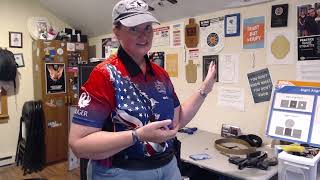
In this solo instructional video, the speaker introduces Annette Evans' concept of a "dry fire dojo"—a dedicated, ammo‑free area in the home (often a garage or basement) used solely for dry‑fire training to foster focus and safety. He recites Evans' advice on selecting a safe space, keeping live ammunition out, storing dummy rounds separately, and adapting the setup to each household. After the safety briefing, he demonstrates a draw drill, highlighting his support‑hand placement, performing 50 repetitions that are speed‑up‑ed for viewing, and noting the tempo (starting at 1.9 seconds per rep). The video ends with a brief sign‑off, inviting viewers to ask safety questions.
Chapters
Alright, tonight we're going to talk about dry fire. The Dry Fire Farmer by my friend Annette Evans. I'm going to read to you first and then I'm going to get to my dry fire. So what does Annette say? The dry fire dojo. I've taken over half of the garage to dry fire in and call it my dry fire dojo or studio. When I met her, she was doing it in her basement. Anyway, it's a space that I use for little else and away from the rest of the house. I know that when I go in, it's time to pick up my practice mindset and not think or worry about anything else but what I'm working on in dry fire. Stepping out there allows me to dry fire in peace without distractions and interruptions because when that door is closed, everyone, including me, knows it's my time. Having a separate area is not only about focus though. Part of it is the safety aspect already described. If you keep your dry fire dojo completely free of ammunition, it's one additional layer of safety against having rounds accidentally end up in your gun. While you should always check any dummy rounds that you are using for dry fire, it does help to always store them separately from live rounds. So I do not always dry fire here, but as for this month, I will probably because I've got the camera and I have my area clear of ammo. In your home, hopefully you have somewhere that you can set up. Basements are really good because there's lots of safe areas into just direct concrete, which we haven't really talked about a lot yet. So that's kind of it. No ammo in the room. Make sure your safe area is truly safe area. Like I said, everyone's house is unique, so you're gonna have to figure out what that's gonna be in your area. If you have questions about safe direction, ask me down below. Happy to help you. And now, guess what? I'm gonna do more draw tonight. So this time I thought I'd let you see the other side so you see how my support hand comes up to complete my draw.. This will also show you whether or not I get a good grip on both sides. Now, the other thing about this, you're not going to watch it in slow motion. I'm going to speed this part up because, you know, it's going to be 50 reps again. I'm going to start with a part-time of 1.9 and drop it down from there. All right, there's 50. Day is done. See y'all tomorrow.