Dry Fire Week 2 Thursday
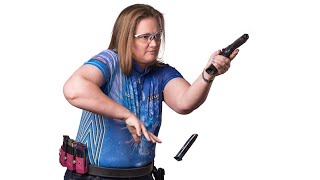
Brooke Cheney runs through final competition prep with dry-fire drills, a mock classifier, and visualization techniques. She draws on mentorship from top shooters like Kay Miklig and Max Michel, and compares the mental focus needed to meditation. The session covers trigger work, reloads, gear checks, and the mindset shifts that separate practice from match day.
Chapters
the ever, ever evil Facebook that says, oh, don't be late. Um, so I don't know how late I am, but anyway, hello all. Uh, welcome back to A Great Start Shooting Schools dry fire series. Uh, we're almost done. Uh, today, tomorrow, last time you'll see me before I go to competition. So what have you learned so far? Dry fire takes time. Uh, you have to set the side at time aside. Thankfully for me, you all are keeping me accountable because I'm showing up here for you at 6 PM on Monday, Tuesday, Thursday, Friday. And just that alone— so this is like going to the gym. It's definitely easier if you happen to have a partner. Oh, by the way, if this— if I disappear really quickly, we're having some pretty crazy thunderstorms here, so it just means I lost power or internet. And if that happens, I will see you tomorrow because there's not going to be anything you can do about it. And it gets really loud in here because all of a sudden the rain just started downpouring. All right, so dry fire, what is it? Again, practicing with your firearm, all the things you have to do. Hello, MK Joe. Oh, and again, I forget to— I need to have like a little poster up that says silence your phone because it's actually telling me that I have dry fire practice right now. Which is kind of silly. And oh, it wasn't that phone, it was a different phone. Um, just so y'all know why I'm crazy is, um, I have one phone for work and one phone for personal so I can turn work off because that's always a good thing. All right, so trigger pull tomorrow, what is happening? I'm going to be reshooting this and showing you tomorrow's target. I have not done any live fire since I shot this target. Now, oops, welcome to the ant world. I don't know if that's probably too small. These are good shots right here from this point up. These are all what we call down zeros. I want more of these. These over here are most likely me slapping the trigger and doing, um, bad things, basically not having good sight picture, not having a good trigger pull. So, uh, my score was just barely a novice, um, and I know that I had some— that I had a bad reload because there's only one reload in how this runs. So tomorrow I'll have another target. Hopefully it'll be dry, you all get to see it. Um, good afternoon, G-Webs. Um, yeah, there's been trees down and stuff in the area. That's why, like I said, it's If I go away, so if I'm looking to be more accurate, what do I want to do more of in my dry fire? Honestly, it's pulling the trigger and watching my sights. So it's the same thing that we talked about in the very beginning, is that, um, that coming off target is really about doing this. Not quite that obvious. Hold on just one second. Sorry, for a second I thought I heard the dog whining at the door and I'm like, it's kind of yucky back there. All right, so of all the things I practice— reloads, etc.— trigger pull is definitely number one, um, because your trigger pull, because your sight picture is relatively easy to get. So consistency, doing it over and over and over again. So where are we? Depends on which book we're using. If we're going to go with Ben's book and we look at his handy-dandy schedule, right, and it is Thursday, and he's saying you should practice scenarios. So one of the things I will do in dry fire today is run through the actual classifier that I'm going to shoot tomorrow. So I will set up a timer, I will put my gear back on, and I will do my first string of 5, draw 1, 2, 3, 4, 5, and time it and see how far I go. Second string, so on and so forth. So I'm gonna run through today everything I'm gonna do tomorrow when I actually shoot the classifier. Tomorrow night when I come back to you guys, we're going to talk about game prep as far as what am I looking at, why am I doing it, what am I bringing with me. So I'm just trying to think what else I have for you. So that's, that's my short version today. The importance of dry fire is just simply that you got to do it. All right, so we've done sight picture, we've done trigger pull, We've done reloads, we've done clearing, we've done drawing. Today, when I sign off of here— because again, can't really— I don't know, there's conflicting conversations about whether I could do this with a real gun or not— and drawing sight picture and pulling that trigger without moving your sights, that is going to be it. That's going to be my majority, because getting better hits on that target. That's the biggest thing. Um, up CNT. Sup, sup, perps, peeps, burps. Well, you know, it could be either way. Some friends are shady, there is that. Um, sorry, the rain is very distracting. It's just coming down in buckets right now. So let's see, that's what I got. I'm sorry, it's wicked short today. I'm super excited that we're almost there. Congratulations on the third, third thumb, C&T. Um, review, that's kind of where we're at. Get ready for the match tomorrow. Oh, and the other part— she loves to be so proud of me— part of the reason this is all pulled apart is that before I shoot my classifier tomorrow, I'm going to be cleaning my gun. I never go to— well, I shouldn't say never— I rarely go to a match with a perfectly clean gun. I will generally clean it a day or so before, and then I'm going to shoot it tomorrow to make everything— sure everything is working. And that allows me to have a mostly clean gun and know that everything is working the way I expect it to. All right, any questions? I know it's only been 6 minutes. We usually go about 15. Um, what else is there? I think that's it. Tomorrow's a big day. I'll let you know how I do. Then we'll pack for the, for the actual match. So you all know, um, we are missing the links to Ben's website where you can check out the book to be found. Oh yeah, and I'm sorry about that actually, because, um, I had updated them all on whatever you call it, um, YouTube, but then I guess I overwrote them when I went live here. Oh, absolutely. I absolutely have an opinion on visualizing success versus skill set development and practice. I was talking with a spectacular shooter today who happens to be an Olympic shooter, and she and I were discussing how all the greats always visualize everything. You see, like, when you go to a match, you'll see people standing there like this. And they're running through, all right, I've got 2 targets here, 3 there, going to this, I'm gonna do my reload here, and they're seeing it all happen in their head. When I was in high school, I was actually, I was actually going for the Olympics for freestyle skiing. And so we're doing ballet skiing, jumps, flips, moguls, stuff like that. And you would always run through your entire thing eyes closed, paying attention to what it is. I don't think there's a coach out there who doesn't use visualization, who's a successful coach. Let me rephrase, there's 5 million coaches out there. Which is more important ratio, emphasize on each? So you need to know what you're looking for. So for me, like I said, I'm like, I want to see that perfect trigger or perfect sight picture and just sort of feel that actual trigger pull. It's nice and smooth keeping that. So it's a combination. First you have to know what that looks like, and then once you know what that perfect sight picture is with that perfect trigger squeeze, you run it over and over and over. When I have trained with the likes of, I don't know, Kay Miklig, Max Michel, Jay Hershberg, um, those guys, they're very much Know everything that you're doing solidly. Run over it as many times as you can. This is on match day more so than just during dry fire. Uh, Sieg Linder's book, actually, he actually has the whole beginning of know what you're doing, know why you're doing it, see it being done the proper way, and then go do it. Once you start screwing up, it's harder to go back to visualizing it properly. Sometimes that's just like, okay, we're just done for the day. So that's— does that answer your question, G-Webs? Because, um, yeah, visualization is super, super important. All the greats do it, no matter what sport you're talking about, whether it's Michael Jordan, um, all that. Um, oh, are you gonna put it up, DJ? I'm like, I almost went for the mouse. I've got assistance today. Um, you're welcome. Does advocacy apply to 2A fight as well, or is this too far off topic? I mean, visualization, like actually seeing a government where our 2A rights are honored the way that they were intended by our forefathers. I believe in that because some call it visualization, some might call it prayer to see what you want. It's always one of those things like one of the other people I trained with, Tony Robbins. Talks about being a race car driver, and when you're training to be a race car driver, one of the things they do is they have a flat car, right? And what that means is you'll be driving and they can push a button and one of the tires goes flat, which puts you in a spin. And what they do is teach you to look where you want to go, not into the wall that you're afraid of hitting, because you're going to go where you're paying attention. And one of our challenges— yeah, it's totally focus. Um, and, and I, I used to race go-karts when I was a kid, and I know this is like, you want to look to where you're going, because if you look at the wall, you're going to run into the wall. Um, focus is super important with our Second Amendment rights, with seeing what is possible, because you focus on the crap and the garbage, a couple things happen. Your RAS, your reticular activating system, will find more of whatever you're focusing on. So, um, hey Tara. Um, so yeah, always focus on the outcome you want. As a teacher, I do my best to try to teach my students what I want them to do. Once they have this and they understand what about being high on the gun, for example, versus down here. Or one of my worst things that I see at the gun clubs is thumb over thumb in the back waiting for someone to lose their thumb over slide. I try to show them only what I want them to do, not what I don't want them to do, because I want them to focus on the outcome that we want. All right, I'll drop the name. This morning's interview I was doing for my series that's coming out, the Instructor Interview Series, I was talking with Gabby Franco and we were talking about how you guys could tell me 100 times how awesome I am, how lovely this is, how much you enjoy the series. But then I get one jerky keyboard warrior that I'm never gonna see again, say, oh, Brooke is dumb and stupid. Our brains will focus on that dumb and stupid thing for whatever reason. Our psyche is a bit crazy. So, um, so anyway, but most of us aren't aware of our focus. So this is where it's super important. And I found out— I, I won't tell you, you're gonna have to wait till week 5 of my instructor series what else Gabby and I talked about. So, um, yes, and I am, I am a former racer, uh, so my dad started me on, uh, dirt bikes when I was like 4, 5. Um, 8, 9, 10, um, I got into— what is it— go-kart racing. You know, this far off the ground, 65 miles an hour, dirt tracks, totally fun. Um, and yes, Gabby is super awesome, and Gabby is from Top Shot and— oh, Top Shelf. But she also was on Top Shot, so there's that. I just didn't read it right. So focus, absolutely, and just in your everyday life. Shooting is not, for me, is not about, "Oh, I'm gonna kill something." It's— this is zen. When this is in your hand, this is all you're paying attention to. The gun is what brings your focus in, because when you have a firearm in your home, in your home, in your hand, it is the only thing that you should be paying paying attention to. Seeing those sights crisply, being sure you're in that safe direction, verifying that you're on target before your finger's on the trigger while settling your sights. Because the beauty for me of shooting is it is singular. I'm not thinking about how am I going to get those websites up, or when am I releasing those instructor videos that are coming out, and all of that. It's only about this. And when you are practicing, you want to use it like a meditation. I don't have the other book with me, but Brian Enos, I think, does a really great job of explaining mindset. And I'm glad that was the first book that I read before I got into all of the craziness of the detail these guys go into. So, yeah, and Gabby is super awesome, and I get— I'm so excited because I get to help her with some other projects. So anyway, all right, so I went my full 14 minutes after I almost died at 6. So, G-Webs, thank you for asking questions. As far as fighting for our Second Amendment rights, always do it. Part of the reason I'm sort of beat right now is because I was at a gun club last night talking about DC Project, and it's— I've got lots of little bits of sleep. So anyway, thank you all again, obviously, for checking in. I will come back tomorrow. I will have two targets back here for you, and yeah. Let's see if I got a little better by doing a little bit of work over the past 2 weeks. Night all, have a great Thursday night.










