Instructor Interview #1 Kelly Pidgeon - Armed and Feminine
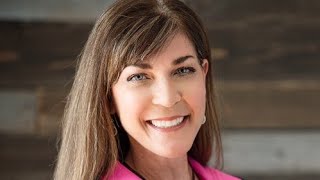
Kelly Pidgeon founded Armed and Feminine to teach firearms to women in Pennsylvania. She's trained over 2,000 students since 2015, mostly women who felt intimidated by traditional mixed-gender classes. Her approach provides different gun sizes, no ownership requirement, and a space where people ask questions without judgment.
Chapters
Let's see what it says. It says recording started.
Voilà! Best to start. Yay! Yay!
It's the beginning. All right. So, Kelly, thank you for agreeing to be my first subject for my new series of instructors talking to instructors to talk to brand new shooters.
Guinea pigging is my thing. You're welcome.
All right. I appreciate that. So we're going to start with the first question, right? Who are you? If you'd be so kind, tell my audience a little bit about you, you know, that kind of thing.
Well, from the 2A perspective, um, I am Kelly Pigeon and I own Armed and Feminine, which is a firearms training company, um, for women. Uh, we also do kids.
And where are you?
Yeah, so we're in West Central Pennsylvania. I won't say it's only limited to women. The majority of classes are, and we'll explain why in a moment, but we do have some co-ed things as well. So we started in 2015 after I got my certifications. I have NRA, USCCA, and ICE training, defensive firearms coach, I'm a shotgun instructor, like, um, a variety of things. Originally, it just sort of exploded and we've probably trained, well, we're just over about 2,000 people now between mostly women. I would say 95% of that is women. It goes in cycles, especially if there's an election year, we have a lot of people who come out. Pandemic, lots of people who come out. Um, so it's, it's just sort of random, but the majority of people are coming out for a basic handgun class, you know, as first-time gun owners. So, um, that's really the bulk of what we do at Armed and Feminine.
So, all right, very cool. Um, when did you open Armed and Feminine? I actually don't know the answer to that question.
Oh yeah, you just said actually in 2015. It was April, April of 2015. Um, I had done my training in February, the end of February, um, to get the first certification. So by the time I was able to get the business set up as an LLC and get all the supplies for the way I wanted to run it and just get everything in working order, it took a few months, uh, to get that up and running. But I didn't want to lose the motivation either by waiting too long and then never doing anything with it. So it was I would say, you know, that was pretty, pretty lickety-split from end of February to the end of April to get all of that going.
Significantly, you are the ultimate go-getter and get-done-er because it took me a year to get through just the zoning process in Connecticut to be able to open.
Oh, we don't have, we don't have zoning out here in the country.
Oh, that's so lovely. I'm jealous, but it's all right. I got a head start just because I started 2 years earlier. All right. Next question. What is your first memory with firearms? And if you're willing, how old were you?
Yeah, you know, um, I was still a kid. Um, my family were archers, um, so there was a lot of bow hunting that was going on in terms of hunting. I only remember there being a shotgun in our home, um, in terms of firearms and nothing else. And then when I was 12, I took my hunter safety education course with all the boys and, uh, for the first time actually shot the shotgun. I remember it being very unpleasant. And after that, never picked up a firearm again until I was 40, late 40s, I will say.
All right, I'm gonna, I'm gonna jump into the next question then. I kept you learning, or was there a break before you got back? So that we got the break, so we already answered that part.
Yeah, big long break, like 30-plus-year break.
Okay.
So let's see. So why did I get back into that? You know, I never really thought much about guns. It wasn't something that was just on my agenda or frontal lobe or anything. But I had been very active in our community in a number of different organizations, one of which was through the Emergency Management Association. And after 9/11 hit, we organized a group to, you know, if something bad were to happen, how could we all as different organizations get together and help out our community? Because we have to take care of ourselves for like the first 72 hours at least. So I was really involved with that, and the sheriff was part of that team, and he said, you know, you need to get a gun, you need to protect yourself because you're always out and about in the community. And I'm I'm like, I don't think I need to do that, Sheriff. Like, every time we're on an event, like, I have state troopers who are with me. They got my back. And he's like, you come up and see me. I'm gonna, you know, you need to apply for your carry permit. So I did. I went up and applied for my permit, which took no time at all, and really didn't do much with it at all. And then I happened to mention to a friend of mine that I got it. I said, hey, I went up, I got my carry permit now, just have it. And he's like, oh my gosh, you have to come out to the gun club with me and, uh, with his friend also. He's like, we have lots of guns, we'll teach you how to shoot. I thought, okay, I like learning new things. Like, I love to learn new skill sets. Um, so I met them out at the range and they just laid out a slew of different firearms and had me try different ones. And basically gave me a quick, you know, introduction to handguns. Now I know what they taught me was wrong in a number of ways, but, you know, it's okay. At least the safety was correct.
And you got the experience to try a whole bunch of different stuff, right?
The fundamentals were incorrect, but the safety was good. But I loved it, you know, from the first shot. The first shot I was like, Ah, this is amazing. You know, you just sort of get hooked. And so I still didn't buy my first firearm for several months. It took me a while to figure out what I wanted to get. So I finally did buy one, probably, I don't know, 5 months after that. And then I took a basic pistol class. I'm like, I really want, you know, a lot of women want that, you know, very academic. I want somebody to teach me. I want a book. I want to touch things, see things, feel things.
You want a checklist.
I know you want a checklist. That's what women are. We, we like books, we like checklists, we, we love anything we can touch, see, and feel. And so I did that, and, um, and it was an interesting experience. Um, there were 12 of us in the class, um, half men, half women.
Oh, that was a huge ratio. When I went, I was like one of 20 guys.
Oh yeah, this It was nice. So it was half and half, but, you know, women tend to ask more questions than men, I think, during classes because, I don't know, men think that a lot of this is inherent, even though it's not. Shooting is difficult. But every time this one particular woman— and she asked a lot of questions, don't get me wrong— every time she asked a question, so many of the guys were like like they just did the contemptible eye roll thing. And what ended up happening is like she shut down, and that actually plays into more of my story later. Um, so anyway, we went to the range and we're shooting all kinds of firearms that they provided for us. And, you know, um, because I know you want to know if it was a good experience or a bad experience, and I'm going to go middle of the road.
All right, it was an experience, but it sounds like our, our stories are sort of similar because like I said, being the one of 20, I knew it could be better and I knew it could need more.
Yeah, yeah, exactly. So I encountered a malfunction and I didn't know how to clear it, and so a helper guy came over and he just went, here, and he handed it to me, and I was like You should teach me how to do that. Don't do that for me. Hmm, okay. So nonetheless, some experience is better than no experience. So I learned a lot and started shooting more. And then I found a trainer who I loved. He was, still is, a tactical trainer for one of the state police barracks near where we are. So I took a load of private lessons with him just to get better, because now I really want to get better.
All right, remind me to skip question number 6 of your first time you do structured training since we're jumping ahead already. But I do want to stop you just for a second before we continue on that one, is that your story of the first experience sucked of a shotgun, yeah, to the second time of, ooh, this is actually fun, right? I don't know about you, but I have a smaller student base than you do, but Do you find a lot of your women have that same story? Like they sort of had not such a great introduction, but they're willing to give it a shot again?
Um, no. What I find is that most have had no introduction. The majority have had zero introduction. Those who have had introduction did not have— they didn't know. Like, you don't know what you don't know, right? You don't know. Like, so you go up camp where Uncle Buck teaches you and you don't know if it's right or if it's wrong. Um, it's mostly wrong, and so they don't know, and so they're not taught, you know, proper, uh, fundamentals or mechanics. Um, and, you know, they're given a really big gun to start with instead of something small.
I hate that so much. It's like, to me, it's the bait of it. It's, it's like, of course women can handle larger calibers. But don't put a beginner— I don't care if it's a guy or a girl— don't put a.45 in a beginner's hands.
Correct. And that happens too. But I would say, yeah, the majority had no experience at all, and a lot of them have never even touched a gun when they come see me, which is the way I want it, because there are no bad habits to break. No bad habits to break when I want it.
But so that's why it's a great start shooting school, because I want the beginners that I don't have to fix their problems, right?
And it is— it can be difficult to fix bad bad habits, you know, over time. You know, so anyway, after I was done with my private training, I decided that I wanted to become an instructor because I just loved this so much. I loved how it made me feel. And I'm like, other women will love this. Let's, let's bring it. So after the training and I brought it back, I knew how I wanted to do this differently from how I was taught. You know, when we do the beginner courses, just as all women, it eliminates the intimidation factor from men. Because women may not want— they don't want to look stupid. They don't want to sound dumb. They don't want to ask questions in front of the guys. Like, it just puts a whole umbrella of low on them. So we make it just all women. And so there's— they're more open to asking questions. They don't feel dumb in front of other women. And the way I do it is I want there to be no barriers to learning. Zero. Zero barriers to learning. So that introductory course is all inclusive. You don't even need to own a gun. In fact, I prefer that you don't, um, because I will provide many, many different kinds for you. Different sizes, shapes, calibers, you name it. So just show up with your lunch and we'll take care of the rest. So when you don't have a barrier, hopefully it opens the door for more people to be able to walk through because some courses, and of course I look at others and compare, they'll be like, you need a semi-automatic handgun, bring 100 rounds of ammunition, bring eyes, bring ears, bring this, bring, bring, bring, bring. So by the time you do all that, buy your gun and all the accessories to go with it and pay for the course, you're in $1,000. And like, right, who's going to be able to do that? So all-inclusive and affordable just to come in and get the experience to see if you like it or if you don't like it and what you do and what you don't like. So being able to provide that, I think, just allows for more people to come and try it. Maybe it's not for you, um, but if you like it, it's an easy way to do it.
So yeah, I remember when I was looking when I was brand new and I would read the different training things. I'm like, I don't even know what they're talking about. What is this that they want me— what are these prerequisites they're talking— like, I didn't understand any of it. So that's where I came up with this question of what advice would you give to a student looking for training, because I was always overwhelmed looking at training, be like, I don't even know what they're trying to teach me in this. Like, at a Great Start Shooting School, I've created Intro to Gun Handling, which sounds like what your course is a little bit. The difference is you do a class, I do one-on-one.
Well, I do one-on-ones too. In fact, the majority of my work is private training, um, which, which is usually after beginner. We do a lot of private training, which is nice because everybody's sort of at a different pace in their journey, so I can gear their training, you know, specifically to their needs, you know, and their capabilities at the moment. So the majority of what I do is private training, but as a beginner you know, look for something that says beginner, beginner handgun, right? Fundamentals, safety. And that's what our beginner course is too. And I will tell people, you know, afterward, I'm like, this does not mean that you are ready to go out and carry a concealed handgun because that's a completely different set of skills. This is strictly safety, safety, safety, and shooting fundamentals.. And that's what this is too. It's a building block. I always tell them it's like math, right? You got to add and subtract before you can divide and multiply. And so shooting is sort of the same way. You do safety and fundamentals, work with that, get proficient at shooting, and then we move up to home defense or concealed carry or something else. So you just keep layering the skills the more you practice.
See, as you start answering my questions, then I'm putting them up. Here I thought I was gonna be— I'm like, oh, I'll get through this exactly the same for every instructor. Yeah, this is all gonna be different. I just gotta take those numbers away.
Yeah, but whatever is out there.
One of the, one of the challenges I have— well, not challenges, but one of the things I'm surprised about, like, teaching, is that students will come in and they'll be like, oh, I didn't know there was so much to this. Like, they totally have this mindset that all they have to do is pick up the gun and pull the trigger.
Right, well, they watch TV, you know, and that's what the movies show you, you know, they glamorize the ease. You watch Angelina Jolie with the, the bullets that go around things, you know, there's just so much nonsense to Hollywood movie productions with, with firearms, you know. But like, again, they don't know what they don't know until they actually try it. But it's not easy. Handguns are probably the most difficult firearm to use. And they always think they want something little. I just want a little gun. I just want a little gun.
I have that conversation all the time. I'm like, see this, the one that fits right here? You don't want to shoot that one. It's a pain in the neck to get in and out of a holster. It sucks to shoot. You don't want to practice with it.
Yes, I always say unpleasant. It will be an unpleasant experience. And so, but that's why I like doing it the way I do it, is that I'll have little ones. I've even spent money on guns to show them they'll hate them.
I'm like, me too, I have those guns in my, my group of my, my little, uh, yeah, my safe over there.
So I'm like, I spent money on this, I want you to try it because everybody thinks they want this or that they're gonna like this, and I want you to try it. Maybe you'll like it, maybe I may, maybe not, but I want you to see that you will not like the little gun as well as you will the big guns. Yeah.
So but it's little, it must be easier to control and stuff. I'm like, no, little means everything is smaller and it's harder to deal and keep your hands safe around it.
Also, definitely it's cute and it's small and it fits in my purse.
Yes, I'm like, usually I have them within arm's distance, but I do not today.
That's all right, I know what you're talking about. So, you know, just, it's been such a wonderful journey. Um, you know, I had never figured that this is sort of where I would be at this point in my life, like going into retirement. You know, I worked in the corporate world, corporate healthcare world for 30-plus years, and so stressful, and found this, and, and I love it. I, I just love it, you know, educating people who really want to suck that up and advocating for Second Amendment rights from a woman's perspective. It's, it's just really been a tremendous experience and get to meet fantastic people, right?
Yes, absolutely. I love the women I've met in the Second Amendment community. It's like, I was— I hated pink, first of all, because I was such a tomboy, and I hated girls.
I think I still am a tomboy. I grew up with all boys, all boys in the neighborhood. Still am a tomboy, but I love pink. I don't care.
It wasn't until I started shooting that I felt I was feminine enough to wear pink after I had a gun in my hand. That's what made me feel feminine.
I don't know. And people say do you like pink guns? I'm like, I don't care, how's it shoot? You know, I don't care what color it is. If you like pink, buy a damn pink gun. As long as the gun is reliable and you're comfortable with it, you're confident with it, and you can shoot it, I don't care if it's rainbow.
We do like teal guns though.
We like teal guns. Teal guns? I don't know a teal gun.
No, I do. I have two actually. I have two Tiffany blue guns.
But you know, Yeah, I don't have one. I— the only colored guns I have are a couple of.22s. One is purple, and not by choice, it's just like, oh, they had it. And, uh, one is like, uh, wine colored. Other than that, it's just black and FDE.
So yeah, I'm like, wait, is it a Ruger LCR that's purple? It's just like, those are the ones that girls bring to my, my, my classes, and I'm like, that's usually the Sky.
Because the SCCY came in like the little SCCY CPXs, they came in like 4 or 5 different colors, and that's what they're drawn to. The Glocks come in the Tiffany blue now too.
Oh yeah, actually, and with flowers on it. I just saw one in the gun store yesterday. So yeah, went shopping with the husband, it's always fun. All right, let's see. I don't know if you have an answer to this, but what are you most proud of in your firearms journey? Or like, what's the most memorable thing?
You know, there, there's a lot. Um, you know, I too have a YouTube channel. I originally— I didn't want to start it. My husband sort of poked me to start that, and, um, so we do love your husband. We do. Yes, he's very creative. Mr., Mr. Producer, I call him. Um, so he started it really as an educational resource because, you know, when, when you're teaching someone, there's so much information, like brain overload. So when they leave, they'll be like, what did she say about that? How did she tell me to do this? So I just created this video library. It's mostly educational about whatever you forgot. Go back and find that video and say, oh yeah, that's how she did it. And so it sort of took off, like kind of out of nowhere. We have like 25,000 subscribers now on our YouTube channel. And, um, A lot of people don't really subscribe, but they watch everything. And I get so many messages from women, and I kid you not, all over the world. And here's a scary thought, really. A lot of women will say, I have not been able to find a class nearby where I live, but I've learned to shoot by watching your videos.
Oh yeah, we love that and hate that.
I understand. Yeah, it's a love-hate relationship. I'm like, I'm so glad, but I would really prefer you go be supervised somewhere to learn.
It's like we have coaches. Right. It's like everyone needs somebody to watch them to see what they're doing, because when you're focusing on one part, you don't know all the rest of the stuff that's happening.
Right. And it's a little bit sad that I'm thinking, why can't we reach these people? And for a really long time, women didn't have resources dedicated to women because let's just face it, we're different. We think differently from men. We're built differently from men. We have different strengths. It really is a whole lot different to coach woman than it is a man. And I— but just recently, you know, the last few years, we've really been seeing, you know, an emphasis toward more women. And more women have become instructors, which is great. More women have YouTube channels, which is great. You know, we need to be continuing to promote that as much as possible. But that wasn't always the case. But the one— the, the one that stands out the most to me This is really amazing. I was at a rally in Washington, D.C., and I spoke at this particular rally, and out of nowhere, this guy came up to me and he said, can I get a picture with you? I'm like, okay, I don't know if you're sure. So he tells me this story. He's like, this is my friend Ekaterina, and she is in Russia, and she has watched every one of your videos. She loves you. And so I said, oh, let's do one better. Let me do a video for her. So he brings up his camera. So I'm like, You know, said hello. I'm like, thank you so much for following along. Let's stay connected. So he showed it to her and it was like awesome. And so he, when he sent it to her, she then got in contact with me directly and had never before. And she said she learned how to shoot by watching all of my videos. She caught the bug. And let's just say right now she shoots IDPA. She's a range safety officer and she is teaching other women now how to shoot. Shoot in Russia. Like, who knew? Like, you just don't know the impact that something I think is so minor— like, let's just whip out a video, right? Go do it and see— you just don't know the reach it's going to have or the impact that it's going to have on somebody who doesn't have a direct link to a resource like that. So like, maybe I'd better put better thought into something going forward, right?
Yeah, like, here's the order you need to watch season— don't jump to video number 10.
You know, that's what I'm thinking, like there should be a succession of things. But you know, to me, you know, this is about helping people to grow. It's not about me, it's about how I can serve others. Like I have always employed servant leadership throughout my entire career, and this is just one more step of servant leadership that I like, is that if I have something that is able that I can share that's going to help someone else to be better or improve on, then I should do that. Like, you know, I was just at ladies hunting camp and we were doing shotgun and I said to the instructor, like, can I go help her with one thing? She's like, sure, go ahead. So I showed her this technique and then she like busted the next several clays. She's like, I love that. And I said, listen, someone taught that to me, that person being Diana Muller. When a world champion shows you something, you use it, right? I said, 'somebody showed it to me and I found it to be effective, so I want to share it with others.' You know, we need to just continue to help each other grow throughout the journey, like whatever that might be. And like the Second Amendment crowd, or I'll say the gun community, seems to for the most part be that way, where women certainly, you know, cheer on each other to do better. Um, I don't know, and I don't know if you found the same thing, but I have found it to be a really supportive community of women.
Absolutely. And, um, yeah, for those who don't know, look up Three Gun Di and you'll find all sorts of things on Diana Muller, who is who Kelly is referring to. Uh, Kelly and I actually know each other also. We met through the DC Project. Um, she's actually my regional director director for our Eastern Seaboard, whatever it is. Um, so Second Amendment Foundation— sorry, Second Amendment grouping. I absolutely agree with what you just said as far as I love the support that we get supporting each other. And when I was a kid, I was bullied in school and it was all by the girls. And so I thought girls were mean and nasty, and it wasn't until I got into the Second Amendment community that I really found women that didn't seem to be the same. Yeah. So I have enjoyed my journey, um, learning about Second Amendment, understanding the gun culture, being competitive shooter. I'm gonna get back into more of that this year because I've been away for 2 years basically, like everything else it seems. So for the final thing, is there anything else you think it's important for students or people who are brand new, never touched guns, important to know about either the gun community, how, what, you know, one of the things I think is so important people understand, if you have questions, call the school, call the instructor, ask questions. Because I know when I was looking at stuff, I'm like, I don't know what this is, I don't know what this is, because just a phone call would be something simple.
Yeah, or, or send a message, you know, in the world in which we live, you know, people like to ding ding technology. Send a direct message, send an email, you know, somebody will respond to that. You know, one thing I would say is everyone starts somewhere. I don't— I would say I hate the E word, the expectation word, but, you know, everyone is a beginner. Everyone is a beginner at some point. And I don't think you should be hard on yourself if you don't leave your first session shooting a little tiny group like this because it's difficult. You know, there are a lot of things, a lot of fundamentals that you have to put together and a lot of things to remember. And depending on how much time you're going to have in your first session, you know, we really just want to make sure that you're safe handling a gun. First and foremost is safety, safety, safety, and then we'll work on those fundamentals. So, you know, shooting is a perishable skill, so if you don't continue to practice that, you're probably going to forget several things. So go at your own pace, never compare yourself to anyone else. It's an independent journey. And just know that there are a lot of resources out there to help you get better if this is something that you want to continue to pursue. But don't, don't leave frustrated if you, you know, didn't shoot the best, like I didn't get a bullseye. Well, hell, like It's okay. It takes— you know, I had a girl that was, um, a really good golfer, younger girl. She was a college, um, student, or she was just leaving college. Her dad sent her to me because she was going to move off on her own and wanted her to learn how to protect herself. And she was on the golf team in high school and in college, and one of these perfectionists, right? Women especially like to be perfectionists right away. It was not going to happen. And so I said to her, she was getting a little too frustrated. And I said, listen, how long did it take you to become a really good golfer? She's like, oh, I don't know, like 4 years. Aha! Hello! It didn't happen overnight. It took practice. It took coaching. It took time. And so go easy on yourself and learn as much as you can and get good coaching behind you with somebody who, you know, can identify how to help you best. And just keep practicing. It will come. It is your own journey. Don't compare yourself to others. Just always think about progress, not perfection.
Absolutely. I agree with that 100%. It does always amaze me how everyone wants to come and shoot the perfect target, and it's just like, no, all we care about is your fingers off the trigger and the gun's pointed in a safe direction. We don't care what your target— we know you care what your target looks like, but yeah, it's like safety, safety is always number one, right? So, all right, well, I think that is everything. I think I got through all of my, my questions, even if it was in an odd order. I'll take the numbers away next time. That's what you get for being my, my first.
All right, mix it up, mix it up.
It's always, always good. Um, and yeah, when I get to posting this, we'll make sure that your link to your YouTube channels there, because if you've got 25,000 subscribers where I have 100, um, you know, you have more stuff than I do.
So there's good stuff to check out. Yeah, I think, I don't know, like over 150 videos or something, which, which is difficult. I went through a whole like 6 months where I didn't even put anything on, which is bad. It's bad. But like I said, it's difficult finding for me the time to create content. One, you know, we're in the snow, snowbelt, right? So we can't get out. My range is inaccessible sometimes. Um, two, my mom, who she's like a full— a part-time job now, you know. I have to spend 25 hours a week taking care of all of her needs, which sucks up a lot of my time. And so I just— it wasn't a priority. And so, which is why I would say to you, like, if this is something you really want to do, like, you, you have to put it on the priority list. Like, it's coming before something else to— because the key, the key to the success is content, content, continuous content, continuous content, continuous content, because it's sort of how their algorithm works too. Um, that's the most difficult thing is finding the time to do that. So if you can be far more committed than I could—
well, you're number one, so I haven't failed yet. We'll have to see what happens. It's when I get to number 2 and 5.
That's why I appreciate that you're like doing several and, you know, keeping them in the can so that you can just post them. I think it's, it's really good occasionally.
Charlie taught me that. I think it's listening to Charlie and all of his Riding Shotgun with Charlie stuff is like multiple.
Just can, um, like I will, we can do maybe 2 at the most at one time, but then my husband gets really antsy and he'll post them like 2 days apart. I'm like, We try to do one on Sundays. Sundays are the biggest viewing day because everyone's just like hanging out before they go back to work and they're scrolling. Um, don't post on a Monday because nobody's gonna watch. Monday's the first day back to the work week, so don't do that. Um, Sundays are great. Sundays, Friday nights, mysteriously Thursday nights and Sunday nights are the best times to post things. So if you wanna learn anything from my experience.
Gotcha. Well, like I said, I gotta get at least 4— I want to get at least 5 of these like done, and then I'll start going up, right? And then if it's once a week, once every other week, once a month, I don't know.
Are you starting a new channel? Are you leaving now?
Same channel? I'm putting it on my same channel. So because right now the only— not the only thing, but I have like 3 things on here. It's competition videos.
Yeah.
Suicide prevention.
Political Videos DC Project. I'm pretty sure I'm subscribed to your channel.
So yeah, not much goes up, not gonna lie.
Now I want to go over here and, and look at it real quick.
All right, I'm ending our broadcast.
Subscribe to it.










