Instructor Interview #2 Kerrie Ann
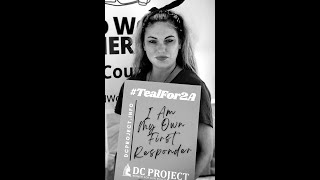
Carrie-Anne Auclair, leader of Armed Women of America's Massachusetts chapter, describes getting her concealed-carry permit in 2015 and learning to shoot from YouTube instructor Kellyanne Pigeon and a retired-cop neighbor. She co-founded a women-only shooting group in 2019 that grew to dozens of members, many domestic-violence survivors seeking protection. The conversation covers gender-specific instruction, evaluating trainers, and carrying across New England states.
Chapters
All right, voilà, the first time using a countdown timer. Thank you, Carrie Anne, for that. You, you may be my second interview for instructors, but you're my first one that I use a countdown on for.
I love it.
All right, so Carrie Anne, welcome to the show. This is my instructor interview show. Um, I'm doing 10 of them, and I don't know who else is going to be on here, but you're number 2. We had Kellyanne Pigeon last week for for the first show. You're going to be show number 2 when I get enough of them put together to actually put you up, because I know you like being recorded and knowing when you're coming up, and I don't know the answer to that yet. All right, for those of you who've never seen one of these shows, here's what the deal is. As an instructor, I have so many students come to me and they're always like, they can just think they're going to pick up a gun and shoot, and then they're overwhelmed with how much information they're actually needing to learn to handle firearms safely and be able to hit a target well consistently. So I started this series because I wanted you all to hear from other instructors and understand none of us started knowing what to do. Everybody had to start somewhere. We all have different journeys that we took, and that's what I'm hoping to share with you in this series. So with that, ta-da! And that was our intro. All right, so, uh, I am Brooke Cheney. I am the owner instructor at A Great Start Shooting School. And with me today I have Carrie-Anne Auclair. All right, so ready? I told her we'd prompt. Ready? So first question: who are you? So what we're looking for is, um, what are your current credentials? Like, what were your first credentials that you got? How did you get into, um, teaching? How long you've been teaching? That kind of stuff.
Yeah, um, So basically, I've got my license to carry in 2015, and when I went to the range for the first time, I realized that I wasn't comfortable, and I realized I wasn't alone. Um, so I actually ironically was talking to Kelly Pigeon, but we weren't friends. I really didn't know her. I was just following her on a YouTube channel, and one night she actually answered a question I had, and I sent her a private message. I'm like, oh, she answered me! And was like, oh my God, oh, you know, it was kind of crazy.
And we did talk about her YouTube channel and how amazed she is at how many people it, it touches her through, throughout the world.
So that's very cool. One that inspired me to, to want to get educated. And when I started, I don't even know how I found her on YouTube. I think I happened to pull up female instructors, and there she was. And, and I watched her, and I liked her style. I like the way she, you know, teaches, and she kind of, um, kind of put it in a simple way of learning, you know what I mean? Because she wasn't— she was just awesome. So I watched her, and then we started talking more and more, and then she's like, you should start a shooting chapter. I'm like, I'm not even an instructor. At that point. And so about 6 months later, we did. We started a shooting chapter with the help of a few other male instructors, and it just prompted us to go fast and furious to try to get our instructor license. And that's what we did.
All right, so, so let me get this straight. You went for your carry permit, and because you live in Massachusetts— because, you know, I don't know if you've heard lately, but there's over 50% of America is currently constitutional carry now. Anyway, we're in Massachusetts, Connecticut. That's so not happening here. So ever. Um, did you have— all right, so my next question: what is your first memory with firearms? Was it your CCW course, or had you been around guns previously in your life?
Well, it's funny you said that because my first experience with firearms, I actually was scared because a gentleman put a shotgun in my hand and didn't show me and explain to me the proper way of using it. And well, let's just say that I couldn't feel my arm for a week. So it kind of scared me. So I was very, very scared of shotguns, but the pistol I didn't have a problem with. I enjoyed that, but that was a long time ago. And then when I got my concealed carry license, I actually went with a neighbor of mine who's a retired cop and he said, okay, come on, let's do this. I, I wasn't— I refused to carry, I refused to shoot it until I understood it. And then when I went out with him, I said, oh, I like this, this is fun, I feel comfortable. But when I got home, I was still very nervous. So that's what I went to the range.
All right, so I'm going to stop you just for a second because I gotta ask, because yeah, you are not the only person who ever has told me the same story, and I'm curious how many of your students are the same. In that their first experience was not a good one. Do you have a lot of students that come to you with that same story?
Maybe one or two, but mostly they are eager to be their own first responders and they want to know how because they want to follow the very—
they—
I think women are very— what's the word I want to use?
We're not being sexist. No, no, we're not.
We're not being sexist.
But there are differences between teaching men and women, for sure.
Out of the chapter, I do teach men as well, and I find that men and women, when you teach them in a, in your own, you know, setting, whether it's home firearm safety or a basic pistol or whatever it may be, I find that the women focus more. They focus differently, just differently. It's not even so much more, it's just different. And checklist—
there's a lot of checklist women, right? I think. Um, so you're talking about your friend who's a police officer. Was that your first structured training, or what was your first instructor training?
That was him. Yep. In fact, when I did my home firearm safety class, I didn't touch anything. So I went to the class, I mean, it was probably 3 hours maybe, and we picked up a, one of those, um, laser, fake laser guns. And that was my, that was my experience.
So that is illegal in Connecticut, just so you know. Yeah, we're not allowed to do that.
I don't particularly, I, I don't like that. I think it is important to at least understand what it feels like. Feel it, hear it, taste it, smell it, and understand the whole beast.
No licking guns, people, just so you're clear. No tasting.
You know what I mean?
Yeah, I know. Well, but the thing is, people watching may not know. So it's like, it isn't— we're in the world of clarification.
Yeah. Thank you. Um, you never know.
Yeah. You never know. So a couple of things that kept you going. One, you love learning from Kellyanne and Kellyanne encouraged you. Uh, you had your neighbor who's a cop who was also helping train you. What else kept you learning and going from that point?
Um, Kellyanne really encouraged me to do this chapter and I'll tell you when we first did it and we had our first meet and greet April 8th, 2019. We've been going for 3 years, and we had our first meet and greet. We had like 40 women show up, 30 women signed up that night. But the stories that I heard, I don't think I realized how important we— how important this was and what we, we started. You know, it wasn't just the chapter, it was now it became something more than that because these women came to us and said, I'm a domestic survivor. I'm a survivor of domestic violence. I'm scared because I'm by myself. My husband just died. I had a break-in in my house. So you hear all these stories and you're like, whoa, what did we just do? But it was amazing. And once you hear those stories, you just can't take them back. And that really makes you want to go forward, be better, do better.
And I realize you and I are talking about chapters and that sort of thing, but the people watching may have no idea what we're talking about. So could introduce what you actually do in Massachusetts and who you do it with and what the purpose is? Since before we— like, people like, chapter of what?
Um, so I'm the leader of the Armed Women of America, previously known as the Well-Armed Woman. Um, also the state director for the DC Project here in Massachusetts. And that was, um, last January I became that. So Um, but that's like, that's what this chapter is. It's a female shooting chapter.
And what are the— what are the— like, it's all women? Yeah, so it's all women.
So what our mission is to really educate, equip, empower women to feel more comfortable and confident in their firearms. Um, and you know, just to go back a bit too, is everybody has their own reasons to get their firearms. So You know, whether it's self-protection, home protection, whether it's target practice, hunting, competition, there's so many different reasons to have a firearm. But I would have to say 99.9% of the women that we train are doing it for personal protection and home protection. And they enjoy it. So it's, it's, it's fun too, right?
Yes, absolutely. So Um, it sounds like you sort of stumbled into finding someone like Kellyanne, as well as happening to have someone next door. What advice would you give to a student looking for training? Because my point of view is, I remember looking for training and not having a clue what even the descriptions of the training was. It's like, it's bring this, make sure you know how to do this. And I'm like, I don't know what those things are, so that means I probably can't do it. So if um, a brand new person is watching this right now and they're not in Connecticut so they can't come to me, and they're not in Mass so they can't go to you. What, what would you tell them to look for?
Make sure that they're credentialed, because there's a lot of people out there that says, I'm a firearm instructor, I can do this, and they just do it. And, and maybe they're really good at it, but they're not credentialed. And credentialed meaning there's so many ways of becoming credentialed. You can be a USCCA instructor, an NRA instructor, and I think Correct me if I'm wrong, but isn't there different, like, in different states you can get certified or credentialed with someone else besides those organizations?
In Connecticut we can. I mean, but that was relatively new over the past— well, relatively new, 8 years probably, um, because— but there are, yeah, there are different ones. But here's the other thing, is just because someone says I'm an NRA instructor I always ask, what else do you do? How do you augment your training, right? Is that because it's like, well, I've got to use USCCA, I've got all of these buttons on my wall that say that I can do these things. I'm like, okay, what do you do to practice? How do you expand your knowledge? What is your training?
If— and again, this is just my opinion, but if, if an instructor is really wanting to make sure that they are being, um you know, they're credentialed, but they also want to make sure that they have the confidence from the student as well. So, you know, I have what— I have a Facebook page, you know, um, I have the chapter. People have put testimonials on my Facebook, um, you know. So definitely just don't look at the credentials, but make sure they are credentialed, but make sure that they, they have a good reputation. Um, I know that Some, like, I want to actually start reaching out to the local police departments too and give them my card and introduce them and have them come to a class so they feel comfortable. So if somebody they know is looking for a license to carry, that might be an option. But they'll be around. Ask questions.
Yes, call them.
Yep.
Because I didn't know, like, when I didn't know the answer to anything, I'm like, well, I don't want to bother these people. I don't know what— I don't want to call and feel stupid. I'm like, we want people to call us and ask us questions about our training and what is what will fit for them, right? Because my favorite poster of all, one size never fits all. So, um, having a 5 or 10 minute phone call with somebody who is potentially going to be your firearms instructor— I, I have it on my website so you can just schedule it. Um, most places don't. You just call them and ask questions. And I will warn you all, a lot of us really kind of suck at the admin side of things. So if they don't call you back in like 24 or 48 hours, just give them another call, at least if you're calling me.
Yeah. It's true though, because, you know, I might not be the perfect fit for everybody, and that's fine. But, you know, as an instructor, I try to do what I can to make sure that that person— and then, you know, honestly, the first question I ask them is, how long have you had your license to carry? Blah, blah, blah, blah. When— how many times have you shot it? Not, you know, it's been a year. Okay, so you pretty much need the basics, right? You need to understand the fundamentals. Which is because we talk gun talk, it doesn't mean that they understand what we're talking about, right?
Absolutely. All right, so here's another one of my things. My students come in and they're overwhelmed by how much there actually is to shooting because they think all they have to do is pick up a gun and pull the trigger. So what advice would you give to your students that think that all they have to do is pick up a gun and pull the trigger?
Well, so it's probably different. Like Massachusetts, you can actually go to home firearm safety class, and that's not including live shooting. That's it. That's all you have to get, a certificate.
Oh yeah, no, I'm not talking about certification. I'm just saying people who want to actually learn, right?
And that was my next— I'm going into it, sorry. So with that said, they don't get a chance to pick up a firearm. Some people, some instructors have that class and it have a firearm you know, a portion of it, they go on the range. But I always tell all my students that this is not the end. You have to continue your education. You have to, because there's so much involved into understanding the fundamentals of shooting. So the steps that you would take to shoot, you know. And so I try to— I try to— what's the word—
encourage.
Encourage. Thank you. I try to encourage them that you need to continue your education to be a responsible gun owner. And usually they end up calling me and we do a little one-on-one. So, and, and it's a lot to learn. So I tell them, don't— you got a book to go home with, but you're going to be overwhelmed when you leave here, and that's okay. That's why you come back to another class, you know, and continue your education, really, right?
Yeah. And have realistic expectations. It's like no one is Annie Oakley. After their first lesson, no matter who you are, no matter how awesome your instructor happens to be. Um, you know, it takes time, it takes practice.
Retain in your head, it's a lot.
I mean, you, you got— you started telling us, it's like you, you got your CCW, your first experience sucked with a shotgun, but then you got your carry permit, and then, um, you got the bug and you got like, oh, I gotta share this with people, right? Yep. Um, so on to my next question. What are you most proud of in your firearms journey?
Oh my God, so much. So, so much. I can't even tell you. You know, it's, it's the fact that I, I finally feel as though this is where I was supposed to be all my life. I just never found it until now. I have met such wonderful people that are so like-minded. But what I'm most proud of is that is the shooting chapter, the women's shooting chapter. And me personally, I have learned so much. You know, I'm a basic pistol instructor. I'm home firearm safety instructor, refuse to be a victim instructor. And I want more. I want to become more and learn more. The more I learn, the more I can give to my students, whether it's the shooting chapter or individual. But when you see somebody on the line and they leave and they say, oh my God, this is so much fun, I've learned so much, I can't wait for the next class.. And I feel so much better and more confident. It really, really hits you here, you know. So I'm proud to be part of a lot in the DC Project as well.
Amazing. Yeah, I noticed I've got my little, my little thing here and yours is up there in the corner there. I'm like, I can't point. It's like, it's always backwards up there. But, and your, your, your DC Project tote too. So there's advantages. We get, we get swag sort of stuff for being DC Project people. Um, let's see. All right, I honestly and truly— ready? This is the final question. Is there any— I know, well, it's, it's one of those things I, I did Kellyanne and I kind of streamlined how I asked the questions. So, um, because again, the idea behind this is simply to get people to understand that trainers didn't pick up a gun and know how to shoot. Most of us, especially a lot of us women, because It's not going to be all women that I interview, but it's a lot because it's the trainers I've already had. And, you know, most of us have not been doing this all our lives and people assume that we've been doing this all our lives.
You know, it's funny because when, like I said, when we started this women's shooting chapter, we weren't instructors and we were still training from the gentlemen that were helping us become instructors and they weren't even credentialing us. So What I can say is that we have learned so much. We did get credentialed, but we're always learning. And, and I just, I'm having a blast doing it. But an instructor don't— we don't stop learning. We're always going to learn. We're always going to continue our education. At least I am. I can't speak for everyone else, but I know I am. So yeah, it's great. And then the DC Project fell on my lap in January of last year, and that's a nationwide organization of women safeguarding our Second Amendment. So without that, there wouldn't be a shooting chapter. We wouldn't have instructors, right? So we try to protect them because protect that right. It's our right. So yeah, I mean, I could go on and on and on.
And living in Massachusetts and Connecticut, it's not like we've got an easy road to hoe, as it were.
No. And you know, there's a lot— and oh, that's, you know, and another thing that I find too is that it's so funny how people can come to a class like, um, the women's shooting class, and the first thing I say to them, how did you carry your firearm here? Blah blah blah blah. Okay, so let's talk about that because it's the law. And so I can't, I can't, um, it's not just one component, right? It's you got whatever state you're in, whatever state you go past, go through, you gotta know the law, you know? And that's just, that's just a fact.
Yeah. And that is not taught in our basic pistol courses here at Connecticut. And I was—
I would—
firearm safety, our, our pistol permit class. Now, I took my first one in 1991, and the only reason I ever took a second one was because I forgot to renew my, my permit. And it was one of those things where I'm like, from 1991 until about 2008 or '09, I thought, as long as I don't hurt anyone with my firearm, I don't have to worry about anything. And then I got into competition and I started traveling, and then I really started learning because it's like, holy moly, it's like Mass is no joke. Um, not that Connecticut's a slouch, but neither is New York or New Jersey. And it's just like, when you start traveling, you're like, yeah, you learn these things. You're like, oh wait, there's a reason I should pay attention to these things.
And that's these things until like, you know, so I— the home firearm safety class and the basic pistols, we do have a component for the law, but I'm gonna tell you that there's so much involved in it that as a student you sit there and you're like, what'd she say?
Well, because if you don't have to use it, it's just like when you took Spanish or whatever the language you took in high school or grade school. It's like if you don't use it, you lose it. Yeah. So yeah, it's a lot of fun. But yes, please feel free to join us at thedcproject.info. Any ladies who are watching, um, because our voices do matter and they're super important. I will say that, um, I enjoy the women I've met in the firearms community without a doubt.
I wouldn't have met you exactly if it weren't for DC Project. And with that said too, I think if there's a lot of people wanting to get involved with trying to protect our Second Amendment, safeguard our Second Amendment, why? Because education is is the key to safety, not legislation, right? Absolutely.
I would be so proud.
I know, but everybody has their own superpower. So I think that I find a lot of ladies want to get involved in that, but they're not exactly sure how to get involved because they're thinking they have to go to the state house and testify and do all this. It's whatever your superpower is. If your superpower is email, I want you on board. If it's you know, taking pictures. I want whatever it is, whatever you want to get involved in. So don't feel like you have to be like a lawyer or an attorney or something. It's not like that.
And I think the most important thing too is to just understand your firearms journey is only yours. There is nobody else who's going to have the exact same firearms journey that you have. So keep going. So yeah, all right, ma'am. Well, thank you very much for joining me this afternoon.
I could talk forever. This is awesome.
Well, I'm trying to make these bite-sized pizzas, right? I'm like, I'm trying to do bite-sized pieces. Yes, and Carrie and I do talk for hours at a lot without, without end.
Honestly, we're like, wait a minute, it's 11 o'clock, we gotta go to bed.
So yeah, when we started the phone call at like 8:30. So, but again, the whole purpose is just remember all the instructors that you're ever going to meet started not knowing how to load or unload a firearm. No one walks into a classroom and already knows how to do all this stuff, so have grace for yourself.
Yep, and we're always learning, everybody.
And that's, that's it. Say goodbye.
Bye. Thank you.










