Instructor Interview #3 #3GunDi Aka Dianna Muller
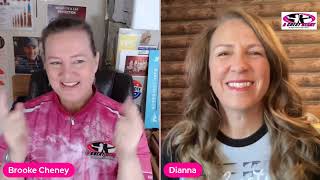
Dianna Muller, a former Missouri police officer and 3-gun competitor, founded the DC Project in 2015 to mobilize women across all 50 states as Second Amendment advocates. She won silver at international shotgun championships and argues that new gun owners need immersive training courses and competition, not fragmented weekly lessons.
Chapters
All right, we are officially live. Well, sorry, we're officially recording. When this goes up, I don't know. Um, so good morning everyone, because right now when we're recording, it is morning. And I have my— one of my favorites, Miss Di Mueller, here with me this morning. And I'm— let's see, it's always backwards. Um, so this is gonna be interview number 3 of our 10-part series on instructors talking to instructors. To help remind brand new people in the firearms industry, no one got to become an instructor or teaching others because they picked up a gun and knew how to do everything. So with that, my first question is going to be, who are you? But like I said before we got started, I have to tell you all that I am just so blessed and honored to know Ms. Dy, and it's so exciting for me to have her on. I'm going to cry, but I don't have waterproof mascara on, so I can't do that. So anyway, many years ago she invited me to be part of the DC Project, long before we knew how big or spectacular it was going to turn into. And so that was my first experience with Miss Diana Muller here. I did not know her as Three Gun Di or any of her history. So not to go on forever, so Miss Di, if you would, could you just tell people a little about who you are, what you do, aside from being the owner, the instructor, the, the head of the DC Project?
Project.
Um, so go ahead.
No, I am just a simple girl from North Central Missouri, which is where I'm at today. I'm at my mom's. My dad actually is the one that's responsible for all of my interest in firearms, my law enforcement career, uh, things— anything around guns and outdoors was my dad. My dad passed in June of 2020, so I kind of— I try to come up here to mom's as much as I possibly can. And, uh, who am I? I went to Tulsa, Oklahoma after college to be a police officer for 22 years, and during that time I stayed with my first love, which was barrel racing and horses. So I, I, I barrel raced. That was my hobby. And then along about 2008, 2009, I forced myself to go to a new range in Tulsa, Oklahoma, United States Shooting Academy. And just go back to a match. I had shot matches in high school and pistol matches and dabbled in, you know, just some local competition as a hobby. And I thought, you know, you should go back and just get some time behind your gun. Well, I fell in love with the people. The people are fantabulous. The gun world is— the ones that are in my world were fantastic people, and I liked hanging around them. So I started transitioning to from 100% barrel racing to about within 2 or 3 years I was 100% shooting. And then another couple of years after that, I retired earlier than I thought I was going to, to pursue a career as a professional 3-gun competitor. So I live off of sponsorships and in retirement, and then my husband does the same thing. So Uh, yeah. And then, I mean, that sounds like fantastic life, doesn't it? I mean, I was high on the hog. I was retired. I was shooting for a living. It was all good and fine and dandy. And then God had to put it on my heart to do something to save this country. So I was in a meeting with a legislator, and I said, um, is there something I— you know, this is just as a tourist I said, is there something I should be doing as a professional shooter to, um, educate people in this building that are making some really horrendous decisions based on misinformation and lies?
And just to add that in, she's at— in DC.
Yes, just being a tourist. And, um, it was from there— that was 2015, 2016— and that's where the idea of the DC Project started. And I had no intentions on creating another organization. I knew there were several Second Amendment organizations But as we kept going, I was like, okay, I only have standing in Oklahoma, so I have to get one from every state. Women can speak a little bit more emphatically about the Second Amendment because we break the stereotype. So this is the DC Project that now, fast forward several years, we now have state directors in every state. And Miss Cheney here has been the state director for Connecticut, and now she's assistant state director. She has asked Ms. Mary Forges to take over the lead, and she's going to be in assistant role. So now we are in the states at the state level, and what we've discovered is that the D.C. project is valuable because nobody is really pushing back against Moms Demand Action, which is an anti-gun, gun control group that uses the female voice. So that's kind of where we are fitting in, is becoming a little army of women that push back the misinformation, the propaganda from those groups. And that's, uh, you know, that's 75% of my time that I don't get paid for. And then I get to go— you know, my job is still fun, and that's what I do for a hobby.
Wait, which is the hobby, the job now, or the DC?
The hobby. And, uh, the, the volunteer work is the job.
Yeah, no, it's— and it's, it's definitely— I, I've known Di a long time. Sorry, just want y'all to see Um, let me— so you can actually see it better. Um, please go to dcproject.info if you'd like to learn more and get involved with us at any level. Any state works. Um, like I said, we've got someone everywhere. So, um, it is, it is totally awesome. I am so glad that we met all those years ago. And again, like I was talking about just now, it's like, I love our competition community. It's such a welcoming place. You make the best friends. And I don't know where any of my friends live. When we're setting this up, I'm like, I don't even know what time zone she's in, because when we get together, it's like, oh, you're just here, whether it's DC or Texas or Florida or wherever, or Kansas. So, yes, I love our wonderful community that we have. All right, so this is probably going back a long time because you said that it's because your dad.
Yep.
So what is your first firearms memory?
I don't have the memory of the first firearms. I mean, it was in this house. It was, um, we always had firearms, uh, around, but Dad was never a big hunter. He didn't compete. He was just a gun guy. And our basement is filled with guns, and we always knew the safety rules. But I do remember around, uh, when I was 14, 15, 16, I went deer hunting with him, and I was a terrible deer hunter. A, I never— I like things the way God packaged them. So for me to— I don't mind killing it, but I do not want to touch it. Um, so I'm not that— I'm not a great hunter. I don't get— you know, I enjoy being outdoors and stuff, but I don't enjoy sitting still. So, uh, yes, I can't—
I can see that. I can't imagine.
And I did not— did not go well together. And so that was one of my first, you know, really strong memories was, was around 14 or 15 and being— getting ready for deer season and, uh, shooting. He had me shoot a pistol by, for, you know, 40— I think it's 44 maximum. No, it was a.357. What I think I ended up taking my deer with was a.357 Thompson Contender, like maximum or something like that. Handgun. So, um, I did harvest a deer and I did not like it. And so— and I don't think Dad really did either. So we turned— he turned our attention towards competition shooting. So that's, uh, my first memory memory.
All right, so then, you know, my next one is, when's your first time ever going to instructor training? Did you, or did your dad just bring you up in— was he your ultimate, you know, was he your main coach for a long time?
He was definitely my main influencer and my main coach and very competent in teaching me how to shoot, uh, but I I do remember once that next progression was looking at competitive shooting, and there was a guy in the '80s named Mike— Michael Plaxco, Michael J. Plaxco. He shot for Smith Wesson, um, and he had a class that was a couple hours away, and, and that was the first structured, uh, training, you know, class that I went to. Cool.
Yeah. All right, so did you continue on with structured training, or was like that one and done, and then you just had to figure it out on your own? Because I can see you being that person.
No, it was one and done and then jump into competition. And you learn so much from competition that, uh, you know, uh, there's your own set, you know, their own set of safety rules and that are, you know, even above what your normal 4 are. And so yeah, I just jumped in and started competing and, and looked at it as a hobby. We really enjoyed it and, and it was something that Dad and I did together.
Very cool. Yeah, I know for all of my students, I sort of— I don't beg and plead, but I strongly suggest that they try to get into competition because it's so much easier to spend $25 on a weekend and go have people watch you shoot. Also, they're not really paying attention to you, but the safety officers are there making sure you're doing good things. Yeah. And it's just like, people are like, well, tactical training. I'm like, no, no, no. I just want you to get good and confident with handling your gun safely.
Then we can get on to that self-defense stuff and moving around and, you know, muzzle awareness, trigger awareness, things like that.
Absolutely. All right, so since you didn't do a ton of training, but what would— what advice would you give to a student looking for training? As far as like, I know when I started, I would look at the pamphlets or I'd look online and I'd read this stuff says well, you need an L1 carbine, blah, blah, blah. And I'm like, I don't even know what they're talking about when they're offering training because I didn't know anything. So how would you suggest a new person to guns who doesn't understand the lingo— what's the best way to find good training for them?
Well, I would definitely rely on the people in your circle that already have some experience with firearms and ask them for reputable trainers. Um, find— try to find some reputable trainers. But here's what I would say: invest. If you're just new to firearms, do not think that you're gonna buy 10 sessions at an indoor range and you're gonna go once an hour for every week and get the same thing that you're going to get by spending 10 hours with your gun at the same time. So I would look at a, at least an 8-hour or 16-hour, 1 or 2 day class that's immersive. It goes over nomenclature, it goes over mechanics, it goes over loads, reloads, all of the things that you can absorb. It is not brain surgery. It is very doable in a, in a, in one day or two days, and your confidence will be exponentially higher than when you started that day. Exponentially, as opposed to doing it the, you know, the long and drawn out way.
And the funny thing about that is I actually started my school so you could do the long and drawn out way. Because when I was brand new to firearms, I had 2 kids, and the idea of getting away for like a full day or 2, yeah, was near impossible. Yeah. So I offer those packages of the tenant, but it's different because it's one-on-one.
I'm glad you— for that specific reason. I mean, there are people that just can't afford, whether it be financially or time-wise, to invest like that. But yeah, there's— there— if you can spend— the more, the more condensed time you can spend with it, the better.
Yeah, absolutely. And I mean, I did it— my first away camp was Babes with Bullets, um, back in the early 2010-11 time frame. And then I got to go to this other really cool thing called a Girl and a Gun National Conference. I got to go to the first one, and it was like you're immersed in it, and is absolutely the best way if you can. And one of the reasons I call my school A Great Start is because I try to take my students in, get them comfortable, and then send them off to something like what you're talking about too. But I mean, it was— I couldn't find anything like what I offer. So, all right. Oh yeah, here's my next question, because I have students that come to me and they, they come in and they think all they have to do is pick up a gun and pull the trigger, and that's all there is to it.. And I find that they're like, when they get here, they're like, oh wait, there's more to this. So what have you found? Because you, you currently teach people. Let's see, what are some of the things at Three Guns? I don't know, what are all the different events that you do where you're teaching currently?
Well, when I was a police officer for 22 years, I was a firearms instructor. And so I had a full-time assignment, and then when there were— when it was in service or rookies were training, I would be assigned out to the range. So it was kind of like a little part-time job. And, um, so I have been teaching for a very long time. I, uh, I think that came from my dad too because he was a good teacher. Um, but, uh, what— there is more than the mechanics of the gun. There's more to even beyond becoming a good shooter. There is a whole nother world out there that if you're going to carry, and this is a, this is a defensive weapon there's so much more outside of just becoming proficient. There is so much more that goes into the decision-making and the situational awareness and things that will land you in prison as opposed to, you know, so it is that you are entering an entirely new world and there are a lot of things, a lot of components that you will be gathering for the rest of your life and learning from other people and figuring out yourself.
Yeah. Oh, and just so y'all know, over here, I am my own first responder. The first time I ever heard that was from Ms. Dy here telling me that, because I never really thought about it. For me, guns were something that I had little kids. I'd been around guns all my life, but unlike Dy, my dad did not teach us really much about guns. It was don't touch. That was the only, like, safety rule I actually knew, right? Um, but the 'I am my first responder' is just— it's, it's heartfelt because, you know, Dy's told me other stories in the past about, you know, as a police officer, they wish they could be there, but it's after the incident has occurred.
And so we're only minutes away when seconds count. Exactly.
And, and it's just, I don't know, there's just so much that we could go into, but I'll try to keep this short because we talked about that at the beginning of the show too. So, all right, uh, on to almost the last question already, hun. What are you most proud of in your firearms journey? Oh wow.
From—
yeah, I'm like, yeah, good luck with this one.
Uh, you know, one of the things I'm most proud of is obviously the DC project, but, um, One of the things I think is really cool about my story is that, you know, I, I, I didn't set out to be a professional shooter, and there's not very many people that can call themselves, you know, that actually live off of being a shooter. So I, I'm pretty proud of that, that we— that my husband and I have created a business out of nothing, out of a hobby, and, um, that we provide value to our— you know, that we are valuable and that we can provide value to the industry. We can provide value to our sponsors and our partners. And I think that's the coolest— I think that's probably the coolest thing. But, you know, I mean, the fire— this— the shooting sports has taken me all over the world, and I have represented the United States, which was a huge— you know, that's a huge cool thing too, is standing on, uh, um— so they have— they don't have 3-gun in the world stage, they have rifle world Pistol World and Shotgun World. So I have been to 2 Shotgun Worlds and, um, gotten silver medal individual and then gold medal team. So standing on that stage and being a representative and listening to your national anthem, it's just, it's super cool. It's as close to a thing as we're going to get to the Olympics. So I— that's another pretty special thing about my journey.
Very cool, very cool. Yeah, it's funny that you say like you never thought you'd be a professional shooter, and it's just like so many women, I think, in our industry, it wasn't our plan. If you had told me back in 2007 when I had my second kid that I would become an instructor, I'd be like, here, have some more. I don't know what else you're smoking. Because at that point in time, I'm like, I didn't know how to look at a gun and touch it without it going off. I'm like, where can I pick it up? I didn't know any of that. And so if you told me that, I'm like, oh, You're gonna become an instructor.
That's a big shout out to God because he definitely has the coolest plans if we just, uh, kind of stay plugged into him and, and go his route. I don't know, I, I was, um, I, I didn't pay attention to him for a long time, and then it just seemed like, you know, the more and more I did, the more I was like, okay, all right, here we go. This is a little journey you got me on.
And I mean, and I love the fact that in 2010 I would hear people talk about the Second Amendment. I'm like, yeah, whatever, whatever, whatever. I didn't care. I didn't know. Just like I didn't know a 10-round mag ban was a gun ban, right? It— in the journey that I've gone on that led me to meet you is spectacular. And now the fact that I get to now take women and help them follow you and follow America and what it was meant to be.
Absolutely. And that's another thing. I look back in growing up and being a police officer for all those years and until that day, I mean, I can pinpoint the day that I started to pay attention and it was like September of 2015 when I was sitting in Congressman Russell's office and it was huge. I mean, I didn't feel the earth shatter or anything like that. It has taken me It was just a beginning of a new chapter for me.
All right. So I got to ask, when did this happen? When did you realize that you wanted people to be their own first responders as a police officer? Because I'm assuming it was while you're a police officer or was it even before that?
Well, I mean, I didn't realize— I never tried to make it. It's just something that's true. I didn't think of it.
Yeah. But for me, you're the one who said it to me.
So now I'm just like, where did it come from for you? Yeah, I mean, it was from years of, um, it was from years of going, going to calls and seeing people being victimized and in their most vulnerable state and waiting for me to be there. It was for years of me, you know, going to calls and being the first one there and not being able to, um, you know, I was my own first responder as well, and waiting for backup can be a— I know how that feels. So, um, it's just a no-brainer for me for, for I, I, you know what I really want, Brooke? I want us to have— I want us to go to the Moms Demand National Conference, and I want to talk to those people because I really feel like if they had an ounce of a different narrative, that we could walk away with half their members.
Yeah, I've actually found that when I go to the Capitol back before, you know, the C-word, um, because I would always go in soccer mom clothing. I never had anything gunny on me. And, um, I would talk to them and like, oh, I didn't know that. Like simple stuff, like the 2 out of every 3 gun deaths you hear about are suicides, you know, my, my thing. But they're like, oh really? And this is— I, I believe 100% in what you just said, is that the more education we can get out there, because— oh yeah, it's not on this one, but yeah. Education, not legislation, is what the D.C. Project strives for. Right. So, all right, with that, ready? Is there anything else you would like to share before we end?
Because we got through all of our questions. Yes, yes. Well, this doesn't necessarily— it kind of does. And, you know, for new gun owners and things like that, I obviously have a passion to engage people and get them engaged for the Second Amendment. So one of my things, my— I've been kind of explaining it this way, is in order for you to be a disciple of Christ, you have to study and read and pray and all those things. In order for you to be a disciple of the Second Amendment, you have to read the Second Amendment, you have to study the Second Amendment, you have to know what you're talking about. One of the things that I think that, you know, all the gun owners in the— in this country is that people struggle with why do we oppose universal background checks, why do we oppose red flag laws. You know, I'll give a shout out to the DC Project. There is a one-page document on the DC Project landing page that will help you understand this. And maybe you don't, maybe you do want universal background checks, but I bet it's because you don't know what that entails. Because here's the, here's the quick answer, is that it, it cannot be enforced without a registry., and registries are federally outlawed, and they always lead to confiscation. So if you know that, when you hear somebody talking about, oh, you know, 90% of the country wants universal background checks, well, that's because they don't know, and it's up to you to figure out how to explain that to them in a way that's receptive to them.
So since we're talking about it, here it is.
There it is. Well, militia being necessary to the security of a free state, the right of people to keep and bear arms shall not be infringed. I don't even have my glasses on, so I can't see what you put up there.
But yes, no, no, no, I know. I was going to say, and I feel like this is an eye test. I can see the second. I know. I'm like, I don't know how to make it bigger because— oh wait, I can make it bigger, a little bit bigger.
But anyway, it's 27 words. And that's not where the meat and potato— that is the meat and potatoes. But there's a lot of really tasty vegetables that you need to know in order to stay healthy because there's always more to learn. There's always more to learn. But so if anybody's interested, they can go to thedcproject.info on that landing page and print out that one-page document that helps you train yourself on how to have conversations about the Second Amendment.
And one of the things I love about that doc is it really talks about so many people go deaf when you say the Second Amendment, but when you start talking to them where they're at versus talking about the Second Amendment, it makes a huge impact because nobody wants Yeah, everybody has a story.
Everybody has a story. So use your story. They cannot take that away from you. Um, and if you don't have a story, you don't feel like you have a story, you can use somebody else's story. You know, you can use Nikki Gozier's story and say, I was denied a chance in a gun-free zone, uh, to protect myself and my husband, and my husband was murdered right in front of me. Yeah, gun-free zones are the biggest farce in, in in the gun control narrative.
Yeah, it is.
It's, it's— why don't we just outlaw murder? How's that?
Well, I know, imagine. And funny, if we go back to the Bible, first Ten Commandments, their murder's already there. So it's already been like off the books for a long time. Yeah. So, you know, but hey, I'm not writing all the laws, but I'm trying to influence them through the DC Project. So there is that.
Yeah. And I'll tell everybody else, since these guys are newbies, um, there, there is a very, very low percentage of people that are actually engaged engaged in any kind of Second Amendment organization. It's like 6— 5 to 6% of gun owners. Can you imagine if we could bump that up to, to 10%, to 50% of gun owners that actually get engaged in the fight to protect their, their rights, their constitutional rights, that, uh, that they can protect themselves? And I'm one of those people. I said that wrong. It's okay, because it's not your constitutional right to protect yourself. It's the Constitution that protects the right God gave you to protect yourself.
There you go. So, but, so I was one of those people though, right? I got my pistol permit when, in 1991, and I figured as long as I didn't shoot anyone, I don't have to worry about any of the laws. And so from 1991 to 2006, I knew nothing about firearms even though I was a gun owner, right? So when they say gun owners say, I'm like, yeah, they were probably those ignorant people like I was.. And it wasn't until I got into competition, I'm like, oh, wait a second, there's more. Because now, like you, I'm traveling across the country in different places, and I realize, oh, I need to know the laws for this, this, right? Um, so again, another reason to get into competition— it teaches you so much. Not that everyone has to be a competitive shooter, but I truly appreciate how far I've come in what I consider a short amount of time. Absolutely. So, and it is odd to me how, like, gun clubs don't talk about politics and the importance of protecting Second Amendment and why we need to speak up.
Yeah, so I'm proud of you for, you know, doing this podcast and, uh, you know, stepping out there to help educate people.
Education is the key to safety. 100%. All right, I'm just gonna end on that because that's perfect. I'm gonna, I'm gonna have this our outro though. Hold on.
All right, goodbye everyone.
Goodbye everyone.










