Instructor Interview #4 Julie Golob
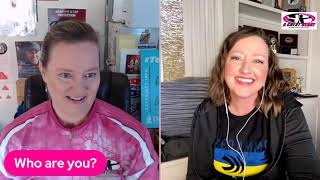
Julie Golob, a competitive pistol shooter who spent eight years in the U.S. Army Marksmanship Unit, talks about her path from her father's range trips at age 14 to elite competition. She advises beginners to define their goals, find instructors who match their learning style, and prioritize slow, deliberate practice over speed.
Chapters
All right, it's recording. All right, well, hi everyone, my name is Brooke Cheney and I am the owner instructor here at A Great Start Shooting School. Today I am super excited to have Julie Golub here, Team Smith Wesson. Wait, you are still— wait, what team are you on now currently? Right, okay, I read your emails but I'm like, so many people have changed. I'm like, oh, and I'm gonna try Okay. All right. I'm going to try not to fangirl too hard, but I just have to let my viewers know you are the first female competitive shooter that I was introduced to way back in 2010. And I was just like, when Mr. Buckland gave me your email and contact and I emailed you and you emailed me back, I'm like, oh, she's a real live person.
Oh, I'm so excited.
So again, I'll try not to fangirl too hard on you today, but I will do my best. Um, so this is our instructor series, and I believe you are session number 4. And, um, the whole purpose of this season, or the series, is because I want all my students to understand that we didn't all of a sudden become instructors. We didn't always know how to do any of the stuff that we do. It wasn't like magically walked into a room, picked up a gun, and voilà, we can shoot. Because oddly enough, I find some of my students think that's exactly what they should be able to do. Yeah. So with that, my first question for you, if you'd be so kind, because I couldn't even start to sum up your life. So my first question is, who are you for my people who are watching, who's never heard about Smith Wesson, probably never, but you know, could you give my audience a little bit about who you are, how long you've been shooting, um, whatever the highlights are that you think are important.
Sure. Yeah, no, I've been competing for Smith Wesson for, oh gosh, years and years, more than a decade as a competitive pistol shooter. I've traveled to 6 continents representing Smith, Federal, and Trijicon, and, and traveled the world shooting in the sport of action pistol action shooting, which, uh, there's lots of acronyms out there— USPSA, IDPA, IPSC— but the to remember most is it's a draw from the holster type of shooting sports that, uh, they're a lot of fun. And, uh, yeah, it's been a quite a ride. I got started with my dad when I was a teenager and ended up shooting for the Army for several years before I ended up being a professional competition shooter.
It's, it's, it's a blast. And I remember you talking about your Army career before. Could you give my students a little bit more on that one? How did that all go? How your dad kind of got you into all that, that sort of stuff?
Yeah, sure. So I grew up in upstate New York. So not a lot of people think that there are many competitive shooters in New York, but there are, there indeed are. And we grew up, I grew up around firearms and learning how to shoot with him. I started competing when I was 14 in my first competition, and it was so much fun. I decided that that's what I wanted to do. I wanted to become a national champion. So my dad and I spent a lot of time at the range practicing and working on it. Until I earned a slot to my first national championships in my junior year of high school. And it was there that I caught the attention of the Army Marksmanship Unit, the Army shooting team, and their coach. And they said, "Hey, we want you. Uncle Sam wants you to compete for us." Was that a super proud daddy moment at that point in time? Well, it's funny because my dad didn't even go to that nationals with me. I went with a group of friends because it was very expensive and it was during the school year. He was a school teacher. So I had to take time off from school to go. But when I came home and told them all about my amazing experience at the Nationals, I said, oh, and by the way, I got recruited to shoot for the Army. So it was a, it was a very big, proud moment, but also probably a little terrifying as well. You know, like, oh my gosh, we sent our daughter away to the Nationals and now she's going to be in the Army.
There you go. Just like that. It's amazing. And this is the funny, this is one of the themes. I mean, like I said, you're only number 4 so far, but I found most of us that are in the shooting sports, it wasn't really necessarily a trajectory we were expecting in our lives. Like, it wasn't— I mean, you already said you were looking to be a world champion, but most of us are just like, oh, didn't know how I was going to get to where I am now.
Yeah, yeah. It's— and it's what's really interesting with the vast majority of people is they're introduced to firearms as adults. They don't have that kind of entry the way I did. That was, you know, just something that I always did and was part of my life. And there are plenty of people that are like that. And with all the new gun owners out there, we're increasing that number. Right. Right. Well, it's a lot of people stumble upon it much later in life.
I know that a lot of my students expect that I've been doing this all my life and I'm like, nope, about a decade, a little over a decade. Um, not forever. So that actually leads me pretty well into the next question is what is your first memory with firearms? I mean, yes, it's been part of your life, but like, Do you have like a favorite first time with your dad or like he said, "Hey, let's go do this." What do you think you got there?
I think the first time I ever remembered dad shooting was when I was really small and we, it was just my sister and me and my mom. And we sat in the car while dad went outside and shot into the sand pit. And it was kind of a weird thing, but I was again, very small. But later I remember him casting his own bullets. And, and by the time I was in 6th grade, I became his little buddy. And so I would go to the range with him and pick up brass and spot targets and, you know, help, help out shooters that way. And it was a lot of fun. I enjoyed it. But my, my real memory of shooting for the first time was when I was 13, getting ready to compete for the first time. We, we decided that I was going to give it a try after, you know, working and volunteering all those years. And in order to do it, we we planned that winter to get introduced to the gun handling skills of the sport, um, to be able to manipulate the firearm's controls reliably. I couldn't have my dad do that for me while I was competing. I couldn't say, hey, will you load it for me? Hey, will you unload it? That wasn't possible. No, no. So we took a very slow, gradual approach. I think we started in January, February in this indoor range in upstate New York, and it was so cold. But, um, we, you know, we just took a gradual progression so that by, by the time the summer rolled around in June, I shot my first match. So I think that's the big memory that I have, um, from, from actually, you know, pulling a trigger myself. Um, before then, I'm sure we probably went to the range, but it was rather anticlimactic, and I wasn't invested in it in the same way that I was like, no, I want to compete, I want to do this.
Very cool, very cool. Yeah, no, it's one of those things where it's just like I couldn't tell you the first time I touched a gun. I can tell you the first time that my dad didn't tell me to have the scope not touching my face when I pulled the trigger. So there's a little bit of that. All right, so here's another interesting— at least it's interesting to me because I actually don't know the answer to this question for you— is what was your first time going to structured training? Was it the Army? I mean, I know your dad was your coach for quite some time, but I'm figuring at some point you went on.
Yeah, so it's interesting. I didn't, didn't go on the normal path again because, you know, I shot with my dad all that time. We didn't take any classes. We didn't go, you know, any sort of, you know, official training camps or anything like that for the shooting sports. And so I think probably my first introduction to a regimented training program was in the military, and it was more a lot different than what you would normally think of when you, you're going to a class to learn how to shoot better or, uh, to even take a competition or a self-defense course, because it was my life every single day. You know, it was one of those things like, okay, wake up at 5:30 in the morning and go do physical training, and then go get your guns, and then go shoot all day, and then, you know, be done at 6 o'clock, 5 o'clock, whatever. Um, but Yeah, I would say in the military, that was the first exposure that I had to training, but I wasn't really— it was never really an instructional kind of thing. You know, I didn't have to be taught how to do things. I just had to become better at them. So I have a lot to thank my dad for that excellent foundation that he gave me and got me ready.
Very cool. So when I think of military, I always think rifle. But you were training everything, rifle and handgun.
Oh, no, no, no. So I was completely shooting for the shooting sports. It was my job at the Army Marksmanship Unit to compete in USPSA and IPSC. And that's, that's essentially what I did for 8 years. So it was extremely focused. Of course, I had to qualify with a rifle, but that was such a, you know, like, okay, you got to go qualify today and that's it. After that, you got to go and train and prepare to win. So it was very, very focused on that. But in the regular Army, of course, you're using a lot of your rifles. If you're military police, you're learning how to use a handgun, all that.
Gotcha. Yeah, no, it's just most of my— the military students that I get, they're all like, if I have to get to my handgun, I've already lost, you know, like they're like, all my military guys are all about rifle all the time. So, all right. So because there is so much training out there, I know when I started, I found it overwhelming to look for training. Like, I would go look for training, I say handgun training, and it would say Handgun 101, blah, blah, blah, blah, blah. And like, most of the stuff, I didn't even understand what they were talking about. So my next question is, what advice would you give to a student who's looking for training? And they're like, I was when I met you. Knew nothing about anything, didn't understand what basic safety was, quite honestly. So what would you say for a new, new newbie? As you said, our numbers are growing exponentially currently. So what advice would you have for a new student?
Well, I think it's a good idea to have a general goal in mind of what you want to accomplish. So if you're getting into gun ownership because you want to have a firearm for home or self-defense, then you're going to be focusing in a specific direction. If you want to become a national champion, you're going to kind of go in a little other direction, that sort of stuff. Um, but I would say that because there's so many very qualified people out there, you're in a really good time and place because you can pick and choose who you want to learn from. And I think that one of the things that a lot of people don't look into is personality. If you understand how you react in certain environments and how you learn, you can kind of pick up cues on what type of instructor is going to be teaching you. You know, I think that a lot of times people assume that, you know, a trainer is going to be like a drill sergeant or somebody who's harsh and loud and demanding and, you know, trying to instill a stressful situation on you. You don't want that to start with because you want to learn the fundamentals, basic safety and gun handling. But after that, you know, you can look for different personality types that are going to help you make the most out of it. You can learn from anyone. It takes a great mindset to, you know, to kind of have that in your brain, like, okay, I can learn from me being a woman. I can learn from a 300-pound muscle-bound dude, right? I can, I can learn something from him. But I can also learn something from other people as well. It may be people who are smaller in stature that kind of fit my physique and that sort of thing. So just kind of keep an open mind and And safety is the foundation, but after that, you know, just try a bunch of different courses out there if you can.
I mean, that's the best way to, to get the broadest level of, of, you know, ability. And one of the things I never thought of when I was looking was pick up the phone and call. Oh, sure. Yeah, it was like, because you're talking about personality and stuff, and I'm like, it never occurred to me because like, here I am brand new and I'm like afraid to talk to someone like you because I'm just like, I'm so dumb and I know nothing. And I'm like, you want to find that, that instructor that's going to talk to that for you and meet you where you're at.
Well, you're paying for a service, right? And you need to look at it from that standpoint. If they're not willing to talk to you about what they do in classes or, or your concerns about what you want to learn or what you maybe have some anxiety over or whatever, if they're not listening to you, then that's not the person you want to go see.
So yeah. All right, so another phenomenon I find in my teaching is I'm always amazed at my students who walk in and think that— oh wait, here, let me show you over up here. That's a picture of Annie Oakley. There you go. And I have so many students that like walk in and I think they're just gonna pick up a gun and blow out the center of a target, and I'm just like there's a little more to it than just squeezing the trigger. And I mean, someone like you who has been doing it forever, all of your life, it's, it's easy to take for granted, I think, probably your skill set. Um, but it's like, what would you help have a better, uh, mindset? Like you said, it is about mindset, how to learn. Um, what do you say to a new student who thinks all they have to do is pick up a gun and pull the trigger?
So I think, uh, the best approach for anything, whether it's learning how to shoot, learning how to start a chainsaw and cut down a tree. You know, you have to think of what you're using and what you want to accomplish with that and how to do it the best and most safe way possible. And so a lot of times, especially if you're new, you just, you, you're so excited to get it done and over with and you think it's a simple process. But it really isn't. It's kind of complicated. Like if you wanted to cut up an apple and you had a little paring knife, you could do it one way. But if you had a large chef's knife, you would want to do it another way. You would want to make sure that your fingers are safe and all of that good stuff. So you don't cut your fingers off, right? This is important. It's the same thing with shooting. You want to take a systematic approach to things. And if anything, slow down. And pause and make sure that you have everything in place to make sure that it's going to be the best, most successful thing possible. You know, I think a lot of people don't understand the importance of having a proper, good grip on a handgun or, you know, having a good position with a rifle. They just assume that, oh, I've seen it this way, this is good enough. But there's so many little nuances and things that can make you better. So sometimes rushing into it is, is not the best course of action.
Yeah. It's funny when I teach the grip, everyone's like, this isn't comfortable.
I'm like, no, but it's good. It's like golf, right? When you have— they give you that golf grip and you're trying to figure it out and it doesn't feel right. And they're like, no, this is the way it's done. This is the best way.
Part of you inside is like, no, it doesn't feel good until you drive the golf ball. And it's so funny because one of the courses I teach is the NRA Basic Pistol. And in there it says, you should be— it should be natural and easy to assume when they're talking about just your stance and stuff. I'm like, I've warned my students, I'm like, no, not really. This is gonna feel really weird because you've not done this before. And that's the part that always surprises me, is they're like, this feels weird. I'm like, when do you ever stand anywhere with your arms out in front of you holding anything?
Right now, it's like, all right, when you're trying to screw a light bulb in or something, but even then it's not both.
No, there's no reason that we ever— I mean, ballet dancers, maybe ballet Dancers, you know, a little bit here and there. So, all right, so now I got a hard question for you. Are you ready? Because you've had such an amazing career, and it's been for as long as it has been. What are you most proud of in your firearms journey?
You know, it— the thing is, it's still a journey, right? When I look at when I first started, I was I was so extremely passionate about becoming the best shooter I could be. And that was my career path. It was my everything I did for 25 years. I ate, breathed, bled, sweat, all that. And then now having children and having the opportunity to work with a lot of newcomers, to be able to teach online and, and through little quick tips and television stuff. It's really, um, it puts it into a different perspective. And so I guess, you know, to say, oh, what is my proudest moment or whatever, you know, I can point to lots of times that I've won medals and everything else, but I think that, you know, being a woman in this industry and to have accomplished everything that I've been able to over the course of 3 decades, um, I think that that's pretty awesome.
I don't—
I'm not one of these like Yeah, amazing. But that's like longevity, and a lot of people don't have that kind of longevity in their careers, especially in sports. So it's really neat to be able to say that and to continue to help and contribute.
I mean, like, you know, I haven't been in this as long as you have, but it's just like, it amazes me the growth that we've seen in the sports, just like in general over the past 10, 12 years. Simply for the fact that when I started, it's like 2010, 2011, it's like if I saw another girl at a competition, it was like, oh, it's a girl. And now it's just like, I do a competition, there's a girl on every squad. And it's just like, it's exponentially growing, I think, for ladies. And I definitely think it's awesome to have people like you in our sports to help encourage other ladies to get there, because I know you were an encouragement to me when we started. Um, and then there's this. Um, for those of you don't know, this is— shoot, I'm trying to do without getting the reflection on there. Um, I love this. I love this book to give to my, um, students because it has handgun, rifle, shotgun. It's got all these great, um, information like stance, grip, all that sort of stuff, reloads. So I like Julie's book, so you can buy Julie's book. Um, it came out a while ago, but you can still get it on Amazon. Um, and so it was also, you know, another fangirl moment, like, I know the author. So, all right, so ready? Honest to goodness, we're at the end already. I told you, I know it wouldn't take forever.
Um, anything else you'd like to share before we end? Oh gosh, no, this has been so much fun. And it's exciting to see women like you in this space who, you know, it used to be when I first started, like you said, there were just a handful of women that you might see on the range every now and again. But now there are so many, and there's so many authority figures, you know, you're training here. It's not just something that, you know, like, oh, I'm gonna go hang out with my husband or my boyfriend, and this is what he wants to do. So this is what I'll do today. There's like a genuine interest and a passion for it, and I can, I can hear it in your voice and the excitement, and, and that inspires me. So thanks for the opportunity to have me on. And, uh, it's, it's— if you're on the fence, uh, about, you know, getting involved, there's a great community out there and a lot of support and a lot of knowledge.
And actually, that made me think of it because, like, when we go to competitions together, my husband and I, everybody's like— they come up just like, how do I get my wife to shoot? How do I get my wife to shoot? I'm like, dude, you're married.
You don't make your wife do anything. Exactly.
Exactly. Yeah. It's like, I'm like, no, either you're interested or you're not. And I think, like I said, the whole purpose of this series is to get people to understand nobody started knowing it all. Have grace for yourself when you do get started. I love the analogy you gave about a paring knife versus a chef knife for cutting up an apple because you just never know. And one of my— on my wall over here, it says, you know, you don't know what you don't know.
So an open mind always learns the most.
True. Very Zen-like. Yes. Well, I love Brian Enos, and he was very Zen-like when I read his stuff. Absolutely. So, all right, Julie, well, thank you so much for giving me your time, to me and my students, or my future students, maybe. I don't know. Absolutely. And who knows, perhaps now our paths will—
are you coming out to Area 7? I am not. No, not this year. Yeah, it's a big Action Pistol year for me, so lots of Bianchi Cup stuff.
Oh, gotcha. All right, well, maybe next time.
Next time.
All right, thanks, Julie. Thank you. Bye.










