Instructor Interview #5 Gabby Franco
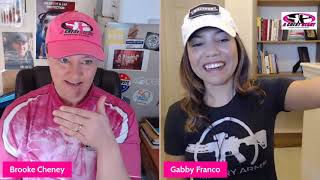
Olympic shooter Gabby Franco, born in Venezuela, discusses her 30-year shooting career and transition to teaching. She emphasizes fundamentals over tactics, the mental side of hitting a static bullseye, and why new shooters need reputable instructors and clear goals.
Chapters
Oh yeah. Did you just put your phone on mute too?
Yeah.
I'll do the same thing because I was actually waiting for you to call if you needed me for tech, but we're good. So we're going to start anyway. Hi everyone. Good morning. My name is Brooke Cheney. I am the owner instructor here at A Great Start Shooting School. I am— this is, I believe, number 5 of the instructor interview series. The purpose of this series is so that you as a brand new shooter have an idea of where our instructors came from. Today I am very happy to have Miss Gabby Franco.
Thank you.
Who I was fortunate enough to meet in DC the first time, I think, with it through the DC Project. She is an Olympic shooter. She is an amazing Second Amendment advocate. And I don't know. Oh yeah, so my first question, because I'm trying to keep these all kind of the same. Is can you tell them a little bit about yourself? Like I say Olympic shooter, but they don't necessarily know what that means. So could you tell people a little bit about your job and what you do as a professional shooter?
Yes. So, you know, every time people ask me that, who are you? It's kind of difficult question to answer because it's so broad in so many ways. You know, I have, I was born in Venezuela. Oh, look who's there.
You know, everybody likes cats. I'll get better views this way.
I was born in Venezuela, moved to the United States after, you know, socialism and a lot of crazy stuff happened down there. And, but I have been shooting for right now for about 31 years and consecutively pretty much. And out of those 30+ years, I've been competitively for 20+ years. So the shooting sport has been for sure part of my life, has been part of not only who I am, but how I conduct my life and how I tackle even problems, thinking about the teachings I learned in Olympic shooting. I'm also an author. I'm an Army wife. I'm a mother. Proud US citizen, and I am just love what I do in the sense not only in the sports because it's fun, but because it's a personal growth. Every time I go to competitions, I grow, I learn, and I'm fascinated with that. I'm also a full-time college student.
So wait, wait, wait, wait, what are you doing now? What additional things are you doing now?
Yes, I am. I'm starting psychology. I'm working towards my degree in psychology. I'm supposed to graduate this year. So I have been, it's been a full 4 years full-time student. Trust me, it's not been easy, almost no weekends for the whole 4 years, but I could not be more happy, you know, that I made a decision after 20 years of graduating high school in another country with another language. So When I decided to go to the university, enroll in the university, I had no idea about English grammar. Those people who used to do interviews with me, and they know I struggle a lot with writing in English. It was very, very challenging, and it's still learning, but it has helped me tremendously. So, and I'm looking forward to my work in the future as possibly, most likely as a sports psychologist.
Wow, that's very, very cool. That is awesome. I did not know. I get to learn stuff today too. It's not just for you viewers, I get to get stuff. All right, um, what is your first memory with firearms? Well, I know it was forever ago, but you know, yeah, it doesn't have to be like the first time you touch a firearm, but just like what sticks out.
No, I, I can tell you the first thing that really stuck out was I, my dad introduced us my sisters and me to Olympic shooting, air pistol particularly. So that was the first one I did, even though it was not technically a firearm, but to me it was. And it was fascinating, the fact that the target didn't move, I didn't move. I just had to lift my arm and shoot and make that hole right there in the middle. And just looking at it, it seems so easy, so simple. But just being behind the gun and trying to do that, it turned out to be very complex. And I fell in love with that complexity, like the battle in my head into, okay, let me try it again. Oh, it didn't look good. Let me try it again and let me try it again and let me find ways that I can do it better. And I really— people ask me, where you find fell in love with firearms and all that stuff. I fell in love with the challenge that came with it and the personal growth and the mental growth that came with it. So yeah, that was my, my very first that I really distinctively remember, the contrast between how it looks to, man, it's not that easy when you are behind the gun.
And I love that you opened with that because one of the things we talk about is how so many students come in and they think all they have to do is, like you said, just pick it up, hold it, pull the trigger, there'll be a hole in the paper. It's just like, yeah, it's a little bit more complex than that. Um, and I—
making the hole in the paper is easy. Making the hole in the middle of the paper is the challenge.
Uh, I, I hate to say, but I've had students who don't hit the paper when they first start either, though. So I try to set like real expectations. Like, some people don't even hit the paper. Um, But sorry, I had a thought and I'm like, um, all right, I'm just gonna go on to the next question. Maybe it'll come back to me. Uh, what was your first time going to structured training? Like, what do you remember? Because I, I know you and I have had this conversation in over lunch or something in DC, but what is the first time you remember like really getting into training aside from your dad?
Me teaching or me receiving training?
No, with you receiving. You being taught, right?
So I, I, after years, probably 2 or 3 years after my dad introduced us to shooting, we got a coach. And it was very interesting because this coach, he had a degree in teaching. So he will come up with this big graphics on paper. Obviously nowadays everything is presented in technology, but back then was like this big graphic on paper. So what he expected us to do, how many pellets we're going to shoot every day, how many dry firing, how many minutes, hours, days. I mean, we were supposed to train per week, per month, per year. So it was a very detailed training for me, especially starting so young.
How old were you then? That sounds crazy overwhelming.
I was probably— I was back then, let's see, I was probably 13, 14 maybe when we got a coach, a very professional coach, and he trained us for, I mean, several years, almost my whole career after that. No, I would say my whole career after that. And and he was very methodical in the way he trained us. Yeah.
All right. So let's go back to the question you created, which I hadn't asked anyone. What is your first memory of teaching someone and what did you like about doing that? Because, you know, why not throw something else new in here today?
Right. So, you know, me beginning to start teaching was a very kind of— I'm going to make it short, but very interesting story because I had my job or whatever, and then I lost my job. So I found myself another job. In this country. I didn't have much family, not my parents, nobody. And I was going through very difficult situations with my marriage too, in the bridge of divorce. Oh no, I was almost pretty much divorced. And then, and then I thought, what I'm gonna do with my life? I just didn't know what to do. And I'm just, you know, crying, this world and whatever. And then I I, I, I know it was God who, who brought me this thought and said, well, do something that you know. And what is that you know? And I thought, well, I, oh, I really, really, really know is shooting. And then it was very interesting because back then, and we're talking 2009, around that time, there were not many female instructors out there that you could like we have nowadays. And so many men say, oh, you're going to be an instructor, but you're not a military, you're not a law enforcement. And I'm not going to say many, just a few. Many were very encouraging.
I've heard that too. That's like, well, you don't have the credentials to do this. I'm like, yeah, right.
You know, and, and, and it was probably one or two who were like that, but sometimes it's one or two. Unfortunately, in our mind, we always keep those negative thoughts.
And we can have 100 people say good job and one person, oh really? And that one person's like, wait, what?
Right. So I said, you know what, I think I know one or two things about shooting. And I started promoting myself about how to just shoot good. I don't care about tactics. I'm not going to teach you tactics. I'm not going to teach you anything other than shooting good. You feel comfortable with yourself behind the gun, feel confident that what you're doing and understanding the technique. So that was my, my principle, not necessarily just teaching how to pull the trigger and align the sights. I dabbled into the psychological part of shooting, and I did that because that's how I learned in Olympic shooting. You know, like I said earlier, We don't move, the target doesn't move. It's fairly simple. It's a pellet, there's no recoil, and still it's hard to shoot that bull in the bullseye over and over again. So more than ever, to me, was more evident that shooting is complex, not because of the technique, but it's because of what is in between our two ears. So it was fascinating the first time I taught because people that went to my classes never were taught with that perspective and the way I was teaching them. And they were seeing these results and they were feeling like this sense of like, man, it's kind of, it's kind of everything is, you know, you know, fixing, like everything is working the way it's supposed to work. And, and I enjoyed that so much and my students enjoyed that. That sometimes I saw them weekly. They'll pay me weekly to get them because it was almost like a, I wouldn't say an addiction, but it was like they saw so many, not only in results in paper, but their confidence was just like a boost that they were like, I want more of this. So I really enjoyed my time teaching when I used to teach a lot more.
Yeah, I do warn people it can be addicting because you can always be better. I mean, here you are, a gold medal shooter, and so many other things. And she's like, but you still are working on getting better. And it's just like, and like Jerry Miculek, who's one of the royalty of our shooting sports, and it's just like he's always trying to get better. So yeah, it is a very addicting thing and it's just so awesome because you're the same. What I was looking for when I started was I didn't want to do tactics. I wasn't going to do anything self-defense. I certainly wasn't thinking I was getting into competition.. But I just want to be able to pick the thing up knowing that it wouldn't go off. Like that basic, okay, how do I do this stuff? Right. So that's actually why I started my school, was so that people could go somewhere just to learn how to handle the firearm safely. And like you said, watching people go from not knowing to confident. And it's like, I remember that moment when I could pack my own range bag. I call it my Wonder Woman moment because it was just like, I know which pieces go together. It was so exciting. So, all right, so one of the things I found overwhelming when I was looking for training— like you said, there's so many tactical ninjas out there who are just military this and save your life and, uh, and I'm like, no, no, I just want to pick it up without killing myself or anyone else. Um, what advice would you give to a student who is looking for training? Because like I said, when I started, I just remember being overwhelmed, not understanding it. But what would you suggest?
Well, you know, nowadays there are many instructors out there, so it's very, very important to find a reputable instructor, someone that, you know, you, you have heard or, you know, through reviews online, or you have seen interviews about them, that they are safe, that they are— they know what they're doing. And they're doing it right. And I'm not saying right because there's only one way of doing things, but there's one way to be safe with firearms, if that makes sense. You know what I mean? Um, and I think that's very important when you're seeking training. And have an idea of what you want. You know, sometimes people say, okay, I want you, you know, you to teach me. I'm like, okay, what is your intention? If your intention is just for concealed carry, you just want target practice, you want to do competitive shooting. It's like many things in life, you know, you cannot train the same when you train a marathonist, you will train somebody who does sprints. I mean, you would say, oh, but I'm kind of running and doing the same thing, but it's not. So, um, people have this idea that firearms is only for self-defense, and sometimes I get that when I do my mini tutorials and video. Oh, but you're— that's not what you do in self-defense. I'm like, well, but there's not, not everything applies for everything, if that makes sense. It depends on the activity that you want to do. So being clear of what you want to do, not everybody is ready to right away use a firearm for self-defense. And I think that's good. You know, when you decide to use a firearm for self-defense, you have to be confident, confident, and know what you're doing for your own safety and the safety of everyone around you. Uh, but for that reason, it's so important finding a training that is reputable and that it could be going to give you the necessary tools for you to build that confidence and, and that strength and obviously proficiency, uh, when you are shooting.
Yeah, I definitely, um, the safety thing is always number one. Uh, one of the courses I teach is the NRA Basic Pistol and it always talks about rule number 1, safe direction, rule number 2, finger off trigger, and rule number 3, gun unloaded till ready to use. Everyone's like, but I'm like, no, no, no, this is a safety course, this is not a self-defense course. It's like, yes, your gun can be unloaded until you're ready to use it for real. And when we teach, um, a safe direction, it's always parallel to the ground, perpendicular to your backstop, right? And I'm like, when you get into different scenario training and that sort of stuff. If you remembered what your safe direction is at the range, then you could start working on dynamic. But yeah, it is, it's amazing how many of the keyboard warriors want to tell you, well, that's not it because there's a dynamic safe direction. I'm just like, okay, when you're starting, you want to learn the easiest, simplest things first, right?
Right. And that is, and that's why it's so important that the person that you are choosing to teach you is aware of those things as well. That is not just a one thing fits all, because like I explained earlier, that's not the case. There are many things that are—
I have the perfect thing for you. One size never fits all.
Right, right. It doesn't. So it's important that a teacher has You know, when you have an open-minded person that they can have perhaps, or knowledge, a little bit of knowledge of a variety of not only scenarios but also activities and sports and disciplines that you can practice shooting, they can understand you better and your perspective instead of saying no, this is guns just for self-defense and this is all you're going to do. And then you're like, you know, no, that's not the case. There's so many things also that you can explore and you can do and, and be better at.
Yeah, I know. Um, one of the things that had never occurred to me when I was looking for training was to pick up the phone and just call and ask questions. And it would say, oh, Handgun 101, blah, blah, blah, blah, blah. And I'm like, I was so new, I'm like, I didn't— I really didn't understand blah, blah, blah, blah, blah. And it could have been something as simple as you need to have, you know, a specific type of gun or something for the class. But when you don't know, instructors don't expect you to know. That's why you're paying them to come to them. So make that phone call. All right. So we touched on this a little bit in the beginning, but what advice would you give to a brand new student that thinks all they have to do is pick up a gun and pull the trigger? And the reason I say we talked about this a little bit is because in your story, you already talked about how you picked it up, you pulled the trigger, like, oh, this is work.
Right, so, you know, pulling the trigger and aligning sights is fairly simple, and that's why anybody can be a good shooter. I mean, anybody can be a shooter. Shooting a gun is not really that complex. Being proficient with a firearm, it has its complexity like any other sport. It's like golf. How difficult could it be just to hit that little ball, right? And, and, you know, it does require some level of expertise and training. So training is very, very important. But even before we go to the training, understanding the technique, the fundamental fundamentals of shooting are very simple. Like I said earlier, very, very simple. There's not much to it. The difference is, is how we perceive the information, how our brain receives and processes information that we see behind the gun. And the reaction we get, we have to what we're perceiving. So it's not enough to know the technique because everybody tells you, oh, I know how to align my sights, I know how to press the trigger, and yet it's very difficult for them to shoot a bullseye in a static target. So understanding the techniques, understanding yourself, You know, we have inner fears, understanding how those inner fears are affecting the way you're shooting, affecting the way you, your anticipation per se, and inner thoughts that may also affect how you perform. That comes to the way you talk to yourself, could be negatively thinking, oh, I'm always nervous when I shoot. I always jank the trigger when I shoot. So those, the kind of talk that you do, even though you seem like it's innocent, it's constantly digging in your brain and your brain says, yes ma'am, or yes sir. You say, you're telling me that that's what you do or what I'm supposed to do, I'm gonna keep doing it. So, you know, and that's the part of, fascinated by the shooting, by shooting, the shooting sports. And one of my biggest motivations to study psychology because I'm fascinated about the brain and how we perceive things in our behavior out of those perceptions, because most of it is perception, you know, in life, you know, to give you an example. I have students that they tell me, oh, but Gabby, The gun moves a lot. I see the gun moving a lot. And I put a video, you know, I filmed them behind them and they feel, right, they feel that they are moving, the gun is moving like, or like this a lot. And then when they see themselves in the video, they see almost, if not as much movement as I had, a natural movement. And they're like, that's not what I see. And I'm like, it's just a perception issue because you're comparing something that moves, your body, I mean, we move even if it's just energy, even if you hold your breath, even if you hold your breath, you're gonna still have movement, and you're comparing that movement against something that does not move, so obviously it's gonna, there's gonna be that vision or that perception that movement feels a lot bigger than what it is, So, you know, understanding certain concepts of you as a human, then you as an individual, and then why you're supposed to do compared to the technique is a big deal. So it's more, a lot more than just aiming and pulling the trigger.
Yeah. Um, competition shooting is totally a mind game in that if you're, if you're having— I mean, because there's days when I'll go down the range to practice and I'll shoot like 10 rounds, I'll be like, okay, we're done, today is not that day. Because you, you do have to be in that headspace. Um, when I was an athlete in high school and I was training for, um, the Olympics as well— I didn't make it, but you know, I tried— but it was It was definitely the— you want to close your eyes and actually see what you want. You don't close your eyes and imagine what you don't want. And unfortunately, like we were talking in the beginning, where it's like if 100 people say, good job, oh, that's awesome, and one person says, oh, well, you could have done it a little better here, and that's all that sticks, right? And it's just like, it's making sure that you change that. That thing when I do my Suicide Prevention Saturdays, I always say I am are two of the most powerful words because whatever you put behind those two words are your reality and it's how you focus. Because if I am awesome, which most of us feel awkward saying something like that, but if we do it enough versus, oh, I suck, because I don't know about you, but I've had plenty of students tell me that. I'm like, You're brand new. You're just learning. You're doing great. You look amazing to me. Like, I've had some naturals come through and I'm like, that's awesome. But they don't know where their expectation is, or they have an expectation way out of reality.
And it's important to say that doesn't only happen to them. It happened to us too. And it's part of the constant battle between our ears. You can be good at certain things in your life and you may not be good at certain other things in your life, and that's why, and we see it all the time, athletes who are medalists and stuff and they turn out to have an issue in other aspects of their lives, so it is a constant battle in your brain, and that's why I tell my students, the mental toughness of saying, okay, I was not good today, but I'm going to try it again. I'm going to try it again. That resilience comes with always trying, always finding ways to become better and accepting that sometimes you are not. So accepting that sometimes, as a human, you make mistakes, accepting that sometimes you are tired, sometimes you go through processes in life that doesn't help you move forward, but at the same time, you understand that it's your responsibility and your duty to get out of that hole, meaning if you feel down or if you feel that that day was not your day, like you're saying, yeah, you packed your stuff and you know that you're going to come back and you're going to try it again, and I think that it's very important, even to the most small little things.
Yeah, it's always a journey. One of the stories I tell my students is like, if I could take my 2008 Brooke Cheney and I looked at my 2022 Brooke Cheney, I'm like, I would look like a rock star to the 2008. But right now in my journey, I'm just like, oh my gosh, I am so bad because I know where I could be if I practiced more. And it's like, I would go to competitions and I'd see like some of these awesome shooters And I'd be like, oh my gosh, that's amazing. I can't believe you missed one, like kind of thing. My husband would be like, shut up. And it was just like, I'm like, because their level of where they're at is so much different than where I was. So it looked to me like they're always doing well and they'd be like, oh no, I missed this because of that. And it's just like your perspective changes as you go through the journey of whatever you're going to learn about. All right. So now I got a hard question for you because you've had such a long career. What are you most proud of in your firearms journey? And it can be anything. It doesn't have to be an accomplishment. It may have been just finally stepping up and teaching. It can be any of the stuff that you've done or your growth or whatever.
You know, it's— I really have had so many, um, different instances that I would— I mean, probably hundreds. But I would say once when I applied I mean, Olympic Games was phenomenal, but one that was hard for me, difficult, was when I applied for Top Shot. Okay, that was when at the beginning of my, um, my, uh, career, career as a firearms instructor. And one of the producers asked me that if I was not afraid to compete and possibly be eliminated at first, and that could ruin my career in the shooting sports. And I remember distinctively that I told that producer, I said, no, I would not. I'm not afraid because nobody can take away what I've done. Nobody can take away that I went to Pan American Games and won gold medals or the international medals I have won, uh, and my participations in my home country, or even that I went to the Olympic Games. So, um, that to me showed that all those years of training was not only shooting per se, but it was a mental preparation. It almost like it prepared me for life to encounter biggest challenges and make big decisions. So to me, the shooting, like I said earlier, is more than just shooting and putting bullets in the paper, but has been a journey of personal growth. And to me, it was, you know, that young and in the difficult position that I was, I would say thank you to the shooting sports for giving me that strength and that wisdom. To, to think that way.
Yeah, it's so funny. I love that it's about the growth, and I think it's really interesting that I know for me, like I said, I had my Wonder Woman moment, like, oh, I know all the pieces that go in this bag so I can go to the range. I was so excited. And but it's just like the confidence that's built. And I honestly, I was always a tomboy, and it wasn't until I got into the shooting sports that I started having girlfriends. And I think part of it is, is that we do have a new, different sort of appreciation by having the confidence that we learn by learning how to shoot. I mean, it seems like it's so simple, and I'm like, oh, you know, you, you must be great to take all your anger out while you're shooting. I'm like, no, it's, it's a very Zen sport for me. It's, we're focusing on a thing. I don't have to think about the kids or the job or anything else. But I mean, I think there's just this inherent confidence when you learn how to do this. And like you said, learn how to do it well, learn how to do it safely, learn how to do it so you're enjoying the process. Because guns are not for everyone. Like, not everyone's gonna pick it up and enjoy it and want to keep going.
Like, motorcycles are not for everybody. Like, things are not for everybody.
So, all right, we're on to the final question.
Okay.
Is there anything else you would like to share? I mean, part of me is like, wait, I also want to know which season of Top Shot were you on? But we can do that later. I'll put that in the bio or something when we're done. But what, what else would you— so again, the whole focus of this series is brand new people who are looking for training or understanding how to get into the firearms world. So got anything?
Well, there's so many things I could to think about and to share. But what I would say is, uh, never stop learning, you know. Um, even today I have my struggles, my little struggles when I'm shooting, uh, trying to find a bridge between going fast and being accurate. And, and, you know, it's, it's always that self-discovery. So I would say continue seeking training, continue seeking knowledge. Safe at all times. There's no, no, no, nothing that can disrupt safety. I mean, in your mind, that should be your priority. And, and be knowledgeable about your rights. That's something very important I tell everybody. Even if you're a new shooter, you have right now the right to own firearms because that's the right that is our founding fathers. Well, they say it's from God, but unfortunately, as most of you have seen in other countries, that's not the case. So we have something that I believe everybody around the world should have and something that we should always be aware of and be ready to protect. So it comes with a big responsibility, you know, having that honor to have guns comes the responsibility to be trained, to be safe, but also know that, you know, we have it and we need to continue to protect it.
Thank you for that, because it is absolutely something that I meant to say, because one of the things that, um, that you and I also, because of the DC Project, we hear this is like Well, I'm a gun owner. I support Moms Demand Action or something like that. And it's just like, there's a difference between understanding how our political system is currently working against us as gun owners versus being a gun owner.
And I would say I would go beyond. It's not against us as gun owners because there are so many people who were not gun owners a month ago or last year, but after riots and all that stuff, they become gun owners. So it's not a thing of you are a gun owner or not. It's a right that we have. I mean, there's— we, we live in a world that we need to make sure that we have more rights than less rights. And so, because like we saw and many people saw last year, you don't know when you're not gonna need it. So, um, I think it's, it's, it's a battle between control of the population and having a free population. And so which one you're going to choose? Are you going to let the government control you more than they already do, or you want to choose more freedom? And so it's, it's a very important subject that we all, not only gun owners but as citizens of a free world, we should strive for.
Yeah, absolutely. Here in Connecticut, I've sat through 30 hours of testimony for all of the anti-gun bills that we currently have running. And the challenge is, is they're called gun violence prevention bills. And one of the statistics here, just in Connecticut alone, I'm like, 75% of violence occurs without a firearm. And if we want to prevent violence, we need to actually focus on violence. And not on the object that somebody is afraid of. Because guns do create fear for some people, and it's just like, we need to focus on the bigger piece. The other thing is, the reason I do Suicide Prevention Saturday is because 2 out of every 3 deaths you hear about are suicides. They're not crime. And, and so it's like just little things like this that you can learn, whether you're— like Gabby said, whether you're a gun owner or not, to understand what's actually happening. Because I was that person who said, oh, what does it matter if they give us a 10-round mag? There's still bullets in the gun. And then I got in the competition world, I'm like, oh, that is a gun ban. Okay, now I know. So, all right, ma'am, well, thank you so much for your time.
Oh, thank you for having me. Love it.
With that, we are done because I have a short attention span, so I'm trying to make it And, uh, hopefully I'll see you in DC or somewhere like that.
Yeah, definitely. I didn't actually— I didn't know that you live in Connecticut. Yeah, why? I thought you live back in Utah.
Well, it's so funny, I was actually thinking about that because I'm like, I don't know where you currently are living either. Um, I'm in Virginia.
Okay.
And because in the gun shooting community we all meet at places all over the country, and I'm like, I don't know where half my friends live, quite honestly. I'm like, it seems like a very odd thing, but I'm just like, yeah, I— even in New England. It's like the people I see at matches across New England, I'm like, I don't know what state they're actually from.
So no, thank you so much for inviting me to, to your show and giving me an opportunity to share my thoughts with you and everybody.
Well, thank you very much. And anyone who doesn't already follow her, follow her. She's— it's so inspirational because, you know, you've seen what happens when guns are regulated out of the population. And as a new gun owner, I know it feels like this is heavy, and they're like, oh, I just want to learn how to shoot a gun. I'm like, you won't have a gun to shoot if you don't learn about your rights and how to defend them. And share that again with non-gun-owning people as well, to understand it's about freedom. It's really not about having a firearm. So on that note, we will go.
Goodbye. Bye. Thank you.










