Instructor Interview #6 Annette Evans
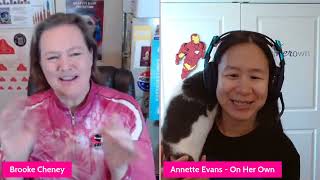
Annette Evans, a firearms instructor now operating as On Her Own, started shooting at 24 after law school. She credits dry-fire practice 4-7 days a week for maintaining skill and emphasizes finding instructors who understand your lifestyle, not just certifications. Her new project explores the skills women need to survive independently, from self-defense to everyday survival.
Chapters
Yes. Okay, now it says live in the left-hand corner.
Yeah, no, don't worry about it because it's not going anywhere. So worst case scenario, I just edit out a little bit of this. Um, all right, so good morning. Thank you for showing up.
Hi Brooke, it's good to catch up with you.
Yes, yes it is. All right, so as we determined, you are number 6. Of our 10-week series of instructor interviews, um, put on by Great Start Shooting School here on our YouTube channel. And I am talking to as many instructors as I can to kind of help my students understand that none of us picked up a gun knowing what to do, and we all sort of had a journey. So the idea is to sort of share your journey with us. So for all my folks This is Annette Evans. She and I have been friends for a long time, over a decade, because they're having that long— yes, they're having the 10th annual A Girl and a Gun conference this weekend.
Wow.
Yes. I mean, I don't know that we knew each other before then, but I know for sure we met there.
Yes.
So that's why I'm like, yeah, we've known each other over a decade. So I've learned about purple zebras, and if people want to know more, they'll have to talk to you directly on that. So for a quick interview or a quick intro, would you please share with my watchers who you are and just a little bit about like— wait, where do— because I don't want to give away too much. We've got other questions. So who are, who are you now? What are you currently doing?
So my name is Annette Evans. I was once primarily known as the Beauty Behind the Blast. My current branding, the current work that I do is under On Her Own. I am a writer. I am a I am a self-defense person who has also spent a ton of time in competitive shooting. So a little bit of everything over the last about 15 years now.
Very cool. Thank you. Very succinct also.
Love that.
Because I'm like, it's so funny, I ask other people, they keep going. I'm like, wait, wait, we've got a question to cover that later. So I'm trying to stay on task so we stay short-ish, right? Because as we discussed before the interview, I'm like, Yeah, you and I could sit here and talk forever.
Yes.
All right, so what is your first firearms memory? I.e., have you been one of those girls that have just had guns around all your life? How did you get introduced? What, what would be the story there?
So the first time I ever picked up a real gun, I was 24 years old. I had just graduated from law school, I had just gotten married, and my now ex-husband, had shot for his high school rifle team, had gone to this work event where the boys went to the range and rented some guns and shot them. And I went, wait a minute, I want to learn how to do that too. I think that every girl should learn how to shoot a gun. To me, it was sort of acquiring a life skill, you know, kind of like learning how to drive stick or learning how to, you know, plunge a toilet or fix a clogged drain. Change a flat tire. I'm like, I want to learn how to shoot a gun. It seems really cool. And I kind of, you know, wheedled my way into going to the range. It's a little bit of blind leading the blind. My friend Jordan Pastorek of the Defensive Collective talks about people who start from less than zero. That was definitely me. And it was really just a matter of, well, you know, let's see what I can do with this.
Very cool. Yeah, it's so funny because I know that for my teaching, a lot of my students assume I've been around guns all my life, and the truth is like, yeah, I have— I was, but I didn't know anything about them. Um, I prefer the people like you, me, Tatiana, who sort of really got into it later on in life. I mean, not that 24 is that old or anything like that, but all right, that old now.
Yeah. I know.
Well, you know, we're not going to talk about that. That was that. Yeah, I know. People are like, don't ever ask a woman her age. I'm like, I will proudly tell you I've made it through over half a decade and it's all good because it's like every year is another accomplishment. So older is a good thing. Um, this I have no idea on this one. I can't wait to hear the answer. What was your first time going to actual structured training? Because I know you've been to structured training because some of my instructors I don't even know And I mean, it's the first time that you remember, right? So what was the first time? I don't know if it was Bruce.
I don't know.
You've got so many choices. So I'm like, yeah, I wish Bruce Gray had been my first trainer.
That would have changed the course of my shooting career. Um, no, I started— I, I started, and this was perhaps not the wisest thing in the world, you know. I'd been shooting for a while. I was doing kind of okay, and I went to an NRA basic instructor course. Okay. That was probably way too early in my shooting career. I followed that up by taking several of the other NRA classes for pistol, the NRA instructor certifications. Back then you could only go through personal protection inside the home and outside the home. But my first sort of like non-NRA class was, I went up into the mountains in the middle of nowhere with an instructor that I had met and he did like a, a camp. It was like a 2-3 day defensive firearms camp where you did nothing but like stay in a cabin and go up to this private range and learned defense— defensive firearm shooting with, uh, pistols.
Were you a competitor?
I'm just going to slide in the lesson. One of the biggest lessons that I learned in that class that had nothing to do with shooting and everything to do with training was to buy an OpLula.
Okay, and for those of you who don't know— wait, wait here, um, yeah, those of you don't know, it's a thing that helps you load your magazines a lot faster. So I'm guessing you were not a competitive shooter yet because I don't know if it doesn't have an OpLula.
So yeah, I had barely learned how to draw a gun out of a holster by that point.
Gotcha.
All right, um, Let's see. Sorry.
Structured training. All right. Yes. I'm going through my checklist. I'm so proud of myself for having a checklist. I know. All right. What advice would you give to a student looking for training? Because like, I know when I first started looking, I would read what they had to offer and I'm like, I don't even know what they're talking about. And I didn't think to like pick up the phone and talk to them or ask a question. So what would you, what would your advice be?
So you have a really good start of, well, I read all I could about them., right? Like you have to vet your trainers. You are trusting your life to them, not only on the range but off the range with what you might be learning in class, what you might be learning about carrying a gun if you're going to carry for self-defense, or about even using it on the range. So, you know, it's, it's a life or death kind of decision even if you're there to have fun. And I think that we're all, you know, we should be out there to have fun, we should be out there to enjoy it, But you need to take that very seriously. And I think one of the challenges when you're new to this is, well, I'm reading all these instructor bios and I guess they sound good to me. I don't know anything about it. So, you know, asking people who you already know who are, you know, kind of deeper into the firearms world is a good start. Another thing you can look for is— and hi, this is my cat, Tuna.
And another thing we did say, there might be cat tail in the, in the video ahead of time.
I'm sorry about that. One of the things that you might want to look for is not just instructor certifications, because, you know, anybody could take a class and hang a shingle, but you're looking for a little bit more varied experience and varied time. You know, I want somebody who's taken more than a couple classes, who has more than a couple years of shooting under their belt, and has decided to hang out a shingle and say, "Hi, I'm an instructor." If you're looking for specific certifications or specific qualifications, that's kind of hard.. But I really like the Range Master Instructor certification. That's one that I have myself. And almost everybody who comes through that program has a pretty good base.
And who is that through?
That's through Tom Gibbons.
Okay. So another, another— so we're going to go off on a little bit of a tangent just because the other thing that I find all the time is like, oh, well, they were military, so they know what they're doing.
So let's talk about contextualization. Sorry, I just saw the lawyer out in her. If you were thinking about using firearms for a particular purpose, whether it's competition or fun or for home defense or for concealed carry as a civilian, you know, as somebody who's just like an everyday person going about their life, then you need to think about having an instructor who is able to speak to your specific concerns in your specific lifestyle. What somebody learns to do in the military or what somebody learns to do as a police officer isn't necessarily applicable to what you're doing in your normal everyday life. So either they need to have that experience or they need to be able to talk about how they've translated what they've done to what you need to go out and do.
Yeah, I mean, one of the other things we've talked about too is that just because someone is a really good shooter does not necessarily mean they're a really good teacher. And I'll give the example of I'm not the best shooter, but I think I'm a good teacher. So, um, because I have had people who have higher skill sets than me come to my class— classes just because they need someone to watch what they're doing, that sort of thing. So yeah, and, and the other thing, like, my— one of my favorite things on the wall is trust but verify. And you don't know what you don't know. And folks who have just been shooting all their lives may or may not know how to teach you stuff, because that was my student yesterday. She's like, my husband's really good and he's really patient, but he sort of does a lot. And you break it down in little tiny pieces. I'm like, well, because he doesn't understand how much he's doing naturally because he's been doing it all of his life. So yeah, just because someone's been shooting all their life also does not necessarily make them an awesome trainer.
Um, so it doesn't— even if somebody's really, really good at one thing, it doesn't mean they're really good at another. You know, concealed carry in particular isn't just about the skill of getting your gun out of the holster and making a bullet hit the intended target. There's so much else to it, and there's other people to learn from who may not be the best shooters in the world but are really good at coaching or really good at all the other pieces that you might need to learn. So there's a lot to be said for instructors who understand, I hate to use this, who understand their lane. And one of the best ways I think to find that is to find instructors who have trained under a wide variety of other people. You know, if all their training is from one source, then you kind of wonder, well, what do they know besides parroting that one source?
Right. And I mean, I will definitely tell, like students will come to me like, oh, well, you know, what about rifle? What about shotgun? I'm like, oh, I can, I can bring you to the basics of rifle and shotgun, but if you really want to know, here's who you want to go to. I've got this one coach here who's a Hall of Famer in Connecticut, and he's always working with kids, and he loves teaching, and it's really his passion. Oh, you want long-distance rifle? Okay, I got my other friend over here who this is all he eats and breathes, and he's actually very good with people, you know, and it's just like the one size never fits all. Sorry, like, wait here, I'll hide for— you're the cat buffer. Oh, all right, well, you said— all right, so the next is, um, what advice would you give to brand new students that think all they have to do is pick up a gun and pull the trigger? Because as we talked a little bit before, it's like my— I have students that will come in here and they'll be so amazed or annoyed that they don't have to just pick up the gun. Uh-oh, gonna try to get the cat out of here. Did he get in your hair?
She's— she's— her claws are a little long right now. Sorry about that, guys. We need to get it to lose the tuna. Lose the tuna. Tuna, we're cutting your nails tonight. Sorry about that.
All right, no worries. So, all right, I had to edit that. Yeah, you think I'm gonna edit that? Maybe, maybe not.
We'll see. I'm not sure.
We'll see what happens. All right, so wait, I'll start it. Ready?
Okay, ready?
Pause.
All right. Hi.
That'll be where the edit will go. I don't know. We had a cat butt interruption. Anyway, what advice would you give to brand new students that think all they have to do is pick up a gun and pull the trigger? Because I find students will be either frustrated or overwhelmed by how much there really goes into shooting a gun.
So a lot of us live in suburbia enough to have at one time in our lives learned how to drive a car. And I want you to think about how much went into being able to drive that car. You know, you had these pedals, 2, maybe 3 pedals. You've got to deal with steering wheel. You've got to deal with the turn signals. You might have to deal with other levers and buttons and things like that. And at the same time, not only are you looking at the front windshield of the car, you have to be checking all these mirrors, then you have to turn your head because there might be somebody in your blind spot. And, but all you're doing is putting your foot on the gas and staring down the road, right? So shooting a gun is a lot like that. It's a mechanical tool that requires a number of skills in order to master it, in order to even use it effectively before you get to a high level of mastery. Just like driving a car, just like using kind of any other mechanical instrument that you might use in your everyday life.
Very cool.
I like that analogy.
That works well for many people. I have one friend that I know of that doesn't drive, and it's not because she hasn't tried, it's because she really just can't do it.
But most of us have had the experience of learning or imagining learning, and I think that that— and if it's not that, like, think about, you know, using your cell phone. And a lot of us at this point, you know, we've been using a smartphone for forever, it feels like. Like, you know all the different functions, you know how to get to all the settings, and it's very, very simple. You just, you know, put your finger on the thing that you want to do and it does it. Right. Go to somebody who's less familiar with cell phones, uh, or whatever reason.
If someone's got an iPhone and you've got an Android, or vice versa, just, just that alone.
It's a little bit more awkward, doesn't it?
Very much so. It's like, uh, no, I don't know how this works at all. Um, what— when did you get into competition? Like, you went to your— some courses, and then how did you and your husband get— or did he— wasn't in competition yet? Oh no, he'd been in rifle competition before.
How'd you guys get into this together? Yeah, it was sort of like the thing that we did, and I got into it because I had learned how to In personal protection outside the home and in this defensive pistol class, I learned how to draw a gun from a holster, but there was nowhere for me to practice that, right? Like most ranges that you go to won't allow you to work from holster. And we found out that, you know, if you go to competition, they'll let you work from holster in the course of a match. And the person who ran that defensive pistol class, Dick Reinheimer, he also ran a sort of defensive pistol match that doesn't run by any of the rules that we're familiar with in IDPA, USPSA, but it was somewhere we could go and shoot scenarios and work from a holster. So I got into it because I went, I have this new skill, I want to practice it, where can I go to do it? It wasn't really about winning or, or, you know, chasing mastery or anything. I just wanted to be like comfortable, right?
Oh yeah, that's totally where I started. It was, I'd been shooting bullseye and then it's like I met this guy, Craig Buckland. Some people know him, some people don't. Um, and he, he brought my husband in. It's like, oh yes, come, come with me. And I'm like, I just still remember that first competition. I'm like, I have a loaded gun and you want me to move? Are we sure this is a good idea? Because I had not had any training at that point. I mean, I had some training, but I was like, okay, really? This is— yeah. So I just want to try to encourage people. It's like, really, competition? And, and it is the other thing too, is like, you You cannot draw from a holster pretty much at any range. You can here at a Great Star Shooting School, but that's because you're always under the watchful eye of a safety officer or a range officer or whatever you want to call— I am.
So one thing I want to mention is, you know, not just my first match, but like my first like year or two of matches, I came in last place at every single match I shot. We measured my progress by how much it— how much last place did I come in? Yeah, you know, it was really cool when I came in last place by like a little bit instead of, you know, we— a lot of these were time-based scoring, so, you know, you have a winner who's really, really fast, and then you kind of like work your way down, and then you take the second to last place and you double their time or more, and there I was. I'm like, I put the wrong person up, and there I was all the way at the bottom, and, you know, I was like inching my way up like competition in the beginning was definitely not a place I went to, to try to win. I was just trying to lose not as badly. Yeah. And I, I don't mean lose by like second place, I mean like last place.
Yeah.
Yeah.
And, and I was there with you in that, um, like I got to— I was lucky enough to go to Smith Wesson Indoor Nationals like in 2011 or 2012, and I met this lady Kitty, and, um, Kitty Catherine and I would would vie for a case of soda, 'cause neither one of us really drink. And it was who was closer to the last place actually was the winner. But we always knew we could just go to the bottom of the list and like see if we were 5 up, maybe in the top 10 of the last place winners, and that was our bet to see who really won. So she and I would pat, you know, we would have our little competition of, all right, who's closer to the actual end? So we were usually in the top, the bottom 10., and it's just like, yes, that's where I was. And now it's like I'm kind of sort of in the middle. Um, uh, Aiming for Zero is next month, and, uh, you know, they have different types of scoring. I'm like, I'm usually in the two-thirds, not in the top 10, not in the bottom, but somewhere in the middle.
So, you know, one of the matches that I used to shoot, a monthly match at an indoor local indoor range, it doesn't exist, the match doesn't exist anymore, but I went from like super, super last place to like last place to like second to last place, got out because I got lucky. I've gone back and won that match. Yeah, so you know, there's hope. Yeah, but I never ever forget where I started, which was so far in last place. We're not sure she shot the same match, and we're not sure she only shot it once.
Yeah. Okay, all right, ready? Next question. What are you most proud of in your firearms journey?
So besides the fact that I have gone back and won matches I lost horribly, one of the things I'm super, super proud of is I have been able to put in enough work over the years, and it's been a lot of work over very many years. I mean, Brooke and I have known each other for how long now? Over a decade now. I am at a point to the point now where even if I haven't been shooting a whole lot, even if I haven't been practicing a whole lot, I have a base level of competency that makes me satisfied with my ability to go out and make a respectable showing out of myself if I go to a match or I go to a class or something like that.
But more importantly, to be able to defend myself. All right, so let's talk a little bit about the work side of things because I don't remember when you were doing this, like it was in the teens somewhere of 2013-14, but you would go online on Facebook on a regular basis and you would share with us that you were doing your dry fire practice.
And before that got popular on the Grams, I was dry firing a lot.
Okay. And for those of you who don't know already, dry fire is basically doing all your skill sets without live ammunition.. It could be drawing, it could be reloads, it could be pulling the trigger, it could be all sorts of different things. And I think that's sort of where I got to get to know what a ridiculously hard-working person Annette is, because it would be bandages on her fingers to go over the blisters that she was creating because she was dry firing so much, kind of thing. So yeah, a little bit. But because of that, we now have this, the dry fire primer. And this one is written on because she actually wrote in it for me, so no one can have mine from my school. But, um, she helps you understand how easy it is to dry fire. And so what she just talked about, as far as having that competence no matter how long it's been because she did so many hours of work over a long period of time. I mean, when you were doing like the, the dry fire stuff online, it was what, 20, 30 minutes a day that you were doing that, like 5 days a week?
Yeah, I was dry firing probably 4, 5, 6, 7 days a week. I was going in, you know, a short dry fire session might be 10 minutes usually more like 20 or 30, sometimes even longer than that, depending on if there was some particular skill that was really driving me, or if I was getting ready for competition or something, or I just got really into it. It was definitely a huge time commitment, commitment. And I'm not saying that everybody needs to do that to get to a level of competency that they could be comfortable with. It's my journey and what I did, and it's what's gotten me to a point where, you know, I'll go— the pandemic's been really tough in terms of practicing and competing and everything else, but I'll show up to like the Rangemaster Conference, the tactical conference, and do their— they have like a little match in connection with a conference where you shoot a short course of fire, and then the top 8 ladies will go to the shoot-off. So I'll show— I'll, I'll get there, I'll shoot that, and I'll go to the shoot-off. But it's only because, you know, I have all these hours and hours and hours of doing that work in the background so that now that my skill has degraded and everybody's skill will degrade if you don't keep up with it, that it's degraded to a level that I can continue to work with.
All right. Yeah, I— yesterday I just happened to have 3 new students. And they're like, there is so much to learn. And I'm like, yes, but it's one of those things I'm always like, here's the thing, you came to me this week. If you come back next week and the week after, then we've got a nice basis because we're— I'm only working with them an hour at a time. And now I can send you home with more homework. And it's like, I wish when someone is— when I had started, that someone had told me about dry fire. Because I'm like, we had guns in the home because my husband had guns I just knew not to touch them. It wasn't until I had kids that I'm like, I need to know how to touch these. And it's like, if someone told me about dry fire, I'm like, that would have been so much better because, oh, I've got guns in the house because my husband already has them. I don't have to get one for myself and I can practice all this stuff. So Dry Fire Primer by Annette Evans, everyone should have one. I mean, it's just an easy way because like the Dry Fire Dojo is super important. Understanding to make your workout— because dry fire is just another form of workout— easier by having stuff set up ahead of time, it's how to win. Oh, so let's talk about on her own, huh?
But you had something else to say. I was going to say one of the things about dry fire, and actually something— I actually want to go even further back from that. Something that's really cool about what you're doing is this: we can have an hour lesson every week And man, if I'd had that when I started shooting, like what a gift that would be. It's just like learning a musical instrument, right? Like a lot of the firearms training paradigm is you go and you take a 1 or 2-day class and then you kind of like fumble along on your own. Maybe you dry fire, maybe you're able to chunk things up a little bit and kind of master a piece at a time. And then 6 months, a year, maybe 2 years later, you go back and do another 1 or 2 day class and try to undo everything that you've taught yourself and learn some new stuff. Yeah. So I really like that idea. If you have the opportunity to do something like train with Brooke and go once a week for a period of time, that's going to be awesome. Yeah, that's, you know, an area where dry fire can really help you because you're not just practicing every week or 2 weeks or month or 3 months that you can get to the range.
You can practice little pieces and master little pieces at a time in between, right? And my students yesterday, like I said, I gave them two things. I'm like, here's the thing, don't try to do it all. It's like, here are the two things you're gonna work on. And, and it's one of those things where when my kids were little— my kids were only like 3 and 4 when you and I met. My son's turning 16 on Sunday. Um, maybe they were 5 and 6 then, but anyway, um, but when they were little and I was looking for training and all I could find was a a 1-day or a 2-day or a week. And I'm just like, I've got little kids. I can't take a whole week or a whole weekend. I can't even take a full day. Are you kidding me? So I did actually open my school specifically so people could have little chunking times of, um, of that. And I'm so thankful for Babes with Bullets because that's where like my first like kind of all immersive— and it was, I actually left my children overnight for the first time simply to go to gun training. That's like how important it was for me to understand how to, to handle this stuff.
But yeah, there's a lot of value to immersive training. Oh, absolutely. Being able to get, you know, those hundreds, maybe thousands of repetitions over a day or two, and to, you know, think, eat, sleep that particular topic for a couple of days or a week. It's just, it's, it's a seminar. Right? And it's like a seminar and anything else that we do. All of us have some area of expertise and we've learned it bit by bit over time. And we all know somebody who has gone to some weekend seminar in our area of expertise and thinks they know it all now.
It's like that— you probably know this because you're very technical, but there is some theory that talks about We know that we know nothing. We learn a little bit, all of a sudden we think we know a ton, and then we learn more and realize how little we actually know. Yeah, Dunning-Kruger.
There you go.
Because I'm like, I know it's got a name, but I always forget the name. But it's just like— and it's one of those things people talk about. Like, one of the things I say is like, oh, how can they not know that? And I'm like, I find that is the most ignorant statement that anyone could ever make, because I'm like How can they not know that? Do you have any idea how much information there is in the universe? It's very easy not to know what little thing you happen to know. So, um, all right, anything else? I got through all my list of things, so we do need to talk about On Her Own. But what— is there anything in particular you'd like to talk about before we end?
So the biggest thing I want to give to The biggest thing— so the biggest thing I want to give to new shooters is that it's okay to be new. It's okay to be a learner. It's okay to come in and say, not only do I know nothing, I know less than nothing, because that's what you're here to do, is to address that, because you've decided that you're interested in learning something, you're interested in expanding your knowledge, expanding your skills, and that is something to be celebrated.. So don't be ashamed that you come here like, "I don't even know which end goes downrange. I don't know how you hold this thing. I don't know what this thing really is. Like, is this a semi-auto? Is it a revolver? What do those words even mean?" It's okay. It's okay. You can start there. We are happy to have you here now that you've started. And, you know, the sky's the limit. Just because you start there doesn't mean that hope is lost, that you will never get there.
All you have to do is keep doing the work. Awesome. Very cool.
Yeah.
And yeah, we don't expect you to know anything because it's like the amount of students that are just like, oh, I'm sorry, I didn't know. I'm like, no, no, no. Yes.
The whole reason you're here is because you don't know. There's all sorts of things I know nothing about. And if I ever screw up the courage to go learn something about them, I'm going to be like, what's this thing, one of my friends just started getting into calligraphy and, you know, I'm looking at the pen she's using, I'm like, I have no idea what that thing is and how you use it. Like, I know how to like write with like a regular pen, but like this, I thought I knew how to write and I know nothing about what you're doing now. Yeah. And that's just the way it is with anything new, and firearms are just something else new.
Yeah. And I mean, and this is the other thing that I kind of like about my model is that most of the time it's one-on-one. So it's just like, it's just me and my student, and they don't have to impress anybody. There's nobody else on the range. It's just, it's easy because we don't expect you to know anything, because why would you be paying us for lessons if that were the case?
So I used to tell my interns at my day job that, you know, you, you can ask anything You can ask any question twice. You know, it's not, you know, ask a question and learn it. By the third time, I'm kind of hoping you'll be able to reframe the question a little bit so that, you know, I can see that I've gotten through a little bit. But that doesn't mean stop asking questions. Right. Right. And it doesn't mean you just ask once and learn it right away. But, you know, give me a little bit effort and I will be able to put a lot of effort into you.
And then one of the questions I started asking, I think last one was, what made you decide to become an instructor and what made you start teaching?
So I mentioned that, you know, my first formal class was the NRA Basic Pistol Instructor, and that was totally a mistake. I had had this idea, well, you know, I feel like, not knowing what I didn't know, I'm pretty okay with firearms. I'd like to be able to show other people what I'm doing and have a credential behind my name in order to do that. And that was completely a mistake. I didn't know what I didn't know. I didn't know how much there was for me to become a safe and effective instructor who holds people's lives in my hands. I don't want to discourage people from the journey of becoming an instructor, but I think that you do need to understand that piece of it. And it wasn't until I really internalized that responsibility that I was able to kind of revisit the instructor path. And I don't teach a whole lot of classes here and there. I do a lot of instructional and educational material otherwise. And it's always keeping that in mind is that we are here to save lives and change lives.
And tell me how many aha moments you love watching on your students.
They're wonderful. They're so good, and I understand why so many people want to be instructors because that is so cool to see.
And it's just like— and for the student, we're hoping, of course, obviously it's great when they have that moment of, oh, I get it now. So, but yeah, and it is one of those things where, um, like Annette said earlier in the, in the interview, is that just because someone has a credential, whether it's NRA, USCCA, you know, whatever it happens to be, tactical arm, I don't know. There's so many out there. NRA is the one that just people are most useful for, but it's like, actually interview your instructors a little bit, call them and talk to them because you wanna know that first, like Annette said, like in my previous interviews, people always said, know what you're going for.. So then you can talk to your instructor and be like, oh, do you do this? Will you cover that kind of thing? And find out if you like talking to that person. Because if you don't like talking to them on the phone, you're probably not going to want to spend a day or a weekend or even an hour with them. So I just wish someone had told me that in the beginning, right? It's like, no, it's okay. They're people.
You can talk to them before you go pay them money and get some references. Talk to some people you know, who have taken classes from them and see what they have to say. You know, you can get them from that instructor, or these days you can kind of go online and Google the instructor's name and AAR, which stands for after-action report, and somebody's probably written a review about their time spent with that instructor. If they haven't, consider that silence may speak, may say something itself. Yeah, not always true. You know, there's some excellent instructors that don't have reviews out there, and there's also some reviews out there that are perhaps not as useful, but it's a good start.
Yeah. So, all right, so for my third chance, what is On Your Own?
Tell my students a little bit about that as well. On Her Own is what I call my, my doctoral dissertation in applied violence. It is a space where— there you go. It is a space where I explore all of the things it takes for a woman to survive and thrive when we're on our own, whether that's, you know, we moved out for the first time, we are traveling for business, our partner is traveling for business, we have the kids by ourselves, we are home alone at night, uh, we've been recently widowed or divorced, and what does it take to survive that? And I include self-defense in there. And, you know, I came out of the firearm self-defense world. So of course, I'm thinking about that. And I'm thinking about the hand-to-hand skills. I'm thinking about pepper spray. But I'm also thinking about all the other things that we have to survive, whether it's a flat tire or bad weather or having to feed ourselves, which really sucks, or dealing with finances. It's, you know, it's a general place for the tagline I'm using right now. It's for the woman who's a little bit messy around the edges and the woman who aspires to only be a little messy around the edges.
And I'm willing to bet I'm not the only one who can like totally get that because I'm like, um, I was talking to someone else, I'm like, yeah, we're not going to move my webcam to see the disaster that is around my desk currently. We're very carefully framed here. Yeah, yes, but it's like we all have messes. We're all a mess somewhere in our lives. Um, with all the Tony Robbins stuff that I've done and all sorts of stuff, it's just like none of us are perfect. None of us have all the answers. Um, and we're all doing the best we can, cleaning up a little bit with the skills we've got. So I guess I can do most of this most of the time. So, all right, well— oh, and where is On Her Own? Is it an online thing?
Is it a club? What is it? So it's an online thing. You can find my website at onherown.life. We'll drop a link. And there is Facebook, there's Instagram, there's now Twitter. There's— I'm not yet on TikTok.
I'm a little bit too old to understand that. I would just be afraid. Be very afraid.
Time sucks. It's like, oh my gosh, all over the place. And, uh, the, the best place to start— well, I'm on YouTube too. The best place to start is my website that links out to everything.
Okay, very cool. Yes, and I will have the links down below, uh, in the description once this goes up. All right, ma'am, I got nothing else. That was it.
Relatively quick and relatively quick and painless. Thank you so much. I'm really excited and honored to be on here, and I hope that folks who have listened will have gotten a little something for themselves. Absolutely.
It is always fun, and I'm just so excited to be able to share so many different people's journeys because someone will resonate with you more than some of my others and vice versa. And it's just one of those things, like, we all had to start somewhere, and that's really the purpose, is to understand it's really okay that you know nothing. And thank you for stopping in and checking this all out. All right, goodbye everyone. Next week there'll be another one, and I don't even know who the next one is, so you're number 6. It'll be a surprise.
There it will be. All right, bye. Bye.










