Instructor Interview #7 Robyn Sandoval
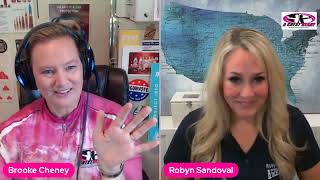
Robyn Sandoval runs A Girl and a Gun, a network of over 300 women's shooting chapters. She went from hesitant beginner to certified instructor and talks about AGG's annual conference, Fall Fest competition, and how the group's mentorship changed her path. She also discusses the DC Project's amicus briefs cited in the Supreme Court's Bruen decision.
Chapters
edit these, so whatever we show up with is what we show up with. All right, so here we go. Um, hi everyone, welcome to, uh, Great Start Shooting Schools interviews with instructors. The whole purpose of this, uh, series is so that you, a new gun owner or a new person who's curious about guns, can have a whole bunch of different stories about different ladies' journeys through this. Now I say different ladies because so far I haven't interviewed any dudes, but But that doesn't mean that, you know, I won't get there at some point. Today I have with me Robin Sandoval, and she and I met a long time ago out in Texas that had very questionable weather that year at the very first A Girl and a Gun National Conference. And we've known each other ever since. So my first question for all of my people that I bring on here are, who are you? So if you would tell my audience a little bit about who you are and what are, what are you currently doing? And that's where, what, where we're gonna start, if that makes sense.
Yeah, so, um, thank you for bringing me on, Brooke, to talk to me about this. Uh, my name is Robin Sandoval. I'm the executive director of A Girl and a Gun Women's Shooting League, and basically I have the coolest job in the world. I get to hang out with the best women across the country teaching instructors how to be really great educators of new gun owners teaching new gun owners and existing gun owners how to get involved in, like, competition and defensive shooting and just all kinds of really great things. And so that's what I do. A Girl and a Gun is a membership-based organization. We have girls' night out at the range at more than 300 ranges across the country. So hopefully there's a girls' night out happening near you.
Oh yes, and we are here in Connecticut, or I'm here in Connecticut, and we have 2 chapters now in Connecticut. As of last year. So up until last year, we only had one. I am a member of the current one if I pay my dues. I think you just sent me an email last week saying I need to re-up my membership, so, you know, there's that. But I do try to stay constant with it. Yeah, I love A Girl and a Gun. It is definitely a wonderful— I don't know, it's a wonderful experience. I'm so glad that I got to be part of that first one way back when. Um, so that is how Rob and I met long ago and far away in Texas. And, um, my next question—
I remember meeting you, and I remember the berm where we were, the little range area where we worked, because you had a shooting jersey and you looked so official. And, you know, we had so many new gun owners where, you know, this was people's first experience in training and certainly no experience in competition. And so you were out there just decked to the nines. You had your race belt on and everything was super fancy. And I was like, wow, this chick's got it going on. And I was watching you and you were, you know, you're fast and accurate. I'm like, okay, everybody look at her. And, you know, I don't know her, but be like her.
Awesome. I had no idea it had that kind of impression. I just remember it being an awesome week. I was so thrilled, um, that because I would— because I would have not been there had I not been in the competition community because I didn't— I hadn't heard of Girl and Gun. One of my friends, Kitty Richards, like, hey, are you going? I'm like, going to what? She's like, going to a Girl and a Gun conference. I'm like, I don't know. And that was only the second time in my life I had left my children behind. And the first time was to go to Babes with Bullets camp. So the two times— the first two times I left my children as a mom was to go do gun stuff.
You know what, there's so many moms that don't take that time out for themselves.. And I just had the best compliment ever. Uh, night before last, someone sent a message that said that my husband has come— she was saying that her husband had complimented her, that she had become a stronger person since attending a Girl and a Gun, and he's seen a change in her demeanor. And, um, because she's a stay-at-home mom with 3 little people and doesn't take that time out for herself, and how it's like a noticeable difference with the empowerment of shooting does. And I always try and describe that to people, that As women's groupings get smaller, their confidence gets larger, and it translates into so many areas of their lives that, you know, they thought they were going to come to the range to shoot or learn to shoot, and instead they end up, you know, down a path of living a better life than they could have imagined.
Oh yeah, no, the pathway is crazy. I mean, not in a million years when I started shooting would I have ever thought that I would become a competitive shooter. So that was like the first barrier. And then, because I still remember my first one where I'm just like I have a loaded gun and you want me to move. Are we sure this is a good idea? I just really wasn't— I was— I just so remember that was my first competition. I'm like, okay, let's try this. And, um, and so to go from not knowing how to pick up a gun without it going off to moving and shooting with a gun, I'm like, oh, this is just crazy nuts. And then becoming an instructor was for insurance purposes only. And then I became open my school. Not in a million years would I think that that's what I would have become in the gun community. And it's just amazing how crazy the story is, because like, if someone told me back in 2008, you're going to be an instructor, I'm like, have some more. I don't know what you're smoking, but not happening. Um, and now, you know, I've, I've got hundreds of students under my belt. I, I love sharing education. I love what you're talking about as far as like when you get those compliments and you just know it's like, oh, I touched somebody and it helps their family and it helps them. So it is very cool.
Well, it's not even me, it's just that, you know, I, I'm complimented all the time. People reach out and it's almost baffling. I can't even really wrap my head around it because they'll say, you've changed my life, or, um, and I'm like, I didn't change your life, I just gave you a journey, I gave you a pathway. You changed your own life. I was just lucky enough to witness it.
No, absolutely.
There was— we've lost several members the past few years because of COVID and just whatever other reasons. And I'm always just so struck when, you know, the, the entirety of someone's life is, is captured in a few words. And the words 'a girl and a gun' are among those words. And because the family felt it was that important to them and in their obituary, and I mean, there's just nothing more powerful.
Yeah, and I mean, like, all of my coaches always said is like, you're the one doing the work. Whoever's watching this, whoever's listening to this, it's like, we can give you the road to run on, but you're the one who has to take the steps. And, and it's just like— and that empowerment thing is, you know, because people come to classes for all different reasons, but one of the main ones is self-defense. And I'm like, well, here's the thing, this is a tool that you can use for self-defense. But I find just that confidence that you have from now knowing how to handle something that so many people are afraid of, just the confidence is your self-defense. That awareness that, hey, look what I can do, you know, stand up and, you know, that little bit of, oh, I can do something I couldn't do before. Because that's why, to me, that's why my journey ended up where it is, because it's just like I started just wanting to be able to pick up a gun without shooting myself or anyone else in my family. And everyone's like, self-defense. I'm like, no, not where I started. It was just, just to be able to handle something that was in my home. And so it is, uh, yeah, I love the journeys. I love the permagrins after a girls' night out or someone's first, first shots. Oh my gosh, that's always so much fun. So, all right, are we ready for question number 2? Um, yeah, you've got a great story, but what do you think made you want to become an instructor? Oh, and after— actually, would you also tell people what kind of instructor you are? Um, I don't even know how many certifications you currently have at this point.
Yeah, I have a lot of certifications. I've been lucky to attend a lot of different academies and, and be able to teach a lot of different types of curriculum. Um, so I don't even know the list. I'd have to look, look up the list of—
well, I know USCCA is one of them.
I don't know what else. NRA, Range Master, you know, all of the standards. Um, yeah, so I wanted to be an instructor, honestly. Um, it kind of just was an evolution, you know, when I was a new gun owner. Um, so, you know, I didn't know anything about anything, and over time, you know, I was fortunate that, um, I was mentored by Juliana Crowder. She was my instructor and friend, and she started hosting these girls' night outs, and there were so many women coming that as you were new and as you kind of learned a little bit, you were kind of the big sister of somebody who knew less. And so it just kind of created this, this kind of mentorship hierarchy. And so I would, you know, talk to—
um, you're still going, it's okay.
Oh no, uh, I would talk to newbies who were there. And so you just kind of end up being kind of a mentor to answer questions of new people. And, you know, the the best way to learn something is to teach it or coach people on it. So it was just working with girls at Girls Night Out, competing. It was just a natural evolution. So I started assisting, watching other— a lot of other instructors, taking a lot of classes, and then over time wanting to become an instructor. And now it's to the point where although I don't have time to teach as many students as I want. I'm able to jump into a lot of classes. I'm really lucky to— a lot of people will let me kind of AI with them or be their assistant instructor on the line. So I get that opportunity a lot. But now it's really more of how can I lead this organization or how can I lead this, this cadre of instructors to show them the example of here's quality instruction, here are really good classes, here are some new techniques or some new trends that are out there in the industry right now. And so I feel like now my job is more as a role model for the instructor cadre to bring them along. So I'm a little more removed from the student level, but I am lucky that I, I do get to teach from time to time.
Yeah, and I mean, it's one of those things. I think my favorite thing that I've learned recently— and when I say recently, I'm gonna say over the last 3, 4 years— is that whole like you just said, like you come in and you're the new kid on the block, and then you learn something, and then you teach something. And that's actually what, you know, most of the places I go, that's how they're teaching you to teach now, is like— so when I have my students, it's like I show them, then I make them show the next person. And it's just, it's, it's like, it is how it goes. It's like everyone, when you go to a range, everyone's like, oh, would you like to try my gun? Would you like to try this? Here, try that. And, and it's just It's a lot of fun. All right, so the next question might be a little bit harder, but maybe it's not because I don't know. How long have you actually been shooting?
So my very first memory with firearms, and you know, I don't know if anyone knows this ever, I don't— I've never really talked about it, but when I was at summer camp, I was shooting a.22 rifle and I actually earned several little NRA marksmanship badges or little, little metal— they were metal pins back then, um, and I, I think I earned up to Sharpshooter or something like that. So that was my first experience with guns. Um, our next-door neighbor had a— I mean, I, as a little kid, I thought he had an arsenal. Now I'm like, haha.
But, you know, yeah, like the news stories we see, we're like, oh, we have 5 guns, oh my gosh. It's like, okay, that's what I've got in my bag right now. What's that?
But as a little kid, I knew that he was a gun enthusiast and, um, and they went hunting as a family all the time. So they had all kinds of trophies on their walls and stuff, you know, deer mounts and hogs and other turkeys and all kinds of wildlife around their house. And so I did have some experience in that just because he would talk about gun safety, um, to the kids. And we knew if there was a gun there not to touch it. And that was kind of part of the conversation. But in my family and in my personal world, it was— there was never anything with a firearm. So it wasn't until I was an adult and, uh, my husband had been wanting to bring firearms into our home, and I was like, absolutely not, not with 3 kids. And I was strongly anti-gun. Nobody needs guns unless you're a hunter, otherwise it's completely irrelevant. And, um, I was, you know, I firmly believed only criminals had guns. And so, uh, I wasn't gonna let it come into my home. And Finally, after a 10-year conversation, I agreed. And I thought it was going to come out of the safe and injure us all. And so, uh, he encouraged me to learn how to use it. And so, uh, I went to the range and I, I think I've shot a few rounds. And, um, I remember being, um, more afraid of not seating the magazine right. So the person I was with was like, no, like slap it, like slap it. Now it's funny because I think about that sometimes with a new shooter, like, no, you gotta like really seat it in there, like push-pull. And I wish somebody had had the language of like, you know, push-pull or seated or make it click or some other kind of word than just like slap it, you know. Oh my gosh, it's gonna go off. And you know, all the things you're thinking of.
And oh yeah, no, oh yeah, when you don't know where anything does or what anything does, the, the level of stress you have is really high. It was like, especially like you said, you were super anti-gun and it was like only crim— only bad guys had guns unless they're hunting. Um, Or maybe there's bad hunters, but anyway, that's a whole other story. But so it was not your husband who was the first one to bring you to the range after, you know, camp?
No, my husband would never grow up with firearms. He's a Texan, and I know that's kind of like an anti-Texan male thing. You're supposed to just— but he grew up in a family of fishermen. They always were fishing, and so that was their family pastime, uh, so he was kind of relatively new to guns. He had gone shooting with friends but had never had any formal instruction, so it was kind of new to both of us at the time.
Gotcha. Oh, that's awesome, because that last thing runs right into the next question. What was your first time going to structured training, or what do you remember from that? I'm guessing it has something to do with A Girl and a Gun, but I could be wrong there.
Yeah, of course. No, it was with A Girl and a Gun, with, uh, Juliana Crowder. Uh, her, her classes, uh, she taught, uh, my concealed carry class that I went to, which I think was my first formal class to go to with her. But it opened the door, like conference. Conference was a huge way for women, including me, to go to a formal training event, to meet trainers that were nationally recognized, that everybody knew about, that were on all the blogs and all the things. So it allowed me to go and get a little snippet of what that experience would be like, to have those training courses from, from these legends. So that was a really— that opened the door for me and so many other women.
So was it 2011 or 2012, the first conference?
Uh, 2012.
Okay. Um, so what I put up on the screen is next year's conference because they've been doing it since 2012. And I have to agree with Robin 1000% in that If you've ever wanted to dip your toe into any type of training, this national conference is off the hook as far as the most amazing instructors are there. It doesn't matter what you're interested in, whether it's competitive shooting, personal safety, um, there's— they— I mean, it's always tons of how-to, and it is just an amazing, amazing event. I, I strongly suggest, A, you join a Girl and a Gun because, you know, I'm kind of partial to it. I'm not gonna lie, because it was my first like sisterhood in the shooting community, uh, above and beyond. Because at the time there really weren't that many girls in the competition shooting world as there are now. I mean, we're still a small portion, but there was a lot more at Girl and a Gun. But it's just like the instructors there are the best in the country. They're donating their time to take care of you. They will take care of you in ways you didn't even know were possible. It's just— it is one of the best events I've ever been to, and the price is right. So, well, because it's like, you and I both know, is like, if you went to any one of these instructors, you'd be paying $400, $500 for the day. And instead, you get to go to one place and you see all these amazing instructors for a couple hours here, and then and it's just like, yeah, it is an amazing, amazing event. So it is on A Girl and a Gun website, and let me throw that up there one more time. And if you just go to agirlandagun.org, you can click around here and find all that stuff. So yeah, so anyway, so yes, I suggest everyone goes to that for training. Ideally, you get to do more training than just that because it's only once a year, but it is amazing if you get to.
Go.
Um, I'm trying not to get too far off track. So I'm like, we could talk about Fall Fest, but not yet. We'll see if we have time at the end. Um, all right, on to my next question, because like I said, I'm trying to keep these sort of similar. Uh, what advice do you give to a brand new student that thinks all they have to do is pick up a gun and pull the trigger? Because I don't know what your experience is, but I know my experience with my students is so often they're like, oh, there's so much to this when you start showing them grip and stance and all of that. How do you set realistic expectations for first-timers?
I think the biggest key is so that they don't realize that— how would I phrase it? So shooting is essentially simple. It's simple. You align the sights, you press the trigger. It's a simple function, but there's a lot of complexities that come into it when you're talking about accuracy. And especially when you talk about defensive shooting versus precision shooting versus competition shooting, it's all very different styles. And so you can really go in the weeds. And if you start, uh, looking at different websites and different YouTube videos and different, uh, places online, you can get a lot of confusing and mixed advice.
So, and some of it's really, really bad. That's the other— I mean, when, when people start going for their Google PhD or their YouTube PhD, it's like Ooh, no, don't believe everything you see online, please.
So just remember that shooting itself is a simple, it's a simple skill, but it's not easy. And it's, you know, it's very complex. There's a lot of complexities to it. So find somebody who speaks your language, who can get, you know, on the same page with you to convey those skills in the way that you need them. But remember that a lot of times, especially for women, a lot of products are marketed towards women and firearms are marketed towards women. And in certain tchotchke ways. So get past all that and go to a quality educator. That's the most important thing, is to find someone who's a really good educator, not just someone who's a good shooter. You know, your husband or your uncle or your dad or your friend or your— somebody you work with might be a great shooter. My cousin just told me she was talking about somebody, talking at Costco with somebody, and took his advice. And I'm like, really? Guy at Costco's advice? So yeah, just because someone's a good shooter, just because somebody can talk about it, doesn't mean that they're a good educator or that they have the quality credentials behind it. So I, I think that would be my biggest advice to a new shooter is just to keep it simple, stick with someone you trust, and slow and steady wins the race.
All right, well, and that kind of bled over into what my next question is, is what advice when you're looking for training? Um, I know for me I have a schedule a 10-minute phone call because I didn't think that I could call around and I didn't know where to start As far as like, I knew I needed to learn more, but like you were talking about slamming versus clicking versus— I'm like, I, I wouldn't have known to ask any of those questions or look for that conversation. Um, but it's just like, if you're gonna call someone about training, what are some of the questions you might ask to figure out if they're the right fit for you? Like, if when you don't know all the lingo and stuff, right? What would be something you would suggest?
I would really ask them their experience in the civilian market. So that's really important because many of the instructors that are out there have law enforcement or military background, and some of them are directors of training of their local ranges. And it doesn't mean that they're not fantastic instructors, but do they have the concepts and the skill sets to teach a civilian mindset? So that's really important because as a civilian, the things you can and can't do are very different than things that the military and law enforcement can do. Just in terms of situational awareness or, uh, or, or skills or on-body carrier, just all of it. There's so many things from mindset all the way down to putting rounds downrange that are— that can be very different. So I would ask their background in working with civilians and also make sure that if you're a new shooter that they work with new shooters. A lot of times if they run a lot of advanced classes, they may have lost touch with that new shooter experience. And that's why I find that A Girl and a Gun really fills a space that is, uh, it's our niche in that we are experts in that new shooter space. Uh, we can— if you've never touched a gun before or have never even been in the same room with a gun before, we can walk you through that experience of what that is and get you comfortable with the firearm, understanding it, um, walking you through different methodology and terminology that we have to make you confident when you do go on the range and put their first shots downrange. And there's a lot of people who are really great instructors that are just so far removed from that emotional and, uh, new shooter experience that they kind of don't share that same space anymore.
Yeah. And I actually— we have this conversation, I have this conversation with lots of students, um, simply for the fact that, like what you're saying earlier too, about just because someone's a good shooter does not mean that they're a good teacher.. And I'm gonna go with the, I'm a good teacher, I'm okay shooter. That's kind of where I fall in, just because it's like being able to convey an idea. And Tatiana and I actually talked about this, um, a while back, whereas like she and I are newer in the space. I mean, at the time it was probably 5 years ago, but, um, it's like when you're closer to being a beginner, I think it's easier to remember that whole 'How do I touch this?' But it's when my students come in like, 'Oh, my husband or my brother took me out and it was horrible because they put a.45 in my hand and it was just—' And I'm like, they've forgotten how much they already know, and they don't necessarily know how to convey that.
But also, there's a process to learning. And so often I find that when women come to class for the first time, they might not even realize that they've never racked a slide. That their partner on the line with them will rack the slide and hand them the gun. And so little things that they thought they knew— oh, I shoot all the time— but they don't realize they don't understand range etiquette, they don't understand the, you know, mechanical function of the firearm. So as a new shooter without all the training scars and bad habits, you're really at an advantage because you can go to somebody who can explain it from step one, from ground zero, and walk you into that perfect experience. Absolutely everything else.
It's why I call it a great start, because I really want to get people who have not done anything yet. Because I was that person who, if you asked me if I was a shooter before 2007, like, oh yeah, I've been to the range. But I was that girl that my husband or my dad would hand me a loaded gun, I'd point it at the, the, the target, and I'd pull the trigger, and I'd hand it back to him. I didn't know anything at all. But there's a, there's a poster on my wall over there. It says, you don't know what you don't know, right? And so if you ask me, I'm like, oh yeah, I'm a shooter, I've gone shooting, I shoot, I own guns. And then I didn't know what I didn't know, like until I got into competition, until I got into training. I'm like, I had no idea that I'm really not a shooter. It was like, I've shot a gun, and that's a little bit different than actually knowing what you're doing, right? Um, all right, so this— the next question sometimes can be hard for people, but I don't know, it's one of those things. In your crazy journey over the past 13, 14 years, um, what are you most proud of in your firearms journey? Is there anything you can think of that comes to mind?
I can't really think of one single moment. There's a lot of times that I've been really proud. Um, recently I was very proud to finally earn the Rangemaster Instructor certification. I had been intimidated by that qualification for a very long time and it somehow just not made— had not had time for it. Finally I made time for it and I was really proud of myself for scoring 100 on the written test, which is rarely done, and, and scoring really high on the, on both shooting polls too. So I was very proud of that, of earning that credential. I think because in my mind I had talked myself out of it for so long. But that— so that was something I was really proud of. I think it was more for me just getting over that mental hurdle itself than the actual shooting qual, because I shoot all the time, but I built it up in my head. I don't know that there's one single time. I think that there's a lot of moments that I'm really proud, like when I get feedback from members, when I get feedback from officers who have come trained with us when we do law enforcement training. And something has happened in their course of their daily work that they were able to put a skill that we gave them into practice that saved their lives or someone else. I mean, that's incredibly powerful and makes me very proud. There's a lot of those moments over the past 11 years.
Yeah, well, I'm thinking— I figured the first proudest moment was when we were actually done with the first conference that year, as far as the compliments go. I have pictures of that still. Like, yes, when Juliana found out that, oh, acts of nature, that's— oh yeah, no, that was, that was fun. Yeah. All right, so believe it or not, with that, we're kind of at the end of the required questions. We can all, like I said, we could talk about Fall Fest, we could talk about other things, but, um, oh, and we have to talk about DC Project at least a tiny bit for folks. Um, but anyway, What else would you like to share before we end?
Well, let's talk about DC Project. Really, actually, one of the things I'm very proud about is being— we filed the amicus brief. A Girl and a Gun filed an amicus brief with the Bruen case. DC Project also filed a different amicus brief with the Bruen case, and I was quoted in a third amicus brief for the Bruen case.
So you're super fancy now.
Yeah, the DC Project amicus brief was actually cited in Justice Justice Thomas's majority opinion. And I was— another of the— another amicus brief that I was quoted in was also cited in Justice Alito's concurring opinion. So to be part of history and working for our Second Amendment rights is very, very rewarding.
And just so everyone knows, DC Project is a group that's women for gun rights. My first trip to DC was 2016, or our first trip to DC was 2016. Were you part of it, that year? I don't even remember. It's grown so much over all of this time. The pre-event. Okay, gotcha, gotcha. I mean, because I have a feeling like you might have been the person who invited me to join DC Project. I'm not even sure because it's all of this— all of the two-way community is small as long as you're a nice person. Um, but yeah, so DC Project Women for Gun Rights. Oh yes, I have my little, my little thing here that, you know, DC Project, gun rights are women's rights. And it is, it is a worthwhile cause. 50 women started, 50 women for 50 states going to DC once a year to talk to our legislators because there's this other group who I prefer not to mention, but they wear red shirts all the time and they're very demanding and they call themselves moms. But We want to be that counterculture of there are women out there who enjoy guns. There are women out there who understand that, um, bad people are bad people. And like Robin used to think, not only bad guys have guns, more good guys have guns than bad guys.
Yeah, I go— I think it's so important that I meet with members of Congress and remind them that moms that make demands to take our rights don't speak for moms like me. And so it's important that all the shouting and all the rhetoric and all the media, that those of us who are passionate about being able to protect our families do speak up and do go and meet with members of Congress so that they can put a face with a name. And especially love changing the stereotype of what a gun owner looks like. That's always very gratifying to walk into a congressional office and the person who is checking you in believes that you're there in a counter-argument. And when I, you know, I'm there to talk about gun rights and that I want the representative or senator to protect my gun rights or vote yes or no for this particular bill, they're always a little bit surprised. And so it's always an opportunity to educate.
And that's— yes. And I will tell you, the first year Holly and I went, we got Chris Murphy into the room because when we signed up for the appointment, we're like, we'd like to talk about gun safety. And, uh, so we got Chris Murphy in the room that first time because it was one DC project, was brand, brand new, so nobody knew. And so, uh, that day Chris Murphy and I agreed to disagree on our points of view. But so it's by having those meetings. Exactly. All right, so I pulled up the next— they do, they do. And, and it's, it's one of those things that I didn't have any real girlfriends until I got into guns. I didn't really like girls a lot, honestly. And now I'm so lucky and blessed to have so many awesome girlfriends because gun girls are fun girls, is what I think.
It's true. And I think that most of us are the kind of girl that always hung out with guys. Like, we like doing guy stuff or just not, you know, I don't know, but we all are kind of the same.
We've all found our people, right? Exactly. All right, so I brought up Fall Fest. Can you tell people a little bit like about this?
Yeah, so Fall Fest is the only all-ladies 3-gun match in the country, and, uh, we actually have 2 matches. There's a team pistol challenge and a 3-gun match. So if you're not a 3-gunner, you still can come bring a friend because it's a team challenge, which makes it even more fun because Uh, you know, you shoot some, I shoot some, we tag team on some, and, uh, it's just so much fun to shoot a stage with a friend. Sometimes you're tethered together, sometimes you have to high-five and pass off, and it's just so super fun. Um, the 3-gun match is a natural terrain match, and so that means that everything's, you know, new and different. You're going down trails through the woods at the beautiful Lucas Ranch. Um, it's in the middle of the country, and it's so really fun. If you don't know the sport of 3-gun, then you can also attend Three Gun University. So we have clinics for the 3 days prior, and it's not going to teach you how to use your gun, so you have to know how to function your pistol, rifle, and shotgun, but it will teach you the sport of three gun, like how to use them, uh, you know, to, to tackle a stage and how to, how to, how to play the game. So we'll teach you how to play the game, how to use the gear, and, uh, how to be set up for that weekend of competing.
And there's a really great prize table. Yeah, so, and this is like, you know how you said you're all excited about your certification? I'm like, 3-gun is one of the things y'all keep saying, why aren't you coming, Brooke? Why aren't you coming? I'm like, I can barely shoot a pistol. You want me to get a rifle and shotgun too?
Out of your own head. Like, I was in mind, it was something I should have done. Like, I should have taken that class 10 years ago. You should have come to Fall Fest years ago. So if I can do 3-gun, you can do 3-gun.
So, so, oh, and, and for real, I do want to go do the USCCA with you and get that certification because I haven't done that one either. And I'm like, if I'm gonna do it, I want to do it with Robin so it's extra special fun. So next time, it's like, next time you do one of those, let me know. Um, so anyway, so that's it. Like I told you, I try to keep these short so people will actually watch till the end. Um, and I don't know, that's it. So A Girl and a Gun, if you haven't joined and you're a girl, yeah, um, join that. Uh, DC Project, whether you're a girl or a guy, join, donate money to us so we can continue spreading the word, um, because things like this cost money to make and we need donations at dcproject.info. Um, and I don't know, if you're brand new and you're thinking about getting into guns, whether you're in Connecticut or not, A Girl and a Gun is definitely a great way to find something that's in your area nationwide because they're all certified instructors, um, who have started chapters, and it's just a lot of fun. So Robin, any last parting words before I click on the end broadcast button?
No, thank you. It was good to see you. I, I always feel like we always both have to leave our states and go to other states to see each other, so I know.
Well, I, I laugh about it because like I have so many friends in the gun world and like I go to competition stuff, I'm like, I literally don't know where half my friends live. Like, for real, I'm like, I don't know where they live. They're somewhere in New England, or at least on the East Coast, I think.
I know I have friends all over the country. I'm like, I wish you could just come over right now.
So, well, thank you so much for your time. I know you're crazy busy all the time, and you're number 7, so I will be sending you a link out to let you know when you're coming out. Um, and, uh, oh yeah, tonight, which is— today is the 7th of July is the first, uh, interview, which is going to be Kellyanne Pidgeon tonight at 7:30. So it's very exciting. All right, hon, thank you for your time. Thank you.










