Instructor Interview #9 Jen Zordan
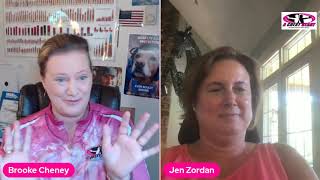
NRA instructor Jen Zordan talks about shooting since childhood with her grandfather's .22, building Women Gone Wild into a 125-person charity fundraiser, and adapting her teaching after an MS diagnosis at 30 forced her to switch to left-handed shooting.
Chapters
Oh, ta-da!
Just like that. See, it says recording started somewhere in the screen there.
All right, party time, y'all.
Yeah, it is. All right, hello everyone, thank you for joining me for another episode. I believe this is going to be number 9. 9, I can count almost. Yeah, there you go. This is my instructor interview number 9 here at A Great Start Shooting School here on YouTube. My lovely co-person over there, that is Miss Jen Zorden. She is an NRA instructor She's officially, officially, officially the very first female instructor that I ever knew or heard about because she was a legend long before I actually got to meet her. Because you're like, oh, you got to meet her, you got to meet her, and I had no idea who she was like 2, 3 years before I got to meet her. But the purpose of this series is to remind those of you who are just getting into firearms or you're curious about it and just kind of set realistic expectations is We all have a different journey to run. And by doing all the different instructor interviews, the purpose of this is so you maybe, you may be like Jen. Wait, sorry, everything is backwards here. Or you could have been like Gabby, or maybe, you know, Tatiana, or who knows of the past instructors. So this is a very straightforward kind of simple, you know, we're going to ask a couple of questions, same questions we did all the other ones. So you can get to understand what different people have for their journeys. Oh, you know what? I forgot the very first one. Do I have my phone? I do have my phone. I need to make sure my phone is on silent because I will be all embarrassed if I forget, and I did not do this on the other one. So give me just one second.
Oh no, that was the wrong button. That was good stuff.
Well, you know, it's, it's one of those things, like sometimes I remember that. I think you're actually— after, after doing this 9 times, you're the the first one I think I remember to actually do.
Oh, you know, I'm trying to figure out how to bing my watch, not make noise. All right.
Oh, good luck.
I just put in airplane mode.
I don't know, maybe that might work. All right, yeah, we will. All right, so poor Jen here, she has no idea all the questions. No, I did give her all the questions ahead of time, but, um, Jen and I met, I don't know, 2009-ish, maybe give or take, 10, 11, I'm not even sure. Uh, but I, I swear to God, I heard about her for years prior. Our mutual friend David Hyatt would be like, oh, you got to meet Jen, you got to meet Jen, you got to meet Jen. I'm like, okay, because it was like a big deal because there weren't that many female instructors, and Jen was an actual NRA female instructor. Um, and so at some point I finally did get to meet her. However, like I did with all my other lovely guests I'm gonna ask you the question of saying, who are you? Like, how long— like, here are questions I don't know. How long have you been an NRA instructor? When did you become an NRA instructor? That kind of thing.
Okay. Okay, don't jump me into that now. Are you gonna ask me officially?
No, that's it. I just realized.
All right, that's good setup. So I became an instructor, I want to say probably 20— well, wait, Zach is 21. I was pregnant with him, so 20, yeah, 21 years ago I did. And I became an instructor because it seemed for me to be the next logical step after being a shooter and getting my concealed weapons permit and really enjoying it. And I wanted to bring the joy to everybody else, so here we are.
Awesome. Well, then that leads me to my next question, right? What is your first memory with firearms? Now we know that you've been a concealed carrier for whoever— for over 20 years.
Um, okay, so my very, very first memory memory?
Well, yeah.
Okay, so when I was a little girl, I was the first grandkid, and then the next grandkid didn't come along until like 5 years later. So I can remember being the only grandkid And my grandfather and I would sit out in his backyard, and he would have his little.22 rifle, and he would lay it across his knees and let me shoot at the target against the, the back of the backyard there. That's my very— I was an itty-bitty little thing.
Yeah. Um, like, uh, not squirrels or anything?
No, no, no, no. He had these, these boxes that he built that were full of I don't remember what, but they were kind of full of stuff that would stop a.22, and then he would hang the paper targets in front of it.
Ah, gotcha. All right, yeah, it's way better.
It was all very safe. It was all very safe. Well, that's— it was before neighborhoods.
Yeah, mine was not. Mine was a rifled, uh, a rifle with a scope that no one felt the need to tell this 5, 4, 5, 6-year-old that you don't put the scope against your eye before you pull the trigger.
Oh yeah, things you learn the easy way and some things you learn the hard way.
Yeah, yeah. I mean, well, you know, everyone has a different impactful, uh, first time, right? All right, so here's the thing, we kind of already answered the question of what made you want to become an instructor. It's that wanting to share your joy and happiness, spread the joy.
Absolutely.
So how long had you been a shooter? Like, now we're talking about you being with your grandfather, so 5, 6, 4, 5, 6, somewhere in there.
Yeah.
And that's when you started shooting. Did you continue shooting your entire life? Had you been—
I did not. No, I did not. Um, I was taught gun safety very early because there was always guns, but as far as shooting goes, I kind of grew up in a more traditional— once my brother was born, it was like, oh, that's the girl over there. So I have a boy now, so I can do all these boy things with the boy. So it was whatever. I went off and did my own thing, even though I was a tomboy and I always bugged my dad. He's like, no, no, whatever. So, gotcha. Um, I kind of went off on my own and did my own thing. And every once in a while he'd let us both— he'd take us both out and shoot. But like, he was really into hunting stuff like that, and taking my brother hunting, I guess— I don't know, I talked too much and I made too much noise. And you know, yeah, 9-year-old girl in the woods. So, um, I got left home for all of that, but, um, but I rebelled against that whole mentality, and I was like, you know what, if you're not gonna do it with me, I'll do it myself. Screw you guys.
So when you— here we are. Um, do you remember your first time going structured training? Was it like the NRA training? Did you get to do something before that? Because honestly Um, I don't think NRA was the first thing. Babes with Bullets was my first thing. But do you remember what it was? I—
it had to be NRA.
Yeah.
Oh, well, the basic pistol course in order to get a pistol course was really the first. Um, and I think when I was dating my husband, he took me shooting a few times, the current one. That was really when I got back to it.
Yeah. Um, sorry, the current one. You only have one, right? It's only Alan.
I only have the one there. Okay, just so I can handle—
well, that's all he can handle.
That's a fact, he'll tell you that.
All right, so how many years were you, uh, teaching? Like, do you remember that? Like, how did you teach? Like, I never went to any of your classes, and so did you always teach out of your home? How How did that all go?
Yep, I always taught out of my home, or I would go to somebody else's house. I could be a traveling teacher too.
Gotcha.
Bring all my gear depending on what the crowd wanted to do. But once we moved up to Weed Road, um, and I had that range, it made it a lot easier for me to do it at my house because then we just go outside and do the practical. Otherwise we'd have to go to a range and all that stuff.
Gotcha. What was the biggest class you ever taught?
11. 11.
Okay.
Yeah, that was a good day.
Yeah, I think 8 is as big as I've gotten here, and it took so much longer because I usually do 4. Yeah, yeah, yeah.
I try to keep it small.
Yeah, I always try to keep it small.
I like doing couples, yeah, wife teams, best friend teams, you know, stuff like that.
Yeah, this is where you and I are exactly opposite. I'm like, I prefer not to do couples Because it seems like— yeah, because for me it seems like the guy almost always knows something or more than he thinks he does than the wife. And so when they're at different levels of knowledge, he tries to teach her a lot, and I'm just like, you're here paying me, let me be in control, because I'm a control freak, right? Um, all right, advice to brand new students. Um, one of the things that I find when I'm teaching is a lot of my students will come in, they think that shooting's super easy and they should be able to shoot out the center of a target, and they don't understand like how much stuff there really is between safety and actually pulling the trigger. So what kind of advice— yeah, so what kind of advice would you give to someone who's watching, for example, that's thinking about getting into guns, has not really taught, you know, considered guns yet, um, hasn't handled them? What, what do you help them— what would you suggest to help them learn, basically?
I, first of all, if you've never touched a gun before and you really want to try it, find a good instructor. That's your very, very first thing. And then learn the safety rules, practice them all the time. Don't let up on safety and practice, practice, practice. You're not going to hit that center of the target until you practice, practice, practice.
Yeah, so that actually goes to our next question. Since you already said, um, the first thing we need to do is find a good instructor, instructor, what are the questions or things that you would ask to find a, a good instructor? Like, if you were brand new looking for a, a teacher, what are the kind of questions you would ask the teacher, or what would you be looking for? Oh my God, um, right, see, this is why I leave the question up so you can read it again just in case, right?
I don't even know. I don't remember this question. I don't, I don't even know what I would ask. Like, Because I guess because I've been part of this culture for so long, it's just all— you take it all for granted, you know.
But because we go to— we know, right, right.
Yeah, you go through who you know. Um, everybody knows somebody that has a permit. Even if you don't know, you know them, right? So you start with your own network and, you know, who taught you? Where did you learn? What did you like about that person? What didn't you like about that person? You know, um, ask 5 different people with 5 different instructors. That should get you on the road to it. And then instructors, no other instructors. If you don't be afraid to say, I don't know if it's going to work out, but can you refer me to an instructor that can teach me blah blah blah?
Yeah. Oh yeah, no, I say that all the time too, is like, I'm a handgun girl. It's like, you want handguns, you want speed, you want accuracy, I'm your girl. But you want to get into long-range rifle or shotgun, I've got amazing people for you.
Exactly. Not me.
It's like, exactly. The basics. Um, what is your favorite thing to teach? Has it always been handgun, or do you like rifle and shotgun too?
I don't— I'm not certified for rifle and shotgun, so the, the only answer I'm allowed to give you is, um, handgun. But I do love a good rifle. Yeah, you know, I mean, the safety rules are the same. It doesn't matter if you're handling a handgun or a Nerf gun, so So, you know, safety is safety, but I love shooting rifles.
Yeah, I will say in our household our kids do have good trigger discipline with the Nerf gun, and the only rule that we make is no headshots in the Windex bottles.
We have good trigger, trigger discipline with everything now. Yeah, they don't even say Windex bottle trigger until they're ready.
It is, it is funny. It's— yeah, it's so— it is when I'm doing my dry fire practice up at the house and I've got my I've got my competition belt on and I'm vacuuming. I'm like, hmm, what would anyone think walking in right now, right? It's like, okay, because if you know— is that this horrible internet saying these days is, if you know, you know? And I'm like, well, of course, if you know, you know.
But, um, yeah, I can't stand that. You know, I do too.
I'm like, I can't believe I just said it. I'm like, I'm really sorry for that.
But they say that your favorite gun is usually the one you have in your hand.
Yeah, yeah.
So, oh yeah, I find that true. I, you know, I love shooting my little Sig, I love shooting, you know, my little.357, I love shooting my AR-15.
For those of you who want to, who don't know, AR stands for Armor Light Rifle. There is no such thing as an assault rifle other than what the media has made up and made. Yeah. So anyway, they're evil.
For real.
Sorry, the people who make up things, not the ARs, just so I'm clear on that one. All right, so how many— do you have any idea how many students you've actually managed to teach in the course of your lifetime?
No. No.
No. But more than 11, we know that much.
Definitely more than 11. Yep. Yep. More than probably 19. Um, over the course of 20 years, I've probably taught a couple hundred people.
Yeah. And what's your favorite part of that?
My favorite part of teaching is when they get it, when they really— when we're out doing the practical and they really, really get it and they hit the target and get all excited. Women especially.
Yeah.
You know, because guys, they gotta be like— I don't know, they're kind of expected to do that. Where women are just, oh, oh my God, I'm gonna suck at this. And then they hit it and they're like, we— and they do the squeezing. I love it, I love it. That's my favorite, favorite part is that enthusiasm and excitement, I guess. Yeah.
And I'm pretty sure, like, in all of my interviews thus far, I think the answer is roughly the same. We all call it something different, right? For me, it was my Wonder Woman moment when I could pack my own range bag, and that's what I wanted to share with people. Um, but then watching for me, my students come in sort of like timid and not sure what to do, and then having that confidence and the permagrin that they leave with most of the time, you know, there's no guarantee, but it's watching that confidence happen.
It's a wonderful feeling.
And so, um, yeah, and it is interesting. It's like, because we have two different— well, I have— find there's two different types of students. There's the ones that, like you said, sort of we're going to be generalized, that guys who just assume they can get it, and then the girls maybe not so much. Um, but even still, the guys, I don't know, it's— it is fun to watch them go from not really knowing to then all of a sudden, right, to pretending they know and then they figure it out.
Yeah, there's always the light bulb moment, you know. There's always— it doesn't matter who he or she is, there's always the light bulb moment. I love that moment.
Yeah, I mean, the thing that surprised me the most, because I'm new to the world relatively speaking, in that like I've been doing this for just over a decade now,. And it's like, I'll have people who've been shooting 20, 30 years and come for just private lessons, not the permit class. And it amazes me because like this one guy, he bought 5 lessons from me and on lesson number 3, he says, Brooke, I can't shoot with my friends anymore. I had no idea how unsafe we were being. And I'm just like, okay. Good to know. I'm sorry I've ruined your friendships, but I'm much happier to know that you're safe now. I'm like, we can have a range day, invite them all over. You can say it's because I've got cool moving targets and stuff. We won't even tell them about the safety issues.
They can tape their faces on them or whatever.
Exactly.
Dick Cheney afternoon.
Oh gosh. Yeah. Oh, it is sort of funny though, how many people— can I bring a picture of my ex? I'm like, no, we don't do that on this range. Can I bring a picture? No, no, no, no, not, not here. Not in your own backyard. You go right there. All right, um, new person, we asked that question. Do you have anything that is specifically the thing you are most proud of in your firearms journey? Okay, yes.
Okay, yes, go ahead. My event. Oh, we're going full screen. We'd have to go full screen. Um, there's— that's a lot of— it's a lot of jowls.
Um, I didn't mean for you to look, just Sorry, I'll make it small. Is that better?
Okay, thanks. I was gonna exercise my neck for this, but I just didn't have enough time. Um, oh no, my event that I used to do, Women Gone Wild. Yeah, yeah, that's the— my, my proud moment.
Um, how many years?
Uh, 14 years we did that, and through that program we introduced so many women to the different shooting disciplines. And of all of those women, so many of them continued with it, um, with different aspects of it. Um, I'm sure you know that because I think that you ended up with some students through that.
Um, oh yeah, I have lots of them. Yeah, I like almost— oh my goodness, the last one I remember was where we all had you in a circle, and I think there was like some blessing and a blanket. Yeah, I sort of remember.
Yeah, the prayer blanket made me cry. Yeah, we did a good job.
I think that was the last one that you were at, because we still did at least one or two after that, I thought. Or is it just that Harlington then turned it into the Women's Day?
Yeah, Harlington turned— after I moved, Harlington turned into their Women's Day. Yeah, um, which is also fun, which is also fun. Not as— I don't think there's as many activities as there was when I was doing it. So I'm pretty sure they're probably not dragging an excavator out there.
I don't know, I haven't been part of it for a while.
Yeah, they are.
I know there's still axe throwing and knife throwing, uh, there is still the field to table stuff. Wonderful. Uh, first aid, massage is always one of the, one of the places you can go. Archery, shotgun, rifle, handgun— last I knew. But what inspired you to do the first one?
Okay, funny story. Okay, so I was a member at, um, Northwest— was it Northwest Connecticut? NWCSA, I just said.
Yeah, that one. nwcsa.org if anybody wants to look it up.
Yeah, that one. And we were doing a Women's Day or something, or I borrowed a poster from them. It was a bulletin board with like different pictures from their different Women's Days and stuff. Oh, because I was promoting their Women's Day at some other event, and, um, I lost the board. So I lost all those pictures. I have no idea what happened to it. It got lost when I moved. I have no idea. To this day, it never showed up again. So I was like, well, I owe them a board. So I was like, well, I have to do a Women's Day. To get pictures to make a new board. So I threw together this thing like kind of last minute. We had 14 people show up for it. We had more volunteers than people. But I got my pictures, got a new board. And then the following year we had— I was like, I want to do this again. It was fun. So the following year I put another one together, took a little more time, thought about it a little bit more. And then we had 25 people. And then the year after that we had 100 people, and then it just kept going from there. And we had to top it out at 125 because the facility just couldn't handle any more than that, right?
And when did it start becoming a charity event, or was it all along?
It always had been.
Where did the first set go, just out of curiosity?
Oh gosh, um, the very first year we partnered up with National Wild Turkey Foundation, Federation, whatever they are. So they took all the money. Gotcha. And then the following year, I was like, I could do this, I can do it better, and I can make more money with it, and I can give it to, uh, whoever we want, right? So I can't remember who that year— I might have just gone right to the club, but I'm not sure. Yeah. And then I decided that I wanted to take the event and bring it to other clubs too.
Yeah, no, I, um, it's one of those things that like every time I have to go to testify in Hartford or in DC, it's just like, I wish that more people understood like what a giving community that we are for real. And your event is another example because like I talked about competition, which I'm going to this weekend, but it's like, um, we're all volunteers. It's like you might go to a match at some club and pay $10 or $15 or $20 or $20, whatever. Um, none of that money goes to the people who are working the event. It all goes to the club, and people don't get that, right? And, um, Women Gone Wild, you could buy shirts back then. And, uh, for the longest time we had some of those shirts.
Yeah, I think I still have one tucked away somewhere. Yeah, it's like a fake item. But I, I chose different charities because, um, I think— I wish I could remember them all. I know we did the National the MS Society. I think we did something for cancer one year. I know we did ECAD a lot because they're a local service dog.
Yeah, I have no idea what ECAD stands for, but yeah, service dogs.
Yeah. And I tried to always— this is going to sound kind of awful, but I always tried to choose my charities based on what is going to pull people in because it was more important to me It was more important to me, but it was very important to me to get the women there to learn the things than it was to make the money. The money was a secondary— let's just, you know, throw it at something that everybody loves and just to get them in here so they feel like they're doing a good thing. But I— my underlying motive is to get them in here to learn the thing, right?
And who doesn't love puppies? Everybody loves puppies, right? Um, so yeah. All right, well, since you happen to mention the whole MS thing, um, we're gonna talk a little bit about that. So, um, those of you watching probably cannot tell, but my friend Jen here does have MS. And, uh, yeah, it is bad. Yeah, I know you can't point where you think you are. You have to look at the screen and, whoa, it's that way. She's over there. It's like, now, now there. Um, so yeah, I just go like this. Hi. Yes, here we are. Um, So, um, I don't know. You can tell people as much or as little as you want. So I don't want to like shove my, you know, but, um, it's been years. You were 32, I think. When did you find out you had MS?
I was 30.
30.
Okay. I was 30.
And how were you? How old were you in 2010 when I met you-ish, give or take?
I was born in 1969, so—
Oh, you're a year older than me.
Okay.
Yeah.
So, all right, you're asking me to do age math, and then I know—
Oh no, this is the joy of being born in 1970, is like I just need to know what year it is and I have an idea how old I am. And, uh, you give me a decade, I know at least whether it was a zero, a teen, or 20. But anyway, um, so how did MS affect your shooting? Like it took time, and then what, what were some of the things you noticed or, or overcame? Just because one of the things, like, as a teacher and also as a competitor, we have all sorts of different abilities. As far as some of my students come to me, they've got horrible arthritis and can barely move their hands. I've got other people who come and they have nerve damage or something like carpal tunnel or some of those things. And for you, um, you know, you're losing your nerve— nerves? I don't know how to explain it exactly.
Yeah, my strength. I, I completely— well, I started losing the strength of my right hand, so I became a left-handed shooter, which was not nearly as pretty as my right-handed shooting. Um, but you know, you compensate. And after a while, it got all right. And then I lost enough of the strength in my left hand that I couldn't really teach anymore. The practical— I can still do the, all the book stuff, all the paper stuff, the lectures, slideshows, all that stuff. But I would have an assistant come help me with the practical stuff. That was my husband, because he's good for me like that. And I didn't have to pay him. So, so he would help me with all that stuff. Um, I do still like to shoot, but I don't do it by myself anymore. Um, unfortunately, I have somebody else set it up for me, and then I pull the trigger and I squee because I still love it. It's the squee factor. It's always the squee factor. Um, but I do that when nobody's looking because, you know, it's not as pretty as it used to be. Well, and, um, there are— I've been watching there's a lot of YouTube videos out there of people in wheelchairs with no hand strength that have or have made for themselves adaptive equipment. And someday when the last one moves out and there's time, I'll start looking into all that.
Yeah, um, through the competition world, I met this guy Shaky Dave, and I am not sure what form of neurological issue he has, But for him, he's constantly always shaking. And so you're talking to him and he's just always moving and he can't really hold still unless he has a firearm in his hand. And then that allows him that moment of zen where he can pull everything together and, you know, it helps him. I've spent time with him when we were in DC and I don't know more of the story than that, but I think one of the other things to understand in the shooting community is anyone can do this. There's always a way. Absolutely.
It's like— absolutely. And the shooting community is so supportive, so supportive. I remember when I was losing my function, I was having a hard time standing up, I was still going to turkey shoots. I'd take my 12-gauge up and I'd go to turkey shoots, and those guys were so good to me. They would be so patient while I got set up and everything, and You know, they would hold my gun for me, hand me my gun when I got settled and all that. They were wonderful, just a wonderful group of people. And it wasn't like this good old boys club where they were laughing at me. That's— they were just wonderful group of people.
Yeah, that's probably the furthest from the truth. It may be a stereotypical thing you see on the movies, but I have never come across a group of friends, any— a group of people like that at a— in any gun community, whether it's shotgun Long gun, long gun, there we go. Shotgun, rifle, or handgun. I know my terms, really, I do. So I have ammunition on the phone, right, so that I don't have to know stuff. I can just look it up. Um, but it's just, yeah, again, it's like when I go and I talk about the gun world, I'm like, I wish people would be— would check it out, would come visit, because, yeah, um, we don't care if you've got like Oh, what is it? Like, literally, um, when I watch the— I can't think of the name of it, but they've got a bunch of veterans that have various body parts missing, and there's a competition just for them. And it's just like, so literally you can have one arm, no arms, no other arm, no leg, and you can still be part of the shooting community because there is a lot.
It's wonderful. It's a wonderful community.
And so if you think you're too old, too young, too fat, too small, too skinny, too tall, none of it's true. We'll figure out a way for you no matter what. Absolutely. Um, yeah, and it's like, I don't know for you, like, the different kinds of students you've had, but I know— I think some of the ones that are like most heartwarming almost are the women who are from domestic abuse and they don't want to be a victim any longer, versus taking their power back. Yeah, and it's just One of the stories that I was told by not my, not my student, but one of my friend's students was that this woman had been beaten, left for dead in a ditch, and her ex went away to jail. Well, because he didn't kill her, she— he got out of jail, right?
It was only attempted murder.
Yeah. And so he swore he was going to come back and finish the job. And that's why she decided she was finally going to, you know, get some training and have something to do.
We are our own first line of defense.
Yes. Oh wait, wait, let's see. I got to get you into the DC project. I am my own first responder. Oh wait, but here, wait, there's more. Gun rights are women's rights. Absolutely. Trying to do without the, uh, the reflection of the lights. But, um, and that's just it, it's like the girls in the shooting sports have grown exponentially. I mean, you've been here longer than I have, but for real, you're—
I was really one of the first. I was a— when I— back when I was doing those turkey shoots, I was the only girl in that barn. Yeah, you know, there it was me and 30 guys. Uh, when I did my instructor training, it was me and 4 other guys. Um, when I did my handgun class, it was me and 4 guys. You know, it was— I really kind of— I don't want to say trailblazed because that kind of gives the impression that I bullied my way in there, but it wasn't like that because everyone was so wonderful and accepting. You know, the other instructors that I met, um, when I was doing the, the whole circuit and going to other clubs and stuff like that All of them just wonderfully supportive and so glad that there's finally women breaking into the, into the community.
Oh yeah, I had another instructor is why I became a training counselor, because, um, when I started back 2010, it's like if I went, I was one of 50 or 60 people that, that were there, um, competing. And, you know, I was like, oh, I've never been a girly girl, but on the range I go, oh, there's another girl here, you know. And like 2011, '12. By 2014, '15, there started to be more women, but it was just like, oh, there's another girl. Um, but as far as, you know, as far as instructors, it's like, oh, they're growing because of things like A Girl and a Gun and the Well-Armed Women. So there's actually national groups out there. But it's like, I had another instructor say, Brooke, are you a training counselor? I'm like, no, I have no interest in becoming a training counselor. It's like, well I think you should be a training counselor because there's not a lot of female training counselors out there. I'm like, okay, I still don't want to do it. And he bugged me for like 2, 3 years. He's like, Brooke, I want you to teach my daughter because I want my daughter to see that women can do this too. Because he'd been a training counselor forever, and I'm just like, okay, fine. After like 3 years, he wore me down. I'm like, all right, I will send— go to the NRA. I will spend the weekend. I will spend my $450 or whatever the heck it was to get it done. And it's just like that. It's, you know, like your story about you needed a poster is why you started. Yeah, I was like, yeah, yeah, there's lots of things along our journeys. It's like we did not set out to be trailblazers. We did not say, oh, I need to do this because I'm a girl in the gun world and there's not enough girls. Uh, not what any of us signed up for. It was really more a matter of, hey, this is here, let's try this, see what happens.
Yep, we're filling a void.
There you go. All right, really, we're finally to the last and final question. Oh, is there anything else you want to share before we end? Whether it's— I know you didn't have any good recipes because I threw that as, you know, it could be anything, right? Well, it could be, what do you love about being in South Carolina versus Connecticut? Anything you want, because when we met, we were in the same state, like same. I would go visit her at her house and stuff, but now I see her once every couple years.
What is not to love about being in South Carolina instead of Connecticut? Um, from the lower taxes, the friendly people, to, I don't know, the food. Um, they put gravy on everything. It's the best thing. They either put gravy on it or they dip it in ranch. I have never been so happy in my life. In my life.
Ranch was one of your favorites before you left.
So there's that. Yes, it is a culinary heaven down here. It's amazing.
And congratulations on having a sort of newlywed, the most—
Thank you. Oh, what do you call it? Yes, my daughter got married in March.
Yeah, and it looked like it was very adventurous, the whole upside-down tents and everything.
It was quite a day, yeah. Windstorm came through. We were having 250 people here. In a tent, and the wind blew the tent away. So we had to scramble to find a new venue, and— but we did it.
We did it, and it looks lovely.
So it was, it was, it was a lovely day.
So, all right, well, thank you for your time. And, um, yeah, it is currently Wednesday. This is going up, no editing, tomorrow night, 7:30 PM.
Editing There's nothing to— you're not gonna airbrush this?
I don't have those techs. I just— that's not me, dude. The best I could do is I could put like a sticker.
Okay, perfect. Look at those little happy face things.
I'll just put little dancing pandas like the Grateful Dead across the bottom. Teddy bears, whatever they are. I'm not a good enough deadhead to know what the hell they are.
Perfect.
So, um, but yeah, thank you. And, um, yeah, that's it. Click the end broadcast button and then it's going to say, are you sure? Because I always forget that part. And then it really is










