License to Carry in Mass with Charlie
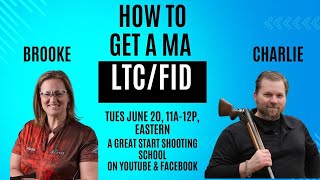
In this live YouTube presentation, host Brooke Cheney and NRA‑certified instructor Charlie Cook walk viewers through the Massachusetts License to Carry (LTC) and Firearms Identification (FID) system. They compare resident and non‑resident applications, outline costs, required training, background‑check steps, and timelines, and explain how certificates are issued and renewed. The duo discuss common reasons for denial, interview etiquette, and the impact of the Bruin decision on restrictions. Practical advice is given on how to interact with police (the state’s “don’t ask, don’t tell” approach), where firearms may be carried or prohibited, storage and transport requirements, and the distinction between open carry, concealed carry, and magazine limits. They also cover the differences between an FID card and an LTC, age‑related rules, and how to stay current on ever‑changing gun laws through organizations like the Gun Owners Action League (GOAL) and Connecticut Carry Development League (CCDL). The session ends with announcements of upcoming Massachusetts LTC classes, logistical details for on‑site or home‑based instruction, and a call to political advocacy for pro‑gun legislation.
Chapters
You want me to roll the countdown?
Go ahead, give us 3 seconds. All right, here we are. Today we are getting— doing how to get a Mass license to carry or firearms ID. And with me today, there is myself, there is Mr. Charlie, and maybe I can put us together. Oh, and we got DJ too, but DJ is just in the background, so I'll see whether or not I can— nope, I don't know how to— all right guys, for real. I don't know how to make it just the two of us. So, oh wait, there we go. Okay. I mean, not that DJ is not important, but you know. All right. So good morning everyone. If you have not met my co-host here, Mr. Charlie Cook from Riding Shotgun from Charlie, say hi, Charlie.
Hi. Hello everybody.
Now Charlie here has been doing mass permits for, I don't know how long, Charlie.
Oh my gosh, I became an instructor certified by the NRA and the Mass State Police in 2007.
2007. So more than a minute.
More than a hot minute.
More than a hot minute. All right. Um, so yeah, so I just started offering my license to carry certificate for Massachusetts. That's really not that— it's— what, what should I call it? It is the Massachusetts approved A thing?
Approved curriculum. Uh, it's, it's an approved course, uh, a course approved by the Mass State Police. Okay, I think that's maybe a good way to say it.
And then the most important part of this is this may be an outdated video within a couple days or whatever because that just changed what they approve or what they don't approve.
Welcome to the Commonwealth.
Ah, yes. So, um, So anyway, you got a couple people saying hi to you.
I don't know if you can see the comments, but I am, uh, now I can.
Now you can.
All right, everybody, what is happening? G-Webs.
Yeah, well, you know, um, yeah. Oh, G-Webs immediately going for like how many, you know, he wants the stats, man.
Good question. Um, I don't— I know, uh, I, I heard I heard Renee Gagne from the DC Project say that we have 600,000 licensed gun owners in Massachusetts.
Okay.
But, uh, I, I don't think, I don't think that's not wrong. Um, yeah, I think we have a, there's a, there's a lot of people and there's more, you know, I'm, I'm certainly doing what I can to, to keep my end up of, of people getting licensed and, um, uh, getting their carry permits.
Yeah. No, I, um, I think if you go onto the GOAL website, that information might be there or on the actual state website. I am not entirely sure. So today we're going to take a little time to go over what the Mass permit application process is like, whether you're a resident or non-resident. Those of you watching live, feel free to ask any questions. DJ is going to keep track of the questions because if I look at the thing all day long, I will get distracted. So I'm I am not looking at the comments right now so that we can actually get through everything. And then at the end, DJ will pop up the questions that we had as we go because we have a little presentation. I don't know.
I can't wait.
I know it'll be new for both of us.
Perfect.
All right, so let me see here. Ta-da! All right, here is my actual presentation. And yeah, it's a PowerPoint, so we're just going to run through the PowerPoint, and as you all have questions, just go ahead and ask questions. Most likely Charlie's going to be doing heavy lifting on actually answering the questions. That's why I have him here, and I'll answer whatever I can. So, all right, let's go. Here's our quick checklist. Whether you're a resident or non-resident, you can apply for a carry permit and in license to carry, which is what it's called in Mass. And here's the thing that drives me crazy is they're called different things in different states, sort of like your Department of Motor Vehicles, etc. and so forth. So if you are a resident, you apply in the town that you reside in, just like here in Connecticut. You get your— you apply for it, they decide you have to have your firearms safety course, you have to have your ID, proof of residence, state and federal background check, fingerprints, check with— they check in with the Department of Mental Health, and I'm assuming that's in Connecticut— or sorry, in Massachusetts, because I don't imagine they go across state lines for that. But I don't know. Charlie, do you know?
I don't know. I— they just ask on the application if you've been confined to a hospital or institution for mental illness.
Okay, so similar to when you're buying a gun then. Yeah, that same question. All right, for my non-residents, who are most people who are gonna come visit me because I'm in Connecticut, it's basically the same The difference is you're applying to the Firearms Records Bureau in Massachusetts versus in the town that you reside. It does cost us a lot more being non-residents. It's $100 a year versus residents which get $100 for 6 years. You still have to go with your Mass-approved firearm safety course, which I am now teaching, and the first one is next month in July, which is why I figured I should let people know how to do this stuff. And you're going to go through the state and federal background check, your fingerprintings, and check with the Department of Mental Health. And oh yeah, it takes us longer. It says 90 days, and, uh, that's what the website says, Charlie. I don't know what it's actually like. Actually, I do know what it's actually like. It's like 6 months. But, um, 90 days from when they get— so yeah, let's chat on that for a second. The state site says 60 days for a residential and 90 days for out of state. What has been your experience on that?
I had a couple people from, from Connecticut ask me about taking a class, and, and I saw, you know, I asked them some questions and say, you know, do you have a license in Connecticut? What kind of classes have you done before? In Massachusetts, you— it's not just taking one of the approved classes it's taking it from an approved instructor. So the instructor has to have a certificate from the Massachusetts State Police to say that you're a certified instructor, and then she can give out these certificates. They do give you your own instructor number, which you have to put on the certificates as well. And this one's really dumb to me. You have to put on when your license to carry expires. And I'm like, why, why do I have to share this information with the people taking my class? Like, that seems ridiculous to me. And since the state has all of this information already, they ought to be able to keep that somewhere.
So because we have to apply through the state to get our okay to teach the state firearms approved, and I think it's the same person, so I don't really know why we—
like, there's nowhere to cross-reference it with, you know what I mean? It should all be in a database, I'm sure. I'm sure it is. Anyway, um, I had some people, uh, that were supposed to take a class with me this past weekend that were from Connecticut. There were, I think, 5 or 6 of them that said they wanted to come up to get their Mass, uh, LTC, their non-res LTC, because they live on a border town and they have friends and relatives that are up here and they don't want their rights to end at the border. They called the Mass State Police and they were not taking appointments until February 2024.
Yes, so you can go ahead and get all of the things that you need for your permitting process, but you won't be seen until 2024. Now in Connecticut, most towns— actually, this just changed literally a week ago— you must have your certificate within the past 24 months. Does Mass have a limit on how long, like from when you take your Mass-approved firearms course from a Mass-approved instructor how long that is good for?
So I'm gonna say yes and no. It has an expiration date. Yes and no. It's supposed to be valid for forever according to the state of Massachusetts. However, if somebody is a resident, if the chief of police is an anti-gun folk and they want to, like, if you've done the class 3 years ago and they want you to take a class that is newer and less than a year old, then they'll ask for a newer certificate. I always tell people if the chief of police in your town wants you to learn how to ride a unicycle and juggle, you've got to learn how to ride a unicycle and juggle. Um, the, the, the state says the certificates are valid for forever, but it doesn't necessarily mean that. Uh, and I hate, I hate, like, I hate giving out some political no-answer answer, but that's what it is.
It's the same here in Connecticut, without a doubt. It's like, although the state did just change it, like, they put it in law that your certificate must be within 2 years old. So that's actually, believe it or not, that's an improvement because prior to that it was within 12 months.
This is really Stockholm syndrome, isn't it?
It's like it's better now because it's 2 years, not just 1 in Connecticut. But yeah, well, because we both teach NRA stuff, so it's like that is also lifelong supposedly. However, It varies state by state, right? So, all right, let's talk about a little bit what the different, different pieces and parts are, right? So we have an LTC, license to carry firearms. Whether you're a resident of Mass or whether you are a non-resident, as far as I know, it covers the same thing. The changes are the cost, and I don't know, so when I was looking at the website, it says here 21 to 69 years old is $100 a year, and if you're a Mass resident, 70 years old or older, you get your free permit. Now, if you're a non-resident, does that count for us too?
Uh, probably not. Let's not be ridiculous. It's not— it's not, by the way, for the people that are over 70, it's not for the first time they get a permit or a license to carry, it's for their renewals.
Yes, so you only pay $100 once, right? Uh, the advantage of being a resident of Mass is your $100 is good for 6 years versus a poor suckers out of state, we have to pay $100 a year.
Yeah, it's, it's applying, applying for the non-res LTC. I tell folks is their new hobby.
Yes, because we have to do it every 7 months or so. Yeah, I know, way before our expiration date is in order to get it renewed. But again, back to Stockholm syndrome, it's gotten better. As non-residents, we used to have to go every single year to renew physically in person, and now it's once every 5 years.
Uno momento, por favor. Let me, let me tell you how good you have it. You not only do not have to apply in person, it's good for 365 days one year rather than a calendar year. Oh yeah. So if you applied in October and you got approved in November, your, your $100 permit is good for a month and a half, and then you have to start the renewal process the following year. So that's, that's old. It's— that's how it used to be. But now it's good for one, like, 365 days, one year.
Okay. Yeah, as long as I've— my husband's had it because he's had it way longer than me. Um, he's had to go up to mass every year, and they only changed that a couple years ago where it's like, no, we only have to go in person now once every 5 years.
Yeah, once every 5 years. Yeah.
Um, So that is—
you have to go to what I call Chelsea where you need a gun.
A little bit, just kind of. It's not bad, it's by the train station. Just don't go under the tracks, right?
Just don't, don't go under the bridge. Exactly, don't go under the Tobin, you'll be fine.
All right, I'll try to think. Is there anything— oh, so the other difference is if you're a resident, you can buy firearms in Massachusetts, whereas a non-resident, you're just allowed to carry firearms. Firearms. You are not allowed to purchase firearms. Did I get anything wrong, or is that—
uh, no. I mean, listen, let's, let's face it, here in occupied territory, guns are more expensive here than somewhere else. So, um, I wouldn't— I wouldn't— if you don't have to buy something here, don't buy something here. Uh, everything's gonna be—
compliant triggers are so much fun.
Oh, sure. Um, The thing is, we have this approved firearm weapon roster. Firearm weapon roster. And you can, you can have guns that are not on the approved weapons roster, but you can't buy them from a dealer. You don't get in trouble for having them. A dealer would get in trouble for selling them to you.
Gotcha.
Yeah. And I also tell people, if you're confused about the gun laws, I'm explaining it well.
Exactly. Yes, at the end of the presentation, I talk about how to stay up on all of these various gun laws. All right, the next slide. Oh, the next slide is horrible because you can't actually read it, but I'll show it to y'all anyway. Reasons for denial of a license to carry firearms or your firearms FIC card. So yeah, FID. Yeah, that thing. Basically, you have to go look, and if you really want it, I'll email it to you because there's lots of things. Now, here in Connecticut, again, those just changed. How often do those change for you guys?
I think it's been a while since it's changed. It's all the regular stuff. You have to not be convicted of felony as a juvenile or as an adult, not confined to a hospital or institution. You have to be a— you cannot be a prohibited person, but you could be a suitable person. And we can talk about the Bruin decision and how that screwed things up as well. But you can't be charged of a misdemeanor with more— that's punishable by more than 2 years. You cannot be convicted of a violent crime. You cannot have a conviction under any law relating to weapons or ammunition for which imprisonment may be imposed— not imposed, but may be imposed— and the subject of an arrest warrant in any state or federal jurisdiction. So it's, you know, it's all the things that you wouldn't do to pass a background check is kind of how I see it.
Yeah.
You know, if you're, if you, I mean, if you're gonna, if you're gonna pass a background check, you're, you're gonna be good to go.
Gotcha. All right. Just cause I made it, I have to show everybody all my slides. All right. We talked about having a training course. That is the thing that may or may not be changing in Mass as far as which are the approved courses. And then where do you apply for your FID LTC? And then you're res— if you're a resident, it's in your own hometown. If you're a non-resident, we just go to the state. And it's so convenient because, you know, Connecticut is basically the same thing. The difference is Massachusetts is actually better about getting back to you as a non-resident than Connecticut is. Shocking, I know, but you're good at something at least.
This, this is true. I did, um, I had on my table, I have a packet to apply for my Connecticut license. And it was one of these things last summer, I did a Utah class for, for somebody and one of the ladies taking the class called me up and she's like, hey, I have a fingerprint card that's not blue because I, when I do the Utah class, I set people up with two sets of fingerprint cards. I always tell them one for practice and one to send in. And she called me back and she's like, I've got a set of a fingerprint card that's green. And I'm like, I don't know if that's different than the blue one, but I went and met her. We've— I got her fingerprinted, and she, she keeps in touch with me. So I told her that I would check out getting my Connecticut permit. I called the state police. I went to handgunlaw.us. I went to the Connecticut State Police. I called the phone number, and the phone number of course says leave a message, we'll call you back. I left my name, my information, told them I wanted to apply for the non-resident license. Never heard back from them. And about a month and a half, 2 months later, I got a packet in the mail.
Okay.
Yeah.
Yeah. Well, so people, my students, uh, who are, you know, they come over from Mass and New York because I'm up here in the corner, in the northwest corner. And it's just like, there's even an email on the website in Connecticut that says just email here for information, and they haven't gotten anything back. So yeah, This is, it's a challenge without a doubt, right?
There's nothing that says we don't want you to have a gun license other than we're not going to reply to you. Like, you don't, you don't exist.
There's a little bit of that. So, all right, we talked about this a little bit, but how long does the application process take? Like I said, the website says up to 60 days and then for resident and up to 90 days for non-resident. But I can tell you, having gone through that process, it definitely takes longer. Um, and then what can I expect from the interview? So this is directly stolen from Charlie's handy-dandy handouts, but, um, your interview is roughly 30 minutes and you're waiting longer than you're actually ever being interviewed. And for residents, you need the original copy of the application and your training certs. Now, as a non-resident, we've sent all of that stuff in ahead, so I don't remember bringing any of that stuff with me. Are you holding up your handouts to show everyone?
Yes, I was. All right, see how, see how smart I am? I'm holding it up, I'm not even on the screen.
I'm like, wait, here, look, here, I'll make you big and everything. Here, you can hold up your handout.
Here's, here's my little handout that I've made.
Oh, that's not the one. Oh yeah, yeah, you sent me a bunch, so it's awesome. Yeah, so yeah, so like you were saying, right now non-residents are waiting at least until February to granted their interview.
You can bring you back up now, Brooke.
Oh no, it's okay. Oh, I'm like, maybe I'm doing something I don't want to be on screen.
I don't know. It's not the show, Brooke.
I know, we talked about that earlier today. Um, all right, so let's see, where are we? Sorry, I looked at DJ's thing.
That's okay.
And I'm like, what, what are we talking about now? See, this is why I try not to look at the chats. So I actually— DJ, I should check in with you. Are there any questions we need to answer right now that have come up? I saw the mask thing about thinking that we're talking about guns in church, but other than that, uh, did I have any questions? Yeah, well, I asked if DJ had any that from the chat thingy, but then I didn't hear him, so it's like his unmute thing came off but I heard nothing. Um, but we're having a lot of that today. Oh, resident interviews, 30 minutes. Every— is, is it like Connecticut? Every town different?
Um, it's, it's the same thing. I always told folks, uh, when you go in for, for the interview, um, they're, you know, they— it's not like they put the light in your face and blow smoke in your face and, and interrogate you. They just want to find out you're not a crazy person. And I'm using air quotes when I say crazy person, but, um, they want to find out Yeah, it is, of course. So I tell people, I always say, listen, there's the 3 things you don't want to tell the police are: you want to overthrow the government, the reason that you want a gun, or the reason you don't— the reason you want a gun is not because you want to overthrow the government, not because you want to shoot zombies, and not because you want to shoot clowns, because that makes you seem crazy. Then I tell people, I give them a nice pause, and I say, but have a gun for all of those reasons, right? You don't tell people, you don't tell, you know, you don't tell people this. You don't say, hey, listen, you know what, I'm mad at my ex and, you know, I'd like to whatever, I'd like to have this person off the face of the earth.
I just want to do target shooting for the rest of my life. So here's what you gave me, right? What you do want to tell them, because here at A Great Start Shooting School, we do try to focus on what you want to do versus what you don't want to do. So Charlie, go ahead. You can—
yeah, you want to tell them that, uh, that your, uh, your spouse has firearms and you want to be familiar with them. That's not a crazy person reason. You can tell them that you work odd hours, like you, you work until 2 o'clock in the morning at a hospital and you're, you're a single young woman and you want to be able to protect yourself because you're coming home from a crappy town in the middle of the night. You want to tell them you're home with your kids and your husband might be away, and I'm, I'm you know, apologize for stereotyping and, you know, whatever, the man's home and all that kind of stuff.
That's why I got a gun, man. I traveled all the time and I was home by myself with two small kids. That was it.
Yeah, absolutely. And you're not a crazy person for wanting to protect your loved ones. You could tell them you've got friends that are interested in shooting and you want to be able to go shooting with them. And, you know, you could tell them you want to take up target shooting or hunting. They're not supposed to ask you these questions anymore. But if they do ask you— yeah, thanks to Bruin— but they're not supposed to ask you these questions, but you want to let them know if they do ask that you're not joining a gang, you're not taking up bank robbing, and you're part-time. You want to make sure that you're not doing it. They're going to do a background check on you. They're going to find out you're not a criminal. However, on the flip side, I also tell people, and I had one student a couple years ago that was taking her course to get an LTC, and she wanted to do the NRA basic pistol class, so she got to do some live firing. She wanted to get a license because she had a, had a, had a relationship with someone that didn't really go well. She said he was— this guy was in his mid-40s and had issues with drugs and alcohol and was moving back in with his mother and unemployable. And they, they would get into arguments and fights at her house, and the neighbors would call the police to, to break it up because, I don't know, I guess they're throwing dishes at each other or something. So she said she was in fear for her life because he said he was going to come back and kill her some night. And I said, okay, that's not a crazy person reason. There's someone that wants to harm you, wants— someone wants to take your life, and someone that's threatening you. That's not a crazy person reason.. But, you know, we have, we have defensive firearms. We don't have offensive firearms. So you don't want to be the one that says, hey, I've got this, my, my ex-wife, you know, my ex-wife is doing this and this and this, and I'd like to kill her. That, that's not a good reason.
No, don't go there.
Yeah, of course, that would be real bad. But if you are, if your, your ex-spouse or your ex-domestic partner, whatever you want to call it, if your, your ex says they're going to come back kill you. That's not a crazy person reason.
So, um, yeah, so I, I just looked real quick while you were chatting. So, um, but it's like it used to be on the application it says, why do you want this? And do they actually take that off, or am I just missing it?
I, I don't know. I haven't seen an application in a few years. I actually— my LTC is going to expire this, uh, this fall.
Oh wait, no, it is still there. Reasons for requesting the issuance of a card or license: unrestricted target hunting sporting or employment. But is that the other thing you told me that is going away? Is it, it's just unrestricted now, or is it not going to be?
After Bruin, everything is unrestricted. The, the state came out, and the Gun Owners Action League, which is the state's pro-gun group, they helped, uh, they helped try to clarify this. Because if your license had a restriction on it that was for, for sport shooting or target shooting, where you can go back and forth to the range, uh, they had to take that restriction away. And if you wanted a license that said no restrictions, then you had to ask your local police station for one. The restrictions— the restrictions were ridiculous. If the chief wanted to put restrictions on it, he could, right? But they can't do that anymore. So they're not supposed to ask you why you want to have a gun. You don't— you're not supposed to tell them, you know, I want to go target shooting, or my buddies are getting into shooting, or I want to take up hunting, or, um, you know, whatever. You're not— you don't have to— you're not supposed to give them a reason, or they're not supposed to ask you for a reason, right?
Because, yeah, like I said, it, it was, uh, it is still on there, and so I don't know if and when they're gonna change that, right?
So when, when people come to me and they say, well, um, if they say, I want it for all lawful purposes— all lawful purposes is the phrase that we had, uh, man, back, you know, 20 years ago when I got my license, um, that was the phrase that we had. Which meant it was unrestricted. All lawful purposes tells me that you've done your homework. If you say that you want a license to, you know, be able to protect yourself and to defend yourself and defend the country against enemies foreign and domestic, hey man, let's take a step back. What are you really looking for a gun license for, right? Because you're not going to start going around shooting domestic terrorists. Even though you want one for that. But you don't want— again, it's the whole crazy person reason. I remember, man, I remember when I was brand new, my license had restrictions on it, and I wanted to get an unrestricted license. And the chief of police in the town I lived in, you know, I had target and sports shooting, so I could only bring a gun back and forth to the range. And I was really confused, like, could I go to the grocery store and go to the range, or go to the range and go to the grocery store, even though the gun was unloaded, locked, and secured? Container and I couldn't carry it. Like, I didn't, I didn't, I didn't want to take any chances. I was, I was cautious about everything.
Um, there's lots of confusion about a lot of things. Like, people here in Connecticut have their pistol permits and they're like, how can I transport it? I'm like, you have your permit, you can transport it on your body, or you can transport it in a locked case, or, you know, and it's— and this is where I'm going to do that quick little segue into Oh, let's talk about the laws, at least a couple of them, because there's laws that keep changing because that is what happens in all of us lovely anti-gun states. Only if you're lucky to be somewhere like Florida do they get better. But this is one that I am actually jealous of Mass because they have the Don't Ask, Don't Tell law. Because in so many states it's very ambiguous when people say, do I have to tell a police officer that I have a firearm on my person? But here, if they ask, you should say, officer, I have a license to carry and I'm currently doing so. However, how would you like me to proceed? Is a great response which Charlie came up with, because this is also cut and paste from Charlie's handouts. Um, but it's also just good in general. Most police officers you talk to will actually tell you not to announce it. Um, there are some that say, of course, always tell them. And it— the reality of almost every stinking gun question out there is it depends. You do not want to introduce a firearm into a traffic stop because lots of people don't understand police officers are not as well trained in firearms as some would hope to believe. So you really don't want them handling your firearm if you don't have to have them handling their firearm. So I love the fact that, again, back to Stockholm Syndrome, that Mass actually has a law that's don't ask, don't tell.
Yeah, that sort of thing. I tell people, I say, look, there are pro-gun police, there are non-gun police, and there are anti-gun police. And the difference between them is You have police officers that like to go shooting. You have police officers that have nothing— they like a gun, it's just a tool they carry on their belt. And you have police officers that think that you and I shouldn't carry because we don't have the same training that they have. And, and you, if you don't want to, if you don't have to tell the police, don't. But I also try to tell people not to use the term weapon, um, because we get that beaten in as NRA.
Yeah, we do not use the word weapon. Because I tell my students in class, I'm like, see this pen? If I stab you in the face with it, it is a weapon. If I'm just writing notes to you, it is just a pen. So our firearms are the same.
Yes, exactly. I tell people the mind is the weapon, everything else is a tool, right? So, and I don't— what I don't want is I don't want it to turn into one of these things like in My Cousin Vinny where you say, officer, I have a license to carry and I have a weapon on me. Because as you're talking to the police officer on the passenger side, you say, officer, I have a license to carry, and then his partner comes over on the passenger side and you say, I have a weapon on me, he could take that as some sort of a threat and then pull his gun out and ruin everyone's day and make everything a big mess. So I've got a license to carry and I'm currently doing so. How would you like me to proceed? And I tell people, you need to say that as well if the police ask you to step out of the car but they— you haven't let them know that you have a firearm on you. You want to say, "Officer, before I step out of the car, I want to let you know I've got a license to carry and I'm currently doing so." Because then I tell them if when they step out of the car, the next thing that happens is you put your hands on the roof and you take a wide stance because they don't say spread them anymore because that sounds bad. And then they pat you down. When they pat you down and find that you have a firearm on you, they make you eat gravel and hogtie you. Yeah, and because you did—
if you did not say something, that's why you informed them. Because my husband was stopped and his gun happened to be in his glove box at the time, and he told the rookie cop that he had a firearm on top of the registration. And the rookie cop reached in, pulled him out of the vehicle, threw him on the front of the vehicle, at which point the sergeant was called, at which point my husband got lots of apologies and no ticket. But you don't know which experience you're going to have. So I've got friends who are cops who are like, I love to see someone's got a license to carry. It doesn't make me nervous. It makes me happy because I know they're— they've passed all the criminal background checks, so they're probably not a bad person. Um, so it actually lowers the anxiety for some cops. But it also— because here in Connecticut, at least if you have an LTC, it comes up when they pull you up. So, but yeah, that is definitely— you just don't know. And you don't know if they've had a bad day.
There's— that is the other thing I tell people.
I—
you don't know if the cop has had a bad day and they want to take their day out on you. Yeah. So you don't—
yeah, it's— yes, don't give them reasons to. Um, here's another popular question. Where can you carry or possess a firearm? So in Massachusetts, on school grounds, virtually all federally controlled property, which obviously works for Connecticut as well, most areas of airports and some state buildings. Same here in Connecticut. Courtrooms if ordered so by the judge, and anywhere the owner or lawful occupant asks you not to.
So That last one is, to me, that one's a little tricky. And I always tell people that means the no—
if you look at the hand sign on the wall that says no firearms here kind of thing, right?
The no gun signs don't have the force of law. But I recently read on handgunlaw.us that they do have the force of law. And I asked one of my friends that— I asked Carrie Anne about this. I'm like, hey, has this changed? And she's like, no, it hasn't. So I always tell people, you know, look, The deal is this. I hate— I'm not encouraging people to break the law, but we are not lawyers.
We are not here to give any legal advice. We'll throw that disclaimer up too. I should have done that at the very beginning. That's when we start talking about laws. It's like, oh no, right?
We're not lawyers and we don't play them on YouTube. Yes, but concealed is concealed. And if you go into a place where there's a sign and it does have the force of law, there's no way that I would go up to them and say, I'm sorry, I'm breaking the law. I have a concealed firearm on. Me. Concealed is concealed. If you're doing your job as someone that carries concealed, people shouldn't know that the gun is on you. You shouldn't be printing, your shirt shouldn't come up. You need to be careful to take those precautions that people can't see it. And I've carried in places where they have the signs, and I've carried in places that may have been prohibited, and I go about my business and I do what I'm doing anyway, which is not breaking the laws, not harming people, not threatening people, and then I leave as soon as I can.
And I mean, the other part of it too is, to me, it's like the speed limit. If you didn't see the sign, how are you supposed to know? Um, oh sure, because unintentionally you can go to some of these places. Like, one of the reasons I never carried when my children were small was because I was on school grounds all the time. And here's the thing that people don't understand. No, having your firearm on school grounds doesn't mean just on your body. So it's like, if I am carrying and I get called into school, I have to come home first, drop my gun off at home, and then go to school. I cannot go to school, take my gun off in the parking lot, because you're still on school grounds. And this is one of those things people like, oh no, that's fine. Not on school grounds, period, end of story. Stay out of jail kind of thing. Because being a lawyer, um, my— I, I've been raised in a family of lawyers, so it's one of those things where, yes, there's all sorts of, um, you know, different laws, but does that mean that I've never driven onto school grounds while carrying a firearm? I'm not saying because I don't recall. So, um, anything is possible. All right, what's our next one? The storage of firearms. I put the fire—
my—
when I was making the PowerPoint, because it says fire, they put up the fire extinguisher. So I just thought that was funny, so I had to throw that there. Nice. Now for MAS, go ahead, you tell everybody what all of this means, Charlie.
All right, so you have to store them locked and secured so unauthorized people don't have access to it, and unauthorized this person is someone that doesn't have a license to carry or possibly an FID card, the firearms identification card. So you gotta use a cable lock. I'm not a fan of trigger locks, but trigger locks are legal. You are going to keep your gun in some sort of a case. So if you, you know, if you don't have a big safe, obviously, but if you have it in a case, put a padlock on the case, put a cable lock through the case, put, you know, do that sort of stuff so that the guns are locked and secured. People that don't have access to, aren't supposed to have access to them, don't have access to them. Here's where things get a little fuzzy when you're transporting firearms, because carrying is it's on you, and transporting is it's unloaded and locked in a secure container. This is Jedi mind trick stuff. A cable lock is good inside of your house because it's a tamper-resistant mechanical locking device. A cable lock is not good in your car because it is not a locked container.
So yeah, the transporting thing definitely didn't make any sense to me when I tried to read this. Welcome to the Commonwealth. Oh, because it's like, um, yeah, so I mean, this is what you were talking about as far as, uh, contained within the locked truck of such vehicle in locked case or other. So I was actually reading the laws on this and it was saying how that— and again, this is why we're not lawyers offering legal advice. It's like you can have one on you, but you can't have another one that you're transporting unless it's locked up. And it was just— it was very odd the way that the laws actually read.
So, well, here's what makes it even more confusing, as if it's not confusing enough. You can have a— I'm very sure you can have a non-large capacity rifle or shotgun and not have it locked and secure. But that would not be the way to do it because you want to take a conservative approach to what the laws are so that if you get the rookie cop and you just went turkey hunting in the morning and you're on your way to work and you change your, you know, you take off all your camo, you throw your pump-action shotgun in the back seat, you throw your camo on top of your shotgun, and then you go to work That's crazy in all areas because it lets people know that you're a hunter, so you probably have something in the back of your car anyway. So you put all this stuff in your trunk. The non-large capacity rifles and shotguns don't have to be locked and secured, but the large capacity ones do. Just lock them all up and make your life easy.
Yeah, I mean, I just, I just always like default to the Firearms Protection Act. It's like separate compartment for this from the driver's locked and separate from ammunition, and I just go there because at least that's federal and I'm following the federal laws, right? Which makes it easier than trying to figure out what the patchwork quilt of all the different storage laws are that have to do with, um, uh, all that sort of stuff. All right, so DJ actually wrote a question for us. Um, do any Connecticut or Massachusetts civic buildings have systems where you're able to temporary surrender firearms? Not that aware of, but if anywhere, I would assume it was the courthouse because bail bondsmen and folks like that going in and out of there. But I don't know, not— I don't know for sure in Connecticut. Do you know of any, Charlie?
Uh, I know I, I've heard people say that when you go to the State House, um, they have a place where you can secure your firearms. Um, I know the times that I've been to the State House, they have a metal detector, and I don't want to talk to these guys Um, I want to talk to them as little as possible, you know what I mean? So I don't want to be like, hey, I got a gun, well, like, where can I keep this bad boy? Start waving it around.
Oh dude, I go in my shirt now with my, my, my logo and everything. And actually, most of the, the state, uh, security guys at the Capitol are actually very pro-gun, so I got that going for us here in Connecticut at least.
That's cool. I've, I've heard people say that there's a place you can store them in the, in the message is the State House, but I, I don't want to run that risk, you know. I, I don't want to run that risk. I, I do keep a lock-secure container in my car, and when I go to places where I can't carry, that is what I do with my firearm.
All right, so since we're talking about the lovely joy of how much fun all these laws are, what is the easiest way to keep up with changing laws? Well, if you're going to get a mass permit, you want to make sure that you join the Gun Owners Action League because that is how I stay up to date on what all the laws are. GOAL, just like CCDL here in Connecticut, will help you understand what's going on. By all means, you'll also get the, hey, help promote them, help them raise money, but the Gun Owners Action League is definitely the best way to keep track of all of these things. Because I know when I am teaching my classes, I do not— I tell people I'm not a lawyer, not offering legal advice. Here's what I understand of the current laws. But probably the most important thing that I tell everyone is to trust but verify. Because even if I tell you something, even if there's something on this YouTube channel or Facebook that you heard or saw from myself or Charlie, please go to your actual laws that are in your hometown and then in your state and then federally if you really want to start understanding laws, because they are complex. There's nothing straightforward about the gun laws, and there's lots and lots and lots and lots of them.
Yeah, I just, um, I participated in a number of these gun law listening tours that they've had in Massachusetts. And, uh, Renee Gagne, the Rhode Island, uh, DC Project gal, representative, uh, delegate— no, not delegate, is that the right word?
She is the director. Yeah, she's the director. What are we looking for? Yeah, right. What is— I never— director of Rhode Island. Uh, Carrie is director here in Connecticut.
I never remember what the title is. Like, is it a delegate?
There's assistant directors, there's delegates. So yeah, we have a hierarchy now.
That's good. So, um, uh, Carrie-Anne and Renee actually took a class with, uh, Chief Ron Glidden, who was the, uh, the director of the state police for a long time. He wrote a 450-page book on the Massachusetts gun laws, and someone else wrote a book— I think it was about a 150-page book interpreting what the 450 pages meant. Yeah. So, and I know Evan Knappen from New Jersey just came out with the New Jersey gun law book, which is 500 pages. Yeah. So it's, it's way confusing, all of this stuff. And they, they like to have it that way. They like it to be ambiguous so that people get hung up in the laws. Yeah. Stephen King novel, right? It's War and Peace, for God's sakes.
Yeah. Yeah. It's pretty, it's pretty awful. And the laws, it's like you can't know them all. Just at least by joining something like GOAL or CCDL, at least you'll get the email when stuff is changing. Because 2 weeks ago here, we just had a new set of laws changed and updated. And then— sorry, I'm trying not to say bad words. So I did a presentation for my students about what has changed. And so like, for example, one of the things that just changed here in Connecticut is we were an open carry state as well as concealed carry. And one of the big things that changed is we are no longer an open state carry on October 1st. And during the testimony, they were specifically asked, what are you going to do to educate the gun owners? And they're like, oh, gun owners are involved enough. We don't need to educate them. It was essentially what their response to that is how do you, how do you help gun owners understand what to do? And they're just like, you don't need to because they just show up anyway. And it's just like, so this is why I did my little piece to my couple hundred students to be like, okay guys, you need to know on October 1st, if you open carry, you become a felon. And it's not like in the law you get a grace period or any of that. It's like, bam, felony, lose your license.
So yeah. Right. Then you can open carry illegally.
There you go. Well, but I mean, and here's the thing, back to cops, it's like they don't know all the laws.
The—
all the cops who have been taught that is open carry is legal are probably also not getting the education that on October 1st that now becomes illegal. It's just— it's just not awesome.
So yeah, it's— oh, so this is one of the things, so in, in Massachusetts, open carry is legal as well. But in practice it is not, right? You know, I, you know, I, I don't want people to know— I, I'm in the camp that if I'm carrying a gun, if something bad happens, I'm the first person that gets shot, and I don't want to take the chance that, uh, that that happens.
So, um, well, some of the, some of the things that whether you're for or against open carry, like some of the things that were brought up was the fact, well, what about military um, because it was all guns. Like, all guns, not rifle, all guns are no longer open carry. So when you're talking a military funeral, that would be illegal. When you're talking, yeah, reenactment shooters, that also would be, you know, all of these little things that you don't think of. Whether you're for or against open carry, you should always be for open carry because the implications of making that illegal make a whole bunch of people into felons when it's something as simple as a funeral. So these are the challenges with our laws, right?
So we can open carry handguns, but we cannot open carry long guns unless you're hunting and it's hunting season and you're actively hunting. Yeah. So I always tell— and this is an old movie reference— I always tell people, if you're in camouflage and it's turkey hunting season and you're walking down the road with a shotgun over your shoulder, you're good to go. If you're wearing a pair of jeans and a polo shirt and you have— you're walking down the road with a shotgun over your shoulder, you're falling down.
Well, y'all be happy to know this is actually the end of my PowerPoint. So if there are any additional questions, um, the most important thing I think is keep learning. If you're in Connecticut sign up for CCDL. You go to CCDL.us. If you're in Mass, join GOAL. If you travel with your firearms on a regular basis, sign up for any Second Amendment groups that are in whatever states you travel through, because the laws are always changing. They're always coming up with more stuff. And the only way, the only way to stop this is at the ballot box in November. That's it. Because I've been a loud voice in our legislative, legislative process for many, many years now. And unless you've— unless you can find pro-gun advocates and get them elected, we will always lose. So as much as I try to stay away from politics, I've just gotten that fed up at at this point, which is, uh, we have to spend time electing pro-gun. And it doesn't matter what party they're in, you just need to find people who are pro-freedom. So that's, that's my last thoughts. But anyway, anything else? License to carry Massachusetts. I here at A Great Start Shooter School am finally offering that class because I went through all the stuff that Charlie went through a decade ago, um, to be able to give you all class. So my class will be in July. I think it's July 24th. I'm not sure though, because I should have probably figured that out before. Right? July 9th. So it's not that far away. So if you want to get your license to carry— and here's the thing, whether you take the class from me or from Charlie, it doesn't matter, because you just need the certificate, and you need to take it from someone like us who are certified, certified through the Massachusetts State Police. Yes, not certifiable.
Well, that's questionable.
I know. So, all right, anything else, Charlie? Oh my gosh, um, suffering, you know, pain and suffering, right?
The, uh, we do, oh, we do, uh, I know this was on one of the slides, there is a difference between the firearms identification card and the license to carry. The firearms identification card allows you to have non-large capacity rifles and shotguns, and the license to carry allows you to have large capacity rifles, shotguns, and handguns. However, we have a magazine restriction in Massachusetts. So if— I know you guys have one as well, so I guess maybe it's a moot point— but if you bring in a high capacity magazine of more than 10 rounds that was made after September 13th, 1994, it is illegal to possess it.
In Massachusetts. Gotcha. Well, see, and when I looked at this and I was reading this, it looked to me as if the difference was the age limit. It is. I'll throw this up again so we can discuss directly, but it says for your FIC, it says 15 to 17-year-olds or 18 to 21-year-olds., and it talks about that, but I didn't understand, can you get an out of— because I also didn't see a non-resident FID card. I'm not sure. Why would you really?
That's really what it comes down to. What's the sense? I had somebody take a class with me a number of years ago, and it was an older gentleman that just wanted to get a double-barrel shotgun to do some sporting clays and trap and skeet shooting, and I said, he's like, I just want to get an FID card. I'm like, don't waste your time, don't waste your money, get the LTC. And he's like, well, I just want to shoot shotguns. I'm like, you're going to start to shoot, you're going to find out you enjoy shooting handguns as well as rifles and shotguns, and then you're not going to be able to get a handgun because you only have an FID card. It's the process is the same, the cost is the same, the hassle's the same, the classes are mostly the same. If you do like, uh, the NRA Basic Rifle or Basic Shotgun, that's not supposed to be valid for the LTC. But if you do Basic Pistol or a firearm— home firearm safety, then those do meet the requirements for the LTC. So take the class to get your LTC, get your LTC. It gives you more choices and options of things that you can own.
Yeah, and that's what I tell people here, because up until 2013, we only had a license to carry. But after 2013, we ended up up with an ammo certificate and a long gun certificate and a permit. And I just tell people, just get the permit because it covers everything. Because like you, I have students come to me like, oh, but I just want a long gun. I'm like, that's all well and good, but I mean, the only exception are my 18-year-olds, right? They, they can only go for their long gun permit.
So, right. And, um, here the— if so, when my kids turned 15, they both got their FID cards. At $25, which I really appreciate because I'm tactically frugal. But when they turn 21, then they can apply for their LTC, and then, and then they're good to, they're good to possess anything. But they shouldn't have to take another course because their old certificate should be valid, and they're just renewing their FID card and upgrading it to the LTC. If somebody at 18 got the FID card, it's going to be valid for 6 years. When they turn 21, they have two choices. They can keep the FID card and let that expire when it expires and, and reapply for the LTC, or they could just wait until the FID expires and then renew and apply for the LTC. Gotcha. So it depends on if you want to spend an extra $100 3 years into it, right, or if you just want to wait it out unless you're non-resident because we just spent $100 every year.
Yeah, so there's no advantage for us to wait. Welcome to the Commonwealth. All right, um, so yeah, so my next class for your MAS permit is going to be on July 9th. However, I also found out that let's say you're coming for your regular Connecticut pistol permit class, you can also just click the little box that says add-on and I will do the MAS permit one for you as well. So just for the Mass folks, when is your next class coming up, and where are you, Charlie? I'll, I'll try to be more like Paul. Tell people about yourself. Lots of, uh, experience. Oh wait, but I have to make you big.
Oh, there you go. Make me big. I'm big. Yeah, me and Tom Hanks, we're big. Um, I am in central Massachusetts. I live in Sturbridge, and I teach courses I have a place that I teach courses in Sturbridge, but I also— to let people know that if they get half a dozen people, I will bring the course to them and do it, bring it to their house. You make your friends pay for the class. I, you know, I get to go and teach the class and make some money, and you get to get the class for free if you get half a dozen people, but you also have to bring the snacks and drinks. And we'll do it right at someone's house.
The— much nicer than me. Y'all have to come. Come to me every time.
No, I'll take, I'll take the show on the road, right? I've, I used, I spent years as a gigging musician. I'll take the show on the road. Um, but yeah, so my next class, I have, uh, I have one this Saturday, uh, July 29th.
Wait, this Saturday would be June, dude.
June 29th, sorry. Um, and then I have one July 1st and then July 29th. Uh, there's a couple weeks where I'm going to be out of town, and then there's going to be one week where I have a Utah class scheduled in Worcester, which is in the central part of the state.
So, and just to help people out, this Saturday is June 24th, not July 24th.
Just, just whatever this Saturday is.
Yes, whatever this Saturday, June 24th, which is when I'm doing my Train a Teacher Day because I couldn't do it last weekend when the national Train a Teacher Day was. So, so there is that. And Charlie, I forgot to drop your link anywhere. So I will put that in the comments when we're all done.
Thank you.
Thank you. Yeah, I think that's everything. Adios, everybody. See you later. Thanks for checking in. Hit the like button, all that fun stuff that, you know, those professionals all say. Night or goodbye.










