NRA Basic Pistol Lesson 5
The instructor maps out next steps after basic pistol training, covering the NRA Marksmanship Qualification Program, defensive courses like CCW and Action Pistol, competitive shooting disciplines, and membership benefits. Personal anecdotes show the path from Bullseye to Action Pistol competition.
Chapters
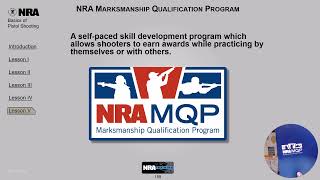
Lesson 5: Continued Opportunities for Skill Development. Learning Objectives: Identify several ways to pursue pistol shooting after the course. Successfully complete the NRA Basic Shooting Pistol course written exam. Ah, this is one of my favorite things of all times. I wish someone had given this to me when I started because this handy-dandy NRA MQP program gives you a track to run on. So if you flip through it, you will see all sorts of cool stuff. You have pistol and rifle and shotgun, and it tells you what your rating could be if you do a standing position, a prone position. It tells you what size target to shoot at. It tells you how much time to give you, all sorts of stuff. So as a brand new shooter, how do you get better? Well, you practice. Well, why did I used to only go to the range once a year? It's because I thought it was boring shooting at a piece of paper. The NRA MQP works to give you a road to run on. It gives you something to measure so that you can learn. If you don't get into competition with me, this is a great way to go because it at least gives you a way to know if you're getting any better. The NRA training opportunities, non-live fire, range safety officer, that basically teaches you how to run a range. It teaches you what ranges look like, what kind of precautions there are, what it goes into to actually run a range. It's very interesting because even as a new shooter, even though you may never be a range safety officer, like work at it or volunteer, but it's interesting to see all the stuff that goes into running a range. Home Firearm Safety. Refuse to Be a Victim is another good one. It is, it's one that I teach as well as a Range Safety Officer, and it's a non-live fire, so it's just classroom, but it teaches you how to look at the world as a criminal, how to look at yourself as a criminal. Not that you're a criminal. I mean, how that criminal looks at you is what the Refuse to Be a Victim course really is. And then there's the Reloading for Shotgun Shells and Metallic Cartridge, which I do not have. Okey-dokey, live fire courses. I'm only going to say basic once, but the NRA CCW, uh, defensive pistol, muzzleloading, rifle shooting. You are currently sitting in the basic pistol shooting. Then there is shotgun shooting, shotgun shell reloading, cartridge, metallic cartridge reloading, uh, personal protection in the home and personal protection outside the home. NRA competitive shooting divisions sanction pistol shooting tournaments and leagues nationwide. Competitive discipline include Bullseye, Action Pistol, Pistol Silhouette, and Air Pistol. The NRA publishes Shooting Sports USA for competitive shooters. Now, I started in NRA Bullseye. It is super slow, super precise, and probably the best competition to get started in. There are absolutely Bullseye clubs all over the place. Generally, you have to join the club in order to be on the team. But I would highly suggest it if you like precision shooting. It absolutely teaches you trigger control, sight alignment, all that sort of stuff. Action pistol is what I do more of now. That is running around and shooting things, and it's very safe. You have a safety officer with you at all times. There is usually a second safety officer. And when you tell the squad that you're on that you are new, everyone is a safety officer. Because I want to keep you safe. My first competition, I remember December, Monday after Christmas, standing there with a loaded gun. I'm like, hmm, I have a loaded gun and you want me to take it out and shoot things while moving. Are we sure this is a good idea? And all the folks there were very supportive and said, yes, the only thing we care about is your safety, which is your gun is pointed in a safe direction. So with that, I went forth and I started running around with guns, and now I do all the time, and it's lots of fun, and it gives you a great way to continue your training beyond this course and gives you specific things to learn as you're going. It's not that you have to become a world champion shooter, but it does give you a lot more opportunities to actually practice in a fun way. Thousands of clubs nationwide are enrolled or affiliated with the NRA. If you go to join an actual club, most likely they will ask you to become an NRA member, and why not? So most clubs have 100% NRA membership, which allows them to get, what's it called, scholarships and things like that. So NRA programs. The NRA basic firearm training program for every shooting discipline. NRA instructor, instructor and coach training. So if you want to become an instructor, let me know. I do that too. Youth programs and activities, competitive shooting programs that we just talked about, women's programs. Women on Target is something you can start looking for. Again, I think those are women's programs that various clubs will throw. Generally, they're for women only as far as the the people who are attending it are women only. We do not have yet enough women instructors to have all women instructors as well, but the Women on Target can be a rifle, a, um, handgun. They have some where they do all three. So Women on Target is another fun program that you can look for at the NRA site. And law enforcement training. The NRA was founded in 1871, originally to promote marksmanship training. The NRA goals are to protect the and defend the U.S. Constitution, especially in regard to the Second Amendment. They promote public safety, law and order, and the national defense, train members of law enforcement agencies, the armed forces, and people of good repute in the safe handling and effective use of firearms, and they foster and promote the shooting sports at local, state, regional, national, and international levels. And they promote hunter safety and proper wildlife management. Now, marksmanship training, that's what you're here for. We're just getting you started on learning how to train with a firearm safely. And if it were not for the NRA, I would not have the books and the tests and the certification that I have in order to be able to teach you. So I support the NRA because they support me and allow me to teach you. Benefits of your membership, uh, you can choose from American Rifleman, American Hunter, America's First Freedom, and Shooting Illustrated magazines. Uh, there's the NRA Family Magazine for junior shooters, uh, firearm insurance, discount programs for tickets, rental cars, hotels, etc., and a watchful eye and powerful voice in our nation's legislature at all levels of government. I've absolutely spent time with the NRA reps that we have here in Connecticut as well as the ones when we go to DC with the DC project. So they really are everywhere, even if you don't see them, they are really doing things. Oh, just in case we need to, uh, let's review. Always keep the gun pointed in a safe direction, parallel and perpendicular to your backstop. Always keep your finger off the trigger until ready to shoot, but make sure it has a home on the frame or somewhere solid. And always keep the gun unloaded until ready to use. As a result of your participation in this lesson, you are now able to identify several ways to pursue pistol shooting after the course, successfully complete the NRA Basic Pistol Shooting Course written exam. What are your questions? Thank you for your participation in this course. You are encouraged to continue your education, training, and participation in the shooting sports and to introduce these activities to others to to preserve the American tradition of safe and responsible gun ownership. And that is that.










