Suicide Prevention Sat & Mike Sodini - The Un Gun - Gun Guy
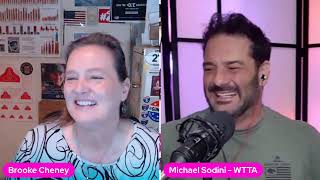
In this episode of Suicide Prevention Saturday, host Brooke Cheney interviews Mike Sodini, co‑founder of Walk the Talk America (WTA), a nonprofit that bridges the firearms community and mental‑health resources to reduce suicide. Sodini recounts his personal journey from a third‑generation gun‑industry professional to suicide‑prevention advocate after a tragic suicide in his own company in 2009. He explains WTA’s core programs: free, anonymous mental‑health screenings accessed via flyers placed in ammunition boxes; cultural‑competence training for clinicians and a directory of firearm‑aware mental‑health providers; and outreach efforts with the White House, the VA, the DOD, NSSF, and other coalitions. The conversation covers policy engagement, including criticism of red‑flag laws that may deter help‑seeking, and highlights recent visibility through media coverage (USA Today) and participation in events such as the Aspen Institute Health Festival and the SHOT Show. Sodini and Cheney discuss challenges of operating on a shoestring budget, reliance on volunteers, and the importance of encouraging gun owners to adopt personal suicide‑prevention plans alongside firearm safety training. The episode ends with calls to action: donate to WTA, share resources, and continue the dialogue across political and cultural lines. Additionally, Brooke notes that after the SHOT Show episode airs, they may field audience questions in the comments, and Mike might pop in later to answer, indicating ongoing engagement with listeners.
Chapters
Ta-da!
There it is. Uh, good evening everybody. It is Saturday night and this is Suicide Prevention Saturday, and I'm so lucky because I've got a guest. It always goes backwards. I don't know which way. I've got Mike Sardini from Walk the Talk America. Hi Mike, how are you?
I'm good. Congratulations on your intro video. The last time I was on the show, you did not have that. I like it.
Oh well, we can thank DM Foss for that. He put that together for me and, uh, I've had it for about a year or so because last time you were on the show was 2022, February was when I had that. So if anybody wants to go back, the link is actually in the description as well, 'cause Michael's always fun to listen to and talk to. So you do wanna go back there. All right, so it's Suicide Prevention Saturday. What does that mean? It means we're here to talk about suicide because when the CDC talks about gun deaths, 2 out of every 3 gun deaths they're talking about are suicides. And Mike here is actually doing something about that, aren't you, Mike?
Yes, I am. I've been doing it for 5 years. It's so funny because you talk about going back to the interview from like that time. I probably should go listen to that because it's always fun to listen to these old interviews to see what I was excited about that seems like it's either old news now or like, you know, we've transcended way beyond whatever program that we were doing back then. So it's always interesting. When you do this type of work, like, time flies.
Oh yeah, without a doubt. I mean, because let's see, in 2022, how long had you guys been around at that point in time?
We started in 2018. Yeah, so like, we're, we're getting close to 6 years at this point. And if you would have in 2000— well, 2017— if you would have told me this too, you know what I mean? I would have been like, no, there's no way. Like, there's no way I was going to pivot from being a gun distributor to this. But like, it's It's wild because after a certain time, just like your show, right? Like, you were talking about before I came on, we were kind of talking about what numbers of shows you've completed. And, you know, before you know it, you're at this weird number. You're like, oh my God, like, yeah, you know, you built something, um, a catalog of sorts. It's just the same thing with this, right?
Like, I, I've definitely found that the, um, to me, the gun world— or for me, my gun world— is that I never intended on doing anything that I've done. Sums up how everything in my gun life has occurred. It's like, yeah, no, that was not the plan.
Yeah. So I, if you would've told me a long time ago that I would be working towards suicide prevention and better mental health, but I'd be doing it from an angle of coming from the gun industry. I mean, it just, it's kind of mind-blowing at this point. And, and to get where we've gotten in terms of, you know, working with the VA and working with the DOD and, and just, making our voice matter. And I know that as gun people, like, that's super important to us because I feel like we've always felt like kind of like wounded ducks that never had a voice. Right. No one really listens to us. They kind of—
we're vilified.
Yeah.
Anytime there is a shooting that gets headline news, we are the problem and not the solution. And for you and Jake to come out and try to bridge that gap, of gun people versus mental health people and actually being able to go, like you said, go to DC and, you know, talk to DOD and all that sort of fun stuff. Now that was, I don't even know when that was. I remember hearing about that. I don't remember recall when that was.
Yeah. Well, in 2019, it was at the White House working on the prevention team, but my work with the VA and the DOD is, is as of recent, like, um, just being invited to their meetings and being able to contribute, um, doing a lot of work with, uh, Walk Talk America and NSSF. That seems like NSSF and Walk Talk America. Are all invited to the same parties. But, um, these are the things that they don't really get. They're not going to get media coverage. They're not going to get put in newspapers, right? But it is finally getting to the point where outside entities, outside of the Second Amendment community, are starting to ask for help, right? Because, um, and once again, they're not going to go— they're not going to go glorify that, right? Because they got to go get their money and they're— they got to do their stuff. But when you're coming to the organizations like us saying, okay, what can we do? I think that's the start.
So we should actually go back to that first since you and I already know each other. The audience may not because just like I have a new intro, I actually have a lot of new audience members too. So I'm going to pull you up on full screen and let you do your normal little elevator pitch so people can understand what Walk the Talk America actually is. Sound good?
Perfect. Okay! So, Rock Talk America was started in 2018. I am from the firearms industry. I am a third-generation firearms industry professional. I got my job through nepotism. I wasn't necessarily a gun person, but after college, basically I was told by my family I was coming to work for them. So it was my destiny, but I became a gun person just by like osmosis and being inside of the gun industry and gun community and kind of learned everything. So it's like you could sell guns, but you also have to understand like the importance of the Second Amendment and everything like that. If you don't have both those, it's not gonna work out for you. I don't think there's anybody that sells guns that doesn't really understand the importance of freedom in the Second Amendment and being your own personal protector and your family's own personal protector. So these are things that I kind of learned as I was in the industry and I basically was a conduit for my former life. I owned a company called Eagle Imports and we were a conduit for people, organizations that weren't big enough to have their own presence in the United States, manufacturers to have their gun in the US. So we used to sell about 60,000 to 80,000 guns a year to just civilians. One of the biggest brands that we owned was Bersa. So we represented Bersa in the United States. We were the only ones that we did their warranty, their customer service, their sales, sells everything top to bottom. It was turnkey operation. 2009, the president of my own company took his own life with one of our firearms, which, you know, just threw us off, off track. And at that time in 2009, suicide was something that you didn't talk about in the firearms industry at all. Even though we were losing combat vets and active duty military and first responders, it's just like we did not necessarily bring up the negative outcomes of firearms amongst ourselves because it was something that would be weaponized and used against us. So we buried my, my good friend Bill Strohminger, and like I said, he was the president of the company. He took his life with one of our firearms. And, and, and I always thought it was weird how no magazines, nothing talked about his death. We just kind of put him in the ground and kept on moving. And I always wanted to do something for that. And Walk the Talk America was it. And in 2018, I had a chance meeting with a lady in New Orleans and we were kind of talking about guns. She didn't know anything about it. And she was just like, what happens during a mass shooting? I said, well, everybody blames us. We blame mental health and then nothing ever happens. And she said, well, how do you work with the mental health community on the things you can agree upon? You know, obviously you can't work on with them on restriction and things like you disagree on, but you, gotta be able to work with them on the things you can agree upon. And that was the birth of Walk to Talk America. Like that conversation with a random person who asked a simple question, you know, what can you do together and how can you bridge that gap is kind of what sparked this whole thing. So what we became in the past, like 5 years is a way to get people and gun owners help when they're in crisis without fear of consequence. That's first and foremost, but it's really kind of, transcended to this like advocacy thing that I never knew would exist with a huge crossover appeal to organizations and coalitions outside of the gun community that just want to save lives. Right? So kind of our motto is, if you want to save lives, you know, check whatever political affiliation you have at the door, whatever prejudice you have against firearms. Do you really want to help people? Do you really want to save lives? And let's find those.
Sex. I ask that question all the time when I'm talking to people, uh, because it's like violence prevention and suicide prevention should absolutely be a nonpartisan thing. It shouldn't matter if you own a gun, don't own a gun, have all of that stuff. And it is amazing how we, you know, stand on one side of the thing or the other. It's, uh, but yeah. All right, so look, while you were talking, I made up that There you go. Yes.
Yeah. It's hard because a lot of people said, like, I was talking about this with Rob Pinkus today, cuz I, I asked Rob, I said, what do you think the most important thing Walk the Talk America does? Like, we were looking at all of our programs that we have, like the free and anonymous flyers in the boxes, right? Some people would say like that, like that's the biggest thing you do. And then, but if, you know, you look at the cultural competence courses for training firearms clinicians, you look at the directory of firearms owning clinicians, like you look at these different programs that we have, but then there's also the advocacy piece, right? Like, how do you put a, how do you measure the importance of that? You know, just like the crossover appeal, the ability. I always say it this way, like, let's pretend like you hated guns. It's like, I want to be that organization where you're like, look, I don't like guns. But I like what you guys are doing, you know what I mean? And I'm okay with that because you're out there. I feel better that you're out there doing it. So it's like, you don't even have to like guns. You, you know, you could be— stand on whatever aisle you want. I want you to get behind the work we're doing, and it makes, makes sense to you, you know, it makes sense to, to saving lives and helping people with better mental health.
Absolutely. And I mean, and here's the thing that I've learned is that, um, so my advocacy started more, um, when I got into competition. And before that, before I started traveling and stuff, and I didn't know anything about guns because I'm sort of an ungun girl, even after all of this time. I'm like, I don't know one gun from the other. I'm like, yes, this one is mine, that one is yours. That's what I know. Um, but it's just like when I learned that a 10-round mag ban does not stop any crimes from occurring, and on top of that, it's even worse because it's actually a gun ban. And it's a sneaky gun ban. And this is the sneakiness of this. So when I started actually looking at violence prevention, that was before I knew anything about the mental health stuff. And it's just like, when you look at what the CDC says about violence prevention, whether it's the workplace, child abuse, domestic abuse, any of that, it's basically all the same stuff. And the stuff that helps prevent violence also happens to be all the stuff that helps prevent suicide as well. And so she's like, yeah, the mental health piece is so big. And like here in Connecticut, uh, last year, 2023, we had a pretty ridiculous bill passed. And I watched lots and lots of testimony. And one of the things that killed me was— but I think the reason it killed me is because he was right— is one of the senators from the other side said, you guys always say mental health, but I don't see you at the mental health hearings. And I'm like, oh, he's right. And this is definitely a challenge. So yeah, it's, it's one of these things. I'm just gonna throw that back up there, bridging that gap.
Well, that's, that's what pushes, like, honestly, Brooke, that's what like puts Walk to Talk America in a unique position. And I say this all the time because it doesn't do any good for anyone to just show up at the mental health hearings without any solutions as well. Right? Like, you know, it's great. Like, no one wants to hear from us show up at these things and be like, Second Amendment, like, you're right, but you know what I mean? Like, so it's, it's like when you're able to provide these, these solutions, like, hey, this is what we do. Like, when I speak at an event and, and I know already when I get up on stage or I'm in front of this crowd that their expectation level of me is like nothing.
Because you're a dumb gun bunny.
They're not going to expect— like, they're never going to be like, okay, whatever this guy's going to say that the gun industry does. And then when I tell them what we do, then I watch their faces because, like, they don't believe that, you know, a company like Armscor— I was going to reach for—
oh, here. Yeah, no, I was like, I was actually looking around. I'm like, do I have your stuff? No, I've got NSSF stuff though.
Yeah, like Armscor puts free and anonymous mental health on the side of their ammo box, right? Like, that's— they don't— they're not ready for that. They're not. Like, that's not even something that they think is gonna, like, ever happen. And to show them that it's already happening, to show them that Ruger and Bersa and Armscor are putting the mental health flyer in the boxes of the guns.
Yeah, I know they're here somewhere. I don't know, actually, I think I'm out of them now that I think about that.
Yeah, you would think that I would have them on hand too. Yeah. Oh, here we go. Here we go. I got an example right here.
Okay.
Our mental health flyer that goes in the boxes of firearms that leads to free and anonymous mental health screenings. Like I said, they, they don't expect that. So once I do hit them with that, like, this is the things we're doing and here's the programs we have, right? Like the, the free screening. Now they're listening and now we're, we're bringing something to the table. Um, so I think it's even a step further than just show up at the mental health. I think it's good that we're there, but also don't want to be a disruption. I want to be someone who's bringing solutions to the table.
Absolutely. Yeah. No, I mean, I believe in all leadership, they're like, here's the deal. A leader, a good leader doesn't just tell you what to do. A good leader helps you find the way. And it's one of those things where it's like, I feel after spending all the time I have in the chambers of both Hartford and DC, that people mostly want to tell you what they think you should be doing. And so offering up opportunities and options, like free screenings, for example. Uh, if you follow that link for the free screening, walkthetalkamerica.org/love, what you will find is an anonymous free screening for just about anything you can think of, whether it's PTSD, anxiety, depression, uh, bipolar. There's a whole list of things.
Substance abuse. Yeah.
And, um, last time we were here, uh, Mike talked about a really cool story about his daughter but I'm gonna make you go watch that. Now, the other cool thing about Mike's previous interview here is I believe it was G-Webs was here, or DJ, and they actually put timestamps on everything we talked about. So you can go find that easily.
Isn't G-Webs the best?
Well, G-Webs is the best.
Yeah, he, he is really cool. His, his support without like flat out coming out and just like being saying like, oh, like he's on all kinds of different podcasts when I'm on there and stuff like that and just always adding something great. But I'm a big fan of you guys.
So yeah, um, yeah, because like, I think, I don't know, yours might have been one of the first or the only ones that actually has all the timestamps on it. So, but, um, all right, so free screenings, go there, find something out, um, you know, go back and look at the previous episode that we did back in February of 2022.
Can I add something to the free screening thing? Um, It's come to my attention that many people, when they hear it for the first time, they're like, well, they're leery, right? Like, what am I— and keep in mind, we've been here now 5 years, so something bad would have happened from someone submitting a screening. Yeah, we'd already been paying for that, and there would be no Walk to Talk America anymore. But I always tell this story because it's kind of funny. It's kind of like my daughter's story, right? When I, when I first wanted— when I first wanted to do the screening, I had— I, I— because I was just like, I'm leery of this, I don't know what I'm doing. I remember I was like, I'm going to fill it out 2 different ways. I went and I filled it out. I think I took the depression one and I filled it out like honestly, which was like, okay, I want to see what happens if I, you know, I know I'm not depressed, so I'm filling it out, feeling good, do get through it. Then I had to circle back and go through the entire thing and I filled it out like I went to every negative emotion because I needed to know like, okay, someone's not gonna come knocking on my door, right? Like, And also too, I wanted to see like, are they asking about guns, right? Because I knew that would be a major turnoff if there was questions about guns. It's powered by Mental Health America.
So yeah, I was gonna say, I suppose we should put that part in there about, oh yeah, it's not you guys setting this up. This is right, the link to—
but, but, you know, even if you answer that thing and it's not something we all want to hear for you, right, or you want to hear yourself, even if it's, it's a bad outcome, Nothing bad happens to you. It literally tells you what to do and recommends you need to go call this number to get help. This is what we recommend. So, so yeah, so for any naysayer out there who might be like, well, I'd be afraid to, to take a screening and then see that it comes out negative and now all of a sudden SWAT's kicking down my door, right, flagging me, I just want to put people's mind at ease. I went through every single one and did it in the world.
Worst possible, you're, you're gonna be dead within the next 5 minutes kind of thing, because you just can't handle life in general.
Exactly.
Well, right. And this, the other thing about it is what you mentioned too, is like, because I did the screenings as well. I don't remember which one because it was a while ago. But it's really great because at the end, it gives you resources. Here on Suicide Prevention Saturday, I try to make sure I give you guys resources, at least links possibly below. If it's just not something we're talking about during the whole thing. But with that free screening, you absolutely have. And the great part about it is it's resources that will help you based on the thing that you are actually talking about. One of my other friends, whose name is escaping me right now, but he's got a channel, but he does, he has PTSD and he talks about PTSD and sort of like with the Suicide Prevention Saturday stuff, it's just so many people, like you said, back in 2008, 2009, nobody's talking about suicide. No one's talking about mental health. It's like, oh, you got a problem? Suck it up, buttercup. So it's one of those things where it's like, now all these people are talking about it. And then when you talk about other things, people are like, oh yeah, me too, which is I, I hate that saying at the same time because it got killed for a year or two, right? But, um, like, I know on your podcast I saw one of the titles was, you know, stories of a survivor. And I have another interview here with G23. Dude tried to kill himself like 4 times and failed all 4 times, and the final one was with a gun. So it was one of those things where you're just like You just don't understand. People do this all the time, unfortunately. And the good news is a lot of them fail. So there is that.
Yeah. Unfortunately though, when it comes to the gun thing, for the majority they don't. So it's kind of weird when you, like the, the last interview we had with Iman on, on the podcast, on the Guns and Mental Health podcast, it was fascinating to hear his story because like he shot up through his, yeah. And he blew out his eye. But, you know, at one point in the— yeah, I mean, it's funny because like I was asking him, I had him, he, I actually had him in studio and, and I was saying like, when you, when you came to, because there comes a point where you come to and you're like, wait a minute, I'm still here.
Yeah.
Like I was like, were you looking around? You're like, heaven looks like my apartment. Nothing's changed, right? Like, uh, that has to be like a surreal moment, you know what I mean? Because he said like he instantly regretted it and then like a second chance, but at the same time he knew something was really wrong. So just the fact that we know suicide loss, or not suicide loss, suicide survivors, suicide attempt survivors, um, that have actually put a gun to their head, I mean, that's incredible because they're a very small amount, right?
Um, so yeah, so for the podcast you can just go to walkthetalkamerica.org/podcast. They are currently on episode number 91. Back in 2021, I was on there on episode 34, and that was the first time you and I actually met. And I don't know how or why, but this is the other thing— gun community is super small, really, when you get to it. I know we're about to be in Vegas, and actually when this airs, we will have just finished being in Vegas with 40,000 other people. So it's like, there's not even 5,000 people in my town.
But it's— it— the SHOT Show is like its own little— like, it's funny the way that time is going to pass for you. It's going to be the first one, you're going to be checking it out. It's crazy. And you're not going to see the whole thing because there's no way you can get to it all, you know.
Well, the good news is I have specific people I'm going to go visit, so I've got like little touch points. So on my way to go see the people I want to go see, I will see other things is what I'm hoping we'll go with.
Yeah, that's cool. And this is actually, um, this is going to be a very unique, uh, SHOT Show because there's a lot of people now from the mental health side going to be attending. Yeah, from all the work that NSSF and Walk Talk America has done with all these other organizations, um, people are actually going to be coming into the— there's plenty of people that are working suicide prevention and mental health that are going to be there in attendance. And we're going to be meeting again, all of us, at SHOT Show, which is kind of a historic first.
Okay. Is that on the schedule for everything?
Uh, it's gonna be a private meeting. It's like a breakfast between— we're doing a lot of work with the VA.
Uh, a lot of work, and which is a lot of help from everything that I've been told. Oh yeah, is who I couldn't think of before.
But yeah, yeah, the unique situation. So like, this is— you talk about like when people say like, okay, well What are the things you're proud of? Right? And one of the things I'm proud of is when in 2019, when I was on the White House team for events, realizing I was like the only gun person in the room or gun industry person in the room. I was, you know, one of the things I had said to close out my little speech in the beginning was the gun industry can help you. You just got to stop making us the villain. Right? And my, one of the things that I contributed to the whole report was The VA needs to get more involved in the gun industry because vets and active duty military gravitate towards our industry naturally. And if they have a presence there in a place where they can have it like be a conduit to stop bad information, right? Like, or, you know, there's plenty of examples I have where people say like, I stopped messing with the VA because they did this to me in 2006. Well, guess what? That person's not coming back to talk to the VA to see if that policy has changed, right? And that's a problem for the VA. So I was like, the VA needs to have a presence there to stop any bad information and be a place where gun owners can talk to them, especially ones that have an issue. They had told me in 2019, we cannot do that. We cannot go and take part and have an alliance with the gun industry of any sorts. We have to stay neutral. But guess what, you know, 2024, they have their— they're gonna have their own booth. You know, last year we had Matt Miller there, who's like the director of the VA, like, you know, when it comes to suicide prevention. So we're move— we're going in the right direction. It's a slow-moving ship, but the fact that, you know, in 2019 they said that they couldn't, and, and I kept saying, well, I'm— I, I had paid— I'd offered to pay for their, their member, like their team. I was like, what if WTTA pays for it and then you can go back to VA and say like, this was a personal trip, right? You know what I mean? Like, so we've come a long way.
Yeah, that's awesome. Yeah, it is great to see inroads. Um, speaking of that, so I'll check out my notes here so I don't go too far because I'm like, okay, um, do you want— so last time we were together, we talked about your, uh, event working with and talking at a Moms Demand Action seminar.
Yeah, that was at San Jose State, right?
Yeah. And then this year, you want to tell us about the Aspen Health Institute?
Yeah. So that is one of the highlights of 2023. I got an invitation. This is just like the White House thing or getting invited to San Jose State to speak for the Moms Demands. Some of this stuff becomes surreal at some point. But I had always heard about that. I'd heard about the festival and I heard that there, like, it was, it's kind of a bougie thing, right? Like, it was like rich people do it, da da da da. And out of nowhere, I got this invite and they're like, look, this is short notice, but would you mind coming up and being on a panel at the Aspen Institute Health Festival, Ideas Festival that's gonna be coming up? And it was like in 2 weeks and I, you know, I'll talk to anybody. So I was kind of like, yeah, sure. What's the details? It's like, you know, they, they're like, yeah, we'll pay for you to come up. So I'm like, okay, that's great. Not realizing like really what, you know, the magnitude of what this offer was. And it was funny because they wanted me to be on a panel and they wanted me to basically commit to like an hour and a half or something like that. And so I was like, what do you want me to do? Like fly in Thursday and then like leave the next morning? And they're like, well, you could stay for the whole thing if you want. And I'm like, wait, you're gonna pay for me to stay for the whole festival? And they're like, yeah, come in whenever you want. Like, we'll get you the ticket.
You must be important now.
So, uh, I, you know, it's funny, I'm like, okay, I, I'm telling everybody, I'm like, look, I'm gonna go up there for the whole thing because I want to— it's all these little events happening and you're just walking around this giant, like, beautiful, like, campus. And, um, I was looking at the speaker list and there's speakers like Dr. Fauci and, and Chelsea Clinton and, and, uh, Brink from BlackRock and stuff like that, who's also part of a shareholder in Ruger, you know what I mean? Because, you know, they're publicly traded. And, uh, so I'm like, this is kind of cool, like, I got to take this opportunity. It was really cute because the— I get off the plane and I'm there, and my first 2 days is basically me walking around, um, and attending events, watching speakers. And they have— this is not a gun thing, like, my part. Yeah, this is, this is everything, right? Like So, so, uh, they were really nervous for me. It was cute. Like about 12 different people from the event were like, pulled me aside and they were like, we just want you to know like this crowd, um, sometimes they're not very gun friendly. And it was really funny because I'm like, it's just super confident. I'm like, no, no, we're good. And like, I remember at one point, one of the ladies was like, man, you have like an insane amount of confidence for what you're about to walk into. And I'm like, this is what I do.
I'm like, this is why ignorance is bliss though, because like you said, you didn't know until after the fact.
But yeah, but it's like, I, I, I sometimes I feel like I do better in front of the non-gun crowd. I feel like the non-gun crowd gives me a— I got to get straight to the point when I'm in front of the gun crowd, because here's what happens when they hear me talking about suicide prevention and mental health. Their mind automatically defaults to like, why are you blaming the gun? Right? Or like, It's kind of what we have ingrained in our head. But when I'm in front of the non-gun crowd, like I said, the expectation level is so low, they're going to be like, oh, God, what is this blowhard going to say? He's going to be like, pry it from a cold dead hand. Right? So I have that going for me because then I can get up there and start talking about solutions. And then once I got them listening because I just threw out some crazy solutions that they never thought could exist, now I can start bringing logic into the conversation. Right? So you talk about the ban of the 10-round clip. Like now they're going to not be afraid to ask me those questions. And sure enough, that's exactly what happened because I was on a panel with two people that I respect them. I respect Megan Raney. I think she's a sweetheart. We got a great relationship. Like she's one of the reasons why I'm up there. But these are people that work in research. And so you couldn't— they say they're gun neutral.
Nobody's neutral about anything.
Yeah, right.
We're not neutral about our favorite color shirts.
Right.
It's like nothing.
Yeah. You know, I, I, you know, I don't know where they, they stand, but it's, I knew they weren't me. Right. So, so there's 3 of us. One of the guys from Chicago as well. So like, he's, he's in it. He sees all the devastation that happens there. And of course, like it's natural for a lot of these people to be angry at firearms, right? Because you need something to blame because you got kids dying. Right. But, uh, it was great because it went exactly how I thought it was gonna go. And, um, It was, you know, it's really cool when, like, like one instance of this, this presentation, like we got asked by the moderator about red flag laws and they're going down the line, right? And they're getting, you get to me last. And of course they're just gloating about the red flag laws, about how many lives they saved. And I get to stand up on my time and go, yeah, I live in a different world than these two do. I'm like, in my world, red flag laws, keep people from getting help and actually probably cost more lives than they save. And I saw the crowd's face like, what is he talking about? And I'm like, this is a bit— there are barriers to entry. I said, if I had a dollar for every time someone contacted WTTA and said, I, I want to go get help, but I'm afraid to do it, I won't do it because there's a red flag law here, what, what else can you suggest? I wouldn't have to champion you people for money. And literally, like, I'm watching the crowd and I'm watching these light bulbs go off the crowd. Sure enough, as soon as I was done with that presentation after the Q&A and everything like that. I said, you know, I said, I'll be sticking around here if anybody has any questions for— I got swarmed. I had a swarm of people. And I had some—
Mike, can I be on your, uh, you know, bodyguard? You know, because you're getting so famous. Nobody's cool.
So we're like, I'm spending the next hour talking to people, having great conversations. And literally people are saying to me, I never thought about red flag laws like that. Yeah, I never thought there were barriers to entry. Like, they're like, I always thought you people were being so unreasonable, like you just wanted to arm everybody. Because no one had ever presented it that way where they saw like, oh, there could be some negative outcomes. Because you're— when you, when you're gun neutral or you, you don't know where you're at, you're automatically gonna go, this is a good thing, right, to be able to take away somebody's guns from some psychopath, right? Like, you're never going to deep dive into how like that— because that's just—
it's just like there's so many negatives to red flag laws that people just don't get. And it's like again, from testifying, I just know. It's like, here's the deal. Let's say you're my crazy ex-boyfriend and I have a gun to protect myself from you, and the red flag laws allow you to get my gun taken away from me, and now I'm dead. Um, I mean, above and beyond, because they're like, oh, we're trying to prevent violence, and it's just like, yes, but it's like, um, and part of like how they're executed and that sort of thing. It's like going to someone's house who is suicidal and taking guns away but not getting them any help is absolutely useless, right? Because it's like mental health is a me problem, not a thing problem. This is, this is just a lipstick. This could be dangerous. No, but it's just like, you take my lipstick away, I can still do stuff to my face. So it's just like the fact that they're missing— they're missing the mental health piece too.
They're missing the mental health piece to get people help, and they're not preventing any of the harm that you could do. Like, technically, if I want to make this house suicide-proof, it's not just taking the guns out here. Now you got to take the medication, you got to take the cleaning, you gotta— you gotta drain my pool, you gotta take the garage door off of my garage.
Like, that's why it doesn't make sense to take stuff away from someone who needs mental health.
I mean, Yeah, and then you got to also provide a path to where I can afford to go get help, or I have a way to go get help. Um, and that's, that's why the red flag laws are, you know, and this is, this is the great thing about this, is to be able to tell people that, you know, sometimes I think when, when I'm put in a situation to where maybe it's a little bit of a setup, you got to remember that half those people, more than half the people in the crowd, they just don't know. And you got to kind of keep that in your head, like, oh yeah, I'm about to tell them something that's gonna, you know, now that I got them listening So that's what was great about the Institute. And I'm telling you, like, the, the most rewarding thing was because now I had 2 days to relax after I went, and it went well, right? So now I got 2 days to relax, walk around, uh, continue to show up to things. So many people were stopping me, hey, I saw your thing the other night, man, good job. Like, or, hey, I'm one of you.
Like, don't tell anyone, don't tell anyone, don't tell anyone that I'm like you. But yes, well, but I mean, this is The other thing is like, one of the things I do at my school is I will ask people just their occupation, right? And it's just like everyone is a gun owner. It's not like all the redneck hunters are the only gun owners, right? It's— there's, there, there's every profession you can think of, they're gun owners. And the way we're like, oh well, because I'm liberal, I'm not a— you know, you can't be a liberal and be a gun owner. You have to be Republican to be a gun owner, or you have to be straight to be a gun owner. You can't be gay and be a gun owner. It's like, no, everyone you know— well, not everyone you know, but a lot of people you know are gun owners. But we don't say anything because A, no one's business, but B, we're afraid of the kickback on, oh, you kill children. And I'm like, no, I really don't kill children. Bad people do those things.
Yeah, I was trying to explain that to one of the guys I was hanging out with at the— what, it was really cool. I got asked to be, I got asked to be a judge on for the University of Tulane on a competition they were having for students to come together and think of ways to reduce gun violence, which is like, I totally thought was cool because I was like, they're students, they're young kids, right? And like, they're going to look for solutions and I think they were told like, hey, like, these solutions got to be out of the box. You can't just be like, restriction, right? Like, because nobody's got restriction on the table. Um, but one of the kids that was on one of the teams is actually at the Aspen Institute. He contacted me when he found out I was going to be a speaker, and he's like, I'd like to meet you. You actually, um, awarded my team the prize. Like, you know, so it's really cool. So I was walking around with this young kid and stuff like that. We were having these discussions because he's not a gun person. Yeah, we're having these discussions about like the gun stuff. And, uh, and it was funny, at one point I was like, you don't think there's a— there's a bunch of guns here? And he was just like, I don't know. And I was like, dude, with all this money up here, if you— like, if you— I don't know if for the listeners who have been to Aspen, they know exactly what I'm talking about. That place is like Washington, D.C. It reeks of money. It reeks of money and power.
I have been to Aspen once. Yeah, it was a while ago. But, um, yeah, no, there it is.
There's money and power walking around, there's plenty of guns too, right? Right. Like, and nobody's dying, right?
And no one is dying. Um, having a teenage girl, that's one of my favorite sayings these lately, and no one died. So, but yeah, it's, it's the mental health stuff is super important. Um, violence prevention. I wish people would just work on violence prevention because by saying gun violence You're talking about this itty-bitty percentage of all the violence in America. And again, back to my research and stuff with the FBI, the Department of Justice, CDC, all of that. It's like when you actually look at violence as a whole, there's an exorbitant amount of actual violence, and then there's this little sliver of gun violence. But it's always gun violence. It's like, no, how do we prevent violence? So what were one of the things that you remember most from that, from judging that?
Oh, uh, more or less every, every single thing that— every single thing. And, and there was— they, they finally, they put it down to 3, 3 groups. So 3 people that got into the end. So one of the things that I, I realized is like, if you, if you let a young person sometimes think— it's cute, right? Because you don't want to like stymie that, because it's like they're trying, they're trying to put forward solutions. But everything that they suggested, it's really funny because I thought that'll never work in the real world because that'll actually get something done and no politician is going to want to wait that long. It's kind of like how you just said solving gun violence. Yeah, first of all, you have to put gun violence in different buckets, right? You can't do it all the same. The same solution for suicide prevention is not the same solution for kids in an inner city and our privileged underserved communities. It isn't. And then when you look at like, okay, what can we actually fix? How long is it going to take?
Well, and how much is it going to cost?
How much is it going to cost?
The biggest things, right?
If I'm a politician, I'm only working with a certain amount of years to, to come through on something I promised you or made you believe that I can do. Right? And, uh, I gotta go for the low-hanging fruit. So what, what I found mostly from this judging this competition was these kids had some really grass— great grassroots, you know, root cause mitigation stuff. Um, like, it— like, one, one person talked about, like, community service, right? Like, one team brought up, like, actually building parks and, and things like that. And they, they related that to, you know, getting rid of gun violence, which is like, okay, I could see that maybe helping in the future, but that's a this is a project, you know what I mean?
Well, but that's just it. Violence prevention is a project, but everybody wants to have that simple thing that they can sign a line on and be done with it.
Yeah.
And it's just like, no, violence prevention is about building community. I mean, all the studies that I've read, it's all the basically the same thing. It's like you and me knowing each other as neighbors and understanding that you're a real person, I'm a real person, because where people can actually kill other people is when I no longer think you're a real person because you and I don't agree. And so it's just like, it's communication, it's, it's society in general, it's cultural. There's so many things. And it's just like, because it's such a multifaceted problem, nobody wants to work on the long-term stuff. But that's the only thing that'll make a change.
Yeah, the team that I actually, I gave my vote to, which there was 3 judges, and this team actually won. Um, their, their solution to reducing gun violence was basically through a local city level, right? Because you think of Tulane as like, you know, New Orleans. So they were, they were talking about having the youth take mandatory, uh, firearms training classes from— that are taught by veterans. Yeah, they were pulling the veteran piece into it to give veterans a purpose to, you know, that may be retired and looking for something to do. Um, so like I said, I think the heart was in the right place, you know what I mean? Some of the stuff like made sense, but it's just like you look at it, I'm like thinking, nah, the government is never going to pay. The government's never going to pay for kids to learn firearm safety training, which they should, but they—
right. Well, there were— there have been like, um, various gang prevent— violence prevention programs that are similar to that, in that they're teaching the kids how to do stuff And they are bringing people around to— because here's the thing. What is violence? It's lack of being able to be heard, understood, or felt recognized. And it's just like you're lashing out. Because I don't know about you, but I've had those conversations with people where I'm like, can I just smack this person in the head? Because I've lost my ability to actually be like, deal with stuff. Luckily, it's only in my head. I've yet to smack anyone for talking to them incorrectly. But, you know, and, and also losing stuff like incorrectly. I'm like, well, no, you're going to talk to me the way you're going to talk to me. And just because it's not my style doesn't mean it's wrong. So I try to remind myself these things, but all right. We have so much more to talk about. This is going to be one of the longer sessions again. You want to tell everybody about USA Today, December 1st?
Um, so this is a really cool situation that happened to us. We got— we, Jake and I were— we had a booth at the USCCA show in Milwaukee. And while we were in Milwaukee, we had a reporter contact us and said he was doing something for the Milwaukee Sentinel Journal or Journal Sentinel, whatever the magazine or newspaper there is. And he did, you know, I'm always like, okay, we'll talk to him. I didn't know where his head was at, but the the reporter was pretty fair. And basically they ran a story and USA Today saw the story and then contacted the reporter and said, hey, we're interested in running this nationally for the USA Today. Can we do it? And he was like, absolutely. And Walk Talk America was featured in that Friday the 1st, December 1st. I have it right here.
I'm leaving you full screen so you can actually show it because when we're side to side, Yeah, this is the best.
You know, we got this edition and then when you open up this main page, we're actually the top, the lead story there talking about what the firearms industry is doing to combat suicide, you know, combat suicide. And the why this means so much to me is I'm one of us, like I'm one of the people that has always said the media does not give us a a fair shake. They won't do positive pieces that come out of the firearms community. It's only negative stuff. And I was wrong. USA Today did it.
So, wait, you were wrong or we as a community are incorrect sometimes?
Yeah, we are incorrect sometimes, right? Not all media, it tends to be evil and bad. And I think this was really fair and this reporter did a great job of kind of dissecting what we do and the reason why. I just love that the USA Today picked it up. And he said that he had nothing to do with that. Like, they contacted him and said, we want to run this. It wasn't like he pushed for it. So I think it's just another building block, another way to show what we need in this industry a lot is hope.
Yeah.
Sometimes it feels like we don't have hope.
We do get beaten down an awful lot, especially over the past decade. Or so. Um, but I mean, DC Project got on the COVID of Time, and so it's just like there's little chinks here and there where people like Diana, um, Di Muller and DC Project, which is now Women for Gun Rights— it just changed— and so I'm like, oh, I'll get there. But, um, you know, it's like a bunch of girls from DC Project were on the COVID of Time magazine. You guys are in USA Today. So it's always good to be like, yay, something we're doing is working.
Yeah, I mean, like I said, it feels like sometimes we have to stay inside of our echo chamber because it's like that's the easy place to stay and people recognize us. But, you know, we can get out and we can accomplish things. And I think if you believe in kind of what you're doing and, you know, you don't buckle under pressure when people start throwing— I get it all the time, right? Like, Some of the statistics that get thrown at me when I'm at these events, like when I was in Aspen and they were talking about the red flag laws, and they're just like, uh, 80% of gun owners are for red flag laws. And I'm like, who did you ask?
Yeah, yeah. Well, but so here's the thing, and this is one of the things I love about my history, is that in 2005, before I was educated about all sorts of things, whether it's Second Amendment or laws or any of that, I would have been one of those gun owners like, yeah, if this is going to stop violence, I'm all for it, because I didn't understand it. I had no idea. And this is also when, you know, people have heard the story before, but like, I pretty much used to think that politicians were doing the best they could for the best, the largest majority of people. And what I found is that That's, that's usually the intention become behind becoming a political person, but the reality is nobody knows all the stuff about the stuff. And here in Connecticut, we're highly regulated, everything, whether it's healthcare, guns, um, I don't know, there's everything. And it's just like, these people don't— politicians don't know everything. And you and I are the ones who are responsible for helping educate them. And it's just like these things where it's just like, okay, for real. It's awesome to see that we can make inroads and just remember that we can. So one of the first things that DCT Project says on their pamphlet, or at least used to be, was, you know, this is a conversation, not an argument. And I think a lot of people forget that from both sides, right? It's like we need to tell people, it's like, oh no, no, no. Yes, this is one way. This is how Mike does this. This is how Brooke does this. And we'll get to the, you know, coming around. And speaking of coming around, I'm gonna throw this out here. How have you guys been doing with this?
It's good. It's steady. You know, I wish we had the marketing budget to kind of blow it up in terms of like, you know, getting it in front of people's faces more often. But, you know, we're still getting a couple people that come through and take the cultural competence courses every week. And we started to build a directory of mental health clinicians that weren't afraid to come out and say, I wanna be listed in your directory. You know, we, we require them to take the cultural competence courses. So, um, I think that's at like 17 now, which is good, you know. I'd like it to be thousands, but I mean, right, gotta start somewhere. I'll start somewhere. And once again, like, we, you know, we don't have— we work on a shoestring budget. Like, like, you know, I have volunteers that, that literally, I, I'm shocked every day I wait for them. Guys like Jake, I, I wait for them to say like, hey, I can't do this Oh no, I can't see that happening.
I mean, I know, like, kids, uh, full-time business, I don't know. But yeah, he loves what he does here.
It's amazing to me, like, because we've given off this impression, I think, especially to people outside of the gun world, that like we're multi-million dollar, like, nonprofit organization that has this endless amount of money. And, um, you know, like, people tell me all the time, oh, you only have 17 there. It's like, yeah, well, it's not easy to get there's a lot of clinicians still that don't want to tell people that they're culturally competent in firearms. We get people to take the class and then we, we encourage them, hey, can we list you? And a lot of people still say no, right?
Right.
You know, because they don't want the stigma.
Yeah. Well, I mean, and this is what we're talking about a little bit earlier where it's like I have my students put down what their occupation is and it's just like, I don't think people understand that everybody in every walk of life, there's firearms owners all around you all the time, but we're afraid to talk about it. Since I'm an instructor, I'm not usually afraid to talk about it, but so many of my students are. And it's like, yeah, it's still going to take time. And because I just jumped into this, just so anyone who's new to Walk the Talk America, they offer cultural competence classes. So professionals have to have a certain amount of hours of training every year. And their classes actually count towards the requirements for one, for their licensing.
Yeah, we get, we, we get a lot of clinicians that come through that take it, and at the end, because it's two, two courses basically, they're online for free and then there's a paid version. The difference is we wanted to keep it online for free, especially for people to take it that aren't clinicians. So we do get a lot of firearms trainers and people that are just curious about it, they take it. But we want clinicians to also be able to take it, get the CEU credits. Not every state will recognize a free course online, so we had to, to work with a company that spread it out nationwide that is accredited in every state. So if you take it through CASAA and you pay their fee, and then it's guaranteed, which doesn't matter if you're in Delaware, right? Like, you're gonna get those credits. But it's, it's really fascinating because We always assume that people are aware of the issues that we have as gun owners, or like, you know, and there's a lot of people that come through, there's like, wow, like, I didn't even realize like gun owners are afraid of me to come talk to. I didn't know it was an issue, right?
Yeah, counselors in general, it's like that. Like you said, when you were a kid, it's just like, yeah, you don't talk about having any mental health issues, much less as a gun owner. Why? So much worse.
Yeah. And, and so like, it's been fun to kind of watch the, the people's light bulb go on, like, oh wow, I have to really think about the way that I approach the gun thing. But then the other thing too is we've had numerous people, uh, say like, hey, going into this I was anti-gun and now I'm gun neutral, right? And like, that's, that's exactly what we want. We don't need you to come out of this course and be like, yeah, now I'm gonna— I'm on the range now, I'm going to get my permit now.
Counseling people because I can. Yeah, yeah, I know.
But just to show someone moving in the right direction, it's like, okay, like I'm kind of abandoning the, you know, like you said, the bias that you had right back in 2005, right?
Like, yeah, I just wouldn't have been like, oh yeah, 10-round mag ban, that's fine, why would I care? If it makes people healthy or safer, then of course I want that, because I didn't know. And we are in The digital dementia age where most of us have about a 10-second attention span. So if we see a headline, that's as much as we know or that we care to know about stuff. So, all right, so here's the deal. I got a friend Hillbilly Up who is going to have a show on at 9 o'clock or 10 o'clock. Yeah, 10 o'clock. So we're 50 minutes in, so we got 9 minutes left. Um, this is a rapid fire. Yeah, yeah, I'm gonna do the rapid fire thing. No, well, but so, yeah, see, I should do you what you did to me. I did like that. Um, I'm just trying to think of like what else is there that we didn't touch that's super important. Um, I mean, I, I mentioned the two-way survey. I'm sorry, in my brain I mentioned the two-way survey you guys did to, you know, reach out to gun owners.
Um, I, I got— can I, can I talk about something? I have something I think is going to be really cool. Um, so, so over the last few years, we've had numerous firearms instructors reach out to us and say, I want to give a— give out your cards and your bands to my students. And we also have included a free slideshow that, that many firearms instructors have, have like incorporated into their curriculum. But we had a lot of instructors reach out in the last couple years because New York, I think New Jersey, Maryland, Indiana, and California are now requiring an hour for all CCW licensed people to, or trying to get their license. The instructor has to present an hour of suicide prevention. So there's a lot of instructors who are reaching out to us saying, hey, like, what can I do to stretch out this hour? Like, I don't even know what to do, what to say. So we're giving them some of these resources, but we are about 2 weeks away from releasing our instructor video that could be played. It's gonna be about an hour and 15 minutes, and everybody that has to do this— like, is it where it's mandatory? Because all these states are making it mandatory, but they don't— they're not telling anybody what's required, right?
So it's like, yeah, we have the same problem here in Connecticut. We've got new laws about teaching laws, but they're not telling us what we have to do for it.
So yeah, right. So we think that we have— we've solved this issue. We, we have come together to do a video. It's going to feature firearms instructors, mental health guys like Jake, right? Uh, DB Palmer— that these are 2A mental health instructors. We also got Kevin Dixie, we got Rob Pinkus. Like, everybody has a part in this, uh, but it'll be something—
board members that he's talking about, just so y'all know.
Yes, but like, this is going to be a good, uh, this is a good start, and that people will be able to go back to their whatever their state and say, this is, this is what we do. This is everything we have. So I'm excited about that.
All right. So I'm going to leave this up for the last couple of minutes that we're talking, because this is like the whole point and why it's so important that people understand that each one of us plays a part in this, whether it's sending someone to Walk the Talk America website, whether it's just sending someone to Suicide Prevention Saturdays, whatever it is, is that as gun owners, we need to talk about mental health and responsible gun firearms ownership. And there's so many different ways to do that. People talk about advocacy and there's always ways you can have be advocates. And here's what I'm going to say. Donate to Walk the Talk America if you don't have time to do something, because those of us who are short on time, sometimes we can drop $5, $10, $100, whatever you happen to have and support them because they are a nonprofit. And that is what I thought of when I saw this, because I know people like— I don't know, I'm guessing, Mike, you probably are in the same boat as me where people walk up to you and say, oh, thank you so much for the work you've been doing. It's so great that you're doing that for all of us. And I'm just like, okay, thank you. And I'm like a little bit— I'm like, I'm doing it because my heart's there. I'm not doing it because I mean, I'm hoping I make a difference, but yeah, so there's financial ways to help as well. If you don't have the time to show up in, what is it? Oh yes. The Aspen Health Institute, darling, or over at the DOD or the VA. I mean, the amount of veterans that can be helped through lots of different charities. So, all right. What else do you want to talk about before we go?
One thing I just want to make for any listener right now, especially if they're new to this, right? Like, as gun owners, like, we, we buy a firearm because we want to be— either we want to protect ourselves or we want to be part of this community. And sometimes we just, like, by default end up in the 2A community, understanding how important, like, the Second Amendment is. But, you know, yeah, when we buy a gun, we, we go get training, right? Um, and we train with that firearm. We learn safety rules. It gets beaten into our heads so much that when we watch movies and things like that. We can literally point out every freaking flaw that, you know, it's like, wow, he just muzzle flashed that child. Like, we see those things and people don't even recognize those things, right? Like, that's how we are, right? And then the second thing that we get, and it's ingrained in our heads, is don't be a dumb dumb with a gun. Like, you, you can't just shoot somebody in a defensive situation and not expect your life to be turned upside down. Um, and, and I think like I wish people understood that we understood that more than everybody because we don't want to lose our gun rights and we don't want to lose our CCW. So like, yeah, we, we try to de-escalate as much as possible. Like, it's been ingrained in our head, just like the 4 safety rules are, you know what I mean? Um, but the third part about being, uh, prepared, which— because I think the first two are about, oh, you're staying aware and prepared and everything that we do as gun owners to be vigilant and be on point— is, is tending to our own mental health, right? Because we're most likely going to end up shooting ourselves with the gun than we are ever having to use it in a defensive situation. If we're going to be real and, and, you know, I know nobody wants to hear it, but it's the truth. You're more likely to kill yourself with your firearm than actually use it in a defensive situation. So that's why having a mental health plan and a suicide prevention strategy is just as important as knowing the safety rules of firearms. And people don't think that we can have all three of those. And we have, we can have all three of those. And that's, I guess that's what I want to say to anyone listening. Like, it is just as important to have a suicide prevention plan and a mental health plan for your firearm as it is to have your firearm staged around your house for your plan for when an intruder breaks in. Like, don't let people tell you you can't do that. Don't tell people you're weak for having a suicide prevention plan. Like, if you know you shouldn't be around a firearm, like have a plan for it with your family, with your spouse, with your significant other, with your kids, whatever, and execute that plan when it needs to be. This is only temporary, right? So you go right back to where you were, Sue's all— everything's all good. So that's— I really want to— like, any new listener that doesn't know me, I want to leave with that, you know. It's important.
All right, very cool. All right, well, with that, I'm gonna let everybody go off to Hillbilly's channel. Because he'll be starting up in a couple minutes. And, um, Mike, thanks so much for all of your time and all of your work, and, uh, excited to see you in Vegas live and in person.
Yep, I'll see you shortly.
And I don't know, after— so the Saturday after SHOT Show, when this actually airs, we should be in the comments section like answering questions for people, possibly. I don't know if we'll see— oh well, no, I won't. I will be on a plane actually. So I know I will not be here, but maybe Mike will pop in, maybe answer questions for you. Who knows?
See what SHOT Show does to me.
Yeah, well, we'll see what happens. All right, everybody, well, thanks for tuning in, and, uh, I don't know, check all the links. See y'all later.










