Suicide Prevention Sat - ***Special Guest!!! Jessica Brace
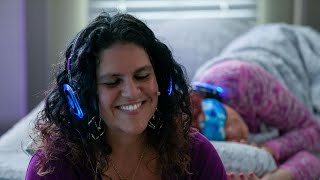
In this live‑stream of the weekly "Suicide Prevention Saturday" series, host Brooke Cheney welcomes special guest Jessica Brace, a former Tony Robbins employee and certified transformational breathwork guide. The conversation begins with a brief framing of suicide as a leading cause of gun‑related deaths and the need for open dialogue. Jessica shares her personal story: a turbulent childhood, the suicide of her husband after 22 years of marriage, and the resulting complex PTSD that left her unable to function. She recounts her journey through various therapeutic approaches—talk therapy, antidepressants, hypnotherapy, a year of EMDR, and finally transformational breathwork—which ultimately provided profound relief. Jessica explains the science behind transformational (or holotropic) breathwork, describing hyper‑oxygenation, vascular constriction, reduced prefrontal cortex activity, and the resulting state of bliss that enables trauma processing without reliving the narrative. The hosts discuss the importance of persistence in seeking help, the distinction between true supporters and "drama vampires," and practical steps for assisting suicidal individuals, including wellness checks, the QPR (Question‑Persuade‑Refer) model, and crisis hotlines (800‑273‑8255, 211). Jessica also details how she now offers breathwork sessions both in‑person in Florida and online via a new membership platform, providing contact information (jessica@jessicabrace.com). The episode closes with reflections on grief, forgiveness, survivor’s guilt, self‑care routines, and community support, emphasizing that healing is a personal, non‑linear process and encouraging listeners to keep exploring different tools until they find what works for them.
Chapters
Ta-da!
Happy Saturday, everybody. Hi, I'm Brooke Cheney, and this is Suicide Prevention Saturday. I am here every Saturday night, 9:00 PM Eastern, to talk about suicide.
Why?
Because as a gun owner, 2 out of every 3 gun deaths that we hear about are suicides. And if we really want to save lives, we should talk about suicide and mental health in general. Tonight I have a very special show for you because you guys love it when I actually have a guest, because then you don't have to just listen to me. So without further ado, I am going to— oh wait, I got everybody. Oh, hold on, wait a second. DJ— oh no, I made him bigger. Hold on, I, I will figure this out, I promise. Should I do that? Oh, all right. DJ, do you know how to get rid of you? I do not know how to get rid of you. Um, I know how to edit your name. Oh wait, do I— if I just click that? No. All right, so This is why I shouldn't have toys, because I can't figure out how to do things. DJ, unmute yourself. Help me out. How do I remove just you so it's just me and Jess?
I will take myself out in a moment.
Okay, well, you could educate me too. That's not always a bad thing to do. All right, so while DJ is going to just take himself out because I don't know how to, I will talk. To my new friend, my, my, my Jessica. All right. So tonight for you, I have Miss Jessica Brace. Jessica and I met because we have both worked with the Tony Robbins groups and been students and volunteers. And Jessica's actually worked for them directly, Tony himself. And so she's got lots of cool things. I think in the, the comments, the description, I said something about breathwork, which we will talk about tonight, but obviously it's Suicide Awareness Saturday. So we're going to talk about suicide. We're going to touch on PTSD, all sorts of stuff. So with that, I told Jess I'm going to let her introduce herself to just talk a little bit about who she is and what she does. And this I know how to do. Go ahead, Jess.
There you go. Hey, I'm Jessica Brace, and I am so excited to be here with you, my firewalking friend. And yes, I did work for Tony Robbins and Firewalks. I've actually walked on fire, eaten fire, uh, danced with fire. It's kind of a thing around here. Um, but anyway, I work as a transformational breathwork guide, and you may or may not know what that means, but what it means is I work in the world of helping people who are really stressed out and have symptoms like PTSD, anxiety, and other things, um, calm their nervous system just by breathing in a different way. So I found that out of my own experience with PTSD. As a child, I came from a home that was not so calm and had a certain level of PTSD. And then as life rolled on, after 22 years of marriage, my husband took his own life, and it was extremely traumatic. And I found myself with complex PTSD and completely unable to function, to the function to the point where I was just on autopilot. I literally was I was driving in my car one day and I didn't see an 18-wheeler, like did not see an 18-wheeler. And the next thing I know, there's a wheel rolling next to my window while I'm driving. And I'm like, oh my gosh. And that was when I realized that I really needed to get a handle on what was going on with my head and my nervous system. And I started exploring ways that I could find to get myself back. From all of that. Yeah, I know. Oh, you're muted.
I realized it actually popped up and said you're muted. The question I have for you is one of the things you just said was you found out you had complex PTSD.
How?
Because so many people don't understand, A, where to go. We've got some ideas of if you're feeling upset, et cetera, there's different ways to call out to people. But what is it that helped you realize that you had something like complex PTSD other than not noticing a 14-wheeler that apparently— did you drive under it or almost?
I jerked the wheel and ended up in the grass and almost hit a sign and was like, just sat there and paused on the side of the highway like, I need to do something about this because that is not okay. I have two little kids at home that I need to take care of and I can't be on the side of the highway like that. Just not going to happen. So I went the usual route and they're like, you're depressed. And I'm like, well, yeah, I got a lot going on, but I feel like I want to do stuff, but I just, my body won't go. Like my brain won't focus. And I just, was excited about things. So I was like, I don't know if I'm really depressed. So, you know, antidepressant medications weren't really helpful for me in that. And it was like, okay, and then I went to talk therapy and that didn't work. And I went to hypnotherapy and I went to a year of EMDR and that helped. All of those things helped me a little bit on the way. But then I found that when a huge stressful life event would come up again, then I would slide back.
What is EMDR? Because of all the things you're talking about— hypnotherapy, I understand. Talk therapy, I understand. I forgot what else you said, but EMDR is the one thing I don't know what that is. So what is that?
So EMDR is a process of removing trauma from your memory, and it's kind of like they swing a pendulum and you go back and you relive through the trauma. And it's guided by a therapist and you relive through it. But there's a sequence of when the metronome or the pendulum is swinging in front of your eyes, it triggers something in your brain and it helps the connection to the trauma that's looping to release.
Got— oops, wait, I didn't mean to do that. One of these days I'll figure out the buttons properly. I need to have more guests more often, I guess.
All right.
Great.
So yeah, so there's so many things, right? I mean, not one of the cool things about being in the Tony world, too, is like, we learn about tapping, we learn about NLP, which is that programming. So it's like, having the tools is not always the answer. You could have all the tools in the world, but if you don't actually apply them to yourself— and I mean, I think one of the best things about what you were just saying is that you tried this, it didn't work. So we went to the next thing and the next thing and the next thing. And I've talked to so many people who are like, I tried therapy, it didn't work. I give up after like one type of therapist. So if anyone out there is struggling or knows anyone who is, make sure you keep trying. It sounds to me like your children were a big part of your motivation to get better. What else helped you keep going?
Yeah, you know, a lot of people are like, oh, I did therapy and it didn't work. And it made it worse. And I had to sit there and relive it. And, you know, I felt— I feel you on that because I went through that too. Like, how many times am I going to say this same story to a different therapist? And, you know, I'm not getting better. And so it was really— I look at it in the way that I explain it to people is that it's like you want a cake, right? And the end result is the sweet spot of I really would like a cake. And so to make a cake, you don't just go flour, cake's done. There's a recipe, there's a process, and there's a recipe. So if you look at your PTSD or your depression or anxiety as a recipe, and so there's certain ingredients that will work and certain ingredients that won't, or maybe you need a little bit more of this and a little bit less of that. So it was just a matter of looking at it in that way of like, where am I going to find the recipe that works for Jess? And how am I going to use that, um, to have myself feel better, to have the life that I would like to have, to be at peace and at ease?
Um, one of the things that happens is that people commit suicide and I get a phone call and they're like, what do I do? So I'm going to ask you that question as someone who's lived with it as far as Your husband committed suicide. I don't know the details. You and I have not talked about it before tonight because I figured we'd talk about it tonight. Yeah. And it's just like, when someone close to you commits suicide, people aren't generally going to ask you that question of what happened. It's like, it's just like my sister was killed in a car accident, but people want to know the details. Like, what happened? I'm like, well, she, she actually— speaking of 18-wheelers, she did not win the fight with the 18-wheeler. And it's like people want to know, but when it comes to suicide, people are curious, but they're not going to ask you what happened. They do. Oh, do they?
Do.
Oh, see, I always thought people don't because they're like— and it depends also what religion you are. I have friends that are Catholic that it's like, okay, this is a horrible sin. We're not going to talk about this as if it never happened. Because if we don't talk about it, then we're not going to talk about everything else around it. So it's like, as a wife of a husband who committed suicide, like, what, what was it like? I guess what questions did people ask? And what more, most importantly of all, is for wives or husbands who lose someone or a brother or sister to suicide, you know, what is the right thing? Not that there's necessarily a right thing, but what do you think helps the most? Not that that's like 10 different questions I just asked you.
Yeah. Well, I'm going to start with the best advice that I received because in the Tony Robbins world, it's like hundreds and hundreds of coaches and having worked for the Robbins company, I had a lot of relationships with a lot of different people that were professionals. Like, that's what they did all the time. So I was very, very supported throughout the entire process of my husband's mental spiraling down, as we say, until his actual success, um, with completing suicide. So with that, it was really, um, the best advice that I got was, you know, she said there are people who are going to come and they're going to support you, and those are your true supporters. And there are people who are going to come and they're just there for the drama, and they're going to want all the details, and they're going to want to make it about themselves. And there are people who are going to come who are just going to want all the dirty details and all this stuff, and then they're gonna leave, and they're not really there to support you. So it's really important who you surround yourself with and who you let in at this time, because you need to do your own processing. Because when that happened, when it was announced, you know, he's gone, this is what happened, it was a barrage. Of people. And at first I was like, oh, they mean well, and I felt responsible to respond to them, and it was really making it harder for me. And then I realized that there's different types of people that are responding. Some were raging at me that it was all my fault, and that was immediately like, oh, there were some people who would call me up and, you know, keep calling me and calling me and calling me, please call me, please call me, please call me. And then I would call them back and they really just wanted all the details, and then they would go away and I wouldn't hear from them again. They'd stop returning my calls because it was too much. And yeah, and then there were the true supporters, which were far and few, the people who were really there to just listen and not offer any advice at all. Those are your true people that you really want around you at that time, as far as friends go. So professional support is different than friend and family support, very, very different, especially at a time like that where you're sensitive. In that experience because it really is a time of confusion for you. Like for me, I really— and I'll be candid because I had to go to a lot of professional therapy on this, and that my husband had some sort of mental spiral down where, you know, his mom passed away from cancer in a not great way. Her death was almost a suicide in itself, is that she found out that she had cancer and she chose to have no treatment at all. And clearly stated that she would prefer to die because she was unhappy with her marriage. And she was glad that she had cancer to pass away. And that, for my husband, was not acceptable by any means because he loved his mom and he did everything to try and convince her otherwise. And when she died, he started shutting down. And I watched him go through this spiral of just losing it, literally losing it. And we had access to so many resources and he didn't want any of it. He refused everything, right?
And this is one of the things that having an addictive family, whether it's drugs, alcohol, depression— as much as people like, oh, it's depression, it's not the same as drugs, it's like, no, it's just as addictive because it's feeding the monster. But it's just like the stuff you're talking about is like, you and I off camera before were talking about Mario Mosen, and a lot of people that are here tonight have seen that interview, but it's like Mario talking about PTSD, but he also just talks about how when they come back from being in war, no matter where it is, right? And people want the details. And I'm like, A, I've never been to war. I've seen the pictures though, because I have friends in the military. But B, I can't get to my head where people just want the details to get the details from you because that's all they want. And then C, like you said, They think they want the details. Then when you share them with them, all that does is make them recoil. They're like, oh no, because they don't know how to handle it because they're not the ones handling it, but they're making you recount it. And yes, I've been through some therapy too where they're like, okay, let's talk through what happened. And I'm like, is really reliving the horror of what just happened really the best way? And it's like everything else in life, one size doesn't fit all. For some people, it's the best therapy ever. For other people, it's going to suck eggs and it's not the right therapy. But if you don't try, you don't know. And it's just like part of figuring stuff out is failing. I mean, like I said, the fact that you went here and that didn't work out, so we went to the next thing, to the next thing, to the next thing until you got to something that's actually working for you. At what point did the breathwork get incorporated into the calming and the improvement of your mental status.
So it was really, you know, working through, um, with different, um, healing modalities and different things. I got better bit by bit and time and processing and going through grief and, you know, allowing. Allowing was a really big part of it for me. Um, but it was actually I was at a business conference and this person came in. It was kind of like we, we all rented a mansion together and we were all content creators. And so we all chipped in together to rent this big fancy house and we were filming and creating content with each other for the weekend. And one of the people that was there was a breathwork guide and he said, hey, does anybody want to try this? And I'm like, okay, cool. Yeah, I used to live next to a yogi ashram. And, um, you know, I did a couple breathwork classes. I'm in, I'm game, sure. And so I lay down on the couch and I followed his instruction for breathing, and the next thing you know, I'm gone. Like, I am in such a deep, deep hypnotic, hypnotic state that I was literally in a white room with, you know, my deceased husband, and we were having a conversation about forgiveness, and it felt real.. And it was the most freeing experience that I ever had. And I came out of the breathwork session like, what? And the guy was like, you went really deep. Have you done this before? And I was like, what was that? No. And I'm like, I am skilled at hypnosis though. I birthed my children with hypnotherapy. So that was amazing. It was so real.. And I'm like, I have never felt peace like that. There was no worrying. There was no sensitivity to noise. There was no startle reflex. There was no confusion and fog. Like all of the things that I had experienced from the shock and the trauma that I went through was gone in like an hour with this guy. And I didn't know how to explain it. I couldn't even speak. He was just like asking me questions and I'm like— and he's like, you just go lay down. So the rest of the weekend I didn't make any videos at that retreat because I was just like, what was that?
But it turned, right? And it's so funny because there's always going to be something different that gives us our, our thing, right? Because like you're talking about that peace, for me, I was suicidal as a teenager. That was when my trauma was like the worst and I was having the hardest time to deal with it. So it's just like, for me, that moment was not breathwork. It was checking myself into a hospital and being put in a room where I didn't have to worry about anyone but me. It was the first time in my life I'd ever put myself first. And I had that. I literally was in a white room, not padded though. It wasn't that bad.. But it was just like, and this is the thing, is like different things are going to work for different people. And that's again why I come on every Saturday since 2018 to give people different ideas and hear different stories to understand that if you're in any place, whether it's depression, anxiety, dealing with the loss of someone, feeling as though you wish you should check out, any of those things, that you can find a way. In the way that's right for you is not necessarily the same right for me. I mean, I want to go to one of your breathwork classes. I just have sucked at signing up for it because, as Tony says, we should all over ourselves because we should do this. And so that is definitely one of those things. All right, so we take a quick commercial break. DJ, throw yourself back up, sir. You're the only one, so you can actually do a roll call for everybody.
Please? I'd be happy to do that. Uh, the Tactical Fudd Buck just showed up in the room last. We've also been joined this evening by Michael Dunn, have Mike White out there as well, 500 Magnum, um, Gun Websites is out there, so is Crabby Turtle G23. He's been a guest on this program before, is out there as well. I think that that rounds us out for those who are with us right now.
All right, very cool. And when I remove him, then we don't hear him anymore either.
Like magic. But he has such a good voice.
I know. Let's see what I think I saw a comment. So Gun Websites, a big part of mental health awareness is being aware of other people's state of mental health and putting yourself in other shoes to think about their state of mind. So, yes, but one of the themes that I've been talking about a lot lately just interpersonally with other people is like, we have to remember that we have to take care of us first. And like Jessica was just talking about, the whole idea that people came to her just to suck off some of the pain and then walk away versus coming to actually support. And it's definitely one of those things where mental health awareness is, are you taking care of you? Because a lot of us are very big caregivers and we love taking care of everyone and we forget about us. You're shaking your head yes. What do you think, Jess?
Yeah. And, and you know, that's the, the biggest part of it is like the stress levels is like, if you don't have like self-care for you, like I've had bad rough times where, you know, like I'm like, gee, when's the last time I actually took a shower and brushed my teeth? Like it's been a while, you know, like how many days have I been wearing these clothes? Like, I've had periods in my life like that where it's like I don't really know what's going on in my world. My nervous system is just so out there. But I know that if I take care of me and I do the things that I need to do to regulate my nervous system, that everything is better. Everyone around me is better, and I'm better too. So it's really, you know, I had to learn because I grew up in an environment where it was like fend for yourself survival mode 24/7. It was so much abuse and violence that, you know, that's how I learned to survive was that, well, if I, if I calm everybody down and I take care of everybody else and everybody's calm, then my world will be okay and I'll be safe. So that carried through into my adulthood. Um, and I literally unraveled myself, you know, I found myself, you know, at, um, a very young age as a widow. And unfortunately, part of my husband's passing also involved setting my home, my car, and my business on fire.
So I went from— not literally, right?
Figuratively. Literally. Oh, so I went from beautiful beach house, successful business, 2 children, married, to homeless in a very short time.
Yeah. Oh, yeah. Because I remember. Oh, yes, I did actually read this.
Yeah. So it was like, I had to learn because that was extreme and it was really easy to unravel at that point.
You know, it was just a lot.
Yeah.
Yeah. So I, I, now I'm recalling, I'm like, oh yes, you had everything and then everything was gone. Um, and it's one of those things where it's like, especially when you lose your partner on top of everything else, back to sort of the PTSD side of things is like, one of the things we talk about with the vets coming home is that the people who died in front of them, they tend to have survivor's guilt. Why me? All of that. And one of the things I always try to remind them is, well, yes, but why would you want your family and your friends to feel what their family and friends are feeling instead? And so we try to do that transference of guilt was, well, I survived, they didn't. And then again, back to that self-worth thing we were talking about where it's just like, okay, we, all of us here, you, me, everybody watching, it's like we're all worthy. We just kind of forget sometimes that everyone has their path to walk. I did find one of the other comments. Michael said, I think depression is worse than drugs or alcohol. Um, all of them have problems, like all of— like whether it's depression, drugs, alcohol, there's so many issues that we— one size doesn't fit all. Everybody's got their cross to bear, as it were, where you just cannot get away from something. Um, I'd like to have the cleaning freak issue. I do not have that. All right, so awesome. Had that amazing moment—
moments—
where you're in a room talking to your husband. Like, forgiveness is such a huge thing. Can you talk a little more about that?
It was just peace. Like, it was— and, and I was like, how is that possible? I've done hypnosis, I've done all of these NLP, I've done all of these things, and I've never experienced something so as intense as that. And it was really like, you know, for me, like, like I had the conversation that, you know, I had wanted to. And, you know, of course, understanding and knowing that it was, you know, my mind was what I needed to process. And so in a way, allowing myself for the breathwork and to bring myself to that point allowed my mind and my body to process in the way that it needed to. And that was, you know, to create that room of sitting with him and having that conversation. Um, so I was fascinated, absolutely fascinated. And I started digging online and looking at different things, and I found a training program, um, of a company out in Bali, and it's called Breath Masters. And I signed up for one of their sessions, like, right away, like, I want to do this with you. And his session was amazing. Um, and then I registered to become a breath master and to get certified by the company so that I could have this tool in my toolbox to help other people. And so I shifted my entire company. I had a website design company for almost 2 decades, over 2 decades, just a little bit over, and I shut it down because when I found how much this was helpful for me and for my children and how much it had changed for me um, and it wasn't like this long drawn-out experience. It was just such ease and peace, like right away. Um, I knew that this was something that I had to do, you know, in part of honoring Dan and his passing, in part of honoring my children, um, and being a better mom, but also in being a better human being. That if I know about something that is so powerful like that, and I really feel that it's my purpose, a gift that I received, and that it's for me to give to others. So I completely changed everything so that I could, you know, continue this on.
And it's, it's really interesting to me how everybody has that thing. One of the other people who watches here, her name is Tara, and she's got a YouTube channel, Tara Smith's Kitchen, and she cooks. Cooks, and that's what she throws up on her YouTube. She always makes me hungry every time I watch one of her videos. But it's just like, one of the things you hear in the Dean, the Tony room, is your mess is your message. And I tell people that my story about how I do not— what do you call it? I never had a plan to be a shooting school I never had a plan to be an instructor. I never had a plan to be a competitive shooter. And all of it was because I wanted to pick up a firearm and not shoot anyone by accident. That was it. Um, and it's one of these things where when we go through hard times and things suck, whether it's PTSD, depression Alcoholism, any of the things that bring us down, usually us getting out of it gives us that information that we need to then help others. You know, in our space, like, one of the things I always— also another one of those things, a rising tide raises all boats. And it's just, I don't know, it's one of these things where it's just like the darkness helps us create our light. The worst things that seem to ever have happened help us then go on to things that can then help others. Yeah. And I don't know, to me that's how life is supposed to go. I know everyone doesn't think that way, but it's amazing to me. It's just like you're telling the story. I'm like, oh yeah, that happened. But it can't happen with guns, not with breathwork. And because I'm like, I feel so smart. Not smart. I felt so confident because I could handle something that so many people were afraid of. And I'm like, and that was probably 2011, 10 or 11. And then by 2012 or 13, I'm like, I should really share this with other people. And so it's just, it's interesting to me. So with that, why don't you tell us a little bit about, like, we got to find out what happened when you did breathwork. Work, now that you help others do the same thing, got any quick tips and tricks for us? You want to talk about how it works a little bit more?
Yeah, sure. I'll tell you how it works. So there's different types of breathwork. Like, you can— most people are familiar with what we call yoga breathwork, like deep breaths, or take a few deep breaths and calm yourself down. And that is part of it. But what I love, the type of breathwork that I love is called transformational breathwork, or some people refer to it as holotropic breathwork. So it's a little bit different because what we're doing is we're taking in 2 to 4 times more oxygen than what we're used to. So we're hyperoxygenating ourselves. And when we do that and we have 2 to 4 times more oxygen coming in, What happens in our body, the response to that, is that all 75,000— there's 75,000 miles of blood vessels in everybody's body— all 75,000 miles of blood vessels in your body constrict at the same time as a response to the increased oxygen. And when that happens, in particular, the magic of a transformational breathwork session is right here, your prefrontal cortex as it receives less blood flow because of the constriction, it takes a nap. So your prefrontal cortex is your monkey brain. It's your safety and your protector. So it's the one that's like, ooh, don't touch that, that's hot. Ooh, what had happened? Oh, I wonder what they're thinking about me. Ooh, what's happening over here? Oh my gosh. Ooh, what am I doing? Don't hit the car. You know, so it's always on and always protecting you, and it's that voice that's always going and going and going, the monkey mind. So what happens with that increased oxygen, decreased blood flow, the monkey mind actually lets down its guard and kind of takes a nap. So what happens is you become into a state of bliss and full internal awareness of yourself. So it's really a magical process. It's very similar to why people take psychedelics, because it's a very similar experience, except we're not ingesting anything. We're just breathing in more oxygen and creating that state of bliss from that. And when you're in that state, the next part of the breathwork and why it works so great is now that your monkey brain is kind of relaxed, your body is feeling safe, is feeling calm, is feeling in bliss. We can then work on processing, much like hypnosis, of what's going on with you and kind of hitting a reset button on your nervous system. So that you do feel calm, so you do feel relaxed, and you can allow your body, like with my experience, to process whatever it needs to process and let it go. Because innately, our bodies want to heal, our bodies want to survive, and we want to survive well in a state of homeostasis and balance. But circumstances get trapped from our experiences, less trauma, and then our body loops and loops and loops and loops, and it kind of gets stuck. But when our body becomes in that state of balance and calm, our body can then go to work releasing what is no longer serving us. So that is really how the breathwork works, um, in that state.
And in a short explanation of it with a little bit of science, um, Reader's Digest version.
Yeah, but it really is— you just like, you can do sessions that are really heavy for trauma release, or you can do sessions, where we just breathe in that way and we listen to sound bowls and music and certain tones, and that literally resets your nervous system. So anyone who studied the vagus nerve, um, and the way that trauma works in the body, um, breathing in that way can reset you.
So I'm laughing because I took some EMT classes last year. Yeah. And we talked about the vagus nerve And as a potential ambulance driver, one of the things they talk about the vagus nerve is you'll have older people who will fall off the toilet because of the vagus nerve. So that's why I'm laughing at it. You can push too hard and knock yourself out.
Yeah.
So we need a little biology lesson, but that's not what Jess is talking about.
Yeah, no, we're not going to pass out on the toilet, no less. That is the breathwork that we do. You're actually laying down. So for safety reasons, you may get a little dizzy and lightheaded because of all the oxygen, but, um, passing out is extremely rare, um, with that. But with the breathwork, you know, there's a lot of different ways, um, and things that can help people with it. A lot of people experience massive release. Um, what really excited me about the breathwork is that you don't relive any of it. You feel an emotion come through your body, but there's not drama and trauma and attachment to it, and there's no story to it. So you physically feel the sensation of an emotion coming through your body, and then it releases and it's gone. So it's your body letting go. If you've ever read, um, The Body Keeps Score by Dr.
Van der Kolk, it's— I can't understand the concept though.
Yeah. Fascinating book, and it explains, um, how trauma gets trapped in our cells and creates a loop, and it's like stuck, and it keeps going and keep going and keep going in our cells, and it keeps playing over and over again. And over time, it keeps stacking and stacking and stacking with all these experiences until I can't handle it anymore. Um, so these are ways that you can release that. So for me, breathwork was kind of the, the frosting on my cake to, to really bring me through some challenging times that, you know, that doctors, medicine said couldn't be done, right?
Oh yeah, no, and it's interesting because on this channel there's another gentleman who actually helped me get started on StreamYard here and stuff, and his channel is Barbecue Guns and Barbecue, and it's one of those things his doctors told him that he was never going to be lighter than 250 pounds because he was significantly overweight from being a truck driver. And he's down to like 210, or I don't even know if he's in the hundreds at this point. But again, back to Tony, I will say that Tony said, don't listen to your— I mean, listen to doctors, check in with them, have them treat you for what they can, but understand they don't know it all either. Um, because he actually has a story I don't remember the story exactly, but anyway, there's stories where doctors will say, okay, you've got 3 months to live. I have a friend of mine actually who had lost one leg to cancer and he went to the doctor and the doctor said he's got to take the second leg off to cancer. And that my friend is just like, mm-mm, not doing it. And he literally walked away from the doc because the doc told him he had like 6 months to live if they didn't do this surgery. And that was over 35 years ago. And he's still a real estate agent now. So don't believe everything that people tell you. And especially when you're talking bad things in your own head. Because we are the ones who talk to ourselves the most out of anyone else. Yep, good old monkey brain. When you talk about like how many miles of, you know, blood vessels we have going in our body and I just remember something. Do you know what happened? You don't know how far across the world you're going to get if someone takes all of your, um, you know, vaso, whatever they are, all your veins and stuff out of you and wraps around the world. I'm like, yes, you go to being dead. You don't go very far. But that was like the joke I could think of. So, um, all right, so trauma. Breathwork, PTSD, complex PTSD, continuing to go until you find something that works. Yeah. And you mentioned this a little bit before, but it was just like when you have someone says, well, I tried therapy and it didn't work. And it's just like, you tried one type of therapy? Yeah. And it's just like, uh, yeah. How do you— what is your choice when you try to encourage people? Like, try something else? Do you ever offer up things like, hey, I do this really cool breathwork thing? Or what is the best way? What is your best way? Because again, one size fits all. For me, it's like, I'm just like, try something else. Try something else. Keep going. Like what you did. And we know we can lead a horse to water, but we can't make them drink. So I don't know, what is one of your favorite things? Because I assume, because a lot of people know that your husband died from suicide, and so they will come to you for advice. Maybe what is— maybe a better question is, what is the most common piece of advice that you get to give people?
Yeah, well, common piece of advice is actually interesting, is, you know, the survivor of someone, you know, who completed. And looking at that, um, I get a lot of phone calls. And the first few years— it's been 5 years, we just hit 5 years, um, since Dan's passing— but in the beginning, I would get phone calls from people like, oh my God, so-and-so's son just took his own life, can, can you talk to her? I have her on the other line. And it's like I'm grieving on my own stuff. I'm not a counselor. Like, I'm not an expert in this just because I experienced it. So that was really hard because sometimes it would be someone that I knew and sometimes it wouldn't even be someone that I knew. And people would just think that because I experienced it, that I was this expert on it. And it's really like, I'm, I'm bumbling my way barely above water myself. No, I don't want to talk to someone else about their traumas right now because I got my, my own. So it was really, again, that self-care of, hey, you know what, I really am not skilled in this, or, you know, um, however, here's some resources that have worked for me. And so, yeah, so I really— yeah, because it's too personal. It's just too personal. If someone's on the fence, I'm not going to hang up on them, but I am going to bring them, you know, to the space of 'Hey, you know, let's, let's get you some support.' And I just had that. I had a very good friend of mine for over a decade, like 2 months ago, she— I was on a phone call with her and she's like, 'I'm done. I don't want to do this anymore. I need to go.' And I was like, 'What do you mean?' And she's like, 'I just can't do this. I'm all alone. Nobody understands and I just can't. I want to leave.' And I was like, 'Let's get you some help.' 'I don't want any help and don't tell anyone.' And, you know, but I was like, I'm gonna make some phone calls. Yeah. Some people who know how to deal with this, and I'm gonna let them know, you know. And so she got angry with me when I made the suggestion about this. So she literally just told me that she's preparing to check out, but yet when I suggested help, she got angry and yelled at me, like raised her voice. And I was like, ooh, That's, you know, very sensitive. That's another sign for me. So I made some phone calls against her wishes because I would like— I would rather be against her wishes and have her be really mad at me, but know that people called her and were able to, to see where she was at and if she needed support and what they could do to help her, rather than not make those phone calls. Yeah.
Yeah, because then you hang up, then you get the phone call that she was successful, and then it's like, well, what more could I do? And this goes back to that whole survivor's guilt thing of, okay, what else could I have done? And I mean, I think one of the most common questions I get is, how can you tell that someone is suicidal? And my answer always is, yeah, I can't unless they're going to share that with you. And the good news is even If they do share it with you, chances are is that is their call for help, even if they get mad at you for actually doing something. Because my dad was suicidal lots in his life and he had to be talked off mountains and talked off having guns in his mouth and all of those things. And it's just like, okay, for real, you don't know unless someone tells And usually when someone's telling you, that's as close as they're ever gonna get to asking for help, cuz they're in a bad place. If, if you're on that edge where you're about to check out, there is no good place. And if they're still talking to you, then yeah, it, it makes sense that you can do something for them. And that's why we have stuff like crisis line 800-273-8255 or 211, because that came national last year. You can dial about 211, and I've used 211, but it's usually for, hey, thank you. I have someone you need to talk to because I'm in the room with the person who's having a bad day. So it's always good to know that there are more resources.
Or I've had to call for wellness checks. I would have a conversation with someone that wouldn't sit right, and I'd be like, geez, they're not answering their texts. I'm just going to call for wellness check. 'You know, they get mad, they get mad, but you know, I would rather know that you're okay.' So what is a wellness check? A wellness check is if you're concerned about someone, you can contact the police on the non-emergency line and have them go and do a wellness check, and they'll go to the person's home and knock on the door. Yeah.
Um, have you ever heard of QPR? All right, so there's a program called QPR, which is question, persuade, refer. And when I was taking that class, what happened was that the person teaching it said, I did like a wellness check. And it was that same, similar to what you just talked about, where it was like he knew someone was in trouble. I don't know if they had said specifically they were going to, because the first part is question, are you going to hurt yourself? And so many people are afraid to ask that question because they think that they're putting the idea of them hurting themselves into their head. It's like, that's not how it works. And then the persuade was, hey, you should go get help, like what you did with your friend. And then from there, she didn't want to be referred. So he called and managed to get her help by having her picked up against her will. But, and she was pissed off, mad, angry, and it was fine. It wasn't fine. Sorry. It was horrible for— she hated him for 2 or 3 years. But then afterwards, a couple of years later, came back and said, thank you for saving my life. And you don't know, they may stay mad at you forever, but they're alive and mad at you versus if you did not do anything. I have other friends who've told me stories of they've made new friends. And like you were talking about, there's those vampire drama people. Yeah, she didn't realize— she started to realize that she had a vampire drama person around them who would be like, send pictures of a noose or a knife and say, I'm gonna do it now. And then didn't know what to do with that. And that's where you call 911 and say, yeah, 211, and be like, I don't know how to deal with this stuff. So, um, yeah, everyone's got a different story. Everybody deals with things differently. And there's no right or wrong. It's like we're all doing the best that we can with the skills that we have. I don't know.
It is just what it is. Yeah. And it really, you know, I've had so many people on the flip side send me messages. I saw you kept going. And when I wasn't okay, I thought about you. And remember that you did it and you made it through, and I knew that I could too. So I've gotten many messages. I'm pretty active on social media, um, through my work. I've gotten countless messages like that. And, you know, just the little things, like, um, I'm very open with my boys. We went to, um, after Dan had passed, we went to a special child therapist who deals with suicide and children. It was a grief therapist for children who dealt with suicide, very, very highly specialized person that I was referred to. And I rehearsed with her for 2 hours the conversation to tell my then 9-year-old son what had happened to his dad. Oh my goodness. So I spent 2 hours with this therapist going over all the scenarios and how to say it and how to frame it. It and preparing, you know, for that conversation with my son. And, um, it was very— her advice was amazing. Um, and I share that a lot. So people do call me and be like, oh, how did you tell? And like, I get that question a lot from people, you know, so-and-so, you know, just completed suicide. What did you— how did you tell your children? Like, how do I handle that? And I was like, well, you know, her advice was amazing. It was really, um, so good. It was let them lead. Don't give them information. Let them lead with questions because they will ask what they want to know, but don't give them any details about it. So my son was really like— I was like, you know, I have to tell you, we have some bad news. You know, Daddy did something to hurt himself and he has died. And become an angel. And he was like, what happened? I'm like, well, Daddy, you know, did something to hurt himself. He hurt himself. What did he do? You know, well, you know, Daddy did something. And, you know, it was very light in the details. And so now, you know, my now 7-year-old will introduce himself to new acquaintances. He's like, this is my mom. This is my brother, and I have a dad, and he passed away because he hurt himself in a tree. Okay. And so whenever we're out and we meet new people, my son, who's 7, will introduce our family that way, you know. And it's very like, okay. And people will just kind of look at me and be uncomfortable, and I'll just nod my head and I said, yep, like, that is our experience, you know. We own it. And we have a sticker on our car that says, um, you matter. Don't give up.
You matter. And we have shirts. Have you seen all the shirts all over the social media? On the back, to the person who's standing behind me, you're important, have a great day, or, you know, something along those lines.
Yeah, I have it on my back window of my car, and so many times people will honk or they'll walk by and nod their head and go, thank you. For that sticker. And so many times, and a few times, it's a sticker, right? You wouldn't think much about it. It's just a sticker. It says, don't give up, you matter. Um, 3 times I've had the sticker on my car, 4 years. 3 times I've come out to my car and there's been a person standing next to my car crying, waiting for me. And all 3 of those people waited for me to share with me that they were preparing in their lives, and my car went by and it changed, changed their thoughts, and they wanted to— the crazy part about that is you'll never know how many people, and that's just 3 that actually waited because they were a neighbor or at the same school or somewhere in our circles. But then I think about like how many times have I been I live in Orlando. I've parked at Disney World. I've been, you know, at different things. We just, um, there was a tragedy. It was maybe last year. Um, somebody jumped out of the hotel window at Disney in front of the monorail. So children are on their way to Disney monorail and, and saw this occur. So my children were like, that's really bad. Did that guy— were his children in the hotel room with him when he jumped? Because of course they correlated that a dad would do something like that. And so the mother was shut down and everyone was buzzing about why the monorail was shut down and all this happened. And people were on the monorail and the kids saw it. And, you know, and it's like, you don't know where someone's at. So my sticker— actually, I'm gonna get a new one, it's getting a little faded— but like, my children, we celebrate having that on our car, right? Because, you know, we always talk about how um, when you're a leading lighthouse, and that we had this experience happen to us, um, and it really hurt us a lot, and it was really hard. And so if we can share about that, then it maybe can help someone else to see their way out. And they're really little. I mean, my little one, you know, he lost his dad when he was a year and a half old, and— but they understand that concept, and it's trickled through everything with the way that they treat friends at school, um, you know, how they go about their daily lives, right?
Yeah, no, and, and we all react to everything differently. Like, I don't know about you, but every death in my family has been unique as to how it has affected me. Like, my dad's was more of a celebration than a sadness because he had been struggling with lots of health issues. My sister's was a shock Brooke. And because at the time, like you, I had babies. I had baby babies. I had a 3-month-old and a year old, um, a year and a half old. So it's just like, so where you are in life changes how it affects you, um, who it is. It's, it's— death is like another one of these things, like not just death by suicide, but death in general is something that our society does not do an awesome job of, like embracing and figuring out to do with it? Because it's like sitting there at a funeral, having people go, why, I'm sorry for your loss. I'm sorry for your loss. I'm sorry for your loss. I'm like, okay. And I'm like, there's got to be something more, something better. But there is so many things we could talk about. Yes. How do you stay on the track? Because like I was talking about Mario before, It's just like, it's like an addiction. I mean, all of it's addiction because we're all— not addiction, but it's like we're always growing on the stuff that we're leaving behind as we're learning something new. And all I can think of, here's the church, here's the steeple, open the doors and see all the people. And it's just like, as we go down the journey, the people in the steeple just keep changing and we just keep adding different people sometimes and letting go of things. So it was like forgiveness of that awesome conversation you had. And it just like, my hallucination is that it was forgiveness for yourself and forgiveness for him all at the same time. And a lot of people don't understand just that piece of why forgiveness is not just for the person who left you, but it's also for yourself because that survivor's guilt thing. And there's so many Thanks. So with that, we are coming up on an hour. I will check in with DJ again because I'm like, I didn't realize we've gone that far. I have not really been paying attention to the chat because I've been just more paying attention to you. So Mr. DJ, is there anything that we should know, or are there any comments that should be thrown up that I have just totally not paid any attention to?
You've got the pertinent questions. I would encourage anybody in the last minutes here maybe to add some. I just wanted to let you know that Vanessa Kitty joined us a little bit late but is pleased to be here as well.
All right, very cool. Thank you. Um, I'm gonna let you remove yourself whenever you do that magic because I don't want to push all the wrong buttons again. So I love and dislike technology all at the same time. I love that, like, G-Webs, who is one of the people that is here— sorry, we call him G-Webs. His, his thing is actually Gun Websites, and he's the one who introduced me to StreamYard so I could do this fancy stuff, like have you there and then make you big and small and all that. So community is huge, and, and it's just like, I am very blessed that I've had people from all over the world who I know, um, whether it's through Tony Robbins, through going to a boarding school, for traveling, for skiing, or now shooting. And I think one of the things you said in the beginning that's so super important is to understand who are your little drama vampires when you're trying to get better. And who are the ones who are really there. And, and that is part of self-care. Um, I had another student yesterday, we were talking about it, and he went through divorce and he was just— he said it was so interesting to see the people that are really there for you are more few and far between than the large group of people that you know. Um, do you have any spectacular words of discernment for some of the things that kind of made it super obvious of, oh, well, you already kind of said, but do you want to reiterate that whole thing of the people that are there to actually listen to you versus try to fix you? I don't know, is that part of it, do you think?
Yeah, so it's really, you know, when you're on this side of it and you're like, wow, this just really happened, I found that the people who are the most supportive are the people who said nothing, but they just just sat, or they just said, what can I do for you? You know, it wasn't the, oh, tell me the story, or what happened. Or, um, also there's a lot of people who will not return your calls, and it's not you. It has a lot to do with they don't know what to say. So I, you know, had a lot of friends that weren't my friends friends for years, and I would say, hey, let's get together, and they'd be like, oh yeah, I'll get back to you. And then I would ask like 3 or 4 times and they wouldn't get back to me. And I was really hurting and really wanted to just have lunch with somebody and get myself out of the house, and they would blow me off. And years later, you know, it came around and they were like, it was just so uncomfortable to be around you because I didn't know what to say, and I just kept seeing Dan, and I wanted to cry, and I didn't want to do that in front of you, so I'm sorry for avoiding you, right? And I was like, whoa, I thought it was me, you know, in this whole thing. So on the, the side of it now is how can you be a good friend for someone who's on, you know, this side of it is just offer an offer more than once just to listen and ask, how can I support you? You know, because they may not be ready for contact, but just because they're not ready now doesn't mean later on as they move through their levels of grief, um, support. And the best way that you can support them is to just say nothing, just be there for them. Yeah, that's really hard to do because you want to soothe. Your natural is to soothe and care for and make it better. But you can't really make something like that better. You can't. It has to be internally within. That person needs to go through their own process. And, and for me, it was really allowing all of those feelings, like the anger, the rage of like, what the heck did you just do?
You know, and, and all that. You, or were you yelling at him at that point in time, right?
Yeah, it was both. Like, you know, and then you yell at yourself like, what did I do with my life? Why is this happening? You know, and you just gotta feel the feels, but don't stay there, you know. And that's really, you know, allowing yourself to kind of— because you can't stuff it. That's the hardest thing, is to not, you know, oh yeah, it happened, whatever, you know. I gotta keep moving. I've got kids. I got things to do.
That's, you know, when I spiraled out. Yeah. And we're very good. Well, many of us are good at stuffing or covering, whether it's drugs, alcohol, other behaviors. And it's like, again, this goes back to the so important to make sure you take care of you. So my suggestion is we're both yawning and we need to go.
It's past my bedtime.
I know it's way past my bedtime, but I forgot to grab links from you. To put in the descriptions. I think I might have put your Linktree in, but I'm not even sure. So would you just share with people the easiest way to check in with you and find out about breathwork and that sort of thing? Because you offer breathwork both in person down in Florida and online.
Online, yes. Actually, Monday we are launching a breathwork membership site, um, where you can come and work with me in small groups doing breathwork online, um, via, believe it or not, StreamYard. So if you're interested in that, I'd be happy to gift anybody that's listening a free session. Um, you can come. We do 4 live sessions per month, all online via StreamYard, so anywhere in the world. All you have to do is email me, and it's really easy.
It's jessica@jessicabrace.com. You're muted. I was saying I may have to take you up on that offer because I'm not listening. Absolutely. And I haven't yet, so I gotta work on that. All right, well, everybody— Tactical Fudd, G23 DJ, Vanessa, G-Webs, uh, I know I saw Mike White, 2A Advocacy, and Crabby Turtle, uh, Tactical Fudd. I think I hit everybody. 500 Magnum. All right, Michael Dunn. Oh my goodness, there's so many. All right, so thank you all for checking in.
Awesome.
Thank you for your time. And for most of you, I will see you next week, Saturday at 9 o'clock. And who knows if there's a random— oh no, ooh, I just realized, DJ, take a note. I'm going to be in Washington State at a wedding next Saturday, so I will not be here. So Anybody who wants to get interviewed, we need to do a pre-recording. So that's the plan for next week. All right, everybody, thank you so much for checking in. Jessica, thank you for your time. And we're out of here. Have a good night, everybody.










