Suicide Prevention Sat - What does Crisis Look like?
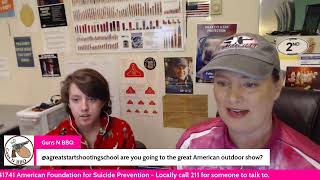
In this informal, hour‑long YouTube livestream, host Brooke Cheney brings together co‑hosts Nadia, DJ, Mike White, Tara and several viewers to discuss suicide prevention and how to recognize a mental‑health crisis. The conversation opens with a light‑hearted intro before moving into data‑driven points: two‑thirds of gun deaths are suicides, and mental‑health work can reduce both gun violence and overall suicide rates. Brooke reviews warning‑sign lists from the National Institute of Mental Health and other sites, highlighting feelings of guilt, being a burden, hopelessness, emptiness, anxiety, physical pain, and observable behavior changes such as sleep disturbances, social withdrawal, anger, and irritability. The group then breaks down risk groups—teenagers, older adults, and combat veterans—explaining why each faces unique stressors (e.g., school isolation, caregiving burden, post‑traumatic stress). They discuss how COVID‑19‑related isolation amplified these risks. Personal anecdotes illustrate stigma around therapy (insurance denial after seeking a grief counselor) and the difficulty of disclosing suicidal thoughts, especially among teens. Practical advice is offered: know the person well enough to notice changes, reach out with empathy, avoid making the conversation about yourself, give simple compliments, maintain regular check‑ins, and encourage professional help. The hosts also stress the importance of community gestures—calling names, acknowledging participants, sharing light moments—to build a supportive environment. The stream ends with a reminder to “not be silent,” a preview of next week’s topic (mental‑garden metaphor), and a call for viewers to reach out if they feel isolated or purposeless.
Chapters
first. Um, that was just the first handful of them. Oh look, I threw DJ on when I went live. Haha, surprise. Um, but anyway, so yes, we were discussing Sharpie addictions and, and I just went behind me and I just grabbed a little bit, um, because obviously you are here in my office. So hello everyone. So far out there I see Fiona, uh, Mike White, DJ Gun Webs, G Webs, because Gun Websites apparently is too hard for me to say this evening. All right, welcome all, Suicide Prevention Saturday.
Why?
Well, you know, I sound like a broken record, but in case this is the only 10 seconds anyone watches— oh, look at him taking care of me. Um, I, I have co-hosts over in the corner. You do? I do.
Hello, people.
Um, 2 out of every 3 gun deaths you tend to hear about are suicides. So if we want to talk about actually saving lives, we need to talk about mental health and suicide prevention. Violence prevention actually also happens to fall along the same lines of mental health. So we can do a one-for-one kind of thing as far as, hmm, if we work on our ability to handle our mental crisis— crises, crises, according to my English major over here.
Sorry.
I'm not saying You know, we can, we can do a lot if we start working on ourselves and become better about dealing with our own crap. Then it makes it easier for us to deal with everybody else's stuff. So Tara has joined us since I said hi to everyone. Oh, wait a second. What did I think of the presence of suicide prevention at SHOT Show? The show— if I went to suicide prevention at SHOT Show, then I would have had an opinion. But since I wasn't there, I don't have an opinion, I guess. Um, I'm, I'm not sure. I think that suicide prevention is definitely starting to become more of a thing. I am seeing it more places. I did not see it at SHOT because I never made it to SHOT this year. Again, back to the taking care of ourselves thing. I need to work on my finances before I can do fun things like run across the country to go to SHOT. I know it's in your backyard, basically. So, um, oh, you like my bullet chart on the back? I'm like, what bullet thing? Sorry, I, I, the shiny syndrome thing, right? My boy says I like the bullet chart on the background, and I will tell you, that was a Christmas present from my husband because I absolutely positively hate ammo because it makes zero sense. Zero, big zero. Zero is the smallest number at the end of the number line. It It starts with 0 and it goes 1, 2, 3, 4, 5. Ammo does not do that. Something that is 22 should be bigger than something that is 9, and that is not what it does. And something that says 380, like 380, should definitely be bigger than something that is 45, but it is not. But anyway, so that's what we got.
We got no common intervals.
That's what I get for reading the comments, so I might have to hide them. David! Mr. Zalby, how are you? Um, Zalby really is his first name and David is his last name. He is our team captain for Icarus Shirts. Um, he is actually the gentleman who got me my sponsor gig with Icarus. This is an Icarus-made shirt, by the way, custom made from them, and it's lovely. So anyway, so hide David.
Zaldivar.
See, if I look at your name, I just call you the wrong thing. All right. Yes, it is a very comprehensive bullet chart over there. Okay, so what did I put on our, our little chat today? I said, how do we find, or how do we know when someone is in crisis? So I went and looked up on the ever-loving web to go look at what they say. And we're gonna chat about what they say, how you find warning signs regarding suicide, and then I'll give you my opinion of the stuff they say. All right, so, oops, wrong button. Sorry, DJ, I know you're supposed to be hiding in the back. Uh, I need to do this. I need to push some button.
Is that it?
That is it. And I am going to share screen. Are y'all ready for this? Here is what— and let me make that the only thing that you see. Go back to— this is the National Institute of Mental Health warning signs of suicide, and they are talking about if someone else is talking about wanting to die, great guilt or shame, being a burden to others. These are the things that they want you to pay attention to. As far as what some— what you might notice. Now, here's the challenge. Many people will never tell you that they want to die. They may have something traumatic in their life that they feel guilt or shame about, but you may or may not ever know that. Being a burden to others. This is something that many people feel. This is, of all of them, the one that I felt. And unfortunately, on this website, they say that people will be talking about that. I didn't talk about any of these feelings. As far as feelings, they say empty, hopeless, trapped, or having no reason to live, extremely sad, anxious, unbearable emotion, or physical pain, right? So there are plenty of people that have really horrible diseases that have constant and never-ending physical pain. And that is definitely a reason that people even talk about assisted suicide. And that one is one that most people know. Now I just did a couple of different shot, a different websites. So this one, I forget which one, this is a hospital. And they talk about many people committing suicide that don't have a known mental illness. There usually just isn't one determining factor. Because as humans, we want to have a single answer. We want the simple answer as to how do we stop someone from committing suicide. But the truth of the matter is it's usually a complex problem and it's not a simple thing. But again, it talks about health issues, financial strain, legal problems, trauma, or relationship. Now, Here's my favorite site, just because, uh, we like the American Foundation for Suicide Prevention because they are gun neutral or friendly depending on which way you want to look at it, but they talk about the same thing. Depression is the most common condition associated with suicide and it usually goes undiagnosed or untreated. Why is that? Well, because when you're suffering from depression, anxiety, substance abuse, you often don't even realize that you necessarily have a problem because you are dealing with stuff in a way— it's your way of dealing with it. So in your head, you're essentially dealing with it, if that makes sense. Sorry, I'm moving the mouse on the wrong page. So that is that. And I will also say— hi, Vanessa. Notice the commonality of the threads here, talking about wanting to die or kill oneself, looking for a way to kill oneself. But again, who's going to confide in you and tell you that they're looking for a way to kill oneself? Not really that often. When you are, again, hopelessness, having no purpose. When I was a teen, that's how I felt. I did not talk about it to anyone. As far as being a burden to others, this is also why so many of our elderly are committing suicide because they have no one to take care of, or they do have caregivers, but they feel as if they are nothing more than a burden to their caregivers. And then of course, the worst part, Mike, you know, I'm talking to you, but we're talking to everybody, youth suicide warnings. Again, they say that people will talk about making plans for suicide. I do not find this is really all that common. Pretty much any suicide that I've been a part of or know about, everyone says, I didn't know, they were so happy, I had no idea. So you'd also have to be a really, really good friend to notice these changes. Um, when they talk about withdrawal from changing social connections to situations, changes in sleep increased or decreased. If we're talking about youth, and I have a 15-year-old standing next to me—
yes, you do—
her changes in sleep pattern just go with where we let her, allowed her to sleep. Anger and hostility, that can also be a daily change because one never knows on the mood of a teenager. Hormonal issues and increased agitation or irritability. What say you, child? You know, tell me.
I think it's a—
for me personally, for you personally, it's a talking mouth.
Yeah, for me personally, it is a rather constant thing of like how irate I am.
Increased anger and irritation? No, it just comes and goes.
It comes and goes. It depends on what day it is.
Depends on the day. So again, if you want to notice if someone's having issues, you have to actually really know them. Like this one, she can hide in her, in her room, in my little crypt, days and days, and she's perfectly fine. Is that less or is that normal? Well, because I see her every day, I know that's her normal. Are you— oh, sorry, she's coming to sit next to me, so I'm gonna have her up here now. So 15-year-old child, there she is. But in talking about youth suicide stressors, right? What are some of the stressors teens have?
Stressors, friends, the complete social, whatever the freak is going on in high school.
So raging hormones.
Yeah, that too.
You happen to go to a new school freshman year.
I do happen to go to a new school.
But what did you find?
Happiness.
Yeah, so she made a good choice. Not— and just before we came on, we're talking about how not all kids have parents that will help them do whatever it is that they want.
Yeah.
And give them options. So, um, I don't know, there are challenges as a team.
There are.
My son was talking about— I asked him one day, what, what's stressful about being a teen? Because as a 50-plus-year-old adult, you're a bit far away from that. I know, but I asked him, I'm like, what's so hard about being a teen? And I honestly think that he came up with the best answer ever. He's like, as a teenager, you know, you're getting closer to being an adult but you're not really given the skills and the abilities that you need to be a teenager.
True.
Like, you're 15.
I'm 15.
Doesn't have a job yet. No. Doesn't have to run bills.
No money. No job. No, like, bank account. Real responsibilities other than school, which I don't really— yeah, whatever.
The dog.
The dog.
The dog. Sorry, the dog's over there.
He's down there.
Yes. So you have to at least feed your dog once a month.
I have to feed my dog.
Once in a while. And the dad and I, we feed the dog often.
Oh, another responsibility could be sports if the kid is really into like sports and such.
Practice of your piano or your saxophone or your ukulele or whatever.
Okay, now this is getting personal. Well, but not—
but when you— were you stressed when— because here's, here's, here's the thing, once a week you have a piano lesson. And see, I do remember this.
I do.
And every time it'd be time for my piano lesson, I'm like, oh, man, I didn't practice. And now I have to go perform. And I know my teacher is going to know that I did not practice. And so you create your own stress.
Yeah. Because you know how to avoid it. Sometimes. Not all the time.
No.
But sometimes.
So let's see. Let's see. Well, so we were talking about pain and Mike is talking about that we were supposed to pass assisted suicide for people with suffering and are terminally ill. Lots of elderly commit suicide with firearms. They do. And suicide with firearms is still generally a male thing. Us women, we like to go a little more peacefully. We usually just OD on pills. As far as the stats go. Hanging is actually another favorite thing that is currently occurring. And as of 2017, suicide was in the top 10 ways to die in America.
Heart— cardiac arrest still the number one?
Yeah, heart problems, cardiac arrest are still number one. Not that you think that you should be, you know, we want to get it in the like the top 20 and and then get it in the top 30 and try to keep lowering where it goes.
Keep it going down, guys.
Unfortunately, it's little things like this. I taught all day, hence all dressed up here, and my students and I talked about this a little bit because it's Saturday. I'm like, of course I'm gonna talk about suicide prevention Saturday. But the importance of understanding that teens and our elderly are some of the hardest hit We are, but veterans are still 2 to 1, unfortunately. And I'm gonna go with combat vets especially, because our government, they are really, really good at training our military to go and do the job they are intended to do. What they're not so good about is when the job is over, they just let them go versus retraining them how to come back. So, um, now everybody's talking about how old they are. All right, so Fiona is comparing you to her daughter Zoe.
I'm Zoe?
Uh, well, her daughter's name is Zoe. Oh, oh, um, hiding in a room, anger, raging hormones, teenage years, etc.
Teenagers. Okay, um, yes, some advice for all of the parents that may or may not be watching with teenagers. I think that the most important thing to do is make your kid feel heard and safe to tell you things. Like, don't go berserk on them if they just so happen— don't take this— I'm just— don't take this personally.
You're fine.
No, no, no. But if they happen to be like a little bit snappy, don't snap back at them. It doesn't help anything if you both react with anger because then it makes them feel like they should just close off again and they can't talk to you. You have to make them feel safe and make them feel like they can talk to you, you know?
And how often do I have to apologize for snapping at you? A lot.
And it's hard. It is hard, but I do apologize.
Yes, yes, yes. What did you just— Did you hear the crack? I'm not sure y'all could hear the crack.
I've been cracking Crack-a-lackin' a lot of Rice Krispie Treats through my wrists.
So, um, yeah, so let's see, we go to family counseling, they get to talk to our counselor on their own as well as we have family meetings. And here's the thing, this is another thing we're talking about in class today, it's really horrible how going into a counselor or a therapist is looked at as a negative thing. Yeah, like I almost didn't get in, uh, insurance when I was married, no kids, because like 5 or 6 years prior to applying for the insurance, I asked my doctor for a therapist because I wanted a grief counselor because my grandma had died. And when I filled out the application for the insurance, I didn't remember that, and they're like, nope, you're denied, you omitted information. And I'm just like, I don't know what I omitted because it was something I forgot.
Whack.
And then finally, after going back and forth, they finally told me it was, oh, you asked for a counselor. What was it for? I'm like, what year was it? It was like '98, and that's when my grandma died.
And so it's a bit wild that they treat trying to get help as a horrible thing. Oh, but it's not.
So hold on, they're talking about how old they all are. So ready for this? Class of '89. You know why? Party hardy, rock and roll, drink Bacardi, smoke a bowl, take a line, we're so fine, we are the class of '89. Yeah, so class of '89 wins.
I'm the class of '89, just so you know, guys. I'm an ageless cryptid. Oh, okay.
I don't know how that works.
I feel woefully underpowered after that. We are terrific, we are great, we are the class of '88. Damn, you partied '89. I should have hung around for another year. Back to you, Brooke.
And just to be clear, bars— I found that in an alleyway one Friday night, skulking around the streets of Greenfield, Massachusetts, at my little, my little old school. So, and Nadia, just so you know, Fiona says you're absolutely correct.
I do my best to be.
It's all right, class of '88 can still be great. We just party hardy, rock and roll, drink for party, smoke a bowl, take a line, we're so fine, we're the class of '89. Anyway, all right, so suicide warnings, right? In order to see a change in someone, you must already know them.
It's true.
And sometimes that can be not so great.
Yeah.
Oh my God, this one knows me well enough she can probably hide if she was going to be suicidal.
If she didn't want me to know, if I didn't want you to know, I'd know how to avoid you.
Exactly. So the, the survivor's guilt that happens after a suicide is really often, I think, what, what drives that question. How could I have known? What could I have done differently? And this is why most weeks I try to remember something positive to tell you all as far as do a single thing.
But by no means be silent. Do not be silent.
Reach out, reach out, whether you're trying to help someone or whether you need help.
Yes, both ways. It's a lot harder to reach out when you're the one suffering, I think. But if you're like perfectly fine, which doesn't exist, first of all, Everybody suffers. Yeah, yeah. But if you are suspecting someone is like thinking about hurting, hurting themselves, or, you know, killing themselves or whatever else, by all means reach out. Reach out, make them, you know, again, make them feel heard. Make them feel like they're not a burden. Make them feel like they have some space. Give them like space to speak, you know. And also don't make it about yourself. Don't make it be like, oh, but please don't kill yourself, it'll make me so sad. Try to reach out with like understanding, you know what I'm saying?
Like, well, so one of the things, like, be, be understanding. Pull it back up real quick.
Yeah.
Um, one of the things is talking take the feeling hopeless for having no purpose, being a burden to others. You don't know if you're the only person who managed to call that person that day to check in. Um, I haven't talked to Pete in a while, G-Webs, but every so often I reach out to Barbecue. Uh, I will reach out to DJ. I will just randomly call people. Fiona, I just Facebook message or tell her she should go shooting. I don't know. Um, but she's going to be taking her instructor course in March. So anyway, or even let's talk about Tara right now. Tara and I talk on Facebook and also the way that DJ and I try to acknowledge every one of you as you come in the room and say, hey, Mike is here, Fiona is here, Kitty is here. I'm trying to think who else I missed. But something as— yeah, well, but I mean, they come and go, right? So something as simple as saying hi and the person's name. Hi, Nadia. Hi, Mom.
How you doing?
I know, I know, we're calling Brooke. It's okay. Something as simple as that is one of the things that can make a difference in someone's life. And sometimes, at least I find, it can be almost easier to give a complete stranger a compliment. And here's the thing: you're never gonna know what the impact of that thing is. Um, there's lots of times when you don't know. You never know. I, I compliment people on their smile, on their shirt, on their nails, anything. And you know what happens? They usually get a really big smile on their face. Is this true?
It is.
It is.
Everybody loves getting complimented.
Yes.
Loves it.
And you do it too?
I do.
Because why?
It makes people happy, and then it makes me happy.
It's like the gift that keeps on giving. You give a little bit, you get that response. However, at the same time, oh my goodness, um, don't give to get, right? Yeah. It's, it's one of those things. All right, we gotta—
we gotta hold on for me. Hold on.
You should be so proud of Nadia. She's a very smart, honest, insightful young woman. And yes, that's kind of what all of her teachers say every place we go, all the time. And her Girl Scout leader, and her volleyball coach, and anybody who interacts with her. So yes.
Which one?
I'm not telling.
Oh, excuse me.
But DJ agrees with Fiona.
Thank you, guys.
All right, so G Web wants to chat about EMT class. All right, um, just add a great time. Yeah, so EMT class is currently over. It— the ball is now in my court to go set up my training. Um, but yes, we can have a chat about EMT class. It's basically a lot.
All right, here's your question: do kids talk about suicide? In my experience, no, they do not. Unless they are telling me specifically. People have to— my friends of mine have just told me that they want to kill themselves. Wild, insane, I know. But kids will not. They won't. They won't talk about suicide, whether it be of like guilt or all the other— we have it right over here— of all the reasons why people won't talk about suicide or, well, signs of it.
So yeah, these are the things that they say that they'll talk about, right? Yeah, talking about wanting to die or kill oneself. Um, so I know you've told me before some of your friends have said that to you.
Yeah. Oh my God.
And this was when she was in 6th, 7th, 8th grade, right? She's in high school now. So now we're talking 12, 13-year-olds are talking about wanting to kill themselves. Um, and it's one of those things where you don't know if someone needs someone to talk about.
Yeah, when I was— I was like major depressed like last year, like in like at the start of COVID I was like, and like for the entirety of COVID I was like slammed. I was like down for the count, hated my life, hated everything. And I did not tell Mom, I didn't tell any of my friends, I didn't tell anybody because I thought I was gonna make myself a burden or I was gonna make them hate me or something like that. And through this whole journey of all this, whatever tribulations and whatnot, I sooner or later figured out that my friends and family do care about me and I'm not a burden to them. And I had to come to terms with that myself before I started talking about it with other people. And some people don't have that much of a fighting spirit, I suppose.
—Or the support system.
—Or the support system. Some people just don't have it. And it's really, really heartbreaking to see when people don't have that. And they're just like, oh, it's just the lonely kid. Don't talk to him. He doesn't talk to anybody. And it's like, they just go silently. They go silent, man.
It's so sad. And it's sort of like, for those of you who are parents, When you have younger children like our children, one day my mom fell asleep watching them, and they must have been very quiet while she was sleeping because they were upstairs in the bathroom flooding our entire— we flooded the sink. So we're not just suicide. When children are very quiet, even if it says how they normally are, you need to worry. Now We knew COVID and this whole being isolated thing was horrible. Holy smokes, dude. Horrible. What? Yeah. And because we are, we are social creatures. And what do you do when you're a teen? That's when you're trying to figure out what your groups are, who you're supposed to hang out with. So to be locked in a house with your family, no matter how how good they are. You're like this for me. No, I don't know. All right, hold on. We're gonna— she's gonna— okay, then let's figure—
okay, whatever.
Let's go like this.
I don't know how you do that.
I just don't even know. Okay, so anyway, we don't have sign language here, but this is one of the things— COVID— one of the worst things about COVID is people were stuck at home in their— oh yeah, in their family. Now here's the thing. We're a reasonable family. No one is perfect, but there are people that the only relief they get from the emotional or the physical abuse is when their caretaker would go to work, for example, or when they go to school, or yeah, for the kids, it was the only time they got away from the abuse is when they would spend time in school. So there's lots of reasons why isolation was horrible, and the fact that isolation is one of the leading causes of Suicide. And gee, our suicide rates keep going up. You know, big surprise, you isolate everyone and there's more suicide. Yes, that's actually— they already know that. We know. All right. Yeah, always remember that suicide's a final solution to what is a temporary problem. Yeah, except the problem is a lot of people have never heard that. And again, one I was a teen and I was like that. I had to get through it as well. Like saying, I want to kill myself just out of anger and not mean it at all. So yeah, that is also true. There are absolutely those who are called crying wolf and they just want attention.
Now that is a whole different issue. That is a completely different issue. Yeah, if somebody says they want to kill themselves for attention That also shouldn't be ignored, because if they're saying that for attention, it's another thing that needs to be addressed. Like, they feel like they're not— they're missing something. I don't— I'm not as well, like, versed in this, in that, like, field, but she said it was a dog out now. That's also a thing that needs to be paid attention to.
Um, yeah, and, and the other people I mean, and yes, of course, context matters, right?
You heard it from the horse's mouth.
I want to kill myself. I never told anyone. On the plus side, if someone's not mad and they just are saying, oh, I just want to die, I immediately think when I say, oh, I just want to die, it just seems like a very drama teen girl thing to say. Oh, he left me. I just want to die now. Right? Yeah. Probably not cause for alarm. But when you have all of these other things, like someone who's injury— oh my gosh, did I feel sorry for myself over the past year? It's like getting my appendix out, not being able to volunteer for Aiming for Zero. I literally called from the emergency room feeling guilty, right? One of the other things was feeling guilty about stuff.
She was so guilty about not being able to help. No, don't feel guilty. Appendix. Her appendix was burst in her. Did it burst? Well, it was— she's making stuff up. Sorry. No, it was starting to like, you know, you know how the appendix like, you know, blows up? It was doing that for a while and she was just like, oh, I'm gonna walk it off. That's what she did, huh? For like a day or two. A long time. Longer, longer than she should have. Well, because—
yes. We're supposed to take care of ourselves.
Yeah.
All right. Um, apparently I have a high tolerance for pain though, uh, but it did teach me actually that— notice that Mike White is giving you a compliment.
Thanks, Mike.
Mike works with kids. Um, yeah, so Tara has the best and worst job for PTSD. She has— she's a driver, so she has lots of alone time to sit and think. Now, if she's paying attention and feeding the good thoughts in there, which we're going to talk about next week, because it's watering your garden and your garden is your mind. But Tara has to be the gatekeeper of her brain as far as if she's driving along and she's thinking, I burnt the cannoli, or I don't know, Tara cooks, hence Tara Smith's Kitchen, you know, and she thinks about, why did I burn that thing? And she focuses on that. Then we get more burnt cannoli.. But if she thinks about her loving wife waiting for her at home and is happy about that, and she drives along like that, then that's even better, right? So anyway, um, yeah, loving wives, loving wives are good.
One of my favorites.
One of your favorites. All right. So anyway, we've chatted on and on and on. Short version of sum up: there is no one way to know whether or not someone is suicidal. Your best chance is if you know that person well enough to notice a change in their behavior. Truth of the matter is, I asked all my friends in high school when I went back to reunion, did you guys know I was suicidal in high school? They all said no because I didn't tell anyone. I didn't talk about it. I had a plan. I knew the plan, and my plan was to make it look like an accident so no one even knew that I had committed suicide. However, my plan current day would not work as well because the police have started actually noticing if there are no skid marks prior to the crashing of a car, they are now calling that suicide by car. Because my plan was sneakier though. My plan was to put little, uh, cuts in my tires and drive really, really fast until I blew up one of my tires and you know, all of that sort of thing. Because I did like driving fast, so if I was gonna go, let's go that way. But also so no one would feel bad about it, in that it would just be an accident. It wouldn't be like, what did I do wrong? Because I've seen the survivor's guilt. You don't have any plans, do you? No. Okay. I never have. Okay. And that's the other thing people don't want to do. They don't want to ask somebody whether or not they're looking to kill themselves. Yes, it is scary, because they're afraid that it's going to give them the idea that maybe they should be. Yeah, which is not how that actually works. Again, it goes back to that empathy of caring for, hey, I need to know that you're going to stick with me and still be around tomorrow.
Yeah, like I— and also, like I said, like, by no means be silent. Just ask. It'll, it'll hurt way less to ask than it will for them to be gone, you know. Like just saying something. Yeah, there you go.
By no means be silent. Oh, he put that up there as well. All right. I think we are good. We have covered what some of the possible things are to be able to tell if someone is suicidal. Um, we've talked about the reality of it. Be aware of it for yourself at the very least, if you are feeling isolated, useless, any of those things. Try to rethink that, because all of us have a purpose. And do we all know what our purpose is? Yeah. No, no, no, no.
Tell me all the purpose. I was agreeing with you on the— on the—
do we all have a purpose? Yes.
Well, yes, we all have a purpose. Reach out, guys.
Reach out. Connection. Connect. Yeah, whatever you're going to connect.
Feed the birdies.
Feed the birdies. Feed the birdies. Oh yeah. Dap you up. She's got all these handshakes. I don't know them all, but she tries.
I have this sick handshake where we do all the, like, you know, all the stuff, and then we do a little twirly at the end. That was much more Gus.
Yeah. Um, so Barbecue already made it, but we were already talking about Barbecue, so that was early. You're gonna have to go watch the replay, dude. But thanks for the thumbs up because I do appreciate that.
Hand job. So true.
All right, so for real, I always end this like 10 times, but it has been half an hour and we're maybe going to brunch tomorrow. We could be, we might be going to brunch, I don't know. So we should probably go a little bit out on the town and, and go take a nap and go to sleep. Oh, it's snuggle time. Um, so yeah, so got any other questions last minute? Anything?
Any last minute questions, y'all?
I don't know, I put something over whatever DJ just said. Guns and barbecue salute. Oh, we're saluting. I can't— I'm— I don't even— Yeah, you don't have the room. I don't have the room.
I, I gotcha. All right, throwing bones.
I love throwing bones for my dog. Yeah. Oh, okay, sorry. I have friends that are into witchcraft and stuff, so they throw bones and read them, so that's what I thought.
I also like throwing bones in that way.
She studied in Africa. Like, for like 3 years to be— she's not— I don't know, shaman, not a witch. But anyway, so that's what I think of when you say throwing bones.
All right, wait, are you gonna— are you—
oh, I think it's the same weekend. Are we? Are we? Um, yeah, it's in Pennsylvania. Oh, you could— yeah, I could— you could— I'd have to not teach that weekend, and I think I already have 2 weekends of not teaching in February. Because— but I don't know. So yes, uh, the Great American Outdoor Show, I was gonna try to go. I have not got past the idea of it, so I don't have an answer for you.
I do all the bone throwing, just so you know. There you go.
We throw the frisbee for the dog. So— oh, all right, we gotta say hi, Dean.
We're leaving. Hi, Dean! Thanks for showing up.
Oh, what's the replay? Speaking of the dog, I just go save the dog.
Well, speak of the devil, there it is!
I will see you in September. You want to see Boyo? Well, get him over here quick. No, it's not— yes, it's a helicopter. All right, sorry, we have to wait for the dog now because the team wants the dog. Come here, come on. Oh, he's all wet. Come here, come here, come on. What are you doing? All right, we have to just go lower. There he is. Doggo in the picture. Now that means I will get more likes and shares because I put a dog in the, in the camera, in the camera, on the feed. All right, um, happy Saturday, y'all. Uh, next week, um, next week is watering the garden. And what am I talking about? I'm talking about when Tara is driving for 10 hours at a time, what does she think about? What questions does she ask her brain to feed her good information? What cool things can she listen to. So next week I am hoping there'll be lots of resources in the description, which I think I put some already, but I will get more. I don't know if I'll have a co-host next week because, you know, the co-host thing always makes this go longer than— I'm so—
I'm a fickle being. I'm a very fickle being.
And I know there's been responses, you know, requests for Max. So we gotta get the Never mind. All right, all right, everybody, good night, good night.










