Suicide Prevention Sat - You need to take care of you before you can take care of others.
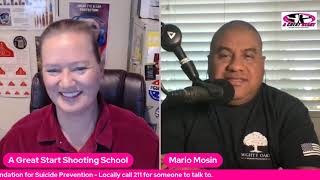
Retired Army Sergeant First Class Mario discusses his PTSD and suicidal thoughts after leaving the military, and how the Mighty Oaks recovery program helped him heal. The free program offers peer counseling led by veterans, and Mario emphasizes that you have to take care of yourself before you can help others. Suicide risk spikes during the holidays, so check in on loved ones.
Chapters
It says recording has started.
Oh my God, we're here!
I know! Uh, welcome everyone, it is Suicide Prevention Saturday because 2 out of every 3 gun deaths you hear about are suicide related. So I am super excited because I am not here, this is pre-recorded. I am somewhere with my phone turned off with a bunch of girls on a retreat weekend. So I just want you to know, take care of yourself. It's super important. And it seems super fitting that I brought Mario on because he just did that last week or the week before.
Yeah, the week before. Yeah.
Okay. The shirt he is wearing, Mighty Oaks, is where he was. So with that, thank you all for tuning in. I'm super excited to have my buddy Mario here tonight. Or yeah, for whatever it is, because it is actually nighttime while we're recording this. So that's how— yes. Ah, so do you just want to jump in? I know, so we tried to record this a little bit earlier and we're going to share you a video, but it didn't work so well. So this is our second attempt. So we're gonna just talk about the video and show you where you can see it on your own when you'd like. It's only 3 minutes. You should see it.
Yeah, you should definitely see it. It's, um It's actually the, the videos what's inspired me to go there in the first place. Um, so, um, when you go into, uh, Mighty Oaks, uh, okay, yeah, and then you go to media. Yeah. And then you go to video, um, and scroll down. You see where it says Luis Rivera's story, uh, right? So if you guys, if you guys get a chance, man, like, check it out.
When I was 17, it was a way to contribute.
So I'm gonna give you all a, a disclaimer: if it stops, we're just gonna come back to society.
It's something I was very proud of. I spent the first 10 years on submarines. In the last 14 years, 8 months as a SEAL. I retired as a Senior Chief. It wasn't until I retired that I realized that I had lost my identity. I lost my sense of purpose. My identity was as a SEAL. I was living a really selfish life. I realized there were many relationships that I was responsible for really ruining. My wife was suffering. The relationship with my children was strained. I thought there was no hope in getting them back, and so I wanted to do something. I was willing to try anything at that point. So I was introduced to Mighty Oaks with the hopes that it could possibly help me help my situation. It allowed me to realize that my life going forward doesn't have to be based off of the mistakes that I made in my past. I looked to the purpose that God has given me. I aligned my life with his, and once that light bulb came on, everything changed. My life radically changed. My years had such an impact in my life that built a passion to continue to help men that were struggling like I was. I can relate to them. Because I was where they are. The message I like to share with the men that come to Mighty Oaks is that God made us, and even though we veered off the path that we were supposed to be on, He can restore us. The one thing that I learned through this whole process is that the more transparent and vulnerable I am for them through that, God can change their heart. So it's really taught me humility. It's really taught me what brotherhood really is. It's really taught me what a true purpose in life can be. We were created for a purpose, and oftentimes we veer off the path and we get these scrapes and bumps and bruises and think that there's no way that we can be restored. But there is hope in God. There is hope in trusting him and trusting those around you that trust him and love him. Don't give up. There is hope.
Ta-da!
Why, you look at that, you got it!
I know, it worked this time.
Yeah, you got it, it's really good.
All right, so Rand, so here's the other thing though that I think is important, because obviously not everybody in my audience knows you necessarily. Um, I got introduced to you because of G2/3, because I knew Barbecue, because of DJ, and all that. So we all have this crazy family tree is how we come together on YouTube.
So dysfunctional family treatment.
Ah, yeah, maybe sometimes. Um, but for people who don't know, uh, Mario, can you give like a cute little elevator speech of your PTSD struggle and sort of like how you got from military to looking for help? Because I think this is one of the places where I find most of my military buddies get stuck is they know they're in trouble, but they don't know how to get to where you got to, which was going to Mighty Oaks.
Right. So, um, for all you guys that don't know, uh, I actually retired from the military, from the Army, as a Sergeant First Class. I did 23 years. I did 3 combat deployments to Iraq. Um, and, um, what really got me into this, uh, Mighty Oaks, uh, program is the fact that I was trying different avenues, right? I was going to the Vet Center. I still go to the Vet Center. And, you know, there's another PTSD program that the VA has, and they all work to a certain point. But what I was really missing in my life is that sense of of belonging, you know. When I was in the military, I wasn't— it wasn't really affecting me as much because I was super busy, you know. I was a unit first sergeant for a striker company. For you guys who don't know, it's a, you know, it's one of those very high up-tempo units that you're always busy. So I never really had to worry about a lot of the things that that are going on. So I'm 2 years into my retirement, and I'll be honest with you, I've been struggling a lot with transitioning back into the civilian world, and also being able to deal with the changes that are going on in my life. And I was really going into a path that I just felt like I wasn't being able to get out of it. And one time I just decided to check online. I was just, I like watching YouTube like a lot of you guys do. And I like watching a lot of military videos because it's my connection to the past and it's something that I know and I love, right? And I really enjoy learning about other branches of service and what they do. And I remember back in the day, I watched this Discovery Channel video in which they talk about BUD/S training and all the stuff that these guys do. Well, Luis Rivera, the guy that you see in that video, he was one of the elders there. Uh, they ended up calling him Mother because he's kind of like always took care of everybody kind of thing. Uh, he ended up being the, the class leader and, uh, you know, took, uh, took, uh, responsibilities of the, uh, you know, responsible of his, uh, SEALs or candidate SEALs, you know. And eventually he it, you know, he became a SEAL and, uh, became a very successful one in that matter. Um, and, um, I happened to— underneath the— underneath that video, there was that Mighty Oaks video that I saw in there. And, uh, and, uh, there's actually another video that's not that one, but there's another one that says, uh, You Are Not Alone.
There's a whole page of them. I forgot to unmute myself. Um, so yeah, there's a bunch of different, uh, videos on that page.
Yeah, there's, um, there's quite a few. There is another one that's called You Are Not Alone, and, uh, it is one that, uh, that really, really helped me really understand. Of course I watched that one as well, but there's another one that's on YouTube that you guys should be able to watch it. Um, but then I started, you know, learning about the Mighty Oaks program and what they're all about and what it is that they do. And I went and checked out their website, um, and, um, I liked that. I liked everything that it was— that it was showing, you know. It showed that, you know, there was that peer contact that, you know, I missed for quite a quite a bit. And the fact that, you know, you were kind of away from everything and distractions and all that stuff was another thing that really impressed me. I was in the impression that, you know, you would have to pay for this program, but luckily it's, it's actually free for a lot of us who go, who attend this.
But they can always use donations.
We always— yeah, exactly. They are actually based on donations. So I mean, obviously, uh, whatever. If I know there's a lot of people that have been involved in the other, um, uh, the other, um, uh, charity group that we use— I forgot they're called— uh, it's based in Kentucky.
Um, So there's a lot of them actually, as you start looking into them. So right, obviously, like you said, you already go to the VA. And so that's government funded. But then there's 22Kill was one of the ones that Barbecue was talking about last night or last week. There is the Aiming for Zero, which is a competitive thing that is under the Active Heroes.
Yeah, Active Heroes. I think that's yeah, Active Heroes is the other one. Active Heroes is a really good organization, but It seems to me like they're still trying to get themselves to where Mighty Oaks is at. I, I think Mighty Oaks is way above, um, a lot of these other, um, organizations. And I think it's just based on the, uh, the networking that they have, you know.
But anyways, now here's the nitty-gritty though. The thing that like I'm calling you to find out about is like, what was it like? Like, yeah, for me, a decision to finally go— because here's the other thing is when we talked earlier this year you were supposed to go back in the spring and I didn't realize you didn't go. So first I want to know what derailed you? How come you didn't get to go earlier?
Honestly, I just thought it was going to be a waste of my time, to be honest with you. I felt that there were, you know, at that time I just felt like, man, I'm going to be gone a week and, you know, do I really want to go? Is this really worth my time? And, you know, all kinds of other excuses started popping in my head. Because in reality, that's what a lot of us do. We come up with excuses to not want to do things, you know.
I don't need this. I can handle this. Obviously I can take care of myself. Right, right.
And I think that the hardest thing for a lot of us that are like senior noncommissioned officers or senior leaders is we worry about somebody else other than ourselves, you know.
That is often the excuse. I can't leave because I'm taking care of so-and-so, and I might be bad, but they're worse, so I need to take care of them.
Exactly. And, and I had that—
it's not just military that makes up those same excuses though, right?
So, you know, I didn't go that last time. Uh, they were a bit, uh, disappointed that I didn't go. And, uh, about a month later they contacted me again and said, hey, do you want to reschedule? And I was like, yeah, sure, why not? At that point I was like, I was really going through a really hard time, and I was like, you know what, I think there's a reason why they're calling me. There's a reason why I need to go to this place. And, um, so I did. Um, I'm not gonna lie to you, even at the day of the travel, I was hesitant. I had not— I'm usually one of those, uh, those that pack like a day early in advance, you know.
I mean, I don't know what those people are like. I think those are just weird people. But anyway, I'm like, this is— my plane is leaving at 4 AM, I might be packing at 2 AM.
I don't know. Yeah, yeah, it's just, you know, I'm kind of used to that because that's how it always has been. So, you know, I started packing at 11, uh, AM and I had to be there by 3. So it's only a 2-hour drive for me, which is not bad at all. So anyways, I have some notes.
Not everybody knows where you are.
I live in Bakersfield, California, in this, um Uh, this location is in Santa Maria, California, which is up in the coastline. It's about 2.5 hours from my location. So, um, so anyways, I do have some notes that I want to kind of make sure that I, that I cover just so that we are—
but so I did want to just bring up that whole thing because like people know that they need help but they don't want to take the time to take care of themselves. And for me, my little story is when I finally checked myself into a hospital because I was suicidal, it was like the most refreshing thing ever, because I finally decided to put myself first. So the fact that you finally decided to put yourself first, then that's important. But we'll let you get to your notes now. I'll be quiet.
Are you sure?
I got a button and everything.
Okay. All right. So I want to talk a little bit about the application process and how that works. So So the application process, you basically go online and you, you place your information in there. And then they usually will contact you right away, like within 48 hours, they usually contact you, which is really, really outstanding. So once they contacted you, they usually want some sort of supporting documentation. They want a DD-214 for our military folks. And for first responders, they want a letter from their agency stating that they work there. In some cases, they may want the chief of police or sheriff's letter just to make sure that they are who they say they are. One, because, you know, so many people commit fraud and all kinds of stuff, and they want to make sure that they're helping the right folks.
And just, I'm going to throw in here just so people get to see, right there, apply now. All you got to do is muddyoaksprogram.org, click on Apply Now, and then you just choose something. Oh, sorry. Oh no, you just scroll down.
Yeah, scroll down.
It's that easy.
It's that easy. It's super simple, uh, and it, uh, it only takes you a couple minutes to fill it out. Once you fill it out, you— within, like I tell you, within 48 hours, usually 72 hours, you get an email from them and you're, you're asked to submit supporting documentation. Once you do that and you choose a date that they have available, they usually give you at least 2 or 3 dates that they have available and also locations. So Mighty Oaks is actually pretty much all over the country. Their main base is in California, and, but they also have locations in Texas, Virginia and Ohio. So it all just depends on the calendar. You have to look in the calendar and see what's the closest to you. But understand, and I'm gonna pretty much— people are not gonna believe what I'm telling you, but it is true— these people will pay your flight to go to California if you need to go to California. I had guys there that were from Mississippi Iowa. I had guys that are from Florida and they flew all the way to California and they didn't have to pay a dime for their— for anything. So that's how— that's how committed these people are to making sure that you are, uh, you're taken care of.
So it is a beautiful thing because you don't have that financial worry. It's like, as you're saying, it's like the time suck alone was like, okay, do I really want to do this? I did, you know, because the first time you and then it's just like, because you— more because of your time, then you already knew that it wasn't going to cost anything. And a lot of people just don't realize. Now here's the other thing though, I know some people get all hung up on the 'I don't need charity' side of things. Did you have any of that, or were you just happy that this was available?
I honestly, I, I kind of put my, my, uh, my ego to the side because I know that in many ways, you know, I'm not used to getting things for free, you know, because I've worked all my life, you know. And I thought that I would have to, you know, put part of the cost, you know. And I even discussed that with them. They're like, no, you don't have to pay anything. And I was like, wow, that's, that's cool, you know. And it made it, made it easier for me just to go and, and and see what this place is all about. Now, when you get the welcome letter, the welcome letter is going to give you all the information that you need about the place, you know, travel, all that good stuff. But what I really like about the welcome letter is that the first paragraph that's on the welcome letter tells you, uh, we are not here to waste your time. And to me, you saying stuff like that, that's just, uh, it's really gonna make me, um, I'm, you know, a true believer that, you know, you— your intentions are good and that you want to really help me. Um, so, um, just understand that they will confirm with you at least 2-3 times. One, because of the, the cost, you know, some of these guys are having to come across the country, so they need to make sure that you're going to attend. So they'll probably contact you like 2-3 times. Are you going to attend? Like, yes. You know, and they want to verify everything because, you know, it's also a logistical issue with them. You know, they got to make sure they have enough food and lodging and other stuff, you know.
Does this mean the first time you bailed, did you feel bad because you knew all of this stuff was going on, or did you learn this when you finally went?
I learned all this when I finally went. Yeah, so I felt really bad. I didn't put guilt on you or anything, but I did feel bad, and I did talk to the director, and I did apologize for that. And they're like, yeah, I understand, man. You know, they're, they're cool about it. So, but I'm sure you're not the first that has rescheduled. Well, it's even worse. Um, they were telling me about the story about this one guy that, uh, took a flight over there, and once he got to California, he decided to go back. I mean, that's a lot worse. Wow. Yeah, that's, that's like, oh man, that's like a big slap in the face, you know.
Well, but people aren't ready always to, you know, it's like I believe in the timing of it, right? The spring was not your time and it worked out because you, you know, you didn't go then but you got to go now.
Oh yeah, no, so it's, um, yeah, I was just, uh, I was just happy that they were willing to, to, uh, accept me the second time, huh? So it's kind of cool. So anyways, when I, um, the main, like, a lot of the videos and pictures that you see, a lot of it is from the, um, from the California retreat. And this retreat is a very beautiful house. It's, uh, it's like a Spanish-style home. It's, uh, up on top of a ridge line.
Huh, this one here?
Uh, let me see. I'm sorry.
Oh, can you see?
Look at my notes. Yeah, that's it right there. It's a beautiful home. And we don't stay in that house. That's where the cadre and the staff stay. We stay off to the right, and they're kind of like— they're, they're nice location. It's actually got like this, uh, uh, it's like a tent. It looks kind of like a tent, but it, you know, inside is really nice. It has like 4 beds and has a desk and a chair and all kinds of stuff. And the beds are actually comfortable. So I was like, oh man, for a minute I thought I was back in the Army having to sleep in a cot. It's like, oh, that's gonna suck. Yeah, no, yeah, it was, uh, it was actually very nice, actually. So, uh, you know, and, uh, yeah, it was, uh, the facilities were great. Um, and actually inside that house is, uh, they have a big living room area and that's where we do a lot of our classes and stuff like that. So it's very cool. Um, What I do like about this is that, you know, it kind of removes all the distractions because you're really, you're really out in the boonies. Uh, like, you're like at least 10 or 15 miles away from the city, and, uh, it's up on top of a ridgeline, which is kind of cool. So you can kind of see the outside world, and, uh, it was beautiful. I really loved it. Um, and, uh, It was just, it was just awesome. Uh, so the, um, the other thing I want to talk about is the staff. The staff is, uh, a majority of them are other veterans themselves. Majority of them are combat veterans.
All right, so wait a second, would you consider becoming one of them?
No, I don't. No. Uh, no, I, I just—
but it makes, makes it easier, right? Because I mean, one of the things talked about is vets want to talk to other vets.
Yeah, no, it's just, uh, I think the kind of commitment that you need to become a mentor, it's a, it's a little too much for me, you know. And I, I've been away from my family enough that I would not want to do that again because these guys are usually going 2, 3 times a year, you know, for a week. And I mean They're doing this, they're all volunteers, man. They're doing this out of the goodness of their heart. So it's like, wow, just like you and I talking about—
you talking about PTSD, me talking about suicide prevention, all of that on our YouTube. We're volunteers. We're just volunteers at a different level.
Yeah, most definitely, most definitely.
And I gotta ask though, you— it's military, so it doesn't matter whether you're Army, Navy, Air Force, right?
I would probably say that, um Most of the cadre— and I'm probably gonna— a lot of people are gonna get mad at me for this, but there's only one Navy guy, which is Luis, right? And he's a SEAL, so he's like, all right, he's cool. And the rest of the staff is other Army, Marines. Yeah, so that's it. That's pretty much it. Just, uh, um, that's, that's majority of the, of the staff there. And, um It was cool, you know, it's cool to meeting a lot of the guys and meeting what they're all about. What I really do like about the staff is that they're all very welcoming. They're very reassuring. And I think what I really like the most is that every one of them gave their testimony. Every one of them, you know, talked about their good, their bad, and their ugly. And I mean, some of the stuff that they talked about was very personal. And, um, I mean, I appreciate the fact that they did that because it kind of helped a lot of us understand that, hey, you know what, you're not alone. You're not the only one that's going through a lot of this stuff. Um, so that really helped us quite a bit.
So, um, the fact that the counselors were also letting you know that they'd been there too.
Oh, absolutely.
In a room full of other people who are looking for right, and tell them how to get better. I mean, so what would you say the main purpose is? Because it's just like, for me, when I went into group therapy, it was, hey, A, you're not alone. B, other people have it better or worse than you, so, you know, you're somewhere in the middle usually. But it's just like, and then tools on how to and what things have helped other people and, you know, get an idea of what to do. So What was it like for you?
Um, I would probably say that, um, for me is, uh, is the fact that a lot of things that they discuss in their testimonials and stuff I did, stuff that we all did. You know, we abused, you know, alcohol. We weren't, you know, quite right with our partners. We weren't quite right with our kids. And, you know, it's like everything that I've been through, I've, I've pretty much done, they've done it as well. I mean, some have done it more extreme than others, you know, but the fact that there's that, that genuine, you know, uh, openness about them is what I really appreciated the most. Um, and of course, um, their— the classes that we did were, were very Man, I can tell you that those classes really open up your eyes and really, really, you know, touch your soul as far as like, you know, what's important in your life, what really matters in your life. And after every class, you know, we had a discussion. We had to kind of discuss the class itself and the content. And it was tough because there's times where it just it made me feel horrible because, you know, some of the stuff that we're talking about in there, you know, I was not doing the right thing as a, as a man or as a, as a father or husband, you know. It's just I wasn't doing it, uh, and it kind of opened up my eyes. The— there's two things that really resonated with me. One is the fact that they told me that quit being a victim. And honestly, it kind of opened up my eyes because, you know, I'm gonna say amen to that one.
Yeah, for sure.
You know, and how is it that you endure all the things that you've endured and all of a sudden you want to become a victim? You know, and, um, I just opened up my eyes because that's exactly what I've been doing. I've been kind of using my, my struggles and my issues as an excuse to not be the right person, you know.
It's not like you were going around thinking that way though. You didn't realize it until someone showed you or was talking about it, right?
Right.
And I think this is the biggest challenge because, uh, when I was a teen and I was suicidal about stuff, it was just like, oh, no one will miss me if I'm gone. Oh, the world is better off if I'm not here. That kind of stuff. And it was all about me, and I didn't realize how selfish I was really being. And it's just like, in talking about suicide, it's one of those things, it's like when you're in that place, you're drowning, but you don't realize what you're drowning in, right? And so it's just like, uh, you know, it sounds like, you know, you want some awesome glasses to help you get through some of that and understand how that's all working out. So right now that you're not a victim anymore, how is life going to change for you?
Well, I, I have to look at things in a different perspective, you know. I really, you know, after that, it's just like, you know, it's like, you're right, man, you know. How is it that I let all these men in combat and all this, and all of a sudden I'm playing the victim? Like, what the hell's wrong with me, you know? And, um, the other thing is, you know, they said, hey, you need to be a leader. You need, you know, just because you're not wearing a uniform doesn't mean you're not a leader. It doesn't mean you, you, you know, you shouldn't lead your family and stuff like that. And it's like, it resonated with me. It really did, because it's something I haven't been doing, you know.
Well, and I have to ask though too, it's like, because I'm not from a military family, um, I've got relatives and stuff that have served, but it's like, if I was deployed and my husband and kids were home taking care of stuff without me, when I would come home, I would imagine that I wouldn't feel like I was really that needed because they took care of it all without me.
Yes, yes and no. And, and I would tell you that it— one, it's good that you have a partner that's, uh, that's high, strong, and can take care of stuff while you're gone. And, um, but two, um, you know, when, when you get home, you need to be the head of the household. You need to be that leader. You need to make sure that you're taking care of the things you need to take care of and be responsible for it. And in most cases, I was just shutting down. I would just sit on my couch and not do anything all day and, and not really care, you know. And I kept saying, oh, what was me? And how I miss my guys, you know. I miss, like, you know miss that camaraderie and that brotherhood, but you know, when it comes down to it, you know, the people that are going to be there is my family. So you have to be respectful of that and you have to be understanding of that. So believe me, it was— those were not easy classes. That was not those, those, those days were not easy. And they'll be straight with you when they go in there, the days are long and the days are tough. But yeah, so, but you know, and the day you overcome it, you'll become a better person for it. And, and I think that's, that's the most important thing that I got out of this.
So, and yeah, emotional stuff is super hard. It's like, I understand you're a soldier and all of that, and it's just like, and you've gotten through stuff that most of us civilians cannot fathom, right? Um, but yet the emotional side of it hits us both just as hard, right? It's like getting your heart and your head right is exhausting.
It is. It's, um, and, um, you know, another thing that they talked about is, you know, putting on this mask. You know, I have a tendency of putting this mask, and you would see me on social media and I'm smiling and look like I'm having fun, but in reality, inside I thought I was dying, man. You know, I just, I wasn't myself. I wasn't who I wanted to be. And, you know, after having those classes, I was like, wow, you know, I, I didn't think of it that way, you know. But I think the one thing that got to me and kind of had that shock and awe effect on me, kind of like what we do when we go and hit our enemy, is that, um, they showed us a video They showed us a video of, of a spouse who lost her husband to suicide, and she talks about, she talks about how this affected her, affected her kids, affected everybody else. And after watching that video, I was, I was destroyed, man, because, you know, I wasn't thinking how this would really affect my family. And, um, it, it would have affected them greatly, you know, maybe scarred them for, for life, you know. Yeah, I gotta stop and think about my, my daughter, especially my youngest daughter. Um, she is very close to me, and I can just imagine how that would affect her and affect her.
This is definitely something that people who die by suicide don't think about— they, like I said, for me, I know personally I'm like, oh, everyone will be better off without me. Oh, it won't— I won't be a burden anymore. Oh, all of those things. And that's why their mind is wrong because, you know, you're, you're a husband and a dad. And so you've got lots of things, but it's like people who are single and don't have a family, you still affect people and you just don't necessarily know it. I'm doing a radio show on Mondays right now. And we were talking about this. And it's like, the truth of the matter is, you have no idea how many lives you've already saved. In that, when's the last time you called one of your battle buddies randomly, whether they complained about anything being not okay or not, the fact that you reached out and said something may have made a difference?
Oh, absolutely. Well, and you know, for me is one instance is that I didn't pick up the phone. And, you know, for many years that, that, that, that hurt me because I, you know, I could have probably saved my, uh, my fellow soldiers, you know. I mean, he is one of those guys that contacted me all the time, and he was kind of a pain, I'm not gonna lie to you. And there's times that maybe that's the reason why I didn't pick up. But then, you know, 24 hours later, find out that he's he's dead, you know. It just, it destroyed me, you know, and made me even go into a deeper depression because, you know, I felt like, hey, you know what, um, he was trying to reach out and I wasn't there.
Uh, so, um, so I'm guessing you guys probably had some survivor's guilt. Oh, workshop stuff going on there too as well, right?
Absolutely.
Not just suicide that takes out your brother and sisters in arms, right?
No, it's, um, we talk about everything, man. We talk about, uh, you know, I can't really go too much into the curriculum because I really feel that— I really feel that people need to show up and experience it themselves, you know. I think it's something that they need to do themselves and be able to, to, to understand, you know, that this is a— this is a hard thing. And I'm not gonna lie to you, 3 out of the 5 days I was crying a lot. I don't cry. I don't cry at all, man.
See, you're talking to someone cries at a sad commercial. I'm like, uh, you know, we had a half-dead mouse in our, in our, in our front hall the other day, and I'm like, oh, the poor thing. Yeah, no, I cried everything, dude.
I don't cry.
And yeah, well, you didn't used to, but now you do.
Yeah. And, uh, I kind of didn't like it because I was like, what the hell is wrong with me? Like, this isn't me.
I don't know that there's anyone who likes to cry, honestly. Like I said, I'm a professional crier. I will cry if you say thank you for having me. I'm like kind of crier. It's, it's brutal for me, and it also makes everyone else uncomfortable.
But, you know, I mean, I mean, to be honest with you, it's okay because women are more emotional than men. I mean, men are not supposed to be that emotional, you know. It's just, it's in our nature not to be that way because in most cases we're the providers, you know, and stuff like that. And I'm not trying to get into the whole macho man thing on top of that, that you're a soldier.
So you're really, really not supposed to cry as a soldier, right?
Right, exactly. Because we have this, uh, suck it up, drive on mentality, you know.
Suck it up, buttercup.
That's what I know. That's, uh, that's just one of those things, you know. And, and, um, that's something I talked about in my group meeting, you know, as I tell them, look, man, you know, when, when you get to a certain level in the military, when you're a senior leader, like, you know, how many people can you go to And then in most cases, I already know what my sergeant major is going to say. Hey man, you'd be all right, drive on baby, you know. And that's it, you know.
Yeah, a couple weeks ago I did a thing about like resources, and one of the things I went to was the VA. And it was again back to the videos that are resources online, and it was one that was called I'm Fine, or I'm Good, I'm Good. And it showed a whole bunch of different soldiers saying, yeah, I'm good, you know, like just that little clip. And then it continued on. And it's sort of a little bit like the Mario look or the Mario look. Yeah, there we go. The other ones, the one we watched earlier, where it's like, I'm fine, but listen, identity, I'm really struggling.
So I have a problem with the VA and their videos because a lot of them seem to me like they're propaganda. I mean, honestly, they want to make it seem like everything is hunky-dory, and if you take your pills, you'll be fine, you know. And you go see your doctor, your shrink, you'll be fine, right? Uh, and you know, the thing about it is that everybody has different types of stuff that they're dealing with, you know. It's not just one thing, you know. Like you alluded to earlier, you know, it's like I had so many titles, I had so many responsibilities. So, you know, having all those things, you know on my plate. In a way, it was, it was hard, but it kind of kept me away from, from that dark side that I was in, you know. But for me, is having to retire in the middle of the pandemic and then not being able to find a job because of all the stuff that's going on. And then all of a sudden you should start getting into this dark place where you didn't want to be at, you know. You start having all these thoughts about everything that you've done and everything that you've, you know, could have prevented and stuff like that. And it just continues to add and add. And in most cases, you know, we wear the mask, you know, we start telling everybody, oh, I'm good, you know, I'm fine, or whatever. But in reality, they're not, you know. But they feel like they don't have a lot of people they can talk to.
Oh yeah. So just in case you didn't already know, you are married, so you probably know this. But when a woman says fine, do you know what the acronym for that is?
That means no, they're not fine.
No, I mean freaked out, insecure, neurotic, and emotional. F-I-N-E.
So yeah, and, and I'll be honest with you, and speaking about spouses, you know, I think the hardest thing that I had a problem with is that, um, my wife didn't really understand what I was going through until she experienced it herself. Um, because, you know, she was one of the essential workers because she works in the farming industry. Uh, you know, uh, she started seeing a lot of her friends get COVID and all kinds of stuff. And then, you know, when she was not at work, she was at home, you know, cooped up like me, and she started having issues with anxiety. Yeah, and this is something that brought that out like crazy, or the way that we dealt with COVID And she started, she started complaining to me about it, and I was like, I deal with that every day. I don't know what you're talking about. That's just one of my things that I deal with, you know?
Right. Well, and the spouses I've talked to who have spouses with PTSD, it's like they are lost as well because they see you suffering. They would love to do something for you, but they have no idea. How to help you, how to deal with that.
And that's the reason why I kind of created my YouTube page and I created that PTSD Combat Veteran series where my videos talk a lot about, about that. I mean, the reason why I created those is one, to, to teach the spouses, the loved ones, you know, how to deal with somebody who has PTSD, what their thought process is and how they're dealing with stuff. Um, I think the, the one video that's gotten the most views out of it is the one that talks— that I talk about relationships, and it hits hard to a lot of spouses. And I've gotten so many comments and, and, uh, from that video, and it makes me feel good because maybe I probably saved one or two people's relationships from it, you know. So, um, I'm just thankful that that I was able to do that and I was able to reach out to people, you know. And so, yeah, I mean, it's good. I just think that the more we provide to others and provide resources, that they can, they can be better able to deal with this stuff. Because unfortunately, PTSD doesn't go away. You know, it's not like one of those things you can take a magic pill and it's suddenly gone.
I mean, it's more like herpes, it stays on forever.
Thank you for putting that way.
Well, you know, it never goes away, it's like a virus. All right, so hold on, hold on. All right, so where is it? So here are you, uh, you go to playlist, go to playlist.
All right, and then where is it at? Yeah, that one right there.
What's that?
Yeah, that one, that series. Yeah, there's a, there's, uh, that one with the No, that one right there. No, go back down. The one, the relationships. Yep.
Okay.
Yep. And I was actually very sick at that time when I was making this video, but I'll give you one more like and I will share this. Thank you.
Yeah, well, you know, we can do this. We can edit this and all of that fun stuff.
Yeah, so it's, um, it's one of those videos that, you know, it just— I guess it hit home with a lot of people, you know, and they were able to understand it, and, uh, that helped. Oh, it's coming in the house.
You said everyone was working, so—
Yeah, that's why I was like, who's that?
You have guests, so should I let you go? I don't know.
No, we, we are good. Sorry, just, uh, it's just my sense of— I think it was just a delivery guy.
Gotcha.
Yeah.
So we can send you presents or something.
Probably. I don't know.
Oh, actually, wait, hold on. I'm gonna go full screen for just a second because speaking of presents, when, when it comes to stuff of how we're doing— I don't know if you can see, it's always awkward, but see, I'm fine, but this is what we look like inside. Inside it's like, I'm fine, but this is how I'm feeling. Wait, sorry, I'm putting it the wrong way.
So yeah. That's funny.
I actually—
that is funny.
Yes, I'm not wearing that shirt today, but earlier this morning, this is how I felt. And then we had a nice little fire in the backyard, and I just sat there, and it was beautiful. And I remember that life is amazing, a blessing, and we're all blessed. We just have to remember to pay attention to the fact that there's blessings that go along with all of this hard stuff.
And stop and think about it. Think about what you're doing right now and what you are doing for other people. I mean, you know what's great about YouTube is the fact that, you know, we get to interact with so many people, not just in our country, I mean, all over the country. I mean, there's PTSD in every veteran, you know, that's gone to war. So I mean, obviously a lot of the stuff that I go through, pretty much everybody's gone through. So, uh, let me, uh, so where we left off. Oh yeah, so by the way, the food is amazing there. They, yeah, they actually have a chef that showed up over there. I'm not lying to you, they have a chef and he was cooking for us. His name was Kenny. And, uh, first night we were there, we got a steak. I was like, with potatoes and I think it was green beans or the other stuff, but it was good. It was amazing. I was like, whoa, that was awesome. And we got fed 3 times a day, you know. I, I think I gained another 10 pounds, you know, made me look fatter. But, uh, no, it was cool. Uh, you're muted.
I realized that because that little thing says, hey, you're muted. I said it's all relative how fatter you look or not.
No one—
yeah, what you look like on the scale, so you're fine.
Yeah, no, that's cool. But, uh, no, it was great. I enjoyed it quite a bit. Um, but I would probably say the, the fourth day was the hardest because, you know, everybody had a, um, an opportunity to tell their testimony. And, um, I was, I was gonna be a— I was a bit hesitant, I'm not gonna lie to you, because, you know, there's so much stuff that I, that I haven't, you know inside of me that I didn't want to let out, and I wasn't sure how people would see me afterwards. But after doing the testimony and being able to tell people what I've been going through and all this other stuff, I really, really just helped me heal in many ways, you know. And what was interesting is that there was one of my battle buddies in that group If you would, if you would listen to my story and you would listen to his story, it's, it's verbatim pretty much. I mean, honestly, it was, it was so, so close to what we were going through. He was in Afghanistan, I was in Iraq. And, um, after, you know, after Bubba was finding out about that, you know, we, we embrace, you know, and we we cried our butts off, man, because, you know, I think we both just were dealing with a lot of, uh, you know, dealing with all this stuff just bottled up.
And while you got to cry your butts off, you got 5 pounds lighter.
So yeah, exactly, something, you know, something— yeah, something gave. Um, but, uh, you know, the 5th day was great, man. We, uh, did the photo, uh, the group photo, and, you know, we got all kinds of goodies and stuff. I mean, these people are just so giving, man, you know, like This is some of the stuff they gave me. All these literature like PTSD, you know, Praying Husband, Leadership by Design, and this one is An Unfair Advantage. And this was actually done by the, um, by the actual founder of Mighty Oaks, Chad Rubishow. Uh, he is a former Special Forces Marine recon And he's the one that kind of started this with his wife. Um, the other thing that I really loved— well, I mean, there's a lot of stuff they gave me, but they gave me a, a Warrior's Bible. Now what I really like about this Bible is that it kind of breaks it down Barney style for a lot of us in the military.
All right, so we'll live— not that we are not— what is Barney style?
Like, yeah, breaks it down to basic stuff, you know, like breaks it down to children's level, you know, third grade. Yeah, third grade level. There you go.
I mean, it was what I've told— I've been told that all the Army, uh, literature is at is like third grade reading level.
It's seventh grade, but—
oh, it is?
All right.
See, this is the problem with like all the lies that are out there.
And we put pictures on it, so, you know, we call them dummy instructions, but, you know, they're there.
Yeah, well, yeah, I made a lot of money with these.
Don't worry, the Marines do the same thing.
Oh yeah, no, I meant military. I think I said Army, but like military across the board.
Yeah, we all did. We all talk a lot of smack, but I swear to God, man, don't let nobody else talk about us because, oh man, that's a different story right there.
Oh yeah, no, I see it all the time.
Yeah, there's a—
oh yeah, no, reading is awesome. Reading is a great way to go.
Yeah. They actually gave me this really cool gift called the rudis, and it's basically like a, like the, like the wooden sword from the Romans, you know, like when you're, you're taken off slavery and you're, you're free. It's kind of like that, but it's kind of cool because it has your—
I gotta make you bigger. There we go. Yeah, that's better. My best— oh, you got your name on it.
And they got my name on it, my branch of service.
You can now dox you, man. You're done.
I'm all over it. So yeah, it's pretty cool. Uh, it's definitely one of my cherished things that I'll have, and it's actually given to all the guys that, that, uh, that, uh, graduate. But they also give you a coin. Wait, there's more! They give you one, which is kind of cool. So the one of this says, uh, some things are, are worth fighting for. And it says, "Never fight alone." It's pretty cool. Of course, they gave me the shirt. And this one, it says, "Mighty Oaks, from the ashes to mighty oaks." It's Isaiah 61. So this is the Mighty Oaks Warrior Program. So it's pretty cool, really, really nice. I mean, these people are so nice and giving. But I think the one thing that I gained the most is a perspective of myself perspective that I'm not alone and that I have friends and brothers that I can talk to. Um, but I also want to tell you guys something. There's also a Woman's Legacy program, and there's also a, um, I'm sorry, yeah, it's a, yeah, Woman's Legacy program, and they also have another one I think is called Resiliency for active duty folks. So I think there's a, you know, I think a lot of women could definitely benefit from the Women's Resiliency because it's not only just women veterans, but it's also spouses. So being able to kind of relate to the same issues, it's always good. And I'm glad that, you know, they actually, you know, want to recognize our women veterans because a lot of them, you know, go through the same ordeals as we do. And, uh, and those, you know, and I just feel that it's a good thing and it's a worthwhile thing.
It's always good to know you're not alone. And I mean, and this is the other thing that you said I think is so key, and I hope nobody missed it, is that you learned a lot about yourself because like no one can save you except for you. Yeah, most definitely. It's like part of the survivor's guilt, part of the, ooh, what can I do, what can I do, often is all you can do is lead them to water. It's up to them to drink. It's up to them to cry their asses off, you know, all of those things. It's like your wife, myself, any of the counselors could not make you feel better or make you have the things to it, but I don't, I don't think—
I mean, honestly, all that that you just talked about is good. I mean, having the support system from your spouse or your friends, uh, having, um, all these— all those are all great things. And, and I think honestly, when you're going through the stuff that I was going through, you don't think about those. Those do not seem to you like they're important to you, you know what I'm saying? Yeah. And, and obviously, once you go through these kind of programs and they, they kind of, you know, open your eyes and, and really make you think about what you're doing and what you're, you know, what you've been experiencing, then is when you start really understanding it. You know, I am so thankful that I have so many great friends, um, including yourself. And, um, and, uh, and, uh, you know, I'm so thankful that if I ever need your help, if I ever need someone to talk to, I know that you'll pick up your phone and As long as I can find it.
I lost it most of the day.
Oh my God. Yeah, no, but I have such great support groups here, and I'm very thankful for that. What I really feel about Mighty Oaks and what makes it better is just that peer counseling, the peer bonding with with other people that have been through the same situations as you've been through. I do want to talk about one more thing, and that is first responders. Oh yeah, we had this— remember, this program is also for first responders as well. We had 4 of them in my class, and one of them was a California Highway Patrol officer. 2 of them were retired Maricopa Sheriff's Department. We had a deputy from the, from from an agency in Florida, in Tampa area. And we had— and I believe that was it. And also one of the mentors was an undersheriff, uh, in, I believe, in Iowa, or I believe so, in Iowa or Indiana, one of those states. But, um, if you know of any of your friends that are also going through this stuff, because I think a lot of us, especially after listening to their stories, you have no idea what first responders have to deal with. You know, at least for me being in the military, you know, I spend a year or, you know, 18 months in country and I'm done, I go home. For these guys, you know, they see that every day, man, and they have to put on the uniform every day. And it's just one of those things that you, you know, you don't stop and think about it and you really don't appreciate it. So if any of you guys know of anybody who's also a first responder, I would urge you guys to ensure that they contact the Mighty Oaks program because I think it's, you know, it's not only good for military folks, it's great for all of our first responders. And yeah, that's pretty much all I got to say on the Mighty Oaks program, Legacy program. It was great. It was a great experience, you know, and I would urge a lot of you guys that are thinking about it, you know, to do it. It's— and also, if you guys really find this cause to be— this organization to be something that you're willing to support, please support it, you know, donate. This is a nonprofit organization, and I'm sure they could use every little bit of money they can to make sure that we get a lot of our warriors out there and get them some help.
That they need. Everyone gets to have a steak because we really want—
everybody gets a steak. It was good too, man.
I was like, yeah, you cry your asses off because that's also super important. That is very important. But it is, um, yeah, it's, it's awesome. Now here's the, the other thing that I, I didn't even ask you in the beginning is like, who really wants to ever go? Whoever wants to actually admit that they've got a problem And here's the thing that I hear all the time is like, oh, I'm not suicidal, I would never kill myself. And it's like, well, even though this is Suicide Prevention Saturday, it doesn't mean that you have to be struggling that hard that you think you're gonna kill yourself to go here, right?
This is right.
And struggling getting back into feeling disconnected. It's not just all about, oh, I was suicidal, therefore I need help kind of thing.
And the same people that we're talking about, they have suicidal thoughts, but they don't want to admit to them. Like I tell you, they wear that mask and they, and and they say, "Oh, I'm fine. I don't need this help." You know, especially a lot of our guys that have been there for a long time. I mean, one of our mentors was a retired colonel from the Marine Corps. I mean, you know, you can't get more higher than that other than being a general. But, you know, if somebody like this gentleman decided to get help, there's no reason why you can't get help. You got to put your ego to the side and understand that that when you go to these things, it's all about you. It's not about anybody else. It's about you. That whole week that you're there is for your time to heal. It's for your time to, to, to let it all out and, and get some help.
Um, Saturday to Friday?
No, we went from Monday to Saturday. It was like Saturday morning I ended up leaving Um, and it was kind of cool because everybody wanted to— I kind of wanted to see the guys that were getting ready to fly out, wanted to see them go, you know, and just, you know, say my goodbyes. Uh, but you can actually, if you're local, you can actually leave on a Friday, but, uh, decided to stay there until Saturday and, um, you know, say goodbye to my guys and, you know, say thank you to, to all the staff because there's a lot of staff there that they're really you know, put this thing together. And, you know, I really feel that at least, you know, shaking their hand and saying thank you is the least I could do, you know. And like I was telling you, I was able to interact with Luis, and Luis is a great guy, man. He is just an amazing, amazing human being.
And did his little heart melt when you told him that he was the reason you were there?
Oh yeah, he— it really shocked him actually, because he never thought that, you know, making a video and telling your testimony, like, that would, that would anticipate somebody to go. And, um, and, and when I told him that, he was a little bit shocked. He's like, what, really? He's like, yeah, man, you know. And I said, thank you. And, um, you know, we had got a chance to chat, and just a really nice guy, man. Just, you know, one of the nicest, cool guys I've ever met. I mean, I met a lot of guys in special operations, but, um, you know, I just I, I don't know. I could definitely relate with him and other stuff. Sorry, it's my—
oh, I'm like, I'm looking for my husband's Ring phone. I'm like, wait a second. I'm like, I turned my phone off tonight.
Yeah, I don't even know who's in the front door, but whatever.
Oh, you got more presents? You got more fans dropping stuff off for you?
Yeah, I think it was a UPS guy.
Okay, well, I will say, and I, I think maybe we'll end on this because I know you said we had an hour, so we're at our hour. But like you telling him that he's the reason you were there, there's comments I'm sure on your videos of people saying thank you for sharing your story. Um, I was blessed this morning to have someone come up to me and say, hey, make sure you keep doing these Saturday things because you never know who you're gonna touch. Because she's like, I watched the replay And the thing that I loved the most was someone said they're having a bad day. And I reminded them, they're not having a bad day, they're having a bad moment, and to pay attention to the rest of the day, because it's actually pretty awesome. And so we don't often get the feedback of all the stuff that we put out there. So we don't know. And this is the thing, just keep going, because you don't know how you are actually going to truly affect somebody else.
Right. And And honestly, I just do it because if I feel like I can make a difference in one person, then I'm doing something. And I've always felt that, you know, a sense of service and helping others, you know, and that's really what's been all my life, you know. I mean, 23 years in the Army, it's a long time, man. It's a long time to give your service and your best years of your life to one organization, You know, you know, you stop and think about it and, and you look at all of the, the bad things that I saw in war and how much people really hate us. It really makes you want to, you know, be there because, you know, I, I still to this day, I think American society takes their liberties for granted and they don't, they do not appreciate what a veteran has done or veteran law enforcement has first responders, sorry, has done for them just so that they are able to live a better life, you know, and they never really get the recognition. I mean, reality, I'm not all about the recognition, but I, I think the only thing that I would want is I would want people to better understand us and understand the sacrifices that we made. That's pretty much it. And it's, you know, that's, that's, that's it. I mean, I missed too many birthdays and anniversaries and all kinds of stuff, you know, Christmases and holidays and all that. And Father's Days, I think I missed every Father's Day in my 23 years. That really sucked. Yeah, yeah, that really sucked.
Well, to be fair, only Mother's Day matters.
That is true, that is true. I mean, honestly, you guys have to carry a baby for 9 months. Yeah. And then I've seen you, you know, after seeing my wife give birth, I was like, Yep, I'm not gonna complain. I'll take my socks and, and my cup says number one dad all day long.
There you go. It is a beautiful thing.
Yeah.
So, all right, well, uh, this ends our Suicide Prevention Saturday for today. Uh, it's my second time having you on, I think.
I know, I'm starting to become a regular here.
I know. Well, I'm— it's so funny because there's like G23, who is who I originally met you through is supposed to come on, and I'm just like, I, I do this so sporadically, these long version ones. So I have to work on him next. But, um, yeah, I'm just super excited that you went and took care of yourself and did what you needed to do to help build yourself up. Now you've got tools for yourself, but that you can now share on your channel as well. So that's super awesome, and I'm super excited. This is pre-recorded because I am currently with a bunch of girls with my phone off, so I'm taking care of me. Take care of yourself. Yeah. And it's just like, it's super important, especially during the holidays. And I would prefer to end on a really happy, joy note, but please understand, folks, the holidays are brutal.
The holidays are very brutal.
Suicide goes up a ton between Thanksgiving, Christmas, and New Year's. It just does. So pick up that phone a little bit more often, check in, just say hi, invite someone over to dinner whether you think they're taken care of or not. Because like you were talking about the Colonel, it's like even if you think someone has all their stuff together and they're not alone, they may not feel that way. So absolutely, my Christmas, Thanksgiving, Hanukkah, Kwanzaa wish for everyone is reach out and invite someone over for the holidays.
Absolutely. That's, that's great. That's great stuff there. That's great advice.
So, all right, sir, well, thank you so much for your time again, and I will see you. The East Coast talking to the West Coast, and we will save the world together.
I know, seriously. All right, yeah. All right, guys, have a nice Saturday.
Peace out. There you go. Oh, we gotta hit the button twice, right?










