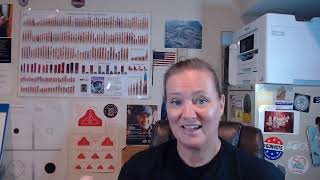
In this live solo presentation, firearms instructor Brooke Cheney uses her platform to highlight suicide prevention as a critical component of gun‑violence reduction. She opens by noting that roughly two‑thirds of gun‑related deaths reported in the media are suicides, arguing that focusing on suicide prevention could save many more lives than concentrating solely on homicide. The talk then shifts to a philosophical yet practical discussion of death—defining it, confronting common fears, and emphasizing that avoiding the topic only heightens anxiety and diminishes quality of life. Cheney stresses the importance of acknowledging mortality to live more fully. She then connects these ideas to de‑escalation, drawing from self‑defense training: the best way to survive a fight is to avoid it. She outlines personal de‑escalation techniques—breathing, pattern interrupts, mental “reset” strategies—and links them to mental‑health management (anxiety, depression, frustration). Throughout, she shares personal anecdotes (e.g., a family loss, her experience on the road) to illustrate how confronting death and practicing de‑escalation can improve emotional resilience. The session concludes with a call to action: prioritize suicide prevention, talk openly about death, and practice self‑de‑escalation to better support oneself and others.
Chapters
I don't know. All right, so it's really hard being on two platforms at once, but I don't want to lose everyone on Facebook because I'm going to YouTube instead, and my YouTube thing is over here, my Facebook thing is here. So, um, ultimately I want to go to YouTube. Completely, because the cool thing about YouTube is I can put this all in a list for— what is it today? Oh yeah, it's Suicide Prevention Saturday. Um, why? Because— 2, wait, no, 3, wait, no, yeah, sort of. All right, so anyway, hi all, my name is Brooke Cheney and it is Saturday and I'm doing Suicide Prevention Saturday and I try to do this every Saturday as much as I can. Some days, not always, some weeks it's Sunday or another random day because life is not always going according to plan. You can see stuff behind me that has to do with guns. Those are my bullets and my ammo and shells and all sorts of things back there. Oh wait, wait, Scully the dog here. Even Scully knows eye and ear protection when you're at the range. So anyway, my name is Brooke Cheney. I am a firearms instructor here at A Great Start Shooting School in And why am I talking about suicide prevention every Saturday? Well, because 2 out of every 3 gun deaths that they talk about in the media as gun violence are actually suicides. So if we're really looking to save lives, my suggestion is we focus on suicide prevention, because imagine how many more lives we could actually save if we focus on suicide prevention. Because you know what would happen? We wouldn't just save the lives of those who died by gun, we could save so many other lives to choose other ways to do that sort of thing. So tonight's topic, death and de-escalation. I just, you know, I like that sort of D&D thing. However, hold on, it's gonna drive me crazy because I'm on Facebook, I kind of look like I'm just a head and it's kind of like freaking me out a little. All right, so I've moved over here instead of there. Anyway, death and de-escalation. What is death? Hmm, that's when we are no longer breathing, we're no longer here. Um, I can hold my breath and not be dead, so I suppose that's not a good, um, good one of those things. Uh, definition, so death, the end of life. And why are we going to talk about this? Well, because so many people seem surprised when it happens. People die every single day, and in America, we are not necessarily the most well-rounded sort of— we're not really good about dealing with it. It's like people die and we're surprised. I just like, none of us get out of this alive, so Death is something that happens on a regular basis every day to people all across the world, and we're walking around trying to avoid death, which makes sense because we like living. However, we need to think about the idea that we want to live as much as we can live while we are here because no day is promised. None of us are promised tomorrow. So why am I bringing up death? Well, because lots of people in America right now, and the world, are walking around and they are afraid of death, and they're afraid of living right now because they're afraid of death. And being afraid of death is making the anxious levels, anxiety levels, rise. It's also making the fear factors rise. And when we're being so afraid of something that can happen on a regular basis, we're forgetting how to live. So that's why I want to bring up death, is because none of us can control it. It's going to happen when it's going to happen. We can try to prepare and deal with it when it happens to us or other people around us, and it's never easy. And in— it's sort of like suicide though, where if we don't talk about it, we're never really going to learn how to deal with it. So that's all I got for you on death. And where's my little timer thingy? Somewhere it tells me how long I've been going blah blah blah, because I always try to keep these less than like 5 or 10 minutes. Um, oh, I'm already at 4 minutes. I better hush now. All right, so death, that's it. Be prepared, understand it happens. Don't be afraid of it though, because you want to live versus living in fear, because living in fear is not experiencing life. And that's kind of that. De-escalation. Aha, what does that have to do with suicide prevention? Well, if you are in self-defense training, then one of the very first things, assuming you're in good self-defense training, is we always talk about de-escalation because the best way to win the fight is to avoid the fight. Now, yes, of course there's people out there, little warriors that are going to say, "Oh, I must fight." Um, but that is not the case. Oh my goodness. Hello. Oh no. All right. Hmm. So just so you know, the YouTube has been going on for 5 minutes. The Facebook Live, however, I forgot to turn it on. So what am I going to do? I'll do a quick little recap for those of you who are just joining on Facebook. I'll try to do the short version. Okay, hi everyone, this is Brooke Cheney from A Great Start Shooting School, and those of you watching YouTube Live, I apologize. Um, 2 out of every 3 gun deaths they talk about in the media are suicides by gun, and we're gonna talk about death and de-escalation tonight, and the main message I have about death is that everybody dies. And currently there are many people in the world who are trying to avoid death, and they're avoiding living right now because they're afraid to do stuff— hang out with family, go out and party, um, visit, be social, go to group events, that sort of thing. So death— hello, Mike— um, it's one of those things in America we're not awesome at dealing with. So the reason I want to bring it up is because it's kind of like mental health, or it's part of mental health, right? Is understanding that there is no day that is promised to us. We do not know what tomorrow will bring. And, uh, yeah, I'm— that was a very long drive if you did it all today. I don't even know if you went up yesterday or not, but, um, so thanks for the deer. So anyway, um, being aware of things that you are afraid of So death is one of those big things. I was like, oh, surprised when it happens. And the truth of the matter is it's going to happen to all of us at some point in time. And my biggest sadness right now is watching so many people being afraid of dying. And because they're so afraid, they're not living, they're not seeing family and friends, they are not going out and doing fun stuff. They're not being 7 minutes in on YouTube Live. Trying not to rehash this totally, is that death is like suicide prevention. We have to talk about it, we have to accept it, we have to understand it's going to happen and maybe not be so surprised when it does. And/or figure out a better way to, or be prepared for it. Um, accident, it was instantaneous, no warning whatsoever. She was a senior in college and all we were preparing for was her graduation that year to become a teacher. So when we found out that she died, the first thing, the very first thing, is always denial because like, no, no, no, that can't be true, that can't be true. And it was true. I remember making the police officer who came to our house show me her license. I'm like, oh, I guess you are right, I guess that was her. So the thing about that though is that The question my mother and I asked, hey Rita, was what's good about this? And you're like, what, your sister just died and you're asking what's good about this? I'm like, yes, the whole point is, is that we all know it sucks. It's like, I lost my baby sister, that totally sucks without a doubt. And my mom lost her baby girl, also sucks for sure. However, when you ask the question, what's good about this? Your brain is pretty stinking amazing as far as what it can come up with for an answer. So the challenge with so many people worrying about dying and only focusing on how they might die versus taking the time to live is saddening to me because today might be the day or tomorrow might be the day and we don't know. So hug your family, kiss your kids, all that fun stuff. Tell everybody who you think are important to you that you love them and spend time with them. Don't just stay home and be afraid of dying. Just live. So anyway, so that's death today, and de-escalation is next because I'm trying not to have this be forever long. So de-escalation, as we were discussing in the beginning, for those of you who missed it, you can go to the YouTube channel replay because I already talked about this a lot, but, um, Oh my goodness, this is so, so technically challenging. Anyway, de-escalation. One of the most important things in self-defense is to survive the fight, and the easiest way to survive the fight is to avoid the fight. So de-escalation is absolutely one of the big things we talk about all the time, and What does that have to do with mental health, Brooke? Well, let me tell you what that has to do with mental health. De-escalation is something that all of us need to work on because, you know, you've had crappy days, right? When everything just kind of sucks, right? And it doesn't take much to make you cranky and mad and like wanting to bite someone's head off. So guess who the first person is you need to learn de-escalation techniques with? Right there, or, you know, right here. I'm looking at myself so I can point that way and see me. But anyway, de-escalation for yourself is probably one of the biggest things. I've been having a challenge. I have been on the road since August 4th, and it's been a lot for me to go from zero for the past year and a half to on the road for 3 weeks in a row. So my de-escalation techniques in my own brain But take a breath in, take a breath out, relax, chill, realize that the world's not coming to an end, and figure out how to calm yourself. Because here's the deal: if you can remain calm, it's much easier to help someone else get to that point. Now, will it always work? No, of course not. But along with suicide prevention, one of the other things I learn about, read about, is violence prevention. And one of the big things that the anti-gang task forces teach in the hood, in the places where they have gun gang violence, is all about de-escalation and communication. So, hello, Mr. Jim, it was great to see you today at the wedding. So de-escalation goes along with violence prevention. So When we're talking about gun violence, to me, I wish we would just talk about violence prevention in general because de-escalation is one of those big things. And it's something as simple as, whoa, hold on, what's really happening here? And just putting your hands up like this is literally like a universal stop thing. And so if all you do is this, sometimes it's enough to break someone's pattern to realize, I'm like, wait, wait, what? Why are they holding me off, right? There's some other tactical stuff that goes with that, but I'm not— that's not what tonight is about. So learning how to de-escalate here first for yourself, especially for those of us who deal with anxiety, depression, frustration— oh my goodness, who here doesn't deal with frustration, right? De-escalation up here for ourselves most important, biggest deal that you can do for yourself. It really can be something as like, wait, like even if you just mentally do this, right? Imagine your hands in front of you, you're like, wait, what am I doing? Oh wait, that's what we call pattern interrupt. A pattern interrupt makes you think about something that you weren't focusing on. Because like, ever notice when you get mad, you're focusing on the thing that's making you mad? And if you can stop yourself for a minute, then all of a sudden it's like, huh, I stopped myself. What am I mad about now? And because you have that pattern interrupt, it helps you. So if you can help yourself, you can help others. If you can help others, you're going to be happier the longer you go. So anyway, I apologize. I feel like tonight has been a crazy ramble on. The poor YouTube Live folks have already been on for 15 minutes. You guys on Facebook, I kind of forgot to hit the button, so you missed like the first 5 minutes. So go ahead and watch the replay over on YouTube, and I will put the YouTube link on here when I am done. So anyway, it's been great. It's been fun. Death— everyone's going to die. Make sure you're living before that happens. De-escalation— you're the most important person. You need to learn how to de-escalate. I'm still working on that. Significantly at this point in time. And Suicide Prevention Saturday because 2 out of every 3 gun violence deaths they talk about in the media are suicide. And if we could prevent and focus on suicide prevention— there we go— we could save even more lives. There you have it, folks. It is Saturday. I'm going to bed. It's been a long day. It's been fun. But it is time to go to bed. So I'm gonna end whatever that's called. YouTube first. Y'all on Facebook, any questions? Let me know.