Suicide Prevention Saturday - Dementia, Suicide, and the Holidays
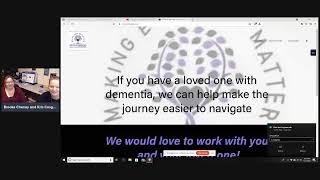
In this live‑stream hosted by Brooke Cheney with dementia practitioner Kris Cosgrove, the duo explores the intersection of dementia, suicide risk, and the holiday season. They begin with a brief technical check, then move into a clear overview of dementia—highlighting Alzheimer’s as one type—and discuss how a new diagnosis can elevate suicide risk. The conversation shifts to the heightened loneliness many experience during holidays and offers concrete prevention strategies, such as proactive outreach, community connection, and monitoring warning signs. Practical quality‑of‑life interventions are presented, including the Music & Memory program, movement‑based activities, and sensory engagement to improve mood and reduce isolation. Caregiver guidance covers respectful visiting practices, communication tips, and self‑care for those supporting loved ones with dementia. Throughout, audience questions are welcomed, and both hosts provide contact information (website forms, email) for further support. The session concludes with reminders about end‑of‑life considerations, encouragement to seek help, and an invitation to future Suicide Prevention Saturdays.
Chapters
respond, so we're just turning this sucker on right about now. All right, so, um, it says we're live, that little thing up there.
Okay, hello!
All right, so here's the deal. Chris and I are just BSing until 9 o'clock, but because, uh, we got, uh, we got gun— oh yes, you're live! Oh, I'm live! Yes, I get Brooke's posts, so gun websites, uh, it was chatting and I'm like, uh, okay, yeah, see, I'm learning how to use the software thingy. Um, so I think this is actually going to be good about showing me that. Let's see if I can reply now. Let me reply. Oh, it's replying both places. All right, so this 15 minutes before 9 o'clock is literally just the actual, actual tech check of how does this all work and what the heck does it look like, because I really don't know. I don't know how this is showing up on YouTube, so I guess I'll just give up on that part. So I don't know why it's gonna go back. So anyway, so as people comment, in theory, we will see it there. Perfect. I, however, don't believe it. So I am going to open up the Facebook over here.
Okay.
So that we'll be able to see, because like it's not showing this there right now.
Okay.
I want to make sure. Ah, there we are. Perfect. All right, so if I hit play, it's a little bit of a lag, so pay attention here.
Okay. Here, and we'll get this, and it'll get it.
And then every so often I will be able to go over here. 5x5 on YouTube. Thank you, Gun Websites. So yeah, so Gun Websites, a couple things. One, uh, definitely makes me blush. He actually redid— he went over an interview I did with this other dude, Barbecue, and he thinks I'm a hero. Yeah, he's very sweet, um, very encouraging.
Gun Websites, you need to do your CT dementia help website. Oh, it's a hot little mess.
So, um, but like one of my favorite videos that he has is about gun rights, and it's, it's a 2-minute thing maybe. Um, I actually love it. Oh, maybe we can get super duper fancy and— oh, and show it and show it and show off his stuff on my stuff. But apparently I'm not that good at being that fancy, but we are just killing time. So, you know, why not pretend I think I know what I'm doing or I have a clue. Oh wait, there's us live now. One watching. I know who that is. It's Gun Websites. All right. So here's the deal. If I go here, I click on us live and I click on him. Does that bring me to his channel? No, that'd be too easy. Of course that'd be too easy. Hold on. Hold on. I'm going to get there. Darn it. Darn it all the heck, no. So I need to be on YouTube still. Aren't you glad you don't do tech?
I am so glad I don't do tech.
All right, uh, gun websites. Hold on, because it's honestly— it's just to come with the— I can talk, I can't speak. Um, gun websites, YouTube. Yeah, because it's right at the top of his chapter. Or at— of his thing. Ah, he rearranged stuff. Oh wait, now if I go to videos, we'll be right there. Oh no, he redid his stuff. I don't know what I'm gonna do now. Um, all right, so anyone checking in, we'll start the real show at 9. Right now we're just messing around, uh, because I really wanted to find my favorite, um, My favorite video he does. So anyway, there's like somewhere on here there's this lovely like 2, 2 and a half minute video that says, um, how the piece of our Second Amendment has just been chopped and chopped and chopped. And it's really awesome because it's totally the timeline of how when we first started in America, we had the Second Amendment. We had the ability to, um, actually have guns, right? No regulations, nothing. And it wasn't even, um, the cake one. Yeah, the cake one. Can you just drop the link in here so that I can make sure I share it out to the— to Facebook as well? Because if you can do that one, that would be awesome. So yes, the cake one. And like I said, In the past when I've gone to your site, it's just at the top and I'm just not finding it, um, because it looks different. I don't know what I'm doing wrong. I'm trying to be too fancy. So anyway, yes, the cake website. The cake website, it's an old one now, he said. No, it's an old one, but it's still my favorite because it's so simple. And he takes a cake and that's the Second Amendment, and then within the first 50 years of America, they take it, start chopping the pieces. And then it's like another 60, and, you know, now we're, you know, and then another 60 years they come and take another piece. And then I want to say 1963 or '68, whenever the federal, the one of the first federal firearms things came out, um, how now they don't even go that far. As far as it's like every year now they're coming back, coming back from the back. And once they take anything, they never get everything away. Now I will say I'm definitely getting more and more annoyed with our politicians, but it's not even just about gun stuff. My knee— for those of you don't know, I blew my knee out last Thursday, not on Thanksgiving, before that. Um, and, uh, and I was in wicked, like, ridiculous pain and suffering kind of pain, like crying, literally telling my husband that, you know, I'm considering asking for a diaper so that I can not have to leave the bed because I was in so much pain. And I couldn't get any pain meds. And I called my doc— hey, Raga— and they couldn't get me pain meds either because of the laws in Connecticut. And I'm like, why are politicians telling my doctor what they can and can't do over the phone? Right. It's like, it's because of the opioid price crisis. And I'm like, yeah, because politicians have done so good fixing the war on drugs thus far. So anyway, that's, that's why I like for— so gun websites. And yeah, the cake one, whenever you get a chance, give me that. Uh, all right, and Mike Ballinger is here on Facebook because I'm not seeing his comment here. So I guess— hold on, let me see if I make this bigger. If I make this bigger, will it show me more? I don't know. I got nothing. All right, we'll see how it goes.
Well, we're winging it.
And here's the thing, when people were commenting last week All I had to do was I went back and answered the questions after the fact. So, um, yeah, so this is going to officially be the longest Suicide Prevention Saturday ever because we're early, we're early tech stuff.
And if they don't know me, I can be a chatter.
That's all right. I'm really good at cracking the whip and say, wait, wait, wait, hold on. Wait, we need to know.
She'll reel me in. She'll reel me in.
Yeah. In theory, that's the, that's the funk at least. We'll see how that works. Um, all right, I'm wondering if this is even easier or better. Hold on. I love making up words too, so there is that. But because people are also very confused, like people keep popping on and popping off. Yeah, because they're like, hey, it's a miracle if I start on time. So the fact that I'm early, if you're like, what, what's going on? However, I will say that I've been told the more consistent you are with actually showing up at the same time, the more consistent your followers become.
Yes.
So It's a small miracle. All right, so yeah, see, I think this is going to be the way we're going to see the stuff as it happens because like, cat's popping up. Oh, so Katrin Moskowitz, uh, another nurse. Yeah, you're my second interviewee. She was my first.
Yay!
Um, so that is— that's how that works. So congratulations for being number 2.
Why, thank you, I'll take it. You know, Any, any good way to spread, spread the good word about dementia education.
There you go. I know it's like, yes, I love talking about suicide. Well, not really. I like bringing awareness to suicide. It's like if we could get rid of it, that'd be cool.
That would be way cool.
Absolutely. So if we could get rid of dementia, that would be way cool too. Yeah. Well, have you ever watched the movie Supernatural?
No.
All right. It's not a movie. I'm sorry. It's a TV series.
Okay.
But anyway, they have these monsters from purgatory that are gonna cure cancer, cure dementia, all of these things. And you know why they're going to cure them? So that we're a better feeding stock. Oh, because they're just going to eat us. Because they want— but they want us to be fat and happy while they're doing that. Well, you know, Oh, all right, so gun websites. Trying to drop the link, hold on. Yeah, that doesn't really show up so much. Um, you know, you guys should become friends on Facebook or actually get your, um, phone number and then we could actually chat because that'd probably be easier. Oh, I know, you can email it to me. See my name right there? Brooke Cheney. Just do Brooke Cheney and put an gmail.com. I can get it there, and, uh, if I do that, then I can cut and paste it up later so everyone can see. Because I guess if I do it in here in StreamYard, it will go to my YouTube stuff, but I'll just have to manually do it to Facebook. Hi Patricia, how are you, hon? Um, sorry, I'm dying. You need anything?
No, I'm good.
My daughter said the other day when I was drinking, she's like, Mom, you look like you're crying when you're drinking. I'm like, no, not really.
You're like, just slamming my water.
Yes, it says mead, but unfortunately that was last week. This week it's only water.
I can attest, it's clear.
Yes, although in high school we appreciate the fact that vodka was clear.
Yes.
And no smell.
And no smell.
And no smell. So that made it a little better. Yes. All right, well, it's 8:57. What do you think, ladies and gentlemen? Should we get started? Um, I'm just gonna assume that you're all nodding yes. Get going already, would you? Yes. It's already been 11 minutes. So, hey, Jim. Jim Smith, uh, one of my friends, and he actually lost his brother to suicide. And he was very sweet. And his— one of the talents his brother had was making, uh, pottery and that sort of stuff. Nice. And so I have one of his goblets. Oh, I thought that was very sweet.
Jim, I'm sorry for your loss.
So, um, yeah. And so Chris and I are pre-talking of all of this. We've already cried at least once tonight. We have. So it's gonna be a rough show, just to warn you all. If you get uncomfortable during crying, you might want to leave now.
Yeah, or just seeing grown women cry.
Suck it up, buttercup, it'll be fine. All right, so dun dun dun, I know it's 8:58, we should just go. We really want to go. All right, so, um, maybe I'll edit it afterwards, we'll get rid of all the beginning stuff, who knows, whatever you choose. All right, so, um, hey Nanette! So yeah, so I can see who's coming in. All right, so it is Saturday night, it's almost Oh, JK says hi.
Hi, Jay.
Um, it is, it is Saturday night. Uh, for once I'm early, not just on time, and this is Suicide Prevention Saturday, and I have a guest this evening. Hi everyone, this is Kris. Her name should be right across the bottom in case you need to know whether it's a C or a K. You know it's a K now.
Kris with a K. Yes.
And, um, We're going to talk about a bunch of stuff. We're not going to talk about dementia, and we're going to talk about how, why you should listen to Chris about these things. We're going to talk about suicide and quality of life questions and just the holidays in general, right? Normally I keep this to about a 15-minute segment because most of us have the attention span of a gnat. However, tonight, because I have entertaining guests, um, it's definitely going to be a bit longer than 15 minutes. So I hope y'all will stick with us. I think we've got a lot of cool stuff to share. Absolutely. However, if we get to the hour mark and we're still not done, we're going to stop there and I'll invite her back next week or the week after or something like that, because we did actually already have that conversation that it could go on. So without further ado, hi everyone. My name is Brooke Cheney and I am the owner instructor here at A Great Start Shooting School. You're in our class, my classroom right now.. And as a gun owner, I think it's super important for us to talk about suicide prevention because 2 out of every 3 gun deaths you hear about are suicides. And if we're really looking to save lives, it seems to me we should be talking a lot more about suicide prevention and less talking about legislation. So with that, that's my shortest intro ever. We're going to introduce Chris. So Chris, I didn't ask you specifically, but Can you give them a 1, 3-minute sort of who are you, how long you've been doing what you're doing, and why is it near and dear to your heart?
Okay. So my name is Kris Cosgrove. A lot of people know me by my maiden name, which is Sobel. I am a certified dementia practitioner and a nationally accredited dementia educator. I used to do media planning and media buying for 19 years and Then I went back to school and went back to school for therapeutic recreation and had my focus mainly on like the geriatric population, especially those living with dementia. Dementia is something that is very near and dear to my heart. I lost my dad to dementia in 2006, and it's just one of those things that I watched him and watched him throughout his journey and end of life and all those different things. And I just I just thought that this is where my calling was and this is where, you know, my passion is. And I really make it a goal to educate people on dementia as well as those living with dementia. I try to educate their loved ones how to kind of assist and guide and help them still live their best lives because no one really knows what, what they know. No one— they can't. Tell us what's really happening. But I truly believe in my heart and soul that, that they're in there and that they do know and that they're, you know, the brain isn't giving them the signals to say what they really want to say. And knowing like how my dad's last part of his journey was, it just became really important to me after I became educated on all of this to find the purpose for people living with dementia. And like, one of the things, like, you know, you were— you are— how suicide is near and dear to you, like suicide prevention.
We were having that discussion earlier too. It's like, we're not pro-suicide, we're pro-education regarding that, right?
And like, and Chris is all about not dementia, but dementia education and helping other people. And the same, like dementia, um, The last medications for dementia that were out came out in 2006. There have been no updates. And every time you think that there's something coming close, there's some reason why it gets kiboshed.
And so wait, I got a question on that. Sure. Is that just here in America? Because one of the things I didn't know about for the longest time was medical tourism. I don't know if anybody else out there has ever heard of medical tourism.
Amazing.
Like, European countries, how there is just different places you go because the FDA just says, nope, you can't do that, right? So I know there's that. I know there's been a lot of— I mean, ah, the legislation that is out there now. Um, it's one of those things. So my, my other question though, as you were chatting, was did you have your guiding angels? Did you have educators who were helping you, or did you see that as something that was missing when you were having to deal with your dad and you wanted to step in create that role, or was that role already there?
So as far as like therapeutic recreation goes, I have a few little, um, and Tracy Centrella Hoskins, if you're watching, she has just been just a guiding light. Um, she's been in the therapeutic rec field, God, for probably close to 30 years. So since we got out of school. Yeah, she, and she works with like geriatric population, more in like the skilled nursing facilities and stuff. But she is— she's an amazing person. And she was just one of those people that always loved what she was doing. So I said, that's where I'm going. If I can go to work and like have fun every day, and make people smile and make people happy, that's where I'm going. But then I took it to a whole nother level. Like, I'm really— I really think it's important for people to be educated. Because there's not a lot of that out there. There's not, you know, it's, it's like there is, but there isn't. You have to, you can go on Google and, you know, go to the Alzheimer's, but we all have our Google's PhD in at least 5 different subjects. Absolutely. But like you were saying, in these other countries, oh my gosh, the way that they treat the people with dementia is just, it's beautiful. Like, you go into their assisted living or their memory cares and they're like their own houses and they're like their own villages and they have a store. And if they think that they need money, they have like a credit, a fake credit card that they can use. And they just take the stuff off the shelves and everything is all fine and dandy where, you know, in, in America we're so much better.
Well, we are.
They better have money. Yeah.
So last time I think I physically saw you was at Atria.
Yeah, or Anthology.
Anthology, sorry.
There's so many A words. The A's, yes. And I actually work for both of the A's. Oh, okay. Wait, where are you now?
I am doing my own thing. Oh, that's right.
So wait, what do you do? So I am a dementia consultant and a dementia educator. I teach the classes for dementia practitioners, or, and I also just teach classes for the public in general, for people who have loved ones living with dementia. I also can go in home and do home safety checks. I can go into their home and create awesome little care plans.
I'm waving at my sister Margaret.
I can go create like little care plans and help them like—
okay, so when, when Nadia, my daughter, was— I was saying that you were coming because Nadia had to bring Chris down here, so she knew where to go.
To the lair.
To the lair, into the office. She's like, Mom, you don't have dementia, do you? And I'm just like, no, kid, we're just gonna talk about it. Oh, um, but like really simple, is there a difference between Alzheimer's and dementia?
So Alzheimer's, or is it like how Alzheimer's umbrella? Yep, dementia is the umbrella and Alzheimer's is one type of dementia. Okay, but people, because Alzheimer's is like the Alzheimer's Association and all these different things, people assume that it's Alzheimer's, but really, in reality, it's dementia. Just like, sadly, cancer is cancer, but then there's lung cancer and breast cancer and prostate cancer, bone cancer, and all the other—
all the other places.
Yes.
Um, all right, so, um, all right, so dementia sucks.
We know dementia sucks. And there's also what people don't realize, there's like over 150 different types of dementias out there. And where they were like seeing, you know, like defining things as like frontotemporal or Alzheimer's or different things. Now they're like doing, saying people have multiple types of dementia. So someone might have Lewy body and Parkinson's or Parkinson's induced dementia and different things like that.
Gotcha. All right. So, but the umbrella version of the umbrella, the umbrella version of things is I'm losing my ability to communicate with those around us. Is that like the nutshell idea of what dementia is?
So large umbrella, large umbrella, simply for those of us not in the medical field. Right. So typical, typical growing old. We all forget where our keys are at times.
I am so screwed. I've never remembered where my keys are.
We all forget where our keys are. We all forget, you know, those little things, but we remember them or we find them. People with dementia, as the disease progresses, like they lose that ability. Like the brain doesn't give them the connections that they need. So it's more, it's way more than just like not knowing. There's just so many different levels.
They can't communicate with themselves, right? I mean, in that if I pick up the mouse and I put it down, I know where it is, right? But if I've got dementia, I put the mouse down, but I don't even remember what the mouse is.
If you, depending on what stage you are in your disease.
So all in all suckage, all suckage, all suckage. So short version of what it is, right? So what do we got? I'm just trying to check on time. So we can, cause we have so many things to talk about. So dementia and suicide, we started talking, you started looking. Yeah. So tell the folks here what you found.
So something that was really interesting was, and Brooke and I just kind of touched base and we can definitely touch base more on this. During another, another show. We'll see how long this goes, right?
This—
one of the things that was really interesting was they said that usually it's typically when people get first diagnosed with the disease that they will— that, that's when the suicide rate go— right, like the intent to commit suicide increases because they have either known somebody with that has had dementia in their life, which the statistics are pretty scary on that too. 1 in 6 people will develop dementia in their, in, in their lives. So in your circle, 1 out of 6, which is there more people get dementia than breast cancer and prostate cancer combined, which is a scary statistic. So early on in the, like in the beginning of the diagnosis, that's when suicides are happening with folks that are getting diagnosed because they know what the outcome is going to be. So instead of being a burden on their family or different things like that, that's, um, they're taking their lives, which is really, really sad because yes, dementia sucks, sucks in so many ways, but the person is still a person and but then is it selfish? Because we were having this conversation.
Yes, I was gonna say, now we're gonna roll into a little bit, because we're gonna jump around a little bit so we touch a little bit of everything, because the title tonight is dementia, suicide, quality of life, and holidays. And when we start losing ourselves, or we're afraid we're about to lose ourselves, this is what we're just talking about. It's like, okay, dementia is scary. Cause all of a sudden I'm in control. And I started having this conversation with somebody else earlier. We're all control freaks. We all want to have control of what we're doing and how we're doing it. And I think a lot of people, when they hear the word dementia, like, I'm done for, I'm going to be a drooling idiot.
And I'm not going to remember, right? I'm not going to remember who my family is. I'm not going to know these people, which isn't like, it doesn't progress from the early diagnosis to like the later stages, there can be a lot of time in between there. Like someone can have dementia for up to 20 years depending on the type of dementia. So you could have the beginning stages of dementia and those beginning stages could be like 4 or 5 years. Most of the time when people are in the beginning stages, they still can work, they can still do different things, like they can still get around. It's not, it's the later stages where, but those are the stages that kind of stick in people's minds. Like when people think of the word dementia, they think of people that can't put sentences together anymore, can't speak anymore, or have that blank stare in their face.
Or look away and be like, oh, I'm sorry.
Who are you? Or, um, yeah, yeah. You know, that thing, that, that ticker, that ticker. You know, like they start losing, losing the words and replacing them with others. And when you see, like, if you have family members and you start seeing a lot of sticky notes around or late notices on bills—
I'll hide my pile of sticky notes. Like I said, I don't know where my keys are now. Um, straight from the vodka. Oh, sorry, I just noticed Gunsight's hair. Hold on, ready? Because it's so fancy and I can do it. Vodka straight from the bottle. No, we discussed this. It was mead. Wait, I can't do anything backwards, but it is now water. I promise it was high school when I did vodka straight from the bottle.
For real.
Right, J Case. So, all right. So dementia sucks. It's not what everybody thinks it is, at least not immediately. Eventually there's this weird mental decline. Um, but ladies and gentlemen that are watching, please ask any questions you want. Yes, whether you're watching this live or if you're watching the replay. Um, so, uh, because Crystal will go come back and she'll look at anything that's on here, right? So why do people die? I mean, in that, is it because, like, here's what I thought, and I'm probably— this is, this is what I love being the, the student versus the teacher. Because I'm like, I get to feel stupid and ask you the question. No question is a stupid question. But it's like, my thought for someone who has Alzheimer's is that eventually they actually forget how to breathe and they suffocate or something like that. Like, in my brain, that's what I think finally kills people, is their body doesn't remember what it's doing.
And that's— so they forget how to swallow, they forget how to walk, so they become immobile. Incontinent, like they forget how to do it all. Um, swallowing is one of the biggest things. So unless somebody's like feeding them, which typically that's what ends up happening, like if they're still healthy, they will just have someone that feeds them.
And I can tell you, for those who don't know, I just blew out my ACL and I've got torn cartilage in my knee, and the doc says movement is lubrication. You can't, you can't be healthy and not move in that you have to move to be healthy. So if you can't move, regardless of why, it totally sucks. Yes.
And that's like one of the things too, like preventive, preventative things, you know, like I always say, you know, use that left side of your brain, do those crossword puzzles, do the Sudoku, you know, like do, do the things. Like I'm also fascinated by people that are like, over 90 that are still like spry and going strong. And I always say to them, tell me your secrets.
Weightlifting is one of them.
Yeah, like, and for real, like, I met this like 97-year-old woman who ended up in a rehab place, be like, um, because she tripped over her big lunking Kirby vacuum cleaner that she was trying to drag up the stairs. If the woman weighed 95 pounds, it was a miracle. She was so spry. And I said to her, tell me your secret. And she told me she does like a medicine cup, you know, of scotch straight out of the bottle.
Like, well, she puts it in her thing.
Not vodka. Yeah, scotch. Scotch. And she said that ever since she was in her early 20s, she has done like some kind of like crossword. She said some days while I was raising my kids, I might have only been able to put 2 or 3 words on, and other days I might have been able to do 3 puzzles. And so like the theory about the whole left side brain stuff.
So I will tell you, when I was in the '80s and '90s, I loved reading Time magazine and they'd always have different graphs and all of this sort of stuff. And in, I don't know, one of the episodes, one of the episodes, one of the magazines had this whole thing on nuns. And back in the '80s, '90s, we still had lots of nunneries and they were large. Yes. So the nuns who had the menial jobs, the cooks, the cleaners, died early. The teachers, however, the teachers were the ones that you'd be reading about. They were 120, 115, 110 years old because they're always keeping their brain active. And so I'm guessing in your field, there's got to be a fair amount of that. But when I said lifting weights is because as long as you move and you're able to move, you're able to do healthy things. Absolutely. When you stop moving, like, I only stopped moving for Friday, Saturday, Sunday before I went in to see the doc, and I already had atrophy in my leg from that. But so weightlifting helps build your muscles, but it also builds your bone strength. Because women especially, we tend to get osteoporosis the older we get. Right. And so it's really, it's really bad, but the weight, all that. So physical weightlifting, brain weightlifting.
Absolutely.
Um, you know, what does your field say about all that?
Yes, absolutely. Like movement, um, that's like dancing, jogging, and Twister. We did, we did a spin on Twister. You know, you gotta make it your own. But, um, absolutely, like, that is when I was, um, the director of the memory care that in the past—
oh, and by the way, her, her workspace looks like a playroom. It's a toddler's, but, you know, not toddlers. Well, yes, but it's like, it's still a lot of fun to play.
It was giant Scrabble board and lots of fun things. But it is, um, I always we did, like, um, we would move our bodies, like, and then we would, we would exercise our bodies, then we would exercise our minds because it was, like, really important. But, um, we would try to exercise at least, like, 2 or 3 times a day depending on— and it could be as simple as, like, dance party or playing the tambourines or just different things. And everything that we did too really revolved around music because music just even when people are in the later stages of dementia, they still have that ability. And if you get a chance to YouTube Music and Memories, if you haven't seen it, and you'll be able to see like what it really is, like nonverbal people with dementia, music is played and then they come alive and they can sing. And I witnessed this for myself.
I had—
is it musicandmemory.org? Music and Memory.
Yeah, it's probably— yep. Help bring music to those in need.
I think that maybe that is— see if you can find the YouTube about—
YouTube version. Okay. Sorry, we're trying to be too fancy. Yeah. But anyway, so music is the universal language.
It's the universal language.
And even if you have friends all over the world, doesn't matter if they speak a lick of whatever language you speak, they can read the music.
Absolutely.
Absolutely.
And the Music and Memory was about a— they did a whole thing about a gentleman who was nonverbal, and they put music on and he just started singing away. His whole mood, his whole demeanor changed. And even when we're talking Right there.
This one?
Yep.
All right, I'm gonna put the, the chat, the link to the chat. Yeah, there we go.
Um, but it's really, it's mind-blowing when you actually get to see it and witness it. And fortunately, I was able to witness it. We had a woman that hadn't spoke, and we put on some old hymns, and all of a sudden, um, she started singing away, and Her daughter said she hadn't heard her mom's voice in 4 years. And it was just, I get the chills every time you tell the story.
Yeah. All right. So we've managed to talk about one thing so far. So dementia, how dementia can kind of tie into suicide because people get that hopelessness. Now this week earlier, we, Chris had sent me a list which on YouTube, I'm going to put it in the description when we're done with this, but Holidays. Holidays. And how it's so hard because now we're talking end stages dementia and how it's just a matter of overwhelmed, easily shocked, surprised, all of that. Yep. So I, I think one of the challenges, like I was talking to my daughter about this, is like so many people just got over Thanksgiving day and a half ago. We're all sitting around, oh yeah, and button the pants, you know, sit on the couch. We just had a meal. We didn't kill our family. We spent time with them though, um, most of us, right? But then there's these people that are home and alone, and the holidays suck for a lot of people. They don't have money for their kids' presents. They're not invited anywhere for whatever reason. They're stuck in rehab. There's lots of reasons why holidays suck and make it so much harder for people. Now, suicide does go up during the holidays. Now, here's the reality of it. Life has a cycle to it, and it goes like this, and it's always a wave, and it's always going. All my math teachers should be very happy that I understand that, or maybe my science teachers. You know, there's always that wave, the sine cosine, all of that, right? Here is our life. Here's a year, basically, in the In the spring, we have more life, more birth and health. In the fall and the winter, people die off, whether it's through sickness or suicide or anything like that. Then we have that, okay, we've got the spring and summer, people are being born, everything's growing, then dies off. So it's one of those things. We're not going to talk about the C word here, but people are like, ah, people. I'm like, every year of your life, It is the same thing. There are more funerals and deaths every fall and winter. There are more births and growing things every spring and summer. So we're healthier then and sicker now. So dealing with suicide is, is harder because it's more prevalent, but it also to be aware of the fact that it's more prevalent helps as well. So, um, one of the stories I talk about, one of the reasons why I do Suicide Prevention Saturday is I was in counseling and one of the guys had to get kicked out of counseling, and then at that point he committed suicide in January, right after the holidays. And it's the wintertime, so much of the darkness, and— but this is just part of the flow of life. It's one of those things. Do we want everyone to live forever? Yes, we do. We want to have our grandparents, we want to have our parents, we want our kids, but none of us are getting out of this alive. So one of my challenges in America is in general, we kind of suck at dealing with death in general. So like, oh, someone died. I'm like, yeah, happens all the time. Not to sound cold and heartless, but it's also one of those things where it's just like, okay, wintertime, things get harder. So here we are happy and celebrating because we've got our family and friends around us. We've got food on the table. And there's somebody who's just like, okay, this sucks. So dementia, a feeling of hopelessness, being afraid of the endgame. Another thing that we talked about earlier. Right. Um, so that's kind of why holidays kind of roll into the suicide prevention thing. Cause if there's someone who comes to mind right now, as I'm talking to you, pick up the phone and call them, just say hi. Check in. If you don't know, you don't know. Some of the strongest people that you know are the ones who need the phone call the most, not necessarily the person who you think is just moody and cranky. So reach out and say hi. Like Ma Bell used to say, reach out and touch someone. But you know, we've got other people for that these days. Anyway, horrible jokes.
No, but you're right. Reach out and touch someone. And one of the things too, you know, remember your grandparents, remember to go visit those great aunts and great uncles because they're lonely too. Like, they would do anything just to have a pop-up visit or a phone call.
How many people do you think don't go to visit because they're feeling awkward around being someone that they feel like they can't talk to anymore?
Absolutely always happens. And you want to know something? The ones that were friends with them the longest and for the longest time, those are the ones that they're gonna remember because their short-term memory sucks. They don't remember what they had for breakfast. They don't remember what they did yesterday. But let me tell you something, they remember who they played with back in 1943 or whatever. They remember their friend Tom, they remember their friend Bill. You can go visit your friends and still have those conversations about, you don't have the conversations about today and yesterday, you have the conversations about, hey, remember when we were growing up and we played stickball, or we played whatever, or when your mom made that red Kool-Aid and we ate peanut butter and jelly sandwiches, or your grandmother, or those things. Those are the things that they remember.
So one of the things we talked about earlier off camera was, um, we've both had people in our lives that had a significant trauma For me, it was a friend of mine had a heart attack and he happened to be in a doctor's office. And if he had been at home, that just would have been the end and he would have been dead. So the doctor was able to save him because he was in the office. But the next 3 to 6 years, unfortunately, his, um, his, uh, Quality of life. Thank you. Quality of life just sort of went downhill, downhill, downhill. And so Chris had the same, a similar thing, not a heart attack, but another event.
Yes.
That seemed like it was really traumatic health-wise. Right. They rallied. But then from that point on, the quality of life, the quality of life goes up. So now we're gonna leave dementia behind and talk about quality of life. Cause I did have another question. From another friend of mine today who's very sick and asked the most difficult question in the world. If I am sick, I'm, let's say I'm riddled with cancer, crazy amounts of pain, and the doctor gives me the opportunity to just do palliative care, which is keep me comfortable until everything stops. And he asked me, he's like, is that suicide? And my thought is quality of life. If our dog was in pain and couldn't take care of himself, we bring him to the vet and we let him go to sleep and we call it putting them to sleep. And there's a huge can of worms to open when we're talking about people, because if I'm talking about me, I'm talking about Sean's wife, I'm talking about Max and Nadia's mom. I'm talking about my mom's daughter, but I'm getting to choose if I want to suffer longer or not. And so it's really a complex question. Is it suicide if I tell the docs, nope, really, I'm done. And it actually happened in my family because my dad had everything failing. He'd already had a quadruple bypass. Sorry, I need more vodka. Of course. Hold on. Not really vodka, really water. So, um, have, um, you know, we had the conversation with the doc and my dad, everything's failing.
He's in pain.
He can't move. He hasn't listened to the doctor for a decade anyway. And he's like, Brooke, I'm done. We had the big family meeting. We said, okay, you just, have your care, take care of you so you're comfortable until— stop trying to revive him, right? And, uh, we had the meeting and then he's like, Dad— my father says, do you guys want me to change my mind? And I said to him, unless something has happened where you're going to listen to the doc, you're going to lose the weight, you're going to stop smoking, all the things you need to actually live and be healthy, No, there's really no point. You're suffering, it's horrible, you're ready to go. He come to peace with himself and he's like, they're like, nope, just comfortable, everything's shutting down anyway, you know, is that suicide? And I'm like, I don't think it's suicide because you're just, you're done, you're exhausted, you can't go on any further. But it's like How, how does it work in your world? I mean, I mean, I know the laws are— oh, and the other part is, oh yes, laws are different in every state. So I don't know where you're watching this, but some places it's legal, some places it's not.
Right. And, you know, same palliative care, hospice. Hospice is an incredible thing. I recently just did this amazing webinar on end of life, and that's— I, you know, whatever it is with America and death. Um, if you asked me 15 years ago, even 10 years ago, if I would be having this conversation about end of life, um, one of the things too that I've become way more aware about is like the whole end of life process. And I guess it's because being in this dementia world, and inevitably in the end, like later stages that's what happens. And so I really had some amazing hospice people along the way that like really shared. And recently I just did a webinar, an end-of-life webinar for like an end-of-life doula, which was absolutely fascinating to me. And it was like, it's something that, that I'm definitely putting in with my services, like as going for more training when I'm done with my gerontology stuff that I'm working on. Oh yeah, she's in school. I'm in school right now for gerontology. You never have enough to do.
Yeah.
Um, but the end of life stuff is really, you know, at the end of the day, it's, it's really kind of fascinating. And I truly believe that it's everyone's choice. And I even think like, you know, our folks with dementia, like Like I always say, I always try to get to know the person. Like, it's a very person-centered approach in my world and getting to know all about them. So like when I've been in end-of-life situations with them, I always make sure that their favorite music is playing. If they were religious, I would read from the Bible, just like different things, like to make their end of life almost as special and as beautiful as the beginning of life. Right. And I think I almost wonder too, like, if some of them, you know, ultimately had the choice earlier on, like, yeah, what would they have said? Like, would they?
Yeah. And it's one of those things too. It's totally a personal decision, like where you believe it's fair. And this is where it gets really hard though, is because we become selfish, like we were saying. Well, so But he asked me if I want to keep her. I'm like, dude, unless you're changing, forget about it. Yes, I miss my dad. I was just there, all of that. But it's just like, it's so hard because we're talking about medical problems for, you know, stuff that's diagnosed, bad heart, renal failure, dementia, all of that. And I started thinking about it more because he asked the question. It's like, Who are we to judge the people that do take their lives due to depression, anxiety, etc., or because that overwhelming feeling of worthlessness has just gotten to them? Because when I wanted to kill myself, it was to escape from all of my pain and suffering, and it was real. It was really in my head. It was really part of my emotions. Had I committed suicide, if I had taken my own life as a teen, just because no one felt or knew about my pain, how does that make it any better or worse or more acceptable? So I think suicide in general is, I don't know. Do you know what I mean? It's like, it's so hard, but all right. So I don't want to go crazy down the rabbit hole, but it's just like, it's really hard. Why is it wrong? I mean, because we miss people.
Right. And we become, you know, like, selfish because we don't want them gone, right? You know, like, I would do anything too to have my dad sitting next to me to still have a conversation to this day, but, you know, that isn't how—
All right, so now I've got all these people asking questions too, so I'm just like, all right, so hold on. Mike asked first. So what do you tell a parent that doesn't want to be a burden to their family and is upset about it. So let's say you're a parent and someone's telling you you've got dementia and you, like you said, the suicide rate is high right then and there because they don't want to be the burden. How do you help the parent work through that? How do you help the kids? Now, is that actually the job that you kind of do for people? It is.
It is like I help with the journey.
So give some free advice to the internet.
I help with the journey from like the diagnosis through end of life and like help the family come together. And you know, that's who usually ends up being the caregivers. Like more, so many of our friends are calling me like, hey, my mom has this going on. My dad has this going on. My aunt has this, you know, can you help? Like, what can, what can you, what do you think? What can you do? And like, you know, our parents took care of us. And I don't know, that's just me personally. Like, I feel like they brought us into this world, they took care of us, and now, you know, it's our turn to kind of step up.
And yeah, well, I know I went to an all-girls school, and what they taught us was when you're a kid, you're taken care of, then you become an adult and you're independent, and then you go back home and you take care of your parents. So back to that cycle thing that keeps happening over and over in our lives. Like the gym—
so the gym—
pointing out to them, right, is that you— yes, they took care— your parents took care of you. It's okay that you're going to take care of them. I think that would be my suggestion.
That is mine. That is basically how I say it too. And like, just, you know, definitely let them you know, let them know that it's okay and that you're there for them and reassure them over and over that they took care of you. Now it's our turn to take care of them.
All right, so here's the next one. Effective in therapy— has any technology been effective in therapy, treatment, or adaptation of these issues? We were— well, the music thing.
The music, right? Like therapy, there's a lot of like art therapy music therapy, exercise. Like, it's, you know, like not treatment. Yeah, not, not treatment, but definitely brings joy, brings purpose, and, you know, helps with that quality of life.
So are there any apps, like if I've got dementia and I'm forgetting my stuff, are there any special dementia type apps for people?
So there, there are like some different apps, like You know, there's these ones to remind people to take their medications. There's like little alerts and alarms.
I must already have dementia. I have that on my phone for all my pain meds.
But there's also like, there's also like really cool things out there too. Like if you have, if your parents, if you have a loved one with dementia and they still can go out and about and kind of make their way around, there's these little tile things. I think they even sell them at Home Depot. You can slide it in a shoe and it's a tracking device. So there's like some of these, there's some of that on my keys.
I'm starting to think I have dementia. I use all of these things.
You're okay, Brooke. Preventative, preventative. But there, there's definitely, and I can send Brooke some little, some apps and some links, just some help.
And so that's where, when we're done with this and maybe when I get to editing this, I'll put it on the YouTube channel just simply because YouTube's a lot better. About being able to put stuff under, or I'll actually put it on Facebook in the communication. All right, so another question, or maybe another statement. My grandpa had a medical error. Hold on, no, no, hold on. Next. Growing in order, kid. Going in order. So end of life issue, right? That's what we were just talking about. And it is part of the suicide problem. And this is where it's just like, I understand in various religions the worst thing you can ever do is take your life. And I even understand more so, like, in the tribal aspect, especially when we were the hunter-gatherers of the world, right? Because you're hands and feet. You're there to take care of the rest of the tribe. So yeah, you can't be selfish and take yourself out of the tribe. However, I also think about— and I could be totally wrong with this too, but I remember studying, uh, some tribe of Indians. I don't know which ones, but it's like when they got too old and their teeth were too worn down, they couldn't chew the leather anymore and they couldn't do anything to help the tribe, that they were literally sort of just left alone to die. And so it's just like there's all— there's a huge gambit of what you think is acceptable and what is not. I think that a lot of people could be prevented from committing suicide if they were given the tools and the help, right, to find a way out of their heads. I also know we can't save everyone, no matter what it is— crossing the street, we're all taught to look both ways. Do people still get hit by cars? Yes.
Great.
We can't save everyone. So being able to deal with the death thing again, America versus everywhere else. It's sort of hard because we're so many different cultures. Absolutely. It's like, I think one of my favorites, one of the favorite things I learned about was the Jewish tradition of putting, um, dirt on the grave. Like, you go and you help bury the person, and I'm just like, wow, that is so— it was hard for me to do. But at the same time, it's so meaningful. It's like, um, I'm not a huge fan of the person who said this, but the idea that it takes a village. And we're losing so much of our society to this. I know I love the fact y'all are watching this, but at the same time, it's like, this is not real communication in that I can't actually look you in your eyes and see what you look like. When you're, um, when I'm talking to you. Yeah. So it's like we get to do this. So we're right here.
Um, we've already shed tears.
We've already cried. Yes. So, but it's so hard. So I'm off on a tangent. So what are we gonna talk about? The, uh, the medical alert thing. So yeah, so you get tiles and an app goes on your phone. Hey Chrissy! Sorry. And I'm like looking to see who's watching. Hi Janet! Hi Mike! Hi Terrence! Um, because at least on, on YouTube Facebook, I can see that. So yeah, I, like I said, I literally have the tiles on my, on my, on my keys. See, I can't even think of the words.
But anyway, right. Yeah, there's so many, like, just different, different things like that, much more advanced than the Medic Alert, you know. And like, too, I can tell you, former resident, one of the reasons why she ended up moving into a memory care facility was because she had the MedicAlert and they knew her by her first name and her family because she would press it like 15, 20 times a day. So it became a huge issue because she forgot what it was. And so she'd press it and be like, is the mail here? She'd press it and say, I think I need a drink, you know, like, or all the things other than what it actually is supposed to be used for.
All right. So I'm going to say we're coming to the end of my longest thing. However, there's so much more. So Chris had originally sent me a list of how to help people during the holidays who have dementia.
Basically, the short version is stay calm in small groups, in small groups, and, and include them in, in like the holiday festivities. Like, Bake the cookies with them and let them actually help bake the cookies. Let them, you know, you might have to do the measuring and you might have to do all that. And if you—
but the most important part of that was the fact that don't worry about whether the cookies taste like crap or not. Just let them do it. Just let them do it. Sort of like baking cookies with a toddler. Yes. Don't expect award-winning cookies when you're done. Realize the gift is not the cookies. Right.
It's the time. Exactly. And if you don't want to eat them, you don't have to.
They won't know you threw them away. It's okay. They might not even know that they tasted bad, right?
Well, you're giving them the ingredients, so they better taste good. You know, exactly. But let them be part and play the holiday music and dance around and just have fun. Yeah. So again, like ornaments and things like that, you know, if you have them, if you have loved ones with dementia that like to be kleptomaniacs and steal the ornaments from the tree, don't put your prize possessions on there. Opt for plastic bulbs.
And you know, when do you find out if you've got a klepto for dementia patients?
Oh, Listen, they can't read. That's— it's very real. Kleptomania is stealing, is very big in the dimensional world because they don't realize that they didn't pay for things. They'll put them in their pockets.
And sounds very familiar being a parent of a toddler. Yeah, I mean, well, and you know, like, the amount of candy that I've walked out of Big Y with that I had to turn around and go back in because I had two toddlers that I just Couldn't fit enough attention to.
And you know, when you were talking about like the whole, the ocean and stuff like that, like same with dementia. Like I always, I do the same thing. It's like a bell curve. And usually when people find out that get diagnosed, they're kind of at the mid-stage, but here's the beginning stage. And one of the first things like we learn is like to grasp a finger. We learn to suck and swallow. We learn to babble and speak and do all those things. And use the bathroom. And so all of those things that we learned in the beginning of life are the things that they lose in the end. Like they forget how, like we were saying, they forget how to talk, they forget how to swallow, they forget, you know, how to use the bathroom. They forget their, they forget how to walk.
Like the signal isn't there. Yeah. So number one, just like everything else, always reach out to people if you're thinking about them. Remember if you just had the most awesome rockin' Thanksgiving that you've ever had, share that with somebody. Check in on all your friends because like I said, so often the people that are the strongest and seem like they have the most crap together, they need the phone call. Um, I blew my knee out, I got lots of sympathy on Facebook and stuff, but I had 2 or 3 people actually call me and check in. And in today's day and age, not diminishing all you folks that, you know, comment and say, what do we need, um, that phone call these days is worth so much more. But if you have someone in assisted living, absolutely reach out, go visit. If you don't have someone in assisted living, find assisted living, go say, hey, who hasn't got a visitor in a while? And can they— can I just go sit with them and say hi, introduce myself? Because you can do that too. And here's the weird thing, as I'm telling you to do that, you know, goosebumps. This is something that the Girl Scouts and I would— we would do every year is we would go caroling and go just hang out at these living stuff.
So I think that that might be where my first love came from, like the passion for working with the elderly, from when we were little and we did like brownies and Girl Scouts and all the fun cool things that we did. Like back then it was at Highland Acres and up by Highland Lake. Yeah, yeah, yeah, we used to Christmas Carol and go paint fingernails and do all these cool things. But it's so important, and nowadays too, like not to bring the whole— I know, pandemic.
I'm like, we have to talk about it because the C word makes everything harder, so much harder.
And that's just like, people are keeping their loved ones home with dementia, and that's where, you know, use my services, call me.
All right, so let's get to that then. How do people hire you? How do people find you?
Where are you?
How do you— how do they buy your time? See, then I got a bunch of it for free right now.
So yeah, um, I have a website.
Hi, Carrie.
Sorry, that's okay. Carrie's in Massachusetts.
Hi, Carrie. She just started her own podcast and she's doing interviews now too. Awesome. Uh, she's part of the DC Project Ladies. Um, so I'm sorry. Yeah, I—
so yeah, so go ahead.
Yeah, you're saying how do we get told of you? There we go. I'll put links and stuff too.
So yeah, you can, um, I have a Facebook group for dementia that I try to kind of post little tips and tricks and, you know, little, little things like helpful hints.
I also have a really kind of—
you there.
Okay.
I have a website that I finally am working on developing. It's, you know, it's, it's in the works, but it's ctdementiahelp.com. And, you know, you can reach me there. My email is really easy as well. It's chrissa.cosgrove@gmail.com. And yeah, and you can always reach out to Brooke.
You can, I can help you friend request.
You can help me friend request. She can help you friend request me.
But, um, is this it? This is it. Okay, I'm gonna, I'm gonna cut and paste.
It's a full work in progress.
I don't even know what I'm doing, but I love my logo because it's waving.
Because it's— well, I don't even know how. I don't know how I made it wave, but somehow I did some funky—
I have friends that do.
Yeah, it's okay. And I, I have like, when you click on the stuff on top, it comes up right, but then when you click on the stuff on the bottom, it's like, doesn't—
yeah. We're not going to be judgy here.
Yeah, no, no.
But yeah, life is a work in progress. Absolutely. All of us suck at things, if that's—
yeah, even like going to manipulating this, you know, like the services that are out there. Like, I really can help people, like, when they get the job, someone who's going to assist or to a doctor's appointment or those things, like questions to ask. Yeah. Or, or if they need someone to come along and be their person, to be an advocate.
So wait, do you have like a checklist?
Sort of thing?
I do. Okay. Did they go to a website and sign up for that, or is that an email thing?
Is that in your Facebook group? So it's so many options. Yeah. It's part of like, when I, when I come into, when I come and do the consultations and like the assessments and different things and get to know, because again, we were talking about like the person-centered approach because every, every person with dementia, like some of the symptoms might be the same, but every person with dementia, they're their dementia is different than anyone else's. So it's like the snowflake effect, you know, no two snowflakes are alike. No two people with dementia are alike. So we do really do a person-centered approach.
And we are talking about snowflakes in the white fluffy kind, not the derogatory way.
Yes.
To be clear, because I did not know that snowflake was a derogatory term.
Oh geez.
I didn't either.
It's horrible. I'm learning so much. Listen, I'm back in college and I'm learning these things and I'm like, Whoa, this is the conversation I have with my daughter all the time.
Clear communication is so very hard because we all have different words for the same thing. Absolutely. Just like, ooh, my favorite story. I'm 17 years old, I'm in England playing soccer, and I said, oh, I'm so pissed. And all the English kids were laughing hysterically because in England pissed is drunk. And they weren't sure why I should be pissed on the soccer field. Yeah. So anyway, communication's hard. So you can help with all of those things. I can. And if you all have made it through the hour and 5 minutes we've been on here.
Wow.
I know it goes so fast. High five, Brooke. I would probably go back and edit it. So maybe we get rid of the first 15, the tech check portion of this evening. Leave questions below. Chris will come by and check and see if they are, regardless of if it's on YouTube or Facebook or any of that, right?
And, and feel free to reach out. Like, if you go on my website, there is like a contact— there's a form where you can contact if you have any questions. You can email me there.
We'll get crazy fancy. Are you ready? Oh wait, can I do that? Oh wait, wait, can I do it? Hold on. I probably shouldn't try to do this, but I'll try anyway. Are you ready for this?
Ta-da!
All right, so where is your contact thing?
Oh, right there.
We'll just— contact us. Yep. So you just click on that if you want to get a hold of Chris.
Voilà. And there's like a little message thing, so you can shoot me a message with your email, and I will absolutely be happy to respond back to the best of my abilities. And, you know, I'm far from perfect, and I don't know every—
everything. And—
but, you know, people— but I know people. I do know people.
I know people too. Yeah, I knew Kat, who was on here earlier.
Yes. So if I don't know the answer, I can always lead you in the right direction.
All right, so that being said, I think we are done with Suicide Prevention Saturday. Dementia and holidays and end of life. End of life. Yes. Quality of life sort of stuff. Yes. So again, any question you guys have, leave them in the chat, leave them in comments, depending on which thing you're working on. And you're welcome. Gunna, thank you. Thanks for watching the entire thing. You have the patience of a saint.
I just gotta say. And check out my website. And if you have any ideas, shoot them my way.
No pun intended.
I don't even know. So I, um, need to take a class.
It's a yes or no question.
So I had— I have, although I was very young. And now, you know, I definitely— now, you know, now I know people.
Now you know people.
I've known her my whole life almost.
But yeah, come, come with me.
So, all right, my big boys would be very happy for me to Come play.
Come play. Okay. All right.
So that's it. Thank you all so much.
Thank you all for checking in. Uh, and I will see you all next Saturday or Sunday, cause you know, life doesn't always go according to plan.
Bye everyone.
Bye everyone.










