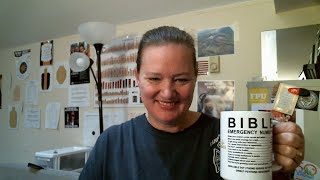
In this live‑stream, Brooke Cheney (host of the Great Start Shooting School channel) addresses viewers on how to cope with feelings of overwhelm and suicidal thoughts. She frames the discussion around the metaphor “eat the elephant one bite at a time,” encouraging the breakdown of large tasks into tiny, manageable steps. Cheney introduces the “5‑second rule” – a simple countdown breathing exercise that can interrupt distress and prevent impulsive actions, citing a real‑life anecdote of a person who averted a suicide attempt by counting down. She then expands on physiological cues: adjusting posture, raising eye level, and opening the chest to improve breathing and shift mental state. A brief guide to meditation follows, emphasizing that meditation is merely focused attention on a single point (e.g., a visualized lotus or any chosen object) and can be practiced anywhere, even for a few seconds. Cheney shares concrete community resources for suicide prevention in Litchfield County, including the Creating Hope Corp website (lcchcorp.org), NSSF pamphlets, the Depression and Bipolar Support Alliance (DBSA), and Living Works training. The session concludes with a call to action to follow her YouTube channel, support the Great Start Shooting School community, and stay engaged in future Saturday sessions.
Chapters
Hold on, please. All right, so there— oh gosh, oh yeah, ow. So, um, pardon me just for a second. Yeah, my back is not spectacular right now. Hey everyone, uh, Saturday night and it is Suicide Fringe Saturday, and this is week 3 of a crappy cold, but I'm not complaining, I'm just stating the facts. Hey Art, I'm sure you're the first one here because you have nothing better to do tonight. Um, uh, I am joking with Art. Art just got— not out of surgery, he's got cleared to go back to work because he had surgery and fusion and screws and stuff put in his body. Um, but he and I are rehab buddies, uh, shoulder rehab. We had surgery same time. But anyway, so we became friends on Facebook more because we had to sit around a lot. So anyway, good evening Saturday night viewers, or if you're watching the replay, whenever you happen to watch this. I'm live on Facebook and, uh, wherever I am. Facebook and YouTube. There we go, that's what it is. Um, all right, so as always— hey Virginia, hi! Um, Merry Christmas, Happy New Year. I figured right between Christmas and New Year was a good time to talk about overwhelm because as much as many of us are pretty much done with the holidays, like Christmas was like the big thing, uh, we're recovering often. So the eating the elephant one bite at a time. I'm sure most of you have, uh— hey Nikki! Um, I'm sure many of you have heard the saying, eat— how do you eat an elephant? That's the question, is how do you eat an elephant? And the answer is one bite at a time. Not more, not less, not a leg, not a trunk, just one bite at a time. And in our society with so much always giving to us and asking of us and overwhelm from Twitter, Instagram, Facebook, CNN, Fox News, whatever your poison is if you watch news still. And if you do, I'm sorry about that because really you should just knock it off. But anyway, um, just because that's my choice, you can have your own. But, um, so overwhelm How do you deal with it? You break it down into smaller manageable pieces. Uh, one of my viewers had just sent me a link to the 5 seconds, and I am— I didn't write down who it was. However, the 5-second rule is basically this: when you are distressed, upset, etc., simply do this. Everybody ready? Take a deep breath in. Let it out and just count 5, 4, 3, 2, 1. That's it. That's all the 5-second rule is, is give yourself 5 seconds to focus on something completely arbitrary as just counting from 5 to 1. Um, there's more to it, of course. It was an hour and a half lecture. I did not get the chance to watch the whole thing.. But so often we forget to just stop for a moment. It's like, it used to be really prevalent, like sort of a joke where if you're really, really angry, just count down from 10. 10, 9, 8, 7, 6, 5, 4, 3, 2, 1. That simple. And what it does and why it's successful is basically this, is that if you're really mad or if you're really depressed or you're about to do something really not good like committing suicide, by taking that 5 seconds and counting 5, 4, 3, 2, 1, you have just switched your schedule, what your brain is thinking about, and you're focusing on something else. So releasing stress and calming down literally can be as simple as counting backwards from a number you choose. Um, the interview I was watching today was called the, you know, the 5-second rule, and it— the lady did a talk about it and got someone to come to her and say, hey, you know, I was ready to jump off a bridge, like literally and figuratively— not figuratively, literally ready to jump off a bridge to kill himself. And he took advantage of the 5-second rule and simply counted backwards: 5, 4, 3, 2, 1. And it was enough to help him not make that final decision of jumping off the bridge. Now, granted, most of us, when we need a 5-second break, we're probably on the edge of a figurative bridge. And things are overwhelming, or I forgot about this, or I've got one more thing to do, or something along those lines. The dishes are piling up, the work is, you know, due, the report is due. Oh yeah, I'm writing a book, I need to finish that, that sort of stuff. So the eating the elephant one bite at a time is just to remind you everything is doable. Oh, and I have the wrong cup. I have my Bible cup today, um, but I have a cup— hold please, one moment. I'm gonna be so excited when this cold is really gone. All right, so where was I? 5 seconds, eat the elephant one bite at a time. Oh yes, so I have a cup that actually says, inch by inch, life is a cinch. I mean, if we break stuff down into manageable bites, like eating an elephant, our life is better because— what? Stop. Sorry, dog, dog. Yes, hi, come here. All right, eating elephant, break stuff down, 5-second rule. Looking at my notes, um, oh, because people like this from back in September, October. Hi, stop. Yes. Um, one more thing to help you. So let's say you forget about the 5-second rule because you only heard me talk about it right now for about 5 seconds. There are other tools you need to have in your toolbox. For example, one of the things I talked about was that, um, where your eyes go, you go. So if you are depressed, you are looking down, your shoulders are hunched over, and you're closed up, and you're probably not talking really loud. If you at least look eye level and you bring your shoulders back a little bit, you now give your body the opportunity to fill your lungs with oxygen, which helps reduce stress. And by your eyes being level, you bring your— you're engaging different parts of your brain. Now, if this is still not enough, shoulders back, lean back, actually look up at the sky. And for those of us who have a belief system beyond our bodies, that when you are looking up, you are paying attention to connecting to that which is above us, whether you're Christian or spiritual in any way. And for those of you who are atheists out there, because I got some of those friends too, the science behind this is that when you are looking up, you're disengaging from your physical body. Your brain just sort of goes into almost a meditative state, not exactly, but similar. And that brings me to my final helpful hint for today, which is meditation. If you meditate, or if you want to try to meditate, it's really not complex. It can be very, very simple. Hey Christine, um, congratulations on the deer in the freezer, by the way. Um, so meditation, it doesn't have to be some, oh, sort of sit there with your legs crossed in lotus position, painfully on the floor, uncomfortable. Meditation can be very simple because all meditation truly is is focus on one thing. This goes back to eat that elephant one thing at a time, right? So meditation is simply focusing on one thing. Um, the thing I was reading today was talking about Eastern meditation, and what they are suggesting that you do is During meditation, you focus your attention on the thousand-petal lotus of the third eye. So pick a vision. If you don't know what a thousand-petal lotus looks like, pick something that you can focus on and put it right here in the middle of your forehead. Sit back, get comfy, feet flat on the floor, however you're comfy, and just kind of focus on the one thing. Because the idea is, you know, pick something that's above, because like we just talked about with the eyes, the higher you look, the easier it is to get into that meditative, meditative state. And I think that's all I have for tips and tricks on how to eat an elephant. Find— oh, find a time. That's it. Meditation is awesome, but it only works if you do it. Just like dry fire or practice or weightlifting or any of that. The idea of it is great. Application is what you and I have to work on. So the note I put in here is you're not gonna find the time to do anything— sorry, my dog is whining— um, but you can absolutely make the time. You have to choose the time that you're going to do this. You're gonna decide and you're gonna fail, and life isn't always gonna go according to plan, but the idea is that you commit to it. And, uh, I don't know if you're listening to the dogs, you know, drinking in the background. I don't know how loud he is. So anyway, make the time. You're not going to find it anywhere. Anything that's important enough to you, you will make the time for. We all do the same thing. Hey, Deb! Um, so sum up, ready? Because look, I don't even know, 10 minutes. All right, eat the elephant. Anything that seems overwhelming is doable one bite at a time, inch by inch. Life is a cinch. If you are depressed or moody, pay attention to your physiology. Figure out where you're— what you're doing. It can be simple, such as just going from here to up, to even, to go ahead and go all the way up, to bring yourself out of your depression. Because we do depression. We aren't depressed. We do depression, and we work at it really hard, because I promise you, it is hard to do this all the time. And meditation. Ideally, if you can do 15 minutes a day, be awesome. However, um, Sam Harris is one of the guys I talk about. I'm pretty sure he suggests that you can do meditation— hey Pete— um, just about anywhere. He's like, next time you're at a stoplight, just take a moment and focus on that one thing, whatever that one thing is that you created, for 5 seconds, maybe 10 seconds, and then maybe get to a minute where you're just focusing on a single thing. And ultimately grow so you get to the point of 15 minutes or so. But the idea is to try to do it daily. And I think that's all I have for a recap. I know that from my training the other day, people wanted to know how they can get training. And let's see, um, in Litchfield, where we are in Harlington here, It's Litchfield County Creating Hope Corp. So for those of you can't read fast enough, it is lcchcorp.org. And yes, I'll, I'll cut and paste it down there. Um, another thing that I was thinking about because I was cleaning my office today is that there are free pamphlets available all over the place. This is after a suicide attempt. And then I have another one here that is actually after the suicide, because until my training, I really didn't think about that part of it because, um, it's just not what I was thinking about. But anyway, these are— if you were in the gun industry, these are from the National— NSSF, National Shooting Sports Foundation. And if you're a retailer or a school or anything, you just call them and ask them for this, and you can put them out on your store counters. Um, if you just want some, let me know. I have them. I can get them to you. Then there is also another resource, and this one is— let's see, I don't know if you can read it or not because I can never tell if stuff is backwards or not when you see it. So DBSA is Depression and Bipolar Support Alliance, and last week I told you guys the story about my friend who just got, um, diagnosed with bipolar. So this is understanding your agitation and understanding your mood and all sorts of stuff. Oh, here's another one, Living Works. Ready? This is suicide prevention. This was the training I went to, and I have more of that, so I'll put links down below because that's what I can do for you guys. I think that's it. That's almost 15 minutes. So just like that, all done. Uh, for those of you who have not gone to my YouTube channel yet, I'm still trying to hit 100 followers if you would be so kind. Um, just below this, uh, live, I believe there is my link to my YouTube channel. And I guess that's it. 15 minutes, one and done. Hey Bob, sure, you're getting it just at the end, so you're gonna have to go back and watch the replay because I'm just, just about done. Um, and so yeah, if you haven't been to my YouTube channel yet, please go there, like that one, the one that's in the link, not Brooke Cheney. The Great Start Shooting School one because I need to start putting up more stuff there, so I need to get some more likes. So Merry Christmas, Happy New Year, see you next Sunday— Saturday, Saturday. I'm like, oh yeah, that's gonna be— that will only be on Facebook. I will not be doing— will I be doing— I don't know. I may not be doing, uh, YouTube Live next be there because I might be away. I'm without looking at a calendar, I don't really know. So anyway, thank you all for watching, have a great day, and I will talk to y'all later.