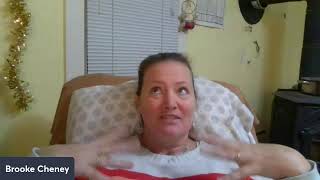
In a live‑stream titled “Suicide Prevention Saturday – Heroes and Self‑Care,” Brooke Cheney, owner and instructor of A Great Start Shooting School, explains why suicide prevention is central to reducing gun‑related deaths, shares her personal experience with suicidal thoughts, and explores the “hero” or martyr mindset that can drive people toward self‑harm. She argues that mental‑health issues and communication breakdowns are at the heart of both gun violence and suicide, and she urges viewers to prioritize self‑care as a prerequisite for caring for others. Using her recent knee‑surgery recovery as a concrete example, she offers simple, actionable self‑care tips—hydration, elevation, rest—and frames these practices as ways to break the hero complex. Throughout, she calls on the audience to spread awareness of Suicide Prevention Saturday, to seek help when needed, and to remember that staying alive benefits the people who love them. The talk blends personal narrative, statistical insight, and practical advice in an informal, supportive tone.
Chapters
Dun dun dun! All right, voilà, it is Suicide Prince and Saturday. 4 seconds in— wait, 6 seconds in. All right, so I gotta say, this streamyard.com streaming thing is actually pretty cool because my little countdown lets me know when I'm supposed to be going on, lets me know how long we've been on, stuff like that. The only thing I wish I could do is have this be not a mirror image because it gets confusing when I try to center me. So, uh, what is it? It's 12/18, uh, the 12th month of the 200— 2021 and the 18th day. So good evening, it is Saturday and Suicide Prevention Saturday. I'm Brooke Cheney, owner instructor at A Great Start Shooting School. And thanks for the heart, whoever gave that to me already. Yay. Um, and why do I do this? Because as a gun owner and as a mom, when Sandy Hook happened all those years ago— just yesterday, unfortunately. Hey, Liesel— was the anniversary, and I wanted to find out how to stop gun violence and what we could do to prevent gun violence. And when I looked into it, I found out that 2 out of every 3 deaths, uh, that they talk about that are gun violence are actually suicide. And I'm thinking, if 66% of the problem is suicide, it seems as though it would make sense that we talk about suicide prevention more. So that is part of the reason why I do this as many Saturdays as I can. So the other part is I actually looked into violence prevention and how do we prevent violence. And again, it's about mental health, quite honestly. It's about communication and how to feel heard, be heard, and communicate better, building communities, that sort of thing. When looking into suicide prevention and the mental health issues, looking into violence prevention, it really tends to come down to communication. Because what is mental health? Often mental health is our own communication with ourselves. Violence prevention is often communication between more than one person. I know in the self-defense world we're always talking about de-escalation, and how to de-escalate is the best way to get out of a violent situation is to stop the violence from happening in the first place. So tonight's, um, title was Heroes and Self-Care. And as you can see, I am sitting here with my head on a pillow. Um, hey Guns, how are you? Uh, actually I should say Barbecue because there's too many people that have guns in their stuff. Um, so I'm working on the self-care portion 3 days ago now, Thursday. So Thursday, Friday, Saturday, 3 days ago I had my knee operated on. One of the things I'm supposed to be doing is, uh, elevating my knee, hence the reason I'm in my comfy chair with my pillow. So I'm working on the self-care thing, which is one of those things that a lot of us are constantly running and taking care of other people and doing lots of stuff, and we're not necessarily doing a good job of our own self-care. Now, if you are a caregiver, whether it's a mom, a kid, a daughter, um, whatever your job is, we always are caring for someone. Often we put ourselves last, and in actuality, we have to remember to put ourselves first. And this is kind of why we're putting together the hero and the self-care thing, simply for the fact that what do heroes often do? Heroes are often actually martyrs, right? The hero is the guy who jumps on the grenade. The hero is the guy who, you know, holds up the, the building until it falls, but the last person got out except for the hero. So often our hero is the one who is not the last man standing. So, and Barbecue, to your point, yes, I'm feeling relatively well. I'm doing what the doctor told me to do, which is stay off my leg as much as possible, but at the same time move as much as I can. So I am working on that self-care thing. What else? So when we're talking about self-care, unfortunately, so often we are— we feel selfish if we're taking care of ourselves. We feel selfish when we're asking other people to do stuff for us because we generally prefer to be the one who are taking care of other people because we can handle it, we can do it, all that sort of stuff. And so I hope you guys are starting to see how the hero and the self-care thing kind of go hand in hand. The other challenge with the hero is that we forget sometimes we're supposed to be our own hero and we're supposed to do the right thing. And how does this relate to suicide? Well, from my point of view, when I was a teen and when I was suicidal, part of the whole point for me, the idea of why I was going to commit suicide, is because it would be easier for everyone else around me if I was no longer here. And that was just the point of view that I had at that point in time. I don't know what it's like for anyone else who's in that position. I only know my personal experience. So in a way, the idea of me committing suicide was that I would be the hero because I would take pressure and stress off others around me if I was not any longer here. Now, I'm sure to those of you who've never considered the idea of taking yourself out of the world, that seems absolutely ridiculous. And unfortunately it really is. But when you're in that space, you just don't understand that. So the hero complex of being able to make things better, um, that's kind of— that's kind of where I'm going, is that with the desire to make things better for others, we often put everybody else in front of ourselves. I'm watching a TV show which is— what's it called— Hawkeye. Um, that's a DC comic. And one of the things when we're watching any of the comics and who's the hero, it always seems to be the one who dies. Now the cool thing about the show is that it also shows you how sad everyone is when the hero is dead. And the challenge we have is if we're trying to be the hero, we forget— thank you, Marcia— we forget that people will miss us. We forget that we're actually causing pain if we're not there. And so for those of you who are struggling and think that the world would be a better place without you, think about all those movies and how sad everyone is when you're gone. And remember, it's important for you to be there for people. But that's really being the hero, is sticking around and making it through the hard stuff, whatever that hard stuff is. And if you put self-care at the beginning of your day versus leaving it for the last thing that you do for yourself, this will help you get through whatever your struggle currently is. And as my good friend Caleb Causey would just say, drink water. If you do nothing else for yourself today, self-care can be as simple as drinking some water. And yes, this was a, um, mead bottle, but it's been recycled to be my water bottle. So self-care doesn't have to be something huge like a $1,000 day at the spa. Self-care can be something as simple as giving yourself one more glass of water before you go to bed tonight. So, heroes— there are heroes out there, but remember, we're sad when they're gone. Self-care. You need to take care of yourself in order to be strong enough to help take care of others. Don't confuse one for the other. We need to take care of ourselves in order to take care of everyone else, and it's really that simple. But we forget because simple is not always easy, and that's the other challenge, is something as simple as drinking a little more water today or putting your feet up, which is what I literally have to do right now, is something that's super important, and you are worth it. So that's it. It's a super short one today. I'm really quite tired, I'm not gonna lie. So with that, take care of yourself. Don't be a hero, except for in your own mind sort of thing, right? And do what you can. Share Suicide Prevention Saturday. So that people become aware of why it's important to talk about mental health. And have a great weekend and Merry Christmas, because that'll be the next time I see you guys. Have a good night. Bye, everybody.