Suicide Prevention Saturday - I have no idea what we are talking about tonight.
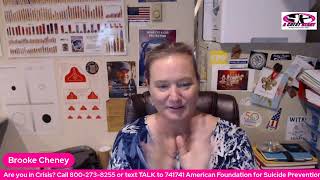
In this live‑stream, Brooke Cheney, owner and instructor of A Great Start Shooting School, opens her first "Suicide Prevention Saturday" by framing suicide prevention as a critical issue for gun owners. She notes that two‑thirds of gun‑related deaths are suicides and argues that addressing mental‑health and communication is essential to reducing these numbers. Throughout the hour‑long session she: - Shares personal anecdotes about her own teenage suicidal thoughts and the importance of being heard. - Emphasizes the "two ears, one mouth" communication principle, mirroring, and active listening as tools to build community and prevent isolation. - Highlights statistics on veteran suicide (≈20‑22 veterans die by suicide each day) and the role of peer‑based group counseling, while acknowledging that one‑size‑fits‑all solutions do not work. - References resources such as the American Foundation for Suicide Prevention hotline and encourages callers to reach out to friends or family instead of only hotlines. - Introduces future guests (Mike from Arms Room Radio, Charlie Cook of Riding Shotgun with Charlie, Michael Sodini of Walk the Talk America) and outlines upcoming episode topics, including addiction and broader Second Amendment advocacy. - Discusses branding and relaunch of her shooting school, using pink colors, and mentions the community of listeners and chat participants. The overall message is a call to improve communication, foster community, and provide tailored support to those at risk of suicide, especially within the gun‑owner and veteran populations.
Chapters
Am I live? It says I am live. Oh wait, let me see if I can remember to turn my phone off before we actually get started going, because that's always a fun thing, right? Um, it's not 9 o'clock, I still have 2 minutes, so— but look how fancy I got. I got my little logo up there, I got the suicide prevention phone number from the American Foundation of Suicide Prevention. Um, so, uh, what is that called? Resources? Yes, that's what they're called. Um, anyway, so it's been a fun day, interesting day. Feels like I've been on the— on here a lot, uh, because I was on, uh, where was I? Hey Dean! Hey D-Webs, thank you, sir. I'm gonna have to ask you what you thought that I said when I, I gotta go back and look at the interview, but you said something about, see right there, I took the laws away from the anti-gunners. I forget what it was, but anyway, we'll talk, we'll chat. Dean, I was telling somebody about your friend over the holidays and stuff. Hey France, how are you? Yay! Oh my goodness, I feel so famous. Miss Gina Roberts is here. She's on the West Coast out in California, and it's early for her. She might actually be interrupting her dinner to watch this. So, um, and I was talking to Charlie Cook, um, just a few moments ago before all of this. I was saying I have very few international stars, but Gina Roberts is one of my YouTube famous people that I know, um, because I'm going to tell everybody the story just because we're— we haven't started yet, but I'm in— Gina Roberts is also another DC Project lady. She's out in California, and we're in DC, and we're on the subway with random people, and this girl walks up and says, are you Gina Roberts? And Gina, of course, oh, well, yes, yes, I am. And it was just so funny because I'm like, oh, I know famous people. So anyway, that's my story about Gina. All right, are we getting started? No, I still have like 30 seconds. Um, until it's actually 9 o'clock, because that's when I said I will be here. So I'm so excited that I figured out some of this, this, this cool stuff. Notice, um, I'm working on branding for Great Start Shooting School, and I'm supposed to be using my pink colors, and I got my pink colors on here. So anyway, I'm just being a little bit geeky. So, all right, it is— I was supposed to say it's Friday night. Hope you're having a good weekend. Um, that was funny. I thought that was a great thing. Wow. Okay, I need the clock to just say 9 o'clock and I'll just start going, right? So yeah, I'm talking to my branding people and they're just like, use your colors everywhere, pay attention to these things. I'm like, okay, and trying to get that sort of stuff done because I'm not necessarily rebranding, but I'm relaunching because I've had so much downtime with my, my knee. Okay, yay, it turned 9 o'clock. All right, so for those of you who are waiting for 9 o'clock, so so that you could get here. Uh, hello everyone, my name is Brooke Cheney. There I am, and I am from A Great Start Shooting School. I am the owner and instructor here. As a gun owner, I talk about Suicide Prevention Saturday, or I talk about suicide prevention, because 2 out of every 3 gun deaths you hear about in the media— of all that gun violence— 2 of those out of every 3 are suicide. And if we're really looking to save lives, we need to be talking about suicide prevention. One of our biggest challenges is that gun violence, gun violence, gun violence, death, death, death, death is like just surrounding us everywhere. For— oh, thank you, Rita. So gun violence, when they call suicide gun violence, I have a challenge because to me it just sounds not really genuine. Because if someone is in such mental distress that they decide they're going to take their own lives, is it a violent way to go? Yes, but so was the car accident that I was planning when I was a teen when I was planning on committing suicide. So, but when you say, oh, gun violence, gun violence, gun violence, but you keep you're not talking about the mental health part of it. You're not talking about 66% of these deaths could be lowered if we actually talked about mental health, because mental health will help all of us. Um, I was on a— I don't know, another YouTube live earlier today, and I was on Facebook, and now it's a podcast as well. And it's called the Daily Bullet— or sorry, the Weekly Bullet— and it's put on by the Second Amendment Foundation. Oh, I've been talking long today. And one of the things we did talk about was communication, because communication is hard. Oh, but wait, ready to read it? It gets even fancier. Hold on just a second. And so when it comes to communication, ready for this? Oh, we were given two ears and one mouth, and we need to use them appropriately in that ratio. And I'm sure this is nothing new to anyone. I'm sure you've heard this before, right? But I think we forget it. Often we are listening to someone and we're waiting to talk versus listening to someone and actually hearing what they have to say. And until you start paying attention to how you are communicating in here, you're going to kind of maybe not feel as connected as you could. And unfortunately, in today's— yes, I've used my downtime, I really have— in today's hidden society, it is harder than ever to actually to connect because as humans we use this whole thing to actually convey information. I don't know if any of you've been to Tony Robbins. If you haven't, yeah, he's not a bad guy to listen to. Jordan Peterson, also helpful. There's tons of good information you can be feeding into your brain about communication strategies. But one of the things we talk about is that communication is all of this, right? If I sit back here and I'm talking to you like this, and well, you know, maybe I care about what you— maybe I don't. But as soon as I'm leaning into you and I change how I'm talking, in theory, according to the scientists, you know, that science thing, those psychologists, We have more connection because I'm closer to you, and I'm really excited that I'm talking to you, and all I got to do is this little body thing. Now, for some of you, like Dean, I know you've been watching me forever, so we've talked about body language. Connection is the other portion of making us whole. Because I don't know, everyone's a different age group who watches this thing. But the truth of it is, is that there was a very famous line for a while that was, "You complete me." I don't remember the actual, uh, sign, but that's what I have in my brain is, "You complete me." We are social creatures. We do need each other. We do have two ears to listen to each other and then one mouth to communicate. It's so funny because I do know a little bit of sign language. I keep saying thank you, thank you, and if you're Italian, it means something else. But anyway, communication is super important, and that's sort of the first thing that everybody needs to talk about in that this is what makes us whole. When I look at all the violence prevention, suicide prevention stuff that I read, whether it's from CDC, our American Foundation for Suicide Prevention, who else, CDC, American Foundation Suicide Prevention, gang violence, you know, the task force that are out there working on these sort of really hard problems, pretty much every single one of the successful programs that they run are about communication. It's about teachers, families, community workers, churches, police, all being willing to communicate with one another to help build a sense of community. And community, what's that based in? Hmm, remember that Latin you hated in high school? Community, communication, see, there's something that goes together there. So suicide to me is the failure of communication within here, to understand that you are the most important person to keep here. On the podcast, YouTube, Facebook Live that I did earlier today, there was a gentleman, Mike, on, and I am not going to butcher his last name because I will if I try to say it, and he's military and he's worked with suicide prevention and he's going to be a guest on here going forward. He said that he would, um, and here's what he said that was so very impactful and important. He said, if you are feeling like you're going to kill yourself, don't you dare, don't you dare make that decision that's going to punish me for not being able to save you. Don't you dare make that decision and make your family and friends go to your funeral. Don't you dare be that selfish. Now, he said it slightly different, and I'm paraphrasing, but I just thought the way that he deals with the veterans and police officers also who he works with And he then went on to say, 'Cause if you commit suicide,' and this is him, not me, 'every year on the anniversary of when you chose to do that, I'm going to piss on your grave.' And it's one of those things where I'm like, I'm not going to say that to anybody, but Mike can say that to someone. But it just made me remember is that when I was a teen and I was suicidal, I thought if I was gone, it would make everyone's— everybody else's life better. I was suffering, they didn't know I was suffering, um, if I was dead I wouldn't be suffering anymore. So that was my number one, but number two, I never had to tell anyone that I was suffering, so they didn't know that they should have been worrying about me. But in my brain, I think I kind of convinced myself that they should know, they should know, they should know. So again, if you are out there and you are in crisis, look what I got for you right here, right here. Um, reach out, call somebody. And no, you don't have to call the Suicide Prevention Hotline. You don't have to call or text them. Call a friend. Just talk to somebody. Um, you are not alone. They actually— in some of those, the training I've done, I believe it's 80% of Um, thank you. Yes, CG Webs has got it all down. Oh, sorry, so I know you guys can't see all of the things because he's on YouTube and you all are on Facebook, but Mike from Arms Room Radio, he actually had another, um, podcast today, Arms Room Radio. So, um, yes, I am definitely going to have him on. I'm so excited. I've got a bunch of people that I'm coming up there. We're gonna have guests, so you don't have to just listen to me. I will warn you, however, that's going to make the show probably a little longer, you know, like with Chrissy. So I lost what I was saying because I shouldn't read the chat while I'm on a roll. So anyway, if those of you who were watching remember what I was just saying, let me know in the chat. Um, I know, Mike, isn't it great? All right, sorry. So here, I should probably throw up the thing while you are— while I'm responding to them. So Mike is one of my longtime fans. He is so super supportive. I get to work with him and his son at my school, and it's one of those things that makes his son super happy, and I love having his kid here. But, um, yeah, so I'm super excited about my new tech stuff. I was bragging about that at the beginning. So, all right, mind dump. So let's see, what are we talking about? Communication. It's important with you in here. When it's with other people, remember, two of these, one of these, right? Um, the other thing that we were talking about today in the other podcast was that someone asked, how do we fix it? And the most important thing I think that's important is right here, the one size never fits all. Because we were like, one of the questions that Rob asked in the interview was, so do you think group counseling works? And Mike answered what I was thinking, which was group counseling works for some, group counseling does not work for all. Most veterans want to talk to other veterans. However, once they've opened up to a brother in arms, then they're more willing to then go get other counseling. So when it comes to how do you know if someone's suicidal, back to this, once we don't know, are the people that are depressed and sad and not eating and pulling away from society? Yes, that's typical depression, and that's a good possibility. But one of the things I realized today is suicide is no different than any— or suicidal thoughts are no different than any other type of addiction. Unless the person having the thoughts or the feelings wants to reach out, wants to get help, wants to get crawling up from that hole that they're in, no one's gonna know. And like I said, my favorite, my favorite/saddest example to me is Robin Williams. So Here is someone that, A, most of y'all know who Robin Williams is. B, chances are you would expect that lots of people liked him and gave him accolades for all the joy and happiness he brought to other people. And yet very few people, except the ones probably closest to him, and maybe not even them, knew how sad it was in here. So I know one of the things when I was growing up, people's like, oh Brooke, you're so pretty, oh you're so smart, oh you're so athletic, oh you're so, you're so, you're so, you're so. And it's just like all I heard was this. I'm like, yeah, they don't know me, they don't know what they're talking about, I suck, I'm stupid, all of that sort of stuff. So, um, DJ, I will, um, I'll forgive you. He's sorry for being late, so we'll let him ride. So I know when I go to the funerals of people who've committed suicide that the conversations I hear are the same a lot of the time. Why didn't they reach out to me? How come they didn't ask me? All of that sort of stuff. And Rita, actually, sorry, so, oh, sorry, I'm not going to look at the chat for a minute. When I'm at the funeral and they say those things, it's like, why didn't they reach out? Why didn't they reach out? It's like, because we're not supposed to. And we were talking about how military veterans are a large portion of that 66% of gun suicide. Somewhere between 20 and 22 veterans a day die. So it's not a small number. You know, we're talking about pandemics and epidemics and all of that. 22 a day is pretty horrible, is very horrible. So I'm sorry I keep losing my track of thought. Maybe it's because I have this thing rolling across the bottom with me, but we will, we will figure all of these things out. All right, so I'm going to go back to this. Next week, talk about addiction. I know lots of people struggling with addiction. However, remind me after next week, I'm And maybe I will just make it and we will talk to Miss Rita, who, who gave all the prayers, because Rita has a story to tell about addiction. And maybe I will have her on soon because next week, since we're almost at our 15-minute mark, I am actually going to have Charlie Cook from Riding Shotgun with Charlie. Wait, if you can see, it's right there. That's his sticker. So you'll know when you go to his YouTube channel that you've got Riding Shotgun with Charlie. He's gonna go into, what am I trying to say? He's gonna come here to talk to us about some of the other Second Amendment advocates that are out there that are also doing Walk the Talk America. And Michael Sodini from Walk the Talk America is also going to be one of my guests on January— no, February. Hold on, I'll tell you in a second. February 5th. So I don't know, we might be in, in the works for a bunch of really long Suicide Prevention Saturdays. I really do love the brevity of this. However, it has really been fun getting more people in. And getting to talk to other people. So I think that is everything that I wanted to talk about. So a couple of things I'm going to leave you with. Remember, we have two ears, one mouth. Make sure that when you're talking to someone, that you're making sure they feel heard and understood. One of the easiest ways to do this is if I say, hey Dean, 'How about you and I go check out the Libby collection?' Libby Holman is my grandma, and Dean's a fan. And Dean says, 'Brooke, do you think we should go check out the Libby collection?' It's matching and mirroring. It's when someone says something to you, if you say it back to them, they like hearing the words they just said and understanding that you really understood what they said. When solving any problem, make sure you know one size never fits all. What worked for me, going to group counseling, will be a total and complete crash and burn for someone else. There is no one size that's going to fit all. There is no one tell for if someone is suicidal or not. And my final one that we didn't talk about yet, but I did talk about earlier this afternoon, so go check out the, the podcast from earlier today. Uh, Mike Rowe, Returning the Favor. If you want a feel-good kind of show, you got to go check this out. But look— well, you don't have to, but one of the things we were talking about, Mike Rowe and Returning the Favor today, was there's a ton of veteran-based, owned, and focused Suicide prevention, Leg Up, so on and so forth. So anyway, I think that is everything. Wait, let me catch up on the comments because I did actually ignore them for a moment. Oh, let's see where I left off. Rita Bardino. Oh yes, Rita, seriously, uh, let's get you on the schedule because I know we talked about that last December, last year, huh? Um, Uh, guns and barbecue every day, uh, no days off. True. Awesome banner. Thank you very much. No, not a teal banner because I'm working with my marketing folks and they're like, put your logo up here, right? And have a great start shooting school stuff all over there. DC Project absolutely has a place in my heart, in my home, but not every moment of every day is DC Project. And let's see, what did DJ play? Nice. Veterans, folks of VAA, I have lots of good things to share, some insight. Very cool. And what else did I miss? Riding Shotgun with Charlie. Yes, he will be here next week. And like I said, we're— oh, and we're going to talk about Hold My Guns and Walk the Talk America. So that'll kind of get people more excited about getting to see Um, who's— and what's it? Um, sorry, I'm talking about too many people at once. Uh, unfortunately I can't block the Russian thoughts without being a moderator. Oh, it's okay, I'm not worried about it. All right, ladies and gentlemen, I think that is it. Rita, if you are still here, just direct message me when we are done here and I will figure out where you're going on the, on the schedule since I'm getting more people to talk to. All right, makes me happy. Makes you guys happy because you don't have to just listen to me. And it generally tends to be a little more interesting. Oh my gosh. All right, G webs. We're gonna hold on just so y'all know on Facebook what I'm talking about. We will talk about that another time when you and I are geeking out because I have no idea what all that means, honestly. All right. And Francie, thank you. Thank you for showing up. Thank you for being one of my fangirls. And I will see you all next week. And yeah, for those of you— oh yeah, for those of you who followed me from Second Amendment to here, nice to meet you. Welcome to your first Suicide Prevention Saturday. And I am really excited that we're going to have a bunch of different guests on in the next couple of weeks. And then, you know, we'll see where it goes from there. All right. Good night, everybody.










