Suicide Prevention Saturday - Living with a suicidal family member
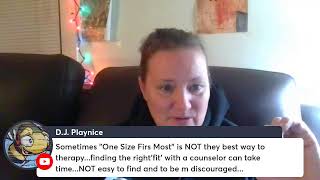
In this livestream, firearms instructor Brooke Cheney hosts a Suicide Prevention Saturday session to discuss how to live with, recognize, and support a family member who is suicidal. She opens with casual New Year banter before outlining the purpose of the show: to provide practical, compassionate guidance because suicide "sucks." Brooke shares her personal family history—her grandmother’s death by suicide, her father’s repeated suicidal statements and a police‑intervention incident, and her own suicidal thoughts as a teenager—illustrating how suicidal ideation can span generations and often remains hidden. She emphasizes that suicidal expressions are usually cries for help and that the first step is listening and asking direct questions about intent, plan, and means. Brooke lists concrete resources: dialing 211 for immediate counseling, the national suicide‑prevention hotline (1‑800‑273‑8255), and a Connecticut‑specific training on January 12 2022 offered by the American Suicide Prevention Foundation. She connects addiction (drugs, alcohol, overeating, smoking) to mental‑health struggles, describing them as unhealthy coping mechanisms. Brooke discusses common barriers to counseling—stigma, difficulty finding the right therapist, insurance issues—and stresses that one size does not fit all. She urges viewers to attend training to gain more tools, to avoid guilt when helping, and to recognize that ultimate responsibility for recovery lies with the individual. The talk concludes with a hopeful New Year message, a reminder to sign up for the upcoming training, and an invitation for questions and future topics.
Chapters
2 minutes late. It is 9:02. However, it is the first day of the first month of 2022, so happy New Year, um, for all of those who are watching this live and/or the replay sometime today. Oh my goodness, why is it as soon as I start, that's when I remember I forgot to silence my phones? Hold please while I do that. So how many of you are recovering from too much fun last night? I know I saw one of my friends today who, uh, was like, shh, be quiet, be very, very quiet, because apparently Jack Daniel's was not her friend last night. So hey DJ, um, Yeah, I don't yodel, but if you do someday, we'll get you on here, moderator or not. Um, so anyway, all right, so title today, right? How do you live with someone who's suicidal? How do you know if someone you live with is suicidal? And, um, and because that's the most common question that I get asked is is people like, how do you know? How do you stop someone from being suicidal? And it's like, number one, you don't really stop someone from being suicidal. Sorry, I'm gonna see if I can get a little bit more of the glare off my face. Um, it's an inside job. In the past, talked about, you know, suicide prevention, um, how do you get stuff to happen? And it's like Suicide Prevention Saturday is here because suicide sucks. In preventing suicide is— oh, okay, thank you, G-Webs. Um, Suicide Prevention Saturday is here because suicide sucks. And I forgot to do my whole intro because I was like 2 minutes late. I'm like, ah, uh, I'm Brooke Cheney, firearms instructor here at A Great Start Shooting School. I am currently not in my office because I'm still on crutches because, you know, um, knee surgery also sucks. No, it on the way to getting better. And all right, common things, suicide prevention, how do we do that? Oh, if you're looking at the description here, you'll see there's actually a link for you to sign up for the same thing I signed up for, for, um, this January on the 12th. Now to be fair, it is specifically for those of us over here in Connecticut. It is the American Suicide Prevention Foundation, and it is their— oh, here, hold on— it is the Connecticut chapter training is going to be on January 12th, which is a Wednesday, and I will be there. And I'd love to invite those of you who'd like to, and I'm guessing if you're even out of state but you see it anyway, you can join and then find out what to do in your state. So let's see, I'll get all fancy. Um, yeah, so DJs can't— um, it's hard to know how to be supportive in the midst of the desire for death and release. And I will tell you, for the most part, if people are letting you know that they're suicidal, because Often that is their cry for help. That is what they're doing to let you know that they need help, and often they don't know how to get help. So it could be something as simple as saying, oh, did you know you could dial 211 and talk to a counselor right away, right now? Um, you can also call the American Society for Suicide Prevention. There's a couple different foundations And so it gets— just look up suicide prevention, and there's an 800 number you can dial as well. I believe there's supposed to be an 811 or a 311 number that's coming out soon that's going to be national, just like a 911 number for mental health, um, help as well. So talking about suicidal family or people you live with, for me it was family. It was my dad. My dad told my brother and I more than once in our lives that he wished that he was dead because our lives would be better without him. And it's a hard thing for a kid to take when their parent is saying these things, because, you know, as kids we look at our parents, we're like, oh, they're adults, they're responsible, they've got everything figured out. If there are any kids watching right now, that is not what being a parent actually is. We'd love to say that we have everything figured out once we become parents, but that's usually not the case. But as a kid of a parent who was suicidal— now go back one more generation— my grandmother actually died by suicide. My father never believed that. She— he actually thought it was assisted suicide. Um, but there's no way to ever know that. So we have it in the family. And my dad lived in Wyoming for a while, and I went and cleaned out one of his, uh, the storage places there, and I found the police report of my dad with a gun to his head or his mouth or something. And, you know, the cops were able to talk him down and said, you know, you've got kids. How about you live for your kids? And in that moment, that was enough to make him not pull the trigger. Now, for those of you who were like here last week, you got to hear the story of my dad's death, which is actually really good in that my dad didn't die trying to escape or run away from anything. While he was suicidal it was really because he didn't know how to deal with the stuff that was going on in his life. Um, relationships were hard, um, uh, drug addiction was a challenge for him, and it was just, you know, that escapism. It's like mental health is about being able to deal with all the crap that we're put through. Life is hard. It's always going to be hard. Oh, thank you, DJ, for for those— oh, here, hold on, let me throw that up because the poor folks on, um, Facebook cannot see that in the chat. But if you're on YouTube, you saw it in the chat. So this is one of the 1-800 suicide prevention hotlines. It's always good to have help. And, uh, oh yeah, and sorry, and then Gunpowder Beauty, you are true. When we're talking about parenting, they don't give us a handbook on how to be a good parent.. And, uh, we are definitely all winging it daily. Uh, one of the things I tell my 14-year-old is, as much as I can, I will try to scar you with different things than I was scarred with as a child. But I'm sure when she's in her 30s or 40s, she'll tell me what I did wrong too. So yes, parenting is hard. Uh, so those of you who are kids out there, be nice to your parents. It's not a perfect job. So sorry, back to living with the family. I'm a little bit all over the place. It's been a long day. Been at the gun range all day. Um, shotgun trap, all that fun stuff. So if someone is suicidal and they're letting you know, chances are they need help. So try to help them. Uh, sometimes all you need to do is listen. Sometimes you need to drive them to the ER and get them checked in. Uh, sometimes it's gonna be really hard. I have been to different types of counseling training at this point. And they do talk about asking the questions: have you ever considered hurting yourself? Do you have a plan? And for those of you who've been listening to this long enough, I had a plan when I was 16 because it involved a car. That's the only reason I know how old I was when it happened. And I didn't know until I was 19 when I went to counseling that that was not a normal thing. So for those of us who have experienced the suicidal thoughts, it's definitely one of those things where it is our normal, whereas people who've never experienced them can't imagine having those thoughts. So I guess one of the other things I would say is important is don't try to understand it necessarily, just work with what you got. So for much of my dad's life, he was suicidal, wishing to escape, right? Um, all drug addiction, alcohol addiction, addictions in general are just ways of dealing with stress, and it all really goes back to general mental health, having the tools that you need to deal with the crap that goes on in the day, whether it's being a parent, being a kid, um, being a high-powered CEO, um, who knows, whatever your job happens to be, plumbing, etc. We all have different gifts of how we're allowed to— how we're good at dealing with stuff. So If someone is telling you, hey, I'm suicidal, just ask, okay, great, how can I help you? And a lot of times they don't know, which is why I am asking folks to go ahead and sign up for and register for the link that's below in the, um, you know, the description portion of this thing for the 12th, because the more training you go to the more tools you will be given if you're looking to help. And David says being a good listener is the first step. And, uh, happy new— happy new year from New Jersey. Happy new year from Connecticut. Um, and listening is easy sometimes. For some people, we want to fix everything, we want to make everything better. But anything that anyone does at this point in time, it's going to be an inside job. And all we can do is give people resources or let them know that there are resources out there. So my dad went in and out of rehab for a drug addiction. Um, he was a very high-functioning um, person who could— maybe most people probably would never have known that he was suicidal at all. As his children, we knew. And the good news is that's not what eventually killed him. So we have that going for us. But for those of you who are dealing with anybody who is telling you about it, then all you have to do is listen, give them help. And if you think they're really going to harm themselves either call an ambulance or bring them to the hospital. And that is pretty much it. Um, how you deal with it is also, you know, one of those things. It's not going to necessarily be easy. When I went to counseling before— not counseling, training for suicide prevention— one of the trainers was talking about he was dealing with, I think it was his sister-in-law who he did call an ambulance on and had her committed. And she was pissed, and she was pissed for a long time, but then she started to heal, and a year or two later came back and thanked him. So just know you're not always going to get a thank you, um, but you have to do— you'll trust your gut, I guess, is the idea. Um, and Happy New Year, Barbecue. What does CJ say? Daily ideation is hard to explain. Um, hold on, I'll just read it out loud in front of me. It's hard to explain to those who have never really actively thought about, of, or pursuing death, right? And one of— there's a show, Ed Mylett, that you can also look up, and he actually just put out a newest, uh, YouTube channel episode, and it talks about death is just an escape, just as the drugs, the alcohol, um, bad behaviors. All of these things really are escapes for the pain that we're in. And this is where the mental health stuff is super important, because all the bad things that happen in our societies all come back to mental health. Violence, anger— these things are the things that are killing us, and we don't talk about enough. We generally just stuff them down and don't know how to deal with the pain necessarily. So suicide's the most extreme, obviously, because you stop breathing and you're done. Drug addiction and alcoholism— there's more. I'm going to say there's probably more drug overdoses than there are alcohol overdoses, but Alcohol just kills you slower, right, by destroying your liver. But they're all escapes. So take a deep breath, learn how to listen, figure out if there is something you need to do, if someone is in desperate need of intervention. And if not, just listen. Let them call 211. Let them call— oh wait, where is it? I have to, uh, scroll up. Uh, go ahead and call 1-800-273-8255 and talk to a counselor. The cool thing about today's day and age is that you can call, you can text, you can email. If you just want to connect with someone in this world, it's not that hard to do. So Um, let's see. Gun websites. Hold on, as soon as I cover it, I can't see it. Drinking, eating addictions, drug addictions can all be from poorly dealing with mental issues. Yes. Um, it's so— if you talk about, um, overeating, for example, what happens is boredom for me, right? I'm actually one of those people. If I get bored, something to break my monotony is get up off the couch, go to the kitchen, make myself something. And it's like, it's just this pattern that we create. Drinking, um, it's another example of— or smoking. Smoking is another great one, is, all right, if I'm smoking, I'm really just taking deep breaths, but It's broken my pattern of whatever's stressing me out, and now I get to do something that's making me feel like I can breathe better, I can relax now. So we have all of these different tools that are not necessarily healthy for us, but they are helping us deal with the stress. And basically, mental health is about finding better tools to help you deal with the stress. And, uh, handing off care to someone actively death-wishing is brutal, like the ultimate failure. Passing someone you love to staff— yeah, they're pros, but damn well— so yeah, so everyone's got a different experience. Um, one of the things that happened with DJ— hey Chris! Um, one of the things that happened to DJ— sorry, I was reading as I was trying to talk. One of the things that happens with care is that you need to be able to find the person or the people that will support you the best. And unfortunately, we're generally also very reluctant to get into any form of counseling. It does not lend itself to try before you buy as far as if I'm going to go to counseling. I go to one counselor, he or she sucks, and I never go to counseling again because it took so much momentum to get me to that counselor, and then I failed with that one. People don't generally— aren't in the mental state of, I should try another counselor. Instead, they say counseling doesn't work for me. So this is another one of those shifts in our society that we have to work on. Because one size never fits all. I do the same thing with my training students. It's like, just because I love my MMP, you know, 380 EZ, does not mean you're gonna like my MMP 380 EZ. It's not how that works. Um, there are good places and there are bad places, just like every other business, because unfortunately— or fortunately, depending on which way you look at it— mental health is a business. Um, Chris here, who is my girl who was on last month. Was it November already, Chris? It was a while back. I don't think I was on crutches yet. So anyway, um, Chris deals with dementia patients, and, um, she knows the business inside and out because she's building her own. She's been in private practice now for at least 2021, if not before then. She's worked in nursing homes and that sort of stuff. And in the failure part, right, that DJ was talking about, I think one of the biggest important things is to understand if someone is determined that they're going to be done, they're determined that they're going to be done. And then other than locking them up into a room with things that are unavailable to them there's not really a way to stop that from happening. And I say that because my experience was 2000 and— no, 1990, I think, is when I was in group counseling. And, uh, oh, sorry. So Chris has been in business for herself since April of 2020. Um, but for me, 1990 is when I was in group therapy. We had a doctor who had been in group therapy most of the year. He was older than me at the time. The first or second week of December, insurance company said, nope, sorry, we can't pay for it anymore, you're out. The doctors, the nurses, everybody said, no, no, he needs to say he needs to stay. He got kicked out because insurance wouldn't pay for it anymore. So that January, I went to his funeral, and in therapy, he was able to hold it together. Without therapy, he was not able to hold it together. I went to his funeral to let his family know they had not failed him. He was unable to quiet the monsters that were in his head that said, told him the world is a better place without him. And suicide— people who die from suicide, the families and the people they leave behind don't understand, feel guilty, assume there was something more they could have done. And the answer is maybe, maybe not. Happiness is an inside job. Suicide is an inside job. Your addictions are an inside job. The only way you can fix it is if you fix it, right? DJ can't come over here. Chris can't come over here. Barbecue can't come over here and fix me if I've got problems. They can offer support to me, but I'm the one who has to reach out and grab the rope and pull and hold on to it to save my life. So I hope that makes sense, because I know what you're saying about passing things off and feeling like you should be doing more, but there's only so much anyone can do. And when it comes to suicidal tendencies, the good news is if they're telling you that's how they're feeling, my personal feeling— because I'm not a trained psychologist— is they are looking for your help. And your help will come however it can. But never feel guilty for trying to help. And if they fail— and remember, suicide is about them failing and not being able to continue on. And because when I go to funerals, that's the thing. Oh, how could that have happened? Why? I was there for them. Why didn't they call me and reach out? And I'm like, when you're suicidal, you're generally withdrawn. You're inside yourself. You are only thinking about you. Suicide is a very selfish thing. Generally. Um, and yet we talk about suicide like as if, oh well, I'm saving other people if I'm no longer here. So, all right, let's see. Hold on, I'll let it go so everybody can read on Facebook too. So sometimes one size fits most is not the best way to therapy. Finding the right fit with a counselor can take time, not easy to find, and can and to be discouraged. Yeah, I mean, and this is just— it is like most people— is hard enough to get people to go to counseling. And so if they go to the wrong counselor for them the first time, there's not a second or third time. I know for me, I've been to multiple counselors and I like some better than others, but you have to first break the stigma that going to a counselor is weakness, because that's, that's the other challenge that we have in America in general. I don't know what it's like in Europe or anywhere else, but just here. So anyway, I've rambled on for a whole 20 minutes now. So happy New Year, everyone, and sign up for that training that's down below for the Suicide Foundation Prevention— Suicide Prevention Foundation. Yeah, I'll get it right sooner or later. Join me next Wednesday— or not next Wednesday, the 12th. I think it's 6 PM, maybe it's 7. Details are there. That's why I posted it so I don't have to remember. And as always, any questions, any suggestions for shows, let me know. And, uh, yes, I'll put Chris's Happy New Year up here. Sorry, I miss barbecues, but Anyway, there she blows. All right. Oh yeah. So yeah. So while I've got Chris up here on the little thingy here, just so you all know, if you're on Facebook, look up Chris. If you have any questions about dementia and how to help deal with it from a patient standpoint, as well as from a family standpoint, because that was what we talked about back in November. All right. All Good night, happy new year. Let's make 2022 as healthy, happy, and joyful as we can. Good night, all. And I'm hitting the wrong button, so it's not ending yet.










