Suicide Prevention Saturday - Mental Health Awareness
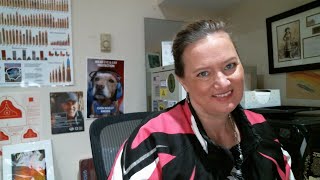
In this 15‑minute live stream, Brooke Cheney hosts “Suicide Prevention Saturday,” a holiday‑focused mental‑health session. She opens with personal context (being sick, holiday party) and acknowledges viewers. The core content covers (1) the heightened difficulty of holidays for those grieving a loss, especially suicide loss, and the need for self‑care; (2) practical self‑care strategies such as gratitude journaling, setting daily intentions, walking in nature, and allowing oneself to cry. She emphasizes body‑language techniques—shoulders back, head up, eye‑gaze adjustments—to physiologically shift mood, explaining the neuroscience behind eye direction. (3) She introduces the SafeTALK “T‑A‑L‑K” framework (Tell, Ask, Listen, Keep safe) for suicide prevention, stressing that anyone can help by listening and directing people to resources. (4) She lists concrete resources: dialing 211 for local counseling, free SafeTALK training offered by Litchfield County Creating Hope Corp, and a low‑cost QPR online course. (5) She briefly promotes an upcoming booklet “From Clueless to Confident,” about her journey with firearms and shooting instruction, asking for audience feedback. The talk ends with a reminder to practice posture, gratitude, and self‑care, and an invitation to future sessions.
Chapters
All right. Hey everybody. Uh, hey replay viewers, because you are the only ones who ever see the very beginning of this. And for anyone watching, yeah, I'm using a filter on Facebook, not so much on YouTube, but it's all right because I went to a party tonight, so I'm all dressed up and fancy and stuff. So I'm writing a list because it's Christmas time and, you know, Christmas time is all about lists. Not really. And you're gonna have to watch me with my nose because I've actually been like sick all week and it's really kind of sucky. So pardon me while I get rid of my runny nose. Hi, Leanne! Oh my goodness, really and truly, that's gonna drive me crazy. So anyway, hi everybody. Uh, let's see, Michael. Uh, I don't know. I can't read both. I can. All right. Hey, oh my gosh. Is it Mia or is it Rick or is it both of you watching me together? Cause then that's, nevermind. I'm not going to go there with you guys. I could though. Um, anywho, uh, Saturday night, mental health night. Um, I know I call it Suicide Prevention Saturday and I've been talking to a lot of people about this lately and really It's Mental Health Day. It's, it's being aware that we all need help and support when it comes to mental health. Um, like one of my friends who's watching, um, if it is Rick— Rick is a police officer, and so he gets to deal with mental cases all day long, including his co-workers. But hey, um, anywho, I am sorry, I am tired. I am on cold medicine. I've been sick all week, and I'm just kind of rambling because I sort of have a whole lot of stuff to talk about, and I'm really going to try my best to keep it to 15 minutes because, you know, it's a miracle anyone stays on for like more than 30 seconds, really. So I'm trying to keep it short. However, hi, happy holidays, Merry Christmas, Happy New Year. I think I've gone to happy holidays just because it covers everything. Rick, you're at work, keep up. Thank you, sir. Um, so let's see, where do I start? Holidays. Yes, I actually have a list. So holidays, holidays are hard. Uh, and we talked a little bit about it last. Um, uh, love you too, by the way. Sorry, I forgot that part. Um, and I keep meaning to call you, but it's like, I've— anyway, I'll talk to you later, Rick. Have fun at work. Stay safe. Um, all right, holidays are hard. Why are holidays hard? Because for those of us— if you've lost someone this year and this is your first holiday without them, whether it's a mom, a brother, a cousin, an aunt, an uncle, um, make sure that you take care of you. Everybody is with— talking much. I swear I didn't drink at the party I was just at. It's— yeah. So anyway, um, holidays are challenging, especially when it's the first holiday after you've lost somebody. Now it's even generally a little bit harder if you've actually lost someone to suicide versus other things, but to me, a loss is a loss. So, um, take care of you. So that goes into my next thing, which is self-care. So Suicide Prevention Saturday, mental health. Most of us are not doing a great job at self-care on a regular basis. We're busy doing stuff all the time, and we need to get better at doing the self-care for ourselves. For me, quite honestly, the Suicide Prevention Saturday, this was my self-care that I needed at the time when I started this last year. Because I needed an outlet. So as much as people thank me for helping them and serving them by doing this, honestly, I did it to help me. So let's talk about some of the handy-dandy resources that I got last weekend at my training, um, for self-care. So mind, start a gratitude journal. It is the simplest, cheapest thing you can do and it's amazing how it changes. Now, I had a gratitude journal going, and I made my children do gratitude journals for probably a couple weeks, and we kind of fell off. But it's very interesting if you take the time to do a gratitude journal. What you'll find is that initially it's sort of simple, and as you go, you'll you'll be amazed at how many different types of things that you can find to be grateful for. Um, set an intention for your day is another one in the mind. Go for a walk, go outside in nature. Um, obviously not in the crappy weather that we currently have in Connecticut, but I don't know where y'all watching from, so it might be nice where you are. But yeah, it's cold and yucky here in Connecticut right now. Um, ask for help if you need it. Go ahead and cry. It's okay to cry if you're sad. Grief and loss are something you can absolutely cry about. Uh, what's it called? Hey, Tiff. Um, uh, sorry. Oh my God, this is why everyone says don't read the comments while you're doing your thing because you get all off track. But, um, see, Florida, Florida should be a great place to be actually outside and walking around. Hey, Jen. Um, let's see, body, go for a walk, bike ride, do some push-ups. The one time that I got— we talked about body language, because sometimes if you are sad, you're very much like this. Your head is down, your shoulders are down, and you're looking down. Now, if I change just one of those things, put my shoulders back, so I'm opening up my rib cage and I'm opening up my chest so I can breathe better. Then that helps elevate my mood. Now, if I pick my head up and I'm looking up, I elevate my mood further because I am more erect and my head is no longer in the down phase. Because when you are feeling depressed, you are down and you are compressed. When you pull your shoulders back, put your head up, now you are not in because go ahead, just try it. Go ahead, just sit there like this. And you can kind of feel like, oh yeah, that's definitely more down. Now shoulders back, head up, look at me in the eyes, and then put a smile on your face. Yeah, as simple as that. Regardless of whether you feel like smiling or not, this changes everything. Now you wanna go another layer? So here's another little trick I learned. If you are in front of people and you don't wanna cry, you don't have to cry. And the way you do that is shoulders back, head up, and look up. Because, ready for the neuroscience part of the— today, this evening's education, is that your eyes actually tell your brain what to be thinking. So when I'm looking straight at you, I'm sort of in the middle. If I look down, my physical awareness becomes much stronger. And I feel more, both emotionally and physically. When I look at you straight on, now I'm just in the middle. When I look up with my eyes, what this does is it disengages my body and it gets me more in my head. So if I'm feeling sad and I start feeling that cry, you know, the tightness of the chest, the watery eyes, and I look up, it stops that. So I'm giving you permission to cry, but I'm also giving you tools and tips so that you cannot cry if you really don't feel like it. But make sure you get to at some point in time. Hey, Mo! Um, so self-care, that's part of it. Uh, mind, body, soul, scenery. Yeah, look at pretty pictures. You know, it's not like there's not 5 million cute little puppy pictures. Look at something that makes you smile or laugh. Watch a funny movie. All right, ready? Next one. It's holiday time, so ready for this one? Just say no. One of the best things you can possibly do for yourself is just say no, because we tend to— oh, thanks, Steph— we tend to say yes to too many things. And guys, I'm going to be a little sexist here for a minute, but women, we tend to try to satisfy too many people too much of the time. And as moms, as wives, as sisters, as daughters, whatever it is, we definitely want to do whatever we can often. And as long as we are being fed— thanks, hon. Well, see, and more— or watch me, I guess that'll make you smile. So that's awesome. Um, you're adorable, by the way. So my friend Tiffany, we've known— we went to the same high school together, and she's still out in Florida, I'm pretty sure. But, um, anywho, uh, self-care: smile, sit up straight, just say no. Oh yeah, just say no to stuff. Give yourself time and take care of you. Hey, Nicole! And realize that you can make a difference. One of the things that we talked about— where is it? Um, in the training I had last Saturday was suicide is a— suicide is preventable. Anyone can make a difference with workshops that teach life-saving skills. We're here to help. So the thing that I thought was important on here is anyone can make a difference. And the thing we talked about in our the training that I had, the SafeTALK training, was that you and I don't have to be trained counselors. You and I just have to listen. Where is it? SafeTALK, T-A-L-K. So why am I drawing a blank? Because I'm like, I'm trying to run through all this because I told y'all 15 minutes or less. So The first part is tell. Someone has to tell you that they're feeling suicidal. You're not just going to know. So I know people ask me that all the time. How do you know? How do you know? It's like, you really don't. You're not gonna unless someone tells you. So, um, and people tell you not necessarily verbally though, just to be clear, because it can be they're careless, they're moody, they're withdrawn, they're self-medicating too much. They're pulling away when they're normally outgoing, and make sure it's a shift, because like I have relatives that are antisocial and they're not suicidal, they're just antisocial. So that was the T, is they will tell you, but you have to be aware and be able to hear them. Ask, are you considering something as drastic as ending your life? L is for listen. Just listen to somebody, just be a set of ears on a head that says okay and don't try to fix them. You're not a counselor. Well, I mean, some of you might be counselors, but for the most part, we're not counselors, but just listening, letting someone know that you care. And, um, and then the last part is okay, keep safe. So the way that you and I can make a difference is by asking someone, by talking to someone, asking them, listening to them, and helping them be safe by simply getting them to someone that can help. Uh, 211 is one of my favorite things to say. And, uh, here in Connecticut, when you dial 211, it rings you to a local counselor who will talk to you. And then if you need help, they can then hook you up with someone who is local in your area and they can tell you what the, um, uh, what is available to you if you need help. So I think that's it. We're at 12 minutes, 13 minutes, all that fun stuff. The safe talk training is going on all the time, all over the place, and it's free. The one I went to was sponsored by Litchfield County Creating Hope Corp, which is here in Litchfield County. I'm in Harwinton, it's Litchfield County. Their mission is a nonprofit. They are a nonprofit organization in Litchfield County seeking to raise awareness for those affected by suicide and mental health issues. To fully achieve this mission, all proceeds will stay in the state of Connecticut, and they provide scholarships, grants to those who are furthering their education to focus on mental health. Once the reason I got to go for free, you could, um, go for free, and that is just one of the resources. So 13 minutes, just about done. Uh, any questions? Any topics anybody wants to cover? Uh, training is available to everyone and anyone. Uh, last week's, um, training— there's— I found an online one. There's a 90-minute one, QPR, I think. Question— anyway, I will go back and look, but I think it's QPR. And it's an online training that's like $25, and it's about suicide prevention. So you can make a difference, and that's the whole point. Just because I'm making a difference, and you might make a difference because you shared this video to someone, or you might make a difference because you did something like go to training and meet other people and grow your network of knowing people who can help other people. And I think That's it. And I have been so sick all this week, I cannot wait to go to bed. So I am cutting off at 15 minutes here. I don't see any questions on YouTube or on Facebook, so I will see you all next week. If you have questions— oh, for the love of peanut butter and jelly, if I could just remember to ask you guys to do me a favor on Facebook, uh, it's Brooke Cheney @facebook.com. And I scroll down my feed a little bit. I just put a thing on about writing a— you're welcome, Tef— um, writing a book in the next 30 days, and I would love your opinion. I am writing a book called From Clueless to Confident, and it's about my journey with firearms, going from really not knowing anything to a sponsored competitive shooter and instructor and owner of my own school. Um, which I never knew would happen. So what would you like to know about that? So there's my little plug, uh, in 30 days. It's probably going to be a booklet in 30 days. I'm probably not going to have an actual book, but the idea is to, um, do that. But I just want to know, what would you be interested in? And I have another post down below that's that. And now my computer wants to restart, so hold please. Um, so yeah, if you'd be so kind, give me your opinions there, or you can leave them here and I will read the comments here as well, of course. So good night, adieu, have a nice weekend. Smile, shoulders back, head up, look up from time to time, start that gratitude journal, and life will be good, or at least it'll be a little bit better. All right, good night everybody, and I will see you next week.










