Suicide Prevention Saturday - The Barber Shop edition.
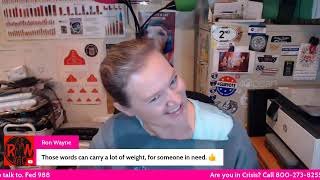
In this live YouTube stream, host Brooke Cheney (joined by co‑host DJ) frames Suicide Prevention Saturday around the stark statistic that two‑thirds of U.S. gun deaths are suicides, arguing that suicide prevention is essential to violence prevention. She shares personal updates, then introduces a key resource: the Confess Project of America, a nonprofit that trains barbers and beauticians in Black communities to act as frontline mental‑health advocates. Brooke explains the founder Lorenzo’s background, the cultural role of barbershops, and the scale of the training (over 3,000 professionals). She also highlights practical tools for viewers: QPR (Question‑Persuade‑Refer) training as a mental‑health “CPR,” the national 988 crisis line, and EMT training that includes self‑care and mental‑health awareness. Throughout, she intersperses anecdotes about her own EMT coursework, recent community events (Women’s Expo), and motivational clips from Mel Robbins. The stream ends with a call to action for viewers to share resources, support the Confess Project, and become “pathfinders” who can help others, emphasizing that anyone can be a conduit for help even without being a therapist.
Chapters
All right, technology is spectacular. Um, hi everyone, it is Suicide Prevention Saturday and my name is Brooke Cheney. And I, you have to, I need to hold on just a second here. Okay, sorry. Um, technology, it's awesome when it works and it's confusing and all of that fun stuff. So anyway, proper introduction. Hi, my name is Brooke Cheney. Welcome to Suicide Prevention Saturday. Uh, usually I would say replay viewers are the only ones who see the very beginning However, I already know that I have DJ with me because, you know, he's my co-host tonight, uh, and Mike White already said hi, and, uh, 500 Magnum is also saying hello. So Suicide Prevention Saturday, why are we here? Because 2 out of every 3 gun deaths we hear about from the CDC are suicides, and if we want to get serious about saving lives, we need to talk about suicide prevention. And here's the thing— hey, Dean, how are you? It was nice to see you last weekend. It was fun. You have to send me those pictures you took because of us all together, because I don't have any of those. Um, so this is, this is the fun part. CDC knows how to do suicide prevention. Funny part about that too, honestly, a lot of the stuff that have to do with suicide prevention, the mental health advocacy stuff, happens to help with violence prevention as well. If people would actually talk about suicide prevention, we would actually get somewhere with violence prevention, because what is suicide? Suicide is the ultimate violence against yourself, really, right? Um, so today— what time is it? It is late. My brain is fried. It is 9 PM Eastern here in Connecticut. I have had a long month. I don't think I've talked about a lot of it this month, Hello, Mr. Woods. Oh, DJ, you can go ahead, drop the banner thingy. I won't mind, I swear. Busy month. This weekend, today and tomorrow, I'm in Bridgeport, Connecticut at the Women's Expo from 9 AM till 4 PM. Basically, the show is actually open 10 to 3, but we are there before and after, right? So that's this weekend. The last weekend I was in North Carolina with Dean. Like, I just said hi to Dean and he's got to send me pictures. And so my daughter and I got to go do that. The weekend before that I was in New Hampshire helping at a, uh, a gun range, which you know because I did my thing from the hotel room, or those of you who are regulars here. So it's been a crazy busy week. However, week, month, the, the week things, uh Oh wait, see, I goofed here somehow. I forgot to do all destinations. My bad. All right, what am I trying to do? Hmm. This week, one of the things I got to do was I get emails all the time. I'm signed up for tons of podcasts, and I happened to click on an email that was talking about You Can Make a Difference, a remarkable story to inspire you to do something big. It is part of the Mel Robbins podcast. So, uh, hold on, let me get there. The short version, because like the, the title tonight— Facebook up here, YouTube down here— is the Barber Edition. So here's the cool thing: you and I have the ability to help people around us. And who are we most likely to help? We are most likely to help the people who we used to be. Back in the '90s, I started following this guy called Tony Robbins. Some of you might have heard of him before, maybe not. And he was just sort of the self-help guy. And we went and worked with him, my husband and I, and walked on fire, ate fire, bent spoons, all sorts of fun stuff. So by starting that, I worked on me because '90s, I'm not that far away from my teens where I was suicidal, right? And so I knew I need to crawl out of my hole at least a little bit. So I had to look for resources. And my goal here tonight is always to give you a new resource that you didn't know about before. So what do I do? I continue my education on a regular basis. So when I watched the Mel Robbins podcast, she talked about this guy Lorenzo. Hold on, I have to look at my notes because I It took me forever. So Lorenzo started the Confess Project of America, and if I do this right, you'll get to see it on Facebook. Oh, I don't— yeah, it's reminding me that I'm here with you guys. There's Lorenzo standing there in the middle of a thing, and there's some barbers all around him and clients. So why did he start the, uh, and what is the Confess Project, right? So DJ has already dropped the links, they're already on both the Facebook side and the YouTube side, or at least they should be. Um, if not, let me know. Oh, and there's also— they should be in the description of this thing. So what is the Confess Project? Here's what Lorenzo did. Lorenzo was born in jail. His mom was incarcerated, and, um, that's where he was born. By the time he was 10, his father died while he was in jail. He— the dad was in jail, not Lorenzo. At 10— at 17, Lorenzo got thrown in jail for firearms stuff. And when he went before the judge, he basically said, I promise I won't come back to your courtroom. Because he'd already been part of the gang. He had seen it. Now, when he was born in the prison system, his aunt and uncle came and saved him. He was born in New Jersey. His aunt and uncle, where are they? Arkansas, I think that's where they are. So his aunt and uncle took him in. His aunt was a hairdresser, and so most of Lorenzo's life he was in the hairdressing area. And for Black communities, that is like sort of like the hub almost where everyone goes and chats. And it's sort of like, if you watch a lot of things like Martin Luther King and civil rights movements and that sort of stuff, that barbershop was a lot of times where they would meet. So Lonzo goes to jail, he gets out of jail, he goes to college, he actually does social services for a while, and he sees the revolving door. And what happens basically is he remembers, you know, with both parents in jail, he had a really high likelihood of following in that pattern. So, um, he, he went into social services, he saw people coming and going, and he really felt what it was is he was hearing there was a disconnect. A bunch of white therapists were trying to talk to a bunch of Black people, and there was that disconnect of not really understanding what was going on. So what Lorenzo did was he quit his job, and he went and he created this nonprofit where he trains barbers and beauticians in the Black communities to be mental health advocates. So just like me, I am not a therapist. I just try to help get you guys to think about, listen to, and talk about mental health. But so he's trained over 3,000 barbers and beauticians how to be first responders, as it were, in the mental health area. Because in this long podcast of Mel Robbins— hold on, let me, I'll show you a picture of it.. And I'll play a little tiny bit of it in a minute, but it's an hour and a half. No, it's an hour and 20 minutes, which is long for me because, you know, I like to be in and out in 50 minutes. So in it you can get all the depth of that story, but the long and short of it is people talk to beauticians and their barber, and in the Black community it is that much more important. And men especially have a hard time reaching out, but when they're getting their haircut, they will chat about everything apparently. So like I said, ideally it's something that we can help grow. Uh, check it out. I can only show you the Facebook side today because when I try to go to the website, it says it's under attack. So unfortunately, he probably got a ton of, um, exposure because of the Mel Robbins podcast because she's seen my 2.9 million subscribers. So here's Mel Robbins. Actually, no, before we do that, ha, DJ, I know I said hi to a couple people, but do you want to do the rest of the roll call please while you are here?
I'd be happy to do that. Krabby Turtle was most recent to join the chat on the YouTube side. On the Facebook side, we got Michael Bellinger joining the chat tonight as well, and Ron Wayne. To get back to that YouTube side, everybody else you welcomed in Okay.
Oh yeah. Hi, Ron Wayne. And I see that he said hi to Crabby and Turtle. Wait, no, he said Crabby Turtle. Okay. Someday I'm going to be so fancy I can make those little icons too, because I'm not a YouTube person that I know how to do that. All right. And I'm— I just, because we're sort of in the middle here, I'm going to go ahead and answer G Web's question. Is there anything like CPR training for mental health to give interested people skills? The answer is yes. QPR training is one of those things. It's question, persuade, question— QPR: question, persuade, refer. It's— when I did it, it's like a day-long training. It talks about how people are afraid to ask other people if they need help or if they're actually considering committing suicide because people don't know and think that if, if you're my friend, right, and I say, "G-Webs, are you feeling suicidal?" People are afraid that then G-Webs will not be feeling suicidal, but because I said it, he will then be suicidal. And that's just one of the things you learn in the QPR training. There's a lot of links. Let me see if I can find any of them real quick. Uh, QPR training. Now the other places— my son actually is doing EMT training now, and hold on, I can copy and paste. Um, there's other mental health training that are available. The other thing, the other resource I would suggest actually is the 988 number that we talk about, because you can call there and find out what's available in your area. For mental health training, AKA like CPR. So let me show you real quick the link I just dropped, uh, for the QPR Institute. These are usually free classes, um, that you can attend. Uh, I mean, mine was— they have volunteers do them, or they're on a subscription basis. Oh, what else? Become a Pathfinder, we can all save lives. Um, so here you go, there's individual training for you, organization training. So like if someone at your job decides this is a great idea, then that is something to do, and you can become an instructor, student, all that fun stuff. So that is QPR, that is the easiest, quickest thing that I know of for or something that's similar to CPR training but for mental health. Now, the Confess Project of America— I know that you and I may not be barbers or beauticians, but again, my goal is like tonight— yes, today while I was at the expo, I talked to a lot of people and I'm just like, come watch tonight because the more people that you can let communities know about stuff like this. So even if you're not a barber or hair professional, at least let someone know that knows a hair professional that can go and do that. So that is my thought as far as letting people understand and know. Oh, um, and then were there any mental health element of your EMT course? Yes, uh, when you take EMT courses Mental health is probably one of the most— one of the many things, because it's actually twofold. When we're taking the EMT course, we're actually— they focus more on us as EMTs to make sure that we take care of us. Because for many people, it is hard to see people squished on the side of the road, or a dead baby, or dead anything, any people and, and/or body parts in ways that they should not be. So in EMT training, they do actually talk more about us as far as if you have a bad call, talk to someone, don't just suck it in. Uh, when I did my EMT training last year, one of our instructors actually had to take a week off because he had a baby die, and it was rough. So there's two parts. One, they train first responders and EMTs to take care of themselves, but two, they do AQPR or something along those lines of how to be aware. Hopefully you guys will go and watch the Mel Robbins video I'm going to show you in a minute, but they talk about— it's very, very simple. Again, it, like I said at the beginning, violence prevention, suicide prevention are are so very similar. Basically, if someone is having a bad day, rule number 1: don't judge. So they're having a meltdown over the fact that they got skim milk in their latte versus the almond milk. Say, "I'm really sorry. I hope it gets better." Active listening without judgment. Understand that— make them understand that you have heard what they're saying. You can— the response can be, okay, I'm sorry, or what can I do for you? Um, but do judgment-free listening, active listening, actually respond to them. There was a third part which I don't remember. Like I said, it's a long thing and it talks about— they touch on what they teach the barbers and that sort of thing. But here's the thing, cops, EMTs, first responders of all types, the first thing we're taught is to get you to be calm, or to try to— we have to first stay calm, and then we have to get you to be calm. It depends. The joy of shock is you're usually very calm when you're in shock, so we got that going for us depending on what the issue is and why we are there. Um, so yeah, there is absolutely EMT training in, uh, pretty much every first responder stuff. Huh, Mario, how are you, my buddy? It is early over there on the West Coast. I hope you're having a yummy dinner or something. Um, all right, sorry, I'm not actually trying to laugh at Mike, but, um, the ambulance rides right now for my EMT training was just going from one place to the next, and it was going to an old folks home, picking somebody up, transporting them to the hospital, and back and forth. So that's what my ambulance rides were. Uh, you're on call, so you never know what you're gonna get, but that was what most of my contacts were. The good news is the horrible calls are not that often, but you do have to be ready and aware for it. I'm still not an EMT. I did go through some training for those of you just joining, and it's been interesting. All right, let me introduce you to Mel Robbins. This is actually the end of her, her, her video. This is the one that I watched, the Mel Robbins podcast on her YouTube channel, Mel Robbins, with 2.9 million subscribers. And here's the thing, at the end of this, she's explaining why she just wants you to listen, and how much she thinks you like the interview. So I'm not going to make you watch the hour and 20-minute interview, I want you all to do that on your own time. But I always love Mel's closing. So with that, I'm going to mute myself, I'm going to play like 2 minutes of this.
And you don't need permission. You don't need to be asked. You are in the best position to serve the person that you used to be. Remember that and go do it. And in case nobody else tells you, I want to remind you that I love you. I believe in you. I am here for you every step of the way. And, uh, I know you got what it takes to create the life that you love. Now get out there and go do it. And I'll talk to you in a few days. That was that chicken garlic situation.
All right, sorry. So I love her ending. It makes me cry every time. Like, do you remember? You are loved, you are worthy, and you can help other people. And that is my goal for Suicide Prevention Saturday. My goal is help one of you be able to help somebody else. And then they can help somebody else. Since I was a wee child in my grandmother's house where she was one of the first Amway people, and there was a chart on the wall and it showed you, and then it showed 3 little lines, and it was you reach 2, and then those 2 reach 2, and then those 2 reach 2. And that pyramid scheme thing, which I think Amway was the original, It really makes you understand how your story, like G23, I don't remember if he's here or not. G-Webs, everybody's, everyone has a story that can help someone else know that they're not alone. And you're always going to be a step or two ahead of somebody else. You don't know who, but there's probably someone out there that you can Angie Webb. No, it is not a Tony Robbins family member. Uh, Mel Robbins had a talk show on like NBC, ABC back in 2006, 2007, somewhere in there. She then— she lost it, uh, almost lost everything. And her— yeah, the Robbins name has nothing to do with it. Becky Robbins, uh, is Tony Robbins' first ex-wife, and then Sage Robbins is his current wife, and he's got a bunch of kids. So, uh, anything about Tony Robbins? He is really that tall. I've been in person, and yes, we do walk on real fire, and yeah, we eat fire too, because, you know, why not go to the next level? So, um, Ron White, yes. I'm not sure which words, but yes. Um, just to remember you are worthy and you are important. And when someone is suicidal, they generally do not feel that. Many of us on a regular basis hold up the measuring stick of who we are to someone else. And the thing that things like Tony Robbins, Mel Robbins, um, Billy Deena's marketing, um, Ed Mylett, Dean Graziosi, all of the people that I do for self-help and making myself better. It's like the only person you need to compare yourself to is the person that you were yesterday. And are you just a little bit better? And here's the thing, no matter how messed up you are, no matter how much you suck and you're spectacular at failing, because I am a spectacular failure on so many levels. Um, and I fail all the time, and it's a good thing because if you're not failing, you're not trying. And these people's like, I have to win always. I'm like, no, you're not gonna win always. No one does. However, we can make it look like we're good. So yes, thank you for that. Sorry, um, DJ, because, uh, theonetrifoundation.org is one of Mario's favorite places to go to help people., and it's another lovely resource. For those of you who are on Facebook side, it's onetribefoundation.org. I think there's another one anyway. Okay. All right. That's what I got for you guys tonight. The Confess Project, barbers, hairdressers, and Black communities being frontline mental health advocates. Remember, we don't have to be therapists. We just need to have resources. Whether it's a 988 number, a 211 number, a anything like that. So DJ, I swear I just saw you unmute for a second. You got something?
I was just gonna give that roll call when you were ready.
All right, go ahead.
All right, well, joining us today from the Facebook side, Michael Bellinger and Dean Sitten. On the YouTube side, Moo was out there, so was Mike White, 500 Magnum Woods was out there, so was Ron Wayne, the Krabby Turtle, and Mario Mosen.
All right, well, with that, I think we are done. I met a whole bunch of people today at the Women's Expo. I hope some of them are here or watching the replay, even if they're being quiet about it. And I hope people will share this, like it. If you're not already subscribed, subscribe it, because, uh, I don't know, Hillbilly is going to be starting up in about half an hour. Hillbilly Nation, you know I always mess up DJ— what's the name of his channel? Hillbilly Up. Thank you. And the, the funny thing is, and I told him this, is that whenever I go to YouTube, it's always his channel that comes up now, and I don't know why. It's like somehow I made him my, uh, home screen, because I have no idea why it goes to that and not to my channel, because I go to my channel more than his. Oh, and the Aussie made it here in the last moments. So anyway, uh, that's it. Sorry, if only I had stopped 2 minutes ago. All right, what am I saying? I'm saying good night. DJ, you got anything else to say? Like, good night? Good night. Okay, bye. Have fun at Hillbilly Up's channel. See y'all later.










