Suicide Prevention Saturday - The conversation continues
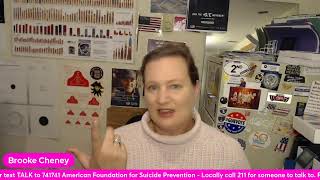
The livestream "Suicide Prevention Saturday" hosted by Speaker A and co‑host DJ opens by highlighting that two‑thirds of gun‑related deaths are suicides, prompting a focus on suicide prevention resources. The hosts discuss anxiety over YouTube censorship, having been cut off twice in four years, and consider rebranding the show to avoid platform restrictions. A roll‑call introduces community members (e.g., Mike White, Viejo, Woods, Gun Websites). The core conversation centers on the hidden emotional toll experienced by first‑responders and animal‑care professionals—animal‑control workers, veterinarians, EMTs, firefighters, and police—who regularly confront euthanasia, trauma, and secondary stress. Personal anecdotes illustrate the difficulty of putting down named pets, witnessing mass‑casualty scenes, and coping with grief. The hosts stress the importance of accessing crisis resources (211, 988, 741‑741) and encourage listeners to seek help, practice self‑care, and give themselves permission to ask for support. They also discuss potential platform migration (Patreon, Rumble) and solicit ideas for rebranding the show. The session ends with reminders about breathing exercises as mini‑meditations and a call for community engagement in future episodes.
Chapters
So hi everybody. It is Suicide Prevention Saturday. And why are we here? Because 2 out of every 3 deaths we hear about are suicides. Um, as I am waiting, I have to wonder, normally there's a 10 or 15 second delay, but DJ, are you watching YouTube Live as well?
I've got that on check and the announcement just went out. So yeah, it's good.
Because I'm like, I actually have it up for the first time in a while, and I'm like, oh, tell me I didn't get kicked off before we even started. All right, thank you, sir. So yeah, so, um, all right, so you start on Saturday because 2 out of every 3 gun deaths we hear about are suicides. And because of that, as gun owners and people who actually want to save lives, we want to make sure that there are resources out there for people. Suicide is not something that people generally easily talk about. I've been talking about it since I was a kid, so I don't realize that people don't talk about this very often. So every Saturday since 2018, we show up here 8 AM or 8 AM— wow, 8 PM or 9 PM on a Saturday night, unless life does not go according to plan, which is from time to time, and then sometimes it's a Sunday instead. So DJ and I were talking just before we came on, and we're talking about my anxiety over the show right now, because 3 weeks ago now, we were 15, 20 minutes into it. Viejo, I know that you're mad about this, so I'm not trying to rub salt in the wound, I promise. But, you know, 15, 20 minutes into it, YouTube cut us off. So the question is, do we stay here? Do we rebrand? Do we call it something different? I don't know the answer to the question. To be fair, I actually have been here on YouTube for 4 years, and out of those 4 years, we've only been censored twice. So considering it's every single week, so at least 52-ish times times a year and we just had a leap year, so maybe that was 53. It kind of works out because the odds are in our favor because that's a lot of broadcasting. However, in talking about stress, like my anxiety over please don't let us get, you know, hacked again. I know it's not a hack, but it kind of feels like it because they're obviously not paying attention to what we're talking about or doing. So We— oh man, sorry, DJ, because the dude who just got in and said made it. Shall we do a roll call just real early so that you have to track for a long time?
Absolutely. Uh, we had Guns and Barbecue in last, we had Mike White 2A Advocacy before that, Viejo is checking in from California, Woods of the Pacific Northwest is out there saying hey to everybody, and Gun Websites was, uh, that's ostensibly the first guy in the room. That's your roll call.
All right. Thank you. And maybe, just maybe, G Webs is getting me some cookies. I don't know, because he said he was going to get some food and be back. So with any luck, he's got cookies for me. I'm sure they're not as lovely as— well, sorry, I shouldn't say that. You know, not like Bubba's possum stew, but that's okay. All right. So anxiety, we all have it for different reasons and we all deal with it in a different way. And it deals with us in different ways because different things bring stuff up. We're talking about how all of us have challenges. Some of the challenges you know about, some of the challenges you don't, but for the most part, we usually hide everything and we don't generally talk about what our issues are. When, um, Mr. Ballinger isn't out there yet, or at least not that I saw, But, um, sorry. Um, and yes, rebrand is Mental Health Saturday. That's a possibility. Um, it's, it's one of those things where, uh, Guns and Mental Health is already taken by Walk the Talk America. Um, but there's, there's stuff like that. So yes, any ideas you guys have for rebranding, by all means drop it below if you're watching the replay on here., or you can drop it in the chat and maybe DJ will be good enough to star them for me so that I don't have to go back through the whole thing. Um, so that sort of thing. All right, DJ, I'm so losing my track— train of thought. What are we talking about?
Well, if you wanted to wait for, uh, Michael Ballinger, um, we could talk about something, but if you want to jump right into that we could begin to talk about some challenges that other people face.
Okay. We'll just do that. Cause Mike and Pam will probably watch the replay if they're just not already here and just haven't said hi yet. So, Mike got a job at the animal control in the next town over. And the hardest part is putting down dogs that are not able to be rehabilitated. And he was just talking about how difficult it is to put a dog down that has a name. And some dogs come in, they've got collars with names on them, and other dogs come in and they just give them names because you have to have a name with a dog in order to help train it. So, uh, the putting down of any animal is hard. Now, Mike's job is to help with rehab and that sort of thing. And some animals are just not able to do that. And he was just talking about the challenge of having to choose to put an animal down. And for those of us who had animals in our lives, I remember the first time coming home from high school one day, my uncle says, oh, it's time for you to take your dog to the vet and have him put down. I'm 16, maybe 17, and all I could think of is, isn't that for adults to do? But no, he's like, here, take your dog, go to the vet, put him down. And it's just like, okay, I can do that if I have to. And so I put my dog in the car, drove to the vet, dog got the shot, and that was the end of my dog. He was sick, um, it needed to get done. But at 16, 17 years old, certainly not the thing I want to do as soon as I got home from school that day. So it's different when it's our own versus someone else, but the emotional pain and suffering that we all go through for losses of all sorts of things— we're talking about, um, animal control, animal rehabbers, uh, EMTs, firemen, policemen, all of the people in our lives that do all of these heroic things, such as try to save lives on a regular basis. And these are some of our people that need the most help but cover it up the best. I have a friend of mine who is— has been an EMT for a long time. She's now in nursing, and she has plenty of her own issues physically, and she covers it all up with humor. And one of the things I learned going through the EMT class is that a lot of the folks in that line of work where you're the first responder, you're showing up and, well, you know, the guy's hand might be over there, but the rest of his body's over here. There's a lot of dark humor around that because most of us never have to deal with anything like that. It's like even the ER docs and the nurses that I talk to, it's like EMTs have kind of the worst part as far as they get you before you're not packaged up. And EMT's job is to package you up nicely so that you can get to the ER. And so once they get to the ER, they still might be in rough shape, but not as bad as found on the side of the road kind of thing. Now, uh, Mike's thing, which I'm putting— I'm looking for it. Uh, it just talked about how that we all go through all of these different emotions. And I'm going to read it because it made sense. So animal control professionals are human and experience a level of emotions that many individuals might not even understand. Such emotions as anger, frustration, and sadness are frequently hidden by animal control professionals. Now, same is true for any other first responders, because let's say you find an animal who has been beaten and abused, and that's why they're not rehabable. I— that would make me angry. It's like, wouldn't it make you angry? So, um, same thing, uh, in EMT class, one of the things I talk about is EMTs hate kids. And it's not that EMTs hate children, it's that the smaller the body, the faster they can tank, and the more distressing it is when you lose someone tiny and small. When I was in class, our paramedic who's teaching the class or some of the classes had to take a week off because he lost an infant. And it's one of those things like they always tell you, make sure if something bad happens that you talk to someone. Now this is where the resources we give you, like the 211, the 741741, 988, all of those resources really are someone to talk to and to take advantage of those things if you need to. Here's our other challenge. So often we're like, suck it up, buttercup, you can deal with it or let it go. And sometimes that works for some and not for others. So DJ, based on what we talked about before, did I get it all? Did we forget something or is that about right?
Well, uh, the high points have definitely been hit. And in the pre-show chat, um, when you read that to me— wow, Animal Control, um, nobody likes to put down a pet, as you were talking about. Uh, but this thing that stood out most was putting down a dog with a name. And that in particular, because they're a mammal, we have this mammalian kind of like bond, even if we don't like dogs or cats or a lizard. Well, lizard doesn't count, right? But anything—
some people love their lizards very, very much.
Absolutely, absolutely. I'm on that. Um, there isn't— it's an emotional thing for a lot of people, and it's not something we think about being a recurring emotional challenge to people like those in animal control., and I don't mean to suggest that somebody doesn't sit and think and thank those people more than just those who they— families they interact with, say, like in the ER kind of thing. But, you know, one of the things about EMTs, those long hours, and, you know, being— you're triaging this person, you know, whatever. You don't know what you're responding to aside what the call was, what the call said, and on scene you have to triage. There may be danger there. You have to consider so many things. You said first a responder? Well, hell yeah. And when you're responding to those things without a police presence or without the ability, and on most jurisdictions, to be armed yourself, you have to wait for the scene to be secured. You can't offer the life-saving that you've been trained, that you want to give. So perhaps in some of those situations, what, you know, in eventuality there is that they're going to have to deal with situation where they may have lost someone because of the delay.
Right. And I mean, and they do totally, like, they don't beat it into you, but kind of, it's like, scene safe, number one goal, because you don't want to become the patient. And then when we got into like mass casualty events and that sort of thing, like, you know, a bus crash or bus crash or something, it's like the whole idea that if I'm an EMT, I got tickets and I get to put a red tag, a black tag, or a yellow tag on you. And well, if it's a black tag, then either you're dead or you're gonna be. And I— and you could be lying there bleeding out, but there's 30 other people, and I got to give you a black tag because there's nothing stopping you from dying, whereas I can save the other 15, but I can't get the 5. And for us in general, like us being humans, one, we overestimate all the stuff that we can do. We underestimate the impact that we truly have, and then we beat ourselves up for the stuff that we can't do. And this is where all caregivers, whether it's for animals, humans, or whatever— it's just like, not that I know it's beyond animals and humans, but I'm like, there's got to be a third thing, um, because 3 is a lucky number. No, so It's just, it's pretty amazing that we all deal with stuff, and it's not all life or death stuff, but there's plenty of things that make us stressed out and are very, very hard. All right, I am looking at the starred stuff. Uh, there's nothing there. So DJ, are there any things that I should pay attention to? And do we need to do another roll call since I last asked you?
Yeah, I'm going to catch that at the end of, uh, a couple of things that were up there. One thing that I did star, I thought, was Guns and Barbecue. I was bringing humor. To Saturday evenings, says it's a leap year or leap day, never a leap week or leap month. It's lame. And there are a couple of suggestions for rebranding, um, so we'll check those out after show. But down here, I gotta scroll of course, and it's a long way down. Mike White on your screen right now, he says, working at a veterinary hospital, I see all sorts of things that make me say that I need to find a different job.
Yeah, I'm with Mike White because I was very confident I wanted to be a vet. I thought it was going to be really cool because I get to go to med school. I could know at least how to work on humans a little bit, but I just realized I did not have it in me to be able to put those animals down. And it's just like— and I, I talked with our vet sometimes as well, and it's just one of these things where it's just like some people bring in a perfectly good animal and are like, okay, we need to put him down. And the vet's like, how come? Oh, we're moving. And there's nothing that says they can't do that to their animal. And it's just one of these things where it's just like, yeah, I'm not sure. I don't think I would be a good vet. I think one of two things would occur. I might do something not nice to a bad pet owner. And then, or, and, or the other part is I would hoard all the animals that they wanted me to put to sleep instead. So yeah, being a vet would be very difficult.
Um, you know, I don't want to— I, I just like to add, add something real quick about that. And there are rescue agencies, groups, there are places to place unwanted pets. Here's one of the things at least that happens in my— you know, where my Humane Society is. Yeah, they're fine. They're finally coming around. The community has a bully breed ban, and that's also across the river in Council Bluffs, so it's the extended metro area here. And they finally— at, uh, the Humane Society began to assign breeds as mixed breeds because otherwise they would have to put them down. Now, people always— not always Many people associate pit bulls and bully breeds with violence, with not being able to be trained. And I'm not here to talk about you can rehabilitate any dog. That's not my— you know, I, I don't do that for a living. But that— I just want to have everybody remember there are— there's a step in between wanting the, the dog to be euthanized because you don't have the same kind of relationship that others do. There are those who are willing to extend what they have, you know, their hearts, their hands, and their resources to do those things. So find those people, find a way to preserve the lives that are already here, I guess, this kind of thing.
Yeah, no, absolutely. Um, yeah, so, uh, Viejo's thing of part-time with country fire department many years ago as an EMT, small community, tough with responding to death of a friend. I saw ghosts for a long while. Yeah, I have, uh, some of the folks I met through the EMT training were EMTs for 15, 20 years, and then there's that one accident, there's that one thing that happens that they're done. Um, and, uh, one of my friends went to do his recertification because there was a really bad accident, car full of teens, did not go well. And it's like, and that was his one accident. That was a lot of people's one accident. Because it was a super bad crash. And it's like, you'll be fine, fine, fine, fine, fine, and then there'll be something, that straw that breaks the camel's back, right? We all have that, and it doesn't have to be as dramatic as, um, a car crash full of teens. It can be something as simple as someone leaving you again. Abandonment, that sort of thing. To DJ's point, unfortunately, the thing that he talked about when I said, you know, when I was talking about some people will come to the vet and have them put down an animal because they're moving and they don't want to take it with them, it's like they won't give it up to a rescue because it's their animal, and so they want to decide what happens to it. And to me It's a little bit ill, but this is just the challenge, is that we do all have different personality types that we deal with on a regular basis.
And the fact that animals are property, and that has to be dealt with often by, you know, city, state code. That's the way that it— that's the way that that cookie does crumble. I wanted to bring Viejo's comment up one more time because reflecting on that last portion there I thought of the fact that especially in a small community, but everywhere that EMTs and others serve, there's a constant reminder because of the exposure to rolling by the site. And it might be additional points. And I'm not talking about the hospital. I mean, site of accident, perhaps the family's homes. You know, every time you would roll past those kind of things, it'd be really hard. A great big deal of distraction would be required, at least for me. To be able to get past those things without having it be constantly recalled. And we're talking about some of the stresses that we don't think of that are associated with those positions, and that's exactly one of them. So thank you, Viejo, you gave me some extra perspective there. Burnaby Sanchez just in the room.
Just— all right, did you say hi to Saria Fam and Chasing Ghosts yet? Did you?
Did you? I haven't. I would— I will I will do the full roll call near the end. Here we go. So, uh, this is from Woods. I want to bring this up too. Um, second, uh, shifted on me. Secondary trauma is real. If you're around, respond to a threat, others' trauma over and over, it affects you eventually. No doubt whittles down that which you had already, and you have to have stuff in reserve. And if you don't that day responding to stress, uh, you know, when it comes, you know, to that kind of situation, it might be sideways in your head. You might have to like do the step back kind of thing. And yeah, I've been in a couple situations like that. We may talk about those in the future.
Well, and then just the idea of if you are around, because we had an issue in our family where we're the caregivers for someone who was in need, and I took most of the caregiving on, but it still affected my husband, my kids. Because I'm exhausted because I'm taking care of someone else. And now my kids and my husband get to deal with all of me being tired. And this is where, um, we always have to remember, sit up, take that breath and let go. Because if we don't take care of ourselves, make sure we've got food and water and sleep, we can't take care of ourselves. But we get so caught up in taking care of someone, we forget that. And then we also forget about the, um, the shrapnel around us, because it is just emotional shrapnel as well. Um, so yeah, and, um, like I said, all of these numbers— you don't have to be suicidal to need someone to talk to. You know, 211, 988, all of these are simple places you call, say, yeah, I'm looking for help with X, Y, and Z. Like we've talked about before, some of them have resources. Like, let's say you're financially stressed because you've gotten in a car accident and you can't work, stuff like that. And these are the things where it's like, yes, we can take care of ourselves usually most of the time, but we have to give ourselves permission to ask for help. So when DJ was talking about, you know, driving by the site of the accident, it's like when my sister was killed in a car accident, I used a different road for a while because it's just like there, right there, that signpost right there, that was where the squished car was. And when you're an EMT or a firefighter or someone who's a first responder, those spots are everywhere for you, especially if you live in a small town like Viejo did. So, um, all right, woods, you have to expand further because treat but threat as well. I don't understand. Um, so there's that. So anyway, what's the goal? Sew So Wrench on Saturday, let's do what we can to maybe rebrand so it stays online. Or we just leave it alone and see if I get another 3 or 4 years before they cut me off again. For those of you who are on my Patreon site, DJ and I were just talking about this before. My Patreon site might be coming down and we might go somewhere else like Rumble. Although I guess the, the powers that be don't like it when you talk about other platforms, so I won't say that out loud again. And I don't know. That's what I got for you guys. Like I said, I usually try to make this 15, 20 minutes, a little bit of something to talk about, a little bit of resources. Um, uh, if I get into that now, this is going to be another 45 minutes before I am done. But the short version is, if you're looking to support me and help me by sending me cash or money, I would prefer that a percentage of that doesn't go to an anti-2A platform, is the short version, um, assuming that is the question that you are asking. So anyway, um, yeah. Oops, sorry, DJ and I clicked on your thing at the same time. Um, yeah, you have to give yourself permission to ask for help, especially those of us like VA hope EMTs. Uh, I don't know what my role is other than I like talking to people and sort of trying to help them. So because we're so busy taking care of someone else, it makes us feel better. However, I'm not gonna lie, there are times when I will take care of you in distraction for myself so I don't have to deal with my own stuff, because it is so much easier to look at somebody else, like, oh, let me do this little thing for you, it'll make things better. And the reality of it is, um, that we can do that easier than we can fix the little thing that we need to do for ourselves. And it's a lot harder for us to do the stuff for ourselves. So yeah, giving yourself permission to help yourself is challenging for those of us who prefer to help others because we like giving and we have our palm open. Remember, I think we did this last week, and with my hand open, you can receive stuff and I can give you stuff. If my hand is closed, I can hold on to whatever is in here, but I can't share it with anyone. And we just have to have that good balance between one and another. So DJ, a couple other folks came in. You want to say hi? Any other, um, comments that I didn't see that we need to talk about?
Right on. You take a look at the comments while I slow down the roll call a little bit. Last in the room, Tactical FUD. How you doing, bud? Uh, Bernabe Sanchez was here as well. Saria Fan, good to see you out there. Chasing Ghost is out there, so is Mark Thomas. Fiona is out there rocking out. Thanks for being here. Mike White is also in the room, a regular. So is Viejo. We had Woods from the Pacific Northwest, that's the guy. And Gun Websites is out there, he was the first one in the room.
Uh, very cool. All right, so Saria Fan going on vacation 3 weeks, don't know where, but I need time for myself. Exactly. So, um, lots of us need time for ourselves that we don't usually take. Uh, my husband actually works internationally, and we were talking about the folks over in Greece. Uh, 5 o'clock hits, they're done for the day. It doesn't matter what they're doing. And I've worked in corporate long enough where it's just like working with Europeans is challenging. Because they have very strict rules. It's like they work 9 to 5 and they're done. Having been in IT as well, it's kind of crazy how it's like we'll work around the clock, not really think anything of it. And Americans are a little messed up that way. We do need to take vacations. How many of you out there have a week or more of vacation that you never use, and then like, oh, I'll use it next year, and then next year you've got 2 or 4 weeks like, ah, no, no, I don't have time, I don't have time, and then you have more weeks and so on and so forth. We got to take time for ourselves. Now here's the beauty of it, one last thing before I go. Take a breath in, let the breath out. That little pause after you let the breath out is a mini meditation, and just there you'll be present while you're paying attention to that, and you've just given yourself a mini break. Because your brain isn't thinking about anything other than that pause. And that is your mini vacation for those of us who don't like get 3 weeks like Saria fans going to. So with that, that's all I got for tonight. It's almost a full half hour. I went blah, blah, blah a lot. Hope you all have a wonderful rest of your weekend. I look forward to seeing you all next week, and thanks for tuning in, and DJ, you got any last words before we go?
I'd like to say reach out, someone cares, and be safe, have fun, take care of your crew and yourself, and rock! See you next week.










