Suicide Prevention Saturday - training results
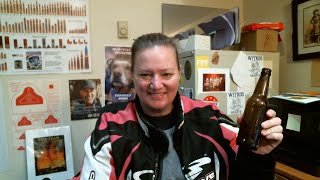
In this live Saturday broadcast, firearms instructor and mother Brooke Cheney shares her experience completing a three‑hour SafeTalk suicide‑prevention training. She explains the TALK acronym (Tell, Ask, Listen, Keep safe), emphasizes the importance of taking any suicide disclosure seriously, and demonstrates how to intervene by asking direct questions and listening. Cheney highlights several resources—including the 211 helpline, Doctors for Responsible Gun Ownership, the QPR program, and the Litchfield County Creating Hope Corporation—while also noting local crisis teams and police support. She recounts real‑world anecdotes, such as a distressed elderly man in a grocery store, to illustrate how simple outreach can save lives. Throughout, she connects her role as a firearms instructor to suicide‑prevention advocacy, citing that two‑thirds of gun deaths are suicides. Cheney reaffirms her commitment to weekly Saturday live sessions, encouraging a “each‑one‑reach‑one” mindset, and shares personal reflections on compassion, self‑care, and the value of asking “What could this mean?” when encountering difficult people. The broadcast concludes with promises to post resource links, future training plans, and a call for community participation.
Chapters
Hold on. Going live. That one says I'm live. That one says I'm live. Ta-da! All right, hold please. Getting all fancy, you know, multiple platforms, all that fun stuff. And yeah, I don't really know what I'm doing. I know it is Saturday. Ta-da! It's Saturday. Um, it's 9 o'clock. As promised, I did Saturday and the same time. After a year of doing this, I'm finally getting a little bit better. So let's see. Hey Kevin, Paul, Peter. Hey Peter, you're like— no, I think I'm gonna give you a top badge, top fan badge. There we go. That's what those things are. Um, so anybody, anybody? Oh yeah, I am very sleepy today. Uh, spent all day Thursday running around New York City. All day yesterday, sort of a blur, but a lot of time on the four-wheeler dragging children behind my, uh— oh, like my jacket? Thank you, I like my jacket too. I've had it for a long time, get lots of compliments on it, and it's really warm because it's really cold in the office right now. Um, so yesterday, dragged kids around behind the four-wheeler on the sleds for a lot of last night. Today I did training. I've got workbooks and everything. So, um, yikes. And I keep forgetting there's stuff in the workbooks that I keep dropping everywhere. So have lots to talk about as always. I'm definitely going to try to keep— what does your name mean? Kid with perfect grammar. I don't know. Oh, Great Start Shooting School. Oh, that's the name of my school. Um, because I am a firearms instructor and I'm a mom, and I do Suicide Prevention Saturday because two-thirds, 60%, of gun deaths are, um, suicide. So hope that answers your question, the kid with perfect grammar. My grandmother would be very proud. So anywho, what have I got? Kevin, thank you. Kevin, are you the one who gave me the doctor's link like 2 weeks ago? Because if you, if you are, reshare that. If you are not, I have to go look that up because I need the doctor's link again. Uh, for those of you who weren't here 2 weeks ago, um, the— you're welcome. Um, sorry, now I've gotten— I've got 2 conversations and 2 screens. It's very exciting. Um, there's doctors that are for gun owners, for responsible— doctors for responsible gun ownership. And I just found out about another group today while I was in my safe talk training, um, that there's going to be like a meeting basically talking about, um, oh, what do you call it, just policy in the doctor's offices and that sort of thing. So, um, and Kevin, I think I said sorry, thank you, and that is that. So for 3 hours today we did SafeTalk resources, and I stayed for the whole thing and actually got a little certificate here showing that I actually went to training for 3 hours today. Um, so what am I most excited about? Let's see, it's basically that it's super simple. The stuff that they teach you here in the SafeTalk resource book is simply this. Oh, so I know for some of you guys when you're looking at it, it's backwards. So I apologize for showing you stuff that's backwards, but TALK is an acronym. So let me tell you what I learned today as far as what the acronym is. T is tell. If you are told about suicide, take it seriously. A is for ask. Ask directly if you are worried about someone who is having a hard time, is, you know, had lots of things happen. Oh, thank you, Kevin. For those of you on YouTube, I will put that link in here. When I am done. Oh, I forgot to turn off my speakers. Hold, please. All right, so T is for tell, um, and it really talked about see, hear, sense, and learn because it goes back to actually what I've learned a lot in self-defense training that I've taken and listen to your gut. If you're talking to someone or you've got a friend that you know is going through something hard, if they have, you know, if there's been drastic changes or they're just not acting like themselves, don't be afraid to ask. So, and ask directly. If you're someone, you know, they're talking about their problems and you want to check in with them, just be like, hey, are you really considering the idea of ending your life or something like that? And you know, the good news is most people will say no, or that'll help them realize that maybe it's not as bad because they could be worse off. Or if they do say yes, the idea is that you are there to listen. So that is the L in TALK. So it is to listen. One of the things that they talk about is, um, 'You have two ears, one mouth. Listen twice as much as you talk. If someone you're talking to happens to be suicidal, you are not there to solve their problems. You are there to help and to listen.' Uh, it basically talked about how you are— most people who are suicidal are just looking for some help, and a lot of people don't know how. So this is why I'm also trying to give you guys more resources as I go. And so I forgot to ask the trainer how you guys can find out about this. I had someone tell me about it because I do these things and he's big into mental health. So I'm going to try to start posting up this sort of stuff as far as where you can find it. And then K in TALK is keep safe., and that is you guys sharing the stuff that I'm sharing with you. For instance, like here in Connecticut, you can call 211 if you're in distress and you need to, um, if you need to talk to someone, 211. The other awesome thing about 211 is that if you need to talk to someone, if you are in crisis, not only will they talk to you on the phone and keep you, um, They will listen to you. Um, they will also, um, what else? They will also be able to hook you up with people in your area. Like if you're just looking for a counselor, uh, they will be able to help you and let you know who is in your area. So Google Doctors for Responsible Gun Ownership. Dr. John Edin is a great resource, and I guess Holly Webster is as well. All right, for those of you watching on YouTube, like I said, I will cut and paste from Facebook to over here so you guys get it at the end. All right, so that is it. That was my 3-hour training. That is what TOC stands for. Obviously, we did not spend 3 hours going over all of that. The other thing we talked about was actual events in people's lives, uh, the challenge— like, oh, so my instructor has— is got 10 years, um, that his son has been gone. And hey, Walt, um, and it's actually December and it's next weekend. Uh, unfortunately his son happened to— not on the same day as Sandy Hook, just happened to be on the 14th of December. Uh, so, uh, he is— yeah, he said he's not celebrating the anniversary, but he's aware of the inner— the date of his son's death, but he just talked about how suicide leaves lots of people question— asking questions why. And his job now is that, um, basically that he goes out and he does these safe talks. There is a 3-hour one which I did this morning. Another thing you can look up is QPR. And I did not write in my notes what QPR says, but I want to say it's question— it's not question, prod, and response, but I got to look it up. Um, but it is a 90-minute training because one of the things that I found from doing this talk is that you guys will ask me, how can you tell if someone is suicidal? And really what we learned today is basically you're just aware. You listen to that gut feeling inside of you. If you feel something or you're concerned, ask questions, check in with that person. One of the things I tell here often is to, if you've got someone on your mind, just give them a call, check in, have coffee, uh, invite them out for lunch, dinner, whatever it is you and your friends normally do. There is always more that you and I can do. And the other thing that they showed us in the training today was that don't be afraid to talk to a stranger. The story that was given today was that there was an old man standing in the grocery store and he was crying, and he's standing there in front of the, the milk cartons and he's crying. And everyone's just walking by him. But somebody who had had training like I had this morning walked up to him and said, dude, you're just— you, you seem very distressed. Can I help you with anything? And he explained that he had the early, uh, yeah, early onset of, um, one of the memory loss things. I don't know if it was Alzheimer's or dementia or something like that. And so he was just scared and afraid But people were just walking by. Nobody had stopped because we feel awkward. You know, there, there's something about a crying adult that we don't know how to deal with. And part of the purpose of the training is to get you to understand that just asking someone, hey, how are you doing, can actually be the difference between life and death for that person. It, of course, we went through stats and all that sort of thing. And I want to say, I think something like 5% of the people you know have thought about or are thinking about suicide. And just because you think about it does not mean that you are going to commit suicide, because that is the other thing we talked about, was there is the thought and then there's the actual ability to take action. And so back to my guy, sorry, in the middle of the grocery store, he's crying, he's got dementia. And the lady or the person, I don't even know, it was a guy or girl that went up to him, you know, said, is there anything I can do for you? He's like, yes, you can call my doctor or my daughter. And the daughter knew that he was having problems, so she had her— hey Gina, um, Thank you. Her phone number and her, her name on his, on his, written on his, on his hand. So that is why they were able to connect him up with his daughter and get him home. But we are an odd society. It's like if you see someone crying, even though you don't know them, just be aware. Hey, Glenn. Um, and it's that simple. We do live in a society, but it's a weird society because it's different everywhere, because we talked about that a little bit today as well. Um, and not to try to get into everything, but, um, they were able to help the dude because one person asked, and that one person then went to the store manager, and they called what is called a support team, which which a lot of, at least here in Connecticut, a lot of, uh, what do you call it? Police departments have, they have a crisis team. And the other thing that our instructor talked about is that having a crisis team in either EMTs or police department is definitely helpful. Um, well, so All right, so I'm going to read to you guys, Facebook, that what the kid with the perfect grammar said is, the person is so helpful, unlike everybody else. He actually helped the person. And the truth is, the whole point of the training I took today is making each person in that room try to be that helpful person. And so now I'm taking the training I took today and I'm sharing with you guys to try to get you guys to be the helpful people. And each one reach one. It's one of those things that I've learned since I was in the '70s with my grandmother, because my grandmother did network marketing with Amway way back when. And so all my life I've been each one reach one. And the kid with perfect grammar can be an example of the next person who does some random act of kindness. And it doesn't have to be around suicide. Uh, I was just watching Jordan Peterson about how to react to strangers It's where the golden rule really makes a difference. Do unto others as you wish done unto you. Um, also ask the question, what could this mean? Probably one of my favorite lessons from Tony Robbins. He tells the story of how he needed something done, and his assistant, who is always very good, would always get stuff done for him. And this one day, she She did not, and he was mad and he was angry because whatever it was he needed, but it gave him a moment to turn it around and say, well, I know she's usually good. I know she's usually good about this. What could this mean? So the next time you are out and the shop clerk or whoever you're interacting with is mean, bitchy, short with you, any of those things, try to ask that question. What could this mean? You don't know if they had to show up to work even though their mom just died. You don't know that they just came from a doctor's office where the doctor told them they have cancer and they're going to die in 6 months. So part of us creating a better society is asking questions like, what could this mean? And try to paint people in the best light possible. Now, I understand sometimes it's very hard to take harsh people and have compassion for them, but your emotions are just like any other muscle in your body. If you actually use them on a regular basis— see, I'm pretending to, you know, pick up my dumbbell because I need to go to the gym— but if you can actually have compassion more for others, you also have to remember to have compassion for yourself. So when you have a bad day and you're not as sweet as you could be, make sure that you give yourself the same grace that you give to a stranger. And I've gone over 15 minutes, and I'm really trying not to, but I do want to thank you all for popping in and sharing and saving and all of those sort of things. And I think that— oh, crying out loud. All right, so I actually have to go look and see how I can get you guys, if you want to, to go to your own SAFE Talk resource book— resource book— resource training. Like I said, it's about a 3-hour training. I know they're held all over um, all over Connecticut, and I think there are lots of places. Uh, the one that I did today was put on by the Litchfield County Creating Hope Corporation, which is a nonprofit here in Litchfield County seeking to raise awareness for those affected by suicide and mental health issues. So I do want to give them a little plug here. Uh, apparently they do a 5K race in May. So who knows, I'm not running, but I could help. And like Walt here says, everyone's actions make sense to them. Um, I know that I try to be nice most of the time, but I fail. I fail miserably. Uh, my husband and children will tell you so, and I have other friends. So try to find this one. The other training is QPR because that one is only a 90-minute training. And I'm sure there are other online sources. Um, I can't scroll up, but I will put those in there. And the thing of it is, is there's tons of resources out there. This is after a suicide attempt, how to support people, and the resources are generally free. It's a matter of having them on hand. So the That's what I'm going to put in the comments, or maybe I'm going to edit the, uh, the top here. And oh my goodness, sorry, almost 20 minutes. I just knew it was gonna be longer because I had all that training today. There is a possibility I will go to another training in January, and I will put that all up here too. It's a train the trainer thing, but I want to go to the QPR training, I think, before I do that one. Alrighty then, that is it. It has been longer than I meant to, but I hope this was useful. I hope this was helpful, and I am here every Saturday as best that I can. It is Saturday. Yeah, every Saturday that I best, best that I can, and I will try to always be here for 9 PM. With the holiday season, it's possible some of these might be a little bit later, but I'll try to let you guys know earlier in the day, at least on— oh, actually on YouTube I can do it too because I can announce when it's going to be. All right. Love you guys. Thanks for watching. Always learn more. I will be putting up some more links into here, and I think that's it. Have a great Saturday. Enjoy the rest of your weekend. Have fun, whatever it is that you are doing, and goodbye.










