Suicide Prevention Saturday - Why? vs How?
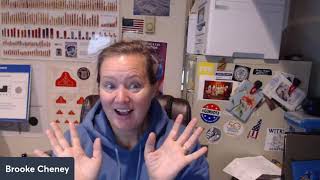
In this live‑style monologue, a firearms instructor uses a new streaming setup to host a “Suicide Prevention Saturday” session aimed at gun owners. He frames the discussion around the contrast between asking “why” and asking “how,” arguing that the latter yields more actionable, hopeful answers for people struggling with anxiety, depression, or suicidal thoughts. He illustrates the concept with everyday examples (stubbed toe) and mental‑health scenarios, emphasizing that “how” questions open pathways to coping strategies and self‑compassion. The speaker then shares several resources tailored to the firearms community: the Aiming for Zero/Active Heroes veteran‑support program, Walk the Talk America (bridging gun ownership and mental‑health counseling), and Hold My Guns (temporary firearm storage for those in crisis). He also lists general suicide‑prevention contacts such as 211, the American Foundation for Suicide Prevention (AFSP) website, and the Crisis Text Line, noting state‑specific variations. Throughout, he encourages viewers to adopt a “how” mindset, seek help, and use the provided tools, while acknowledging legal complexities around firearm storage.
Chapters
Dun dun dun! All right, so hi everybody, I am using a new software thanks to my friend at— which one is it? Is it Bullets and Barbecue? Not Bullets and Barbecue. Who am I thinking of? Hold on, let me, let me cheat and look. Who am I thinking of? Nope, that's not it. Anyway, it is Saturday. George? No, was it George? I don't even know. Anyway, someone gave me an idea to use this new software that supposedly is going to let me stream here and there, and here being YouTube and there being Facebook. And in theory, when y'all say something, I will see it, and I think it's going to show me whether or not you're on Facebook or YouTube, but I don't know yet because no one is here yet because it's the beginning. And it's not even 9 o'clock. For once I am early. These things happen from time to time, not a lot, but from time to time. But it's because I've got the new software. So ready? Poof, like that, it's 9 o'clock. So what does that mean? It's Suicide Prevention Saturday. And everyone's like, but what is Suicide Prevention Saturday? I ask myself that often. So hello replay viewers, because you all are the only ones who ever see the beginning because That's just how that life works. So Suicide Wednesdays and Saturdays, why? Because suicide sucks. And as a gun owner, hence all the gun paraphernalia, I happen to be an instructor and a trainer and all sorts of stuff. But in working with firearms and violence prevention and getting into what is real and what is not, suicide is 66% of those gun death numbers they talk about. And the truth of the matter is, it's really quite awful. So tonight, the— what is that— the title of this is Why vs. How. And we're going to talk about why versus how, because one of the things we do on a regular basis on a daily basis, on a moment-by-moment basis, is ask and answer questions within our own heads. Like, how did I start this? Like, what am I doing and why am I here, right? Because suicide sucks, that's why I'm here. And what am I doing? I'm just trying to raise awareness of suicide, and especially as gun owners, I find it super important— excuse me— that we're willing to talk about these things. So with that, why versus how. Um, oh wait, can you see? Oh look, there it is, my, my, my new sweatshirt from Ruth's Power Sports here in Thomaston. Am I sponsored by them? No, but I just realized I'm really warm in my new sweatshirt, so I'm like, holy heck. But this is a short video as always. Why versus how. Here's one of our challenges in life. If you ask, "Why me?" you will get an answer. And if I just stub my toe on the coffee table and I'm trying not to scream or yell profanities across my dining room, living room, wherever the table was that I stubbed my toe on, one of the most common things people will say will be, "Ow, why did I do that?" And guess what? As we've discussed in the past, we are asking ourselves questions all the time. Now, why something happens, we give ourselves an answer. Why did that happen? Well, because I was stupid, because I didn't look for, um, the table, because I wasn't wearing shoes. When we ask that why question, we come up with so many answers, and Here's the funny part. If I ask the how question, I come up with other answers. If I said, instead of saying, why did that happen to me? I say, how do I avoid doing that in the future? Like, oh, well, I could put on shoes. I could look where I'm going. Do you hear how that's a different answer? Because we asked a different question. And this is where we're talking about what goes on in here and just being aware of how that's working. See, if we say how it's working, we come up with more empowering answers, because how can I avoid slamming my toe and breaking my pinky toe off my foot? Well, if I had shoes on, that is one way that I could have avoided slamming my toe on the, on the table. Um, when I ask why did I do that, the negative thoughts of, well, because I'm stupid, oh, because I was barefoot, because I wasn't paying attention, So the why question often has less empowering answers when we come up with them. Now, are we always choosing the answers we get? No, of course not. Sometimes we're being fed, why is the state of the world as it is? Whether you're talking about, um, gas prices or, um, all sorts of different things that are going on right now, right? So it's like, oh, Why are the gas prices so high? And you can come up with lots of reasons. You can blame it on whatever you like. However, you say, how do I save money on gas? And funny, we've got options on that side. It's like you can get a credit card that's got points that goes towards gas. You can go to BJ's. You can do lots of things. But notice how as soon as you ask the question how, there's options that can give you a path to the direction that you want to go. When we ask, "Why me?" we get answers, and it's not usually enlightening, uplifting answers. The "how" gives us a path to walk on. So for those of us who have dealt with anxiety, depression, so on and so forth, um, a lot of times we'll ask questions like, "Why do I feel like this? Why can't I get over this?" "why can't I change how I feel?" And we'll get questions like, "Well, because when I was a kid, these horrible things happened to me," or "because my ex did this," or "because that happened," and so on and so forth. But when we say how, how do I get out of feeling like this? Notice how my voice changed when I say how, and I really wasn't even trying to do it. I just kind of noticed. And this is sort of what you can do for yourself is start to notice how things sound, 'Cause they're gonna sound different in your head than they sound coming out of me. But it's like, if I'm doing, dealing with anxiety, how can I get out of this gives me a path to look for. So it's like how gives you opportunities to realize that there is a way. Just 'cause you may not come up with the answer right away, the how at least gives you hope and gives you an idea that there is a possible path for you to follow. Like, how do I lose weight? We know that, right? Pay attention to what you eat. How'd my doctor put it? Move more, eat less was one way. There's lots of different paths when you say how versus when you say why. Why am I fat? Well, let's see. We eat a lot, and we eat junk, and we don't move a lot, and so on and so forth. So how— wait, so how versus why. So these are my big things. If you start paying attention to 1 or 2 questions a day that you ask yourself, maybe you can start having a better pathway to figure stuff out than having the, ooh, how can I punish myself further for not being perfect and wonderful and spectacular? Not that any of us would ever do that on purpose, But society is pretty good at being harsh. We are actually usually pretty good at being harsh on ourselves, and we kind of need to be able to have some grace for ourselves. And figuring out how do I have grace for myself versus trying to come up with reasons why should I have grace for myself. Again, I'm just going to say one little word makes a difference. Why should you have grace? Well, because it'll make you feel better. Why else? Why not? How can I have grace for myself? Oh, well, one of the ways you can have grace for yourself is imagine for a moment how you would speak to a 4-year-old child who's sitting in the corner crying, and think about the compassion and nicety that you'd have for that child, and then pretend for a moment you're that child and actually speak to yourself in that loving, compassionate tone that you would talk to that child in. So my hope is that tonight, by some miracle, you have decided that how is much more powerful than why. Is it that you're never going to ask the why question ever again? Of course not. However, when you find yourself asking why and you find that the answers are getting darker and nastier and meaner, Maybe you should ask yourself, how do I break that cycle? And come up with things that will work for you. Now, you guys all know how often I will talk about how I mean to give you guys more resources. So I am going to share my screen, 'cause I have this new cool thing that allows me to share my screen. So when I am done, I'm so going back and watching this 'cause I have no idea. Alright, Aiming for Zero therapeutic and recreational programs and activities that will leave you feeling great while relaxing you at the 147-acre ranch. So Active Heroes, Aiming for Zero is the thing you guys hear me talk about all the time because it is what we in the gun community, specifically in the competition community, get together and raise money and awareness for veterans all across our country. There is an actual center retreat, and I am awful because I forget where it's at. So don't, don't, don't get mad at me for not knowing these things, but you too can go to activeheroes.org and you can find out more about them. So there's lots of ways. So, okay, so it's in Kentucky. Is where the actual thing is. Now my understanding is that you can also do all sorts of other things where they have events all over the country, because I know here in New England we do all sorts of things with active, uh, with Aiming for Zero. So here's one resource for you. What else do I have for you tonight? Oh, we're going to talk about Walk the Talk America just briefly, because you guys know I like to 15 minutes or less and be done with this. But Walk the Talk America, for those of you who haven't heard me talk about this in the past, is firearms and psychologists coming together and realizing we need to have this conversation. Because if you own a firearm and you're having mental issues and you need to talk to someone, we're very reluctant to do so simply for the fact that if we talk about mental health issues, we might lose our ability to have our firearms. So Walk the Talk America is attempting to bridge that gap and sort of have that conversation about how do we deal with this, how do we let people actually come to counseling and get counseling that they need while still maintaining their rights, which brings me to our next, Hold My Guns. So this is started by a single woman I don't know that she's single, but a woman who thought that, okay, one of the challenges we have is if you're a firearms owner and you know that maybe you shouldn't be around your firearms right now, firearm storage is— this is called Hold My Guns. Oh wait, does it say it anywhere here? Yeah, so how is Hold My Guns making a difference? It allows, like, if I were having a challenge, I'm like, oh, I need to get my guns away from me. Hold My Guns allows me to bring them somewhere and leave them there until I'm ready to get them back, that sort of thing. Community outreach, mental health advocacy, same sort of stuff that I'm trying to do. They're just more organized and trying to do it throughout the country. I am just here in Harrowington doing my little Facebook Live thing on a regular basis. So Hold My Guns is just another way that we are trying to help people in the gun industry as well as just in general be aware of the mental health issues that we have here in America. So here you have it. So what is this? HoldMyGuns.org. And what else is on the page? Here are some of the storage partners. And one of the challenges is that with something like Hold My Guns is all the different laws that we have on firearms makes this actually very hard because here in Connecticut, for example, um, there's lots of different laws that can make something as simple as Hold My Guns a challenge for FFLs to be able to take a firearm from somebody for an indefinite period of time. There's lots of legalities and craziness surrounding firearms in general. I know people think that, oh, more legislation for firearms makes them safer. This is the perfect example of where it does not. Because of all the legislation we have around firearms, something as simple as "hold my guns" is definitely a challenge. Walk the Talk America, one last time, is It's just walkthetalkamerica.org. I'm not sure if you guys can read that 'cause it's really tiny at the top of the screen there, but if you can, hey Michael, Michela, yeah, there I can talk. So Michela, what you would do is call something like 211 or yeah, 211. That is a great one. And here, let's go to another one. So if you do, Suicide prevention. This is how easy it is, hun. Click on any of these. They have numbers for you to call, so you can call whoever makes sense to you. If you're here in Connecticut, you call 211. If you want to talk to someone else at the American Foundation for Suicide Prevention, there you go. Make that phone call right now. Hold on, where is the darn I swear that there was, um, a phone number right there. Oh, there it is, it's on top. My bad. So here you go, kid, go to afsp.org/get-help, and that is who you want to talk to because I'm not a counselor. I'm just trying to raise awareness. As much as I wish I could help everyone, Is it 211 everywhere? Awesome. I just know for sure it's in here in Connecticut because I've used it for friends. So, um, so yeah, that would be pretty much what I would do. Now here's the cool thing though too. Let me actually click on the page, not on my thing. Is they give you lots of different ways because if you're a veteran, they talk to you different than if you're just someone like me. And crisis text line, because I know some people don't want to talk to someone when they're in crisis, and texting can be easier for them. So they've done everything they can to help get people be able to do outreach. So here's the thing: call someone, text someone, reach out. The fact that you're saying that you're having suicidal thoughts is exactly the sort of thing that actually 80% of Americans have at some point or time or another. So kind of it's good to know that you're not alone. And then on the other part, hey, you've got options. So, uh, yeah, if you're in Ohio, call 211. I'm guessing that's why you know that it's 211 in Ohio. Um, and/or text or call, whatever works for you the best. So with that, I think I am done because that's all I had for tonight. But that's kind of it. You guys all have a wonderful night as best you can, and I will see you all next Saturday. And I finally gave you guys resources tonight, so hopefully that will help out. Talk to you guys all later. Bye.










