The very 1st Suicide Prevention Saturday - Uploaded from FB Oct 27 2018
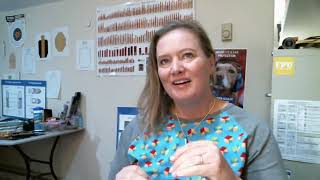
In this live Facebook/YouTube broadcast titled “Suicide Prevention Saturday,” Brooke Cheney introduces a new weekly series aimed at raising awareness about suicide and providing support. She begins by testing her audio setup before launching into a candid personal narrative about her own teenage suicidal thoughts, trauma, and the hidden nature of her struggle despite outward success as a student and athlete. Brooke explains that suicide is driven by internal feelings of worthlessness and pain, not external circumstances, and emphasizes that survivors are never at fault for a loved one's death. She shares her experience seeking counseling at age 19, recounts the loss of a counseling peer, and discusses the difficulty families face after a suicide. Throughout, she provides concrete resources: dialing 211 in Connecticut for counseling, the National Suicide Prevention Lifeline (1‑800‑273‑TALK), the veteran‑focused Aiming for Zero program, and an NSSF firearms‑and‑suicide‑prevention pamphlet. Brooke urges viewers to check in on each other, ask questions, and keep the conversation open, suggesting the series could become a weekly event. The talk ends with gratitude and an invitation for comments and future sessions.
Chapters
Hey, it is Saturday night and I have no idea if anyone can hear me or not. This is definitely a challenge. Hold on, I'm looking at my other thing to see if I can see, but then I won't be able to tell if I can hear. So hold on, I'm gonna look at my phone to find out if this is working or not, simply for the fact I would hate to have this conversation. Hey Derek, Can you hear me or do I sound like a chipmunk? Charlie, let me know. Do I sound like a chipmunk or can you actually hear what I'm saying? Anybody, anyone? Hey, Aaron. I'm gonna ask, can you guys hear? If I spell right. All right. So anybody? I need to know. I see me. I know that part works. I'm trying to figure out if the sound is working. Sounds okay. Yes. Awesome. Thank you. Before I got into this lovely, crazy topic, I definitely wanted to make sure that someone could actually hear what I'm having to say. Hey, Vin, how are you? Thank you guys. Thank you for getting back to me. Sounds perfect. Awesome. Because guess what? I got a real big fancy— ready? Hold on, I'll show you. Ready? My new thing. Ta-da! Wait, so yeah, it's a microphone, 'cause I know it can actually look like something else, but it's really not something else. So my first time with this thing out of the box. So thank you guys for getting back to me. Sorry, I forget there's a delay here. So Suicide Prevention Saturday. This is something that I have talked about for a long time, probably months, definitely weeks. But suicide is not something that is fun to talk about, but it is something that is super important to talk about. So I'm going to talk about it because as a teen, I was suicidal. And as a teen, I went through— kind of small for anything other than a microphone. All right, well, never mind. We won't go there, or I'm not going there. Yeah, never mind. Story. Keep him in line, damn it. So anyway, all right, so Suicide Friends Saturday. As I was saying, one of my challenges in life as a teen was that I was suicidal. And the challenges for people who have never experienced that are they can't understand what is suicide, what causes people to commit suicide and that sort of thing. So I thought I would start Suicide Front and Saturdays to get to allow people to ask me questions if they so choose, and/or to just simply— sorry, I gotta turn this off because there's things popping up on my screen— allow you to ask questions, but also if there's anyone out there who's struggling, to understand that they're never alone and there always are more resources out there than you're aware of. So for my friends who are here in Connecticut, there is a phone number you can call. It's just 211, and you get to talk to a counselor if you need to. But having had friends who I've lost to suicide, having had friends who have lost friends to suicide— hi, Matt, how are you? I know one of the questions people always ask is How could someone do that? How could someone take their own life when they've got family and friends and it seems as though they've got a pretty good life? So here I am to sort of try to explain at least what it was like for me. So as a teen, I had trauma in my life and I'm not going to go into that because that would take a really long time and it'd be a really long Facebook Live. So I was just suicidal as a teen because I didn't know how to deal with trauma and it made me feel very alone. Now, when I was a teen, I was a good student. I was a jock. I did all those things that everyone expects you to do. More than once, I was absolutely called the all-American girl and just told how smart I was and pretty and all of that sort of stuff. So one of the things people need to understand about folks who are suicidal is it's not generally an outward thing. I mean, there are people you see who are depressed and that sort of thing, but the suicide is in here because it's about how you feel. It has nothing to do with how you look. It has nothing to do with people encouraging you around you or not encouraging you around you. So it is a feeling of worthlessness in that you could have the best family in the world, the most loving friends in the world, but inside you just feel as though the world is a better place without you. And my friends who are on here who know me, they're like, really? Not you, Brooke, right? So that's just it, is that there's not always an outward awareness of someone is suffering. Because all of my suffering was in here. I didn't say anything about it. All my anguish and my pain was inside of me. It wasn't something I was telling anyone else about until now, because it's super important that people understand what happens and what they need to do. Because I'm doing this in hopes that perhaps someday I can help someone else who's either dealing with suicide or helping someone who needs to know that there's a resource out there for them. Like I said, here in Connecticut, the easiest one I have is just dial 211, and there's counselors that can talk to you. Because this is Facebook and this can be anywhere, I'm sure there's something like that, and there's tons of suicide prevention hotlines and stuff like that, but when you're suicidal, you are not likely to be going to look for that. So it's good to learn about these things beforehand. Let's see what else. It's kind of a hard subject. So if you have any questions, please ask because I wrote down a couple things. So suicidal thoughts are basically that— well, mine were because I don't know what suicide is like for anybody else or suicidal thoughts are for anyone else. But when I was a kid, my thoughts were my life would be easier. Or sorry, everyone else's life would be easier if I weren't here, because I felt as though I was a burden. I was also in such emotional pain that death seemed like the only way to get away from the pain. So killing myself was about getting away from the pain and not having to deal with that emotional pain that I was suffering through anymore. And so the suicidal thought, because people— I have had this conversation with other people, and what they talk about is how could you think that the world is a better place without you? And when you're in that emotional pain, it's super easy to think that the world's a better place without you because your life would be over and you would no longer suffer. I was 19 when I finally got to go to counseling. Thanks, hon. Thank you, Aaron. So I was like 19 when I went to counseling, and it was challenging because all of my life I had no idea the fact that I knew how to kill myself, that I had a plan how to kill myself, that this was not normal. And it wasn't until I got to go and and sit down with a counselor. And they're like, yeah, Brooke, no, no, no, having a plan, knowing what you're gonna do, all of that is not how most people think. So that's sort of the other interesting part about the suicide stuff is that when you are the person who is suicidal, that is your normal. So thanks, Chris. So when it is your normal to be suicidal, you don't understand that having desires or wishing that you were dead is not normal. And for those of you who are blessed enough to have never experienced that suicidal thought, your normal is to can't imagine to figure out why anyone would be like that. So, hey Aaron. So that is probably one of the things that's hardest for me to try to understand. To explain to people because I've been to the funerals of people who didn't win their battles. I won my battle, so that's why I'm here to talk to other people about it. And when I go to funerals, actually, huh, one of the guys I was in counseling with back when I was 19, he left our program because of insurance problems, and he Thanks, Jennifer. And it was awful. So anyway, I was in counseling. This gentleman lost his insurance. It was 2 weeks before the end of the year, and he'd gone through all of his money, or all of his insurance. The doctors and the nurses pleaded with the insurance company to keep him in there, and they couldn't. And then 2 weeks later, 3 weeks later, I went to his funeral. Because he didn't make it. And the reason I went to his funeral— this is super hard, gosh, sorry. All right, I can do this. So the reason I went to his funeral is because we'd been in counseling together, but he was dead now, so there's no more counseling confidentiality thing. So I needed to tell his family that it wasn't their fault. Because during counseling, he loved his family very much, and he knew that his family wanted him to get better, and he lost the battle. And I think that's one of the hardest parts about people when they lose the battle to suicide— the family and friends that are left behind. Can't understand why they couldn't help them, and they can't understand why they were left behind. So, see, I picked a great time. I thought I'd be able to get through this without this. So anywho, when someone loses to suicide and they take their own life, even if it was your best friend and you didn't see it coming, understand Someone losing their battle to suicide is not about you. It's because they couldn't win. And I think that's probably the most important reason why I had to go to that funeral. So the family knew that he loved them more than anything and that there wasn't— they did everything they could to support him. So, thank you, Chris. Sorry, I can do this. So anyway, so when somebody loses, it's not about you because you're still here and you still get to grieve and you still get to get through everything else, but you will be able to carry on and it's just never your fault. And I think that's one of the biggest challenges with people who are touched by suicide. And that's probably the biggest message that people need to understand when they've lost someone else to suicide, is that we all do the best that we can with the tools that we have, and we need to support one another. We do need to check in on each other. We do need to encourage each other, and we need to do the best that we can with the tools that we have to remain in contact with others. So I guess that's kind of it. Like I said, I know I didn't really have a plan for this other than I've been talking about talking about suicide for weeks and months now. But when you lose somebody to suicide, understand that they lost the battle. It wasn't because you could have done something more. It wasn't because you weren't there or anything like that. Because I'm pretty sure, at least from my personal experience, that I did not blame anyone else for the way that I was feeling. I was not— what do I say? I was only thinking about me. Suicide is very, very selfish. It really and truly is, because when I was there, The only thing that mattered was I couldn't handle the pain and suffering that my emotions were causing me. And that's what I was trying to escape. Again, I can't talk for anyone else because I don't know what their suicide stuff. So thank you, Rebecca. So that's kind of it. That was my— I guess the important part to know is that There's resources out there all over the place. One of the guys that was on here watching, I can't tell who's on and who's off right now, but Chris, we do this great thing called Aiming for Zero, and it's all about, thanks Bob, nice to see you, man, sorry I haven't Periscoped in forever. So there's lots of support out there. Aiming for Zero is specifically for veterans. And the whole idea is that there's 22 veteran suicides a day, and Aiming for Zero is about getting that number back down. So we do charity events all the time in the shooting sports. You guys can all see that, you know, this is my school. This is where my shooting stuff is. So Aiming for Zero, like I said, here in Connecticut, you just dial 211. You can get support that way. I have a firearms and suicide prevention pamphlet here that I have at my school that the NSSF puts out. And I think the most important part is just to talk about it, that suicide does happen. And unfortunately right now, especially in young people, it's growing a lot. So it's even more important that we talk about it because having lost my baby sister, her senior year in college, losing young people is much more impactful. Wait, that sounds wrong. Yeah, losing anybody is always bad. It does seem though losing young people seems to be more difficult. So it just is something that needs to be talked about. So that's kind of it. Bring it up, talk about it, and who knows, if you're watching the replay and you have any questions, leave them in the comments, and if I get questions, then maybe I'll try to do this again next Saturday. I was kind of thinking of trying to do this on a weekly thing, but we will see. So anyway, with all of that heavy, exciting stuff, talk to people about mental health, suicide. It needs to be talked about so people understand that it's not just random It does really happen. Oh, thank you, Chris. Chris is still here. He just put up the link for Aiming for Zero, which is awesome, and the national resources. Thank you, because all I'm talking about is Connecticut right now. Oh, is there a— oh, actually, the NSSF stuff has some more stuff too. National Suicide Prevention Lifeline is 1-800-273-TALK. And I can put that in there too. But so anyway, all right, so really, I think I'm gonna go now, 'cause I think that's enough. And like I said, any other questions or comments, and I will see if I can do this again next week. I think I can do that on my schedule, 'cause the shooting season has sort of slowed down a little. All right everybody, well, thanks for checking in, and I hope this will reach someone and help someone, and I will see you all somewhere else on Facebook at some point.










