3 Feet From Gold: How To Go to the Olympics and Medal -Episode #7 w/ Tayyiba Haneef-Park
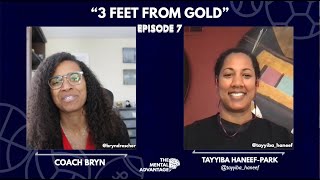
Tayyiba Haneef-Park won silver at the 2004 Athens Olympics and competed in three Games total. After retiring in 2012, she struggled with depression and her father's death before finding therapy and moving into coaching. She talks about building mental advantage in elite sport and the identity crisis athletes face when competition ends.
Chapters
All right. We are here today with the amazing Taíba Hanif-Park. And from a former conversation we had, I learned a very valuable lesson. One is never a former Olympian. So Olympian Taíba Hanif-Park in the sport of volleyball. How you doing, Taíba?
I'm doing great. Thanks for having me again.
Oh, absolutely. I'm so glad you're here. So when we say again, for those of you that are like, wait, I've listened to your podcast interviews. I did a conversation or had the pleasure of having a conversation with Taíba on Clubhouse, which is how we connected. And I was like, we got to get this amazing story on the podcast. So, so happy to have you. So, Taíba, we know that you have gone all the way up to the Olympics and we're going to get to the meat of that story later. But I'm always curious, how does one get started? So was volleyball the first sport that you picked up?
Volleyball was not my first love. Um, I have loved sports ever since I can remember. Um, and I fondly remember being in Brownies in like 1984. We had Brownie Olympics and I just thought it was this amazing thing. And I did fairly well. Um, it was at a local track stadium and the coaches came up to me afterwards and just asked if I wanted to join their track team. And so we did that and it was right about the same time as the 1984 Olympics. And so having it be here in Los Angeles, there were actually some events that were local to Orange County. And so my parents took me to those events and I was just enamored by the excitement around just the athletes, the level of sport, the level of just unity, everyone coming together through sport. And I had no idea what was happening, but I knew that I wanted to be a part of it growing up. And so I think that Olympic edge was kind of born in me from that moment.
Nice, nice. So watching the Olympics, obviously being like, okay, I've got Olympic fever, right? And you were in track and field. So how— now you, you obviously got— joined a track team, and I remember from your story before, there was some success in track, right? We're going up the Junior Olympics. Is that correct?
I went all the way to the Olympic trials in 2000. Oh wow. Yes, that was actually— that was my passion. I was a high jumper, and it was something that was different for me at the time because it was something that was so unique. If you saw someone with a USA track uniform, you knew that they earned it. You knew they were on the national team or they were on the Olympic team. It wasn't like, you know, a Dream Team basketball uniform that anybody can just go and buy, or it wasn't like a soccer jersey that everyone wears around. If you had that USA Track and Field, it was because you earned it and you were on that team. And so it held a little bit more passion in my life as I grew up.
Nice. Nice. So you're doing track and field and you went all the way up to the Olympic trials. Now, so this is your first time. Now, you hadn't yet gotten to the Olympic trials in volleyball, correct? At that point?
No, I was actually still fairly new in terms of our sport in volleyball at that time.
Okay. So when, so the, since this was your first, you know, sort of glimpse of the Olympics besides being a spectator, tell me a little bit about that experience competing in an Olympic trials, you know, in track and field, besides the prestige, of course.
Right. You know, it was one of those bittersweet moments actually. And it's kind of what shifted my gear towards more of a team sport, you know, and as we watched the Olympics, it's such an amazing event, but it's, it's once every 4 years and these athletes train their entire lives for maybe, you know, 10 seconds of glory. Glory, or you know, 2 Minutes of Glory. And so as we were actually competing and going into the Olympic trials, um, you know, we were getting ready. Let's say you're supposed to start at— I think it's supposed to start at 10 o'clock, and we were starting to warm up. NBC decided they had a, um, an open slot to air, and so they pushed us earlier, which meant that we didn't get our full warm-ups. Um, I think the American— I think it was Tish Waller at the time. She was one of the number one high jumpers, not only in the US but in the world. And her mark was actually really far back. The track wasn't big enough for her approach. And so she didn't actually have enough time to get that full warm-up. None of us really did. And it really altered our experience. And so we just kind of, we missed some of our marks. She didn't even qualify then. And it was kind of at that moment where it's like, it's so hard to prepare your whole life for this one moment and then to have it just kind of be ruined by something like that. And so I actually turned my focus more to the team sports, and I knew that, you know, if I'm having a bad day, I'm surrounded by 11 other players that can help me still attain that goal.
I think that's so important, and I'm glad that you're highlighting that because I think that a lot of people don't really understand. I'm a former track and field athlete, like what it's like to go through that whole process. And like you said, the race is over in a matter of seconds or the event.
Yes.
And, and that one, you know, situation or, you know, can just be like so heartbreaking. 'Cause you know, did you watch the documentary 3 Feet? Not 3 Feet from Gold, The Weight of Gold?
The Weight of Gold, I did. And my only complaint was that it was not long enough.
Yes. It was so good. I 100% agree. And they talked, and I remember, you know, Michael Phelps talking about that. Like the idea that literally, do I want to go and do this all over again? And, you know, 4 years of my life for, even though he did win, you know, the most gold medals of any athlete, still 4 years in the making of the process to go for another gold or to go for it.
Absolutely.
So yeah. And you obviously had the, you know, spoiler alert for the listening audience. She had the opportunity to compete in more than one Olympics, which we'll get to. So tell me how you found volleyball. Who introduced it to you? I mean, for those of you that don't know, Taíba, can you tell everybody how tall you are? I'm 6'7".
6'7".
So she's a bit tall. So 6'7". That's a great picture online if you want look up Tayyaba, that she's standing next to George Bush, and not that he's George Bush Senior, not George Bush the Junior or whatever, but it's just to show you the difference in height. And, you know, just like, wow, I don't know how tall he is. But anyway, so with that, I would assume, you know, being a one-track-minded individual, when you see a tall individual, that people tried to put you in basketball. Was that any part of your journey?
That was. And so early on it was track, basketball, and soccer. And I actually really love soccer too, you know, and not in a way that like kicked me out of the sport, but it was kind of like, this probably isn't going to be your shining sport when you grow up. Like you have track, you have basketball. And, um, and so it just kind of, it was track and basketball going into high school. And my sophomore year in high school, my math teacher at the time was actually the JV coach for volleyball. And there was an injury on varsity, so they were looking for someone to just come fill in for a few games. And I was in between seasons, never played before, but he said, you know what, you don't have to know the game. At that time, you could block the serve. And so it was like, you know, just, just come out and try, you know, if you love it, you know, please stay, have fun. And you know, if you don't, no harm, but we just need someone to kind of, you know, handle the middle. And so I went out there, I loved it. I had so much fun. It was a different energy. It was something that was new. You know, the girls were— they just had so much fun in it. And so, um, I started playing a little bit more. They invited me to club teams around here, and so it just kind of picked up speed and gained momentum from there.
That's fantastic. And I love that, that you're talking about fun, because that gets lost sometimes along the way.
It does.
So it's like, you know, we're, we're all like, it's so— because fun is what got us into the sport, right? You were driven by seeing these Olympians, and then you're like, track, oh, I love this. And then you have a bad experience with some, you know, not being handled properly or certain venue challenges. And then all of a sudden it's like, I gotta go somewhere where I at least can get, you know, kind of surrounded by a team. So then you find this sport, and of course they see your height and they're like, don't worry, just stand there.
Yeah.
But obviously then you went to the, the business of honing craft. So you were, um, when you were going the difference between high school and club, what was different about that? Because I think people, you know, that maybe aren't familiar with club versus high school, tell us a little bit about that process or that experience.
Um, you know, the speed at every level just changes, and it was much quicker. And so while I was able to just kind of stand in the net in high school and get away with a lot of things, you know, I had to learn the pace of the game. When it got to club. And then again, that jump from club to college, and again from college to the national team. Each time you go up another step, the pace of the game changes and it becomes more technical. And so in high school was really where I built kind of just a foundation and a knowledge of the game. And then club is where I actually got into the skill aspect of it. And, you know, when I got to college and national team, they put it all together and, you know, you master a little bit more of the elite techniques, but High school was just more of that foundation for me and the love of the game.
Yeah. Which is awesome. So like you said, it's different levels. So let's talk a little bit about that. What was your pinnacle moment in high school club or regular high school? And do you remember the highest level that you played in that situation? Like, once you got into serious tournament play or something like that?
Right. I think it was finally about the time I was a senior, I had kind of close that gap between myself and a lot of the athletes that had already been playing for most of their lives. And so I was getting looks from colleges. I signed with Long Beach State who was the best college at the time, national champions. And so I remember right before going into college there was a big tournament. I think it was called the Festival. They don't have it anymore. But my team went up there. We weren't necessarily expecting to win but we were, you know, hoping to do really well. And we made it to the championship match. And, you know, we We had a great match, but unfortunately we didn't win. But just seeing that level of excitement, seeing that level of play and being able to say, I'm actually right here in the midst of it. Like I am one of the best players and I'm staying in stride with the rest of them. Like it felt so good. It was a great stepping stone to where college would then take me as well.
Okay, awesome. So I want to back up just a little bit, because I think there's something to be said for when you do get recruited. Was Long Beach State your number one choice? You said it was the best college at the time, so perhaps it was, but were they the first people to recruit you? Do you remember when the first coach came to talk to you and what that felt like?
You know, I don't, I don't remember that process in depth for volleyball. And so again, because I was a three-sport athlete, I was looking at LSU for track. I was looking at, at UCLA for USC for basketball and track. And so there were just, there were different schools and it all depended on what sport I really wanted to do. And actually the school was going to allow me to pick. And for me, Long Beach State, I didn't actually know much about volleyball. I didn't know how well, like how many championships they had. I didn't know about the coaches and the players at the time. And for me, I actually grew up running my club track there. And so it was like, it's just the state school that's up the street. Like, I don't want to go there. And so when they reached out, it was just kind of like, Okay, I'll just, you know, we'll respond to them when we respond to them. And my club coaches were the ones that were like, he is the best developmental coach in the world. So, you know, it would be a great place for you to be. And so I think that's when the conversation actually took— it went to another level. When they said I could play volleyball, when they said I could still run track, if I wanted to do basketball, the option was there as well. And so I think that kind of became the place that just fit the most. It was, it was right up the street. Mom and Dad are right there. I had researched some more and they had been taking players, raw players like me, and by the time they were done, they were national champions, they were Player of the Years, they were making Olympic teams. And so it just became home.
So I think, first of all, um, a couple things that I just learned about you that I did not hear the first time. But one, I did not know that you, uh, were recruited by 3 different You know, like you had, you had a bevy of choices essentially. Yeah.
Yeah.
Those were the answers. I can feel that.
I'm thinking of those, those three.
That's, that's awesome. And then secondly, I love like the message to any of our listeners that maybe have athletes that kind of get concerned that they didn't start the same time as other people, that it's not too late. Like, you know, and I don't know, I mean, just to use another person, Misty Copeland didn't start dancing until she was 16 years old. And like, you know, she's now a prima ballerina. So, and of course it is unheard of in ballerinas to like start at that age. Like that, you know, people would be like, oh, it's too late. So I think it's important that people know that it's, you know, whenever you start, it really depends mostly on, like you said, getting the right developmental coaches, the passion that you have, and the work that you're going to put in.
So absolutely. Yeah, absolutely.
And the other thing I wanted to say was, okay, so you go, and I have an athlete who is a multi-sport athlete and does not want to choose. Plays volleyball, basketball, and track. Not quite 6'7", not even close, but I would like to know, did you ever do the multi-sport athlete thing in college? And what does that look like for anyone that's kind of like, I don't want to choose, I like them all.
And I never felt a pressure from anyone to choose. I think my parents never made me. It was, you know, this is your path and we will support you in whatever you want to do. So I think I had that freedom where I I think in today's culture, I think we're trying to force our kids to make that decision a little bit earlier than, you know, when I was that age. But my also, but also my coaches saw the benefit of me being a multi-sport athlete. So as a high jumper, being able to take off strong and high jump off of one leg helped itself with my approach when I was a middle and then volleyball, you know, just the jump techniques that we were doing in volleyball helped with the high jump aspect. I didn't actually play basketball. So my senior year when I was done with volleyball, I was going to go back and I was going to play basketball. I actually had a friend from high school that I recruited and we were going to play basketball together, but I left and I decided to go join the national team a little bit early. So I didn't have that opportunity, but I always did track and volleyball.
Okay, awesome. So you're starting college, you're at, you know, one of the best you know, according to your club coaches, best developmental coach program, you know, programs in the country. Tell me about that. Like you said, the speed is different, but do you remember walking into your first practice? You know, what are you feeling and what that experience is like for you?
I, I was so intimidated because again, it was, it was another level. I think they had, I think they had gone to the Final Four the year prior to when I came in. And so, you know, they were expecting to be back there again. And so even just, I was thrown right into double days. And every 4 years you're allowed an international trip. So our double days, we actually left and we went to Japan and we trained with one of the best Olympic coaches. He was the coach of the '80-'84 team. And he actually had a player, Flo Hyman, who was one of the best in the world, American player, 6'5".. And so he had trained her. So when we got there, I was on this different path while the team was actually practicing. I was on another court with him and just again, learning those fundamentals, just catching up, learning the game. I had like a hanger and I had to whip this hanger and you'd have to hear a certain sound. I couldn't even replicate it now, but if you heard, if you made the right mechanical movement, you would hear the sound. And so I just, I stood there, like I didn't even touch the ball for about 2 weeks. And so it was a very different path. And so I was a little bit intimidated by that. And by the time I joined the team, you know, I was still a little bit behind. And so I think, you know, somebody had hit a ball and another player and I were going for at the same time. And I think I crashed into them. The gym was silent and it was just, you know, you have your responsibility. This is where you're supposed to be. This person has their responsibility. Don't get wild. Don't go crazy. You know, if you don't know, if you're not sure, then you go ask somebody over there.. And so everything was very structured and I didn't necessarily have to worry about the coaches keeping us in line. Like I had to worry about the other seniors. I had to worry about the teammates that were really disciplined and said, this year we're going to win a national championship. And so it was intimidating walking into that still as a young athlete, but I quickly learned systems and roles and all of that within that style of play.
Yeah, that's awesome. And I love that story about the hanger, right? Because, you know, you just don't know. There's so many different fun, uh, tools and tricks of the trade that, you know, coaches use to really help you hone in on a skill or, you know, some sort of modality. So I think that's amazing. And now you probably like, you know, a little bit, uh, PTSD around hangers. But yeah.
Oh man. And then they had— we had— I had a birdie. It was a badminton birdie, and I just had to throw it and do my arm swing, and it had to land on in a certain spot. So now when I see those birdies, it's like, awesome, awesome.
Okay, so you're, you're, you're catching up to the competition, uh, you're— I mean, you know, to your teammates, because, you know, again, you're being developed, which is awesome that they saw that potential in you and they're not just like, hey, you're not here, you know. So you're having that opportunity, you're going to Japan, you're training with one of the top coaches in the world, you know, and that brings its own host of situations. Now tell me about your first, uh, big match with, uh, the team and/or big competition that you had to do with college, and if you remember.
Oh, so I redshirt my freshman year, so I didn't play at all. Okay. I just spent time training and developing. Um, and then my freshman year, my actual— the next year, redshirt freshman year, um we went to our preseason tournament and one of our starting middles was injured. And so unexpectedly now I'm thrown into the starting lineup, but I actually went out, we went in to win the tournament and I was on the most valuable player roster. And so it was just that huge moment of accomplishment. Like, this is what I've been doing and it's all been working. This is what it's for. And it's mundane and monotonous and sometimes it's just repetitive, but it's showing that it pays off. And so just kind of stay the course.
Yeah, absolutely. Absolutely. So what was the— what did you guys end up finishing in college like? Because you said they had gone to the Final Four. Did you have a national championship while you were there? And what was the, you know, what, what was your journey in that process? Right.
So I was in college for 5 years since I redshirted and we were national champions. Once we had a runner-up my senior year, and then we were third twice. So 4 out of the 5 years I was there, we went to the champ—
well, the Final Four.
Nice.
So what is it to go to a Final Four? Because not everybody gets to do that. Do you remember your first Final Four or any of your Final Fours and what that's like, like to be at the big dance, you know, as they call it in basketball? I know.
Yeah, well, and it's different too because coming from Long Beach State, we didn't have football. And so we were the football team. And so no matter where we went, like our pictures were in the newspaper, people were coming up off the sidewalks. I do remember one of the years it was in Hawaii and volleyball is huge. And so just as a team, just walking down the street, people were honking their horns and waving and they want autographs. And my senior year when we went to the championship match, it was actually in San Diego, so it was down the street from where we were. And so we had like the hometown crowd. And so, you know, a crowd of 15,000 that's all rooting for you. You know, we were, we were undefeated. We would have been one of the best teams in the nation, or we were one of the best teams, but I think we would have had like the best NCAA record of all time at that point. And so it was a huge feat and people were just coming out of the woodworks to show their support for us.
So it was, it was pretty amazing. Wow. So you won all these national championships. You are a celebrity. All right. In the volleyball world. Let's talk about that transition to the next level. So, you know, you finished college, obviously. I mean, knowing that you, I mean, like I said, let alone going to one Final Four, you went to it 4 times and you had an opportunity to walk away at least once as a champion. Do you remember? Well, let me, let me, before I go to the national team, do you remember the championship match in the the, the year you won the national championship? It's okay if you don't, because I know, like, yeah, I do.
I, I didn't play in that one.
Oh, you didn't? Okay.
Yeah, got it. Okay.
All right. Um, so before we go to the national game, I do want to talk about it because typically this is where we kind of get into— where did you find the mental game in your process? Because you're playing all these different sports, and since this is the mental advantage, I do want to know, like, who, who introduced you to it, or where were you kind of like, oh wow, this is something I should probably pay attention to.
And I don't know that it was ever introduced in a way specific to any sport, which was great because I grew up in elite camps since the time I was young, especially with USA Track and Field junior version. I would spend my summers at the Olympic Training Centers in Chula Vista. And so we always had a sport performance coach. And so we learned breathing techniques. We learned how to reset our minds and our bodies. We learned about the different mental games that your opponents will try to play to take you out of your mindset. And so it was something that was just like, you know, you learn your basic math facts as the years go by and they add on to it. And so it was something that was always a part of my athletic routine and game and studies education as I grew up. I don't think it was really refined until probably right before I retired. Right before you retired. That 2012 experience. And that was really difficult for me. It was a struggle for me just after pregnancy, being a two-time Olympic Olympian already and trying to compete for that third one. I had to find that grit. I had to have that breakthrough in my breakdown. And so that's when I really started to study the importance of it, but it had always been in my game education from when I was young.
Yeah. And I think that it has become a little bit more commonplace too. Like, it's become more accepted. Right. In the past, it was like pseudoscience, and now it's like there's a little bit more like, okay, maybe this has something. It still doesn't have quite the prominence it needs, but it's getting better.
Okay.
Yeah. So you're finishing up college and maybe you already are doing some stuff, but when did you first get the call up to the national team? When does that, you know, what does that feel like, that experience?
So right after we had our national championship, it's usually played right before Christmas in December. And so right after Christmas is when I got an invitation to join the national team. So that winter training block in January, February, I went out to Colorado Springs and that was the home of our USA Volleyball at the time. And so I went out there to join the national team and the rest is history, I suppose. But it was, you know, you ask, what is that transition like? Yeah. So going from being one of the top of the game in the collegiate world to again, now you're like the bottom of the national team and the pace is faster. The fundamentals are even more refined. And so there was definitely a transition again during that period.
Was there a young lady that you knew about that you were then all of a sudden teammates with? And, you know, I'm sure that has its own level of like, you know, because you talked about the Japanese, the player that worked with the Japanese coach. But, you know, once you become like, you know, you hear these legends and then all of a sudden you're like alongside them. Did you have a moment like that? A little bit like, oh my gosh. And like fangirling a little bit, but also like inside being like, I don't know if I'm ready, you know? Right.
And I did, you know, and unfortunately, and I was a victim of it too, volleyball is not huge in our sport. Right. So the athletes aren't showcased the same way as maybe like an NBA player or football player. And so I didn't know much about the people that were on the team. I did know that there were quite a few Long Beach State girls that were like 3 or 4 years ahead of me. One was maybe even 6 years ahead of me. So they were there and they became like my sisters, you know, Long Beach State. Sorority. We're teammates even though we weren't there at the same time. Right. So they really kind of became my sisters, my mentors, and just kind of took me under their wing. There were a few collegiate friends that I had on opposing sides. So we played Stanford in our final. We lost to Stanford my senior year, but their two best players were on the team the same time as I was. And so we went through that experience together.
Got it. Got it. Right. So is Long Beach State just asking not to speak ill of your alma mater, but is it still as prominent as like a pipeline to the top levels of volleyball?
No, it's not. Probably about 3 years after I left, the waves kind of changed and there's actually been a lot of hype now Midwest and almost East Coast. Okay. And they've seen some really good teams.
Okay. All right. All right. So you're on the national team. Talk me through the process of like, you know, the biggest match that you had there and, you know, what, what that process was leading up to it.
Yeah, so I joined us about 2001 going into 2002 when I joined the team, um, and I was more of just kind of a practice player. Um, my coach took me along to some of the tournaments just to start to get the rhythm and see what what the best players in the world looked like at the time, but I wasn't really playing. And so kind of going into 2002, by the end of the year, they had our starting right side player had an injury. And again, it was one of those moments where, what do we do? And so he left it up to the team to vote on who they wanted. And it was between myself and another player, and they said, we want her.. And it showed the confidence that they had in me, the confidence and the work that I had been putting in as well for myself. I know that I'm following this plan and they see the work that I'm doing. And so they voted me for a starting position and went out there and my libero came up to me and she said, just swing. There's nothing wrong that you can do. You just swing and I will cover your back. And I think that took some of the pressure off of me because I knew I had those conversations with several players. And that was really one of the defining moments, I think, that of becoming an actual starting player for Team USA.
That's awesome. And I mean, to like, that's an example. And I think for those that are listening, if you are on the practice squad, if you are not starting and you want those, that, that level bump up, whatever, you know, put in the work. Your teammates are watching, they're observing, and you want them to vote for you when it comes time for it. And I know it won't always be left up to your teammates, but there's so many stories of them campaigning for someone as well.
So that's awesome. And I think a lot of young kids today too, especially with the age of social media, there's this need for instant gratification. And so when I joined the team, my head coach told me, I want to see you on the court in 2004 Olympics as a starter. And he laid out this plan. And I trusted in that plan. It didn't have me starting from the beginning. It didn't have me going to every single tournament. But I knew that if I put in the work and I followed this plan and, you know, was dedicated, then I could earn that spot by the time it got to 2004. You know, there's those 2 years in between. I knew that if I put in the work, work, that there was something big at the end. And so I wasn't necessarily— I wasn't easily deterred when I wasn't starting right away and I wasn't getting all the touches and the reps of some of the other players.
And that's so powerful. I think trusting in that plan and knowing that a dream delayed is not a dream deferred or denied. Right. And I think so valuable. And that's awesome. I'm glad that you trusted in it because you also don't want to peak too soon, right? Maybe they do put you starting right away and And then you mess up, you shake, you know, and then it's like, oh yeah, no, not the one. So they saw what was potential for you and you trusted in their vision. And so that's awesome. And kudos to you for doing the work. So your 2004 Olympics. So you're getting ready to go. When do you find out like this is happening? You know, is there an Olympics before that? And, you know, 'cause no, you were saying it was 4 years, right? It was a 4-year plan.
Yeah, it was a 2-year plan. So I joined in about 2001, beginning of 2002.
So the next Olympics was 2004. Okay, gotcha. So Olympic trials, talk me through it, like, you know, that whole process.
Yeah, so it's a little bit different where it's not necessarily a trials. We have, um, World Cup. It's also every 4 years, but it's like the same years as the Olympics, and that is used as your qualifier. So the top 3 teams from World Cup qualify for the Olympics. And, uh, we were playing well at the time, um, but I think we had a few early losses, and so we weren't sure where we were going to end up. And it actually came down to the last match of the day. And so we were tied with Italy, and I, I don't even remember who they were playing at the time, but had Italy— if they won, I think it was one of those, it came down to the number of sets So if they won more than 2 sets or whatever it was, then we weren't gonna go. But if they lost, then, you know, we go. And so they weren't having the match of their lives, unfortunately. And so we were actually— we were literally standing in the, like, the observation area. Yeah. And they lost the first set, they were down the second set, and when, you know, the second set was over, we knew automatically that we were going. And so we are just celebrating in the stands. You know, this match is still going on, and I'm sure it's not easy on them because they now realize that they're not going right as well. But it was just a celebration. And yeah, I think we've had about another 6 months to kind of prepare for the Olympics after that tournament.
Yeah. And I love your story so far. It's like, um, you know, like how things go. And, and I, and I found this with other athletes, right? Like, because it's like, oh, that girl doesn't get injured, you you don't start. And then the second time that girl doesn't get injured, you don't start. And so, and now if Italy wins, you don't go to the Olympics for the first time. So, but you know, and some people say, well, that was luck. I'm like, nah, that's just how it works. Right? Like sometimes when you have a plan, things just unfold in the way that you could never have picked it. But exactly. It's all moving and paving the way. When you have a clear defined goal, things just sort of happened, sort of like the parting of the Red Sea. Yes. All right. So you're going to the Olympics. You're excited. We talked about this before, and I definitely want people to hear about this. So tell me about opening ceremonies, because, you know, like, what's that like? Tell that—
the whole experience. Opening ceremonies is not as glamorous as people think it is. I think what people see at home is this major production. And they see all the fireworks and the stops and, you know, they're zooming in on the athletes. But opening ceremonies is a long day. So we actually still have practice in the morning. So we have our practice, we come back, we shower, and then you're in staging pretty much until the ceremony. And so, you know, I think they started bringing in buses maybe around 10 AM, and everyone— each country has to assemble as all the sports within that country assemble, and they start to load the buses. The buses will then take them over to the Olympic Stadium. They get staged over there, and then you wait for everyone from the village to kind of make their way over to the stadium. Once this opening ceremonies actually starts— and in Athens, they did it by Greek letters, and so we were the last, one of the last teams to come out. So we were just waiting in the gymnastics building one by one as they called the different teams out. But in that stadium, they didn't have a big screen set up, so we had no clue what was actually happening. And so we didn't see any of opening ceremonies until we got out there. And since we were the last team called, we didn't really see much of anything even after that because they were done. But it is, you know, a few hours of just standing around even when you're in the actual opening ceremony stadium. And so by the time we were done, I got home, my knee was probably swollen as big as a basketball. That's what it felt like. And we start the next day. You start the next morning, we wake up, we notice that my, you know, knee is just unreal. And so the icing begins, the compression begins, and it's, you know, everything that you can do to be able to play in a few hours.
But it is probably one of the longest days that I've ever been a part of. So it's important for us to know that the athletes are going through something in the process of us having this epic event on television, right? We get to zone in, we get the waves, and we get to see Taíba waving and all that. But we don't see that they're standing for hours. They had no chairs for them.
Yeah, they had no chairs.
Well, you're in the comfort of your home. Yes, exactly. I'm just, I'm just grabbing some food. And just having a good old time and being like, this is amazing. Yeah, but it's a different experience to be there. And I think that, you know, and obviously different than a spectator that's at the actual event as well. Yeah. I do want you to recall going through the tunnel because you did tell that in a really cool way last time.
Like, what's that experience like? You know, it's amazing. And it doesn't matter if it's your first time or your third time, like it is an emotional experience. And I don't know that I have adequate vocabulary to truly describe the effect of it. But, you know, it starts early on. And again, when you're in that moment, you're Team USA. So you're there with, you know, the dream team for basketball. You're there with Serena and Venus. You're there with the top athletes in all of their respective fields. But it's not in that moment. It's not, you know, one person is above any other. It is, you know, Kobe Bryant is the same as the badminton and the shooting guy over here. And so it starts as you make your way through this long tunnel and before they call your name, it's this quiet sense of, it starts as a whisper and it's just this quiet, you know what, we're one team. And it starts as a USA, USA, and it's quiet and it's quiet. And as you start to move towards the opening, it gets a little bit louder and louder and you're like, USA, USA. And then when they say, and now entering the stadium, Team USA, the stadium goes going wild. We're going wild. We're now fully screaming, Team USA! They ask you not to have your phones or your cameras out because they want to see your face. They want the camera to pan around. But we're all trying to capture the moment. And so you're crying, you're laughing, you're screaming. It's a whirlwind of emotions. Wow.
That's such a— I mean, obviously, most of us won't go to— besides attending an Olympic event, let alone competing in one. But just to hear like what that experience like, thank you so much because it's like it's visceral, right? And just like feeling that. And so you have obviously that big lead up for that few moments of like, this is— but I love what you said about all one team because yeah, you think like you're standing next to Kobe Bryant and Michael Jordan's back there and all that stuff. And these guys are, you know, celebrities, but it's like nobody's, you know, their camera's going to show the different people when they can find them in the crowd.. But ultimately, you know, we're representing USA, which is awesome. Right.
Right. So, and again, it's not, it's after that moment, it becomes about the medal count. It becomes about how you place and, you know, where you finish and all that. But in that moment, it's just about showing up for each other. It's just about showing up for your country, representing your country. It is the spirit of the games that even if I don't finish, I am an Olympian. I have made it here. All of that work has paid off for this moment. If this is the only moment that I have, if I'm injured before my race even happens, I have this moment. That's right.
Because it's a lot of work just to get there.
It's not—
it really is. It's not just about what happens after, because, you know, that's all going to be determined, like you said, and it becomes down to who got the most medals and all that. So you, you obviously, as you said, like it's a grueling night for the athlete after that amazing moment. Talk to me about the trip to the, you know, the whole sort of preamble to competition the next day.
You know, it was a little bit different in each of the Olympics, but for the most part, in almost all of the sports, even though the Olympics are a once every 4-year event. Yeah, you are still competing against the same people you've competed for every single tournament in those past 4 years, you know. And so it's more about— and like you talk about that mental preparation, it's about the rest, about the recovery. I know we still have practice in that morning, and so it's going in and just making sure you feel confident with your touches, refining anything, any last-minute things that you need to talk about, going over potential lineups matchups. But when you get to that court, it really is— you can get caught up in that moment of it being the Olympics and be overwhelmed by just the event in itself. Yeah. And so you have to ground yourself, and it is, I have been playing against these same teams the past 4 years, month after month. And so I'm just going back to what I know. And so I think in I think after opening ceremonies and that next day of preparation, it really is just trying to maintain a level of calm and not ride the emotions of the wins and losses.
How much of a warmup do you have? Because I remember you saying something about there's a bus that takes you and then it's like you're— or maybe I think that was our conversation, but you said that the bus takes you to the venue, or maybe that was in a previous, a future Olympics, which I want to get through each one because each one has its own awesome story. But so this is your first Olympics, you're going to competition, and that is so powerful what you're talking about because it is like that, that's so important because there's this whole thing of like, do I hype myself up differently because it's the Olympics? And it's that emotion that typically makes the difference between a team that succeeds and a team that doesn't or kind of whiffs it, so to speak, because they are trying to to overcompensate for the level of the, the hype of the competition. Because like you said, I'm playing against the same people. Like, it didn't change, you know. The, the stakes are different, but it's not— you know, I'm not playing against all new people out there.
Awesome.
Right, right. So tell me about, uh, the, the road and like what happens, because this is our, our goal is what? What's our goal? Obviously, I mean, I think it's gold, but tell me a little bit about about the conversation you guys are having going into this?
And so, you know, it was a learning curve, actually, through all the Olympics. And so my very first Olympics in 2004 was a very unique experience in that we were so focused on only gold. And I think there's this pressure because volleyball was actually invented in USA and we have yet to win a gold medal. They were picked to win the gold medal in '80, and then there was the boycott. Came back in '84 and they won a silver. But, you know, they were, they were really kind of devastated by that. So we still have not won a gold medal. And that in 2004 was one of those years where it's like, you know, we're picked to win gold. And we— I mean, everything we did, eat, breathe, sleep, dream, train, everything we did was for gold. You know, we had there— I think there's about a group of 20 women that were training. And so we made these like little sock dolls. You had to dress it up like yourself. Herself. And so for those that didn't travel, you know, when we traveled, those who traveled took the dolls of the people that weren't with us, and the ones that were left at home had the dolls of those who traveled, so that we were always connected and always thinking about the same thing. I think the downside of that was that we really didn't establish small goals, small attainable goals to let us know where we were along the way. And so when all we were thinking about was a gold medal and we lost lost an unfortunate match to Dominican Republic, we fell apart. We didn't expect it. We didn't know what to do. And so it was very hard to kind of regain that step. And I think it just kind of fell apart after that. And so it was the first Olympics where you didn't actually play out all of the positions. And so, you know, we tied for 5th with everybody else, but it was a real disappointment. We were angry with ourselves, with one another. I think immediately following our last match, you know, people just left and flew home. They didn't even stay around. And so it was, it was very different. And I think what we learned going into the next Olympics was, you know, let's have these little indicators, these small goals along the way to show us where we are, what we need to adjust in order to see if we're still on track of actually winning this gold medal. And even then we expanded it of, you know, we're going to train to the best of our ability, knowing that there are external forces and that we can't control everything and somebody else could just have the match of the life or we may encounter a ref who's just not on our side. So we're going to play to the best of our ability in hopes of winning gold.
Yeah, that's so powerful. I think that's important. Obviously, you had an athlete one time, I was like, what's your goal? To win. I'm like, okay, everyone's goal is to win. Let's maybe broaden it a it because that's, that's pretty typical, right? But some things are outside of your control, like you said. And I think that's important that people hear that because, yeah, you can play your best match ever as Taiba Hanif Park and the team's just not clicking that day and it just doesn't work out. You can have an all-time, like, oh, most blocks, most hits, you know, whatever. But it doesn't— it comes down to a whole of the experience.
And so, so important. And again, it goes back to that, you know, that one moment. So walking away from the end of that Olympics, it was, it was kind of devastating.
Yeah.
You know, we didn't, we didn't win gold and we felt like failures.
Meanwhile, everybody else at home was like, oh my gosh, you're an Olympian.
Like, you got to go. Like, remember that, that opening ceremonies moment that you talk about? Like, that's what they were living for. But meanwhile, you know, we didn't, we didn't I didn't win a medal at all. And so it was just a horrible experience. When in reality, looking back at it, it really wasn't. Like, it was a good experience.
Yeah. But I think that's important for people to know, especially high-level athletes, because a lot of times we scrap everything that we did well if we don't have the outcome that we desired. And it is really the process. It's the process of going through it and remembering to celebrate the small victories along the way, right? There was probably a great match in that 5th place finish that was amazing and you were having fun. But because it was just on, it's like, next, next, next match, next match, one step closer to gold. Like, it's like, we don't have time to celebrate. I think that we need to send that message to athletes that it's okay to celebrate a little bit on the journey of the championship. Right. You know, and not feel like if you don't win a national championship, the whole season is a wash. Yeah. Yeah.
But that's kind of the message. Failure is feedback.
It can be very positive feedback. Hello. Hello. Oh, right. Failure is feedback. I just did a video about that this week. Oh, awesome. Yes. Excellent. I mean, yeah, so true. So I just want to, I want a lot of athletes to hear that, that, you know, this is a lesson that you learned from that process of like, let's just, you know, sort of like still have that end goal in mind, but maybe make some other things that we can benchmark it along the way. So second Olympics, tell me about that journey.
So very different experience and not even necessarily getting into the meat of what was going on behind the scenes of 2004, but we were actually at war and going into war. And so it was very different when we got there. It's usually this big celebration of, you know, everyone in the village, you post your flags everywhere and you decorate. No, we couldn't wear any identifying USA gear when we traveled. And you, you know, talked about the bus. When we traveled, we had armed security with us. We had like bulletproof windows. And so it was a very different experience. When we went to compete, we were booed. And so it was, you know, as my first trip to the Olympics, it was understated. Yeah, well understated. And so going into 2008, it was incredible. China threw every single last cent that they had, you know, into that experience. You know, the village was just amazing, it was incredible. The venues were some of the best that I've ever seen in the world. And so there it was, a very different experience behind the scenes just because of that. But also, um, the very first day— so actually it was after opening ceremonies, but the very first day of competition while we were actually on our break, our nap, a former teammate of ours from the 2004 team was out with her parents doing a tour. And unfortunately a Chinese man came up to them. He I think had some mental depression going on, but, you know, he ended up stabbing quite a few of the tourists. And so our former teammate was affected. Her father was killed. Her mother was critically injured. And so this all happens like hours before our first match. And so they had to come and gather us at the village and wake us up during our naps. And we didn't know if it was a terrorist attack or what at that point. So it was, this is what's happened. Unfortunately, we need you to get in contact with your parents, make sure everyone's okay. And then they brought in a whole bunch of psychologists just to support us. And can we still go on? Do we— will still want to go on tonight? Like, it's first game, we're playing Japan, it's a pretty important match, you know, how are we doing and what do we need to do to get ready to play if we're going to do so? So the undertone of 2008 was also very different, you know, we weren't necessarily the most solid team in terms of just being great teammates for one another, but when that happened, you're playing for something greater than yourself. Like you're— you step outside of your own ego. You're playing for your sisters on the team, your family back home. You're representing what Americans do in the face of adversity. You know, you step up. And so it was, it was a very, very different Olympic Games just from that aspect alone.
Wow, that's so powerful. I think it, you know, like that, that why does really bring a team together. You know, I always think about when, uh, USA Soccer played Japan after the earthquake, and I was like, they just— there was no way we were gonna beat them because they had a bigger why. Yeah. Yes. You know, and so similarly, in this instance, you're bringing your entire team together to rally around, like, if we're gonna do this, we're doing it for everybody, you know, because, you know, her dad is no longer there, and I mean, it's just a whole different thing. So yeah, awesome. Well, I'm, I'm, you know, like, I— to go through something like that, you know, her and then all of you. So what was the outcome of the journey in that process, like, as becoming more united?
Yeah, we, we made it back to the final match, and, uh, we hadn't expected to that time, but we, we made it to the final match, and we actually won a silver medal.
Okay. So I see, see, I was like, I wasn't sure if this was the first silver, the silver. So wait, this is the first. This is the first. Okay.
Yeah.
By the way, she's two-time guys, two-time. So three-time Olympian, two-time medalist. I mean, I don't know. How do you fit your resume on one piece of paper? Okay. So let's back up because you said something when we had our conversation before that I thought was really powerful because I was all about, let's talk about that silver medal match. Match, but you said it's not the silver medal match. So tell me a little bit about that.
It's the one before the match. Yeah, you know, it was a realization of the semifinal match, and I think we were playing Italy at the time, but we beat Italy, and it was so exciting, and it was a moment of just overwhelm and just like, wait a minute, just contemplation of no matter what happens wins, we are going home with a medal.
That's right.
No matter what, like, we're either going to get gold or we're going to get silver, right? It doesn't matter if we win or lose, we go home with hardware. And so I think it was like it all settled in at that moment of, wow, we don't want to stop, right?
Now we're this close, as I'm titling this episode, 3 Feet from Gold. So we're this close. Okay, so, so it's Italy again, by the way, everybody. I hope you're listening.
Italy is involved again, and because Italy loses, we're going on to the next thing. Yes. And then oddly enough, so we lost to Brazil in 2004 to not, you know, advance. Yeah. Uh, we, um, lost to Brazil in 2008 for the gold medal, and then in 2012 we lost lost to them again. So Brazil, Brazil and Italy, they just, you know, pain points.
Now, was it, was it like a decided victory, or was it like, you know, this close?
Like, because, you know, it was, it was really close. It was fairly close. Yeah, it was a well-fought match, both in 2008 and 2012 was a little bit different, but okay, well-played matches on both sides.
Okay, so when we realized that we're, we're gonna get the silver because you didn't have the goal of the gold, is there a feeling, just want to ask, of like, what if we had intended gold this time? Or is it like, hey, you know what, better than, you know, like last time it was 5th, so this is quite a decided better situation, right?
I think you allow yourself to be present to that moment even more, and it is, you know, I, I'm not expecting any outcome, any particular outcome. So I'm just going to allow myself to be present. I'm going to play to the best of my abilities, and whatever outcome presents itself from that, I'm going to honor and cherish and know that I put in the work for it. And so, you know, we talk about the weight of gold, and there really is this— and, you know, most people probably don't know, but there actually is post-Olympic depression. It's a thing like a PTSD. Yeah. There are also statistics that show more silver medalists actually suffer from depression than any other medal winners. And that is because a lot of people that get to that point think that they lose the gold.
So you lose the gold instead of winning the silver, or you win—
and even you win a bronze, like, you legit, you have to beat that team or you're walking, you're going home with no medal. So you win that bronze. Right. And so the silver holds a different stigma. But in that instance, we didn't expect an outcome one way or another. We were just in that moment. We were being present to ourselves, that opportunity, play the best, honor our sister, honor our family.
And beauty came out of it. Yeah. And I mean, of course, I don't want to ever say that what happened to them, but it's that thing of like, if that doesn't happen, I wonder if we have the same outcome. Like, right, right, absolutely. Yeah. So for— so congratulations, of course, again, for the millionth time that you've heard this in your life, on winning the silver medal. And unfortunately, yeah, so thanks for that fact. I had no idea that silver medalists experience greater depression. So you're coming home, what's that like? Because I mean, there, there's got to be— even if— because you guys were present to it, so talk to me about the process of like being welcomed home as an, you know, with hardware?
It was, it was great. It was a surreal experience, experience. You know, we, we didn't want to take our medals off. So I think from the moment they put it on, we slept in them and they were with us wherever we went. You know, we wore them on the airplane home and they upgraded us. We went through TSA check and, you know, everyone wanted to check them out and stand and take pictures with us. So it was really incredible. And then I think I think that summer, I think it was a summer for Oprah's debut show. She invited all the Olympians out there to her show. And so her first episode was just kind of interviewing us. They put us up in a hotel. They did a little tour around the city for us on a bus. They hosted breakfast and we got to do her show. And I got to meet Oprah.
So yeah, you know, stuff like that started to happen and it was pretty fun. Okay, so, and one thing they did talk about in The Weight of Gold, and I want to check in with you because, you know, you've already mentioned depression and mental health with athletes is so important. I think that we definitely need to address that. So that is awesome, and then at some point it stops being a thing.
So do you remember the comedown? Yeah, and I think I think in 2008 it wasn't as big for me because I knew that I wanted— actually, at that point, let me backtrack. I didn't know that I wanted to do it again, but, um, you know, I knew that I wanted to start a family. I knew that I wanted a little bit of time off. I knew that there was a potential to come back in 2012 and do it again. And so it wasn't like I have to soak up this moment. There was still possibility in that moment because I knew that I still wanted to go back and play. And so it didn't hit me as hard.
However, 2012 was, was different, to say the least, right? So because you're coming back, so you had how many children before you—
just one or two before you came back? Just one.
In 2010, I had my son. Okay, got it. So you decide to go off and, you know, you've got your silver medal, you're like, okay, I want to start a family because you're already married at this time. So you take some time off and you, uh, get to spend some time with your hubby. Because if you don't know, and you can tell a little bit, you can tell, so I won't tell, uh, what's it like being an athlete on that grind all the time, and how much time is there for a significant other or any of that?
It was really difficult, you know. I think in any relationship, long-distance relationship, it's difficult. He was military on top of that, so he had his own parameters of when he could be available and travel and, and all that, and that didn't usually match up with mine. So I think we were probably married for about 2 or 3 years before we actually spent any significant amount of time together in the same place, like, you know, 2 weeks, let's say, in the same place. And then, yeah, after 2008, we figured it would be a great time time to have a child if it worked out that way because I could still have a child and still have a year and a half or about a year to come back and train again for the Olympics and try to earn a spot. So it was just, it was great timing for what we had planned for 2012.
All right. So we've had some technical difficulties for those of you listening, but it's okay because like anything in sports, you can't always control what happens to you. You can only control how you respond to it. So the key is just keep rolling with it. That's mistake response, all that stuff. We can get into that some other time. With this, uh, Taíba is coming back from having a baby. Take us from there. What's that like? I mean, you've had a child, you're an elite athlete, you're having a child, now you're trying to balance. And, and I think there was a point where you knew you wanted to come back, but what was that—
what was that process like? You know, I— after 2008 and winning a medal, you know, my dream from 1984 was to be an Olympian and win a medal, you know, preferably gold. But now I had my medal. I was at a place where I was happy in my marriage, pregnant, just had my first son, and, you know, I had accomplished everything I truly had wanted. And it was just kind of this intense feeling, you know, it was— a guilty feeling actually of sitting there with this beautiful newborn child and I'm looking at him and just saying, I should be happy. I have everything in the world right here, but there's still this itch. I want to win a gold medal. Like I really want— we were so close. We've been so close. And so I want to, and there was a lot of talk at the time. So my son was born in 2010 and kind of going into that 2012 Olympics, Olympics, there was hype about us winning gold again. We hadn't lost to any teams at that point, and this was going to be the team to bring it home. And I wanted to be a part of that. And so I had the difficult discussion with my husband of, I'd like to go back to Anaheim and take our son with us and go train and see, see what happens.
Nice. Was he— he was obviously like on board. Because, you know, he loves you and he wants to support you. But, you know, that is going to take a family decision because— Yeah, yeah, yeah. So now your son goes to practice with you at this point, right? So like you're going back.
Is he there with you or how does that work? Well, my family was in California and at the time my brother lived not too far away from the gym. So I actually ended up staying with him for a little while. And so while I was at practice, my son would stay with his wife and their babies. And so I would go to practice and rush back home because I was still breastfeeding at the time. And so it was, you know, that transition back and forth, trying to go and focus here for a couple hours and then come back home and focus on family.
And, you know, this is interesting. I just thought of this. This is like our 3-sport athlete situation, and I, I just want to parallel it because I think there's all this this thought when you're a woman and you're competing, it's almost like you have to choose motherhood versus career or motherhood versus athletics, like, you know, elite athletics. And I think that that's awesome that there was no pressure to choose. It was more like, I want to do this and how can we make this happen? And I think a lot of people need to hear that, you know, from mothers that want to, you know, pursue higher things. So, or not higher things, 'cause that sounds like motherhood's not a high thing, but you get the point.
I'm not putting that in. It really just comes in, and like you said, it is building the support system around you that will, that can enable you to pursue that avenue.
Yes, yes. Okay, so you're coming back from having a kid, having a child, excuse me, and what is like, you know, what's your body feeling like and what is the road back to, uh, or road forward hard for you to, you know, kind of go for that fourth—
uh, sorry, third Olympics? I'm not gonna lie, my body hurt. My body hurt in ways I didn't think. Um, you know, I, I came back to practice when he was 6 months old, and so I still wasn't necessarily physically in shape, but, um, I wanted to be in the gym. And so, um, I wanted to try to fight for an overseas contracts so that I can just get those higher level touches and get myself ready to compete for a spot on a team. And so it was a lot of recovery time. It was a lot of aches and pains, but I was able to secure a contract overseas and took my son with me even there. And even when I got there, they were hoping for 2008 version of me, not the newly pregnant. So it was difficult for them at first. Do we still want to have this contract with you? Are we going to allow you some time to figure out— and as I started playing, it was even in my post-pregnancy shape, even though it wasn't my 2008 shape, I was still able to compete. I was still one of the best players on the team. And so there was a little bit of grace there. And then when I finished my season, I wasn't necessarily invited back to the national team. By this time, I've now got back to my post-pregnancy, my pre-pregnancy playing shape. And there were other college girls training at the time. Some other people had been invited in. It was kind of like, thank you for your service, but we're kind of moving in a new direction. And so I really had to compete hard. I had to keep emailing, I had to send videos, but I was really adamant that I deserved a chance to kind of at least show up and compete for that spot. It legitimately there are players who can beat me out, then I can hang my head up high and walk out of this gym. But I want to know if I'm better or not. And so please allow me to come in and at least make that effort.
So I want to ask a tough question, and please don't feel offended by this, but do you feel like there— and like you said, there's that itch. But do you feel like there was a sense of that also because your identity was— when we talk a lot about identity, and athletes wrapped up in being a volleyball player, or do you think it really just was like unfinished business?
A little bit of both. I think, like I said, it was ingrained in me since I was 5. And so that was just that natural part of me. But because of those last couple of years and actually winning a silver medal, like it, it did become more of my identity that those last few years.
Absolutely.
Yeah.
Okay. So you're, you're, you're campaigning hard, which I think also is something for people to hear because, you know, just because someone tells you no doesn't mean they have the last say on your career. So I think that's an awesome part for people to hear. So you're campaigning like, yo, give me a chance. You don't know. I know I still got, you know, good stuff left in the tank here. And so what happens when you finally, you know, they're like, all right, come on.
Out. Again, even that process was very difficult. They said, yes, come on in. However, we're not going to put you on the A side or B side or even the C or the D. Like, hey, you're over here on Z side. You know, there isn't really a side. Like, there— we, we were able to come in, um, the courts were divided by a black sheet, and so we were on the court behind the sheet. There was no coach there, there was no practice plan there. It was just kind of, you know, a bunch of girls who wanted to be in the gym and, you know, wanted to try to compete. But, you know, we were kind of all over there together, just battling together, figuring out what our practice plan was going to be, how we can establish some rhythm and get back in shape. And I think through that process, you know, there were those tough days where I'm more concerned about, does the coach see me and does he know what I'm doing and am I putting in the right time that I'm actually taking away from the focus of what I'm there to do. And so there really was a day when it was a breakdown cry. Excuse me. That ugly cry. Just like, you know, the one you stop the breath, there's snot coming out of everywhere. Like, it was the ugly cry. And in that moment, it was, I'm going to get this all out. And the next day I'm going to show up and I'm going to compete for me and I'm going to compete for a spot. I'm not going to be worried about what they say or what they say. I'm showing up for me and I'm going to do what I know I can do. And the thing is, I'm going to make them take notice. And that's exactly what happened. Slowly they started saying, wow, your game changed. When did you become this new player? And it was just showing up with confidence in the skills that I knew that I had and just played that way. And I moved up to D court and C court and B court and potentially sometimes on A side.. And in a 4-year period, there's tons and tons of tournaments, and I only made 2 tournaments. I made the team that qualified for the Olympics, and I made the Olympic team.
And those are the only 2 teams that matter.
That's right. It's the only 2 that matters. But it really was in that breakdown cry moment. It was like you said, I'm not going to let somebody else's limiting beliefs of me become my reality. They didn't picture me on that team. They had already kind of designed the roster in their, in their head and I wasn't on it. But that wasn't my reality. My reality is I was going to be on that podium no matter what. I was going to show up and I continued to show up like that after that breakdown cry ugly day.
I love that because I kind of, I guess the way I heard it, it was like, it was like a grieving of the loss of that like player that you were trying to be just to like fit into their box and then and you were like, wait a minute, this is not the box that I came for. You know, like, put her to bed. Like, this is not about that. This is about me and my mission, and I got to get, get right.
That's also about honoring yourself where you are. And so I wasn't the player that I was in 2008. I'm a different player. You know, I may be a little, you know, stronger in some areas, not as much. We've got a little bit more padding in some other areas.. But I also know that having my son made me stronger physically and mentally. And so I'm going to honor those parts of my body and in my mind, and I'm going to use them to my advantage.
That's fantastic. I love that. So you're, you, like you said, you only made 2 tournaments and they were the only 2 that mattered, the one to go to the Olympics and the Olympics themselves. So tell me about the journey this time, because, you know, you're a vet now. You've been to 2 Olympics. You've been through some dramatic situations at the Olympics. You've got your medal, and obviously the goal is to get gold. So how is the chemistry with the team and how is your expertise helping in that process?
It was— I had to settle into a different role. And part of that was realizing that new role was just as significant and as impactful as it was when I was previously on the court. And so now I was one of the older players on the team, and so I was a mentor to some of the younger players. And I actually think that I was chosen— you know, when you're playing at that level, the difference between you and the person that's competing for your same spot is, you know, it's so small. Yeah. And so I think one of my advantages is the person who was starting in my position and I had a really good relationship. She was, you know, one of the world's best at the time and kind of our Olympic gold hopes rode along her, you know, doing well. And so I was a confidant for her. I was a mentor. I was able to kind of guide her through some of that process. And I was secure in that role as we started to go forward. It was, you know, I may not be on the court, but I know what impact I can have off the court. And so it was, it was very different than the previous two Olympic Olympics.
Yeah, that's, that's— I think that's really key for athletes to hear, and coaches is like, you need that person that gets that, you know. Sometimes everybody wants to be the star player, but there you need star players and role players, and you need people to flesh out that whole team. So that's so valuable because without you, maybe, you know, things don't go the same because your, your experience, your depth, and your willingness to push her to be her best self because having you right behind her still pushes her to the next level. Makes such a huge difference too. So that's fabulous. So is Italy or Brazil involved in this one?
You know what, I know they're there, but you know, they're there. I think we, I think we played Italy earlier on, so it wasn't necessarily for a deciding spot. Okay.
Um, but yeah, we did, um, We did play Brazil again for the gold medal. Okay, so you did make it. I lost to them in 4. And you lost to them in, oh, 4 sets. Okay, got it, got it. Okay, so what, so the whole point of coming back was to get close to gold. Did you, now I know you didn't, I mean to get gold, but did you feel like you got gold even though you didn't, if that makes sense?
I did. And again, it was a completely different experience even that time because, you know, I didn't, I didn't go in with these heavy expectations. I was present to the opportunity again. You know, I was, um, just relishing the fact that I even made the team, you know. Yeah, I hadn't expected that. And now I had a 2-year-old son who was there with me, and so I got to see the experience through a toddler, and it is completely different, you know. The wonder and amazement of it all and just, you know, living the Olympic experience to its fullest and, you know, visiting the sites, cheering on other teammates and other sports, being a part of the family excursions and whatever it might be, but just kind of being a part of the whole entire Olympic experience. And so, you know, even though we didn't win a gold medal, I had a very complete great tournament and experience there.
That's fabulous, that's fabulous. So 3-time Olympian, all right, uh, 1-time national champion, uh, in college, uh, I mean, World Cup how many times? We went 5, 5 times, 4 or 5 times. Okay, so 5-time World Cup. I mean, just all of that. So now we're looking at post-sports life, we're coming from this silver medal situation, what's next for Taiba Hanif Park at that point? Because I know you're, you know, these are, what are the years of this last Olympics? This was 2012. 2012. So we're a few years from your last Olympics.
So what, what was that transition like and what did you kind of settle on? And so again, at that point, you know, I had my son, I I had 2 Olympic medals. It was, you know, I think I am done here. I was able, I was fortunate enough to walk away on my own terms. And so I did actually officially decide to retire. And about 2 months later, I was pregnant with my daughter. And so it was, okay, this is officially a new chapter in my life. And I think it was, you know, different again and trying to transition into something new. So I said, like, my husband was military, and so now I'm transitioning into this military life. Now I'm transitioning into a stay-at-home mom. I'm transitioning into, you know, it was just a different role for me. And so it took a while to get used to. And then that loss of identity that you mentioned kind of set in. If I'm not an athlete, who am I? And, you know, what do I mean to people? And, you know, I could go to practice every day and work on a skill and know what the outcome would be. You know, now I'm at home and I'm cleaning up toys and 10 minutes later, you know, it's just a mess. And so it's like, at the end of the day, like, what did I accomplish? You know? And so that sense of accomplishment that used to drive me was like, I didn't have it. And so I think a little bit of that depression started to set in.
So what did you, how did you, um, what was the go-to way of handling it once you— I know, because obviously you're experiencing it, you're going through the experience.
At what point do you kind of go, okay, I've got to figure something out here? And I don't think I honestly realized that I was going through it. I knew that I was in a different funk. I knew that something was different. I think my husband can see it too. But as an athlete, you know, we're kind of trained, you know, everybody's going through something, just, you know, suck it up up and play, you know, just hold it all in, just to show up. And I think it wasn't until, um, my father passed— I was 1 and he was one of my best friends— that I really kind of went into a darker place. And I think through that process, it was— I actually learned that, you know, it's okay to not be okay. And when I admitted that I was in this dark place and actually sought out help, that's when, you know, the journey began to go uphill for me. But I didn't know and I didn't want to admit for a long time that I was in that place because it was almost kind of a level of shame surrounding it. Just, you know, we are still getting to that place, but the stigma about it, you know, was still high in my head.
Yeah, and unfortunately it still is there, that stigma, not your experience. But yeah, it's a lot of that you got to suck it up, like, right? Because we play through injuries, we do so much, and so it's like, come you're, you're just being too sensitive. And so we sort of try to gloss over what we're experiencing or feeling. So yes, absolutely. And, you know, condolences on your father. I lost my mother a few years ago, and I know how, you know, life-changing that can be to lose a parent, especially one that you were close to. Not that most people are not close to their parents, but if the parent, you know, that you're the closest to— so at this point, you are now doing what But with your world, besides being an amazing world-class mom, you found another avenue that you could still do volleyball.
So tell us a little bit about that. Yeah. So it was right about that time that, um, I realized I was kind of going through some of the depression and we were in a smaller town. And for me, I, I didn't feel like I could find that support there that I needed. And, you know, coincidentally about that same time, a college friend of mine had asked if I wanted to come out and be a beach volleyball coach at University of Arizona. And so an opportunity presented itself. It was in a little bit of a bigger community. I was able to find, you know, a therapist there that I really liked. And so made that move, you know, the kids and I moved to Arizona while my husband was still in New Mexico. And, you know, that presented its challenges as well, but it was a path for me to kind of get out of that depression and honor where I was, and it ultimately led to more coaching opportunities for myself as well.
Awesome.
And you're now coaching with the professional volleyball team? Yeah, I do some volunteering coach with the USA national team during the summers, and now I was one of the coach slash the co-facilitators for the new professional volleyball league from Athletes Unlimited.
Nice. Fabulous. So, all right, well, first and foremost, this has been an amazing journey. Like, just go recounting this, I can't even imagine having to have lived it. And thank you for your vulnerability of talking about your depression, because I think so many athletes need to hear that and to know that it's okay to have a therapist. And I think it's interesting when you talk about the mental game, and not you, but I mean, people say when I talk about the mental game and people associate that with mental illness, and there's mental health in there. And, and you can't, um, I had a sports psychologist on recently and he said you can't really separate the two. In the process of pursuing the highest levels of sport, you're gonna have like, you know, it's just this constant grind of going for the best and trying to get those, like you said, that minuscule difference. And so that's gonna sometimes yield its own special set of circumstances in that process, and then the come down, of course, after sports. Um, I have a couple of rapid-fire questions if you're okay with that. Um, they're just fun questions that I ask at the end.
All right, so the first question is, what is your favorite snack? You know what, I actually just went today and got mochi donuts. I had mochi donuts.
I love those right now.
Okay, mochi donuts. What's the brand? Where do we find it?
Treats?
Snack? I don't know if it's really a snack, but it's a sweet treat.
No, that's okay. It doesn't matter if it's ice cream, if it's mochi donuts.
Uh, where's the— what's the brand? Where do we get it? You know what, it's called Moto Hawaii. I know they have them in California and Hawaii and a couple of other places, but Moto is—
all right, all right.
So donuts. I see.
I didn't know about these, so I'm gonna have to look into it. I'm not sure they're vegan though, so I'm not sure I Anyway, um, what is— if you could have any superpower, and I know I'm talking to a 6'7" person that already knows how to fly, but, uh, what would it be and why?
Oh my gosh, being a working mother, my son just asked me this yesterday and I said the ability to transport, just put myself instantly in different places.
Yes, I know. And are they Competing in sports?
So are you like being in all the directions? Not— my son is doing like MMA.
He wants to do some flag football, so we're getting to that point. Okay, got it, got it. Because I know they're still growing up, so, you know, they may not be at that year yet where you're going everywhere. And, uh, this one's the, the most personal, uh, I always joke, but, uh, toilet paper— are you an over or an under on the roll?
Oh my gosh, I'm over.
Someone put it under and I was like, what kind of monster? Now why do you feel like it needs to be—
why do you think it needs to be over? I don't know, it's pulling towards you.
It's just easier. It's just easier. It's just easier. Okay, so here's the, the magical question I like to ask. Uh, I, I assume at your house you would change it. It if it were put on wrong? If I do, yes. Yes.
Okay.
If it's—
if you're at someone else's house, do you change it? I don't change it, but I'm that person that will come out and make some, like, smart aleck joke about it to them.
Like, our friendship is technically on the line right now just because of what you just did.
I love that.
I thought I knew you, and obviously I No, I don't. Right. I thought we were close, but now I'm finding out I don't know anything about you.
Love that.
Love that. All right.
Who is your, and we may have already discussed him, but who's your personal hero? I'd love to say that there is something super, super deep, but there's probably a lot of them in the athlete world. World, but you know, it always goes back to the parents. It goes, it goes back to mom, especially just the support that she's given me throughout my athletic career. But now that I'm transitioning and just being more of a career woman, being a mother and the time away, just her support in that aspect.
Nice. Nice.
And when you leave the earth, you know, which is of course, hopefully a long, long, long time, what do you want to be remembered for?
Well, living a life of possibility and creating a life of possibility for myself and those around me. Yes, love that. All right, last question, and this is the most important.
What is your mental advantage? Mental advantage, I think we talked about it before, is just I will never let anyone else's limiting beliefs my reality.
I know my reality and I will work for it and towards it every day. Yes. And I think that's perfect for this episode being called 3 Feet from Gold because you got to keep going. You can't stop. And even though you never got the physical gold medal, I think you got the gold medal in the process of pursuing it. So thank you so much, Taiba. Where can people find you and, you know, anything you want to connect connect with them on or you want them to connect with you about?
Yeah, I'm on Instagram, Taiba_Hanif. You can— it's a public page, always come and find me on there. I'm on Facebook as well, Taiba.Hanif. Twitter, Taipizi143.
And always open to conversations, hit me up. Awesome, awesome. Well, thank you so much. This has been an amazing conversation. And you heard it here, everybody, connect with her. This Olympian is a world star mom and a world star athlete and most importantly, a world star person.
So with that, we will thank you for being here. Thank you so much for hosting.
More from Bryn


Who else hype for this upcoming season with Caitlin Clark and the Fever with all these great adds?







How to be nicer to yourself: Stop putting yourself down either out loud or in your head


Winning At The Net Game of Sports & Life No Matter The Score - Episode 60 w/ Jordanne Scott