Adversity Advantage: What Scouts are Looking for In Rising Athletes - Ep 10 w/ James "IV" Williams
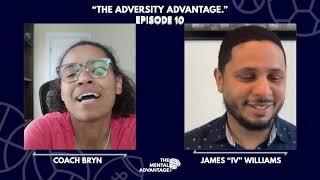
In this episode of the "Adversity Advantage" podcast, host Bryn Drescher (Speaker B) interviews basketball scout and founder of Between the Lines Sports, James "IV" Williams. The conversation covers how scouts communicate feedback to players, emphasizing candid yet sensitive evaluations and the importance of sharing actionable insights. Williams stresses character and teammate qualities—such as humility, supportiveness, and adaptability—as critical evaluation criteria beyond pure talent. He advocates for relentless effort as the most controllable factor for gaining exposure, noting that coaches reward high‑motor players. Advice is offered to parents, coaches, and athletes on fostering character, handling adversity, and developing a strong work ethic. Rapid‑fire segments explore what makes PJ Tucker and Rajon Rondo effective role players, personal preferences (cheesecake, favorite superheroes), and lighthearted topics like toilet‑paper orientation. Williams shares his personal heroes—his mother and mentors—and his desire to be remembered as a good, dependable person. He identifies his mental advantage as perseverance through adversity, referencing Nipsey Hussle. Finally, he outlines his business operations: BTL Hoops scouting services, mock drafts, the upcoming NBA Combine, and how listeners can follow him on social media.
Chapters
And so the other side of that is, um, the better you are in theory, the less your character has to be. Because, you know, your character has— the character— excuse my language, but the character has to match your bullshit. So it's like, or the game has to match your bullshit rather. So if you are a really, really good player, there's some ego and other stuff that comes along with that, and everyone knows that, right? So like, if you're, if you're a head case but you can hoop, people will deal with it, you know? So, so Sometimes you have guys that their egos are way up here and their game doesn't match it. If it doesn't match it, then do people want to deal with that or put up with it? A lot of times they don't.
Hey, hey, hey everybody. Welcome back to another episode of the Mental Advantage Podcast. This week we are gifted with the presence of James Williams IV, I believe it is, but I'll let him clarify that because we got to find out about these other 3 James. Also, he is the owner and founder of Between the Lines Sports, and he does scouting and media outlet. But there's more that James does. He's also a dad, a proud girl dad, another girl dad. But there's so much more to James, and I'm going to let him introduce himself. How you doing, James?
Pretty good. Pretty good. Yeah. So James Williams IV is the fourth. I go by Ivy for the fourth sometimes. Founder and owner of Between the Lines Sports, basketball scouting slash media outlet based in Atlanta. Proud girl dad of a recent high school graduate and, and I guess legal adult at 18. So yeah, so that's— those, those are, those are the big accolades right there.
A little scary. Yeah, like legal adult.
Extremely scary. Extremely scary. It's for me for sure, but not for her. I think she's okay, right?
No, she's probably fine, right?
Yeah, I'm terrified.
I am too. Yeah, it's a whole different, whole different ball game for sure. Awesome. Well, I'm so glad you could join us because this is such a different place that we've gone before. We've talked mostly to athletes and former athletes. I did have a sports psychologist on, and, uh, you're the first person that isn't currently an athlete, although, well, I guess there were former athletes. But tell me a little bit about how you I like every superhero has an origin story. I love superheroes and origin stories. So tell me a little bit about how you got started in scouting and maybe it came out of your own athletic pursuits. Tell us more about that.
So I am a former athlete. I played basketball at a small NAIA school in Dayton, Tennessee called Bryan College. I wasn't very good though. I just, I just tried really hard. Worked in the NBA for a little while with the Cavs and the Hawks. Primarily in basketball operations and grassroots basketball development. And this business came about by chance. It came about by chance. I got out of the— got out of the business for a little while and, um, was miserable. I was in sales and I was extremely depressed. Extremely depressed. I'll say that candidly. I was very depressed, um, and I didn't enjoy what I was doing. And so I embarked on trying to get back into the business, and I kept coming across the same question. And the question was like, what have you been doing lately? And my response was always, well, I've been working, you know, I've, you know, I've got, you know, adult stuff going on. So I didn't understand the question. I thought it was like— I thought it was a weird question. And then one of my buddies, uh, he brought it up. He said, James, well, they're asking you that question because they want to know what you've been doing in basketball. And for me I didn't, and I was like, well, what am I supposed to do? You know, I was like, I have this resume of work experience. And he was like, they don't really care. They just want to see that you're trying, you're doing your best to somehow stay connected. And so I embarked on, it was more so just a journey to kind of showcase my basketball acumen first. I wanted to let people know that I knew basketball. And for me, the ideal way to kind of showcase it was to, um, to scout. And so I started this, this YouTube series called Call 'Em Up, and it was based on NBA G League players. That was my, my last in the NBA, um, well, I was exclusive was, was in the G League with the Cavs G League organization. Okay. And so I did about 15 videos on, on YouTube on 15 players, and of those 15 players, 13 of those guys got called up. That season. Wow. And so a G League coach got wind of, uh, or came across one of my videos somehow. I still have no idea how he found it because no one was watching my videos. Um, and so like, and the thing is, I knew, I knew people weren't watching it, but it was more so just so I could, if someone asked, I could show them, well, this is what I've been doing, right? But he came across one of my videos and he asked me, he said, well, how much would you charge me to, to do some scouting, um, some advanced scouting for our team? And I didn't know because in my mind it wasn't a business, right? Just so to kind of show what I could do, right? And we came up with a number. I did a couple of videos for them, and then he was like, well, you should probably come to the G League Showcase. And this— that year in particular, it was in Mississauga, Canada, which is right outside of Toronto. Um, and so I think this was November when he told me about this, and I think the Showcase was right after Christmas. So I didn't have a lot of time to kind of put it together.
Yeah.
And I remember pretty much lying to everyone about it. I lied to my family about why I was going to Toronto, and I lied to work while I was going to Toronto for another reason. And, um, got there and pretty much, um, so even that story is interesting because I got there, I was broke. I think I spent my last bit of money to go. Um, you needed a credential. I didn't get a credential. I bought a ticket. So the best way I could do it, I bought, I bought one ticket for the first day that I bought. And so this was like a round-robin, like AAU kind of event. So like, you know, every 2 hours a new game starts, and you know, people bought my tickets for every game separately.
Oh wow.
Yeah. And so what I did was I— so I used to always dress in a suit and tie when I would go out, no matter what, like Vegas in the summer, Toronto in the winter, I had a suit and tie on because I wanted to stand out. And so I wore a suit and tie, bought my floor seat, I sat down, I didn't move. I didn't move the entire day. And, um, halfway through the day, a different coach, uh, came and sat next to me. I didn't know who he was, I had never met him before. And when I watched basketball, I talked to myself. So I just, I kind of talked the game, like, oh, you shouldn't have done that, or you know, get over that screen, whatever the case may be, right? And we just started talking basketball. And, you know, halfway through the conversation, he asked me who I worked for, and I just told him nobody. I was— I told him I was there trying to get a job.
Yeah.
But he doesn't know this. And that crazy thing, I talked to him on Clubhouse maybe a month and a half, 2 months ago. Just by chance, we end up in the same room.
Yeah.
And I told him how much that question meant to me, because in his mind, I, I took it as he thought I was good enough to work for someone, right, based on how we were having a conversation. And so that was kind of the embark, and it just kind of snowballed from there. I just, I kept going to events and I kept meeting new people, and the business expanded. And now, almost 5 years later, I've got 30 interns working for me in all different kind of departments, and it's a full-fledged business, LLC, all the whole, the whole deal.
So yeah. That's awesome. I love that. So, so many things that you just highlighted in that bit. One, right, you know, luck is where preparation meets opportunity. So one, you bought the ticket, you were broke, you said, well, whatever, come hell or high water, I'm going to be there. Someone told me to go there, I'm going to go there. And, you know, just you being knowledgeable on what you— or, you know, what you had basically trained in your whole life as far as, you know, becoming one, a fan of basketball, a player of basketball, and then equally a student of the game, right? And the process and the business of the game. You just from doing that, like being in the right place at the right time just sets you up. I don't believe in chance. I believe that everything happens for a reason, but I understand, like, it kind of seems like that just dumb luck, like that just happened. But I'm like, that guy finding your YouTube video, everything, like, first of all, can we still watch those videos? Are they still alive? Can we go? They are still— okay.
All right. They are, they are way down at the bottom of the YouTube page now, but they're, they are still there for sure.
All right. So if anybody wants to find the Call 'Em Up, James's beginnings, you can see where he was and you can also see where those players are maybe now. And that, that would be really awesome. You should probably start that again. I don't know. I don't know. It sounds like a good series.
Yeah, it was, it was pretty good. I've thought about it. The issue was just the time constraints.
Yes, I know. The editing and the shooting and oh my gosh.
Yes.
Yes.
I totally understand. That was a lot. That was a lot for sure.
All right. So now that we know how you got started, let's talk a little bit about what that process is. So of course it's one thing for me to watch a game and be like, oh, they shouldn't have drafted that guy. Or, you know, being what they call an armchair quarterback or, you know, a couch surf— I don't know what they call it, couch coach or whatever they call it. But what is it? What goes into scouting? Tell us a little bit about the background of that and then what you bring to it or what you're looking for. Because in case there's any parents or coaches or anyone looking to work with you, like, you know, what, what is that whole process about?
So at its, at its most organic basis, it's evaluating talent. So identifying if someone can play or not and at what level those players can play. So that's the first thing. But honestly, any Joe Schmo can do that part. Anybody— like, if you see somebody can play, pretty much most people can identify someone who can play. Um, the, the tough part is probably identifying level that they can play at. Um, and then there's a, there's a deeper level of it which, which comes to What kind of person are they? Are they a team player? Can they play on this team? Can they thrive in this system? Um, and that's high school, college kind of thing, and also the NBA. Okay. And then from there, like, on the professional level, it's what would they do if we give them $10 million? You know, what kind of drive do they have? What motivates them? How do you—
how can you tell that? I'm sorry to interrupt, but how can you tell that if you, you know, I'm— you're just watching me in a game Well, maybe you're doing more than that and you're gonna say, but how can you tell if you give me $10 million what I'm going to do with it?
Uh, there's definitely more. So there's definitely a lot more research. Um, it's called— it's what they call intel. So, okay, you gather intel. Um, character. Character is, is key. Uh, the kind of person that you are is probably the most important aspect of it. Um, you know, you hear all these like terms like, this is a person I want to go to war with, or I want to be in a foxhole with, or whatever the case may be. Um, You want equally good players and good people. Um, and then the other side of it is— on, there's a flip side too, because everyone doesn't care about character. And so the other side of that is, um, the better you are in theory, the less your character has to be. Because, you know, your character has— the character— excuse my language, but the character has to match your bullshit. So if like— or the game has to match your bullshit, rather. So if you are a really, really good player there's, there's some ego and other stuff that comes along with that, and everyone knows that, right? So like, if you're, if you're a head case but you can hoop, people will deal with it, you know. So you, you sometimes you have guys that their egos are, are way up here and their game doesn't match it. And so if it doesn't match it, then do people want to deal with that or put up with it? And a lot of times they don't. Um, and now there's just such an abundance of players everywhere too that, you know they can find, they can find a replacement who won't say anything, you know. They'll be a good teammate, and that's what people want. Like, because the last thing you want is for your 7th or 8th best player to be the, the head case on your team, you know. So you don't want that. You don't want, you don't want a bunch of those guys either. So you almost want to kind of balance it out. You want to have more good quality people on your team, um, because everyone has their issues and everyone has their problems, as you know. I'm sure you know So you want to kind of balance it out and make sure that, you know, it doesn't be a detriment to the team, so to speak. And so I, I look at all those things. So outside of you can play, I try to find out what kind of person you are, like if you can fit in this system. Can he fit in a system that has a group of guys who are married and have families? Is he going to fit in with those guys, or does he need to be around a group of young, younger people who he can kind of relate to? Or would he thrive with more, you know, adult supervision, so to speak, you know. So there's so many different variables of things. Um, it's harder, you know, as, as they're— the younger they are, the harder it is because you're trying to predict what someone's going to become. Yeah. Which is difficult. The thing that I try to do is I try not to put the younger people in a box. So, you know, whatever— I don't— I typically try not to, to evaluate under the age of 15, um, only because it's just, it's just so hard. And right, the really not that great either, to be honest. So I try my best to evaluate the upperclassmen, high school players, and so on and so on. But I don't put kids in boxes. I'm just more matter of fact about what I see. And then the more I get to know players, and then I do a lot of watching from afar. So I'm not the person that— there's scouts who are very boisterous and outgoing. They, they make themselves known in the gym.
Yeah, I'm—
that I'd rather go into the gym with my laptop, do my work, and not speak to anybody. And not because I'm antisocial, just because I can do a better job of evaluating the player, the parents, how they interact with the other— with their teammates, all that stuff, if I'm not really socializing with other people. So that's kind of where I try to find my sweet spot. But of course there's the networking that goes involved.
Yeah, of course. So what, you know, this, that was where I was going to go, kind of what you were saying, because I wanted to know, do you, uh, because I know there's restrictions, right? Coaches can't recruit certain players based on certain rules with the NCAA and, you know, all of that. When you are in that situation, because you're now, I, if you were contracted by the team, are you bound by the same rules or are you not? Because you're an independent agency and you can go up to like, you know, Mikey Williams right now and you can talk to him even if you're not a college, you know, you don't to do the whole from afar, even though that's your preference, right?
I, I have complete autonomy to talk to anybody, pretty much. Okay. Uh, unless, like, so sometimes events will say, hey, don't talk to the kids. That's different. But for the most part, that's, that's kind of the— that's kind of why the, the business actually exists, because there are a lot of people who do what I do. Um, it exists for the reason that coaches, coaches only have certain times of the year where they can actually talk to players. And so we're the middlemen, so to speak. So we're allowed to go talk to the players, talk to parents, find out about grades, or, you know, just whatever the case may be, what they're doing, you know, what their extracurriculars are, you know, just to find out about them. So, you know, after games, I'll talk to players sometimes, you know, just whether it's simply just trying to get some information, like getting a phone number or a social media tag or something, or, you know, what are your grades like, you know, have you taken the SAT yet, you know, where's your mom, you know, where's your dad, let me go talk to them kind of thing. So I, I live in that area where I can, I can do a lot more for coaches, and that's— I think that's why they probably subscribe to the service more often than not.
Okay. All right, awesome. And so it's a subscription service that we can subscribe to, or we can independently contract you on a certain case basis, like, I want information on this guy? Yeah, for sure. Gotcha. So, uh, the other question I had was, obviously this podcast is called The Mental Advantage, uh, very, you know, uh, consider it of the mental game. What aspect do you find for the mental game and how are you measuring that? You know, or what do you find helpful as indicators of that?
Um, the ability to handle adversity is the— is my key indicator always, because it's the one thing that adversity will always happen. Whether it happens often or not, it will always happen. And how someone handles it, or, or I guess adjusts to it in the moment, is a key factor in what they could, what they could be. I believe, um, right now I have a, I have a thought process. This has been my thought process since I kind of started this, is that, um, older players in college typically adjust to the NBA in a much quicker, at a much quicker pace because they've had moments of adversity on a consistent basis. So if you have a guy who's a one-and-done kid, who's a kid who's just one year out of high school, he's in the NBA, and you take a 4-year college player and you measure them up side by side, the younger player may have more, more physical potential or more star potential, as they say. But I typically find the older player has gone through stages in his college career, and because he has— and those, those stages are typically just simply that. Some at first is, I want to play, so how do I get on the court to play? So you, you fight, you're fighting with maybe there's an upperclassman on the, on the team that plays my position. How do I take some of his minutes so I can play? And then how do I, you know, the next year maybe how do I establish a role on the team overall as opposed to just wanting to play? How do I establish whatever my role is? And maybe in the third year, in the fourth year, you become more of a primary focal point on the team. So that guy is going through so many different levels of adversity that by the time he's a senior, he's, he has he has, um, overcome so many obstacles that when you go to the NBA, more often than not, you're a role player. And so that guy can walk into that team as a role player immediately and just fit, as opposed to a lot of the high school younger players, they've always kind of been the guy. And so there's not a lot of adversity when you're the guy because, you know, you have less restrictions on what you can and can't do. You have less No one's going to challenge who you are because you're typically better than everyone else. So because of that, those guys have— it's probably the first time they face major adversity is when they get to the NBA because you're not the primary person on the team. You can't shoot the ball whenever you want to. You can't talk back to the coach. You don't have full autonomy to just run the team how you want to. And then those guys typically struggle a lot more because of that, especially late these past like 5 or 10 years or so. Yeah. There's just a supreme struggle, and it takes them a lot of times 3 or 4 years to kind of adjust, which is in theory those 3 or 4 years they would have been in college, right? And so the ability to handle adversity, whether it's a loss or a position being taken or time not being, being given to you, all those things matter to me. And so, you know, whether it's on the court, and then sometimes you like when you do your intel, you know, what kind of adversity have you been on, been through off the court? And have you— have you— are you a big brother or a big sister? Do you take care of your siblings? Um, are you in a one-parent, two-parent home? You know, do you have responsibilities outside of playing basketball? And so if, you know, everything's kind of been handed to you and laid out on a silver platter, more often than not a struggle is going to come at some point. And do you want the struggle to come after you give them $10 million? You know, like, what happens when you get in the face? You know, it's like a boxer, you know, like, it's— everybody's fine until you get hit in the face the first time. Yeah. And so how do you adjust to that? And so for me, my indicator is always just how do you handle adversity? How do you handle adversity that you cannot control, period? Like, there's something that's gonna go— yeah, not gonna go your way. How do you deal with that? What do you do to overcome it? What's your— what's your demeanor, your mentality like as a— as a person, as a player? By yourself and then with your teammates. You know, all those things matter to me.
Okay, all right. So how you handle adversity. So what came to me, one, was James, are you advocating for all high school basketball players to finish college? I just want to know. I'm getting you on record.
No, I'm not. No, I'm not. No, I am— I'm also a firm believer if you can hoop, you can hoop.
You can hoop, you can hoop.
Okay. Yeah. So, um, if you— and you know, I believe that No matter what, if you have the skill set for the job, you should be able to have the job.
You should be able to have the job. Okay. So when I also, I noticed I say so a lot, so I'm just going to put that in there because I'm like, oh my gosh. Yeah.
When I say, I say like a lot.
Yeah. When I'm editing these, like that's, yeah. Anyway, the big thing that I'm hearing from that, right, is adversity. So But the first thought that came to me was like a LaMelo Ball, for example. Did you have anything to do with him? Did you scout him even if, 'cause I'm sure you do it independently 'cause you can't turn it off. Like you're doing it even if you're not doing it. So what are your thoughts about like a LaMelo Ball or even now some of these AAU guys getting these huge followings, the Mikey Williams, like, you know, everybody's talking about him since they're 14. I mean, Bronny James, you know, like, What are your thoughts about that? And what do you think that a player like a LaMelo Ball, like a Marvin Bagley, Cam Reddish can do if they are a one and one, one and done, to be able to create that in an, I guess, inorganic way, if that makes sense, or to be able to sort of, you know, if they're not having that adversity off the court. Right.
Um, I, I think it's, it's probably more so on the adults in the situation to, um, somehow manufacture it, to be honest. Um, I think based on what I, I did, I did scout Lamelo when he came back from Lithuania. I didn't scout him before. I saw him, of course, because the whole team was a, a YouTube, uh, you know, internet sensation. So I knew about him. I had never scouted him before. Okay. But he, when he came back and played at Spire in, um, in Ohio I did, I did scout him then. Um, I think he, he overcame a lot of adversity in the sense of— and again, it's different because, you know, you get pulled from high school, you, you're taken to Lithuania to play basketball. Um, you're, you know, you're 2 years younger than your, your, your older brother, not the oldest, but the older brother. So, and so you're with him, you got so much attention on you, whether it's a, um, a TV camera in your face all the time, or again, you know, people following you and wanting to— wanting a piece of you. Yeah, I think that's a level of adversity that, you know, a lot of kids don't face. Again, now some people could say that it's, you know, it's self-inflicted because it was, you know, the family created this, this, um, this train pretty much. Yeah, now you gotta keep the train going. And so that's one thing. But, you know, even now I've heard stories about like some teams not wanting to play him when he came back, you know, because, hey, well, he's a pro now, like, I don't want to play against professional against— I got high school kids, um, people questioning his character, or what, like, what kind of person is he? You know, you may see it, see the show and watch them, and you may forget that he was 15 or 16 when the show was out. And, you know, like, what were you like when you were 15 or 16? And, you know, people may want to hold you to a higher standard because of, you know, like, he said something stupid. But like, right, what 16-year-old doesn't say anything stupid, right?
Thank God there weren't cameras.
Seriously, seriously. And so, um, but I think it— to answer you, to go back to your question, I think it has to do with more so the parents and the coaches to create some adversity. And I think the downside to it is, as parents, even, you know, I, I'm, I'm victim of this, you know, I fall victim of this. Like, I want to, I want to make it as easy as possible for my kid to get, to get to wherever they want to get to, right? Um, and then the coaches, to be honest, a lot of them aren't, you know, they're, they're, they're more— they're volunteers. On the, you know, high school side, but more the AAU side, the travel ball side. And so maybe they may not know how to, you know, create that, that adversity so the kid can overcome it. And then to be sure that the kid would do it properly when, you know, when they do it. So like, you know, playing that mental game with them and giving them situations that, you know, how do you, how do you do this? And are you giving them, you know, like real-world circumstances that will cause think about stuff and how will I react to this if this happens. Um, and so I, but I put it, I put the, I put the blame more, not even the blame, I put the pressure more so on the adults in the situation. Yeah. To try to create some adversity. Because at the end of the day, while we all want our kids to be, to thrive and be successful, you have to allow them to, at least in my, I believe this wholeheartedly. I think that the reason why I, I'm the person I am is because I dealt with a lot of stuff as a kid and I was able to overcome it. So like now I just say I roll with the punches. Whatever, whatever happens, I may be upset for a moment or two, but at the end of the day, I have to keep moving. So you just kind of roll with it. I think have those, those kind of people who can just roll with whatever happens, because you, you'll see some stuff, especially, you know, AAU high school stuff. Kids will throw tantrums, you know, if something doesn't go the exact way they think it should go. There is, you know, I don't want to play, or I don't like this, or even practices, you know, I don't want to, I don't want to practice to that. I never missed a practice in my life, my entire life, from 8 years old when I first started playing any sport. I've never missed a practice in my life, no matter what it was, right? You know, never. And so like now you see here kids like, oh, I couldn't make it today, you know. What do you mean you couldn't make it? You know, I mean, things like that, you know. Like there's a lot more like freedom to and flexibility to just kind of do what you want. And I think that's because, you know, we want to make it— well, if you don't want to go, you don't have to go. Yeah, my mom used to tell me, if you started, you're going to finish it. That was, that was her line, right? If you're going to sign up for this football team or this baseball team, this basketball team, you're committed to it until it's done. You can't quit in the middle of the season if you don't like it. And then on the other side of me, I had older brothers too. So yeah, I was, you know, I was, I was picked on and beat up on by my older brothers to the point where like, I think they toughened me up too, and that helped a lot also. So I mean, there's so many different factors and variables that can go into it, But manufacturing some adversity for kids who may not have as much, I think is huge for the, for the adjustment whenever they get to college and or the professional ranks.
Absolutely. And as I'm recalling, um, because I had Marvin, uh, on Marvin Bagley on my podcast, uh, hasn't come out yet, but it will be coming by the time this airs. It will have dropped. Uh, what I also recognize with a player of that magnitude, these one-and-done players, these high-profile players is there's a level of adversity that even we can't comprehend because of what goes along with all of that. Everybody wants a piece, everybody's trying to get at them. So while maybe they're not— not to say that all the one-and-dones are in this category, but maybe their family isn't struggling financially or isn't going through the turmoil that you see of the rags-to-riches stories, Yet there is definitely a level of pressure that is unfathomable for those of us that haven't experienced that in some ways, wouldn't you say?
I would agree. I would agree 100% because like you said, there's— they're just— they're more people trying to hang on or trying to get access, um, trying to get an interview. Like, you'd be surprised, like, you'd be surprised, like, you go to some of these events and you see adults chasing after kids. And like, you know, like, as a kid, like, I can't imagine, like, having a, you know, a 30-something-year-old man running behind me trying to talk to me for a second. I can't even— I can't fathom that, right? So I can only imagine, or just, you know, meeting somebody randomly and wondering if they know who I am and if they want something from me, if they're trying to get something from me or get access to me for some reason. So yeah, I think there's definitely a level that most people can't, you know. And again, like, you know, Zion's a— Zion and LaMelo are probably like really unique cases because they had like massive followings, you know, millions of followers on social media. People like, like, people know who you are wherever you go already. And so there's a level of fame that they probably wouldn't have had if they were a regular high school student, you know? Yeah, absolutely. And so how do you deal with that? There's a huge difference between being popular at your school and being popular in the world. And so how do you handle that popularity on that magnitude where people are always trying to get to you? And I, I can't even imagine what that's like. And again, like for you, like you said, that's, that's definitely a level of adversity that you have to somehow figure out how to overcome for sure.
Right. Because you can totally mismanage that in a way that can be really bad for your draft stock or your, you know, any of that. For sure. So that, that's really good though to, for us to keep into perspective, right? Because there's a lot of different facets that each athlete in their own individual right is faced with. So the questions that come to me when it comes to Alright, so we're, we're out, we're evaluating their mental game. We're looking at their overall stuff, their ego, their attitude, how they handle things. You know, obviously their playing acumen, not just on the field, but off the field, off the court. And then as well as their ability to understand the game, right? Like understanding the game. Have you had an athlete that you were like, you was good, but you were like, I just, I don't know. And I don't want names. Obviously, that's not what this is about. But like that you were like, I don't know if I want this kid to go, you know, all the way, or, you know, or the team is really excited about him, but you're kind of like, yeah, I just don't think he's the guy. So, yeah. Tell us about—
yeah, for sure. So this year in particular. So the cool thing about my job now is that I'm actually starting to see kids go from high school to college to the NBA.. And so this is, I think this is the second full cycle year that I've had where I've seen a kid from that level all the way up and now draft eligible. Okay. And so the cool part about it is that I get not even close familiar, I get very familiar with certain players. And so now as teams start to call, as the draft approaches and they're saying, oh, well, why is this happening to him? Or why is it happening to him? To him. And one kid in particular that I told him flat out, the kid's never had any adversity in his life. And that's, I mean, that's for me, I knew that personally because I had been close to him and been close to what, you know, being just close into watching his situation and knowing about his situation, right? There was nothing that had been a struggle for him ever. And so this past year was the first time he ever had any hiccup. And, you know, COVID, I mean, there's— and then COVID hit everybody. Yeah, everybody, right? You know, so obviously there's a level that like you can't control what happened, why it happened, you know, and then your team maybe doesn't play as well as you're used to playing because you maybe played on a bunch of really good teams your entire life. So you've always kind of won, you know, you lose a game here or there, but you pretty much win all the time. And now people are scrutinizing your play to the point where it may affect your, your draft stock and what, you know, you thought that you would be, you know, where, you know, maybe you thought you were going to be a lottery pick, you know, and now maybe you're out of the first round, you know, you just never know. And so how do you deal with that kind of adversity? Um, and so I tell— I had people call, I had NBA teams call me about this particular player, and I was like, well, you just— this is how he is. I mean, this is, this is— I mean, you know, certain things like, oh, why is he shooting it well? I was like, well, honestly, he's never really been able to shoot, right? You guys have seen highlights, you haven't seen him play, and so you don't know. So now your first time seeing him play, you're realizing that it's not that smooth stroke you thought it was, that it's streaky, you know, or, you know, he's not handling losing very well, whatever it may be. How do you— and so be honest with them and tell the truth. My whole thing is always tell the truth. I never try to sugarcoat anything about a player, about their skill set, because I don't, I don't have, I don't have skin in the race, as they say, right? No skin in the race. I'm not invested outside of my time, which is, you know, given to a bunch of kids. And they, most of the time, kids don't even know it. So, um, there's no skin in the race. I just try to tell the truth. And for me, that goes back to my credibility as an evaluator. I want to make sure that people understand that I'm being truthful, whether they agree with my opinion or not. It's, you know, it's the one that I've kind of formulated over the course of these years. But yeah, like, hey, I don't know if that's going to work. Well, I don't think, I don't think personally he's a first-round pick, you know, right? Something like, I don't think, I think he's an NBA player, but maybe he's not a first-round pick. So, oh, you don't think he's a first-round pick? I don't think so. I mean, somebody may draft him, but yeah, that doesn't change the fact that maybe they, they were wrong, right? So, and I, I feel— I had a conversation 2 days ago with, with a buddy of mine, um, and we were talking about a particular player in, in this year's draft. Yeah. And he said, oh, well, he's a first rounder. And I'm like, no, he's not. And he's like, where are you getting your information from? I was like, he's not a first round. He's not first. I was like, now he may get drafted first round, but right And how do you know? How do you know? And I just kind of lay out the things that I know and what I've seen, right? Again, not saying that I'm 100%, right?
Right.
In my opinion, I wouldn't draft him in the first round, you know? And you can think about it if you want to. And but that's kind of the thing, like, you see them, see how they act, how they move, how their, how their circle is, all these different variables. And again, like, I go back to the money all the time, but do I want to give him $10 million? Well, what would he do with it? Does he become— does it motivate him, or does he become complacent? Is he good enough for that money in the first place, or can you— could he provide more value at a lesser number? And so all those things kind of matter when you're making— when you're making that decision. And a lot of that comes from what you see from them when they're young.
Yeah. Are you saying that if So based on what you just said, are you saying that if I give him less money, he may perform better?
Yeah. Wow. So, so I call these guys value picks. Okay. And what I— so first, first round in the NBA, first round draft picks, their money's guaranteed from number 1 to number 30, whatever, whatever. And it's slot, it's slotted money. So whatever you get drafted, that money's just there.
Okay. Um, and so, well, tell us how much. If I get a first-round draft pick, what do I get?
What am I getting? So if you're the number one pick, you're gonna— you're slated to make around $40 million on your first contract. Okay. So it's 4 years, so about $10 million per contract. Okay.
And it drops down, um, the later I go in the draft.
Yeah, right. Okay. Yeah. And so the second round is all contract negotiations, so whatever your agent can negotiate, but it's typically a lot less. Okay. Now you may have some second-rounders get first-round money So maybe they sign a 2-year deal that's similar to what maybe the 20th pick gets, something like that. But so, case in point, let's say I know a kid that he's a tweener. He may— and I say tweeners are typically from 20 to 40. All those guys could switch, in my opinion. Like, any of those guys can go from any— from— they can go from 40 to 20 or 20 to 40, and somewhere in between they can just go.
Um, you mean the picks, not the money?
Not the— yeah, okay. And so if I can get a player later and pay him less, and I think he's a quality player, typically he provides more value because he's cheaper to you, he's cheaper to your books.
Ah, okay. So you weren't talking about like a money ceiling? You weren't saying that he's gonna play less because he's getting paid too much? You're talking about— what?
Got it. Okay. Yeah, what value he could bring. So he, in theory, he could, he can bring more value because you got him on—
you got him at a discount, right? Yeah, pretty much. Exactly. Got it. That.
Okay, that makes sense. Now, now, on the other hand, there are certain cases where somebody gets drafted high and then the motivation to get there, it, it shrinks, uh, dramatically. And then they don't perform well because, you know, maybe the, maybe the goal was to get drafted and to make it. And, and so like some people, like, they get there and they're like, they forget that now you have to— the goal is to stay there. It's not just to get there, it's to stay. So however you get there is one thing, but to stay there is sustain that success for us a number of, a number of years is where the real money comes into play on that side. And so you find a lot of guys that are drafted very, very high, and you'll look up and they're out of the league in 4 years. Yeah. So get one contract. And so why did that happen? You know, were you— was— or were you probably drafted— maybe if you were drafted later and you had a chip on your shoulder to say, well, maybe you shouldn't, you shouldn't have skipped me earlier, maybe I would have played better, as opposed to saying, oh well, I knew I was the number one pick, I got drafted number one, this is where I'm supposed to be. And now I'm supposed to— again, that goes back to the adversity we talked about earlier, like, right, everything's kind of come where I thought it should be, and now that you're— how do I handle this? You know, like, do I play hard? Do I try hard? Do I work out in the offseason? Do I eat right? Do I take care of my body? Do I, you know, not party, you know, 7 days a week until 3 AM? You know, like, whatever the case may be. And so all those things matter. All those things matter. And you never know what kind of person you're getting until you get them. Unfortunately, there's no science to it. It's just— right. It's really just a guess.
It really is. Yeah. So, okay. There is some science that suggests that the higher the athlete's paid, the less motivated they are, interestingly enough, kind of to go to what you were talking about. So it's like I've reached this pinnacle. And also almost like the pressure that comes with it, maybe it's a back down on their part, right? Like, so it's not so much that they're intentionally like, okay, you're paying me $50 million, I don't care. It's not that, but I think there's a level of something inside of a person that, you know, it's kind of like, okay, whoa, right? Where, you know, and we just look at it, right? People say all the time, oh my God, I like watching college basketball because they work their butts off. They play harder. Because they're not being paid. Now that we have the name, image, and likeness coming and all that, you know, which we can talk about that in a second, um, you know, of course, who knows if that's going to change. But, um, it is very good to know that, you know, yeah, things to look at, right? Because you want to find out, like, am I getting a value for that? Not just what they're getting paid, but are they putting out the work? Yep. When you— have you ever been pleasantly surprised that you were wrong, or are you pretty bang on most of the time? And I, you know, I'm sure you're happy to be wrong because you don't— yeah, you're never betting against a player, right? But tell me a little bit, have you ever had a situation where you were like, you know, I read that all the way wrong, or he just surprised me, he just came out of nowhere and kind of did what I thought he wouldn't do?
Yeah, for sure. I mean, I think if you're an evaluator, you're always going to be I— you're always gonna be wrong at some point because somebody's gonna prove you wrong, or somebody's gonna prove you right. I mean, or right, or you'll be wrong and you'll say less and they'll be— they'll be doing more, or you'll think highly and they'll— they won't perform as right. Um, and so it happens every year. I mean, honestly, every year there's a player that I'm thinking like, oh, that kid, I think he's going to be good. And then again, whatever the circumstances are, because you can't control circumstances, like, right, something just Um, but yeah, I mean, case in point, I can— I'll say his name because he plays— he plays for my hometown team. Okay. Um, I wasn't high on Trae Young. Okay. Um, but Trae Young has— now, I didn't think that he couldn't play. Um, I just didn't think that he would be this good so soon. And, and he is— oh wow, he's, he's superseded what I thought could happen. But then the, the crazy thing is, uh, when I was in Vegas, uh, last week another scout was telling me about. He said, well, you know, a lot of this is, is the change to the rules. You know, like, you, you look at him, you see he's small, and, you know, how's he gonna, you know, um, handle the, the pounding that he's going to take in the NBA?
Yeah.
He's like, well, the rules change. You can't touch him. And so you think, and like, those things, like, and you're not— and I may— maybe I have like a '90s, early 2000s mentality about the game. And so like, I think, well, you can't put your hands on them. Right now this guy has his— he has wiggle room to do whatever he wants to do, right? You can't lay a finger on him. And so now do I think— when I go back and say, well, maybe he wouldn't survive in the earlier generation, I could say that, but you know, at the same time, if he's as good as he is, maybe he adjusts, you know?
Yeah.
And the other side, I, I, I kind of— me being a small— I was a small point guard, um, I've always been— and so like, people, oh, he's so small.
He's always been small.
Yeah, so it's never changed, right? He's, he's probably, he's probably more, more likely to adjust to the size and physicality more than somebody who's bigger and maybe has been the biggest, biggest person on the court, as opposed to the opposite, because he's always been the smallest person on the court. So maybe he, he has the easier adjustment, which again, that's the, that's some adversity too, that maybe because he's always been that small guy, he knows how to adjust to whatever it is. And maybe as it gets harder and stronger, there's a different level of adjustment. But he all— he knows that he could do it, as opposed to I'm the biggest dude in the gym, like I've never seen anybody my size ever in my life, and then now I walk into a gym and everybody's my same size. Like, how do I function as now I'm, I'm normal? When you're small, you're, you're not like— you're always small. Yeah. So now you factor in that, like, he's probably— he probably had an easier adjustment than somebody else because he's, he's known he knows who he is already. And I think, you know, as a small person, you always know who you are on the court. And so you know what people are going to say about you. Oh, he's too this, he's too that, he can't do this, he can't do that. And a lot of times you kind of carry that on your shoulder and you just— yeah, you know, I'm— I was, I was a little tyrant personally. I was, yeah, I was feisty. I talked hella, hella you know what. Yes. Um, I, I didn't back down from anybody. And so I was very much more— I was probably more aggressive than most because I felt like I had to be because I knew when people saw me, they saw weakness. Yeah. And I wasn't going to let that, you know, I wasn't gonna let that dictate how I played in my game. And so maybe that's what Trey did. And so I'm— I— but I— when I say pleasantly surprised, I root for him, and I'm happy that he's, you know, taking, taking the league by storm, so to speak, now.
So yeah, it's so such a good point because there's so many athletes out there that sort of, you know, like, they get We get so lost in this idea that, oh, I'm not naturally the height, the whatever. You know, if we were to build the perfect basketball player, football player, you name the sport, it's like, oh, I don't fit that. But because of that, you have an advantage. It's called the underdog advantage. We talked about it in a different episode with a guy that walked onto the NFL. I mean, basically, his name's Greg Camarillo. But in general, because you're that, you have to work harder. You're having to become, like you said, more scrappy, more inventive, right? So maybe he would adapt to the bad boys of Detroit, right? With the Bash Brothers or whatever they were called. I don't know. But he would've made a, you know, he would've probably, but it doesn't really matter. These are all great conversations for us to have. Like, you know, this team versus that team, this guy being the great versus, you know, LeBron, Jordan, Kobe, you know, all that. Right. But I think it's really good to like, for athletes that are listening or parents of athletes is like, you know, use that to your advantage because the shorter or smaller that you are, the more nimble you are, the more, you know, they're always talking about big guys can't be fast, even though Shaq kind of, you know, was a fast big guy or at least had a lot more nimbleness than most big guys come with. And I think Zion and what's his name, Giannis, is like that. Maybe, you know, don't quote me. No, you're right. Okay. Yeah. So I think it's really important that we look at that and we say, okay, what do I have that I can work with versus what I don't have?
And I think that's a really big thing for basketball players to keep in mind. For sure. I think there's another thing. A lot of, as evaluators in particular, we're always talking about what someone can't do. Yeah. Like, well, he can't do this, or he doesn't have this, or he's not, he's not this. Yeah. As opposed to identifying What does he do well, right? What are, what are his skill sets? What are, what are, what are his— what are the talents that makes him unique? And right, can we use those talents to better our team? I feel like that's on an athletic team or a team in general, you know, right? You know, if I'm building a— a case in point, I have all these interns with me. Am I, am I trying to put you in a box, or am I trying to figure out what your skill sets are so that you can better help us? And maybe I'm looking for one thing, but if you're, if you're skilled in this other area and I can find a way to utilize that, how much better am I as a leader to identify who, how good you are and if you can help us? And so often, you know, well, you'll, you'll hear it, honestly, you'll watch the draft, you'll, you'll hear all the things. Oh yeah, all the things he can't do, what he's not, this, he's too small, he's too, he's not long, he's not fast, he's not athletic, but can he play? Yeah, you know, I want people who can play, right? You know, like in business, I want people who know their shit, you know? Like, so if you, if you're a great marketer, I want you to be— I want you to go kick ass in marketing. If you're a great publicist, go kick ass in publishing. If you're, you know, I'm not gonna put you over— if you're, if you're a marketer, I'm not gonna put you in sales, right? I'm not gonna, I'm not gonna put you in IT if you do something else. Put— let me be who I am and let me feel my role. And if I can feel my role, then we, then we win as a team. And, you know, so I feel so often that we put people in boxes and we want them to fit this, like you said, this perfect mold of what a player is or what a teammate is or whatever, whoever, you know. And you can't, you know. I mean, I think, like you said, like him being— like him being small is a, is a, is a plus for him because he's always been— you're not gonna— there's no adjustment.
Yeah.
And I've been, you know, I've been busting your ass since I was 12 and I've been tiny. So yeah, excuse my language. Sorry, I don't know if I can curse. It's okay.
I'm sorry, I, I do do this sometimes, but, um, it's just locker room talk, right?
Pretty much, pretty much, pretty much. But, you know, if I've been— if I've been— if I've been, you know, killing you since I was this age, more often than not, you know, and I, and I've had to overcome whatever, whatever my shortcomings were, right? It may continue. Um, I may so that kind of stuff.
So I think it also helps Trey that there wasn't a real standout star on the Hawks. So he's kind of been— at least I don't think so. I, I guess, yeah, exactly. So he kind of had to, like, he had the opportunity, he had the perfect environment. On another team, maybe Trey Young doesn't happen. And so, you know, that's, that's a really great thing. And to go back to something you said earlier that I wanted to ask you about, how do you become familiar with culture of the teams that you're talking about? Because, you know, like, obviously we know some guys in the NBA are married, some guys are single, you know, all that. But when you're talking about team culture, I know you come from that world, but are you getting your intel like firsthand from the organization? 'Cause I don't know how they're gonna tell you the truth, so to speak, if that makes sense. Or are you, you got other, you know, people that you talk to, or are you actually somehow around the culture enough to know it?
How do you get that information? It's probably a little bit of everything. Okay. You know, like, teams aren't going to give you— yeah, aren't going to give you the intricate details of the team, right? Right. So one thing, you have to really be a good value, a good evaluator of people, and not even just like— so just knowing about, about people. The, the luck— luckily, the good part is being in the circle just you, you get a lot of information just from small talk. Yeah. And you find out what kind of person someone is. And someone's— people will tell you a lot if you just ask, um, and not— but without being intrusive is probably the way I like to, like to, like to, um, say it. So yeah, I mean, I asked— I mean, I may not even know I'm asking the question that may help me, um, and I'm not even— and a lot of times I'm not even fishing for information. I mean, just say, well, well, how, you know, how, how is it that when, you know, when he got on the team, there's another point guard there? How do you handle that? You know, and you just kind of find out little nuggets here and there. And then it's like putting the puzzle pieces together and figuring out, you know, what kind of people— or, you know, luckily I, I do have the ability to kind of cross paths with people from time to time. And you just, you know, and you don't know everything, obviously. I can't know a person's— the ins and outs of a person. But based on my interactions, I can say, well, he seemed like a good person, or he, he may be a jerk, or, you know, like, whatever. Because you get all that stuff. You know, you get all of it. You get the good, you get the bad. And so, you know, whether it's, you know, well, he played the same position as this guy. This guy's probably not gonna— this guy's probably gonna be threatened that this guy's coming in. And how will that— how will he— how would the kid coming in handle it? How are the veteran there handle it? Is there going to be a clash? Is there going to be some sort of issue there? Or, you know, do you— do you see, you know, player X having fundraisers to support some charity, or do you see player Y, you know, flashing jewelry and girls on, on their stuff? And you just never know. And again, all those people can be doing other things off the camera that you may— right, right. But no, just piece it— piecing together what you can come— you can come up with to better determine what something may— may—
whether something may be a fit or not. Okay. All right. I love that you said earlier, and I wish I had said it then, but that you talked about talking about what players can't do. And so, because I do feel like we limit people, we do try to put them in a box, like you said, and finding out where they're best fitted. And then you spoke earlier about parents, sort of like in the, and the adults around the athlete. How do you believe that, or what advice, let me say this, because you do interact with all of these people all the time, and while you are evaluating them, Do you get into like, here's some advice on how to improve his draft stock? Because at that point you're just taking intel. You're not necessarily like, you know, like I said, you have no skin in the race, right? How are you helping or what advice do you have for these individuals to help them not be put in a box or not be focused on what they can't do or help the parents sort of, you know, bolster the athlete properly?
So to be honest, the more high-profile players, I don't get questions a lot because it's kind of, you know, there's, it's probably a smaller circle, um, more tight-knit circle, or, or so there's maybe a more, a level of arrogance that we're fine, we don't need your help. Because I get, and even with me, like, I, I, the, the better players, I don't necessarily evaluate that much because you know, Zion Williams didn't need to be scouted by me, right?
Exactly.
No one needs to sell him, right? Right. So the cool thing is, it's probably more so for the, the guys that are not necessarily under the radar but less known players. Those guys would be more— their parents may be more inclined to ask, or the player may be more inclined to ask, hey, what do you think I need to work on? Or what, what do you think I can do better? Um, the, the thing is I feel like all players should see my scouting reports on them. The thing is, they don't, you know, they don't.
So while I'm evaluating, can they ask for it?
Um, sometimes they do. I've had some, but most— I mean, they can, they can always ask.
Well, would you— do you provide it? I mean, like, if they—
yeah, I probably more so I would give them an overall evaluation as opposed to showing them the actual report, right? I would tell them what I thought. Um, and a lot of times I do this, and the players I probably have closer relationships with, I talk to them more frequently because I feel like there's a relationship that I can share. There's not— there's also a lot— there's a level of sensitivity that you don't want to hurt anyone's feelings, right? So now if someone, someone flat out, hey, hey James, what do you think I need to work on? I'll say, hey, we need to work on your ball handling. You're, you're very weak going to your left. You know, your pull-up game is pretty predictable. I may say something like that to be, to be honest with them just so they can work on And it's more so as a critique as opposed to a teardown. Right, of course. Now, right. And then so on the college level, there's a lot of that. So I'll, you know, I'll be candid with players who may be aware of me because a lot of in the college space, I'm definitely more so in the cut or the background, so to speak. So a lot of people, you know, and I like that. But anyways, but if players know me and know about me and they see that I'm at their game, hey, what did you think? I'll tell them. Yeah, because I think what happens too often is— I mean, I found this out, and I— first of all, Moneyball is one of my favorite books— I mean, my favorite movies. I love it. And I read the book, and I read, I read the book. I read the book once a year now. I think I've read it like 5 years in a row, at least, at least once. Um, and, and there's a, there's a, there's a, there's a part in the book where Billy Beane talks— there's a scout talking to Billy Beane about things that he didn't do well when he was a teenager. And Billy was so angry in the book because he's like, why didn't anybody tell me this? You know, I could have, you know, I could have been there. I could have, I could have worked on that. And so it's almost unfair to have this information and, and it not be shared with the player because the player is the one that's going to be affected by it the most. So if I can provide that information and it's taken and received well, by all means I will, because at the end of the day, I want everyone to make it to where they're going to make it I want everyone to achieve whatever their goals are. And if I can help you achieve your goal, that's the whole point of my business is to help people. So if I can help you achieve your goal, I want to help.
So I'll definitely share. Yeah, I think that's really important. I don't think people recognize that, you know, when we're talking about draft Sunday or whenever it happens, draft day, a lot of times, you know, there's so much little rhetoric turned around. I watched a TikTok video that said, Yeah, he's a real football player. And the girl was like, aren't they all? Like, in the NFL, right? Like, that's not really a comment, right? Like, he's the guy you want in your locker room, like, you know, right? But anyway, but we're talking about people, and they're sitting there, and we're just having this, you know, like, people— like, the, the, the color commentary that happens on all the sports shows, the stuff that happens on the sidelines, all of this— we're talking about these individuals as if we know everything anything about them. And so I, I agree. I think they— I think it would be really helpful for them to know, because like you said, yeah, why wouldn't you give that information to them so that they could get better, rather than, you know, just kind of like, well, here, I've got a snapshot of who you are, and, you know, I'm not going to really give you that information because I kind of already know where you're going. And I don't want to be right about that. I want you to prove me wrong, right? If it's— always, right? And yeah, yeah, right. And I'm like, I'm— and I love that you're saying like, like, I'm not putting you in a box. I'm not going to limit your upside. I'm going to give you the information. What you you with that information obviously is going to be a big determiner, you know, determinant of what you, you know, who you are as a person, obviously. So, correct, correct. When you— okay, I understand that the big guys aren't asking for advice, and that's fine, but if you were to give advice to the parents surrounding these athletes or the coaches, if they were open, what would be the biggest thing that you see that you're like, man, you're missing it every time, or, you know, you're seeing— you're coming up against this a and what would your advice be to them?
Well, typically it's probably the, the, the aspect of being a really good teammate, um, because again, a lot of, a lot of times the bigger, the bigger well-known players, they don't have to be because they're the best player. And so, um, so it's more so, again, it goes back to character. Character comes back up again. What kind of person are you? How are you with your team? Do you encourage them when you, when you're playing? When they're playing well, do you, do you lift them up? When you're playing bad and you win, are you still okay with it? Because sometimes you'll see guys that, you know, like the team may win and they played horrible and they're upset because they didn't play well, right? Can you be happy for other people and their success? No. So can someone— can you be a good— do— are you a person that someone wants to be in a foxhole with? Do I want to go to battle with you? Are you okay with not being the primary person? And a lot of times, like I said, they don't— they have that adjustment period to do so takes a lot longer because they're just so not used to it. That, that could hinder your progression by itself because you have to adjust to that first and then you work on your game. And so can I work on that? So it's the, it's the teammate aspect for sure. Is it? Yeah, because like you said, I mean, it's hard to even evaluate them sometimes because they're typically the best player at the level they're playing at. So like, how do you really determine how good they are? Because they're better than everyone, so you really won't know until that, that top level. So it's more so can you be a really good person in whatever the situation is? Can you be a good teammate when you win? Can you be a good team— can you be a good teammate when you don't play well? Can you be a good teammate when you lose? Can you listen to coaching? Are you waving your coach off when they're saying something that you don't want to hear? Are you looking at him in his eye and saying, yes sir, I understand what you're saying? You know, are you, you know, are you getting your teammate a towel when they come off that they just had a good run? Whatever the case may be, those things I think matter. Because more often than not, you're not going to be a star in the NBA, right? It's just, it's, it's a small percentage. I mean, they're, in my opinion, there may be 5 superstars in the league. Yeah. You know, and then everyone else is, they play a role. Now maybe your role is to be the primary guy on your team, but are you a superstar? Probably not. And so can you, can you adjust to not being the guy and not being the focal point wherever you are? And just be a good person, you know, because good people last a long time. If people like you, they last a long time. And there, there are tons of guys in the league right now that their careers may prolong 3 years, 4 years, 5 years just because they're a good teammate. Like, and like you said, locker room guys. Is he a good locker room guy? He's a good locker room guy. We want him on our team to help our team grow. And so, and, and executives look for that kind of stuff as well. So like, while I'm looking for this young inexperienced team or this young up-and-coming team, I want a veteran presence around them to make sure that they can kind of grow and cultivate who they are as people. And so sometimes that just helps. And so if you can become one of those players too, how much better off would you be and how much longer would your career be?
So what I'm hearing is have the, the coaches, the parents talk to that player about, here's what, you know, yeah, you're gonna go out, you're gonna always be our the top scorer. You're always going to be the best. What I'm looking at is your character. I'm looking to develop your character. Because obviously, if I have like, you know, a Bronnie or a Mikey Williams and they're already going, you know, like we know they're going, then my big focus would be on their, you know, how can I develop you as a person? Because to prepare you for what's coming, obviously in addition to what your parents are saying and this and that, but you know, either way, but like Here's what I'm looking for. Of course, I want you to go out, give your best in every game, and I wanna see what you do when nobody's watching, right? This, the, the little intangibles. That's really good. Yes.
To have that conversation for sure. Absolutely.
And have it early often and often, right? Because we know that the first time it's probably not gonna be totally right. It's just like, hey, you know, great. Like, and, and I love that about celebrating other people's victories as well, because I think a lot of times, as I tell my players, when you are punishing yourself for a mistake, you are so about yourself that now your team is playing with 4 players, like when it comes to basketball, right? Because you're so in that, they might as well count you out for the next play or the next play. So you're basically abandoning your team to lick your own wounds instead of like drilling down and being like, hey, you know what, I'm off, but maybe I can become the greatest assist. Maybe I can become the greatest, you know, cheerleader to hype up and bring the Scottie Pippen out of the other guy or whatever, you know? That type of stuff. So, yeah, so important. And the other question I had for you— there was one additional one I knew I wanted to ask you about— the parents, um, advice. Oh, what advice do you have for players that might be listening to this that aren't the best or aren't yet being scouted? What can they do if, like, a James doesn't know about them, right, to improve their exposure? What should they be doing? What what could they be doing to help themselves in the process, besides of course working on their game?
Um, the primary thing to— the, the easiest way to get noticed is to play hard. Okay. And whatever, whatever your sport is, whether it's football, baseball, basketball, soccer, hockey, play hard. Like, like, if you're, if you're giving your maximum effort every time, the one thing I can say for certain is coaches, especially college coaches— like you said, people love watching college basketball, college The players play harder. If you play hard, coaches will— coaches may take a chance on you because if your skills— if your skill set or your talent level isn't as equal to that, playing hard is a talent. And so, um, so they'll call him, um, he's a high motor guy. Some— they'll say something like that. He's a high motor guy, which means he's just— he's always— he's always going, he's working hard. Um, case in point, I was in— when I was in Vegas, there's this really highly touted kid there and a lot of NBA teams were there to watch him because this is the first chance to get him— get to see him play, right? And a lot of them were very upset that he didn't play. They didn't— they didn't feel like he played hard.
And again, you don't know, right, what's going on in that weekend, or—
yeah, exactly, don't know. But in— for them, in the— in the moment, we came to see you and we felt like you didn't exert enough energy to justify maybe where you— where people think you're going to go. And so, and that's the thing, like, and then you have other kids who are just playing hard. I like, I like that kid because he plays hard. Yeah. And it's something— it's so simple, and it's the one— the thing that you can control. A lot of things you can't control. You can't control if you're making shots, you can't control if you're getting the ball, you can't control if you win or lose a game. You can always control your effort. And if you can control your effort you're in a much better situation. And so the thing that I would— I tell any kid at whatever level you're at, whether it's a peewee level all the way up to the pros, just play hard. Yeah, play hard. And, you know, let the chips fall where they may, because, you know, truth be told, there's, there's, there's, there's a line, you know. Like, if I, if I work hard, it doesn't mean that I'm going to succeed. But if I don't work hard, there's a, a very— there's a high a much more, higher chance that I won't succeed. And so give your best, you know, in every, Every, every case, and let the chips fall where they may. So just effort, effort, effort, effort, effort, effort, effort. Always just give it everything you got and just let. I made it, I made it to a lower level of, of basketball in college because I felt like I played hard. I wasn't. I said I was.
I didn't think I was very, Was the most talented.
Right, Right. But my effort overcame my size, my stature, all that other stuff. So like, just play hard, you know, and then see what happens.
I'm sure you've heard of hard work beats talent when talent doesn't— or wait, hard work beats talent when talent doesn't work hard. So essentially, yeah. And I think about that kid that everybody came to see, right? And we don't know what happened, right? And that could be the last time, right, that they take a chance on you, that they bring out the big guns, right? And then all of a sudden you're now being talked about as second-tier, third-tier talent because you didn't— you didn't— when you were on the stage, you had the chance, you didn't perform. The— on the flip side, a kid they didn't come see now gets all the attention because you're disappointing. So, you know, on that weekend. So that's, you know, so the key is, like you said, work hard because that all of a sudden your draft stock can go up because somebody else decided that day wasn't their day. And they, you know, a lot of times that's what happens, like Unfortunately, the best kids, they get very in their feelings and, you know, they have a harder time with loss because they don't deal with it very often. Right. For sure. Okay. So I have a couple questions. I have some— we're at the rapid-fire questions at the end here. Okay. And I wanted to ask you because it came to me, best role player in the NBA right now, in your opinion? PJ Tucker or Rajon Rondo? Okay, I know Rajon Rondo used to play for the Celtics.
Who's he with now? He Clippers now.
Okay, he's with the Clippers.
And where's PJ Tucker?
He's with the Bucks. Okay, the Bucks.
What makes them good role players? Uh, they know their role, really. Um, Rondo has a leadership quality that is unmatched. Um, he's, he's not a shooter, but he can make shots. He, um, he galvanizes the team at every turn, um, and people respect what he does. Um, PJ is just— he— PJ plays hard. PJ, you know, out of college, he didn't get drafted, had to go overseas for a little while, came back. He figured out who he was as a basketball player. Yeah, he does— he does it to a level that is unmatched at every turn. Not saying that he's typically not the best player there on the court. But he's intense, he plays hard, he defends well, um, he does exactly what he's asked to do and he does it at a superstar level, you know. So be a superstar, as they say, be a superstar in your role. I think those guys, the best way I can say, they're both superstars in their roles and it makes them, makes them great teammates. People want to play with them and be around them and it's, and they're valuable because of that.
Yeah. So is Luka Dončić as good as everybody says he is? He is.
He is. Okay.
All right. He is. All right. All right. Well, looking for big things from him. Okay. So now into the real rapid fire questions. You just got some special ones because I was like, these are questions I have. I have to ask. Favorite snack or, you know, was it guilty pleasure? Cheesecake.
Cheesecake.
Okay, you like the Cheesecake Factory then? You're like, yeah, that's actually— I don't. You don't? Okay, so you like homemade cheesecake, like, or homemade cheesecake, or I'm actually— or Sara Lee cheesecake from— oh, okay, even simpler.
Yeah, you're like, okay, cool, all right. Yep. Go ahead. I will eat the cake with the fork.
No knife, no cutting, just eat it with fork. All right, awesome. Okay, so cheesecake. Those of you listening, if you want to, you know, you players and you want to get a little bit higher draft stock, I'm just putting that out there. Maybe send them a Sara Lee cheesecake. I mean, I'm not saying he can be bought.
I'm just saying. All right.
Yeah, I won't say that. Right, right, right. So since I like superheroes, I feel like most people that are into sports also like superheroes.
What superpower would you want and why? I've thought about this before too. Um, probably the ability to, um, transport. So go from one place to another place in an instant. So, you know, just I can go from here to Beijing in the instance and I'm there.
Right. And the reason he chose China is because they're also— they're upping their game as far as, uh, basketball too. So that's what it is. He wants to go to China and be able to scout all over the world so he can be everywhere. Yes, teleporting. I love it, I love it, I love it. All right, and do you have a favorite superhero? I do.
Okay, I do. Um, I have two. I have two for different, very different reasons. Okay. Um, Superman, because he does everything. So whatever superpowers someone has, he pretty much has it. And again, there's some, there's some exceptions, of course, but he can pretty much do anything. Pretty much. He's as fast as the Flash, you know, he's got laser vision. I mean, he's stronger than everybody. Super Superman. And then my other is Batman. So Batman for, um, you know, because he's not, he's not a real superhero, right? He doesn't have— there's no powers. So like, he's a regular dude out there And he's, you know, he's— I think about it, he's an underdog in my opinion.
Yeah, he's the underdog.
And so, well, except he's like really rich.
Really, really rich. I think that's why people like him, except everyone's like, yeah, you know, like, because I could be Batman. I'm like, yeah, if you were really, really rich and also had a huge issue on your shoulders about your parents being, you know, uh, gunned down. I, I think you broke a rule there, liking Superman and Batman, but that's okay. I'm gonna let it slide. Uh, I'm a Superman person, uh, compared The two, of course. And then of course we want to put the ladies in there, you know, the Wonder Womans and all that. All right. This one's an interesting question. Not everybody has an opinion on it. I recently was told this is a first world problem, you know, like, like, who thinks about this? But I still find people to be pretty particular about it. Toilet paper. Do you have to have it on the roll a certain way? And are you an over or an under?
It has to be on, it has to be on the rolls a certain way, and I'm definitely an over as opposed to under. I will, I will, in someone else's house, I would switch it.
Oh, see, that was my next question.
So you are a switcher.
Okay, I am definitely a switcher. Okay, see, I am not a switcher in other people's houses, but in my house, absolutely, it's got to be an over, and I am a switcher. But in your house, even if I drive your car, unless I am not able to touch the pedals, I won't adjust to your seat too much unless it's unsafe for me to drive at that distance. But yeah, I'm like really like don't like to mess with other people's stuff, like if I don't have to. All right, so, but are you a bathroom snooper? Have you— do you go? Okay, not— okay, there are some bathroom snoopers as well, so people need to know about them. All right, and then, um, what—
who is your personal hero? Hmm, so my mom is probably the easiest the, the safe— the safest answer. Yeah. Um, you know, she raised— you know, my dad was around for a little while, but she raised me and my 3 brothers pretty much by herself. Um, itty-bitty lady, she's about 5 foot 2, 110 pounds, and she would— even now she could still get us all aligned. So my mom, for sure. All right, which is kind of cool. But then on the other side, I have, um, a couple of mentors that kind of like took me under their wing, and my in my pre-teens, early teens, uh, a guy named Harold Melton who's a Supreme— he's a Supreme Court judge here in Atlanta in Georgia, and a guy named Alan Bynum. He's, um— they're like, they're the men I want to be, you know, um, and they've always kind of looked out for me and made sure that I was okay. And they're the guys that I, I fear disappointing more than anybody else outside of my mom. They're the guys that I, I don't want to disappoint. I don't want them to be, you know, unhappy with me ever. So they're the guys that like I look up to. They're great family men, um, they're great role models, you know. They, they love— they do what they do, they love to. And that's the cool part, like identifying what they do, they love, and they love their families. And so they're the guys that matter probably the most to me outside of people that are actually related to me.
They're, they're They're the guys. That's awesome. If you could be remembered for one thing, or, you know, however you want to put it, what would you want to be remembered for?
Hmm. Probably being a good person. I think People want to be famous and, you know, impactful on like the world. I probably want to be famous and impactful on people that are in my life. So I want to be a good person. I want people to know that they can depend on me if they need me, that I, that I can— what's the word— that I could be called upon at a moment's notice and like, you know, just come through. Yeah, I want to be that person, you know. So be honest, and, you know, no one's perfect, you know, but, you know, be, be compassionate, have empathy for people. I want people to know that I'm a good person, probably more so than anything else, that he was— I know some people, they're like, they're not famous, but, you know, you— if they, if they die tomorrow, thousands of people will come because they've impacted those people in some way, and even for a moment. And, you know, I want be able to connect with people that way.
So being a good person. Yeah, so absolutely.
What is your mental advantage? I've said it, I think I've said a bunch, but probably the ability to overcome adversity. Um, I think that, um, I faced a lot in, in different, in different capacities. There's been so many different things, and so it's not one thing, but just the ability to keep going when probably most people would stop. Um, Nipsey Hussle had a quote. He said his most endearing quality is he just didn't quit. And I think it— I, I love that line. And it's, it's— I think it's true for me. It rings, it rings true for me as well, because I— if I, if I'm in it, I'm in it. And there's nothing that anyone can do to stop me from whatever that is, whether it's this business now or me deciding I was gonna play college basketball when I was, you know, a 5-foot-2, you know, high school sophomore. Like, just whatever it is, I don't quit. So, yeah.
So that's, that's probably it. Fabulous. Well, you heard it here, everybody. Adversity is the key to not only, you know, help you succeed in life, but help you succeed in sports, especially from a scout's perspective, helping you to get to the highest levels of sport. You know, manage that adversity, pay attention to it, and figure out how to navigate it. James, how can people connect to you? Where do you want them to go to find you? And what are you working on that you want to share about?
So social media, Instagram, Twitter, it's @BTLHoops. So on both of those platforms you can find me at BTL Hoops. Website is btlscouting.org. Working on— we just finished our big board for the NBA draft. I'll be in Chicago next week for the NBA Combine. Um, and, you know, just, just continue to try to grow the business. So nothing, not one thing. There's a bunch of moving parts right now. So like I said, I have a bunch of people doing different things and trying to manage all of them at the same time. But our, our last mock draft, we've done two already, is coming right before the draft. So we'll kind of try to predict where people will go to the best of our abilities and, you know, see what happens.
But all those, all those things, all those things. Oh, one last question. I know this is it. Who's going number 1 this year? Kay Cunningham. Kay Cunningham. Yep. Just wanna make sure. And when's the draft so I can get this out before then to find out if you were right? July 29th, I think.
July 29th. Okay. It's later than, it's later than normal, but July 29th, I think.
Okay. So Kay Cunningham, we're gonna see if you go first and that'll be awesome. And then James will be predicting the future and everyone will be calling him. If he gets that one right, which I know he will, probably. All right, well, thank you so much, James. It was such a pleasure to have you on the podcast today. I hope you enjoyed it as much as I did.
More from Bryn


Who else hype for this upcoming season with Caitlin Clark and the Fever with all these great adds?







How to be nicer to yourself: Stop putting yourself down either out loud or in your head


Winning At The Net Game of Sports & Life No Matter The Score - Episode 60 w/ Jordanne Scott