Born To Be A Trainer Of Champions: How To Become A Top Basketball Trainer - Episode 16 w/Earl Ramsey
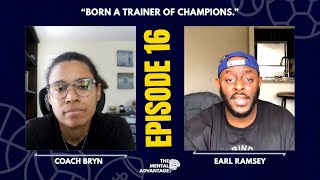
In this episode of the Mental Advantage Podcast, host Brent (Speaker B) interviews basketball trainer Earl Ramsey. Ramsey recounts his upbringing in South Central Los Angeles on Gage Avenue, describing the harsh environment—prostitution, drug activity, gang presence—and how those experiences forged his toughness and compassion. He explains the origin of his personal brand "GAGE" (God and Grind Every Day), a mantra reflecting his roots and work ethic, and mentions the upcoming merchandise line and website. Ramsey also talks about his new "Halfway Decent" podcast with co‑host Marvin, its name’s cultural meaning, and where listeners can find it. The conversation shifts to a discussion about WNBA prospect Stephanie Watts, her draft experience, and the challenges of making a roster in the limited‑spot league. Ramsey shares his mental advantage—focusing on positive outcomes—and offers rapid‑fire personal insights: his favorite snack (chips and guac), ice‑cream flavor (strawberry shortcake), desired superpower (teleportation without time‑travel), favorite superhero (Black Panther, Bane, Venom), toilet‑paper preference (over‑the‑top), and personal hero (Kobe Bryant). He reflects on what he wants to be remembered for—integrity, love, and his brand’s impact. Finally, Ramsey provides his social media handles for personal, training, and clothing content, and invites listeners to connect via Instagram, Twitter, and his upcoming website. Throughout, he emphasizes mental toughness, community roots, and the importance of branding and personal storytelling in building a successful training career.
Chapters
Listen to every coach, hear what they gotta say, but go into it knowing that I, like, I'm not here to make my dreams come true. I'm here to stop somebody else's dream from coming true. You have to be that hungry. You have to be— everybody's there to make their dreams come true, right? Who are you gonna stop from making their dream come true? I mean, it's a cutthroat game.
Welcome, welcome, welcome everybody back for another episode of the Mental Advantage Podcast. Today I am gifted and we are gifted with my good friend. Yep, that's right. This one's a friend as well as an amazing person, Earl Ramsey. I'm going to let you— him tell you a little bit about himself. Earl, tell them what you are and what you do and all that good stuff.
Right, right, right. What's going on, Brent? So I'm Earl Ramsey. I'm a basketball trainer. I train everywhere from NBA, WNBA, overseas, men and women, all the way down to the itty-bitty kids, you know, 8-year-olds all the way up. So I've been doing that for a while. Kind of started, you know, with my little brother in, uh, in South Central LA, just kind of teaching them what I knew. So that he can become a better player than I was at that age, 6 years younger. And, uh, it ended up working. He ended up becoming one of the best players in California. He was ranked top 2 in California for a while, USA team, and, you know, all kind of accolades in high school. Just graduated from college and, uh, looking to be a pro right now. So starting from that foundation, um, that brought me a lot of clients of his future teammates, and I mean past teammates. And, you know, so kind of started there. And after my playing days, like, that was something that still— I was still passionate about. So, um, yeah, a basketball trainer. Now I have my own brand and, uh, trying to build this thing up.
Nice, nice, nice. So a couple things I want the guests to know. One, He is a proud girl dad. He's a huge fan of Kobe. So I'm not saying he got a girl because he's a fan of Kobe, but maybe, maybe, maybe that's how it is.
I don't think that, I don't know if that works, but yeah.
I don't know exactly. So you spoke a little bit when you were talking about your brother and you said about your playing days. So let's talk about it because how does one become a basketball trainer? Like you said, you got started training your brother and trying to train him up. But why isn't you— why aren't you going to the pros? Or why didn't that happen for you? Or when did you know that wasn't going to happen for you?
Yeah, well, in high school, um, I was really good. I was one of those kids that was really good as a youngster, like really young. Um, and that's not always a good thing. That's not like a bragging thing, like, because a lot of those guys like flame out. A lot of those guys hit it too early and then the world catches up with them and whatnot. Um, so I was one of those guys that was really good as a youngster, 6, 7-year-old, like really good. And then as I got to high school, life started to happen and I didn't play in high school. We were getting evicted, we were, uh, my little brothers had to go to school. I was driving at a very young age because I had to get my dad back and forth to dialysis and then get my brother to to school and whatnot. So I just didn't go to school enough to play. I had a million tardies and absences while I was in high school. Um, couldn't try out, couldn't do none of that stuff. So just a bunch of life stuff was happening. I was in classrooms like literally sleeping because that's the only time I was able to actually, you know, get some rest sometimes. And sounds terrible, but it's the truth.
No.
But yeah, I went to Crenshaw High School because of the coaching staff. Coach Willie West is a legend. He's had a world championship. He's been there for 40 years. His, his last year was my first year there.
Okay.
And then the legend is gone. So, right. Um, and then his coaching staff, I knew his coaching staff. Coach Stan was my guy. Um, I played for Coach Stan before I even went to Crenshaw. At the Crenshaw YMCA, travel ball, stuff like that. But, you know, it just didn't— it just didn't work out. You know, when I would go try to, to, uh, to tryouts or whatnot, I always had to go home and pick up my brother. Like, it just was— it didn't work out. But right after that, right after school, you know, I, I was working with my brother because I just didn't want him to have the same path. I didn't want him to, like, lose it. He was even more talented than me. I didn't want him to, um, to lose that fire for basketball. Um, so I just kind of like everything that I do, I just kind of start making him do.
Yeah.
And, uh, you know, it worked out.
That's awesome, Earl. First, and I, I, I hope that they get, you know, the listeners are, are getting that, you know, this is not an uncommon thing for a lot of young basketball players coming from certain, you know, areas of the country. You know, like it sort of choose, right? Like you were the oldest of 3 brothers, right?
I got way older siblings, but they haven't been in the picture in a long time.
Right. So, but you know, at that time you were like, how do I take care of my family? And so you chose obviously unselfishly to take care of your family and maybe out of necessity, not so much like, hey, I'm going to do this.
It was just kind of thrust upon you, so to speak.
Right, right.
It wasn't like I'm going to sign up for this.
Like, no. Yeah, yeah. And so I think it's really great that you also had the presence of mind to think, like, how can I help my brother not have to go to this same path? Because I see that I got a good head on my shoulders, but I definitely wanted this to go a different way, and I don't want that to happen for him. So I think that's awesome that you did that, and I commend you for that. And I mean, of course, I've seen you shoot, Earl, and you have quite a shot. So I can only imagine with all the years of dedication where you would be But now you get a chance to mentor the next generation and the current generation of NBA and WNBA players. So I think that they're very lucky to have you in that regard. Thank you.
Thank you.
So you started training your brother. You said that, you know, and I know we're talking about DeVarrell, correct?
Yes.
Okay. Right. And so DeVarrell starts going up and he is, you know, you know, you're training him to become the best. When do you start attracting the attention? Is it where you're working out? Is it, you know, how, how do you come across? Because I know, like, from, from meeting you, basketball is kind of a small community and people, I think it's a much bigger. But yeah, how do you attract your first, like, besides De'Verall, who's talented, but your first guy that's like, hey, you, can you train me type thing?
Right, right. Um, interesting, interesting. Um, De'Verall became so good that people would ask me who trains him. And before we knew this training thing was a thing, right? Like, because I thought I was just helping my little brother. One, and this is the backstory with him, he wouldn't leave me alone. Like, he wouldn't leave me alone. Like, so I would be out there, I would watch Kobe Iverson, um, some of the players in that era and I would go outside and I would emulate their moves. I was really good at just emulating a move. I don't know how it started, when it started or whatever, but I was really good at emulating footwork, dribble patterns, you know, shots, fadeaways, stuff like that. And I would just work on it until I got good at it, work on the dribble pattern until I got good at it. Um, and my brother would just like follow me on like a little pet, like he just would not leave me alone. And I would get frustrated because he would try to do it, but he would mess me up from my focus. So I would tell him like, yo, if you're gonna do it, do it right. And then I would stop doing it myself and just drill him to death. And then he would end up getting it, um, not knowing that at that age I was training him. And I was super early, that's 11, 12, he's 6, 7. Yeah, you know what I'm saying? Um, but it started kind of like that. Um, and then my first other client, client was a kid named A'Jon, who I now call my little cousin because we've been knowing him forever. He was a foster kid, and it was a foster home on our block on Gage Avenue. And Deverell and him both went to school together. He's, I think, a year or two years older than Deverell, but they went to 61st Street Elementary together, and they would walk home And, uh, my backyard, Bren, before I got there, was full of basketball players. Okay. I would get out of school and I wouldn't have nets on my own court. Like, okay, it would be people lined up to play at my— in my backyard. And this is not no huge backyard, right? This is 20, 30 feet, maybe a little raggedy basketball court, but it's super competitive. We got some music out there, we got the little stereo hooked out there, and we would just play all day long. So A'Jon and DeVrill would come and they would just watch us. And then one day A'Jon walked up to me and he said, can you make me as good as DeVrill? And I was— I didn't know what that meant at the time. I'm young, like I'm 13, 14.
Yeah.
Could you do— could you do what you do to DeVrill for me? And I was just like, yeah, I mean, come tomorrow. It's a Saturday. Come tomorrow at like 10 in the morning. We gonna just work out outside. And he wasn't that good, but he played football, so he can work really hard. He was a really hard worker. And I would have him dribble with the right hand for like 5 minutes, dribble with the other hand, like, like some gruesome stuff. Like, that would be hurt. I would have him run around the house like 100 times. They would throw up, cry, and stuff like that. I had no idea what I was doing at the time. Like, I just— all right, this is what I do with the verbal. I gotta do— you gotta do it too. And they would sit there and they cry and throw up. But, um, at the end of it, they would, you know, go to the YMCA, and we ended up signing AJ up for the YMCA. And he was just better than his age group. And we was like, yo, you never played organized basketball before.
Yeah.
But you're like, you're one of the best now. And he had a little backboard shot that he liked, and he would always make that shot. He was super tough, and this kid ended up just becoming one of— another one of the best players in California. And you know that only by going against the people that are the best. Okay, like, we don't exaggerate when we say De'Verall was one of the best players in California because he goes up against Lonzo Ball, and him and Lonzo Ball are literally ranked 1 and 2 in point guards at— in, in California.
Gotcha.
Same thing with A'Jahn. A'Jahn was going up against Parker Cartwright and other really good guards in his class, and then you see where they rank. Um, so he was a— he was my second guy. And then after that, they go to— they go to middle school, parents are starting to ask like, who trains them, who they working with, right? Can you get my son? Um, and then that's how it starts.
That's amazing. So first of all, I hope y'all caught that he started when he was 11 years old training his—
yeah, it's crazy. Okay, I'm thinking you were much older when you started If you call it training, knowing what training is now, it was like 11.
Right, right, right, right, right. So obviously he, yeah, you weren't certified or anything like that, which I don't necessarily think is, you know, I'm sure there's somebody that's going to be like, well, you know, he's got him, you know, taking people's health in his hands. But he knew the game of basketball and he was like you said, emulating the greats that he saw, which, you know, everybody does Kobe for 3 in the backyard type stuff from California. Where I came from, it was Jordan for 3, but whatever.
Yeah, absolutely. Absolutely. And I was a huge Mike fan. So, like, as soon as Mike retired, I had Kobe.
You had Kobe, right? We had to kind of— we had to transition, right, to the Kobe era. So I think that's awesome, though, to know that you started so young, just one, you know, emulating your heroes, then training your brother because he was messing up. And you were like, look, I'm trying to be smooth out here, and you messing up my flow. So you better come out here and do it right. 'Cause A'Jahn sees that and goes, yo, can you do that for me? And then it just snowballs from there, parents, other players. So when, now I'm sure you've never had a confidence problem, Earl, but when your first, like, maybe you already knew these guys, but when your first, like, guy that was going to the NBA came to you, was there ever a moment where you were kind of like, I don't know, this is a little bit out of my depth? Or did you always just be like, yeah?
I, um, I can't say. I can't say that I've ever felt like I'm kind of out of my league. Um, and I'm not saying it cocky, but I'm just saying that like I've been doing it that long that I don't need to write what I'm gonna do down or nothing. A lot of my drills are just game movements and I just drill them. So if we're doing a between the legs crossover and you need to get better at that, let's do that 20 times in a row. And then on the 20th time, let's go between the legs, crossover, and then another cross and go get a layup.
Okay.
And that's just how I, you know, create my drills. It's not really, um, a huge process, and it's not super, um, you know, super thought-provoked thing. Like, it's just, uh, what do you got to work on today, right? All right, let's do that. Now if you're coming with like, as a, you know, like A'Jahn did, fresh slate, then a lot of my drills are going to be just off creativity, right? We're gonna do this stuff just to get you, um, better skill-wise, right? You know, a lot of— one day we might do all ball handling, we might shoot only 10% of that workout, right? If you're already a great ball handler, 90% of our drills are going to probably be shooting from where you're weak at.
Gotcha.
Stuff like that. So it's not— I've never went into a workout thinking that like, this is kind of too much for me. Now, if I had like a workout with LeBron or something, then I would actually like think, well, okay, let me— what do LeBron—
right, what do I need to give LeBron?
Right, right. What does LeBron need? Let me see.
Well, well, let's, let's test your acumen here because, um, one thing I know about Earl, because I've had several conversations with him, and basketball, uh, the game of basketball is not my strong suit. It's the mental game. But Earl knows. So what does LeBron James need to work on, in your opinion, from watching him play over the years? What has he improved on and what could he get better at?
I think LeBron— my knock on LeBron when he was probably at his most athletic is that people can stop him, and it was because he didn't have the, the, the, uh, the post He had no post game. He couldn't shoot out of the post. He couldn't create out of the post. Well, LeBron has that now. Okay, so LeBron is complete as you can get right now. Um, maybe shoot a higher percentage from 3, but LeBron is— he's complete. But, uh, but earlier when he was becoming a superstar, and the reason why I didn't put him ahead of Kobe and Mike is because he didn't have nothing but his athleticism at the time.
Gotcha.
And I would tell people that were saying LeBron is the best player, LeBron the best player, and this is 2007, '08. Yeah, look at Kobe. Like, look at Kobe basketball-wise. Let's take athleticism out of it, right? He's playing better basketball than LeBron. But I think LeBron recently just said it too. One of the coaches, uh, I can't remember the coach, he said scheme for him in the playoffs and they just said like build a wall, like don't let him come in the lane. And make him shoot. Yeah, they won that series, you know what I mean, against LeBron, prime LeBron. So once he came back and he had the fadeaway and the post and all that stuff, he's LeBron James now. Like, you gotta say top 3 now.
Nice, nice, nice. And I think, uh, one of the things I want to highlight, uh, is what you talked about, which is repetition. Now there's some schools of thought, right? You said— because I say repetition is the mother of mastery, right? You're not going to become good— like you said, you're going to be 20 times, you're tired, you're you're getting fatigued mentally, you're getting fatigued physically, but it's key that you still have the same precision on rep 20 that you had on rep 1, I'm assuming, right? You're looking for all of that. So when there's some school of thought that states that I should be playing to my strengths. So you say, if I'm a good ball handler, we're going to focus on your shooting. So is the aim to make an all-around player? And what is the benefit of that? Kind of going back to LeBron, like he's got this great strength and he's powering through opponents, but there's always, it's kind of like with Jordan, right? They knew if they doubled and triple teamed him, with the Pistons back in the day, they couldn't, uh, you know, he couldn't, uh, play against that. He couldn't be physical. And then he had to adjust and create, and they created the triangle offense to give him more opportunities.
Right, right, right. So yeah, um, I think now you have to be a little more complete than before. Before, um, Kobe— funny enough, Kobe Bryant in person told my brother, we asked Kobe, uh, for a 6-foot guard that wants a long career as a pro in the NBA, what does he have to do? He said he has to master one thing. That's Kobe's advice. Yeah, he has to master one thing. Um, what is he great at? He has to become a master at it. Um, nowadays, Dwight Howard just put a post up and he was doing ball handling drills and he said, look, kids, I'm not going to use this in the game but never stop developing your skill. Never stop getting better all around because the game is changing. Okay, big men are extinct because they can't shoot now. You know, if you're a big 7-footer, it was almost a shoe-in in the '90s that you're going to the NBA. Like, you didn't even have to be good as long as you're a big 7-footer, physical, can rebound and stuff like that. I know about 8, 9 7-footers that did not make it to the NBA or probably got a one quick little stint and they're not in it. I know them personally, right? And, uh, it's because they're skilled, like they can't shoot the way the new 7-footers can and whatnot. So I would say it's a healthy balance of if you're, if you're young, try to become better at your weaknesses. If you're already in the NBA and you have a role, master your role. Master your role. If you're, if you're a knockdown shooter in the NBA and you shot 39%, Next year, get to 44 and watch your paycheck become much larger and watch your role become much larger. You come in and you can shoot 44, you just was a 39-percenter, you, you got you a— like, you one hell of a shooter. That's a huge jump in the NBA. So I think as a pro, master your role. I think when you're growing up and you're 11, 12, 15, um, and you can get better but you're still really good at all this stuff,, but you can also like, because high school, if you're dominant in high school, you're dominant in high school. You don't really need a big, you know, a lot while you're working out though, and you're becoming, you're getting ready for the next level. Let's work on that other stuff.
Okay. All right. That's a good point. All right. So I obviously, I, we, as we discussed as we were getting on the call that I just got back from summer league and, uh, I watched several more basketball games than I've probably ever watched in my life in person, but I know that would be like your candy store, right? Yeah.
So 2019.
Yeah. So before we talk about summer league and what I observed there, I want to ask you, what is the difference in mentality between a good high school player, a good college player, and a good NBA player, in your opinion, from the people that you have encountered? So like, is it, is it you got to be different all along, or you kind of develop that as you go?
Yeah, I think, I think starting the reverse way, NBA players, to be great as an NBA player, you have to realize that you, when you enter the NBA, you're now at the bottom level. I don't care how good you are coming out of high school or college, when you enter the NBA, you're playing against everybody that was good in high school, everybody that was good in college. Like the best of the best, right? Anybody that you're playing right now in college, in the NBA, they were that. They were All-Americans, they were the whole thing. So yeah, I think in the NBA you have to come in hungry. If you don't have a great workout regimen, you need to be first in the gym getting this NBA training. If you need something, to add to your game. If you're not a great shooter, I think you need to get with a shooting specialist and make sure you get a lot of reps up. Make sure, because though they have a lot of people on staff that's specifically for these things, I think you need to get with a nutritionist. If you, if you don't, if you're not a great eater, if you only eating Cane's and McDonald's and whatnot, get with a, get with a nutritionist because you're going from 30 games maximum in college 25 games max in high school to 82 games the next year, right? You don't have to play every game and you're going to be fatigued. If I get on the jet right now to New York, I'm not doing nothing for the rest of the day, right? Some of these cats got to do— they got to go to practice, they got to go interview, they have to go to shootaround, they have to then go do whatever endorsements they have, that type of stuff. Then they have a game tomorrow night, you know what I'm saying? So the NBA, I think, um, you have to just come in it, uh, as you are a freshman in high school and you want to prove yourself. Gotcha. I come in super hungry. College, college is such a different game that if you are someone who's, uh, uh, uh, College is more system. So if you're somebody who can, who can thrive in the system type of basketball, if you're somebody that can really shoot it, if you're somebody that can— that's great off the pick and roll, you know, it can pass— if you're a big man that can rebound really well, college is, is pretty good for you. But you have to get used to workout, school, film, workout. Then you sleep, right? Like, it's so much— like, some of these kids got so much homework, or that's why some of these guys, you know, their degree being some, some crap, because you got to get something easy. Gotcha. You can't be a, a psychology major and, and play basketball. It's just too— it's too time taxing, right? Right. That's a different mental game where I think your mental— like, you, you'll get more mentally fatigued in college if you don't have a good system around you. Gotcha. And let's not get injured. If you get injured, it's always mixing it up. Your scholarship is at stake, right? You know what I mean? You don't want to go to school paying what you actually got to pay. So college is stressful. And then high school, I just think, um, you know, you deal with the high school things. You deal with if coach is playing favoritism, if, you know, your girlfriend, your boyfriend, you're dealing with class schoolmates, you want to kick it, you want to have fun, but you know that you're really talented and you want to go play at a high level. So you got to kind of sacrifice those things. Um, so yeah, I just think, uh, every level meets its different, um, challenges. And mentally, to make it— some of these guys that had made it, especially out the dirt, that wasn't this 7-foot phenom. Yeah, guys kind of made it that was kind of regular. You got to commend those guys because they probably went through a shitload that no one knows about.
Yeah. Okay, so definitely it needs to be— now I'm, I'm, I'm, I'm, I'm— after being at Summer League, I learned a few things. One, it goes exactly what you said. None of these guys have ever been on the bench before. Never. So they become bench players Immediately, and it's different being in that role. They now have to figure out how to be supportive. Yep. They don't do that, right? Everybody was being supportive of them. There's this feeling of I'm competing for my spot. And for those of you that don't know, for Summer League, it's a situation where you've got a few guys that are already signed, like they got drafted or whatever, and then you got maybe one 2 roster spots, maybe. Okay. And just because those 2 are on the team that you're playing for doesn't mean you're going to get them because they're also watching every other guy at some point. Yep. So 5 spots could be taken by guys on the same team at different teams. That's exactly how it goes. Yeah. So, so what would your— what if you're a basketball trainer? I mean, you are a basketball trainer, but if you're in their shoes, What are you telling your guys? Because, you know, what are you telling them to go in with what mentality to Summer League? Because we already know that the guys got signed, that drafted, they already got their contracts. So we're not talking to them right now. We're talking about the guys that are unsigned and going for their dream.
Well, yeah, my brother is going to be in that position next year. This year, funny enough, we didn't know the draft process. So we didn't, we didn't enter the draft process in time for him to be able to be in the draft process. Now, he probably wouldn't have got drafted because his numbers didn't say so, but he would have been able to do summer league and get the workouts from NBA teams. And we just didn't know. And our, uh, the people that's representing us right now, we kind of got them kind of late. So, gotcha. Um, next year he'll probably do a year overseas, and then next year we'll do the whole summer league thing or whatnot. But To answer the question, um, yeah, like, I would tell the guys, and I'm gonna tell my brother next year, the same way he made the USA team: go in there completely humble but super hungry, right? Listen to every coach, hear what they gotta say, but go into it knowing that I, like, I'm not here to make my dreams come true. I'm here to stop somebody else's dream from coming true. You have to be that hungry. You have to be— everybody's there to make their dreams come true, right? Who are you gonna stop from making their dream come true? And it's a cutthroat game. Like you said, a lot of these teams don't even have a roster spot. They like— they have 12 guys, they're probably auditioning for their, for their, uh, G League team, right? Or, you know what I'm saying, you'll be a 5th, 6th, you know, rotation guy, and you'll make their G League team or whatnot. But yeah, a lot, a lot of these kids are superstars in high school, super good in college. Then you got to deal with guys in summer league that have played 2 or 3 years in the NBA, and they're there just to work on their left hand or to work on their shooting, and you're trying to make a roster spot. So how are you going to make the roster spot? By talking the loudest, playing the most defense, getting on every loose ball, hitting every shot that you get an opportunity to hit or chase it down, drawing fouls, making smart plays, being unselfish, showing that whatever my team needs, I'm gonna do that.
Gotcha.
And for an All-American superstar college, high school player to do that, I think it shows a lot of heart. That shows that this kid can care less about his previous status. He's ready to work. Gotcha. And the NBA is full of those guys, those 11, 12 guys, number 10 guys. Those are those guys. Those aren't All-Americans. The All-Americans usually don't make it to the NBA. The ones that don't, the ones that don't make it to the NBA is because they won't do the dirty stuff.
Gotcha. I would say hard work beats talent when talent doesn't work hard, right?
And that is the truest statement of all time.
Yeah, and one of the things I saw from watching a few of the Summer League games, you know, well, they were talking about— I mean, and he was drafted, but, um, one of the guys I was sitting next to, because you know my basketball acumen, I was not— you know, I was just watching more how they were reacting to bad calls or what they felt was a bad call or an unfair call or whatever, right? Or how they were communicating with their teammate if they felt like their teammate didn't pass to them or see them. I was looking at all—
that's important too. There are people there specifically watching that.
Yeah, yeah. So I was looking at that more than anything, right? Because I don't know all the, like, but you know, but the most important thing is the point guard who's making good decisions, right? Setting up good plays, not just being about like showboating, right? Because you know, there's times you can hold on to the ball too long and now you've wasted a time down the court because you're trying to have a highlight moment. Yeah. There could have been an easy dish to somebody who's wide open, that type of stuff. So, but also knowing when you have to take those risks and you have to play. So it is about, not about being completely a passer and he's not about to compete.
No, you like— that's one thing that, um, I'm glad you said that. That's one thing that I told my brother about. One of the reasons why in college his name kind of slipped through the radars is because he was so much of a team player, right? Sometimes you gotta be a little selfish. Yes, a couple times you have to make a play and prove that Whenever there's a moment that needs to be captured by my point guard or my player, I can make that— I can make that happen. And my brother is somebody that's fully capable of it, but it's plenty of guys that's on those rosters that can, that can do that. Um, problem is a lot of those guys need the ball a long time and need to miss 6 or 7 shots before they can get into that.
Yeah, the quicker you can, can make that happen the better it is for you. Yeah, absolutely. So yeah, and I was thinking about when I was watching the Cleveland Cavaliers when LeBron played for them and he was passing at critical moments in the game, and you're like, why is he passing? He should be— it would drive me crazy. Yeah, it would drive— yeah. So it's— and obviously, you know, I mean, you do need to know, you got to be a good facilitator of ball movement, but you also need, like, when, when, when the ball— you know, that was the thing. I think Kyrie Irving said it. Like working with KD, he was like, I need to work with somebody that I can trust is going to take that last-minute shot, right?
And I know I can do it, but he also can do it.
We good. Exactly. And so similarly, you know, and I know LeBron said he took that personally and whatnot, but I think it's, it's important for those listening because some of y'all I know are not athletes and you're kind of like, well, how is this relevant? We talk a lot about basketball, but it's more about knowing your strengths but also knowing that you have to have balance. You can't be all of one thing and not of the other. It's all about having a well-rounded— just going back to what Earl was talking about earlier, having a well-rounded game, right? Because you never know where that's going to plug in, fit in. Now, one of the things that someone said at summer league, and you can maybe speak about this, what advice would you give to a player that goes and the coach is not playing to their strengths? In other words, the coach is asking them to do something that isn't going to highlight them or isn't going to— and I know you said listen to every coach, But what do you do if the coach is, you know, quote unquote coaching you wrong?
And when you know what's funny, that kills, that kills so many careers. And it's, it's so sad because some of the most talented players that could have been in the NBA or, you know, could have been doing big things even in college, um, their talent is wasted because they're not utilized the right way by a coach. And sometimes these coaches are so stubborn that they won't get off their horse for what's better, for what's best for the team. Like, there's a kid that can make your whole life easier as a coach because he can create, and the coach just want to prove that he can coach, coach, coach, coach, coach, coach, coach. A lot of times that's not coaching. That's the, you know, that's, that's kind of, that's the ego thing. You're trying to prove to how good you are as a coach, but you're a Michael Jordan fan, I'm a Kobe fan. Yeah, like Phil would put in the triangle and let it be. Like, right, we see down like 12 points, the team will go on the 8-0 run, and he'd just be over there just kind of like, I'm not worried about this at all. Like, right, the players will be fine. Most coaches are, timeout, you gotta run this, you gotta run that, come back and do this and, and do that. So it's, it's about, you know, I think there should be more coaches that relate to the guys, um, or, and girls a little bit more. Um, even if it's an assistant, make sure there are people that can kind of coach these kids up and these fellas and women up so that they're ready to come back in the game. A lot of times the coaches is killing these players' confidence. It happened with my brother, it happened with so many people that I know, um, and that's important is just having, you know, a, a, a good coaching. Now, a player in that situation, I think the player, um, do the— what, what's absolute best for the situation, like pleasing the coach and whatnot, run the play. But it's going to be a moment where you're going to have to ignore the coach and go with your gut. You're out there, the coach isn't. There's going to be a moment where you're going to have to say I may get fired for this, I may get benched for this. If you did— if you're talking about a different industry, fired for this or whatnot, right? But I see something and I know this is gonna work and I can do it. And then you got to do it, and you have to have the utmost confidence in yourself because that is also how a coach starts to trust you, is by telling the coach, hey, relax, I got this. Yeah. You know what I mean?
I got this. So yeah, I think, you know, it's funny now that you're saying that, it reminds me, and I know that absolutely we're talking about athletes, but it reminds me in the business world of a time that I was coming in new to the country, the company that I worked for, that you and I both worked for, Educare. Yeah, yeah, yeah. But having, being a newer facilitator and then facilitating with the creator of the curriculum, right? And him having to have a certain level of confidence before he lets me sort of play a little fast and loose with the material, right? So similarly, when you're coming in as a new athlete and you talk about that confidence, it really is important that you don't build your confidence on the opinion of someone else. So, right? I mean, it really is important that you understand that there's a reason why they may be micromanaging because you haven't shown them that you are, you're able to take risks. You're going to be able to kind of come out here and say, this is my team. I think coaches, I don't think coaches— I mean, yes, there are coaches that are stubborn, but I think also they, they don't know what they don't know until you show them. And sometimes you have to be willing. And again, it's finding that balance, right? You can't be completely off the rails, but you need to be able to push that envelope and say, you know, like, okay, I'm gonna push it here a little bit, I'm gonna push it here a little bit. And that coach is going to give you a little bit more rein, you know, with the reins, because all of a sudden it's like, okay, you know what? I, I know this guy knows what he's doing out there, or this young lady if we're talking about women's basketball, of course.
Yeah, yeah, no, definitely. I think, I think, um, I think a coach or a boss or somebody that, uh, whatever industry you're in, I think the moment you show that you have the guts to kind of to, to take it there. Yeah. And you execute— now you have to execute. Yes, that's important. Can't do that and then it sucks. But, uh, but, uh, one of the things I learned from Kobe, and you know, you're in the mental game, and yeah, I remember you mentioning that, you know, later on you seen you had a respect for Kobe because of the mental.
Yeah.
But one of the things I, uh, learned from Kobe early on is when he missed those shots in Utah, um, yep, you could— his career could be over. He could never have that opportunity again. Like, he could never, you know, he could never recover from that mentally as well. Like, mentally That takes guys' soul away because, like you said, a lot of, a lot of guys' uh, confidence is in the word of other people. Like, you know, you're so good, you're this, you're that, right? You're number one, you can do so much. And that's all, you know, that's good to have those affirmations, but if you don't believe that deep down, you know, you don't become Kobe Bryant after those, after those misses, right? You become just the kid that You know, lost us the game by shooting 2 air balls. Yep. So it's, it's, it, yeah, it's, it's a thing.
For those of you that don't know the story, uh, Kobe missed, uh, I think it was 3 or 4.
2, I think 2 in a crucial moment, but he airballed 3, uh, altogether.
Yeah, he airballed 3 3-pointers, okay, in an NBA, uh, well, sorry, semifinal, conference final game. So it's a playoff game early on, right? Right. So in this instance, this is super early in his career, right? But this is his freshman or close to his rookie season.
Yeah.
Somewhere around there. Yeah. So he basically, instead of, you know, he said, if you can see him in an interview, it's actually on my Instagram because I love this story. But he basically says, I had a choice. Like he take, he took that feedback. And most people are crushed by failure. They're like, oh, that's it. Like you said, that's it. They're done. They're like, okay, I'm never going to be great. But Kobe had a big enough vision that he always would process why did that happen? Instead of it happened and I suck, it's like, okay, it happened. Now what should I do about it? He recognized that he didn't have, as Earl has already pointed out, 30-game season to 82-game season. He did not have the stamina to have anything in his legs to be behind those shots. So he made sure it never happened again. That's the Kobe mentality. And Earl and I have had several conversations. I used to be a Kobe hater. I'm here admitting it, right? But when I learned about Kobe's mentality, it was done. Like, I've fallen in love with him.
In the mental game?
I was like, how do you hate Kobe? Yes. Well, it's because I was from Chicago and all the comparisons, right? So then when you learn about Kobe's mentality, you can't hate him because, especially if you're into the mental game, because you're like, oh, man, he was the GOAT. Like, when it comes to that, in my— I'm not going to get into it. I already know Earl is Kobe all the way, number one. And all that. But the point is, is that he's the GOAT in the mental game for me, right? And I don't know if LeBron is there, but I know he's investing in his mental game probably because—
I know Kobe is, I know Mike is. Right, and Mike did too.
I mean, but I don't know that— I still would put, I would put Kobe above Mike in the mental game. I would. Yeah, yeah. Because I know that, because I think Kobe really diversified what he was interested in and like, you know, he plugged that into so many things post-basketball that I have not seen from anyone else, you know. I mean, other LeBron's doing it now, you know. Yeah, but I think again, it's Kobe's example, right? So I— and so that was what we're talking about. And so having that confidence, but I think what I would say, and you could say if you agree with me, Earl, it's really the vision that Kobe had. Like, he was so determined to become the best that he was talking to the best. He was having conversations while he was guarding them. He was making sure that he was tapping every source possible, not just basketball stars. He was talking to Jimmy Kimmel. He was talking to everybody like, hey, what books do you read? What do you got for me? He was just such a student of that. And I don't think we've ever seen anything like it in the history.
You got to be to ask that many people and those stature of people. Now, I'm not one to kind of put people on huge pedestals, right? They're not human. But That took some guts for you to just ask Michael Jordan, who— that might be the only person I'm starstruck by if I meet him, because that's Michael Jordan, you know what I mean? Right. That's, you know, Black Cat, Black Jesus, like y'all used to call him in Chicago. But like, that's Mike. So, um, in the basketball world, like, that would be the only person I would look like, dang, like, shit, that's, that's Michael Jordan. But yeah, for Kobe, in the middle of a game, how do you make so much room on your, on your turnaround? Yeah. And Michael is sitting there telling him. I was like, what?
Like, what?
Right. I think Mike was just shocked that nobody's ever asked him, right? Like, everybody just kind of feared him and just kind of let him be, and he's Mike. But for, um, for Kobe, for young Kobe, to kind of dig into, you know, you know, people's minds and ask questions and then go apply it. That's, that's the one thing he did better than anybody, is he applied information, uh, that was given to him. A lot of times we have all that information and don't know how to apply it, myself included and everybody else. Um, but in basketball specifically, Kobe, and in other, other you know, he just won an Oscar before he passed away. So yeah, in other, you know, areas as well. Yeah, absolutely. And he goes and he finds the best of the best and he gets the advice. And I remember him saying that, um, you know, even in his early playing career, he was writing because he didn't know what he was going to do after basketball was over, but he knew it would be something in writing. Yeah. And you look at it now, they got novels and you know, just all kind of cool stuff. So I think in the mental game, he was, you know, a standard for sure.
Yes. And if you are a parent of a young basketball— even any athlete really, because he really covered all the sports— I highly recommend all of Kobe's books. Um, those of you that are listening, you're not going to be able to see this. Excuse my book falling here, but I got— oh, I gotta buy that series. I have the whole— I have both books. I have the one for track and field. I have the one for tennis. So I absolutely recommend Kobe's books. And, you know, me and Earl could talk Kobe all day. But the one thing that I think is really important is, you know, Kobe was all about like, you know, just, just, yes, everyone focuses on his work ethic and it was unmatched. But he did understand, he was into meditation, he was into visualization, he was into the other things that so many players don't incorporate. Incorporate. Now I know, Earl, you focus on the physical. Do you ever recommend, uh, things like that to your players, or do you leave that to the folks like myself?
Yeah, no, I definitely do. Um, and the thing that kind of, you know, makes my training now more unique, um, in its own way is that a lot of times, you know, every— anybody could get you skillfully better. And I say that because it's not too much out there that, you know, someone can't give you. Like, you know, combos and certain dribbling, you can do this shit yourself. Yeah, you can get better yourself. But my training style is usually the environment. When we come in there, there's some good music. Sometimes we play— we work out to all Sade. Sometimes a little rougher, we work them out to all DMX or Jay-Z or whatever, but it's just— it's— we tap into a lot of what I do is, is mental. But, and this is even before me and you got together, a lot of what I was doing was, um, a mental game with the guys. Make 5 in a row, and if you don't make 5 in a row, you have to do a certain something, maybe some sprints or something like that. What that's gonna do for you is make you tap into actually shooting to make and not just shooting to shoot. Gotcha. You know what I mean? Go between the legs 20 times without messing up. When you mess up, you have a— not a punishment, but just some— a consequence there. And what that is, just make you focus just a little bit extra. Now, the best of the best know how to stay loose, know how to breathe. And when I see some of my players getting a little too tense because their work— they're, they're on number 19, 20 is next, and they miss 20 and we got to do it all over again— I don't let them let up, right? You're gonna make the 20, but the next time I'm gonna talk you through this. Let's breathe. You didn't breathe. You were tense the whole time. It was just going in, and then once you got to that pressure You already tense, and now you're mentally already thinking about the miss. So what we're going to do now is we're just going to breathe. And every— between— before every shot, we're going to take a deep breath, and then it's just nice, nice. And if your shoulders aren't relaxed, that don't count. Now, now we're gonna— now we're gonna punish when you don't, uh, complete the, the exercise. The— you have to be relaxed now. Now let's shoot it. Because now when you're in the tense moment in the game, you're exhausted. You just went up and down the court 5 times. You got a rebound, you went to go get a layup, you got a block, you went to go drive it, and then you got fouled. You're exhausted. That's so many up and downs. That's what the conditioning is for, right? Can you make it when you're tired? Making it when you're tired is all mental. Yeah, now, now we're talking about 100% mental. Right. We know you can make the shot when you're not tired. Could you make it when you're tired? Tap in, take your deep breath, make sure your shoulders are relaxed and you're not tense. Shoot the ball like you did in practice. And then that's how some of the training goes. That's great. So we definitely tap in, um, on a mental level when we work out. Um, so yeah, and then I— when we got together, I recommend that too, man. Yeah. I recommend really getting it out there, you know, because like I was telling you about my brother, he had an injury, pops passed away, another injury, goes to college that he didn't really— we weren't really committed to, but he ended up going, transferred, all kind of stuff in that span. So, you know, mentally he could use that 2-3 years, you know.
And for those of you that don't know, uh, obviously none of you would, but Earl and I got a group together and we were meeting regularly during the pandemic and talking about the mental game. And I told Earl, I'm not going to say who was on the call, but I told Earl like, yo, put a group together, give me, you know, whatever, whoever you got, you know, I'm thinking he's going to give me his high school players because, you know, and yeah, he brought me some NBA and semi-pro, basically a group of really talented people. And I was a little bit, you know, like, he doesn't have apparently a— his confidence was not shaken, but I had never had an NBA player on a call before. So I was, you know, I wouldn't know what the difference was, right? But the one thing that I found, and I think this is, you know, other than the difference of what they're facing, is they're all the same. Like, it's— you can give them the same curriculum or the same exercises It's just the application might be slightly different, or the context of how you would debrief an exercise would be different. But in general, I did not find that I needed to bring a new weapon out of my arsenal to talk to the NBA players than my high school basketball player. So I really owe a lot to Earl in that regard because he really exposed me and let me know that I had the goods for all the levels.
So I really appreciate it. Like, like you said, once you realize that the curriculum isn't different, look how many people you help. Exactly. We were coming to you offline about certain things.
Yeah.
And now we got relationships. You got relationship with some of these people. Yeah. For life. Like, you know what I'm saying? These people, um, are people that you can call up for things like this or— yeah, or whatever, because of the relationship that— that— what was that, probably 6, 7 months?
Yeah, we did 6, 7 months.
Yeah, right, of, you know, just Zoom calls, right? But it, it helped, especially in the beginning when we had to do those certain exercises and whatnot. Yeah, then look how much looser these people got. These people were starting to talk a lot more and, you know, really get into the exercise, really come for the exercises and things like that.
So yeah, I mean, you knew them, you knew them, so you saw the— probably the biggest transformation Yeah, absolutely. Yeah, yeah. So, uh, so I wanted to talk to you because we haven't talked about women's basketball, and I want to make sure we cover, you know, both sides of the game here. Obviously there's a lot of talk about the WNBA and making it competitive, and, um, I'm gonna say this up front, I'm not a proponent of this, but I do want to hear your opinion. Uh, they need to lower the rims so that women can dunk. What do you think about, uh, the WNBA and making it uh, you know, as a viable product?
Absolutely not. You do not lower the rim.
That's offensive to women.
That is super offensive to women. That's, you know, that's, that's little girls league. Like, yeah, they already play with a smaller ball because their hands are naturally a lot smaller. Yeah, so I get that. But lowering the rim, now we just like picking on them.
Yeah, exactly.
Um, and we got high schoolers that are like my height that can dunk now. Yeah. And I've only dunked once in life. There you go. In life, I've only got a clean one, one time. So they're growing more hops than me, so I doubt, I doubt that they need to be accommodated like that. But, uh, one of the things about WNBA that I love, and just women's basketball period, is that, um, they're a lot more skilled than the guys footwork-wise and can shoot-wise and stuff like that. We've had uh, what would you call that, co-ed? We've got co-ed workouts for summers. Yeah, 10 summers, you know, long now. Like, you know, like we, we've really gotten it in, uh, with NBA, college, you know, all of that stuff. We kind of mix them all together because I want them to see basketball is basketball, right? I've had a little bitty kid, you know, Izzy, who was a little girl when I met her. She was 7, 8 years old, and she ended up becoming like— right now 13.
She's amazing.
Yeah, like crazy good. But even then, she would be working out with an NBA player and a high school superstar and WNBA. Like, so it just was— she, she was— she was— she got to see that the work is just the work. Like, if you can play, you can play, you know. So yeah, that's— I don't— I think women's basketball is in good hands. I think it is competitive. I just don't think enough eyes are on it. We don't, we don't glorify these people's name the way we do LeBron and, you know, Kobe and Mike and all these things. Like, Cheryl Miller is one of the best basketball players to ever play, period. Yeah, not including basketball players, one of the best, period. Like, look at her record. Lisa Leslie, one of the very best of all time, period.
And she could dunk.
And she could dunk. And she can dunk. And plenty of your favorite players didn't get 100 points in the game, right? You know, like Lisa and freaking Cheryl Miller, right? It's crazy. But, um, skill-wise, skill for skill, they'd mop some of these guys because a lot of these guys— oh yeah, left hand, right hand, footwork, spin work— like, a lot of these guys don't have that.
They have athleticism. That's it. It's a lot of fundamentals in women's basketball. What they say, if you want to see how the game of basketball is meant to be played, watch women's basketball. Right, if you wanna watch just a bunch of showiness and all that, watch men's basketball. And not to say that there is no excitement in women's basketball because there is. But it's like, because Earl is a true basketball fan, he's watching both. And so that's what someone said. If you're a real fan of basketball, you watch both. You're not just like, oh, I only watch men, right? What do you think? As far as your advice to young athletes as they're coming up, right? Because, well, let me say this. Everybody says the game is 90% mental, 10% physical, right? But, and we've been seeing a lot about mental health being talked about as of late, right? And regardless of this knowledge that it's 90% mental, 10% physical, there's very little practice time devoted, like you said, even, you know, to the mental aspect. Um, what do you think that— put, you know, um, I have my own opinions, right? I think it needs to be embedded, but, and not just like reactionary, right? Like, go talk to the sports psychologist. But what do you think, uh, why do you think player— you know, the teams don't devote to it, or the players don't take advantage of it if it is available?
Um, I think the, the coaching— I just think the old way of thinking is still prevalent to this day. Honestly, I just think work super hard and you're going to be good. I think that mentality is still kind of there. But, um, if people did take the mental side a little more serious, I think you would get better basketball and just better people after basketball and during basketball. A lot of these— like, why are people that are millionaires and playing the game they love depressed? Yeah. Why are they, you know, going off missing after basketball and can't get in touch with them, going broke, got all these women around, got all this liquor around? Yeah. You know, buying chains to make themselves feel better, buying rolls. Like, you know, those things are great. I love material things too, but yeah, like, why aren't more of these people happy and going fishing and going and getting together as a community and doing, you know, things that, you know, can help your mental a lot more. Why are some of these people bad parents? Why are some of these people, you know, bad husbands and wives? You know what I'm saying? And it's literally because of the stress of being great, the stress of being, you know, making the team and being the man and getting the contract and All of these things come into play, and it's just— I, I think if we took a little more time to kind of dig into the mental— the mentality of these players, I think you would get, uh, more well-rounded human beings out of that. And, um, yeah, you know, I know me, my coaching, and what I'm gonna do for my daughter and, and the rest of my kids— we— if you need a mental break, even from school, like, I remember seeing post where people was like, uh, uh, they took a, a day off with their kid. That is totally me. Like, that is me. You need a day off? I need a day off too.
Let's, let's take a day off.
Yeah, you know what I'm saying? Like, I think those conversations aren't talked about enough. Yeah, you know, the day offs and the, the I need a moment. And yeah, um, I think a lot of our, our, our, our problems stem from stress on top of stress. Yeah, you know, I think more so if we were, you know, um, a little more connected to how we actually feel and a healthy way of, of getting that out, we, you know, yeah, we'd be some, some conscious human beings. People will be coming around getting things really done around here.
I know people spend more time focusing on themselves, right, instead of everybody else. I think the biggest thing that, um, I remember a conversation you and I had and we were talking about De'Verrill. And I remember you saying like, oh, and you know what, thank you for saying that. And we were talking about asking players about anything other than basketball, anything other than their sport, because all the world focuses on when you are good. And this is why they have these mental challenges is because their whole identity is wrapped up in their sport, in their being good. And so when they have bad days, when they have bad games, they just don't know who they are. They feel like they don't have any value or worth. So how can we support that athlete? And we were talking about that, how to ask an athlete about anything other than the sport. Like, next time you see, you know, anyone that's good in your life at anything, ask them about something other than that thing, because that's all we focus on is the wins and the successes, or even the losses. Like, I know y'all lost. How did that, you know, how you feel about that instead of talking to them about anything other than that.
Yeah, yeah. And as much as you may come, uh, come off, you know, very innocently, you're not trying to bother them, right? And these are your people, so these are people that would break down their game with you normally. So, um, but I had a friend, my boy Zoe, he asked me straight up, you're like, yo, how's the girl?. And I remember telling him, he doing good, man, he just did this in basketball, he just got his 1,000-point USA team, he said another— he said, okay, but how is De'Vero? And since then, I do not answer that question with stats and basketball stuff. Nice. Wow, like, I even got caught in it, like, damn. Yeah, like You're right, the girl is actually fine. Yeah, it's healthy, he's happy. Last time I seen him, he was stealing some of my shoes out my closet to wear to school. He's fine, you know what I mean? So it's little things like that where even the parents, if we can adjust that, because a lot of us put so much of our pressure on our kids and siblings that you have to be great in order to be good. You have to be rich in order to be happy. Yeah. And those— that's not true. Like, it's not, it's not true. I know wealthy unhappy people. Past rich, I know wealthy unhappy people.
Yep.
You know what I'm saying? So, um, yeah, I just think, I think that was a key thing, you know. And when I asked you that, it was a genuine question. It was like, yo, how could— you know, what do we ask, or how could we ask? Or even though he wants to, to talk about the game, how could I stop him from talking about the game? You know what I mean? And let's just talk. Like, there was clearly something on your mind during that game because you didn't even look the same.
You know?
Yeah, yeah.
So that, that's a thing. Yeah, absolutely. It makes a difference. So a couple things I want to touch on before we go into the rapid-fire questions. One, I see your shirt, God and Grind Every Day. Um, he mentioned he grew up on Gage Avenue. Tell us more about that, Earl.
Yes, I grew up on Gage Avenue in South Central Los Angeles. Very proud, um, to be where I'm from, but it was super hard and it still is if you go back Right now it's still, you know, super difficult to kind of grow up there because of where it is and, you know, the things that go on there. You see prostitution very normally. You see pimps, you see drug dealers, drug users, you see gangbanging, you see panhandling, you see robbery, thief. You see everything on one block, and all the way around that block you see it. And, um, you can't escape it, uh, until you go, you know, miles and miles in another direction. And depending on what direction you really want to go, you gotta go north. Yeah, you gotta go like by the water. You gotta go west, right? Because if you go south, it's the same thing, right? Same thing. But, but if you go, you know, a little north and west, you can, you can find something a little different— Hollywood and all those places. But Gage Avenue, um, I wouldn't trade it for the world because it kind of made me who I am. Um, it was tough, but I learned toughness. I learned compassion there. Um, I've seen more than I should have as a young kid. I've seen people lose their life there. I've seen, um, us get evicted and thrown out by the cops and our stuff getting thrown all out the house. And I've seen people high to the point of, uh, almost death. Um, but I also seen, you know, love there. I've seen people that wouldn't allow me to become that there. And I seen my brother become a superstar and he was going home and laying on the couch there. Yeah. You know, I mean, A'Jon, who was in a foster home, right? He becomes a superstar basketball player on Gage Avenue. So I just wanted to make a brand that represented the positive side of Gage and anything that's something like Gage. So I made GAGE, an acronym, and it means God and Grind Every Day. And, um, that's a message that kind of made sense. It was a mantra, it was a motto, it was, you know, something that whoever's coming from where I'm coming from in any field— like, it doesn't also— it only has to be a South Central. It could be, you know, in finance. You, you, you wake up, you give praise to your Most High, and, uh, and you grind at whatever that thing is. And, um, it's, it's something that, you know, holds true.
And where do we get the merch for those of us that want to buy it?
On my Instagram, God and Brian Every Day. Um, the website is coming— it's actually created, but I'm just fixing it up. The website would be, uh, www.everything-gauge.com. So everything-gauge.com. Got it. Um, so Soon, this, this month, I'll launch that and have different designs. This is just more so, uh, a casual design for people that just kind of wanted a casual shirt or something that's kind of cool but kind of casual.
So more and more crazy. And you recently started something else, uh, besides basketball training. You got your merch line, you got it, grind every day, which he does call his training Gage Training as well. So it's not just the, the brand of the shirt. So if you obviously would get in touch with Earl and we'll put all his information as far as contacting him if you want to. Now he's in Arizona. He lives in Phoenix now. He's got, he's got roots here in LA. So, but, you know, in general, he's got to kind of stay at his home base. So you might need to go to Phoenix to get training with him. But you just started a podcast.
You want to talk about that? I did. I did. I did. So Um, the Halfway Decent podcast. Um, and we made it— we named— I named it Halfway Decent because in our community, in our Black community, you know, halfway decent is a compliment. We're doing it half-assed. It's like, yo, when you got something cool on, okay, you look halfway decent today, I see you. Like, we always get these backhand compliments, right? Which is something else we got to stop doing.
We gotta work on that.
Yeah, because you know I'm big on Mentally, we gotta stop doing that. But I thought it was a funny— yeah, a cool type of, you know, uh, uh, title. But Halfway Decent Pod, um, me and Marvin, these are— these are co-hosts. And, uh, we do some cool stuff. We have some cool guests. We talk some basketball, but we also just talk some life stuff, some, uh, some, uh, random debates that's out there and whatnot. Uh, it's a pretty cool podcast. You can find that on YouTube at Halfway Decent Pod or follow us on Instagram at Halfway Decent.
Yeah, absolutely. I loved— I saw a clip of one episode and I love the little bowl where you pull out the questions. Yeah. And I got to start doing that.
That's so good.
Yeah. So I love that idea as well as I saw the episode you had with the young lady. I can't think of her name, but she said LeBron was the best and y'all was both— Stephanie Watts. Stephanie Watts, right. And you were both like, standing for Kobe.
So yeah, yeah, no, it was some good dialogue. And Stephanie is somebody we all can learn from because she was the number 10 pick in the WNBA this year and got cut. Oh really? Yeah. Oh, Stephanie's about to play in Australia and then kind of come back next year, but went to 2 teams. She got drafted by the Sparks and the Sparks just didn't have a roster spot for her. Wow. So they traded her to Chicago with Candace Parker and all those girls.
Yeah, so there's no spot.
Yeah, there's no spot there neither. Oh, interesting. Yeah, so she, she ended up in two spots they didn't have a roster spot for. And it's hard enough to make it in the WNBA anyway because it's only a handful of teams, and you know, these girls are literally fighting for their lives. Only 100-some spots. And so many great basketball players.
So this— yeah, total, you're not even talking about every year. So now, now you would think if you were top 10 WNBA— so it's not the same as the NBA, you're not a guaranteed contract?
No, um, not the same as the NBA. And that's what I thought initially, because I'm like, top 10 is great. Yeah, great. But if you don't have a spot out, then you just don't have a spot. Like, the Sparks and Chicago are two of the oldest teams in the league, so they got a bunch of vets on the team, a lot of people that's still hanging on to their WNBA life. And, um, yeah, she, she has a good attitude about it. She's a hard worker. She had two ACL or MCL injuries on her knee, so she's, she's used to hard work.
Yeah.
Like, she's used to coming back and proving people wrong and whatnot. So I don't— I'm not worried about Stephanie. I think Stephanie is fine.
Uh, what is your mental advantage?
Um, my mental advantage is that I see the best in situations. So I see the best outcome in situations. So therefore, I don't worry about the worst that can happen as much.
Okay.
Yeah, I think that's how—
focus on the positive, which we talked about all the time throughout the pandemic, for sure. Even though there was a lot of tumultuous— there was some debate, there was some definitely debates, but in general, me and Earl have a lot of agreements. But we have the kind of relationship where we can disagree and think— oh, absolutely.
We can talk about it too.
Yeah, for sure. Okay, Earl, so we are to the point of the rapid-fire questions. These are very simple. I ask every guest the same questions unless I start doing the bowl like you. Uh, so here we go. Are you ready? Yeah, exactly.
Are you ready?
I'm ready. Okay, awesome. First question, very simple: what is your favorite snack or thing that you like to eat? No political answers here.
No political answer. Okay, cool. They changed because I like my vegan stuff. Yeah, I'll just say chips and guac.
Chips and guac. Yes. You know, it's funny, I didn't like avocado when I first moved to California because it was in everything in Chicago.
And now it's like, I love it. Same way. And I lived in California, but when I got to the cook part, avocado became a thing.
Yeah, exactly. You're like, what is this? Why is it everywhere? And then you're like, okay, it's good. It's just new. It was different. All right, uh, favorite flavor of ice cream?
Strawberry shortcake that we used to get off the hood, little, uh, ice cream trucks. Oh, you talking about the— okay, yeah, the strawberry shortcake. Yeah, the pink one. Yeah, yeah, yeah, yeah, my favorite one.
Yeah, okay, okay. Uh, and, uh, this one is a— oh, favorite— if you could have any superpower, uh, what would it be and why?
Oh, I've answered this before, didn't I? Uh, favorite superpower— if I could have a superpower, it would be to— it would be to— superpower, come on—
probably to fly. Yeah.
Where would you go?
Um, everywhere. Everywhere, right? Yeah, yeah. I've already answered this a thousand times, but I'm a teleporter myself.
I don't want— I was about to say that, but I don't want to know too much in the future. Like, I was like, oh, I don't want to teleport through time.
That's time travel. I just want to get there. So like, if we go to Japan, I just want to be like, bam, we in Japan. I'm not trying to do the commute, you know what I'm saying?
Yeah, yeah. I was about to say a time traveler, but I was like, I don't want to know what's happening.
Some people do. They would, but you know, according to the legend, right, or television, because I don't know anybody that's actually, uh, time traveled, but from what we hear, if you mess with the time-space continuum, it messes everything up. So yeah, you have to observe it, but you can't interfere, you know what I mean?
Right. If you save somebody, like, according to some movies, somebody else got to die.
So yeah. I ain't trying to mess with none of that. Exactly, exactly. I know, like, I would stop all the bad things that ever happened. I'm like, ah, I'm not messing with that.
It's gonna happen to somebody.
Exactly. Yeah, exactly, exactly. Okay, uh, the other question is, um, do you have a favorite superhero? Do you have a guy or a girl?
My favorite superhero is probably Um, I'm gonna say, I'm gonna say Black Panther now.
Nice.
I like Black Panther forever, right? Yeah, I like, I like Black Panther now.
Okay. Yeah. And, and we're gonna see who's gonna—
it never was like Batman because Batman wasn't—
yeah, I know where everybody likes Batman, but that's just— I don't know, I guess because he's rich and he doesn't have superpowers. So something like—
I like his nemesis more. Like, I like—
yeah, he's going against Oh, you like Bane?
I like Bane. Like, Bane has some cold one-liners.
All right, all right. So, hey, you— maybe I should start asking favorite superhero or villain.
Maybe I should, right? Okay, Venom. I like Venom.
Oh, Venom's good. Yeah, yeah, yeah. Okay, so, uh, this one's about— now, I've— it's recently been brought to my attention, and I feel like I should say it, that maybe certain races of people don't think about this. Okay, so maybe this is a first world question. So tell me, but in my experience, people have some preferences when it comes to toilet paper. Some people like it over the top, under the bottom, but some people say, look, it's whatever. So what say you on the subject? Are you an over the top, under the bottom, or are you just like, whatever, I don't care?
Over the top.
Over the top.
Over the top. Okay. There's no, it don't make no sense to come from the bottom. It's gotta be over the top.
It's easy. Do you change it if somebody in your house—
I would change it.
Okay.
It's not a huge pet peeve, but I would change it.
If it's in my house, I would change it.
Right.
But you're not gonna come to my house and change it.
No, I wouldn't change it at your house.
That's rude. Some people do change it at other people's houses, Earl.
Yeah, no, that's rude. What if I like it that way?
Like, no. All right. And are you a bathroom snooper? Have you ever looked in anyone's cabinets in their bathroom?
I have before, but I wouldn't call myself a bathroom snooper. Okay. I don't do it like any house I go to, I'm gonna look through your stuff because I don't even want to know what's behind something, right?
Right. You don't know, like, you've seen what's underneath your thing.
Do you really want to? Exactly. I don't even want to know what's behind some of those, right? Some people keep personal stuff in the bathroom, right? Don't want to even find out about— find out about, you know.
But the only time I've ever gone in somebody's cabinets is because I was trying to put the toilet paper on the roll and looking for it because I thought maybe it would be underneath. Yeah.
Yeah, exactly, exactly.
Something like that, something like that, right? That's it.
Uh, who's your personal hero? Personal hero, I would probably say my dad was, um, rest in peace. Yeah, Kobe Bryant.
Rest in peace.
Yeah, he was, he was, he was someone who mentally, when you listen to him for 10 minutes, you felt like you could anything. Nice. When Kobe talks, you, you listen for 10, you'd be like, all right, I can do it. Yeah.
You know, uh, what do you want to be remembered for? What do I want to be what?
Remembered for. Remembered for, uh, for my integrity. Um, I want to be remembered for what I leave here, meaning the brand, the things that, uh, it means. Um, I want to be remembered for, um, the love I showed people and, um, you know, the type of father and friend and, you know, husband and brother I was.
Nice, nice. Well, Earl, where do people connect with you? Uh, and, uh, so we know obviously that the website's coming, but on your Instagram— what's your Instagram? And, uh, you know, where else do you want them to— obviously the Halfway Decent Pod, but what else?
Yeah, so yeah, y'all can follow me on Earl Ramsey, @EarlRamsey on Instagram, @EarlRamsey on Twitter. Um, that, that page specifically is all over the place. It's me personally, it's some of the training I do, it's some of the clothing. But if you want to follow me specifically for the clothing, it's Uh, Guiding Ryan Every Day. If you want to follow me specifically for the training, it's Gage Training, um, on Instagram. But, um, yeah, you can follow me easily by typing in my name. You'll see all three of those pop up.
So yeah, we're into 2021, so you can just DM him if you want to hire him. Yeah, you know, you want to check out the Halfway Decent Pie with him and Marvin Bagley. Uh, thank you so much, Earl. This has been such a pleasure. Um, and you know, of course You know, we're friends for life. You know, we've had some amazing conversations, so really hope, hope you consider this one of them. Absolutely, absolutely.
This was fun. Whenever you need me back, just pop on, you know, got some more questions. I'm always down for stuff like this.
You know, you know, we got more to talk about for sure. Absolutely. All right, thank you.
All right.
More from Bryn


Who else hype for this upcoming season with Caitlin Clark and the Fever with all these great adds?







How to be nicer to yourself: Stop putting yourself down either out loud or in your head


Winning At The Net Game of Sports & Life No Matter The Score - Episode 60 w/ Jordanne Scott