Breaking Barriers: How to Hit Home Runs in the Mental Game Episode 38 w/ Rachel Balkovec
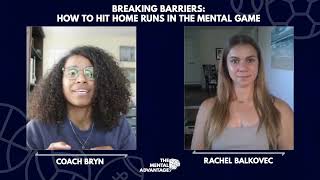
Rachel Balkovec, the first full-time female strength and conditioning coach in MLB, talks about overcoming the YIPS and PTSD as a player, then building hitter confidence through breathing techniques, eye-tracking research, and game-like training. She learned Spanish to connect with Latin American players and runs a mentorship program that demands effort and research.
Chapters
You can't say no. You know, I could quit my job with the Yankees, I could quit my job with the Cardinals or the Astros. I've worked with 3 organizations, but I can't quit this. You know, my purpose is to make a difference, to empower women, to change the world, and baseball is my vehicle. And I just know that.
I'm excited for you to see this week's episode, but before we get to that, I have a message for you. If you're a parent of an elite athlete or a coach of a high-performing team and you want you're looking for some help or assistance with making them more mentally resilient, perform with more confidence, be more consistent, anything like that, then this is for you. I have an 8-week program all designed to address exactly that, to help your athlete be at their best on a more consistent basis and not get tripped up by those little voices in their head and getting down on themselves for mistakes, but performing like we know they can. So what I want you to do is don't delay, schedule a— just grab a time on my calendar through this link, and let's set up a time to talk about your specific situation and how what I'm offering in my 8-week program can help. Okay, so it's Bryndresher.com/freeconsultation. So click this link, grab a time on my calendar. I look forward to talking to you. And now on to this week's episode. Hey everybody, welcome back to another episode of the Mental Advantage Podcast. Finally, I'm getting some more ladies on here. It has been a bit of a dude fest. If you've been watching, you already know. But interestingly enough, this guest is going to be telling us about her journey through men's sports.
What?
I'll, we'll explain. We'll get to that in just a second. But I'm really excited to have you on today. How are you doing, Rachel?
I'm doing great. And, uh, you know, it's okay if this has been a dude fest. That's pretty much my day every day, so I can also understand that.
Yeah, I was gonna say, you work with guys, so you're probably like, yeah, because I've had, um, from the MLB, I had Nick Swisher on. He was my first guest. I had, um, Shea Hillenbrand, and, uh, I think those have been my two baseball guys. I don't know if I've had anyone else, but this is my first time talking to a lady from baseball. So I'm excited about that because I want more women on my podcast. I'm committed to diversity. But tell us a little bit about your journey as an athlete, and then we'll talk a little bit about the transition to being a coach.
My journey as an athlete was I grew up playing a lot of sports and narrowed it down to softball in high school. So last 2 years of high school, I just played softball. I pretty much knew I wanted to— my dream was to be a Division I athlete at Texas University. That ended up not happening along with my Olympic dreams. So, as many people find out, you know, at some point it died out. But, I basically started out playing a lot of sports, narrowed it down, and then ended up getting a Division I college scholarship to play softball at Creighton University. I transferred after my freshman year and ended up at University of New Mexico in Albuquerque, Albuquerque, New Mexico. And, you know, I love this podcast about the mental game because actually my demise was my mental game. So, for those listeners who don't know what this is, I'll explain it. But, I basically got a bad case of the YIPS and my career was ruined by it. So, the YIPS is really well-known in baseball and softball. It's basically extreme performance anxiety that leads to an inability to throw the ball. So I was a catcher and I couldn't throw the ball back to the pitcher. And then it leaked into just every other part of my game. And it was horrific, honestly. It was a really horrible time in my life. And looking back, it's like there was no— there were no mental skills coaches then, you know, and there wasn't the mindfulness and the Calm App and athletes promoting the Calm App and talking about mental wellness. I mean, you think about what Simone Biles just did with coming out and being like, hey, I'm not mentally well and I'm going to die if I make a mistake. And it seems like there was two camps. There was a camp that was like, oh, you're weak and you're soft. And there was this camp that's like, no, why are we, why are we talking bad about this person for discussing a mental health issue, you know, related to sports? So none of that conversation was happening back then. So I didn't know what was going on. I didn't have any tools to work through it. I didn't know how to fix it. And my coaches, bless their hearts, probably didn't know either, but they did their best. And they sent me to just like this, the campus psychologist who was not a sports psychologist. So she did her best, but it just was not a great situation. I actually was diagnosed with PTSD from an experience that I'd had with my coach from freshman year, and I never really recovered. So that was the end of my career. Actually was after my junior season. I didn't even play my senior season because it was time for me. I just thought I need to start my career, like this is going nowhere. And it was really painful. It was like something I wanted to leave because I knew in my mind that I had the skills physically and also that I had the work ethic and all this stuff to be very, very, very successful. And it was just this complete brick wall. So, um, interesting that you're having me on this podcast because it's something that I'm very passionate about and I experienced deeply the negative effects of not having your mental game in place. So that was my sports career. Thankfully, and I hope I can transition and I'll let you ask a question after this, but basically, thankfully, through that process, I really took to the weight room because I, you know, I wasn't performing on the field, but I had this like Division I body. I was very physically set to be successful. And I had some talent, but it wasn't expressing— I wasn't able to express it on the field. So, through that process, I just really took to the weight room. I loved our strength coach. I loved working out. I would work out extra. I would do extra lifts. And I got, you know, very good at that. And also, just I loved it. You know, I loved that place. That place was safe for me. So, that actually led into my career in strength and conditioning, and that led into me getting into baseball. But, I'll let you ask a question if you want because Well, I know we'll get there.
Yes, we will. But first and foremost, thank you so much for giving us that background and being vulnerable because I know that there's so many athletes that end up kind of having a similar route through sports. And it's like all the, like you said, the physical acumen, the strength, everything they needed, and then something goes, happens, a certain event, not getting the right, treatment or support, and then next thing you know, it's like, that's it, that's the end of my career. And that, like you said, it can be devastating for an athlete, particularly when you know about the identity piece being such a big thing. It's like all you've ever known your life was that you were an athlete, you were a softball player, you were this person. And it's sad to say, thinking about how many athletes we probably lost along the way to this similar story, right? And not having the right support. What do you— and before we get to the next question, I love that you found your, you know, you found a lane that you did feel safe. You did feel like you had it. You were a master of your domain, so to speak, like you said, in the weight room where you knew that, you know, that wasn't a place that, you know, the other place was touching you, so to speak. So when you talk about And by the way, my brother's name is Creighton. So I was just like Creighton University. Yeah, my younger brother's name is Creighton.
So I was like, oh my gosh, yeah.
So I know that name. He didn't go to Creighton, but his name is Creighton. Yeah. But what I want to get to is when you talk about the YIPs, because thank you for explaining that, because I know a lot of people don't know what that is. And I have heard it before because I know it's the thing, uh, and you, you're going through that, and like you said, it was a devastating part. Not to kind of like relive it, but can you explain a little bit about that identity for people? And like, what happens when you identify so much with something and you're going through this situation and you're not getting the support? Like, how that really impacts a person, especially as you're kind of on the other end now and helping people with this?
The question was, how did this impact me? And at the time, I— in the bubble, I didn't know what was going on. No one was there to Hey, you're dealing with performance anxiety. I didn't even know what the YIPS was. I actually didn't know it was a thing. So, I just thought it was crazy. And more so, I thought it was mechanics. I was like, oh, I'm— you know, so I was working on my mechanics and realistically, I should have been doing breathing and meditation and visualization. And my coaches, you know, bless their hearts, they actually did for that time did the best they could, but it just like wasn't enough like intervention, I think. But, the long-term impacts of that was A couple of things. I actually had dreams, nightmares I would call them, about my coach from freshman year of college for like 10 years. Like I just, I think, can't remember the last time I had one, but it was several years ago. But I would have dreams about him for, you know, so when I first would, the psychologist diagnosed me with PTSD, I thought, oh, okay, PTSD, like that's what soldiers get. Okay, I don't have PTSD, you're crazy, you know. But now I look back and I'm like, oh, I definitely had PTSD. You know, I definitely was feeling the effects of this for a very long time. Thankfully, it wasn't in other areas of my life that the anxiety, like, carried over. I still got good grades. I still had friends. I, you know, I didn't, like, become— thankfully, it didn't affect me in that way. But funny— it's not funny, but it's funny enough. 10 years later, 12 years later, I became a hitting coach, and hitting coaches have to throw batting practice. So throwing brings up anxiety for me. So the actual throwing the ball still brings up anxiety for me. And I still, I mean, I'm still working through it. My batting practice is not very good because I just have anxiety surrounding throwing a ball, which is very strange, you know, but I'm actually thankful that it's nothing else. Like, I don't feel like I'm an anxious person. I don't feel like I, I have social anxiety, it's just throwing a baseball, which unfortunately I have to do a lot now for my job. And also I'm so much more well-equipped to handle it. I can handle it now. You know, I'm aware of like breathing exercises and the mental side is just, you know, I'm a more mature person. I'm not an 18-year-old girl, so I can handle the anxiety that kind of comes up for me. And it is getting a lot better, obviously, so.
Yeah, I noticed that you put anxiety in quotes and just, is that because you don't necessarily, I know PTSD, And then, you know, of course everybody kind of blanket uses anxiety pretty broadly. And I'm not saying, you know, it is or it isn't, but, uh, do you feel like you're not sure if it's anxiety or you're— it's more like, I want to overcome it? What is your reason for putting it in quotes?
Yeah, good question. Um, I put it in quotes because I think people generally now, it's like I, I believe, and this is with my own personal experiences with anxiety, I believe that anxiety is a spectrum. I mean, I have anxiety when I'm in traffic in LA, you know, like, yeah, I have anxiety when I have to have a tough conversation. I have anxiety— what I, I don't like to say, I have anxiety, like it's a permanent state. I, I look at people that say that and I'm like, I don't want to dis— I don't want to offend anyone or, you know, make it like not validate somebody, but like, I wish people wouldn't talk like that because you just accept it as your identity. You're like, oh, I have anxiety. And then you accept that you're going to have anxiety for the rest of your life. Whereas like you, or I have depression, like, okay, I understand that there are chemical imbalances and I, I've pretty well versed in neuroscience. I'm not a neuroscientist, but it's like, I understand that there are those extreme cases where you might be in a depressive state for a very long time. But I have dealt with depression when I lost my identity as an athlete. I've dealt with depression when I went through a really tough time switching careers and moving to Europe and being alone. Yeah, I was depressed, but I don't have depression permanently. So the reason I put that in quotes is like, I don't have anxiety, but I have anxiety surrounding this one thing in my life, which is throwing baseball. So it's like, that's why I put it in quotes is because I actually don't like to use that term because now I think it's almost so well accepted that I almost think it's overused. And it's like, oh, I have anxiety. And I think it just becomes people's identities. And that's not, I'm not trying to be insensitive, but that's coming from somebody who can openly say, I've dealt with anxiety, I've dealt with depression, but I don't have anxiety. I don't have depression. I am not depressed. I am not anxious. I'm not claiming that as an identity.
Yeah, I love that you said that. It's so crazy 'cause when I work with my athletes as a mental performance coach, I talk to them around that same languaging, how important it is not to own it, to say I experienced it, but I don't have it. Like you said, that ownership of it can make it very difficult to, 'cause then it becomes, like you said, a fallback. Like I have it, so therefore I don't, like working with youth and different things like, yeah, I have anxiety, so I need to go step outside. I have anxiety, So I need to do this. And I'm like, where are we going through that discomfort for a little bit and then finding coping mechanisms versus like, yeah, you know what, I'm going to need to go and be away from people as often as possible. But no, I appreciate you saying that. And of course, we're not being insensitive. We know there's diagnosed things, there's people that are medicated, different things like that. But it's important that people get that we need to be mindful of what we're claiming as parts of our identity because it makes it very hard to separate. Separate and then, you know, move beyond it or transcend it. So thank you. I, I could not be in more agreement, Rachel. So thank you for saying that.
Yeah, I saw you nod your head, so I, I felt the agreeance.
Yes, yes, yes. Now, um, I don't want you to relive the nightmare of what happened with your coach, but we know that coaches can be, um, very, uh, challenging for a lot of athletes. And obviously PTSD is a whole nother level, but, uh, without, you know, maybe going into anything that would make it difficult for you, what would you, you know, what was it that was going on with this particular coach? Was it, um, anything inappropriate, or was it more of like just coming at you like guns a-blazing and not caring about how it was going to affect you?
I've reflected on this so much, and I've talked about it a lot. It doesn't bother me at all to talk about it. And the first thing I'd like to say is I was 18. So I, you know, whatever happened, I may not remember correctly. And also, I was an 18-year-old girl, you know. So I think that looking back, I'm a really intense person. And I was— I'm more mature now, but I was probably intense in a way where I was like, kind of, I was brash, you know, I was very brash as a young person, to my parents' dismay. And I was not letting anyone get in my way and I would have a— I didn't care who you were, I was going to tell it like it is and that includes my coach. And, you know what, that benefited me actually because I was so run-through-a-brick-wall intense about my training. In fact, before that year, my coaches left me because I was so over the top and it really— it manifested itself in like doing extra and showing up early and staying late. And, you know, and yes, I was immature and so I probably had too much to say sometimes. So my coach freshman year just didn't like that and really, really pushed back on it in a way that I'd never experienced and I wasn't prepared to handle it. And then he thought that on top of that, I think he thought that I was showing him up. And so he thought that I was being disrespectful to him. And I don't even think it's like, I don't even want to put blame on the coach anymore. You know, I used to maybe think back and be like, oh, he was such a bad coach. Yeah, I think he probably could have done some things better, but realistically, I probably could have done some things better as well. So I think it was just a bad mix. And, um, it started with— he was a— he was the head coach and he was also the pitching coach. So I was a catcher, so he would actually pitch BP to us and I would have to throw it back to him. And because I had developed this you know, anxiety surrounding him really is what it was. I just started messing up throwing back to him, and then he would yell at me because I couldn't throw it back to him right. And then it just spiraled, and really it turned into just about everything in the game, you know, everything. It was— I couldn't hit batting practice. So, so that led to me not playing, of course, and that it just was a really, really fast snowball down a giant mountain.
Yes.
So, absolutely. That's kind of what happened. Yeah.
Thank you for that. I think it's important that people not necessarily have to know the ins and outs because I don't really like the whole idea of like, hey, so why were you depressed? What was going on? Because like that whole situation with Naomi Osaka and Simone Biles, it's not really up for us to have to completely understand. If somebody says they need something, they need it. But I wanted to talk to it because I know people have had bad coaches. Well, okay, let me not say, because I like that you said not necessarily all the coaches, because it's perspective. And when you know better, you do better. And coming from where we are, and like you said, I was young, I had my own perspective. But what feels like a bad mix, and so like what I need— I did a whole episode on love languages for athletes. Like, it's so important if we could learn that, right? And I'm sure this comes up in your hitting world of like, you're helping me hit, obviously that's a sweet spot of my career. You've got to know how to speak my language. And I don't just mean English, Spanish, et cetera. I mean, you know, knowing how, what's going to help get it across to me. And not everybody has that, you know, intellectual or emotional intelligence to say, you know what, maybe there's something I need to do differently because it's not translating. And like you said, everywhere you went, everybody was loving Rachel, but this guy was not a Rachel fan for whatever reason. And that made it difficult, especially when you get all your juice from your sport. And so, you know, a lot of us build our entire confidence and self-esteem on our sport. And I can also relate. I'm a pretty outgoing, outspoken kid, precocious, whatever those words they talk about. So it's like, all right, maybe have several seats, kid. Like, you're— because, you know, I'm just used to being, you know, whatever. So I feel you, although I ran track and field, so it was a little different, but I was the captain of the team, but it definitely, I didn't have the mental game either. You know, I was just like, oh, we have to do the how many 200s?
Like what?
Like, you know, instead of like, hey guys, we got this, let's lock in, you know, I didn't have any of that. So let's talk about your transition. Okay. So obviously you found solace and refuge in the strength and conditioning world. When did it become apparent to you that this could be a career and not just like someplace that you just loved to be?
Um, I pretty— I had a, I had a very key mentor in my undergraduate degree. So when I went to New Mexico, he was a professor of mine. And then, um, basically I was still on the softball team and he basically said, hey, would you want to— he actually invited me to live with his family and also train me as a softball player and help me learn how to train athletes. And he just Yeah, and I just, I can't even tell you enough how much that impacted me. But he really set me down the path. I basically, I was in my undergraduate degree. So he was like, you know, I said, "Hey, where should I do my internship?" And he was like, "Go here." You know, and then the next step was, "What should I do after my internship?" And he was like, "Go here." I mean, he just really, he guided me. He set me on my path in a really great way. And I knew that it could be a career because I had great relationships with my Strength Coaches. So I was like, "I want to do your job." So I knew that was all possible. And really early, I knew that I wanted to make that a career.
Nice. And also just highlighting for those listening how important it is to have a mentor that kind of helps you architect that path, because a lot of times we just have a passion, but we don't know how to get there. We don't know what to do with it. We're just like, I love this. And somebody's like, well, did you know this could be a thing? So that's awesome. That's fantastic.
I even do. I mean, I want to say I want to touch on that. Like, I in the offseason right now, actually, applications are open for this. I, I do mentorships formally. So I think it's so important, like you just said, because I reflect back on my path. And I'm like, oh my God, if, if I didn't have those key mentors, I would have wasted so much time, I'd be making less money. Who knows if I'd make it in baseball, I don't even know where I'd be if I hadn't had some really key mentors earlier in my life. And I'm so passionate about it that now I do formal mentorships because people don't always have that person that just magically appears and tells them what to do, you know? And like you said, everyone has a passion, but they don't know what they want to do with it, or they might know what they want to do with it and they don't know how to get there. So yeah, I can't agree enough with that.
Nice. And even though it's the middle of the episode, how do we apply for this mentorship? What do we do? Okay, sorry.
Yeah, it is the middle. Sorry, this is, this is ill-placed. Um, you could just easily— you could go to my website, rachelbalkebeck.com, and there'll be a mentorship tab. You can easily apply, uh, or just find through my Instagram. Um, so applications are open until November 5th. There we go, plug in the middle of the podcast. Got it done.
There, we got it in. No, this is important because, you know, some people don't listen past the middle, so this is good. Now I have another question because I want to help this person work with you. What is a good qualification for a— what do you think, not necessarily just to mentor with you, but if somebody wants to be mentored What kind of qualities do they need to have to be a good mentee?
So to earn mentorship, I say this so much, you have to earn the mentorship. Like you don't just write someone an email and be like, will you mentor me? You know, which actually people do, but it's like, you got to show up. So a lot of times that means doing an internship for them and working for free. And then all of a sudden they want to, they want to mentor you. It's because you've invested time. You know, sometimes internships aren't available, but also there's other things that you can do to show how invested you are. And if you are sending a cold email to somebody, do your homework. You know, like sometimes for me to send an email, I will spend weeks listening to podcasts, watching YouTube videos, understanding who this person is, how do they drink their coffee, what kind of dog do they have, like everything about them. So when you do write someone an email, it's not just like, hey, can I have free advice, guy? You know, No, it's like, "Hey, I read this, I listened to this, I heard you say this. And by the way, not only did I hear it, but I've already implemented some of your advice. And now that I'm implementing your advice, it's impacted my life." And then, all of a sudden, if I get an email like that, I'm like, "Oh, my God, this person really has done their homework and I'll respond." And I do this time and time again. I just did it in my own life. I went and visited North Carolina women's soccer who's— it's one of the longest-standing dynasties in the history of all sports and it's still going. And the coach has been there for 30 years. Mia Hamm went there, all the great So I have read books. Yeah, Anson Dorrance. Exactly. I've read books, I've watched videos. I know all about this guy. I literally like have stalked him so much. Finally wrote him an email just this year and I'm like, you have impacted my life, my coaching career, things that I do myself as a woman. I wrote him this really nice long email and he got right back to me. But it's because I've invested hours of my time to learn about him and what he does and implemented it. And then people want to give you time back. But if someone just writes an email and says, hey, can you help me? It's like, I don't, I don't know. I don't know if I can help you.
Yeah.
Yeah.
Because you're already showing, I mean, through what you're talking about, you're already showing that you're willing to put in the work. It's not just like, hey, because it's got to be a two-way street. Like, I want to make sure that you're just as interested in this, because if I'm going to give my time, I need you to be like showing up. And this is the same thing, you know, I feel like with athletes I work with. I do not want to just pour into you and you take it and be like, "Thanks." I want you to be like, "It changed my life. Let me tell you what's different now." That's where I get my juice from. That's what makes me feel the most rewarding, you know, most like rewarded is when I see an athlete actually like practice this stuff and live it. So I'm sure you feel similarly. So that's awesome. Fantastic. Okay. So now I want to talk about one— I had one question that came to me when you were talking about this mentorship and At the time, I mean, obviously your mentor was helping you. Was it like any sport or was it like always going to be baseball, like men's sports? Like what was your thought process in that? Because I know there's not a ton of upside in women's sports, but I kind of want to know when it came down to it, how you made that decision or, you know, where that came from. Yeah.
So baseball came around because I had, I don't even remember having a specific sport before this, but I basically graduated, long story short, I went to LSU and I did a graduate assistantship in strength and conditioning there, great opportunity. And, while I was there, guys who I knew who I had kind of grew up with at New Mexico athletes, they were now going on to their professional careers and playing professional baseball. And, I was hearing all these stories from them about how it's so far behind and they're eating hot dogs and they're on a bus for 12 hours and they're working out at the YMCA. And I'm like, what? Like, this is professional baseball? Like, I had no idea. So I was like, I really want to get into that and change it. And from the get-go, I've always gotten into baseball. I thought I want to really make an impact and improve it. And that's really why I wanted to get into baseball. On top of the fact, you kind of alluded to this, but it's a lot better career than women's sports. And I hate to say that. It's changing, but it's really not. It's still the same. It's not like I can go be a professional softball strength coach. It's not a thing. You know, college strength coaches, of course, but even right now, let's say if I was a softball strength coach, I'd have 3 other sports. It's not like that's a great career. So, I really took to baseball and then I fell— as soon as I had my first experience, I fell in love with it and fell in love with the challenge. I would say I don't— I think there's still a lot of room to grow and room for improvement, but I fell in I fell in love with the challenge of specifically professional baseball because of the business, the minor league system, the Latin American players. It's just this huge onion and there's so much work to do. And that's what excites me about it.
Okay. One thing that I love about you is that you learned Spanish to work with Latin American baseball players. I love that you are willing to do what it takes, showing once again, willing to do what it takes to go where you need to go to make this happen. How has that benefited you or that process of sort of going against the grain and then being able to, like you said, transform sports, which I'm like, oh my gosh, again, soul sister, you want to make an impact. But what drives you with that hunger? Where does that come from? In your opinion?
Honestly, it comes back to purpose. You know, it's like, it's just like anything else. When things get hard and you're like, why am I doing this? I mean, there's so many times I can recount, but specifically even when I transferred over to being a hitting coach, I moved to Europe. I literally sold all my belongings. I had 3 suitcases, got to Amsterdam. I pulled 3 mattresses off of the curb and slept on 3 mattresses stacked up for a whole year that I got out of the trash. And I just would, I would think to myself, like, why in the hell am I doing this? And I have a quote that's usually up on my wall everywhere I go. It's traveled all over the world with me. It's not up yet here in my place here, but it's usually on the wall. And it's basically like, what is my job on the planet? You know, what is it that I have special skills to do that if I don't do it, nobody else is going to do it? And it's a Buckminster Fuller quote. And I just know that if I don't do this, then there's no one else like me that can do it the way that I can do it. And it's like my job, you know. So when you truly have a purpose or calling, it's like you can't say no. You know, I could quit my job with the Yankees. I could quit my job with the Cardinals or the Astros. I've worked with 3 organizations, but I can't quit this. You know, my purpose is to make a difference, to empower women, to change the world. And baseball is my vehicle. And I just know that. You have special skills, experiences, talents, et cetera, that are going to allow me to do it better than anyone else. And if I don't do it, then I'm not sure who else is going to do it. And that's speaking from several perspectives, you know, as a woman, you know, and not just saying I'm the best coach ever. That's not what I'm saying. It's like in this particular situation where I'm a woman and I'm working in this industry, I know that I'm unique even within that group and that I have to do it. I can't quit. It's like I'm chained to it for the rest of my life in a good way.
No, I love that. I love that. And for the listening audience that maybe doesn't know, she's the first woman to get full-time hired in the position that she's in in Major League Baseball. So she's not only living this, you know, what is my job on the planet? But I agree with what you're saying. Like, I know some people are going to hear it a certain way, but we can't, we can't worry about how they hear things. What you're saying is I'm an individual and I have my unique imprint and I'm doing what I was meant to do in the way that I can do it, which is through the lens that is Rachel and my experiences. And nobody else is going to be able to tell that story in the way that you can, because it's your story, it's your journey, it's your path. So I love it. I think that you're bang on. And anyone that, you know, isn't inspired by that probably isn't listening close enough. Turn up your volume, people. So now I love it. I love it. And so what is my job on the planet? Thank you. I didn't know that one. So that's good. I'll add it to my quote repertoire. My favorite is, how you do anything is how you do everything. I use that one quite a bit with my athletes because I want, you know, because I'm like always looking at in and out of sport. And like you said, sport is just a vehicle. And, you know, baseball happens to be the vehicle that I'm coming, you know, to who I really am. And I love that because it's all self-discovery and all that. So, okay, so let's talk about, I know that you've worked with several teams, you've gone to the UK. Let's talk about working with men And maybe just that first time that you were in the job, like, what was going through your mind the first day that somebody gave you an at-bat, so to speak, if you'll forgive the cliché?
The first time, so the very first time, I'll never forget. And it was the class— I mean, honestly, it's a scene out of a movie. So the first day was with the St. Louis Cardinals. I didn't internship in 2012. And I mean, to give the audience some context, because we're in 2021 right now, there were no women. I mean, there weren't nutritionists, there weren't mental skills coaches, there weren't, there weren't women in the building, you know, let alone women who were actually working with the athletes. I mean, there were some women in the front office, but they weren't around. And it was really different for the people, the men that had been there previously, because they're like, this is new. And I've been working in the game for 30 years, never seen a woman, you know, walk through the door. So very, very rare. And in today's game, it's rare. But back then, it was almost nonexistent. There was one other physical therapist at the time. And I believe one or other athletic trainer at the time. So there might have been 3 of us in the game. So I come on the scene, and I'm super excited. And we get to the coaches meeting, and there was probably 30 coaches in this meeting and they were like, "Hey, everyone, this is Rachel. She's the strength coach." And I stood up and I was like, "Hi," you know, and I gave a short introduction. And I sit down and the guy who was leading the meeting, who now I'm friends with, so everything's fine, but the guy who was leading the meeting said, "All right, guys, we need to talk about this." And I'm thinking like, "What are we going to talk about?" You know, I'm just really excited. I'm just here to learn. And he's like, "No one better cuss in front of her." We need to have no rap music in the weight room. Be careful what you say because any of us could lose our jobs. She's the most powerful person in this room. And he's going on and on. And I'm just sitting there and I'm like, I could— my face was so red and I was so mad. I wasn't embarrassed. I was just— I was like, I'm like, who does this motherfucker think he's talking about? You know, I'm like, I'm like, I'm the— I'm the I'm the worst person in the room with cuss words. I don't even, you know, and I'm just like, this is so, you know, off base. So I finally kind of to show that I wasn't even listening, I was stuck, I couldn't leave, but I just like leaned over in my seat and just put my head down because I was like, I'm not participating in this, you know. And finally, another guy who's also still a mentor of mine, another guy said, hey, Jesus, like you're making her blush. Like, why are we talking about this? He was like, she's not special, just, they're gonna be fine. Like, capped the conversation. So we go out, we go out, and, you know, and he was like— he, the guy who stopped the conversation, he said, he said, you're gonna be fine, like, they're gonna respect you, and I'm not worried a little bit. And so that was kind of— that was the first day. I couldn't believe this conversation was happening in front of me. So that was that. But interestingly enough, and I'm sure the listeners or everyone is curious to know this, the players never bother me. They never One time in 10 years, I've really had like an issue with a player. And that was when I had first joined the organization, they didn't know me that well. But really quickly, a week, 2 weeks into my job, it's like, it's not even a big deal. Because once they see my presence, they see how I handle myself, they hear what I'm saying, they know I know what I'm talking about, they know I can help them, they don't care. You know, and also, by the way, I'm the first person to turn up the loud music, you know, the loud rap music and I'm the DJ. So, like, they're like, oh, okay, you know, she's, she's one of us. Like, I think music and dance are love languages of athletes sometimes. Like you mentioned, I'm going to start using that. If you can play their music and you can dance and like get, you know, whatever, and they're like, okay, like she's one of us. So, that was my very first day on the job. And I could say that that was pretty atypical. So, thankfully, otherwise I probably wouldn't be here.
Yeah, so funny because Michael Gervais, who's a sports psychologist, has a similar story, high performance psychologist has a similar story to— not obviously, but somebody making it difficult on the first day by giving some speech that they think is helpful but is really actually making it difficult for that person to do their job. But, you know, sounds like both of you guys knew exactly what to do to kind of turn it on its head. And, you know, um, so I love that you had also an advocate that kind of got like, dude, we don't need to make her different, plus you're just going to make it really difficult for these guys. To even, you know, want to interact with her.
So awesome.
So I know we only have a few more minutes, so I want to make sure we get to the hitting part and, you know, talk a little bit about the mental game of being a hitting coach, because obviously, you know, this is how— this is where the guys make all their money. Not that the pitchers don't make a ton, but, uh, what is the components of a good hitter when it comes to the mental game? And what do you do as someone who does work on the mechanics incorporate that with them?
So I'm going to— you could go a million ways with this, but I think the, the easiest way to be confident is to be prepared. And if we are going to talk about preparation, the thing that we impress upon them the most is having a realistic training environment. So a lot of times, you know, and some people are listening, know about baseball, some people don't, but a lot of times traditional practice for hitters is like you put a ball on a tee and they hit it off the tee, or you kind of toss the ball and it's a little— we call it soft toss. You just toss the ball to them. But actually, that's so far away from the game that it's just like, what are you— that's not building you confidence for hitting a 95-mile-per-hour fastball. That's only building you confidence for hitting a ball off of the tee. So when we talk about being confident with them, it's like, we have to make the training environment so difficult. And I don't mean, you know, hardcore military. I'm talking about technically difficult or close to game. Close to game is what I should say. Not even difficult is the wrong word. More specifically, close to game-like. So we do a lot of training with high velocity. We do a lot of training that mimics the game so that they feel more confident when they actually get in the game. And sometimes a lot of the comments we'll have is, wow, this pitcher doesn't even have as good of a curveball as the machine, or, you know, whatever. And so they're, they're almost more prepared because what they're seeing is more difficult than what they're seeing in a game. So we preach confidence through preparation. And on top of that, I would all— I would add preparation isn't just the actual practice, but being informed about what pitcher they're going to face. And so mentally preparing is like studying, right? For baseball anyway, is studying. And actually for any sport that's, that's a 1v1, maybe not track, you're not preparing against an enemy, right? Um, but in a lot of ball sports, of course, like You know, in football, you've got to study. You need to study what the other team is doing. So being prepared and feeling prepared when they get in the box is knowing, okay, not only, okay, what does this pitcher throw? What does the pitch look like? But also in what count does he throw what pitch? So I'm going to go back to like being confident starts— being confident starts with preparation and being in training and being informed of what you're going to know, what you're going to face in the game.
I love that. Easiest way to be confident is to be prepared. That's definitely going to be a quote that I will remember because I always say confidence is just repeated action over time. So like you said, but game-like situations, it's so important. If they're not right, we got to bring in that crowd noise. We got to show you the speed of the ball, right? Like, because, right, there's all these times that we're working on fundamentals in sports like basketball, but we're not really doing game-like situations. And like, if I'm calling all the plays in practice, I'm not going to be on the court when you've got to decide when that, you know, that outlet pass isn't there, what are you going to do?. And so we've got to get, you know, decision-making, like you said, knowing, doing the studying. And in track and field, I would say, um, you're absolutely right. There's no opponent other than yourself. So you got to know yourself and you got to know in this curve, where should I, you know, where should my, how should I be feeling?
Right.
So I'd still got to study the flow of the race, even if I don't necessarily have an opponent that I'm against, but I kind of do need to know, like, maybe I need to know her kick that I'm going to go against, but on the right side. I'm with you. I'm not saying you don't know what you're talking about. I 100% agree. I was just thinking like, I think there is a component of study. I didn't have it. I'm not saying I was doing that because I wasn't. I didn't know any of this stuff just like you back in the day, but I was just like, run fast, beat other person. That's all I knew. Or don't beat other person. Um, but absolutely so important. What mental components do you— besides studying and, you know, game-like situations— what do you tell your players as far as like when they're squaring up in that box? Because from what I understand, I'm not a baseball player, um, we have already established that, but that, um, and I think Shay or Nick were telling me you got to start your swing before that ball even leaves the pitcher's hand or something like that. So Tell me a little bit about like, what is that?
So, so my research and my second master's degree was actually on eye tracking for hitters. And what research tells us basically is that the hitter is basically making a decision of where they're going to swing to hit the ball in the first third of ball flight. So that's like 10 milliseconds, or excuse me, like 100 milliseconds out of the hand. So they already like are predicting where that ball is going to be. So mentally, like more, more specific details-wise, we usually tell them to look at the pitcher's hand. And as intuitive as that might seem, we actually know through tracking and understanding the behaviors of high-level hitters and lower-level hitters that that's actually not something that comes naturally. You have to really practice it. So making sure that they're focusing in the right place at the right time. So if they get to the ball release late, it makes it very difficult to predict where the ball is going to be and make that decision of whether or not it's a ball, whether it's a ball or a strike, or, and also where where it is, what pitch is it. So you're absolutely right, like, that's a, that's a very baseball-specific mental approach. But it's hugely important because they don't have much time to make a decision. So the best hitters in the game are the best at that. I think it's a misnomer, the best hitters in the game have the best swing. Well, not necessarily, because a lot of swings can get it done. But the best hitters in the game have elite plate discipline, or what we would call, you know, pitch recognition. So their ability to lay off balls that are in the dirt and swing at strikes, um, to look for their pitch that they're looking for, whether that's an outside fastball because they want to drive it the other way or whatever they're looking for. The, the top hitters have that ability, and that's literally a mental thing because it involves the eyes and the brain.
Yeah, I love that. Is, is one other question, because I, I definitely need to have you back because we need to geek out on the mental game, and I know you don't have that much time, and I want to get to the rapid part of our questions, but I did have one other question. Do I know if I want it to go to a grounder versus a homer, or am I always trying to hit a homer? Now, I know for a certain, uh, uh, strategy it may not be best for me to hit a homer if we want to load the bases or we want to do whatever, but, uh, I'm just like, do I know that when I'm swinging that I'm like, oh, this is gonna go ground to the, you know, uh, down the first baseline, or is that just something?
No, look, I mean, the absolute best hitters in the game hit 40 home runs a year, right? So 40 out of, out of hundreds and hundreds of at-bats, you know. And so to say that you're trying to not hit a home run or trying to hit a run is kind of funny to me. Although if we're talking about the elite of the elite of the elite, right, yes, there's some hitters I know have said like, yeah, I'm literally trying to hit it directly to this— you never try to hit to a person, but I'm trying to hit just to the right of them. I mean, we're talking about seasoned veterans of 10 years in the big leagues, but for development purposes, we're really just trying to hit line drives. I mean, it's kind of the same thing that people probably heard when you were 5 playing Little League or whatever. You're trying to hit a line drive all the time. And that's how we want to train, is to hit a line drive all the time, even though there might be certain instances where you need to hit it to right field or left field because of the runners on the base, the other runners on the bases, or because the pitcher and what they're throwing or what, um, they have in the— be looking for that you're going to hit that way. But ultimately, and whatever happens happens. Like, that's usually going to be a good result.
I love that. Thank you for saying that because that's really helpful for us to know that line drives— I didn't know that. So this is in, you know, so like in other words, we want to be consistent. Right? If you're getting a lot of line drives, you're getting on base, you're putting yourself in scoring position. If you're followed up by—
exactly.
So, and this is like life, right? It's no matter what, if I am being consistent, I'm going to have better results ultimately. But if I'm always going for a home run, I'm probably going to strike out more often than not, right? So I need to have the right, uh, the right mindset. And it's not always about going, you know, swinging for the fences. It's just about having, like you said, those mechanics studying and following the basics and being prepared so that I can be a better producer for my club, you know. So awesome, fantastic. Well, Rachel, this is great. Um, I definitely want to talk more to you, but I also know that you've got to go. So let's talk rapid-fire questions, and we'll have you on. I hope you'll do the podcast again because I want to geek out more about the mental game and talk more about what you think about men's versus women's sports and all that good stuff. But are you ready for the rapid-fire questions? Are you ready?
Are you sure? I'm ready.
OK, all right. All right, first rapid-fire question. What is your favorite snack right now?
Almond butter. Easy.
Almond butter. Oh my gosh. You know, my girlfriend, huge fan of almond butter. Like, that's sweet to her. You must not have a sweet tooth.
Do you have a sweet tooth?
Yeah.
Oh, I have a sweet tooth. Almond butter is like the fix. To get me past it. And I would say dark chocolate and almond butter, but I try to go really dark because I have a huge sweet tooth and I would just crush some chocolate.
So yeah, I feel you, I feel you. What is your favorite flavor of ice cream?
Mint chocolate chip.
All right, uh, if you could have any superpower, um, what would you want and why?
Oh, it's easy. Flying. Flying. Because I'm a huge traveler, so I spend a lot of— I know, maybe not money, but a lot of points and a lot of money sometimes on plane tickets. So 100% would be flying.
Okay. And where's your number one destination that you want to go?
That I want to go? Um, that I want to go? I've been— I want to go back to New Zealand. I would say that's— it's my favorite. The— my favorite place I've ever been is New Zealand, probably. And, uh, I would— I would want to go back there again.
Nice. Did you know that, uh, did you know Lord of the Rings was shot there? I don't know if you're a Lord of the Rings fan, but it was shot. Yes, I did.
Yes, yes, I did.
Of course you did.
That's like— I know, super fan. But it's pretty obvious once you get there, like, you're like, oh yeah, this is Lord of the Rings, you know, like, just exactly what it looks like.
Nice. I hope to go there someday and geek out because I wouldn't say I read the books, but I'm a huge— I've seen all the movies, so I'm like, yes. I would probably equally just be like, oh yeah, I remember this from that movie.
Awesome. Yes. Yes.
Do you have a favorite superhero?
Wonder Woman, obviously. Of course. Duh.
I mean, why did I even ask? That makes so much sense. I probably would have been disappointed if you would have said Superman. I'd have been like, even though Superman is one of my favorites, I would have been like, really? Really, Rachel? Come on, let's give the ladies a— I never understand that. You talk to women athletes and you're like, who's your favorite player? And they're like, LeBron James.
I'm like, okay.
I'm like, you guys know that there's like—
okay, I can understand it. I mean, that's, that's who we saw. That's, that's who we saw on TV.
So they're, you know, I know, I know. Well, it's women's soccer players too. And it's like the US Women's National Team is so good. And then you got people talking about their favorite player is, you know, Ronaldo or whatever. And I'm like, come on. But anyway, yeah. All right. Yeah. Uh, uh, okay, this question, maybe you feel some way, maybe you don't, but some people do. Everyone has toilet paper. I know you do, you're a human being. Do you like your toilet paper over the top or under the bottom?
Do you have, you know, and over the top? Oh my God, so annoying.
Do you change it if it's wrong at your house? On the odd chance that it would be wrong at your house, would you change it?
Thankfully, my boyfriend and I are on the same page about this, so I don't have to change it. At my house.
What if you went to someone else's house? There are people that would in fact change it. Are you one of those?
No, because I want to be respectful of their toilet paper choices, you know?
Okay, that's a new thing. I want to be respectful of people's toilet paper choices.
Okay, awesome. I love that.
Yeah, there are some people that do. It's crazy. They're like, yeah, no, I change it. I'm like, really? I would never. I would never change it at somebody else's house, but absolutely in my house. My girlfriend has no preference. Reference, but she is now trained so that she doesn't have to deal with me going, why did you change? So, uh, all right, who's your personal hero?
Um, I'm gonna go for mom and dad. Yeah, just the way that they've— the way that they helped me and how they overcame their own, uh, circumstances and got themselves out of their circumstances as kids. They've just completely overshot their coverage on life and set my sisters and I up to be wildly successful. So I would say they qualify for my heroes.
Love that. If you could be remembered for anything, what would it be and why?
Empowering women. You know, winning a World Series is cool, but to me, again, that's just kind of a formality for what you get along the way and what you're able to accomplish through sports and the platform that I give you. So I would say I want to be known as somebody who opened doors for women behind me.
All right, and what's your mental advantage?
My mental advantage is being a chameleon. So I can, uh, because I've traveled the world, because I've been through a lot of difficult circumstances, because I've been in a lot of different circumstances and had to adapt, I've become this chameleon that can put on stilettos and go to a club in New York City and put on a baseball uniform and be a baseball coach. And I do both of them very well and I feel very good about that. And it allows me to connect with a broad spectrum of people and it's a huge advantage.
Love that.
Love that.
So besides reaching out to you for mentorship, which we've already established is on your website, uh, where else can people connect with you? Don't worry, I'll put it in the show notes. And anything else you're working on that you want people to know about support you?
Yeah, just, I mean, if you can spell my name, you can find me. So it's on Instagram at Rachel.Balkovec and Rachel.Balkovec, excuse me. And then RachelBalkovec.com is my website. And I think I'm Rachel_Balkovec on Twitter. I mean, look, if you go Rachel Balkovec, you will get to me somehow. I have confidence. So good luck.
Awesome. Awesome. Rachel, it was such a pleasure to have you. I mean, your story is phenomenal. Like I said, more people need to hear it. I'm glad that I could be a part of that. And you definitely empowered— inspired me today. And I know that you're already inspiring women as you continue to go through your career and look forward to seeing what you have next coming.
Awesome. Thanks for having me on.
More from Bryn


Who else hype for this upcoming season with Caitlin Clark and the Fever with all these great adds?







How to be nicer to yourself: Stop putting yourself down either out loud or in your head


Winning At The Net Game of Sports & Life No Matter The Score - Episode 60 w/ Jordanne Scott