Building A Sharper Mind : The Mental Skills Of Elite Performers - Episode 44 w/Justin Su'a
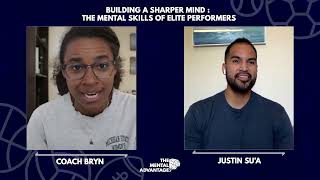
Mental performance coach Justin Su'a explains how elite performers use automated routines and immediate feedback to stay sharp, while most people struggle with delayed results. He shares practical tools: audit your habits, use the "fountains vs drains" test for relationships, and clarify your values. The "yips" happen when trauma or injury makes you overthink automatic skills, but a supportive team and good communication can help.
Chapters
What is mental performance? I get that question all the time. What does that even mean? So let's stop and look at physical performance. If you say, what is physical performance in a simple definition? And again, I can— this can be holes poked in my definition right now. It's the execution of motor skills to achieve a task. Essentially, that is the basic first principles of physical performance. Now, mental performance is the execution of mental skills to achieve a task. And now the question is, what are mental skills? In my opinion, it's your ability to, your ability to be where your feet are, your ability to navigate uncertainty, your ability to slow your heart rate down, your ability to visualize, your ability to have a meditation practice. All of these are learnable, trainable skills. And so if you're a business professional watching this, you're thinking, oh, I don't need to be an elite athlete to reap the benefits of that. I could be a parent, I could be a CEO, I could be a cashier at the grocery store. These are all things that— mental tools that you can learn and apply and get better at to enhance and optimize whatever you do.
I'm excited for you to see this week's episode, but before we get to that, I have a message for you. If you're a parent of an elite athlete or a coach of a high-performing team and you want— you're looking for some help or assistance with making them more mentally resilient, perform with more confidence, be more consistent, anything like that, then this is for you. I have an 8-week program all designed to address exactly that, to help your athlete be at their best on a more consistent basis and not get tripped up by those little voices in their head and getting down on themselves for mistakes, but performing like we know they can. So what I want you to do is don't delay, schedule a— just grab a time on my calendar through this link, and let's set up a time to talk about your specific situation and how what I'm offering in my 8-week program can help. Okay, so it's Bryndresher.com/freeconsultation. So click this link, Grab a time on my calendar. I look forward to talking to you. And now on to this week's episode. Welcome back to another episode of the Mental Advantage Podcast. Y'all, I know I say this every week. Those of you that come all the time are probably like, okay, Brynn, really? But I am super excited about this week's guest. So he is actually a mentor of mine. I told him he's my mentor. He didn't necessarily sign up for it, but I was like, yo, you're my mentor. You're the guy that I want to learn mental performance coaching coaching from in sports psychology. So without further ado, Justin, how are you today?
Brynn, I'm, I'm excited. I'm doing very, very well. When I saw this on my calendar, this is the one thing I was really looking forward to today.
Awesome, awesome, awesome. So his, his name is Justin Sua, okay? For those of you that are like, how do you pronounce that awesome last name? It's Sua. And, um, I got the pleasure of meeting Justin via Clubhouse. For those of you that are listening or watching, you guys know Clubhouse was an audio platform that took off over COVID when all of us were sort of confined to our homes, and it was a way to connect, and it was beautiful. And I think it's still going. Um, I'm not sure of its effect, but I'm not as plugged in. Um, but Justin was somebody who I've been following for quite a while. And you've been doing mental performance for— and, and sports psychology for how long now?
Uh, probably for a little bit over a decade now. A little bit over a decade in the field.
So tell us a little bit about how you got started, because I think that all of my guests are superheroes And I like origin stories. So tell me a little bit about your, how you got started.
Yeah, I like that.
Yeah.
I like that, that superhero's origin story. That's really cool. I like that. I might have to use that. That's really cool. What's really interesting about my journey and just anyone's journey really is sometimes when you look back, you can only connect the dots looking back. I think Steve Jobs is the one who's really known for saying that. And I find the same to be true in my own life. I didn't even know about this field. I didn't want to do this. I didn't know you could be a mental performance coach and work with elite athletes and soldiers and actors and musicians. I didn't know mental performance was a thing. I wanted to be a ninja growing up as a little kid and then a cowboy and then a professional baseball player. And ended up— I was born to parents who— my father's an immigrant. The last name is from Samoa, the Polynesian island in the Pacific, and my mom didn't even graduate high school, born and raised in Los Angeles of Hispanic ethnicity. But my dad ended up being a professional baseball player, having never played until college. My mom was a vice president of a multimillion-dollar company, having never graduated high school. And so, I come from two parents who really epitomize go for it. It doesn't matter who you are. You don't need permission to be great. And so, I was the beneficiary of two parents who were in the trenches and just created a life for themselves to go do it. And so, I was raised that way. And so, yes, you want to be a ninja, Justin? Go be a ninja. You want to be a cowboy? Go be a cowboy. You want to be a baseball player? Go be a baseball player. And so, went to Brigham Young University as a student athlete, played baseball there, got a degree in broadcast journalism. So, that's where I learned how to be on camera. I learned how to interview. I learned how to write. With no excessive jargon. Take the jargon out. We don't need to know how smart you are. Just write the way people speak. And so I learned that in that degree. And then I went to my first internship at NBC Sports Los Angeles. That's where I'm from. Went back home. First day on my internship, I realized I hate this. It's not for me at least. I don't want to interview athletes. I want to somehow, be part of sport, but not be a coach, not be an athlete, but didn't really know what were the other options. So I tabled it. It was just almost a thought, not even a dream. It was more of a thought. What I really love to do is to teach. That's why I loved teaching, what do you call it, clinics as a hitting coach or a pitching coach. I love doing teaching things, teaching little children. So I went in to be a high school teacher. For 5 years, I was a high school teacher. I learned education pedagogy. I learned how to create curriculums. I learned how to take a subject and take it from their minds to their hearts. I learned how to work with kids who didn't want to be in class, but you have to somehow be an effective storyteller, somehow create a lesson to where they're engaged, where they come into class and they're looking to leave inspired. And so, I did that for a little bit. And then I said, "You know what? I want to enhance my ability to teach, so I'm going to go get a master's degree in education." I applied for my degree and I didn't get it. They said, "Nope." And I was declined. I was actually kind of shocked. I was like, "How do you get declined? Okay, well, all right, what else am I going to do?" And I scoured both the universities close to me, their master's programs, trying to look for something that intrigued me. And I saw a degree at the University of Utah called the Psychosocial Aspect of Sports. And I thought, "What?" What is that? And so I double-clicked on it. I went to look at it and it talked about the science of optimizing human performance, motivation, team cohesion, arousal control. And I thought, what is this? I called the dean and they quickly told me that my degree in broadcast journalism does not give me any of the prerequisites to even take these classes. I thought, no, please. So I kind of begged to get in. I took the GRE, did everything, and they threw me a break. They said, okay, you'll come in, but you are on thin ice because you have no background in any of this. But they let— I think they— my enthusiasm really intrigued them.
All right, first of all, I don't know if you guys are as in love with Justin as I am just listening to his story, his enthusiasm. I mean, all the things. So, uh, a couple things I heard. One, You never know the amount of hats that you're going to wear that are going to make you really good at what you do. So, for example, all his former life stuff from his origins of the way his family raised him makes him amazing at what he does because he brings all of himself to that. The fact that he was in curriculum and learning how to teach, that makes him really amazing at what he does. He faced some adversity which found him to go into the sports psychology world because they didn't let him go on this traditional path that he thought he was going to go on. So he knows about how when life detours you to something magical. And then the other thing that he said that I thought was just really amazing— and I know you guys are like, I heard it all, why are you recapping it? Because I need to, guys. Because I need to. I need to just— I need to really grasp this. That he just went on to do all of these— you know, he's learned. He went to IMG Academy, then he went to some professional teams, and now he's with the Tampa Bay Rays. Primarily in the sport of baseball, but he didn't just do baseball. He did football, he did baseball, he served, you know, military people, clients, all the different things. So, and, and it all started from not even knowing this was a thing. So, uh, amazing, amazing story, Justin. Um, I just love that. I love that so much.
I'm just like, oh my God, thank you. Um, I—
and we met on Clubhouse, as I already said, and one of the things is, one of the reasons I'm so excited to talk to Justin, and you guys I'm a very, uh, I don't have Justin's training, okay? So I do mental performance coaching, but I don't have Justin's training. Um, and I met him, I followed him on Twitter for years. Like, I was like, I need to follow people that are interested in what I'm interested in or doing what I'm doing. So I followed Justin. I had no idea who he was, and I've been following for years on Twitter. I had sent him a message and never, you know, um, and he gets a lot of messages, so, you know, I understand, I know how it works. So he gets on Clubhouse, and I, I'm— no, I'm sorry, I'm in a room on Clubhouse. I have to tell you guys this story because this just speaks to who he is. I'm in a room on Clubhouse, and he— somebody invites him in, Brynlee, uh, Shapiro, who's also a mental performance coach. And he comes in, and I'm like, oh my God, I know this guy, I follow him. And we end up having this discussion, this kind of round robin discussion in this room. And to his credit, I was like, man, I— he said something about sports psychology, and I was like, oh, okay, he believes you need to be a sports psychologist to do this. I was like, oh, Oh man, I was like all crushed. 2 seconds later, he requests a private room with me. He's like, man, you're amazing. And then he totally like mentors me and pours into me for like an hour in a Clubhouse room. And I just don't know people that would do that. So I just want to thank you publicly on my podcast for that amazing, amazing thing. Thank you. And I want you to know that I have been reading the books. So I have all of them.
I have Peak.
I have all of them. So I've been reading them. I've been sharing about Resulting. I'm so fascinated by resulting and hindsight bias and having this language. I'm also reading this. You didn't recommend it, but I'm reading it with my athletes. The Inner Game of Tennis.
You already know.
It's like one of the beginnings, right? Um, I recently got a textbook on sports psychology because I'm like, I want to know a little bit more about some of the language that you guys at least learn, whether I want to go to school or not. But anyway, it's not about you guys hearing about what I've been doing, but Justin gave me all these books because he's like, you know, Brynn, you have the relatability and we're going to get to a question here in a second, Justin. You have the relatability, but you don't have all of the— sometimes you got to have that other stuff to be able to talk to the people that are around the athletes, because in order to work inside an organization, they're going to want you to talk about some metrics and some numbers and some science and stuff like that, because they don't necessarily, necessarily care about the wonderful personality that you have as they do as like, what's the science behind what you're teaching. So talk to me about that. Tell the audience a little bit about that whole relatability and how important that is. And then the other side of it too, if you can kind of break that down for us.
Yeah, that's, I think that is a, it's an incredibly important aspect of this field and really in any field, a coach could say that a manager could say that in corporate America. You could say that one of my favorite axioms when it, when it comes to relationships and leadership is to build relationships so strong They can bear the weight of truth. And I love that, to build a relationship so strong it can bear the weight of truth. And that comes from Tim Elmore. I heard that a long time ago and it really stuck with me. And that's the key to this job. If you really want to help someone and nudge them towards the best version of themselves, they need to trust you. They need to trust because as humans, we are always— we're meaning-making machines. We are interpreting things. We're trying to understand, okay, what is their angle? What do they want from me? Are they trying to— to make themselves better. And so I think in my experience, when you truly show authentic, sincere care for this person, that you are coming in peace, that you are coming not as the sage on the stage, but the guide on the side. When you help them realize that they are the hero, to use your example, and you're just the person to help them along the way, to point them to look, to show, to to show them where to look but not to see, to help them understand that you already have the tools. You already have these tools that you have wielded to get you to where you are. Let's highlight them. Let's bring them out. Let's polish them. And let me show you how to show yourself how to do them on purpose with purpose so you can utilize these tools by design and not by default. And so part of having a relationship is incredibly important. Now, In addition to that, there are some people who just naturally have this charisma. They're just natural storytellers. They're just naturally likable. They could build this. That's why when we were talking in our conversation, in order to be a true professional and a practitioner, we need to understand that people can get enamored with someone's personality. They can get charged up and inspired by someone's emotionality around a topic. The more fluent you sound and more memorized and rehearsed you sound, you can be so good where people think you actually know what you're talking about, where in reality you might have the superficial knowledge, but you've memorized the concept so well and you can articulate it so easily, so fluently that the reality is your knowledge could just be pushed over with one single push. And so as professionals, it's incredibly important to not just snorkel information, but if we're truly trying to help others, we need to scuba dive. We need to go deep into the science, deep into the research, deep into the fundamentals of these different domains so that we can come up and truly provide people with help so that we can be flexible and nimble and know what works, what doesn't work, the context of situations. And so that's my, that's, What I always say, I think it's easier to learn knowledge and to gain understanding of these principles. I think that is easier than learning how to be charismatic and learning how to connect with people. That's not easy. That is not easy. And when I noticed you, I thought you just have this natural ability to connect with people. And I thought, wow, that is incredible. Here are some books. To give you even more power, some more fuel for your engine as your career skyrockets in this industry.
Thank you so much. And it has, it has. I mean, just like the, I mean, the upside of stress, the thinking in bets and obviously grit and knowing about measuring things. And that's one of the things I was really fascinated about with Scott Goldman about can you really measure someone's potential, right? And I still think the answer is no. I'm staying on it. I don't think science can totally measure it, but they can get a general idea. I know some people might disagree with me. Now, you said you've worked in lots of different fields. Okay. Like, I mean, not lots of different fields, lots of different sports, right? Or lots of different areas or arenas. Do you think there is a difference between an athlete and like when it comes to mental performance or mindset, do you think there's a difference between an athlete, like a premier athlete and like a CEO of a business company or a military, you know, general, or what do you think separates them and what do you think kind of keeps them together, I guess?
Great question. I think even that question, let's just take athletes. You can crack that open. And I think there are subtle nuances. I think there's a difference between team sport athletes versus individual athletes. There's a difference between professional athletes and amateur athletes. I think even the sport of American football itself, From my personal experience, there's a difference between DBs and offensive linemen, quarterback and a kicker. And so I think some of the questions we need to ask ourselves are, what is the context of my situation? I love the fact that you asked this question because what you're implying is that before a person listening to this just picks up and does what they read in a magazine that a professional athlete does, Or they apply a strategy that an elite athlete applies to pause and say, does this necessarily work for me? How will I know? How can I measure it? I think even practitioners will read books and where these mental performance coaches or sports psychologists are highlighted on how they do it. I think it's easy to say, oh wow, let me do what they do. Well, pump the brakes. Look at their environments, look at their circumstances, look at the type of athletes they work with. That might not work with the type of athlete or professional I'm working with. And so I think it's important to— I love this question because you are, you're pretty much saying, hey, pump the brakes, what are the differences? Now we can also look at the similarities. I think even if we break down the question, what is mental performance? I get that question all the time. What does that even mean? Let's stop and look at physical performance. If you say, "What is physical performance?" in a simple definition, and again, this can be holes poked in my definition right now, it's the execution of motor skills to achieve a task. Essentially, that is the basic first principles of physical performance. Now, mental performance is the execution of mental skills. To achieve a task. And now the question is, what are mental skills? In my opinion, it's your ability to, your ability to be where your feet are, your ability to navigate uncertainty, your ability to slow your heart rate down, your ability to visualize, your ability to have a meditation practice. All of these are learnable, trainable skills. And so if you're a business professional watching this, you're thinking, oh, I don't need to be an elite athlete. To reap the benefits of that. I could be a parent, I could be a CEO, I could be a cashier at the grocery store. These are all things that— mental tools that you can learn and apply and get better at to enhance and optimize whatever you do.
Nice. That's such a— oh my gosh, so powerful because— and I think that's where I'm after, right? Is that we don't need to be athletes to employ these skills. And the difference is, is obviously athletes, celebrities, certain people are doing it on a heightened stage. So there is a different environment involved in that. So it has a different set of responses that are necessary, right? Because you're dealing like, you know, we don't know what it is. No one does film of our mistakes. Like nobody goes, let's play that back, Brynn. What did you say in that meeting? Let's watch this. Everybody watch this. All right. Right. We don't have that. Right. And we also don't have anyone tweeting at us most of the time going, Here's a clip of you messing up in that game. What were you thinking? So there's a lot that comes with being an elite athlete and that goes along with that. And yet most of us are thinking like, we don't put it in our own shoes of how are we using our mental skills every day? Do we even have mental skills? Most of us would. So what advice do you have for athletes and even individuals for how to get started with mental skills if they don't really have like a cursory knowledge? Because a lot of people talk about it's mental, life is mental, games mental, but they don't actually teach you how to do it. Like Jim Quick talks about Limitless, everybody talks about that you should learn, but nobody teaches you how to do it. Nobody teaches you how to get out of your head. How do we do that?
Exactly. I think there are so many different ways to answer this question, so many different directions to go. As, as you know, I think mental performance and enhancing our mental skills is just kind of like— it's like going to the gym. When you go to the gym, there's— you want to do upper body or do you want to do lower body? Do you want to do cardio? Do you want to ride a bike? Do you want to go running? Do you want to— there's a lot of different ways. And the further, the more knowledge you have, asking us, a person like myself, a person like you, immediately it's— we make it really complicated because there are— we take into consideration so many things. And when you ask me that question, my heart's pounding. I'm like, Oh my goodness, okay, who's watching this? What is their situation? So my safe answer right off the bat is it depends. It depends. Now, if we were to get down to first principles, I would say this, ask yourself, ask yourself, what is the feedback that I constantly get from people around me regarding my mental performance? It could be good or bad. If people are telling you, Wow, you have an amazing ability to slow the game down. Wow, you know what? It seems like you struggle when it comes to stress. You know what? You don't seem like you beat up on yourself so much. Oh, it doesn't seem like you have a lot of confidence. Now, if you're not getting that constant feedback or feedback from somebody, this would be a very good time. If you want to know where to start, go talk to somebody, ask somebody, sit them down who knows you. And say, "I am going to give you permission to give me some feedback and some questions that you want answered. What is your assessment? What do you think? Do I seem like a confident person to you? What is my, according to you, what is, how do I respond to stress? What is my feedback on receiving feedback? What feedback do you have for me? How do I receive feedback? What do you notice about how I respond to failure?" Now, And people who write assessments are probably cringing hearing this answer because, no, you should do it this way and this way and this way. There are so many different ways to go about it. But if you want to start very simple, you need to— a lot of times you want to get an outside view and you want to be very careful who you ask this to. Because if you go ask someone like a parent or someone who's always— let's say grandma. Grandmas are the best. They're so great. You're wonderful. There's nothing wrong with you. Okay, Grandma, let me go get the opinion from somebody else. So you want someone who both cares about you and has the— you trust that interest in mind. And then you can start that conversation from there. And then after you get that feedback, then it's like, okay, pick one. Okay, how do I respond to stress? Okay, let me work on my confidence. Let me work on my attention control. And what's very difficult about mental skills is you can't carve any of them at the joints. What I mean by that is it's very convoluted. Confidence and focus and motivation and growth mindsets, and it's all kind of like intermixed. And when you're working on one, you tend to be working on others as well. And so what I would say is Now that I'm thinking out loud, I would come back to this. What are your habits, your daily habits? Take a look at that. Where are you spending most of your time? Number 2, audit your circle. Who are you around? Where are you getting information from? Are they fountains or are they drains? Number 3, reconnect with your purpose. What is your why? Has it gotten stale? Are you living your life by design or by default?? And those are some great places to start. And then number 4, I'll just throw in there, your values. Are you aware of what your values are? Do you, do you know your, your, what do you call your superpowers using the superhero analogy? Do you know what they are? I would recommend going using VIA, going to the VIA survey, Values in Action. If you Google Values in Action survey, that can, it's a really good place where you can articulate and really highlight what your values are. So I was kind of bouncing all over the place, but there might be something in there that somebody might jump on.
No, I love your answer in both counts. Uh, first of all, the bullet points, right? Um, and I, I do love asking people because, um, part of the reason you have a coach is the awareness piece of being outside yourself. And obviously we say feedback is the breakfast of champions, and not being willing to have feedback is telling me a little bit about where your mental skills are. Because if you're not doing any kind of self-examination and even asking for feedback about that, then there's some work there, right? Because we've got— that's how we improve, right? Through relationship, through people around us, right? We attract people in our life to kind of make us better, in my opinion. So I love that. And then I love what you said about the different stages, right? Like, who's around you? What are your habits? I mean, doing a habit inventory is something I do with all of my athletes. So absolutely. So important. And then the fountains and the drains. Say a little bit more about that. I didn't want to interrupt you, but I was like, fountains and drains, just so people understand what you mean by that.
First of all, before I talk about fountains and drains, it's really interesting when you put things like that on— we make these analogies online, people will come and poke holes in them all the time. And I almost have a copy and paste response. That's why I love analogies. Every analogy has limitations. But what I am talking about in fountains and drains are Fountains are people who are fountains of their— fountains of their values. These are people who are fountains of positivity, fountains of peace, fountains of energy, fountains of optimism, a fountain of perspective. Now, when people first hear a fountain and they look at themselves, am I a fountain? No, I'm not because I'm an introvert. Fountains isn't necessarily an introvert versus extrovert. You can be a fountain of non-judgment. You could be a fountain of organization. You could be a fountain of peace. People might call you up or want to be around you because you don't talk a lot, because they could just feel comfortable around you and at peace. You might be a fountain of humor. And so surrounding yourself with people who are fountains that nudge you to the best version of yourself. And so we all have somebody. If you want some, if you want to laugh, there's a person you call, you like to hang out with. They're your fountain of humor. If there's someone who you just want a good critical eye about, you're going to call that person because they're good at that thing. Now, the opposite of that is a drain. Now, the drains are the people who suck the life out of a great idea. They're the ones who throw your dreams in the trash. They're the ones who have a problem for every solution. Now, what I will say is, as I'm describing this, some people are thinking about— they're labeling other people as fountains or drains. Oh yeah, they're a fountain, they're a drain, or whatever. I want to say that we are all fountains and drains at times. I will speak for myself. My kids and my wife can come in and say, yep, I have drain moments. There are moments where I'm hangry or I'm tired or whatever it may be, and I'm not the kindest person. I'm not as patient. I'm not as loving. I'm not as happy. Yeah, we have all those moments. So I don't want to label, oh, you're a drain, you're a fountain. We all have those moments. Another question I always get is, Justin, what if I'm surrounded by drains? What if I live alone? What if I'm married or my kids are a drain or whatever to a drain? You don't have to know these fountains. Your fountains can come in a form of an author, a podcaster, someone you follow on social media. You might have to go to your social media accounts and clean it up. You might have to go and say, you know what, let me start eliminating these voices or muting these voices. Here's another thing. Drains can come in the form of fountains. They can be dressed in the form of fountains. Maybe there's somebody you're following who— maybe there's someone you're following who is a great person. And they're doing amazing work and they're not doing anything bad. But every time you come across their feed, it makes you feel less than. It makes you, you compare yourself to them and it might not be them. It might be the place you currently are in your life. They don't— unfollow them, mute them. You don't need that. And so that's something as well where not doing anything inherently wrong per se, but They just— right now in your place where you are in your journey, it might not be helping you out. Maybe you might be comparing yourself to that person. So in that case, this fountain might be a drain for you. And so, yeah, you don't have to come across them all the time.
Oh, man, you are just giving so much goodness here. Okay. The big thing that I want to address there is obviously the labeling, right? Because this is something we do. Our brain seeks to categorize, right? And we know that we put it in boxes.. And so once it's in a box, we think that that's where it's supposed to be. So when you talked about that a fountain could be a drain for you, everything is about the way that we see it, right? There's no such thing as good weather or bad weather. There's just weather. So tell me a little bit about— to get back to the world of sports, because we know we're talking to athletes too. Let's talk about when we're talking to a professional athlete, because you've worked with both levels, right? All the levels, all the way through in between. What's the difference between a professional athlete who has like a crazy schedule like the MLB, right?
How many, how many games in a season?
162 in the regular season. 162. How do I keep my motivation, right, or my fountain attitude that, you know, like I'm gonna be poured into, I got this? How do I keep that going for 162 games? Or, and I know that there's a lot of answers to this, so don't feel the pressure to like fix it. But what I'm saying is, what can someone do to keep motivation over like an NBA and MLB season where it is just like end to end? Every night I'm in a different hotel and we might have a win last night. It's regular season, so you're going to have wins and losses.
How do you weather that kind of schedule? Yeah, that's a really good question. And the way I want to answer this question is not necessarily prescriptions, but more observations. And they can derive— audience can derive from this what they want. I think when you're talking about the professional elite athlete, and that's who you asked about, they are a different breed. I will say that these are men and women who have been through the wringer. They have been through obstacles, they've been through injuries, they have been at the highest level and in some cases are making a lot of money. And so they love their sport and they love competition. There's a sense, there's a kind of a a dogged, competitive approach to them where they don't always feel like continuing on. They don't feel like working out. However, they act in spite of how they feel and they have created so many high-performance habits that they're now automized. So you look at a professional athlete and as they tell their story of their daily regime, their daily routine, you think to yourself, wow, I need to do that. Well, the reality with these athletes is it's not even necessarily motivation anymore. It's not even discipline anymore. It's habitual. It's like brushing your teeth to the rest of us. These routines that they're executing, they've been executing over a long period of time, decades, careers. And now this is just what they do. They eat the way they eat. They work out the way they work out. They train the way they train. Their attention to detail is spectacular, and they embrace the boredom of consistency because that's just how they do it. And so as an amateur athlete, we're still trying to develop those things. As the layperson, we're still trying to develop those things. And so that's one difference that they have working for them and that they have cultivated over time. Number 2, now to offer not necessarily a prescription, but a perspective on this, there is a model called the goal gradient effect. Now, Professor Hull, back in the 1930s, he originally used it working with animals and he noticed that rats ended up speeding up the closer they got to the finish line. This research has been later transferred into athletes and human performance as well where they ended up noticing— I read an interesting report where They looked at the times of marathoners, hundreds of, I don't want to hyperbolize this, I think it's tens of thousands of marathoners. And they noticed an interesting trend at all of the big thresholds from 3 hours, 3 hours and 30 minutes, 4 hours, 4 hours and 30 minutes to finish a marathon, they noticed something interesting. At each one of those major thresholds, there is a huge uptick in marathon finishers, and then it died. And then next threshold, huge uptick in finishes, then it dies, huge uptick in finishes. And what they are thinking, obviously you don't know, but what they are thinking, what's alluding to is the goal gradient effect, which essentially states when you can see the finish line, It increases effort. And so if somebody is here and you're thinking, oh, look how far I have to go. And you're— we always hear life is a marathon. Life is a marathon. For some people, that's exhausting to think. And they think, oh my goodness, I can't even finish this. We end up seeing that people are most excited to finish at the beginning of a marathon and at the end of the marathon. It's that middle part where you are just Oh my goodness, I don't know if I can keep doing this. So in that case, if that's you, instead of having the marathon mentality, you apply the goal gradient effect to your life and you shrink the track, make smaller, make shrink the field. Instead of thinking, okay, I'm going to accomplish this in 2 years, maybe if that's overwhelming, maybe you say, okay, what am I going to do? What am I going to do in the next month? If that's too far, what am I going to do in the next week? If that's too far, what am I going to do today? Let me just get to lunch. What am I going to do right now? And so that's optimizing, utilizing the research on this called the goal grading effect to help you rather than hurt you.
So they've got to focus on the game that night versus the 162-game season. And then I've got to focus on this inning, not this whole game.
Yes, thank you. So going back to this, I appreciate you nudging me back to it. So going back to the question, professional athletes have an amazing advantage is because their life, their career is a number of closed-loop iterations back to back to back to back. They have a clean slate every at-bat, a clean slate the next game, a clean slate the next batter. So they have many opportunities to iterate and to get better and to get better and to get better. Now, if every single iteration and opportunity is bad, bad, bad, bad, bad, yes, that gets You can see how that can destroy confidence and be very difficult. And so that is an advantage of athletes is a lot of times when you're trying to get in shape or trying to make money or whatever it may be, certain habit formation, you have a lag effect. A lot of times the results of your effort has a lag factor. You don't see the results of eating healthy until weeks or months later. Professional athletes, you can see your results right now, right there in front of everybody. And so, you can make adjustments the next at-bat, next pitch, next play, next shot, next possession. And so, that's something that is incredibly motivating.
I love that. Oh my gosh. Of course, I could talk to you all day. Okay. So, that is amazing, what you said, and then the Gold Lag Effect.
Have you ran a marathon?
I have, I have, I have as well. Uh, I did not reach my goal, but, uh, I ran in Hawaii and, uh, the humidity was crazy and we trained here in California, so we were not prepared for the heat that we were encountering at 5 in the morning because we were like— we ran in the morning here, so we were like, oh, it's cool in California in the morning. But yeah, so, and I also went out too hard, so I didn't have a 1-mile goal, I didn't have it too much. So I tell that story all the time talking about exactly what you just talked about, but I never thought about the reiterative effect of like having to be able to go those cycles so many times for professional athletes. So thank you, that is, uh, really helpful. Now I want to talk about the yips because this is a big term in baseball. Um, so two questions. One, can— would you say the yips— and I know it's specific to baseball— happens— well, first my question is, why do you think the yips happen? To baseball players? And you can, you can explain what the YIPS is. I'll let you do it because I'm sure you'll have a more eloquent way of saying it. And do you think the YIPS happens, or would we call it the YIPS, for things that happen outside of baseball? Those are—
that's my two. Yeah, no, that's a, that's a, that's a really— those are two really good questions. And it is very— it is a— it is talked about. Yes, you see happen in baseball, you've seen it happen in basketball, you've seen it happen in golf. So essentially, for those who are wondering, what are the YIPS? It can happen in gymnastics, it's called the twisties. In liberal arts dancing, it's called stage fright. It could be labeled as stage fright. Basically, it's your inability and sometimes unexplainable inability to execute something that you've done a million times. That to the outside person, they think, wait, just throw the ball, just make the putt, just do that thing you've done over and over again. This is where the neuroscience comes in and the cognitive science where the researchers come in and talk about where it's happening in the brain. But to the lay audience, to myself, to you and to the person, they're like, I should be able to do this, but for some reason I cannot do it. Now, a couple of reasons that I have seen that I've been told to me from anecdotal and qualitative, just experiences and conversations A common theme that I see is number one, they have a traumatic experience, meaning it was embarrassing. Maybe they walked in the batter, they hit someone who was hurt. A pitcher hits a batter and the batter was hurt and hospitalized. It was a person who throws a ball away that cost them the game. It was emotional experience. Well, now they— it's, it's so embedded in their mind that it creates a visceral it just triggers a visceral feeling in their body that stops them so they don't experience it again. These have been words told to me by people who've experienced it. Another part is compensation or overcompensation for an injury. Sometimes athletes don't want— you have to change your motor, your kinetic chain in order to execute a shot or a putt or a throw.. And in order to do that, you have to change your mechanics. And in changing your mechanics, now the thing that used to be automatic, now you're thinking about it. Now you're like, oh, how do I do it? How do I grip the ball? Where is my arm angle? What about this? And all of a sudden you start to think it and then you start to overthink it. And then all of a sudden it gets very messy, very, very quickly. And it's very tough when this happens. There's a lot of variables and things to take into consideration to help somebody through it. I've seen a lot of examples where people do it and can overcome it and some where people can't. Then some where it's always in the back of their mind, they've just cultivated mental skills to be able to navigate it, turn down the volume of the resistance of the loud voices or the feelings in their body or the voices in their head as some say, and they work through it. It's a very intriguing topic.
Interesting phenomenon.
Awesome.
Thank you so much. And thank you for— yes. So you know about the— obviously everybody in the world knows about what happened with Simone Biles. And thank you for speaking to the twisties because obviously I was like, how do you guys— I mean, it's just phenomenal to me that anyone would ever think that an elite athlete would not want to perform. They feel compelled to do it. And so when they say they can't, we need to trust them. Like 99% of the time, they're being real, guys. There's not many elite— you can't keep them from their sport. Most of the time. Yes, there's burnout. Yes, there's all those things. So, uh, I want to talk about, uh, what was it that I wanted to ask you? Oh, so if I am a mental performance coach and our— or I'm a coach or I'm a parent and I'm dealing with an athlete who's having one of these traumatic experiences or having an inability, which, which a perceived inability to overcome a circumstance, or, um, at what point Do you believe that, um, I have to— like, like, I guess what I was thinking of is like there's a point where you kind of have to— you know, it's in the decision of the person. Like, no matter what I give them, they're probably not going to be able to do— I, I can't make them do this, right? I can't make them overcome it. So how do I recognize that, in that, that I need outside help, or do I— or that maybe this person is just gonna— it's gonna have to click for them? And so I've taken them as far as I can take them in this journey, especially even you as a professional working with these top-level athletes. How do you recognize that point where it's like, there's not much else I can do within this, in this instance?
Yeah, so I will answer the second question first from personal experience, and then I could offer some suggestions, or maybe they could derive some, some principles from what I share. So yes, one, it all starts with communication. Starts with communication and knowing that when you are in the helping profession, like my job, it takes a village. There's a lot of people because it's not just me who wants to help the athlete. The athlete wants to help themselves, but also it's the pitching coaches involved and the manager is involved and athletic trainers involved. There's a lot of people who are really pulling to help this player perform and optimize. And this player is— it's very, very difficult. And so step number 1 is to communicate with the player because another feeling that is closely tied to someone when they have the YIPS is embarrassment. It's shame. You feel bad. You are scared. There's so much uncertainty. And it affects you off the field as well. It goes with you everywhere you go. You wake up in the morning, It's always on your mind. You're showering, it's always on your mind. You're driving, it's always on your mind thinking, uh-oh, I have to go play catch today. What is about to happen? So it's very difficult. So you ask the athlete, can we bring in other people to help? And this is why. I will— so at first, and so they say yes, especially goes back to our first question, building relationships so strong they can bear the weight of truth. A lot of times players will say, especially early on, I don't want anyone to know about this. Well, the reality is everybody knows about this because everybody can see it. So the big thing is, to your point, you want to create an environment that helps them grow and allows them to fail so they can learn lessons. So you involve the clinical psychologist, you involve the coaches, you involve it. But again, you don't want to— and then as a support system, It's talking amongst yourselves and being able to say, okay, we need to be on the same page because not everyone could give all this different advice. And so exactly, so many cooks in the kitchen. Who's going to be directing and leading this? And a lot of times it comes from the player. Again, these are adults. Now when you're working with the youth athletes, it's much different. So you decide amongst the group who's going to be the main voice, who's going to be the one who it comes from. So another thing to do as well is when you work with players with going through the struggles is they are so desperate to get out of it that they're going to cling to any type of tactic possible. And then all of a sudden that tactic becomes the obstacle. Oh, I must not. And then they begin to— that tactic becomes almost the tick necessary to overcome it. Now you have another problem because now they're overemphasizing, over-indexing on, okay, now I have to take a deep breath. Now I have to meditate. And then they become overcompulsive on the tactic.. And so you have to be very mindful that this is organic. We're going to figure it out. We're not going to give you prescriptions. We're going to give you perspective. Hey, this is what we're going to do to help you. Here's a strategy. You want to, when you make a mistake, the more emotionality you give to it, the more angry that you get, the more your brain is going to pretty much say, oh no, get away from that. So, hey, instead of throwing it away and getting mad, say, oh, Take a deep breath or saying, okay, what can I learn from that? Just that subtle little thing right there. Coaches, now they understand I need to be patient. I need to be loving. I need to show them that I care about them, that we're in this together. And so all of these are different conversations that we have and communication we have. It's not pretty. It's messy. It's— we have a loose framework, but it's adaptable. And we never want to tell the player, oh, you should get over it by this time. Oh, you'll be okay by this time. You'll know it's— everyone's different, but we're here on the way. One of the key principles is to normalize it and not minimize it. Hey, this is normal. People have experienced this before. Hey, it's okay. You might— it might be normal that you're not sleeping as well. It might be normal that it's always on your mind. It might be normal that you're crying on your way to home. Because you're wondering how this is going to affect your career. The more you can communicate and have the player communicate with their loved ones and people, the better off you are in my experience.
Oh my gosh, so powerful. So powerful. This is like absolutely communication, obviously a key part. We're talking about relationships and communication and environment, making sure the right people are around you and everybody's on the same page because a lot of times it is, It's the parent, it's the coach, it's the athlete, and we're all on different pages and all that. So, I had a question that came to me while you were talking because this happens to me sometimes. Of course, I'm going to do it and I have confidence in what I'm teaching and what I'm offering. It's funny because you're talking about what you just said, that overemphasizing, that talks about that in The Inner Game of Tennis, how we start to focus on that one thing like, "Oh, I just have to swing my racket." a certain way. That's what it was. I was swinging my racket too soon. And he talks about feel the shot versus, you know, focus on the tactic. So helpful because, like, you know, we get so stuck in, like you said, take a breath before you do everything. So now the athlete's like, okay, and then it stops working for them. So they're like, that's not working anymore, give me something else. And it's like, yeah, because it wasn't about the breath, it was about the presence, it was about the feeling of being in your body and all that stuff. But so when you do these things and you give these not like you said, not prescriptions, but observations and strategies. And then you let them know that it's going to be, you know, sometimes the multi-pronged approach and all that. Do you, Justin Sua, and for any other professionals out there, do you ever get scared that you can't help somebody? Like, do you ever have that fear, like, I'm in over my head?
Like, do you ever feel that way? Yeah, I'm— early on I definitely did. Early on. And I'll tell you why I don't as much before, because early on in my career, my— I was more of a mirror approach practitioner. And by what I mean by mirror approach practitioner is what am I going to share? What am I going to do? How am I going to help? What answers am I going to give? What am I going to do to show that I'm competent to help this person on their journey? And it was a very— now, what ended up happening, it put a lot of pressure on me. It put a lot of pressure, undue pressure on me because like you said earlier on this conversation, I'm not the one playing, I'm not the one in the arena, I'm not the one who's doing this. And if they're successful, what I'm saying, what I'm essentially saying is, oh, I helped them, I gave them that technique, I gave them that. And so I noticed it very early on. And then as I have gotten further along in this journey, I have noticed, or I've tried to notice, that I have a different approach, which is the magnifying glass approach, which is what is the athlete going to do? What tools do they already have built in that I can highlight for them, that I could ask them? What questions am I going to ask that they can help so that they can help themselves? And also to know that, you know what, I, they have it, they got it. They're the ones who can do it. And to know that there are other professionals in the field who can help them along the way. If there's someone who needs a clinical psychologist, if it's deeper than my circle of competence, absolutely. I'm going to say, I love this player so much, or I wanna help this player so much, let me introduce you to someone who could truly help you. That's why the relationships of trust are so important. And so now it's less How am I going to help the athletes? And more, how can I provide a safe space for this athlete to be able to think out loud with no judgment and me allow me to say, hey, what do you mean by that? Hey, have you considered this? Or what about that? For a player to come up to me and say, Justin, I need confidence. What do you got? And then I, instead of giving them self-determination theory or what do you call it? Self-efficacy theory and teach tools on self. I don't go that route anymore. I just say, what do you got on confidence? What builds your confidence? What's helped you so far? What derails your confidence? Oh, okay, cool. What do you think you should do? Oh, that's a great idea. See ya. And that's it, really. That's really it. Now, again, these are professional adult athletes. With a younger athlete who doesn't have much tools, you have to be a little bit more specific, a little bit more overt. But even still, I think as I've gone later in my career, I used to think— early in my career, I used to signal to people that I was smart with jargon and with tactics just so I can show them I know what I'm talking about. And now I realize I have no idea what I'm talking about because nobody really does. And so now it's like, okay, Let's figure this out together. Let me ask questions and okay, this might work, this might not work. Let's go try this. It's going to get messy and it's more of an organic conversation where we explore the process together.
I'm so glad I asked you that question because, you know, it's crazy. Just the other day I was talking about this and it was all about, yeah, how to ask the right questions because a lot of times we think It's like, um, no one is an expert on that athlete other than that athlete. Like, so when you're coaching someone, you, you know, it's like, I'm an expert, I'm an expert on all these things. But as we notice from— and I'm sure you can speak to this and you kind of already spoke— like, when you're dealing with that particular athlete, you're not necessarily, you know, they've got their own host and way of looking at it. So I can't come to the situation with all of my theories and then try, you know, sort of like selling somebody a car based on safety features when they really, all they care about is the horsepower. So, like, I need to figure that out so that I can, you know, and so it's more about learning and it's a learning process. So, if I go into it seeking to learn about this athlete and help them learn about themselves, then now it's a whole different dynamic because it's not about I'm the expert. We are a team. I'm on team you. I am not the coach. I am not the head. You know, this is about you. Like you said, the hero's journey, right? I'm just the guide. I'm helping you on your journey of where you told me you want to be, which is, you know, wherever— top of your sport, top of your industry, wherever it is. So fantastic, fantastic. And asking better questions, so important. If you are coaching and you're not asking questions, you're not doing it right. And I know I'm saying zero-sum statements here, and Justin's like, well, don't put me in that bag. But I'm saying it— if you're not asking questions, you're not doing it right. So, um, yeah, I'm speaking for Brit, not for Justin.
Okay.
Um, one of the things is when I met you, you said this awesome statement about decision-making. I help athletes do what?
Say, do you know what you said? Yeah, become better decision-makers through mental skills training.
Okay, so let's talk about decision-making. Um, obviously, um, I've been talking about this all week because, uh, about athletes have to be like, they can, they can make a decision in, you know, in a matter of seconds. And some of us, it takes a little longer. And have you heard of the Colin Powell rule, the 40/70 thing? Like, if I have 40% or less of the information, I can't make decision. If I have 70% or more, I, you know, I have too much information and people die. That's what Colin Powell said. Now, obviously, you know, Annie Betts in the Thinking in Bets book— Annie Duke, sorry, I always want to call her Annie Betts. Annie Duke talking in Thinking in Bets talks about the whole, like, you know, making smarter decisions when you don't have all of the facts and you have to go on what you have. So how can we make— how can we speed up our decision-making? Is it about making fast decisions, smart decisions? I know it's It depends. But what do you think about decision-making?
How do we become better decision-makers? Yeah, I think one of the important keys to remember when it comes to decision-making is this term of resulting. And we talked about it, is to not conflate or mix up the decision with the results. And so just because you had a bad result, that doesn't mean it was a bad decision. You could— you can make a good decision and have bad results because of poor luck. You can have a bad decision and have good results because of dumb luck. And now the example that you give, let me give a simple, a really, an example of that. Let's say it's a green light and you just, it's a green light and you're driving, you go in the green light. It's a default decision. Like you're doing, it's not even a decision, you're following the rules. And then wouldn't you know, someone runs a red light and all of a sudden you get sideswiped. Now, does that mean it was a bad decision to go on green? No, it was just bad luck. You just had no clue it was going to happen. Now, conversely, if you decide to run through a red light, just say it's a red light, I'm just going to go, just drive right through it, and you pass the intersection unscathed, that doesn't mean that it was a good decision. It means you got lucky. And so the same thing. So that's what we have to understand is we have to be able to Separate and say, "Okay, do I have a— focus more on the decision-making process aside from the results and know that they're not always going to add up." Now, when it comes to athletic performance, there are a lot of types of decisions from in-game decisions like you said, split-second decisions. Am I going to go left? Am I going to go right? Am I going to throw a curveball? Am I going to throw a fastball? Am I going to swing at this pitch or am I not going to swing? A lot of decisions are made unconsciously. They're just flying under the radar. They are made by themselves because it happens so fast that your mind can't even compute that decision being made. Now, we also have other decisions that we are making by default that we don't even realize. Sometimes there may be some people who it's your— you're waking up in the morning, you're grabbing your phone and you're just scrolling the internet and you're laying in your bed. For 30 to 40 minutes, not doing anything by default. It's a decision you made, but you almost don't realize you made a decision because it's default. Somebody cuts you off in the road and you start sticking your finger out the window telling them they're number one, but it's almost like it wasn't even a decision. It was your default mechanism because you've done it so many times. So with professional athletes, the big thing is number one, shine a light on the decisions that you might be doing by default only because It's a function of constant just exposure to that thing. You've done it so many times, you just do it by default and not by design. Another thing to do is to pause and say, okay, where do I need to create more design in my life? Maybe I need to make a decision to how I'm going to approach this game. What's my decision on when something doesn't work out for me? How am I going to decide how I'm going to bounce back from it? After a bad game, what am I going to decide to do? What's my decision on how I'm going to respond when I walk home to my family? And so that's really what I mean by these decision-making processes. It's creating a framework around the best version of yourself and identifying, okay, where do I need to optimize by making better decisions? And it doesn't have to be cumbersome. It doesn't have to be this, oh no, I have to— because then we have something called decision fatigue and it's like, okay, I have to make all these little decisions. So a simple decision could be maybe you want to drink more water. So you want to tap into nudge theory and environmental design and put water bottles all over your place to make it easier to do that behavior. So that's what I mean by decision-making. It's making easy habits and easy Easy— good habits easy to do and bad habits hard to do. That all comes down to decision-making, confidence, arousal control. It's you're making decisions to execute certain things in order to optimize.
Okay, so the, the default thing is awesome because I definitely, you know, I've definitely said the default to design quote before, but I never thought about, like you said, like the laying in bed and scrolling on the internet, these fault, these decisions that we make that we don't recognize. And of course, awareness is such a huge part of what I teach because that's where everything starts. But we have to first, like you said, do that habit inventory. We have to become aware of those things because that's a decision that we're making that we're not taking ownership of. It's like, oh, I don't know, it's just like, what's the big deal? It's not a big deal. But what's that costing me, right? If I'm not looking at that, then I don't— right? And you said like it's harder to make, so maybe I put my phone somewhere else, or I have quiet time, or whatever I have to do to set myself up in the right environment. So fantastic to know, like, because we do have these default decisions, right? Like you said, like some people even get a little aggressive when somebody is aggressive on the road to them, and then it's like, oh, I don't even know why I'm doing that. Well, we got to get clear on that because now we've got to get to a place where that's not our default response. Because that now— because most of them, that's the consequence I don't want to deal with. Now the guy's chasing me down the road and I'm like, what the heck is going on? And it's like, you know, now I'm off to the races in a whole different way.
So, yeah, go ahead. One thing I do want to say to that is a lot of times we experience the bias. What you see is all there is. It's hard to see outside the system when you are the system, when you're in the system. And why it's so beneficial to— that's what I love about our job is that we can be in that environment and be an observer and watch and go up to a player and say, "Hmm, I noticed you responded this way when this happened." Or, "Do you notice, do you realize that you do this when this happens?" And a lot of times they're like, "Oh, I didn't even realize that," which is so important to have some people you trust around you who you give permission to give you observations like that, to notice things that are happening under your radar by default.
Yeah, yeah, absolutely. That's why you need that outside face, voice sometimes, just because you don't have an opportunity to watch yourself all the time. Even if you are super self-aware, there's stuff you're missing because of our own bias. You know what I mean? It's just like you said, it's my own bias. And I'm like, no, I'm good. I didn't say it. And you're like, no, you just said it. You're like, no, I didn't. Yeah, you did. I'm telling you, if I had a recorder, I'd play it back for you. I'm telling you, you said it. So, but anyway, yeah, absolutely fantastic. Okay, so, um, what is Justin's mental advantage?
I think my mental advantages are the things that I It's all of the things that make me uniquely me. So, my mental advantage is the fact that there's no one on earth who's like me and there's no one on earth who's like you and there's no one on earth like somebody. And so, no one was born to the parents I have and has the DNA that I have, that has my values, that has my passions, that has my dreams, my goals, my family, the things that make me who I am. My experiences, my education background. I am me, and I know I'm not for everybody, but I'm for some people. And to leverage that, to not try to be like other people. And I think that is my advantage, is the fact that there are a lot of things that I had no control over, zero control over, that I didn't build, I didn't try to do. It was just something I was, I was fortunate, lucky, blessed to have. And to acknowledge that, to realize that, to know that these are things that make me uniquely me, and to stay in that circle of competence, to, to stay right there in my sweet spot. And, and that's what I think is my, my mental advantage.
I love that. Uh, I, this, I want to ask you this question because you've been interviewed a lot. You've been on a lot of podcasts. You've obviously been, you know, in this field for quite a while. Like you set and worked with a number of people. What's a question you don't get asked a lot that you kind of wish you did? And I know that's a weird, a weird question, but it's just like, yeah, what do you wish people would ask?
I wish, I wish people would ask me, um, what people get wrong about me. Okay, so what do people get wrong about you, Justin? I am a lot more cynical than people probably would believe. I don't believe a lot of people and a lot of things. And what I mean by that is I'm— I used to be very agreeable, very agreeable. And whatever you told me, yes, I'm going to do whatever you told me. Yes, I do. And I ended up realizing that I wasn't thinking for myself. And so now whenever I get pieces of information, from anybody, from anybody, even myself, even myself, I'll pause and I'll ask, "When is this not true?" Or, "Am I full of it? Is this wrong? Is this wrong? Where does that not necessarily make sense?" And so that's something that all the time I get. And another thing that people, I believe, get wrong from me is they're like, They think, "Oh, you study sports psychology. That's why you're always positive. That's why you're always optimistic." It's like, "No, no, this is literally DNA. This is how I am wired. I don't meditate in the morning. I don't read mantras to myself. I don't have to remind myself to be positive. It's just, this is how I am even before the field." And then the third thing that people get wrong about me is a lot of people assume that this is Is this my calling and what I want to do for a living? No, I could leave this field in a month. I can go into doing something completely different. I am not defined by this field. I am not defined by being a mental performance coach. I don't even have the label about it. Oh, good. No. I call myself a teacher. I'm a teacher with a background in broadcast journalism, a degree in sports psychology, a love for mental models and for storytelling. That's how I identify myself. I'm a teacher with that background. I'm not necessarily a sports mental performance coach, but that's how I'm categorized and labeled. I get it. I understand why, but that's where I I identify more with being a teacher with the background that I have than anything else.
Yeah, I always say like, you know, titles are just for, I don't know, somebody. Like somebody gets really excited about titles, but it's like, yeah, if you want to put a name on it. But it's like, it's so funny because when I offer, when I offer my coaching to like a parent who's hiring me for their kids or whatever, they don't care what it's called. They just care about what you can do, right? The athlete doesn't care. And this is what Justin said to me. And I want to pass this on to anyone. And I'm not saying don't go get sports psychology degree or anything like that, because absolutely, as armed as you need to be in your field to feel like you can offer the most value to the people that you're helping, you should do that. But he said that no athlete has ever asked him whether he had the— you know, if he understood cognitive theory or if he understood— they don't care. They just care about, hey, my head hurts. Do you have a painkiller? You know, to give an example.
So speak about that. A little bit more. Yes, I will. I will say that I was just on the phone with somebody. I get calls from undergrads all the time. And the question they ask me, like, should I go get a degree? Should I go to the degree? And that's ultimately your question. Like everyone's— you, you— I told this gentleman on the phone, you're— only you could answer that. Only you could answer that. I will say the more letters you have behind your name, it could potentially give you more opportunities. And the type of degree in clinical psychology, yes, you can go do that. And then the question is, well, Justin, why didn't you do it then? Why don't you go get a degree in clinical psychology? I said, because that wasn't, that was my passion. I don't want to study that type of degree. I don't want to study, go in and do that. I just want to continue to do the best work where I'm at. I started with 10-year-old baseball players. Now, to go back to our earlier conversation, if you don't go, now the question is, so what separates you? So how can, so just anybody can go and say, I'm a mental performance coach. I'm a brain coach. I'm a mindset coach. I'm a cognitive coach. Everyone's making up these titles, these names now. So, that's why I am a firm advocate is just because you don't go get traditional academic number letters behind your name, if you truly want to benefit and help people, you still must go and do the work. You still must go and study as deep as you possibly can study so that you can be a true helper. Also, so that you know the parameters and the parameters of your circle of competence. I am very— where people do damage is when somebody reads a book and they say, I can help everybody. And they start applying what they learned to somebody who has— who is dealing with issues that are completely outside of their scope of expertise or expectation. So it takes this intellectual humility. To know that I can't do that. I don't want to do that. If I really cared about this athlete, I would tell this athlete or this person, you know what, let me introduce you to someone who has a lot more training or a lot more experience, or maybe we can go together and let's go do this. I do that all the time, all the time. We have players who come to me with an issue and I'll stop them and say, you know what, let me introduce you to somebody who would truly help you in this because I can't. This is outside of the scope of my expertise. And so that's what I, that's what I mean by that. It's, it's getting that knowledge as much as you can. If you want to go and continue to get higher education, that's great. Go do it. It'll give you wonderful opportunities. And if, but if you want to work in pro sports, NASA, like there's certain, there's certain thresholds of education that they're going to look for. They are, they are going to look for. And so I always get the question, well, Justin, how, How have you worked with so many professional organizations? Well, I've had the opportunity to get my foot in the door and to show a track record that, oh, I have been able to provide value to these organizations. And then word travels and then it goes through word of mouth. And also I'm very, very adamant and I articulate where my circle of competence lies and I stay right there. What I don't do. And I think that's very, very important for people in this field to know where your circle of competence is and stay right there. And, and to do service to those you're working with, to let them know as well what you do and what you don't do.
So important to be really clear, right? Because a lot of times it's like, you know, we feel like we have to chase money or we have to run around, and it's like, but the pitcher doesn't try to be the third baseman. But yet we think we need to be the third baseman and the pitcher and the catcher and all the things, and it's It's so clear in sports. You know, like you don't have a football player trying to become a baseball player. Well, I mean, we did have a basketball player become a baseball player, Michael Jordan. But outside of that, but he didn't succeed at the major leagues. He did all right, but he, you know, he just, he specializes in basketball. You know, that's what he specializes in. So, you know, it doesn't mean you don't have passion for other things, just like Justin said. But it's just like, what do you specialize in? And I like how you talked about identity and you weren't saying the word identity, but we know identity is is a big part of it. I'm going to get to the rapid-fire questions, but I can't let you go without talking about identity. Obviously, so many athletes go through the dark night of the soul when they're done playing or they're on an injury or, you know, something happens. How do we help athletes with this identity piece? You know, because I talk about the diversifying, uh, I call it no Plan B, like we're diversifying. You know, your sport is one part of that plan, and then there's, you know, this other phase and these other their passions. And obviously with the pandemic, we had a situation where people couldn't play their sport. How do we help athletes with their identity, or, you know, people in general? Because I know it happens to mothers, I know it happens to military people, it happens to lots of people. But how do we help people like kind of not attach their identity to— like you said, I'm a mental performance coach and that's what brings me juice, that's what makes me valuable.
Yeah, no, I think that's a really good question, and it happens all the time, particularly with people who are in an industry or in a sport that they've done their entire life. They go to family reunions and birthday parties, and the first question is, how's basketball? How's baseball? And then when you're injured or you're forced to retire or you're released or whatever it is after college, after pro sports, a huge part of who you are is gone and it's difficult. And so number one is, we talked about this before, normalize it. It is normal to feel the way you feel. And the analogy that I love or the kind of I like to compare it to the grieving process. You're going to go through a little bit of the grieving process. You're going to go through numbness. You're going to have denial. You're going to be angry. You're going to be sad, some depression, and then acceptance. And then you're going to be like, okay, I'm ready. I'm ready for my new chapter. I'm ready for my new life. And then once you know it, you're going to be driving down the freeway one day and it's all going to come back and you're going to start crying out of nowhere. And it's normal. It's beautiful. It's difficult. It's very hard. And so that's why it's very important to surround yourself with your fountains, your family, your loved ones, to develop habits as much as you, as quickly as you can again. And you might not feel like it at first, and that's okay. But to know that this is, you're going to get through the turbulence. You are going to get through the turbulence. It's going to be, it might be hard to realize it right now, but to surround yourself with people who do have that outside perspective, who love you for who you are and not because you play the sport and not because of what you've done, but who you are. And I think surrounding people who, who truly know you and love you regardless of what you do or don't do, those people will help you tremendously along the way.
I, you know, I definitely talked about some pieces of that, but I have not talked about the normalization of it. Like, you know, just like, hey, this is because, because a lot of people say they don't— you hear Naomi Osaka or these people in these documentaries, no one prepares you for this. And so how can we prepare them is just telling them this is going to happen. Like, you know what I mean? This is what's going to happen. Like, you know, they have exit interviews at jobs. They don't have a lot of exit interviews in sports. It's just like, you're released, bye, see ya. But I'm like, why don't we have an exit interview that says, hey, you know, I'm just letting you know, hey, it's been great that you've ran, you've done this, This is the deal. This is what you're going to experience for the next probably couple months because it's going to be a bit of a big of a shift because I've been coming to the gym every day.
I've been lifting.
I've been doing all this stuff and now I'm not doing that anymore. So it's just like it's a loss of self in a lot of ways. So absolutely wonderful. Okay, Justin, we are now at the rapid-fire questions, the real questions. I was asking you those softball questions. Now it's about to get hardball. Okay. All right.
First question, what's your favorite snack? Favorite snack is— oh wow, these are— favorite snack right now, I'm gonna go with, uh, uh, what do we have? We have some, some potato chips.
I love potato chips. Okay, do you have a special kind of potato chips? Like, I'm a— I'm— I like the, uh, Kettle Brand chips. Like, those are my chips.
Like, and the salt and vinegar. So funny. It's so funny, my family's gonna see this. They're like, why would you say that? So we just discovered it. So there's something called Siete Kettle Chips. Oh yeah, potato chips. And, uh, it's, uh, very, very delicious. Too delicious.
So we gotta get them out of that. Yeah, a little bit too much, right? Like, these are the ones you do not want to bring home because now you're finishing an entire bag. And we're talking about the—
not the—
we're not talking about the kind of bag you buy at the aisle, right? We're talking about— yeah, I feel you. Okay, favorite flavor of ice cream, if you have one. If you don't like desserts, cookies and cream. Cookies and cream. Do you have a certain brand?
Because some people are really specific about this. Stuff? No, I'm not specific.
I'm not specific. Yeah.
All right.
Just give them some cookies and cream. Okay. If you could have any superpower, because we know you have a lot of them already, but if you could have any of those superhero superpowers, and you're welcome to define it however you want, which one would you want and why?
So I would— so it's going to sound really different, but I've thought about this a lot. So have you ever seen— I don't know if you've seen The Incredibles. Yes. So The Incredibles, the mom has an incredible power to be incredibly just super stretch. What's interesting is if— and I just think about sports— if I had the ability to stretch with incredible— my arm can go and rob a home run. I could throw, I could slam dunk from the opposite side of the court. Like, I would be unstoppable. I could— if I'm running, I could do it in one step. I could finish the race. So I just thought about going back to my athlete days and just dominate all the sports with my ability to stretch as far as I want, as fast as I want.
I love that. No one has ever said that. No one has ever said stretch. Most people say flying, and you said— I love it. So that's awesome. Okay, see, this is why I asked this question, because I'm like, yeah, you know, I never thought about the stretch one.
I—
mine is teleporting, but then I thought I would also like the ability to be able to communicate with any living thing, animal, plant, like any language, like just be able to speak everything. That's a good one. Yeah, so I like— that's, that's my other one outside of the normal, like flying, teleporting, you know, all that.
Yeah.
Okay, uh, next question. Oh, do you have a favorite superhero? I guess what we just talked about, or The Incredibles mom, right?
Uh, favorite— you know what, I don't have a favorite superhero. I, I honestly, I— if I were to just say one, it would be like— I, I wouldn't be— I just don't be throwing out a name.
I don't have anyone for a reason. I'm gonna, I'm gonna give this to you as a gift, um, because I think since you're in the sports psychology realm, right? Okay. Batman versus Superman is a psychological breakdown of why man likes Batman more than Superman, because he seems more attainable. I think this is my own theory. And so I think people like Batman because he's just rich, right? He's an everyman that became like— right? Versus Superman was born with these talents, right? And I also say, this is what other thing I want to say, is that Clark— everybody thinks they're Clark Kent. But Clark Kent knows he's Superman.
That's the interesting paradox. That is interesting. I like that. I like that.
That was a good— yeah, you like that? So those are two things that you can use or not use. You can just be like, oh, that was fun, Brenna, I'm not using that. Okay, um, other question that I have. This one's funny. Uh, you have toilet paper at your house like everyone else, um, unless you have a bidet and you're super fancy. Um, but you have toilet paper at your house. Do you like it over the top or under the bottom, um, on the roll?
Or do you not? I, I, I think with the, the initial— I'm gonna focus on the part that do you like. I— for me, it does not matter. I know some people, this is a heavy conversation, heavy topic, and depending on which— so we have the kids' bathroom and our bathroom. I'll see different labels. None of them disrupt my— me emotionally. When I put it on, I'll go over.
I'll go over when I put it on. But you don't care either way?
Okay, cool.
But I don't care.
Yeah.
Yeah. All right, cool. I'm an over as well, but I will change it if it's not correct. On the roll at my house. There are people, Justin, just to inform you, that will change it at other people's houses. That's how passionate they are. But I won't do it at your house. I'm not going to come to your house and tell you how to put toilet paper on your roll. Okay.
Who is your personal hero? My wife, hands down. My wife. Yeah. The stuff that she's overcome, she's— adversity she's faced, and she faces it with so much poise.
And she's amazing. Fantastic. Fantastic. You know, it's so funny, Michael Gervais also said his wife. Just saying. I'm like, I don't know if you guys, you superpower guys are like, yeah, but I love that. He was like, yeah, so amazing.
Fantastic.
Um, and then last question, what do you want to be remembered for?
Uh, I want to be remembered of being a good husband and father. That's it. Like, at the end of the day, that's really what truly matters and all that matters for me. I've been a teacher, I've been a baseball player, I've been an athlete, I've been, I've been broadcasting and doing this and of I just want to be a good dad and husband at the end of the day.
Fantastic. All right. What are you— if, well, first of all, let the people know how to connect with you and the different places where they can find you and anything you're working on that you want to promote, now's the time.
Yeah. You can just find me, Justin Sua, J-U-S-T-I-N-S-U-A, on all social media accounts. And we just started a YouTube channel. So, we had the podcast going for a while and We're dabbling in video, so it's been, uh, it's been fun. It's been fun.
That's, uh, it's been a fun project. And his podcast— are you still doing the podcast or are you changing? Still doing it.
Still doing it.
Still doing it. 10 minutes. They're like 10 minutes or 2 minutes.
How long are they? 2 minutes. About 2 to 3 minutes long every weekday.
Yeah. So for those of you that are like, Bren, your podcast episodes are too long, I cannot do this, um, then yeah, Justin, 2 to 3 minutes, guys. Who doesn't have 2 to 3 minutes to tap in to get downloads from this amazing man. All right, Justin Sua, you are amazing. I'm so glad that you did this and that I got a chance to have you and have this conversation, um, on the Mental Advantage podcast. Um, just thank you so much.
Uh, thank you. That's all I have to say. Thank you so much, Brianna. It was a pleasure. All right.
More from Bryn


Who else hype for this upcoming season with Caitlin Clark and the Fever with all these great adds?







How to be nicer to yourself: Stop putting yourself down either out loud or in your head


Winning At The Net Game of Sports & Life No Matter The Score - Episode 60 w/ Jordanne Scott