Creating A Champion's Mentality : Winning The Mental Game -Episode 42 w/Lorin Dixon
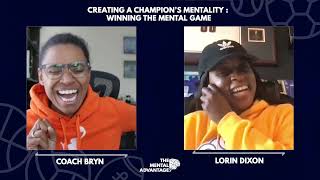
Lorin Dixon, a 5'3" UConn point guard turned Olympic gold medalist and CEO, talks about the mental habits that made her a two-time national champion and how they shaped her pancake business, Zavery Cakes. She credits mentorship and identity diversification for navigating life after basketball, and argues athletes should plan for multiple phases beyond sport.
Chapters
What advice do you have for people that don't lose? How do they stay hungry? How do they stay like— because like not losing, that is, that's, that's a whole thing for people losing. So not losing, how do you stay hungry and keep being your best?
You know what, never once crossed— I don't think it crossed our minds. It was never how can we stay hungry because these situations we were put in at practice the coaches we had. And again, it's not just Gina Auriemma. There's 4 coaches on that team. You have a point guard coach, you had a center coach, you had— we had like 2 center coach, 1 point guard coach. And I was there with Shay Ralph. She's now the head coach at Vanderbilt. And then you had Coach Gina Auriemma. So it was system. The one thing people have to understand is UConn is a system. UConn is something that has been tried. It's true. It's a system. You go in and you enter this system. So it's not like it has to be kind of figured out. It's not like you come in there trying to make a name for it. What you're trying to do is be better than the people who came before you. So come before us, we had the Diana Taurasi, the Sue Birds. They won, but they weren't undefeated. So the goal was, if we're going to win, let's be undefeated. So my first year we lost once early and we're like, that's not going to happen again. And then we lose again in the Final Four. We said, all right, this just can't happen. The next year we go undefeated. So then after that, it's about the goals you set. And so the year after that, once we became— once we were like 38-0, well, hey, Michigan, the Fab Five, they held the record for being undefeated. And we were just like, well, let's chase that record because you can't chase the record you already broke. Right. Somebody and no one has beaten that record. So we were like, why can't we? So then we went undefeated the next year. So it was like, all right, now we're 2 seasons undefeated this third year. So that's why everybody— it was the, oh my God, you guys are the— you're going to be the 90-0 team. You're going to beat Michigan's record. And that's what we were chasing.
I'm excited for you to see this week's episode. But before we get to that, I have a message for you. If you're a parent of an elite athlete or a coach, of a high-performing team and you want— you're looking for some help or assistance with making them more mentally resilient, perform with more confidence, be more consistent, anything like that, then this is for you. I have an 8-week program all designed to address exactly that, to help your athlete be at their best on a more consistent basis and not get tripped up by those little voices in their head and get getting down on themselves for mistakes, but performing like we know they can. So what I want you to do is don't delay, schedule a— just grab a time on my calendar through this link, and let's set up a time to talk about your specific situation and how what I'm offering in my 8-week program can help. Okay, so it's brindresher.com/freeconsultation. So click this link Grab a time on my calendar. I look forward to talking to you. And now on to this week's episode. Hello, hello, hello everyone. We are back with another powerhouse episode of The Mental Advantage Podcast. And I am, I feel like I say this every week because I love the people that I have on the podcast. I mean, granted I choose them, but I am so excited about this week's guest because I'm also, if you have noticed, it's been a lot of guys. So I'm wanting to get a little bit, few more ladies on the podcast. And so I'm excited about our guest today. We have the amazing Lauren Dixon. And if you're watching this, you can kind of already see in the background a little bit about her that might be on the screen, but I'm going to let her tell you about herself. How you doing, Lauren?
How you doing? Thank you for having me, Brynn. Thank you for having me on your podcast. I'm excited, ready to jump in, and really, really excited to be here. Nice.
Nice. So tell the people a little bit about your background, and then we'll get into the story. So I don't want you to tell the story per se, but you can just say like, you know, just a little bit about the background of like, you know, the accolades of Lauren Dixon.
Yeah, sure. I'll jump right in. Lauren Dixon. I am a former McDonald's All-American, UConn women's basketball player, 2-time national champion, WNBA player, Jamaican Olympic team player. And now I am CEO of Xavery Cakes. So, you know, now different venture. I'm a CEO of my own company and making great strides there, too. So a lot, a lot there. Just, just a little bit.
Yeah. No, that's awesome. Like, yeah, it's just, just a few things. Just a little bit. I mean, I was a McDonald's All-American. I'm a UConn grad, 2-time national championship, 4-time 4-time Final Four appearance. Okay. I don't think that many people can say that. All right. And then also WNBA and an Olympian. I mean, is there anything left? Is there anything that you left on the table? I mean—
No. If you want to throw in there, I won a couple of state championships in high school too. I went to Grace the King. I mean, no, everything that I really wanted to accomplish since I dreamed of playing basketball, I did. I checked it off my list. I was an overseas basketball player too, all-star. And we'll leave it there. We kind of did check out. I love that.
See, I got the right one, y'all. I got the right one today because she's got— she's been to the mountaintop and back, and she's got a lot of gems to give us today. All right, Lauren. So we did a live together. For everyone watching, we did a live together. Lauren was gracious enough to come on my live, and we talked about something that I get asked about quite a bit. And the reason I want to start with this is because, uh, Lauren, your position was a point guard, correct?
Yes.
Okay, so you were a point guard, and, uh, there's a particular point guard in the NBA that a lot of people are talking about right now, and no, it's not LeBron. I actually don't know if he's a point guard. Is he a point guard?
He's an all-guard. No, he's listed as a, uh, I think a small forward, but he plays that point guard position.
He does, right? Like, he runs the offense.
Yeah. Okay.
Yeah, I was gonna say he's a little tall for a point guard, but yeah, he's a lot taller.
I mean, I'm 5'3", so I'm on the other end of that spectrum to LeBron. But yeah, he's, he's pretty tall for a point guard.
He's pretty tall. Okay, okay, okay. Wait, listen, y'all.
5'3".
This is important. Okay, I just learned this. I did not learn this on the live. So before we get to the point guard I was talking about, 5'3". Let's talk about that. Was there ever a concern about your height in pursuing a career that seems to be so dominant by the tallest? You know, that type of stuff.
I'll tell you, and that's a funny story because growing up I was actually the tallest person on my team. When I started playing basketball, I was about— I was close to 5 feet tall, 4 and a couple of inches when I was like 10 and 11. So people thought I was going to be 6 and change. So I played the center position for a very long time, especially when I started playing. All I can do was rebound and run. And I started out, I actually only played with the boys until I reached middle school. I didn't really know there was a girls team. And we're talking back, I'm going to age myself here, when basketball wasn't really spoken about for women's basketball. So I played with the boys, but I was always just the tallest one out there, so I would rebound. So for a very long time, people were just like, you're going to be 6'5", you're not going to have a problem. Until I returned, I want to say for like the 6th grade and everybody— I just didn't grow. And I had one coach that said— my mom is only 5'2" and my dad was only 5'9" and my coach looked at me, she said, you're not going to be tall. I don't know what people are telling you. You just had an early growth spurt. She was the only person. She said, you need to learn how to dribble and shoot because it ain't going to last long for you. And I'm like, what do you talk about? No, this is my career. I'm about to be 6'5", 6'6".
6.
And she said, you're— I'm telling you right now, look at your parents. Your grandparents are not tall either. Figure it out. I still to this day, I owe her a thank you because I took that to heart and did develop those skills. And I think from about this, I want to say the 5th grade until now, I grew about a total of 2 to 3 inches. And so at first it wasn't a problem. Then when I started getting into middle school and high school, people say you're not growing anymore. Basketball is not going to be for you. Stick to track. That's what I was doing also. Maybe you could get further in that. You're really good at track. And I've been told over my life, I can't even count how many times people told me you're just too small for this sport. You have to be at least 5'6", 5'7" to do anything. And for me, I really just thought— I mean, I never actually thought about— I'm just like, wow, I feel bad for you that you hold such— and these are coaches telling me this. I'm like, how can you be a coach and not understand that it's my skills that's going to get me to the next level, not my height? So it never deterred me as, hey, I'll never make it. It was just, I feel bad for the coaches that are going around telling girls this who might be on the shorter end, that your height is what's preventing you from getting to the next level. To this day, I think I still am the shortest person to ever go through UConn. Coach told me that when he was recruiting me. He was like, look, you're 5'3", but again, that doesn't matter here. So yeah, being 5'3", I always try to hit the 5'4" mark, but I'm not 5'4". But I, I still got to do everything I did and I'm only 5'3" and it never once made me feel like I couldn't do something.
It's just No, this is so good, Lauren. Sorry to interrupt you. I just— this is so good because I cannot tell you, and I love what you said, how can you be a coach and be saying that? And, you know, she went to one of the premier— well, if not the premier college program in the country at UConn, playing for Coach Auriemma. And then she also, if you heard, she said she played in the WNBA and she played overseas. And she was an Olympian. So all the things of the people, that's such a good message for people to say is that my height does not determine the heights that I can go with my career.
I like that, Brit. I like how you put that. Guys, listen up. You see how she took what I said and it made it even better? I like how you put that in. It doesn't determine a thing. What determines that is whatever you keep up here.
That's it.
Whatever you keep up top in your mind, whatever you actually believe, And we'll get into that later, how that— I had to deal with that throughout my career. But whatever you believe is what you can achieve. That's what I tell myself all the time.
There you go. There you go. All right, Lauren, now you're talking good. You're talking good. OK, so here we go. So I just want to— I'm glad that we got that out of the way because there's so many people that limit themselves, right? And so speaking of people telling you what is good for you, what's not good for you, what you need to do, we need to get back to this point guard we're talking about because he's got a lot of people talking about him. And I'm sure he's got a lot of people talking to him, and we're talking about Ben Simmons. As a mental performance coach, I get asked about him, I swear, like once every couple months. I'm like getting asked about Ben Simmons, and I'm like, okay, yes, it's mental. It's clear it's mental. But you gave me some perspective that I did not have because one, I didn't play the point guard position. Well, my basketball career was very short-lived. That's really what it's about. And secondly, you know, you just gave some insight as a basketball fan. So I'd like you to speak to that because, you know, everyone wants to know what's going on with Ben Simmons. Is his shot actually broken? And so you said some really cool things and I'd like you to recap as much of that as you can remember from that conversation.
Yeah. And I hope I do it justice because if you guys have a chance, go back to that live. Yeah. Me and Brynn had the ability to really just talk for about an hour about it. It really was— I don't know if I remember all the gems I dropped. Yeah, it's okay.
I remember the key thing, so I'm gonna highlight it if you don't. So I don't expect you to recap the entire thing, but just like the perspective of being a point guard yourself and what that gives you, and maybe a little bit of your own story that helped inform why you feel the way you feel. So yeah.
Yeah. So my Ben Simmons take is— it might be a little different from some people, but as someone who played the sport and I'm going to— again, I just said everything I played on, but Ben Simmons is now getting paid millions of millions of dollars on the most global of platforms to play this game. And there was a couple things that hit me with Ben Simmons. Yes, Ben Simmons should have probably taken a shot at the end of the game, and that's where this all stems from. I don't know how many people listen, watch basketball, but it was last year's playoffs. Sixers were due to win the championship because Lakers were out. Nets were out. Kevin Durant got knocked out by Giannis, and there was a last-second shot. Instead of shooting, Ben Simmons passed the ball. The person he passed it to did not make the shot, and all the casualty kind of fell out on Ben Simmons. And the thing has been Ben now does not want to play for the Sixers. He wants to be traded. The Sixers don't want to trade him for anything less than a couple of superstars. And that's where we are today. So my thing with Ben Simmons, there was a couple of highlights I saw with number one, right after that happened. His coach and the other best player in the team came out and basically said, we could— we can't win with Ben Simmons. He should have shot the ball. He should have done this. He should have done that. That is detrimental to someone's health. That is some— to someone's mental ability. Because at the end of the day, your coach and your teammate is who you go to war with. Your coach and your teammates— that you, you'll be surprised how much time we have to spend together during a season, during the course of a season playing basketball. And that's 40-something games for me in college. Overseas is about the same. In the NBA, they play 82 season games. So for most of the year, you're going to war with your brothers or sisters. And that's— that's— so to have two people that you respect, that should respect you. And again, you're not friends. You don't have to be best friends with everyone, but there's a certain level of respect you really do expect when you play the games with the people you play with. And there's a certain level of trust you need to do the game well. And I think at that point that shattered that trust that he had with his coach. And I understand, right? You lost. I lost two Final Fours. I've been there. I won two, I lost two. I know how much that hurts to lose games that you should win, games that teams that you've beat already. And it's just like you're that close to the goal and you fall short. In no way should that have come out as in you just can't say that about the person that, you know, you need to win a championship. That was number one.
No, and I wanna stop you there just for a second, 'cause I think that's so important. If you're a coach, if you're someone, when you're talking about a superstar personality and a personality and an ego, right? You need to feel supported because also as the face of a brand, and you can talk about this, a face of a team, there's a lot riding on you and your success. So while understandably it would have been nice if it was a different outcome, much like the whole Seattle Seahawks situation, right? If we can make the touchdown, we win the Super Bowl. If we don't make this, you know, like everybody thinks it's a bad call and we talked about that. But I think it's so this whole thing and we talked about that, about leadership, like a coach should fall in our opinion. And I mean, I won't speak for Lauren, I'll say in my opinion, If I'm a leader, I was taught fall on me. If, if, if, if we win, give credit to the team. So it's fall on me when it doesn't work out, give credit to the team when it does. And I think that there's not that— I don't know if that happens all the time in coaching. And even if a reporter is pressing for it, is that, you know, how do you, how do you avoid that?
And you know what, Bren, I'll say this. It, it, for good coaches, it does because you have to understand, especially like if he was on his way out, I can understand because you probably wouldn't have to deal with him. Right. And I'll talk about later why I'm not giving Ben Simmons a pass. But this did really irk me a little bit when it happened is that I could, you know, I feel like what happened was that Doc was coming from the Clippers. They had just lost. They were up like 3-1, lost the year before, and he couldn't take any more bad press on himself. So he kind of deferred that and it was just the heat of the moment. But like you said, in a loss, especially as a coach. As a point guard, you know, they call point guards— you are the coach on the floor. So if anyone has to have that relationship with a coach, it has to be the person who's going to have their hands on the ball for most of the game, which is what I was. You are the facilitator, and Ben Simmons takes that a little far, but you are that second coach on the floor. So it's extremely important that you, you, you don't single him out because— and like we said before on the live, it didn't— it shouldn't have come down to that final shot. It never— there was a lot of other mistakes made that game and the way they played, and no one was perfect. It— I can go down the list of everybody who made a mistake. It should not have come down to that shot. So you can't say we only lost because of that one shot. This is something you guys— your schemes, the defense— like, you guys were messing up most of the game, but because of how good you were, you kept in. You had a chance. You gave yourself a chance to win. You didn't win.
So good.
But that's where I think that came from. The second part of this with Ben Simmons is his mental. I think that at this point, Ben Simmons likes to revert like a lot of us do. We like to revert back to what got us there. Ben Simmons is a face of a billion-dollar brand, you know what I mean? So when you are used to just scoring because you can get to the basket or scoring because you can dunk or scoring because this, when you're in that heat of the moment, you're not going to take a 3 when that's not your game. Because like, we look at Steph Curry, I don't care if Steph is up by 30, down by 30, 1 second left, down by 2, he's taking that 3 because that— he is Steph Curry. He can do that. He's been— that is his thing, right? That's Ben Simmons' thing. So at the end of the game, Ben Simmons is going to revert back, like, especially not even at the end of the game, in a high-pressure situation, Game 7, you win this, you get to the NBA Finals, you're going to revert back to, okay, this is what I can do to get my team to win, whether that's the right or the wrong thing. And I think that's where the mental part comes in of you got to trust what you worked on and understand that people now know that's what you do. And so you have to trust that, look, I'm a professional basketball player. I play in the NBA. I get paid millions to do this. I know how to shoot the ball. Let it fly. Because you have to live and die with that situation. But I think what Ben is saying is I can't get in trouble. I can't make my team lose if I don't shoot the ball because I'm really good at other things that I do. When in the end, he kind of got the same fallout because he was kind of— whether he did or whether he didn't, he kind of ended up with the same fallout that he was trying to prevent, I think, by not shooting that ball. So in those split-second situations when you have the ball, you're the point guard and you're like, well, I can pass. At least let me talk on me. If I have Maya to my right, if you guys don't know who Maya Moore is, she is probably the greatest basketball player to play the game of basketball. If Maya's to my right, I have, you know, somebody else to my left, or I can kind of shoot the ball. I'm going to go with somebody like Maya who I know has the highest percentage of making this shot so that we can win. When, you know, people might say, oh, Lauren, you'll shoot the ball, you're wide open. I probably should. You revert back to I know this is a sure option. And if that option doesn't work, now people are like, yo, you were wide open. But you're like, 99% of the time this works. So that 1%, it doesn't. Damn. But I'm gonna just go with 99% of the time of it working. So I think that was another reason that he, that he kind of did it.
I think that's so good. And I, there's a couple things you mentioned there. And I know we talked about it in the live, and I want to shift more to your story in just a moment, because Ben's not here to defend himself. So we're gonna, you know, we're gonna, we're gonna give Ben a break. 'cause I know there's enough people talking about him and we can talk about it in relation, but there's that identity piece, right? He identifies as a ball facilitator, as you said. And I love that the coach on the floor, the person who has the ball, you gotta have a good relationship with your coach. But also if I, and also, right, this is a better option. If sometimes it doesn't work out, some people don't make the last minute shot. Even Jordan has missed the last minute shot, even Kobe, even Steph, right? So it happens. People don't make every shot every time. But because we think they should do something, it becomes— and maybe he should have, you know, because I guess it was an open layup or something. Yeah, it was a wide open layup, which is the surest shot in the game of basketball, um, especially if you're an NBA player. You make a layup, like, you better make a layup, okay? Because I don't even want to have a whole conversation about layups and basketball players because that is like— it's called a layup for a reason, uh, but But the point is, is that it is, it is a situation where the identity of a player really takes its toll on an individual because it's like, well, this is how I see, and I identify this person to my right as a shooter, so I'm going to give the ball to that person. And also people are making split-second decisions and maybe they're the best decisions, maybe they're not. Who knows what was going through his mind at that moment? You know, but the thing is, is that We also need to look at the fact that, like, there's something else that I was going to say, but it's escaping me. So let's get off of that. So identity is a big part of it. Yeah.
Before we go, not to cut you off, I do have a— let me flip this back to you because the question here would be, and this is something that people applaud Jordan for and Kobe for and LeBron, because, to be honest, is, you know, in my opinion, the greatest athlete to play the game of basketball. Maybe the other thing that I think about is also taking that last-second shot means that fallout, no matter what, is on you. So as a mental coach, yeah, I would like to know— some people just don't want that responsibility. Yeah. If I miss that shot, like Jordan lives for that. I'm going to take the last-second shot. Yeah.
The ball better be in my hands. Right.
Kobe is the Black Mamba for a reason. I don't care if there's one play where 5 people are guarding Kobe. And he still takes the shot. And it's incredible. He makes it, but that's what he lives for. Right. You know, LeBron does it all the time too. So my question is, is that something that really, you know, that could have really played into the situation?
Also, I 100% agree that that is, but I think it's like knowing who you are, who you are. That's a big part of the mental game is to know thyself. Now the fans are going to put something on you because You know, the interesting thing is I was talking to a scout about a guy who played for the national champion, a national champion team without naming a player. And, you know, in the NBA Summer League, you know, come in, you know, been drafted by a team or not, maybe not drafted, I don't know. But it's like, oh, I don't know if he's gonna make a squad or not 'cause his game's not that unique. It's not that different. So they're looking for a signature from you as a player. It's not just that you can play basketball, much like a singer, right? I was watching The Voice last night, and Kelly Clarkson was singing with her team of people. And Kelly Clarkson has a unique quality to her voice. Even if you surround her with people who can sing, there's something extra there that just takes you up a notch, that you can say, like, something about the way she uses her voice is different. Even though they're on tune, they're not— there's just nothing that grabs you, right?
They're not If there's something special, like you said, it's something that sets you apart from everything.
Exactly. So, so when Ben found the thing that set him apart, and you talk about that, like, yeah, maybe I don't want that. Just like Charles Barkley, I didn't sign up to be a role model. So we have to know who we are because the public is going to try to put that on you and tell you who you should be. Regardless, for all we know, the person he passed it to was the Maya Moore of the team. I'm not saying he was, Okay, and I'm not saying there couldn't have been a different decision because obviously in all situations where it does not work out, there's always another option. But when we look at the statistical likelihood of that working out, that is the most important thing, is to be able to stand behind the decision that you made. And so I think it's really important, like you said, like, as from a mental game perspective, I'm coaching somebody like a Ben Simmons or I'm coaching a LeBron, or you got to know who you are. I want the ball last minute. I want the ball. And if you're not that guy, that's okay. But then it may be, why don't you want the ball in the last second, right? Maybe there is a confidence issue. Maybe there's something we need to address. Or maybe you're just the person that wants to facilitate. So then we got to find who we're going to pair you with so they're always running with you.
Exactly.
So they're running with you because they know you're going to be looking for that pass. You're going to be looking for that outlet, right? We got to find that. We got to find that number 2 that's going to come and be clutch. So either way, we've got— you got to play to the strengths of the player. But we also, as fans, are all, you know, have to recognize that, you know, we're looking at it from lots of angles and we don't know all the stuff, but we can't make a LeBron, a Kobe, and we can't make a Kobe, a Jordan, and we can't make a Ben Simmons, any of those. So that's a really important thing.
People want to. That's why people— and I think people for so long, he was dubbed the point guard of the LeBron James. He was dubbed the next— he's not LBJ. LeBron is LeBron for a reason, you know what I mean? So I just wish he handled it better. That's the only thing I wish he did better. Other than that, I think unless you have him here to ask him, that's kind of from my perspective where I kind of saw things go wrong there in Philly. Absolutely.
Anyone that knows Ben Simmons, let them know I'd love to talk to him on the podcast. Give him an opportunity to speak right through his own story. I would love that. I know my podcast is growing, so we're going to put that out there that we want Ben Simmons on our podcast. And it's definitely going to be not a gotcha or gimme interview. I want him to be able to speak to his own situation. So let's talk about Lauren, because that's who's actually on my podcast today. We spent a lot of time talking about Ben. So you obviously— identify with Ben's story. So I want you to tell a little bit about your story. As we talked about, you were a point guard playing under the, you know, Gina Auriemma, who's definitely one of the greatest coaches up there with Pat Summitt and the name of the Stanford coach whose name I don't know. So excuse me, but go ahead and tell me a little bit, tell us a little bit about your situation and, you know, kind of that transition I want you to specifically speak about that transition from playing in high school to going to the biggest stage of basketball.
Yeah. So high school, like I said, I went to Christ the King. That's a— it's a basketball school in Queens, New York, Middle Village. And Sue Bird went there, Tina Charles. I went there and I'm missing people. You know, I'm sorry. But so coming out of— coming out of CK, I was top of my class as 6th in the country, McDonald's All-American, all accolades, Miss New York State, Gatorade Player of the Year. All this stuff coming out of New York, and now you got to choose schools. And for a lot of high school, a lot of high school kids— and I know we didn't talk about this last time, but I'll start here— for a lot of high school kids, getting recruited is the greatest feeling in the world. You, first of all, you're going to college for free. Everything you worked for is now coming to fruition. People are seeing what you can do. For me, it was the most stressful time of my high school career. I actually committed to UConn early so I could stop going through the process. And so all the schools are reaching out to you. I got recruited by hundreds and thousands of schools. And then I had my top, and it was LSU was my top school. That was when Coach Pokey was there. She's a point guard coach. I was like, LSU is great. But again, everybody said, look, UConn wants you. You have to go to UConn. It's just what it is. There was no— and I tell this story because I think now a lot of kids, a lot of especially girls, because it's becoming a bigger sport, it's now being recognized. More and more people are watching it that it's okay to make your own decisions. But back then, we're talking about all of maybe 15 years ago, it was more of UConn was that dominant school. They haven't won in a couple of years. So they were looking for people to come in and. And it was like, Maya Moore was going there. So it was like, you know, they only recruited me and Maya that year. And it was like, you got to go to UConn. High school coach, parents. My mom was the only one. She— my mom wanted me to go to Harvard. She was like, Harvard's recruiting you. You do not turn Harvard down. I said, you know, Mom, no, you know, I'm a basketball player. I'm going to, you know, play WNBA and do this. You know, Harvard is not going to get me there. And she's like, Lauren, please listen to me. But I obviously did not listen to my mother. I went to UConn and it was also a fantastic decision. And that's one thing, like once you make a decision, Harvard could have went a different way, could have been great, you know, but the way I went, UConn has done a lot for me during the while I was there and after. So, you know, I don't regret it one bit. But, you know, I go to UConn. But the thing is, you're now at UConn with 12 other All-Americans. And that's where things really hit. Like everything that you said that made me special and made me stand out and gave me the accolades and ranked me in the country, you're now going there with a lot of girls who have the same thing. So once you got there, it became a very— you weren't the everything there anymore. And the one thing, the reason why I went to UConn is when I was being recruited, Excuse me. One thing— bless you. The one thing Coach said to me, he said, look, I'm not going to give you just the keys to the kingdom when you come here. If you work hard, you'll play. If not, then, you know. And it was the— he was the only person to not give me— to like say, hey, I'm going to give you everything. And I was like, you know what? I want to work. I want to work hard for that. And so that's really why I went to UConn. And I get there and I, like I said, we won 4 Final Fours, 2 national championships. I only lost 4 times in my career there.
4 times. Hold on, hold on, hold on. 4 times. So hold on. 4 times. Before we go, and I just, please put a pin in where you were at work because I want to get back and we're going to press a pause on that. What advice do you have for people that don't lose? How do they stay hungry? How do they stay like— because like not losing, that is, that's, that's a whole thing for people losing. So not losing, how do you stay hungry and keep being your best?
You know what, never once crossed— I don't think it crossed our minds. It was never how can we stay hungry because these situations we were put in at practice, the coaches we had. And again, it's not just Gina Auriemma, there's 4 coaches on that team. Um, you have a point guard coach, you had a center coach, you had— we had like 2 center coach, 1 point guard coach. And I was there with Shay Ralph. She's now the head coach at Vanderbilt. Um, and then you had Coach Geno Auriemma. Um, so it was system. You— the one thing people have to understand is UConn is a system. UConn is something that has been tried. It's true, it's a system. You go in and you, you enter this system, so it's not like it has to be kind of figured out. It's not like you come in and they're trying to make a name for it. What you're trying to do is be better than the people who came before you. So come before us, we had the Diana Taurasis, the Sue Birds. They won, but they weren't undefeated. So the goal was, if we're going to win, let's be undefeated. So my first year, we lost once early and we're like, that's not going to happen again. And then we lose again in the Final Four. We said, all right, this just can't happen. The next year we go undefeated. So then after that, it's about the goals you set. And so the year after that, once we became— once we were like 38-0, well, hey, Michigan, the Fab Five, they held the record for being undefeated, you know. And we were just like, well, let's chase that record because you can't chase the record you already broke. We have to chase somebody. And no one has beaten that record. So we were like, Why can't we? So then we went undefeated the next year. So it was like, all right, now we're 2 seasons undefeated. This 3rd year, that's why everybody— it was the, oh my God, you guys are the— you're going to be the 90-0 team. You're going to beat Michigan's record. And that's what we were chasing, always a championship. But there had to be something during the regular season that you were chasing to keep you focused on the goal. We knew, we knew, like, I've never not been to a Final Four. So I'm like, we've been there. I won, I lost, that's great. We're going to, you know, the goal is to win again. But what's going to keep us focused day in and day out, no matter who we play, to say, you know, we're not going to lose? And it was, we're going to chase this record.
I love that. I know, I think this is important. I got to highlight this. I think it's so important people get that, like you said, setting new goals all the time. So it can't just be about the win. Y'all get that? It can't just be about the win because, as you say, John, John, um, Wooden, oh Lord, why am I thinking, forget it. Coach Wooden, I don't know why all of a sudden I blanked on his name. John Wooden from UCLA said, "You can play your best and lose, and you can play your worst and win." And so it can't just be about the win. It's gotta be about what is your individual goal in this particular outing. And so it's like, okay, last time we beat this team by 5, this time we're gonna beat 'em by 20.
And that's the thing. And that's, and so, you know, and not to give away what we talk about, but so that was the season goal. But each time you play a team, We have a game goal and the game goal is— it's funny that you say that because that's the goal. We need to beat this team by X amount of points. If we don't, because what happens is you're UConn and the thing I don't think people understand is the Lakers deal with it. The Warriors definitely dealt with it after they came off of beating everybody. And, you know, every team is gunning for you. When they look at their calendar, they circle your— they circle the day they play you. So every time we played a team, there would be girls that would average 2 points. We would play them, they don't shoot. We would play them, they would go off for 5 threes, 6 threes, and you're like, well, come on. So when we were playing these teams, we said, okay, this, this, this, you're not going to surprise us. So we made sure we respected every person we played, and we respected so much that we said we had to beat you by a certain amount of points. And so that kept us engaged. We weren't just playing you, we were playing ourselves, we were playing all the practices we do. And if you ever been through it, to a UConn practice, you understand what I'm talking about. It's everything we do behind the scenes is who we're playing against. And then we achieve that goal at all costs, and then we move on to the next one.
I love that. This is so good. Like, I hope you guys are getting this. Like, everybody listening, like, that was so good. We need to be having We need to play, respect our opponents, our competition. And notice another thing Lauren said, we brought out the best in our competition. So they normally didn't play like, you know, a certain level, but now they playing UConn, they bringing it because it's like, that's the thing about, I don't know if you know this, Lauren, but the Greek word, the word competition comes from the Greek word kompetire, which is to make one better. So literally we are collaborating on a best effort from both teams. And then one team's just going to be the victor in the end, whoever out, you know, bettered the other. But by playing a UConn, and I always say this to my athletes, either you're going to, I'm going to win, or you're going to make me, I'm going to make you better. Like if I don't win, I better make you better through this outing. I better at least have you respect the fact that you played me today. Like, oh, that's Lauren Dixon. She normally go right by me. Okay, cool. She liked to go right. She ain't going right today.
Exactly. Exactly. Know your opponents. And it's, it's what it is, is a mentality shift. I have to say, going to UConn changed the mentality I had. It's like, I'm going to win at all costs. And that's the thing, I very much love the Michael Jordan quote, I never lost, I just ran out of time. That is something I truly believe. Like, I'm going to win at all costs. And even if for some reason I do quote unquote lose, I didn't. It's a learning experience. And then the next time I come across that, whether that person specifically or in that situation, I'm now well equipped for it. And the mentality is, I'm going to win. And when you have a group of 14 girls who think that way, it's very hard to be defeated. Very, very hard to be defeated. And when— and if we are, the people who beat it— look at those teams that we've— that I've lost to in my career. Great players, great coaches, very similar mentality because people start, well, this is how UConn works. Let's imitate that and make it our own. And then you start, and that's where the competition, that's where it gets fun because now you're playing against girls who are just as good as you. And they push. Now you got somebody pushing you and it starts from— we don't actually practice against girls. We practice against guys at UConn. So it starts in practice. You know what I mean? You play people better than you. To make you better. And then you take that and now you— it's like a dress rehearsal. And now when you actually come to the real presentation or the show, oh, it's fun. Now it's just fun because we know what we're doing.
Guys, okay, again, so key what she just said there, the dress rehearsal thing. I would talk about this, obviously, if you're ever in the performing arts space, you know that they do a full dress rehearsal before the actual big show. They're putting it on like, okay, we got to find out where are the issues, the technical cues, the, you know, like whatever. Oh, okay. Oh, it takes a little longer to do this wardrobe change than we need to do this, or we need to make these adjustments. And so when she's talking about like, you got to practice the way you play, because when you get into the game, you have the ability to just trust. And that's where the flow state comes in, because a lot of people think, oh, I got to try in the game. It's not to say the game won't have its challenges. It won't have its effort because, you know, you're not going to always know everything the other team is going to throw at you. But if you've practiced it enough, there's a point where you can kind of say, I know exactly what I'm supposed to do in these situations because I've rehearsed it so many times. I know my lines. And it's the same thing with basketball.
Exactly.
Exactly.
It makes the game—
Now, I know I interrupted you and I want to talk about— I want us to get back to the story of— let's talk about your adversity as a basketball player. Okay. So you were saying like we had all these people, we only had 4 losses. I know you probably don't remember where you were, but pick it up from as best you can.
Yeah. So, you know, we had full losses and I'll talk about, you know, just my experience going through the program is that again, I came in, so I was able to come in and start— you kind of come and see how things work. You learn the system, you're going through the practices. And for me, it was when— when it's a confidence thing, when you come from being the best and then you come, you're like, well, everybody's now here. I had to learn that it's okay to still be like, you know what, I'm going to take it here. You know what I mean? Because when you're there, you start doubting, oh my gosh, am I still the best? Am I this? Am I that? Am I everything everyone's been talking about? And that's where I believe a lot of people have to leave their ego. You have to leave your ego and you have to be willing to put in the work to actually continue to stay on top. There's one thing to get there. And I think if you ask a lot of people, and I'll talk about even after transition from UConn, there's one thing to get there. And a lot of people would like to rest on those laurels. I'm here, I'm in the league, I'm at the top school, I can just coast. And then you find that, wait, I'm starting to get passed by or I'm not getting what I thought I would be getting. It's that you have to say, well, okay, I'm here. How can I stay here? How can I grow to this place to keep being the best of the best? And when I first got there, I just wanted to coast. Oh, I'm at UConn. We're good. I'm this. I'm still Lauren Dixon. And I had to learn that. No, no, no. You're here. But now you're here with a lot of people who are just as good as you. You have to work hard to make sure that you still, you know, are playing at a level that's going to keep you basically relevant. So, you know, that's something— that's a big thing I had to do. And like I said, my coach my— the guard coach at the time, Shay Ralph, helped me a lot with that. She was definitely somebody that I leaned on heavily at UConn because I spent the most time with her. And Shay actually went to UConn, won national championships. Her resume is tremendous. And so— and if you ask anybody at UConn, Shay is— she's probably the— you don't really see it with her, but she was probably the roughest person to go through. I mean, it was— if you needed a banger, She was going to do the dirty work, but she also scored 30 points a game. Like, she just did it all. But that tenacity and that, that just what she walked around with, she brought it for as a coach. And she was like, let me tell you, this is what it takes to be successful on that next level. I haven't been here yet. So when she speaks, I'm like, well, that's where I want to get to. So, okay, yeah, I'm listening. And it took her really coming in and being like, That's great who you were, but who are you now? And, you know, at UConn, I was— I made the Big East All-Freshman team. You know, I was definitely, you know, like I said, we're a collective. You just want to make sure you're doing your part to make sure that when the book is written, that you are part of that, that collective to help the team win. And as a point guard, you control everything on the court. So that's the other thing was in college, the game sped up a little bit than high school. So it's like when you see rookies come into the league and people go, well, you know, the game has slowed down from them. In college, these girls are moving. Now you're talking about I'm 18 playing with 21-year-olds, people who are now league-bound, and they're moving. So, you know, when I, when I came in, Candace Parker was a senior. Um, so, you know, I'm talking about greats. And so the game was a little fast that first year, and so it had to slow down. I had to understand it. And the mental shift I dealt with was not really— it was on the court, but it was more in my mind. Yeah, it was the, can I do this? Am I— was high school just high school? So I had to actually— and this is where I think having a mental coach is extremely important. And Brynn, that's— I'm thinking what you're doing is so important, especially for high school students, for college students. It's being able to speak to someone before it becomes a problem. And that's something I think, you know, Ben Simmons really could have used is being able to— it's okay to talk to somebody. It's right. I think through this thing with therapy is so bad and it's okay to have a mental coach or have somebody or speak about your feelings and say, this is what I'm going through. Because the problem that I had is by the time you realize it's a problem, it's too late. By the time you realize it's a problem, it was affecting my game on the court. Yeah. So, you know, the coaches are like, learn what's going on. And coach is like, yo, you're out there. Why are you not shooting? Why are you not trying to score? Why are you not doing Ben Simmons? Why are you not doing the things that we know you can do? And, you know, I can't tell you. I don't know. You know what I mean? So, and so for me, it was something I really had to work through. And like I said, I definitely very much appreciate the relationship I had with Shea because it's what allowed me to figure it out and come out of that. But I think if a lot of people saw like, yo, I'm struggling here and had somebody to talk to, it would definitely help their whole game and have to take them to the next level versus having them feel paralyzed, not being able to— like, I don't know what's going on. I'm scared. I don't know what to do.
Yeah, you've said such good things there because, uh, it's, you know, I always say this, coaches use words like focus, consistency, they ask you questions, and it's like you can't, uh, solve a problem at the level of the problem. So it's like if I'm thinking about it, right, like I'm gonna think my way out of an issue with my thinking, it makes it a little bit difficult, right? So not having that outside voice to just go, hey, Did you know that these two lines connect? You're like, oh, and it could be so simple. It could be one little adjustment. You even talked about changing, like her graduating and going to another environment snapped some things into place for her because she got to see herself differently in a different paradigm. So, and, and, uh, but it's so important that people get that. And I love what you said about it's too late. Like a lot of people wait till it is a problem. And it's like, but if we're proactive, which is what you and I both talked about on that live, we're giving them the foundation to set it up. This is why I'm so passionate about parents hiring a coach for your athletes, hiring someone, because we all want to hire the specialist on shooting, the specialist on conditioning, the specialist on all these things, but nobody is doing a budget for their mental game coach. And it's crazy.
Let me ask you a question because you're a track star. D1, you did track. When I, in college, preseason, I used to love preseason. I'm a runner. I mean, the strength conditioning coach, our trainer would say, you do preseason if you want, because we know it takes me one week and I can get myself into shape. It's mental. I can go. I've always been that way. Right. But if you're playing and one thing I did one time is I don't like to stretch, which ended up And this is where also I could have used someone to talk to. I do. I did not like to stretch in college. Never did in high school. I'm young, I'm 18, whatever. Tore my hamstring. College. I was left out. I didn't play from— I think it was like September to almost March, but I had to come back to play. And I was going to redshirt, but I couldn't because other kids got hurt and we were trying to win a championship. So you're like, I'm going to play, right? But it all started— it stemmed from the fact of I don't want to stretch. But my question, when that happened though, what do you have? Well, you have a trainer. You have somebody there to fix that problem, right? And the trainer is telling you, Lauren, you need to stretch. Lauren, let's figure it out. Lauren, you need to do this. Now whether or not I listen, that's up to me. But I had someone there at every step helping me through it. I came into college, everybody's big because kids are working out. What do you have? The minute you step in, you're— you have a strength and conditioning coach. Yep. Well, let's get you situated. You have a— we had a point guard coach, the thing I've been doing my whole life, but I still had a coach to do it because, you know, Shay was a point guard. She knows how to do this. So in every aspect of, especially an organization like UConn, you have a coach there. Why don't we have mental coaches?
I think it's the stigma, Lauren. Let's be real. Like, and, and we talked about this also on the live, and, uh, I think it's a big thing for the audience to remember is that there is a lack of trust in the— sometimes, okay, let's talk about it, let's, let's get real talk here. Some coaches don't want the outside voice because now it's a different voice that your team might listen to. Okay, now I'm not saying this is a universal thing, but there is some concern there. Hey, how do I know what you're going to say to my players? Because I'm saying one thing in Lauren's ear. I don't need you to be telling her something different. Okay.
You got to deal with the parents.
Right, right. We got, right, parents, right? We already know parents can be a challenge even at the college level because sometimes parents do call coaches and they'd be like, I mean, ain't nobody calling Geno on Auriemma, but they might want his number.
You'd be surprised. I'm not going to lie. I've heard stories. You would be surprised. You're like, yo, what is going on? Right.
You're calling Auriemma about your daughter's playing time? Like, yeah. So parents. That happens. So sometimes it's a little bit of a threat on the coach's part, but even, but there are, in these days, I will say, obviously it's gotten significantly better. A lot of programs are embedding a sports psychologist into their program. However, I will say this, most of them are for all of the sports. So they are not just for basketball. They are not just for, you know, this. So it's a relationship thing. So maybe the coach says, hey, just so you know, this is Dr. So-and-so and they're here on campus. 'And so if you have any problems, if you have any challenges.' And, and of course, Lauren, who doesn't want to stretch, 'I don't have any problems or challenges, so I'm good.' Now, so that's the only thing about, um, when you, when you, when you, uh, couch it that way, when you give that context, a lot of players have a challenge with that. So we have to work on, you know, destigmatizing it. But that's why I think It should be a part of practice. It should be that we're doing action, actual activities with this individual to build the relationship. So now when I'm like, hey, something's kind of twitching a little bit in my mind here, or something's going on, I'm gonna go talk to them that quickly 'cause I got a taste, just like a sample, right? Get a sample and then I'm gonna go get more.
So— 'Cause let me tell you, no one goes from high school to college to the pro without having any issues. There's too many adjustment periods there. Throughout a whole season, you know, jumping to each level. If you're trying to get to the next level, you have to adjust to that next level. Kids who've been there for 3 and 4 years, and then when you get to the league, you're talking 10+ years that just know the game. So there's always— so to say, oh no, it's not needed, I think— not like I said, again, I'm aging myself, but that was 15 years ago. The game has changed a lot. The language around a mental coach, a language around speaking to someone, is definitely— it's something that that's being brought more to the forefront. People are talking about it. You hear NBA players, Kevin Love, being an advocate for talking to people. So it's a great thing to see. But from my experience, we're talking 15 years ago, it was not a thing. It just wasn't a thing.
Funny, I hear so many people say like, yeah, I don't know, what is it with this generation? I was like, no, you needed it too. They just didn't talk about it.
To keep going. So we're like, this generation actually expresses themselves and they, they, they don't care to be put in that box. And so some people have a problem with it. I see it as a great thing. We're seeing people finally acknowledge there's more to— and we're not just robots going out there every day playing this game. Like, we have things. We go— can you imagine going through a whole season and saying, yeah, no, nothing ever— I never have a mental issue, I never have a bad day, I never have issues? Like, no, I just Yeah, you get paid to do something, or, you know, but at the end of the day, we're human. Every, you know, we have bad days. We have days where things happen in our families. We still got to go out and play the game, but it's— we still have to deal with those. Same way you have to deal with things on a day-to-day is the same way we have to deal with things. But we also have a job to do. So we try to make it, you know, effortlessly because you want it. It's just— you got fans coming. You want to make sure every time a fan comes, it was important to me that you got your money's worth. Because without you coming to these games, I'm not where I am today. So I'm a big proponent in making sure every time I step on that court, I'm doing something like, oh wow, I got to go back. Or wow, you know, it was worth it. That's important to me. So even though I have a bad day or something's going on, you kind of got to bottle up and say, let's play. But this generation is like, I can still talk about it and do my job. And I think that's great, great to see. So I think I'll bring it back to what you're doing is so important. I hope that more people take advantage of it, especially in high school and college, to say, you know what, let me, let me actually give this a try.
Yeah, I think you spoke earlier. Maybe that's, that's what I think I was going to go back to. You said you think that the job is done once you get recruited, but what you don't take into account is all of the difference that that is like. You're used to playing in front of your home team, your family. You're used to having support in the stands. Now nobody knows you, and you've got a bunch of haters that are chiming in regularly on your social media. And like you said, you said this on the live, as much as I'd like to say I don't read it, we see that stuff. We're on social media, and even if I'm not looking for it, somebody's at me and letting me know, hey, you know, just so you know.
And social media is great, and I think that's what makes it, um, so big today, to just have somebody to talk to, is that When I was going through school, remember the first iPhone came out? I think I was in college. So we had Twitter at one point, but there was no Instagram. It's no TikTok. You weren't— you were able to maybe talk to me, but you weren't able to get into my life at all times, right? And I was just— oh, I was a talker. Oh, I mean, I used to— yo, haters for you, Kai, because when you're the best, people like to say, oh, you kind of this, you kind of— I was— I'm a— let's, let's play. So you know, but then people are going to come back at you. So, you know, and so sometimes when you have a bad game, you're like, no, I'm not going to go on, I'm not going to read it. But now in today's generation, you cannot go anywhere without seeing people speak about you this way. And I, you know, and Ben Simmons sees it, LeBron sees it, you know, we see it on a collegiate level. High schoolers are going to see it. So you're coming up and now the world has access to your life. Yeah. Times. I'm going to say how I feel whether you know me or not. And I can say it behind a computer, but that don't mean it don't hurt what you're saying to me. You know what I mean? I'm still human. So it's very important that basketball players are able to keep their mind focused on what's really important. But we do see what's being said about us out there. And it's hard sometimes. It's hard sometimes. It really is.
I mean, it's so important that people get that because It is, you know, I said to you, a young lady said, you know, it's like everybody says, leave whatever happened before off the court, like, you know, like, or leave the game on the court, right? Like, hey, it's a loss, it's done. And so for you, when you leave work, you, you know, this is, I'm talking to the regular layperson that might be listening to this that maybe isn't playing sports anymore. No one is doing instant replay of your biggest mistake of the day, right? So when it's like, yeah, just leave it all on the court, man. It's good. The game's over. Take off your uniform. But it's like, yes, that is a very helpful piece of advice. But again, idea and execution is a totally different thing. Everybody has suggestions, but until you walk in the shoes of somebody that experiences this, you can't quite fully fathom what they're experiencing at that. And then playing for a UConn, I mean, like you said, you got a target on your back. Everybody wants to bring you down because everybody loves an underdog. Everybody likes to win. Unless everybody's their team, unless that's not their team, right? So it's like, I don't, I don't like UConn because they came in and they beat my whatever team, right? And so that's why now anytime UConn plays anybody, I'm always rooting for the other team.
So, you know, it's like, okay, arenas. I mean, we, we, and you know, it's such a privilege and I say that, but when we used to play teams, we would have to— some teams have arenas that their guys play in girls playing, which is a totally different story we should get into because women should be playing in the same arenas as everybody else. Exactly. That's not always the case. But whenever we played a school that had that, they had to actually put us in a guys arena. And because so many people came to watch us lose, it was just— I mean, I played at Duke one time and the gym was packed like a guys game. I mean, they were on the floor. You couldn't actually step out of bounds without stepping on somebody., and we could not hear each other to play the game, and we won, but it was just the most intense feeling. So when you say, like, yo, just leave it off the court, when you are seeking a goal and you're very, very, very— you're exceptional at that goal, it's hard to just say leave it on the court when you lose. That's very difficult because part of who you are is what you're doing. So it's like, if I have a bad game, It takes a while for me to come down and say, it's okay, Lauren, because the first thing he says, I should have, I could have, I didn't. And it takes a while. And then so when you finally come down and then you go on social media and it's like, yo, Lauren sucks, you're like, yo, what is going on? Like, I get it, guys, it was one game. There's 82 or, you know, however left in the season. But it took me— and, and I'll, I'll bring it— it took me leaving UConn, then entering a different environment in the WNBA overseas, my personality changed again. And it's very interesting because at UConn, I kind of got into this thing in my mind of, you're a facilitator, you're a passer, get the ball to this person. And we were winning. When you're winning, you don't want to change things. When you're winning, you forget you stayed at school all summer to shoot, to work out, to play. Because when you're winning, we're like, Yo, we got a system here. Let's play. Until you look up and you're like, well, I'm only kind of using about 30% of my capabilities here. What, what's going on? But then you get back in the game like Ben and you're like, now I'm going to go back to what's making us win. And, you know, you start in your mind saying, this is what I do because it's working. And then you get to— and I forget, we had one game my senior year and we're playing in the Elite Eight to go to the Final Four and we play Georgetown. Now we've beaten Georgetown, I think, 2 or 3 times during that, during that season. It's not, you know, we were like, you know, exactly, you know, teams now know you because you have like a week to prepare for each team. But, you know, you're like, it's Georgetown. We're going to be all right. We're down by 12 with 2 minutes left. Wow. What I'm saying, ESPN is reporting, everybody's reporting. It's like, you— oh, yeah, UConn is about to be knocked out. Uh, coach is like, yo, it's, it's, it's— I don't know, Shay was like, it's time. Like, you gotta do something. I'm like, all right. They put me in a game too. Now, if anybody knows basketball, if you're down by 10 with 2 minutes to go, most people say game's over because it's hard to actually score that many points in that little bit of time when, if you know, the other team also has to touch the ball. So the rule is, yo, if we're up by 10 with 2 minutes left, unless we do something crazy, the game is over. So UConn is losing. Our fans are in the stands like, oh my God. Che's like, it's— let's go. I go in the game. I think I scored like 10 points in like a minute and a half. Wow. At this point, I'm shooting, I'm driving, I'm stealing, I'm rebounding. I'm doing everything I can because I— the— there is no option for us to go home. I've been to 3 Final Fours. I have 2 national championships. We are UConn. We're not going home.. And so after the game, everybody goes, well, where was that this whole time? And I'm like, in my— but that was the first time in a very long time my mind was— I just shut my mind off. You were not going to talk me out of this because I was so afraid of not attaining the goal I set for myself, which is in my senior year bringing this team to a Final Four, that the only thing I cared about was doing whatever it took to win. And then that moment I became everything I worked on all those years, all those months. And people are like, yo, Lauren, yo. And I'm like, oh, well, that was fun. Why didn't I do that all those times? You know what I mean? So, but the thing is, success is such a high that you're just like, I'm going to do whatever it takes to get here without understanding. But there's another level to you if you actually could calm your mind and understand your mental. That you can get there and probably excel if you just said, you know what, I'm going to trust in myself, I'm going to learn how to control my mind and I'm going to take it to that next level. And that's what we did. And we ended up beating Georgetown.
There you go.
Of course, like 6 or 7, people are like, that's insane. And then we go to the Final Four and I'm just like, I got it. So once I graduated, I kept that. That's what I left with. Look what you could do. And so when I entered the new thing of professional basketball player, it was a wrap. It was just, I'm a shooter, I'm a passer, I'm a scorer, and you can't tell me any differently. Right. And so my mind shifted and I became, oh, okay, I see what the high school Lauren, what she was about.
You know what I mean? No, no, it's so good. Like, you know, what's coming to me is when your back's against the wall, right? Because I always say if you're not tapping into your mental game, You're leaving potential on the table, but our potential is uncovered through the challenges that we encounter. We think that we're going to tap into all of our potential right off the bat. And technically, yes, it is always available to you. But obviously I'm going to run my fastest time when I'm running against my best competition, regardless. Even if I think I'm running full out, it's different. You find this extra gear that you didn't know you had. when all of a sudden it's like, oh, my God.
Wait, wait, wait, wait, wait, wait, wait, wait, wait, wait, wait, wait, wait, wait.
What the heck? Where did this person come from? Right? So it's just different. So I love that that shift helped you. And people always like, where was that that whole time? But it's like it was always there, but you needed something to pull it out of you. And, yes, we try to coach it. Come on, Lauren, you got this, right? And that's why I always tell people, if even if I tell you all the great things about you, you're going to go back to your regularly scheduled programming. You're going to appreciate what I told you. You're going to hear everything. But it comes when it comes. And everybody peaks at different times. And they either discover it or they don't.
And so— You could complain about it. Like, I could have been like, oh my God, you know, why didn't this happen a year ago? What I took that as— Thank God it's happening now. Thank God I'm tapping into it now because everything's a lesson. Everything in life is a lesson. Everything in life is a way to build up your, your mentality and just the way you think more and more. It's like building— it's like building a wall brick by brick. Every lesson strengthens, strengthens my mind. And so for me, it was like, well, thank God this is happening now. I— it didn't deter from my success. I am Lauren Dixon. I, I won everything I won, and that's great. But now I'm able to tap in, and this is going to take me, like I said, WNBA Olympic team, uh, you know, overseas All-Star, and then it's going to shift me to the corporate world, which I did work for a little bit, and then a CEO. And I keep the same lessons with me the whole time because it doesn't change, just the arena did. Nothing has actually changed, just the arena. So as a CEO, the same lessons I learned at UConn is what allows me to be so successful in doing what I'm doing today.
Yeah. And I think, okay, so that is amazing right there. I hope everybody caught that because a lot of athletes feel like, and we talked about this, that their the identity piece of I'm no longer a basketball player. So who am I? But it's like everything that she discovered about herself along the way is still accessible to her regardless of the arena. So whether you be in an actual arena around thousands of fans or you're just running your own business, you're still the same amazing person. That's the thing, that you're in and out of uniform the same. But we think when we're in uniform, we're, this is what I always say, everybody thinks that they're Clark Kent. But Clark Kent knows he's Superman. That's the thing you need to realize.
Clark, you guys heard that, right? Tell me you guys heard that.
That was a good one. Clark Kent knows he's Superman. We don't know if we're falling for these glasses, but, but, you know, it's like, really? Like, if you've ever watched Supergirl, it's like, really, the glasses? That's not really doing it. I— looks the same to me. But, you know, nonetheless, it's important that we recognize that, you know, Clark Kent knows he's Superman.. But we think we're just Clark Kent when we're out of uniform. And we have to remember that that is present. Those superpowers are present long beyond the game, which could help with the transition. And there's one other thing I want to say, and then I want to get back to a question, which is if Lauren had tried to duplicate what happened at the end of that game, she would never be successful in basketball again. And I know that's some, that's a hard, you know, somebody will be like, wait, why, why not? Because you can't try to do that. You just do. She made a decision and then she went about the doing, and she just trusted. Like, okay, no, we're not losing this game. I, I, you guys need me, I'm in, put me in, coach. And then it's like she turned it on. But if she had— next game, like, okay, well, now I just got to do that now from the jump. You can't just do that. You just have to— again, it's a decision and then it's a trust. In the knowing. But once you start trying to play basketball, that's when you mess up.
You try too hard. You try— you're doing it. You gotta let the game come to you. But you, like you said, you just got to trust everything you've put into the game for the amount of years you played it and trust that, you know what, this— I can do this. That's all it is. Yeah. But you seem to always perform when the back's against the wall. People always say, oh my God, Lauren— they used to say, Lauren, It's funny because I'm in North Carolina now, but they were like, when we played UNC, they were like, yo, it's Lauren's game. And it was just— it was because the chatter with UNC and they had another point guard at the time. Cool, cool, cool person. Really nice girl. But they were like, yo, she's fast too. What are you going to do? At that point, I was like, all right, I got to take over. And so it was always a mental shift there. But again, it comes back to your mental shift. Whenever I just turn it off and I'm I'm not overthinking a situation, I find that it's a lot— the outcome is a lot better for me by just trusting everything I've built on to get to where I am today.
Yeah, I had a soccer player— football player, as he calls it, of course, because overseas— but that's what he talked about. That's how he found flow, was just like in the game on game day, it's a, it's a lot more about trust, allowing, and then, you know, just doing what you know how to do versus what other people think is on, you know, like a lot of people like, oh, practice cool, it's less pressure, it's this, it's that. And then they go into the game and they try to turn it on. It's like, nah, you got to have it on all the time.
That's something we— I preach about. If the way you practice, I promise you, is how you're gonna play. You could sit here like, nah, in the game— you'll have one or two games where you might be able to do that, but the way you practice, how every time you take a dribble in practice and you like to just throw up them half-court shots, that's fun. But in the game, when it comes down to it and you can't make that layup or you can't make that jump shot because you were messing around in practice, The way you practice is the way you play. The way your team practices will determine if you win. The work you put in when no one's around. And I tell my brother, I'm like, you know what your character is? Your character is what you do when nobody's looking. That's who you actually are. When nobody's in there counting the reps and the lights aren't on and you don't have 1,000 people in the stands, what you do is what's going to end up— people are going to see when the lights are actually on. So that determines who you are. And that's just what I tell him to live by at all times.
Who are you?
No, absolutely.
Um, my favorite quote is, how you do anything is how you do everything. So it's just like, it's gonna be there. It don't matter because like, oh, I'm not playing basketball, but like, I bet you if I took a screenshot of like an instant replay of your class or your relationship or, you know, the game, there wouldn't be too much difference.
Exactly.
It's gonna be a little bit of consistency across these different categories. That's why people say, I want to be best? I'm like, I can't tell. All right, so I can't tell. All right, uh, the other question I wanted to ask you, because we do need to get to the rapid-fire questions, um, was as you're transitioning and now going into the business world, talk a little bit about that comedown and how you've helped yourself, how it's kind of been a difficulty, and also how you've kind of found some footing in that after basketball.
So after I decided to hang up the shoes it was hard. It was hard. And if anyone tells you it's not hard, I would— number one, I'm not going to say they're lying because everybody has their own way. But I would love to know how they did it, because when you're so invested in something being your identity for so long, and that's what I had to unlearn, is that basketball is what I did. It was not who I was. And for so long it was— I considered who I was, meaning if I didn't reach the top of this thing, Then it was a waste of time. What was it? You know, you start thinking these things about yourself. So when I stopped playing the game of basketball, number one, you got to check your ego because now you're entering a world you've never been. So you're not coming in on top. A lot of people have been here already. So I had to come in and say, okay, I am not the basketball player anymore. What does the next phase of my life look like? And so after basketball, I went into marketing. Got a corporate job, went into marketing, and it just didn't actually fit right with me. It wasn't something I personally enjoyed. And I was like, all right, I need to find out what I would love to do outside of basketball because I no longer play. And for so long I was just like, but no, I'm this person.
I'm Lauren Dixon.
I can't just go do something and be regular. I have a pedigree behind me. And what I had to learn is that, no, that's your ego talking. That's not your heart talking. That's not anything talking. And it was very hard on my mental. It was very hard mentally for me to accept my life was shifting and I was transitioning out of something I did since I was 10. So after that, I kind of took some time and I was like, all right, let's figure this out. And then I was like, though, and it's funny because people, if you know me, I like things that are not probably very typical. Like, I'm very much, people say, and I think it's a great thing. People are like, you're a very closeted nerd. Like, you like these. I like to build things. I like to create things. I like to see how things work. I like to take things apart. The shows I like to watch. I'm a big history buff. It's just not— I'm not a big TV person. You know, I love to read. So, um, I was just like, all right, what's this? And then I had this opportunity of something that gave me so much joy that came from one day that I had my niece and she was like, hey, Titi, I want pancakes. And, you know, I, I didn't— I can't draw. That's the one thing I can't do. My sister got all of that. I, I blame my mom. My sister is the artistic person in the world. My mom gave me none of it. That's what happens when you're the firstborn. You're like the test child. And then, you know, my brother and sister are good. But so I was just like, you know, I couldn't— I tried to freehand her some pancakes and she refused to eat it. I mean, looked at me like I had 3 heads. So that's where my passion came in. I said, well, I'm going to figure out how to get you, you know, characters you love, things you love. And I'm, you know, to your breakfast table for you to eat for breakfast, lunch, and dinner. And so that's where Savory Cakes was born. Like, and the motto I came up with is that, um, we take, uh, boring pancakes and make it into things you actually love, whether that's Stephen Curry, LeBron James, different things. You know, you can see it on the wall behind me. So, um, but that transition to get there, oh, Brynn, that took time, that took work. Even, even as a new company, now you're entering a different atmosphere where you got people who are entrepreneurs and I run a billion-dollar company and a million-dollar company. The first thing I did was get a mentor. The first thing I did was get a mentor. I got a mentor who makes— she makes over like $4 million a year off of Amazon alone. She's in different stores. And I said, okay, because just like I needed it for basketball, I needed someone who can help me avoid pitfalls. You needed your Shay. You needed your Shay. I needed my Shay. And I met a wonderful woman. And actually, I told people I have about 4 mentors. Mentors. I have about 4 mentors that I definitely go to different situations, but she has helped me through so much. And, um, and that's— and then that's why we're so successful like we are today. But the one thing I would say, that transition was— oh, that was, that was rough. That was rough coming in and being on the bottom, man. It was.
But you got to start. So you think it would be helpful? Because this is something that I do in my program. I help athletes Diversify their identity. So in other words, we need to identify these passions sooner, right? Like we need to talk about, you know, because— and this is— and I think the biggest challenge is parents and other people try to talk about a Plan B to athletes and they don't want to hear that. So this is not a Plan B, this is a multi-phase plan of which your sport is one of the phases, right? Or one of the facets. Because it's not that, you know, we're going to do basketball and then we're going to do this, because typically there's still that that dark night of the soul that you're going to go through. So we want to help you see like you can, you could now with the NIL, obviously you have the opportunity to start thinking about business as a college student, which you could not do. You know, I don't know if you guys know this that are listening, but if Lauren even wanted to like sell a t-shirt out of her dorm room, that could be a violation of NCAA rules, I think.
I'm going to tell a quick story because I don't want to cut you off. I actually— we actually almost got in trouble for that. We at UConn took a picture in front of— there was like something like Starburst in the background. Now we're kids, we're not paying attention. And another school called the NCAA and they said UConn is promoting Starburst. And we had everybody, oh my God, we're going to take their wins away. It turns out it was nothing of that sort. Like, yeah, we were just taking a picture in a place that had something in the background. But that's how strict The rules were about being collegiate athlete promoting anything while you were at school. You just lose everything.
It got crazy. It's crazy just to even put people under these kind of contracts, these kind of restrictions. These are young people who are in many cases coming from impoverished backgrounds and they're like the great hope of their family to go, particularly the males. Unfortunately, the upside for emails is not quite there, but it's getting better. Um, but it was just like, and then you're talking about like trying to take away their entire livelihood because they took an innocent picture, or, you know, they sold one thing because they needed some money to get some extra money on their dining card, and all of a sudden it's like, oh, that person sold me something, they're in business. You can't sell anything as a student athlete. So I, I think I'm glad that the NCAA is doing NIL, but I think there still needs to be a little bit of expansion of allowing athletes to have their human and personhood. Because having that multi-phase plan of getting athletes to start thinking about post-career life earlier, because it's like there's going to be a post-career whether you're LeBron James or not. There's always going to be a post-career. Now he has many ventures as a basketball player. He's doing schools, he's got business stuff. He's got all— he's got his hands in lots of pots. Yeah. This is not something we should only be doing as professional athletes. We should be doing this at a much sooner time.
So that transition period is, it's very— you go through a little bit of depression. Like, I— it was hard for me because no one prepares you for that, for, okay, life, especially for women, because we don't get the same pay as men. So there's no, we're just going to coast off of this for the rest of your life. You have to know how to invest it, how to work it. You don't— and there's nobody really helping you with that either. Now it's a lot better because now it's something that's spoke about. But before, there's no one really there to help you with that. So it's just like, what's life after basketball?
And it's hard. Do you think Maya would have stayed in longer if there was more upside? Because I mean, you know, I mean, she's like you said, one of the greatest to ever play the game, and she left basketball before basketball left her.
Um, that is a great question. The only reason why maybe not with Maya is because Remember, Maya after basketball got paid very well to do endorsement deals. So she actually had the amount of money that some NBA players were getting. Again, that's worth the 0.0001% deserving. So with Maya, I think it came down to more of what her belief system was and what her calling was to her, which in its own— to walk away from something that could have made her millions of dollars more. Says something about what she really believed in. Yeah, that's what pulled Maya away, was just more of, this is what I believe in and I'm willing to lose everything for it. Yeah. Yeah, I should say lose because nobody took it from her.
She just gave up everything.
She literally walked away from basketball. Like, if you guys, if you guys haven't seen her play, go back and watch some Maya Moore clips. I'm telling you, we actually, like I said, we came in together, we graduated together. I, I'll go down on record, people, I, I love Dee. Again, that's UConn. Sue is UConn. They're great, you know. Elena Delle Donne is great. But again, Maya is probably my favorite female basketball player to ever play the game. I mean, Tina's also great. Childhood friend. She's another one. You know, like I said, you got to— but Maya Moore is definitely probably my favorite basketball player to ever play the game of basketball. She just did everything.
It was insane. Better than Sheryl Swoopes. And who else did they say?
Because they put those— Growing up, you got— I get to watch— You know what, Britt, I'm going to go on record because I'm very good. I like being clear about things. Maya Moore is my favorite basketball player. Okay. All right. I think she could take on anybody in women's basketball.
Okay.
All right.
You heard it here, y'all.
You heard it here.
Maya Moore. Okay. All right.
All right. Maya Moore.
I got to go back and watch some clips because I know she walked away, but I don't— I've literally never— I don't know if I've ever seen her play basketball. So it was crazy. I'm gonna check it out. I'm gonna check it out. All right, Lauren. First of all, I could talk to you all day, but it turns out we have lives. We have things we need to do. The podcast guests are probably like, okay, let's wrap this up. So let's get to the rapid fire questions.
Are you ready?
I'm ready. Let's do this. Let's go. All right. These are really serious questions, so I need serious answers. Okay, Lauren, I need you to not— I thought you thought you were doing good, but now I hope you're ready. All right.
So first, first question: what is your favorite snack? Oh, my favorite snack, actually onion rings. I love onion rings, but it has to be— what brand is that? It's one in a green bag. Oh, the Funyuns? The Funyuns? Not Funyuns, not Funyuns. Okay, I don't— I don't like Funyuns. The other ones, the other ones. I think it's like Wise makes them. Yeah.
Okay, all right, so get her some Wise onion rings. Wise, I hope you're listening. She'll take some onion rings. An endorsement. I don't know, I'm just saying. I mean, right, you know.
All right, do you like ice cream? I'm not a big dessert person.
Not a dessert person. She's a savory person, as she said. Okay, all right, okay, got it. Okay, well then we'll skip that question. We're gonna skip it. We're gonna skip it. All right, all right. Uh, if you could have any superpower— because I, I think athletes are superheroes Right. So I always, you know, like, I'm a huge superhero fan because I love the stories and the, you know, the analogies. Who's your favorite superhero and what power? Well, no, that's not the question. If you could have any superpower, what would it be and why?
Oh, oh, that's a good one. That's a good one. See, I would say the good thing would be like, have you ever seen a show Charmed? Yeah. Of the original.
I don't watch— not the reboot. Yeah, yeah, yeah.
I don't watch the— yeah. Yeah. My favorite, besides Supernatural with Sam and Dean, my favorite show ever is Charmed. I would love to have Paige's power. She has the power to orb, and what that means is she can just think of someplace and be there. Because you know how much money I would save on airline tickets? It would be amazing. It would be the power to orb. Like, I can't— I can handle everything else. It would be the power to orb.
I love that. So we have that in common, except I say teleport, but that's— it's the same thing. So I love that. Yeah, and I think the other, other power would be the Green Lantern and being able to just think of something and make it be a thing. Yeah. Right?
Like, I just like, okay. She could do that too, her power. Oh, she can do that too. Yeah, and it'll actually come and say, it's crazy.
There you go, see? So that we're on the same page. Looks like, see, I was thinking as you were talking, Lauren, I was like, I feel like we would be friends if we lived closer together. Right? Because I live in California and she lives in North Carolina, so, you know. Okay, awesome. Um, do you have a favorite superhero? Is it Paige? Because I mean, that is a power.
So, uh, no, my favorite— actually, my favorite, uh, person on that show is Piper. Um, but a superhero, um, it's a great question. I— oh, I'm a, I'm a big Iron Man fan. I will say that from The Avengers. I am a huge Iron Man fan.
So you just want to be rich?
Got it. Okay, so he's a CEO, he's an entrepreneur, he just hits all those boxes I'm a big Iron Man fan.
Yeah, I love that. I love that. See, the consistency is real. Okay, this next question is one that, um, has been brought to my attention. I'm just gonna mention it again because I know some of y'all who listen all the time are like, you say that all the time, Britt. It's like a first world question, like not everybody cares about this, but everyone has toilet paper. Yeah, and some people have a preference on how it needs to be on the roll.
Okay.
Are you an over-the-top or an under-the-bottom?
I am actually an over-the-top. I've yet to have an athlete say anything different, but yes, I'm over the top. I am a big— it has to be at least 3-ply. I'm a big toilet paper person. It's something I think about a lot. I am over the top. Has to be something very fluffy and 3-ply, and I, I—
it's important to me. So speaking of the importance, if I was at your house— I'm an over-the-top as well— but let's say I put it on wrong, are Are you changing it?
No. You don't change it?
I don't change it.
At your own house?
No. Okay, then okay. Because I just want you to know, Lauren, there are people that not only will change it at their own house, because I will. If you put it on wrong in my house, I'm changing it, okay? But I won't change it at your house, but there are people that will change it at your house. Like, they will go to your house and they will change it because they feel like you did it wrong.
So I have a lot of other things that, that like I have to do at my house.
Toilet paper is just not— Yeah, you're like, I love toilet paper, but as long as it's there, I'm good. I don't need it to—
gotcha. Okay. Like, all my hangers have to face the same way in my closet. I will not go to your house and fix that for you if it's not. That's something that, that has to work with me. I'm that—
like, that's what bothers me more than you would. You will come to my house and change my hangers or no?
If your hangers are facing different ways, like you have one coming in this way, one coming in this way, it would bother me enough to probably want to do something about it. Wow. Okay.
See, maybe I need to start asking about hangers. Maybe I need to change it about the— yeah. Who knows? Who knows, podcast listeners? Maybe we're going to do hanger questions now. Like, how do you feel about hangers?
Okay.
Anyway, I just feel like the over-the-top question and the under-the-bottom is like such a passionate thing that people like really get into it. But then some people are like, I don't care. It's just on the back of the toilet.
I'm like, I don't know. Right.
It's just such a cheesy answer. Yeah. I don't care. Like, why does it matter? And I might be the same way about hangers. Like, yeah. Okay. It's in my closet.
Okay.
The fact that it's hung up, that was an accomplishment. Okay. Um, the next question is, who is your personal hero?
Oh, oh, that's a great question. Honestly, I would have to say my mom.
My mom.
Uh, there's a lot of famous people I can, I can, I can get into, but my mom has the strength of— again, my mom's Jamaican, she came over from Jamaica, um, and my mom is the most, most— she's the most resilient person I think I've ever met in my entire life. For making do with what she has, you know, what was given to her. And she does not come— she comes from a pretty poor family in Jamaica. And to get me to where I am today, definitely my mom.
Okay. And what do you want to be remembered for?
I want to be remembered, you know, it'll be great to be remembered for my accomplishments, but more of how I left the world. My greatest The reason why I work so hard, I did with basketball and I am with my company and I hope to maybe retire from it. And I just want to be remembered for never giving up. I want to be remembered for maybe helping the next generation, whether that's entrepreneurs, basketball players. I still talk to basketball players and just leaving the world better than I came into it. There's a lot in this world that's confusing. There's a lot in this world that just is hard to understand. And if I can just help that next generation, that next person navigate, become successful, get through it, that, that would be just, I guess, my book. Whatever my book can help the next person when I'm gone get accomplished, whatever they want to accomplish, because you can do anything you set your mind to, but you have to have a strong enough mind to actually see it through. And if I can have anybody understand my story and say look what she has accomplished and do it. That would mean a lot to me.
Nice.
What is your mental advantage, Lauren? What is my mental advantage? I believe in myself that much. I believe in myself that much. I've been through a lot. And Brynn will talk. And if we ever jump on again, you're like, yo, let's run it back. I've been through a lot in my life, and the only way for me to get to where I am today and continue to grow is to believe in myself more than anyone else could believe in me. I mean, it's great to have people behind you, but if no one was standing behind me, to still say I can achieve this with or without anyone because I know I can do it, and I believe in Lauren Dixon that much, well, that, that, that, that definitely gets me to new heights at all times.
I love that. Just so you know, I don't know why I just want to tell everybody this right now, because this is probably the most inopportune time to share this. I'm 5'7", so I just want to let you know.
You're tall. I'm tall. I get so jealous and envious of anyone over 5'5". I'm like, she said 5'7". I'm like, you're a giant. I have my son, and my son right now is He's 1.5 and he's tall off the charts. He's about 10% in his age. And Doc's like, oh, he's going to be a tall one. Every time I go, I'm like, yes. So when you say you're 5'7", I'm like, yeah, just letting you know.
And I am someone who does not play basketball, everybody. So just so you know, I'm using that height to its advantages. All right, where can people connect with you?
Share all the things.
And I'll put it in the show notes. We'll make sure it's in the show notes.
That's great. You can connect me on my Instagram, Lauren Dixon name. Got to just spell it right. L-O-R-I-N. My mother got really creative. Lauren Dixon. You could actually catch me on my company's page, which is Zavery Cakes, named after my son Avery with a Z in front. So Zavery Cakes on Instagram. That's about it. TikTok is the same thing. Just any of my handles is always going to be Lauren Dixon. Nobody ever uses that name.
I'm just so lucky. All right.
Awesome.
Well, especially now spelled L-O-R-I-N, right? That's right. Yeah. So first, thank you so much, Lauren. This has been— you've given so much goodness to us and absolutely would love to have you back and hear more of your story. So guys, tap in, make sure you go follow Lauren, support Zavery Cakes, especially if you got little ones that are looking for creative ways to get some cake, pancakes and all that good stuff. Thank you, Lauren, so much.
This was amazing. What you're doing is amazing, Brynn. Keep it up. Follow her. I'm gonna see if I can work on that Ben Simmons for you a little bit, see what I can do there. But what you're doing is great and please, please, please keep it up. There's so many young athletes that could really use your guidance out there to get to that next level. Thank you.
More from Bryn


Who else hype for this upcoming season with Caitlin Clark and the Fever with all these great adds?







How to be nicer to yourself: Stop putting yourself down either out loud or in your head


Winning At The Net Game of Sports & Life No Matter The Score - Episode 60 w/ Jordanne Scott