Dominate Your Lane : Developing A Winner's Mentality Episode 52 w/ Aaron Kingsley Brown
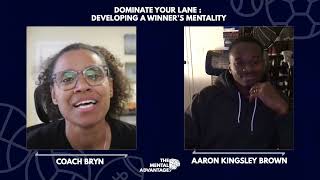
Canadian Olympic sprinter Aaron Kingsley Brown talks mental toughness, vulnerability in leadership, and how LeBron James' ability to bounce back from public failure shaped his own athletic mindset. Brown credits Athletics Canada's sports psychologist and a commitment to reflection as keys to recovering from any setback.
Chapters
You want to approach each race like its own individual challenge, right? So if you're planning out your season smart and intelligently, you know, with your coach and your agent, you want to pick meets that will put you at the best position when you need to be at your best, meaning you're not just trying to run races just for the sake of running races and making money. You're trying to give yourself the best opportunity to be at your best when it matters most, which is always going to be the World Championships or the Olympics.
I'm excited for you to see this week's episode, but before we get to that, I have a message for you. If you're a parent of an elite athlete or a coach of a high-performing team and you want— you're looking for some help or assistance with making them more mentally resilient, perform with more confidence, be more consistent, and anything like that, then this is for you. I have an 8-week program all designed to address exactly that, to help your athlete be at their best on a more consistent basis and not get tripped up by those little voices in their head and getting down on themselves for mistakes, but performing like we know they can. So what I want you to do is don't delay, schedule a— just grab a time on my calendar through this link, and let's set up a time to talk about your specific situation and how what I'm offering and my 8-week program can help. Okay, so it's brindresher.com/freeconsultation. So click this link, grab a time on my calendar. I look forward to talking to you. And now on to this week's episode. All right, all right, all right, we are back for another episode of the Mental Advantage Podcast. As usual, as per use, I have a special guest with me. And y'all, you're going to be excited, or at least maybe I'm just excited, because this is my first track person. I was a track athlete in college, so I'm super excited to talk to a track athlete because I've been talking to a lot of different sports, but we haven't really covered the world of track and field. So I'm excited to bring that to you. Now, my guest today, Erin. How you doing, Erin?
I'm good. Good. Just hanging out. How are you?
Awesome. Awesome. Give everybody your first and last name and a little bit about you.
Yeah, my name's Aaron Kingsley Brown. I'm a Canadian Olympic sprinter, Canadian medalist. I went to USC back in 2010, graduated in 2014, was an 8-time All-American there. And then I went pro and I'm a professional runner for Nike. I've been pro for about 8 years now. Went to many world championships and 3 Olympic Games. So I'm a vet in the game now, kind of an old head. So I'm still doing my thing out there, you know.
Super awesome. Okay.
Wow.
The Olympics. So you're not the first Olympian we've had on here, but like I said, first track person. So definitely want to hear about your experience in the Olympics, world championships. And, but the— and the first question I love to ask is, How did it all start? Like, was track the first sport that you sort of gravitated to, or, you know, how did you find the world of running?
No, so I feel like a lot of sprinters find their footing in track and field just from other sports and getting noticed. So that's pretty much my origin story is I played all kinds of other sports, and the common denominator between all of them was I was fast, and I caught the eye of my club coach, Bill Stevens, and he kind of said, hey, if you come out and train with me and actually take this seriously, you have a lot of potential and you can get a scholarship to the NCAA. And who knows what else can come out of that? And I was like, I don't really know. I'm just kind of doing this just because it's track season. And then it comes basketball season and then football season and soccer. And I'm like, I just, I play all sports just for fun because I'm competitive. But I took him up on it and, you know, I ended up running an age group record in Canada. So yeah, I just kind of just kept climbing the ladder. I went to World Youth and I got a silver medal. I went to World Juniors and got a bronze, ended up getting a scholarship to USC like I said earlier. I was an All-American many times over. And from there I got an offer to go pro and it's just kind of like, I just kept pushing the boundary of how far I could take this. And I never really had a vision in mind, like, this is where I want to go. Like, I didn't set this up to get here by design. It's kind of just people around me that I was fortunate enough were positive role models and pointed me in the right direction and made sure I did the things I needed to do in order to, you know, keep excelling and going to the next level. And then, you know, I ended up here. There's just, Just my life, right?
That's awesome. Um, you love that. Like, so you go, you go from a, you know, multi-sport athlete, just love competing and, you know, being involved in athletics, and then someone sees something in you. Do you think, you know, you said you didn't have this ultimate vision because you're just like, someone saw something in you. Do you think that's important that the athlete have that vision from the beginning? Obviously not having had it and having had success, you may have a different perspective, but I'm just curious, do you think that's important that the athlete has that vision, or do you think there's an advantage to kind of not knowing and just leaning into, you know, the, your, your, the hard work or the being good?
Yeah, I've seen it work both ways, you know. Um, it kind of just depends on the person, you know. For some people, having a vision and having guidance is good because it keeps them grounded, it keeps them structured. And they know exactly where they're going. But at the same time, sometimes people get stressed out and say like, I'm not where I should be at this point. And they think that they are failing at life and whatever the case may be. And they might, you know, give up before they actually reach their blessing. They might just be right around the corner if they just stuck with it. But because they're comparing themselves to somebody else or some preordained vision of where they're supposed to be, that's just based off of other people's experience and not necessarily themselves. So they can get hung up on that and then quit. Conversely, on the other side, some people might not have any guidance and structure and just kind of just going through the motions and not have the people in their life that will send them on the right path. So they could never reach their potential because they just had no, no ambition. They had no idea of what they wanted to do and they didn't realize their full potential because it wasn't molded in the right way. So it all depends on the individual, how they're wired. Like if they're a very motivated person, sometimes it helps to have a vision, a goal to work towards. If they're kind of just relaxed and they get too stressed out, if they have things that they're working towards and kind of goals are daunting, like, hey, I just want to just have fun and relax. And that's just how they get the best out of themselves, then it might just be better for them to figure it out as they go. And get people around them that could be like, okay, I'll let you do your thing on the, on the track or in the sports world, wherever the sport is. But let me worry about the off-track stuff. Let me handle, okay, you just got to worry about what you do with your performance and I'll get the coach, I'll call the schools, I'll call whatever, whoever, make the calls and get everything around them. In order. So it really depends on their situation and who's around them.
I love the way you answered that because you do see a lot of both sides, right? You see that part of people's like— because ultimately when we are working on plotting our path to any particular destination, particularly when we're talking about goals and career benchmarks, we're just guessing that we're going to get there at a certain time or by this age or by this stage, right? And so when we don't get there because someone else hit it at that milestone, that, that period, it's such a, such a great point. And then also the not having any sort of structure or vision can also leave you floundering and feel like, you know, you don't really have an anchor. So love both sides of it and then seeing the good side, you know, and so like, and it's individual to the person. So super, super love that answer. And when you talk about you didn't have a vision and you just followed it, What is your recommendation from the path that you had that you would say was really helpful to keep going when you're kind of going, you know, going through the, the tough grind, as people like to use that word, of, you know, being a high-level athlete?
Yeah, I would say that because I was fortunate to have other people that gave me structure and guidance and told me what to strive for, that kind of shifted my mentality. And over time I became a person that became very goal-oriented and structured and set goals and chase them and put things in place in order for me to have the most high level of success. So I shifted over time because somebody lit that fire for me early. So if you can light that fire in yourself from a young age, it's only going to help you as long as you keep it in perspective. And, you know, with your goals, you're setting them based on your own personal ambitions. And they're not influenced by others and you're not comparing yourself and getting caught up in FOMO and stuff like that and just doing it because everyone else is doing it. If you really audit yourself and see what you are interested in and what you think is going to be fun for you, I think it's a good thing to have goals early on because it gives you something to aim for. When I was in 9th and 10th grade, I was kind of just, you know, having fun and at school just to hang out with my friends and, you know, be popular and try and get girls and stuff., but once I figured out about the NCAA, I'm like, okay, I gotta get my grades up because I have to have the right GPA in order to get accepted into these universities. USC is one of a really top-notch school academically, so they're not just gonna take anybody. So from that point on, once I knew the goal was to get a scholarship, I started to get my grades up and I wanted to make sure my times were good so that I would get a scholarship. So having a goal in place helped me to better myself day to day.. And if you can do it that way, then I would definitely recommend, you know, having a dream school that you want to really go to, but also having some other schools that you'd be cool with as well. So, you know, kind of like a plan B, just so you don't put all your eggs in one basket and think, okay, it's either go there or I'm a failure. And then I would, I would advise you though, if you're going to take that path, is to give yourself some fluidity and flexibility because sometimes your goals change and what you value changes over time and you might be privy to some new information and then decide, hey, I don't want that anymore. I kind of like this now. And that's totally fine, especially at a young age. You're going to change your mind hundreds of times, you know, like, and that's okay. Like, you might not know you like something until you try stuff. So try a bunch of different stuff, expose yourself, you know, taste different things. And see what you gel with, see what vibes with you, um, and then just follow that to the, to the best of your ability.
Good advice, because, um, we've had people on here before and I've asked this question. You're talking about obviously things are going to change. Sometimes you think that, like, I had someone on that was, uh, you know, their goal was Division I, but they found a lot of success in Division II, and that helped them go, you know, pro versus thinking that Division I was the only path, right? And so obviously USC, premier program, no matter what whatever sport you're talking about, premier school, and just having that anchor of even that helping you shoot for that doesn't mean that may be where you land, but having that, you know, that focus at least kind of, you know, gets you on the straight and narrow. You talked about having fun, and there's this thing about is when we're talking about pro athletics, performing at the highest level, it's a business, it's a business, blah, blah, blah. I've heard it a lot in a lot of different sports. Obviously haven't had a professional track athlete on here. Um, is it supposed to be fun, or is it a business, or is it both? And how do you manage that, balance that?
It's definitely both. Um, some people do do what they do in track especially because they're good at it and not because they like it, and that is possible because it is a business. If you can make money out of it, then you can make a career out of it where you're making a living, but it helps if you enjoy it. Because let me tell you, there are so many hard days out there in training that if you don't enjoy it when you're actually supposed to be doing the fun part and competing and traveling the world and getting to see all kinds of different cultures and, you know, going for different accolades and improving your times and all that good stuff, if that's not fun for you, then it's going to be, it's going to be difficult and you might get burnout because you're in an environment where you're not enjoying yourself day in and day out and you're just doing it for the paycheck. Or because people are telling you you should do it because you're good. So I definitely see both sides of pro track and field where some days it's fun where, you know, when I go to training, I love my training partners, I love my coach. You know, we all keep it light because we know how hard it is to train day in and day out and the grind that we need to put, like the work we need to put in in order to be successful. So we try to keep it light and fun. Off, you know, when we're not being serious on the track, like when we're just around each other hanging out, we'll joke around and stuff and keep that camaraderie because that element is good for you to have. You know, like I said, a lot of athletes go through burnout because it's just not fun and they're just out there just going through the motions and trying to get home as quickly as possible and get out of that environment. But, you know, you got to ask yourself, what would you rather be, going to work every day where you're happy or going every day just out of necessity, you know. So there's definitely a lot of tough stuff to deal with on the pro side of any sport. You know, there's politics and, you know, all kinds of stuff that come at play when you're dealing with money, just because business does that. When you're— people who run businesses naturally try to take emotions out of it to be good businessmen, and so they're trying to get the most out of it that they can. In a capitalist society or whatever it is. So when that happens, people's feelings are going to get hurt and people are going to get the short end of the stick on in some occasions. But this is the nature of the business. So you have to understand what you're walking into, but at the same time still find a way to have fun and enjoy it and look for the good moments out of it too, because there are some.
Because ultimately that's why we all got started, right? We liked it, right? Nobody was like, I know it's a business, I can make a lot of money, I'm going to get started in this. Typically anyway, maybe there is a kid that was like, I can be, I know a rich and famous whatever, I'm going to get into this sport. But I feel like initially we all got involved because we liked it. And then it kind of, you know, as we navigated, we figured out a lot. So I do want to get back to the, you know, the sort of the pro side and some of the, you know, the things that you've seen as a, you know, high-level athlete. And, but I want to kind of go on to the thing about running. All right, now what are your events in track and field?
I did a 100 and 200 and 4x100 relay.
Okay, all right, so you are the super fast, okay? Yeah, because I was a 400 runner, so I'm the— I'm on the long distance. I mean, I was 200 and 400, but I was not fast enough for the 100. Okay, so in the, um, people joke about running because they say it's everyone else's sports punishment. Now, when you obviously got into track and field and you were shifting from these other sports and you saw the upside, obviously, of like having some success early on, like, wow, I'm really good at this, I'm getting confirmation of my talent. Was there ever a part where you're like, do I want to really like run all the time? Or was it just like, I like the winning, I like the competitiveness, so I'm not really thinking about the fact that I got to go and do whatever the workouts are, you know, like when I didn't like the 10 300s workouts or something like that, you know?
Yeah. Um, so I think that goes back to the environment that I was in, and I was fortunate enough that when I got into track and field, I had two guys around me in Ian Warner and Andre Hamilton, who unfortunately has passed now. But, um, they were like, they were two years older than me, first of all, so they hazed me all the time. And because they did that and they were always like challenging me to be better, it created this competitive environment where I was just constantly looking to improve. So I just wanted to prove them wrong so bad. So initially when I got into track and field, it was kind of like, okay, I'll run just because I know I'm fast and I'll test my limits to see. But I didn't know that people actually had like training programs and like went out and trained day in and day out. So when they told me about practice, I'm like, I'm not doing that. Like read the paper. I'm like, I'm not doing that. I would like warm up, do like a couple strides and leave because I'm like, I'm not that serious into this. But then the moment I saw how fast I could be just off of sheer talent and having those guys around me who were always like teasing me and saying like, oh, you're not that fast, whatever, whatever, and wanting to prove them wrong, that made me want to do the workouts. I'm like, I'm going to actually apply myself to see how fast I can be. And then it wasn't a matter of, oh, this is just like punishment from other sports. Like from that perspective, it became like I'm entrenched in this. And this is like, I'm in track, like this is what I'm going to do. I want to actually see how far I can go when I apply myself. So initially, yeah, like, you know, I played basketball and we would do suicides and stuff on the court and I'd be like terrible. But I played soccer too. And, you know, I play on the wing and the strategy because I was faster than everybody is kick the ball far and make Aaron run down the field and go get it. So I was used to running. Right. And then football, you know, they would make me run seam routes and post routes and go deep so they can throw it to me and stuff. So I'm like, I was kind of used to having to run because that was my advantage. That's what made me good.
So yeah, you know, I love the way you answered that. No, I love the way you answered that because I think a lot of people don't— they rely only on their talent. And so when they show up and it's like, I'm good, I'm good, I'm winning. I know I did. It was like, I'm good. Like, I'm on this team. I'm making— I'm getting some accolades, some rewards. We're winning races, whatever the case is. But then all of a sudden, when you really realize that it's not just that you're good, you got to put work in because there's a— like, I think I read a book. I can't remember the name of it right now. It might be Endurance, but there's actually a strategy to a sprint race of 100. Like, they didn't know that Usain Bolt is actually slowing down 6.3 seconds. He's only at maximum speed at 3.6 seconds of that race or something like that. Once you recognize that in the 9-second race, that it's like nobody can run all out and be at max speed for the entire race, so that you have to know that about your body. You need to know how to be explosive out of the blocks because the race is pretty much over if you don't get out of the blocks. So I love that. And it's like, those are the things you didn't know. You just knew you were the best, but you could be from Podunk somewhere and there's some other guy who's, you know, working all the time and he's going to outpace you. So absolutely there's a strategy to it and I'm good running as a part of it, but if I work at it, I can be even better. Imagine that.
So love that.
Love that. And that's that hunger, that competitiveness that you have. So when it comes to, you know, competing to be your best, do you remember the first time— and I know you said you had good training partners and stuff, but do you remember the first time like you came up against like a boss competition person and you were like, it was kind of a wake-up call to you?
Mm-hmm. Yeah. I mean, several times. Yeah. But one of the earliest ones was in the, what grade was that? 11th grade, I'd say. No, 10th grade. 10th grade. So I had just won OFSA, which is Ontario is state meet pretty much, like it's provincials. So all of Ontario, the state of Ontario comes together and you line up and my age group was grade 10. So it's, they call it juniors. So all the fastest 10th graders in Ontario. And I won the 100, I won the 200, and I was actually part of the 4x100 senior team. So those two guys that used to always make fun of me actually respected me because they wanted me on their team. So I went up to the seniors and we won that, and we broke the officer record in the 4x100, and I had it in the 100, which has now been broken. But, um, yeah, back then I had it. So I'm feeling myself, like, I walk away with three golds, you know, I'm with the The big homies, we just broke the record for that. It's like I couldn't do it wrong. But then after OFSA was this meets called AO's, which is Athletics Ontario's like championship, but it's not provincial championship where it's just like 10th graders. It's like everybody. So it's like club track, right? So when you have high school track, you have people out there just messing around, whatever. But in club track, you're actually like this is your thing. Like, you're a track guy, you're committed to this. So I raced a guy that was older than me. I think he was like 3 years older than me. His name was Tyrone Halstead. I still remember that. And, you know, I won also with like a 10.9, 10.93, I think, or 10.91, something like that. And that was a record. And that was my PR at the time. And in that race, when I raced Tyrone, he ran 10.4. So I've never been in a race that fast and I didn't know what happened. I'm like, well, how did you go that fast? And then I looked at what I ran and I ran 10:73. So I was like, I have no idea how I got so much faster. I just dropped 2 tenths. But it was because I'm in a big dog race trying to keep up. So that was one of the first times I was exposed to someone who was way faster than me. And I just was running off of fear like, oh my God, keep up, keep up, keep up. And then that was the moment too, was like after that when I ran 10.73 where I actually went to my club coach and say, okay, next year I'm going to take this seriously and actually do the workouts. Because up until that point I just would read the paper and be like, nah, I don't want to do that today. I'm just jog a little bit, whatever. And I'm like, okay, I'm actually going to do this track thing and I want to run faster.
And you know, the rest is history. I love that. I love it. Do you know where Tyrone is now? I don't know. Yeah.
Okay. I don't know if he's still running, but High school, at least.
So yeah, but that's so awesome how just being exposed to that competition did a few things. It woke you up to people can run faster than this, right? Because we have this ceiling that we believe is the, you know, of our, of our talent. And then when you come up against real competition, you find something in yourself that you weren't tapping before. So because I don't know if you know, but the Greek word competition— well, the word competition comes from the Greek word kompetir, which is to make one better. And I did a podcast episode about it. It's like you two conspired to have a greater performance for the both of you. Yeah, do you know what I mean? And so amazing, amazing. Yeah, so, uh, that's, that's freaking awesome. Uh, so with that, so you got woken up and it, and it forced you to get serious about the sport. So Tyrone has no idea, wherever he is, that he, you know, is not responsible for your success, but he woke you up to what was possible for you, which is freaking fantastic. I love that. I love those kind of stories. Thank you for answering that. You talked about the mentality. Obviously, the mental game is huge in sports, the whole 90/10 rule and all that. What say you about track and field versus soccer, football, basketball, which are the other sports you engaged in? Would you say it's different? Or would you say it's really all the same? Speak more about that.
I feel like they're similar in some ways. But track is unique in the fact that it's a solo sport. So, you know, you have that team dynamic with soccer and football and basketball, where it's as if like, you're contributing to the good of the entire team. And your impact isn't as felt as it is in track unless you're running the relay. But for the most part, when you're running individual races, it's all on you. And so there's nobody that you can slack off and rely on and say, I'm going to let him carry me today. No, you're responsible for getting your body to the finish line and nobody else can do that for you. Whereas in soccer, some days where I just didn't have it, other people can score the goals, other people can play defense if I'm slacking and my man's beating me. Basketball, if I'm not scoring, someone else can pick up the slack or guard the best person on the floor. Football, same thing. Like you're relying on your teammates. Like I could be the best version of me in football as a receiver, but if my quarterback stinks and can't get me the ball, I can get as open as I want. But if he can't get it to me, what am I going to do? Whereas in track, like, I have the ability to impact how I— my results every time out because I'm the one that's running. And unless I'm running the relay, like I said, then it's just me out there. So that's the difference between the two. But again, like, the principles of sports are just— you run into the same similar things where you have to apply yourself in practice, you have to train how you want to compete. The stuff that you do at practice shows up in the meet. It's just, I feel like it's magnified in track just because it's only you out there and nobody can do it for you. Yeah.
And all eyes on you, right? So like, you know, there's no one else to watch in this particular race. I mean, obviously the competition, the field, but if I'm coming in and I'm like, oh my gosh, you know, so, and I love what you said, which is, You know, that whole thing about not just like, if I'm not playing my best, the team can still win, right? But if I am playing my best, if my team is not at the same level, I may not be able to operate at the premier levels, right? In some sports because I'm dependent on someone passing, you know, being able to create those opportunities. And in track and field, it's different. So when I was an athlete and I did not, I ran Division I, I mean, I competed in Division I track and field, but I wasn't, at your stature, I remember being in the starting blocks and the blocks being like a place where, and you may have never had this, but I was thinking, oh my gosh, this is so-and-so to my left or so-and-so to my right, because you get to know the field, right? And at different meets, did you ever have a moment where you were kind of like, oh my gosh, can I hang? You know, like this is so-and-so in that, or were you always just like tunnel vision for the finish line?
I mean, I raced Usain Bolt at my first Olympics, so I definitely had that. Yeah. Yeah. So I was 20 years old at my first Olympics, and I remember watching him on TV win the 100, and then I just thought to myself, like, the 200 is after the 100. I'm like, wait, I have to go out there and race these people. So I got super nervous after that. And then I went out and watched race people that I've been watching on TV. But after that first round, it kind of broke through for me that like, I don't need to be afraid because like, I held my own. And then when I saw the heat sheets for the semifinals, I saw I had Bolt. I'm like, oh my God, this is crazy. So I remember the day before, after I ran the first round of the 200, I had saw him coming out of the tunnel. Like when you get dressed and walk back to the track, the warm-up track, You're walking through the tunnel together and I saw him and I'm like, okay, I might never ever see this guy again. I'm 20, I'm not thinking about my trajectory of how long I'm going to be in the sport, whatever. But I see him, I'm like, oh my God, I got to say something to him. At least I could have that memory. So I go up to him, I'm like, hey man, that was a great 100 meters yesterday. And he was like, oh, thanks kid, or something like that. Yeah. And then it turns out I literally have him in the next round. So when I'm thinking I'm never going to see him again, like I'm literally about to race this guy.
Wow.
But when I raced him, I PR'd by a lot and that gave me much more confidence because I'm like, okay, if I've raced the world record holder, the fastest guy that's ever done it, there's nobody else I should be afraid of because it's like he's the standard, he's the gold standard. So everything below that like, why would you be afraid when you've raced the absolute best? So that was a mental barrier that I broke through where I didn't really get nervous to race individuals anymore. There's times where I get nervous, but it's not because I'm racing a certain person. It's because I have my own stuff going on, like anxiety of how I'm going to perform. But in terms of like looking to the left and right and being like, oh, this guy's in the race, that went away after I raced Bolt.
Great. So like, you know, the best thing that could happen for you is to come up against the greatest. So that you can say, and you were able to, like you said, you know, again, kind of like the Tyrone situation, you had your best time ever. So just, you know, like you don't know if you're going to beat him because that whole thing about on any given Sunday, right? I mean, he still has to perform. If he doesn't perform in that race, it's a whole different Olympics, right? Like, I mean, he's going to, we assume he's going to be consistent, but you know, I need to be able, and the thing I love about track and field is, I'm really not competing against Usain Bolt. I'm competing against the clock and my former time, right? Which is really important to remember. So I can use him as my pacer, my pacer, not pacer, but you know what I'm saying? Like the rabbit in the horse race, as they say, but I'm just going to go out and run my best, right? And do my best. Because if I, you know, if I'm like, if my only goal is to beat Usain Bolt, I'm probably not going to perform my best, I would assume. All right. So when you— I love that you said that and you talked about the nervousness and the anxiety. So speak more about that because I think a lot of athletes don't— they think that obviously a high-level athlete like yourself, it's like, man, you guys seem so cool and calm. And you watch all the— the camera always pans the runners as they're in the starting blocks and you're like, what are they thinking? What's going on? Are they just— are you mentally rehearsing? The race. So like, tell us a little bit about when you're experiencing that. Um, you talked about anxiety and nervousness, and I know we label it as anxiety, and I don't— I don't— well, and you may— I don't think you mean the clinical, um, diagnosis of anxiety. So speak a little bit about like what that— what usually sort of predicates that when you talk about thinking about your own performance, and also— and then kind of lead into your pre-race routine, like what's going on when you are in the blocks.
Yeah, so, um, I don't mean the clinical version of anxiety. I mean like performance anxiety, like wondering, am I gonna do exactly what I've been rehearsing to do? It's almost like you're going out there to do like a dance or sing a song, and you've been rehearsing and you know you can do it because you've done it many, many times. But like when you add in the elements of the crowd and the stage and competitors around you and the wind and the weather and all that stuff, that starts to change and you can't rehearse that part because it's not the same. So when you're in your element of competition, that's when things start to creep in your head where like, am I actually prepared for this? I've done it a million times, but is this going to be the time where I mess it up or am I going to perform exactly how I want to? And so you run through the race a million times through your mind. And for me, what helps is to calm myself down and kind of center myself. So like, if I find myself getting too antsy and like my breathing starts to elevate, I will slow myself down. I'll start to control myself through my breath. Like I'll slow it down, try to control my thoughts, and I'll literally talk to myself like, I'm here, I'm good, we're okay, we can do this. You've been practicing, we're ready. And I'll say stuff to, like, positive affirmations to myself and repeat it over and over again. And then once the starter says, "On your mark," I repeat my cues over and over. So, like, I try not to make anything too complex because, you know, you want your mind to be pretty clear so you can instinctively react to the gun and let your body do everything. You know, like, if you're thinking a million things, you can't react to the gun and move as fast as you're running. Because your mind can't keep up with how fast you're trying to move your body. So I'll repeat something like big arms or low angle or aggressive or pull the hips or something. I'll just repeat that over and over and over again, and that way when I'm focused on that, anything external becomes background. So like if, you know, the guy next to me in the lane wants to slap his knees and scream and go, let's go, or something like that, it doesn't bother you as much because I'm focused on what I'm saying in my own in my own head and focusing on my own lane. And if people in the crowd are super loud or like cheering or like booing or whatever, anything could happen at that point. You want to be able to be impervious to that because you have to be focused on what you're doing in your own lane. If you start thinking about other things, then you get thrown off. And that's how, that's what professionals are able to do is no matter what's going on around you, you're still able to perform and get what you need to get done in those moments.
So yeah, no, that is awesome. And, you know, it's so funny, I was going to mention that I saw your reel about if the other guy's like, oh, like, you know, like, because, you know, you got guys that are like, oh, and that's the way that they prepare. And you're like, you know, and you were just kind of like, like, you know, you did the thing of like, you know, just like, why is this guy yelling while I'm trying to be all zen, you know? But it's like you have no control over what that guy is doing. So you have to train yourself to You know, even, you know, stay in your own lane, but like stay in your own lane of your own mind too. Like you can't worry about all of that because I, you know, focus on what you can control. We all know that in the mental game world, but it's not as easy as it sounds in some instances. But even so, like, I think what you're also saying is you've got to train yourself that way too. So it's trusting your body, knowing that everything you've done up to this point will work and training your mind with those distractions, because you can't rehearse it, but you can have someone like make a lot of noise and practice and, you know, work on how can I still myself, how can I stay focused, how can I, you know. So maybe some people play loud music or do something to prepare themselves to at least zone in rather than, uh, you know, be distracted, so to speak. Um, when you, you did mention something, you said the big hips, and I just want to make sure I'm clear. Were you saying that you are thinking that while running or that's before the gun goes off?
Before the gun goes off. So literally up until the point where I'm like in the set position, I'm repeating over my head like aggressive, aggressive, aggressive, aggressive.
Gotcha. So in a short race like the 100, which is, you know, less than 10, are you faster than 10 seconds? I am in no way. I'm pretty sure you are, right? Obviously if you're, I'm assuming. Okay. So in a 9-second race, you know, 9 between 9 and 10 seconds. Are you thinking anything?
Yeah.
Yeah. Okay. How many? So what, give me an example.
Yeah. You know, like for me, there's always cues as I run through my race. Like, like I said, it's, it's not gonna be anything super complex because by the time I think something, I'm already like 5 steps ahead. So like I'm probably pretty much delayed, but you know, like when I'm thinking, let's say, pull, pull the knees, I'm trying to sweep my legs through with a low projection and go through my transition, get into my up tall running. And the thoughts there are kind of like, hold, hold, hold, because if I'm doing the right things, I'm just telling myself to keep continuing doing it. Don't break. So I'm trying to just tell myself, keep doing that aggressive. Okay. Pick it up, pick it up, pick up the frequency. And, you know, the things that you tell yourself, like I said, like when you're at 40 and you tell yourself something, by the time you get to like 55, that's when it kicks in. So sometimes if you feel stimulus around you, like you feel people in your peripheries and they're like pulling on you, sometimes you might say, stay relaxed, stay relaxed, stay relaxed. Or like, you know, knees up, knees up, knees up, like high knees because, you know, you're starting to fatigue and you're dropping the hips and dropping the knees and, you know, You're not coming up enough. So you tell yourself stuff to keep yourself going, but you really are already doing what you need to be doing and you just have to hold it. So you don't tell yourself, that's not like a distance race where you're like, okay, now I'm making my move and now I hold up and whatever. It's more like very simple things that are instinctive and you just want to remind your body like, wake it up, do this, do this, do this and keep doing this.
Yeah, I love that. That is so good for the audience to hear because it's like, but like you said, it's simple commands and also just reminders because you, I don't know if you've read The Mental Game of Tennis, but it's like you've trained your body around something and there's a level of trust that has to happen between the mind and the body to just allow the body to do what you've trained it to do. And it's almost like the mind has to get out of the way and just be like, let's do this. Like I've done everything I could do to prepare for this moment. I just have to, trust in my training. And even if I feel this guy coming up on my left or whatever the case is, you know what's going to happen in this last couple of minutes. So like you said, the relaxation of it, because that's what I love about sprinters in slow motion is the movement of their faces and like recognizing, like when I was running, it's like, get to that last, you know, you're like, you're locking up, but it's like, the key is, is to relax through that tension, not to actually succumb to it or, you know, that type of thing. So I, I think a lot of people don't know that. They think it's like this efforting, but it's like, no, it's actually, I mean, there's definitely an effort to it, but it's not through trying to, if that makes sense. So fantastic. Fantastic. So we talked about the Olympics, not in detail, but there's, in the past, I've asked athletes this question and it's like, you know, obviously the Olympics is the biggest stage for track and field. Okay. I mean, there's the World Championships, of course, and those are— but, you know, the world watches when the Olympics is happening, right? And you also said you were sponsored by Nike, which we'll get to, you know, sponsorships and kind of that, like you said, the difficulties of sometimes the pro, you know, side of sports. What is— what is— is there a difference between the Olympics as far as you— how you compete and, you know, a track meet that is happening in Switzerland, you know, because it's Tuesday. I know there is in the sense of more people are watching, but do you prepare differently? Are you supposed to, you know, cause like the whole thing of, do I need to have a different, you know, pep talk or a game plan for the Olympics versus any other 100-meter race or 200-meter race?
Yeah. You know, you want to approach each race like its own individual challenge, right? So if you're planning out your season smart and intelligently, you know, with your coach and your agent, you want to pick meets that will put you at the best position when you need to be at your best, meaning you're not just trying to run races just for the sake of running races and making money. You're trying to give yourself the best opportunity to be at your best when it matters most, which is always going to be the World Championships or the Olympics. So let's say there's a Diamond League early in May. You want to win, you want to run as fast as you can, but at the same time, you understand that this serves a purpose where it's like, okay, I'm exposing myself to guys, to high-level competition with guys that I'm going to be racing possibly in July and August at the World Championships or Olympics. So it's not the end-all be-all if I win or not. You want to compete to a high level in the best of your ability, but at the same time, it serves a purpose. Like, I'm trying to see where I'm at, test myself against some high-level guys, and then go back to the training block and figure out what I need to tweak, what I need to improve, what I need to work on, and then go back out, retest it. And then you come back, and then you tweak, and you keep going out and doing that over and over and over again. Until you get to a point where you're peaked and you're at your most confident and you know you're going to go to the championships feeling your best or you're going to have a high level of success. So the approach is different in that sense. Also from the fact that it's a championship, so there's multiple rounds like at the Diamond Leagues, for example, there's usually only one round and then you're done. So you have to be ready to go full on for that one race and then you move on to the next race. But at the World Championships or Olympics, you have multiple rounds here coming back and forth. You got to mentally prepare each time to go through the rounds and each round has different strategies. So the first round, if you're, you know, one of the top guys, you're going to try and take that easy and conserve as much energy as you can. Then in the semifinals, your strategy might be to set yourself up for a good lane in the finals. So you want to be one of the top 2 qualifiers, or you want to win the heat because you want to be in those premier lanes. Then in the finals, obviously, as you try to win, just be your best. But everything leading up to that has been thought out and strategized. So it's a lot more strategy that goes into the World Championships and the Olympics because there's more rounds, and theoretically everybody should be at their peak at that point if they've planned it right. So you know you're gonna get everybody's best shot, they're going to be at their fastest, so you're you have a different mindset. And then like you said, there's the eyes. Everybody's watching that. Some, like, people do watch the Diamond Leagues and stuff like that, but at the same time, the, the weight and the magnitude of the Olympics and World Championships is what everybody is factoring in because that's where you're— that date is like on the bulletin board, like, you must get your best at this time. So everybody's coming in knowing this is where everyone's supposed to be at their best, and this is what they're competing for, those medals and those titles and stuff like that. So your mentality around that versus Diamond Leagues or World Tour or like trials or those smaller meets is going to be different than the pinnacle of the season.
So I had a guy on my podcast that he's a great snowboarder. I know it's a different sport, but he could not perform well in the qualifiers for the Olympics the way that he could during regular season because, you know, but as a, as a, you know, a sport like track and field, which is, you know, your major money is coming from your sponsorships and winning, you know, and being able to perform well. And especially the Olympics, when you get on the biggest stage now, the, like, you know, and what I mean, the world is watching. I'm saying like people who don't watch track and field every other day are watching it on the Olympics. Right. So when you talk about that different mindset, I understand the strategy and I love that. How do you keep yourself calm when the stakes are higher in that, oh my God, my entire career is, you know, like if I'm at the Olympics and I don't perform well, I might just be another footnote in history of the guy that was, you know, behind Usain Bolt in this race.
You know, that's how I am. Well, it's a heavyweight to carry knowing all the expectations and people watching and everything that's at stake. So you try to almost forget about it, you know, like it's impossible to completely separate yourself from it because we're human and, you know, we have functioning brains and stuff and you can't just shut it off. But you do your best to do that. And, you know, once you expose yourself to it over and over and over again, it gets easier to do. But I feel like the more, the more you keep yourself in a familiar environment, the easier it is to tell yourself this is just the same as it's been before. So for me, I know I like to have a certain routine, and if I follow that, then I feel like this is just like every other meet that I've been to because I'm doing the same things and I'm going through that same routine. So I like to unwind with like a good show. You know, not watch any type of track at night after I've ran, you know, keep my mind off of that. So I'm not like— there's such thing as mental fatigue. So like, even though you're like kicking up your feet, if your mind is still on, oh my God, I got this guy in the next race, you know, oh, I gotta run this, I gotta do this, and you're replaying the races over and over in your head, you're still mentally fatiguing yourself. And by the time you get to the race, you're going to be tired mentally and just like worn out because you've been stressing about it so much and exposing yourself to that atmosphere in your mind. So I try to stay calm. I try to eat the same things for dinner that I can. Obviously, depending on where I am in the world, my options are limited, but I try to do my best to keep it similar. And then, you know what, like I said, watch my shows and then my mind's on that. I'm focused on the show and I talk to my wife, I talk to my friends and stuff like that. And then just, I just, you know, go out and switch, like flip the switch when it's time to perform. But up until that point, I'm not trying to be in that environment. And that helps me to stay calm because the more I'm exposed to it, the more I'm aware of everything that's at stake because I'm constantly thinking about it and looking at all the different variables. But if I'm taking myself out of that element and just focusing on like fun things that are like light not career-changing, life-changing, then it's easier to go into it fresh versus already fatigued and tapped out.
And you have some really good answers, Aaron. I know you're probably—
of course.
I mean, thank you. But I think that, you know, I don't want to— I hope people that are watching this and listening to this are not underscoring what he said or undervaluing, which is having a familiarity with a routine is actually helping you not view this environment in such a different way that it's causing to take you out, which is like, oh, I don't have to have a special routine for the Olympics. Yes, I have to have a different strategy. I need to know the field. I have to know how much I'm putting forth in this heat or this stage, but I still warm up the same as if I'm at my home track. I'm at any other race, right? I'm doing pre-race routines the same as every other time. It's just my strategy adjusts, not my routines or not my thing. And then also making sure that your life is not 100% your sport. Because, you know, that whole thing of— obviously we know the identity piece with athletes, but even the fact that we're mentally fatiguing ourselves because we think like all that efforting the night before race of thinking about the race is actually going to tire us out and actually most likely won't add any value to our race in the moment. Again, I've trained, I trust, and then I go run. I execute. Now, you obviously are sponsored by Nike. Congratulations. That's awesome. Obviously, Nike is to me obviously one of the biggest gets in track and field. I know that you can be sponsored by other brands, But, you know, I think Nike is like the premier sports brand, particularly in running. I know it's in other sports too, but when you got sponsored, was it something that was an aim of yours? I mean, I think it is for all athletes, but like, were you strategically going for Nike or was it just like, hey, you know, whatever comes, I'm open to it, you know, or did you have different sponsors and then kind of gradually?
So tell us a little bit about that journey. Yeah, I mean, I wore Nike all my life, so that was always the dream sponsor, but I was open to other brands. It's just, you know, the kid in me, you know, I was a sneakerhead growing up. So like being with Nike is like the pinnacle and the dream come true. But at the same time, you think about it as a business, like we're alluding to earlier where, you know, you got to make a career out of it. So whoever comes with the best offer, you got to go with that, even if it's something that you're not familiar with. You know, if it's a shoe brand that you've never worn before, sometimes you just got to make it work because that makes the most sense business-wise. But I was fortunate for me that like the thing that made the most sense was Nike. So I get to, I think they're the best products on the market. You know, they got the biggest name, they kind of set the lane for professional track with their history and stuff if you go back in the day. So yeah, running with Nike was just kind of merging, you know, business with pleasure because I get to stay with the products that I've been using my entire life and that I'm familiar with and also still make a career out of it running for them professionally.
Nice. Does it add any pressure to the situation now that you have that, you know, premier brand behind your name? I mean, because obviously Aaron Kingsley was a premier brand prior to— well, at least I believe., right, uh, than he was with Nike. Um, but does it add pressure, um, or is it just like, hey, this is part of the sport?
It did initially. Um, you know, I'll go into races and look at my contract and think, oh, I got to do this. Like, if I don't do this, there's this penalty. Or, you know, I would think about all the things that could go wrong, but then I shift my mentality over time. And having older people who've been in the game longer than I had kind of, you know, gave me pep talks and told me how to think. And eventually it changed to what can go right. And I think, okay, how far can I take this? And, you know, what's the most I can make out of this contract? And how can I best represent the brand even off the track? And just, you know, as an ambassador and role model and stuff like that. So now I don't even think about it. Like, it's, it's, I've been representing it for so long. They know the athlete that they sponsor, they know who I am. We've been in business for a long time. So It's just kind of second nature now. And I don't really think about the pressure anymore. But when I first signed, that was like something that was there periodically.
Yeah, I think that's good for athletes to hear, you know, because I, you know, obviously there is stipulations in your contract that, you know, they would like to support a winning, you know, athlete. And there can be that pressure of if I don't win, because, you know, sports like track and field don't— not that you don't make good money, but it doesn't have quite the price tag of a LeBron James or, you know, from the league itself. Obviously, the sponsor can give you a great amount of money, but the, you know, track and field outside of the sponsorships and the purses from winning don't come with quite the same price tag. So it is that pressure of like, I might not be able to afford the training facility or my travel if I don't have this. I can't come to these races. I can't be against the best talent without this sponsor. So there's that element. But once you just recognize that it's a part of it and like you said, like, how can I use this for me instead of feeling like this is working against me and kind of always focusing on the what if this goes away? Because then, you know, self-fulfilling prophecy and you know all about that because— but yeah, that shift in mentality is so huge. So I love that. I love that. When you talk about the politics side, and we're going to finish up here, we're bringing it around to home, but obviously as a pro athlete, you get to compete on the biggest stages of the sport. You get to come up against the biggest names. Then there's this other side with the big heavy hitters on the business side. You talked a little bit about the politics. What helps an athlete navigate that side or be prepared for that side when they're in a that they don't really— it's not where they're—
it's not your zone of genius. Um, I think knowledge is power, so I think the best way to prepare is just talk to people. You know, people that have been in the sport will give you the knowledge and pass it down because we want to keep the sport going. Um, so there's a lot of people that are willing to talk if you're willing to listen. Um, what I did when I was young and I wanted to know about the sport was just ask questions. I was interviewing agents before I was even ready to sign just because I wanted to understand the process. So I would message an agent and be like, hey, you know, such and such athlete, I'm, you know, tracking this way, I've ran this and I'm thinking about going pro one day. I would love to know more about it. And, you know, if they're interested, they'll say, hey, let's have a call. And so I talked to an agent and, you know, obviously once we connected, he was like, hey, I want first crack at you when you go pro. I'm going pro and whatever, but he was more than happy to share like the ins and outs of the sport and how it worked and, you know, the kind of things that they look for as an agent to help you go pro. So that was definitely helpful. And I was mindful of that going into my senior year. And then there's older athletes. You know, I talked to many, many athletes because I was fortunate that even though I was in college, I was still making world championship and Olympic teams. I was rubbing shoulders with other professional athletes and I just asked them like straight up, like, what's it like out there? And like, what do I got to do? And you know, how does this circuit work? How do you get invited and stuff like that? So people are out there that will give you the knowledge. So if you're looking to do that, just ask, don't be afraid.
And that's the power of social media is that everybody's within, you know, a couple clicks. Yeah, a DM away, right? And especially if you've got some sort of, you know, success behind your, you know, your career, they're, they're probably aware of you, right? Especially if they're, they're, um, students of their craft. So when you talk about, uh, that, you know, like, first of all, did you have that knowledge that you should talk to those agents, like, or was it just something that you innately knew or someone suggested it?
Uh, it's something I just did, you know. That's what helped me get to to where I was at as a collegiate athlete is just asking questions. And when people around me saying like, hey, do this, I would just ask more and be like, well, how, how do I do it? Like, what do you mean? Like, what do I need to do? And that just kind of stuck with me where I'm like, okay, I had success from going from high school to college because I got the knowledge. So why stop there if I'm trying to go pro? Why not get the information early So I know exactly what I'm aiming for my senior season and what these agents and shoe sponsors are looking for so I can best set myself up knowing what my target is. And that goes back to that goal setting thing where you have something to aim for that helps you, you know, visualize it and day to day prepare for it.
Oh my gosh. Like, yeah. And I, like you said, prepare for it, but also just knowing like that's I'm headed there. Like, I am not just that I'm good and I hope I get a sneaker contract and I hope somebody wants to sign me, but I know I'm going to need an agent and I know that I'm going to have a sponsor and I'm going to be on the biggest stages of this sport because that's my vision. That's my intention. So might as well start to at least take the action of, hey, listen, what are some things that I should be looking out for? What are the ins and outs of this path? Because I'm headed there. There. Okay, so, all right, you know exactly where you're progressing. Exactly. You're like the Kanye West and Kobe Bryant of track and field right there. And I know that you— they weren't the first to ever do it, but they're the current examples that I have because I, I just love— I always think of that, those moments where Kobe's guarding, um, Jordan and he's like, yo, what kind of workouts do you do? What, you know, what are you doing? And He was constantly hungry for making himself better and using those people to guide him in that and like learn from those on your way up instead of only just being like, oh, I got to do this by myself. So I love that. When you said you asked people, there can be a good amount of— and I mean, I don't know, maybe I'm wrong, but there's a good amount of people that can be jaded, right? So how do you filter what to listen to and what not to listen to when you have a vision and you are, like you talked about, like, you know, focusing on what could go wrong versus what could go right and making that shift. When did you make that shift and speak more about that? Because I think a lot of athletes don't always understand that. And so talk about that because like, who do I listen to and how do I stay focused on the positive versus all the temptation to worry and, you know, worry doubt and fear?
Yeah, so I think, uh, you have to have your own filters when you— whenever you get information from anybody, honestly, and not even just sports but just in life, because everybody has their own experience and their own biases and their own perspective based off of what they've been through. So you take that knowledge but also look at it through the lens of this is their experience, so that might not necessarily happen to me. So it's valuable information to know what could happen, but it's not a guarantee that it will happen to you. So if someone's jaded because they had a bad experience with, let's say, a coach and they're like, hey, should I join this training group? Like, is this a good coach? And they say, no, he's terrible. Well, you dig deeper, be like, okay, well, why? What is it that didn't work out? And the more you unpack it, the more it becomes clear of why that person is saying they're not a good coach. So maybe it's just because their personality is in jail and then you're like, okay, well, my personality is not like that person, so maybe it will work for me. Or you say, well, I'm exactly like this person and we tend to like the same style of coaching. So if it didn't work for you, then it probably won't work for me because I know I like that similar style. And so when you get more details and ask more follow-up questions, you can look at it and take off the biases that someone might put on based off their own personal experience.
And then apply it to yourself. That's great. That's great. Because it is difficult sometimes with all the noise. And so like keeping your own perspective. And the second part of that question, and then we're going to move to the rapid fire. What do you— you talked about shifting your focus and like you said, other athletes and using them as your guide. What helped you shift your focus to the positive, you know, or the preparing for the best best case scenario versus the being prepared for worst case scenario or even being worried about that?
Well, it was like you said, it's like a self-fulfilling prophecy. So if I'm gonna focus my energy on something, I want it to be the best case scenario. So if you're only focused and fixated on what can go wrong, and that tends to be the environment that you live in, and you only think about the negatives, and that becomes the loudest thing that's taking up all of your mental space. But if you're focused in on the positives and what you could possibly achieve and who you could become, then that becomes your energy that you're surrounding yourself with day in and day out. And that's much more uplifting and powerful because it's a positive environment. You're drawing from something, a good experience versus a negative one. And so that's just a better place to mentally live in because it energizes you and say like, I'm working towards something, I can do this. Versus like, I might fail and become this, or I might fall off and turn into this. You don't want to live in that world. Like, I really feel like manifesting and then how you think day in and day out turns into what you put out and the energy you project. So like, it might seem like, you know, foo-foo or whatever, but I actually believe in it because I've seen it play out in my life. Like, literally changing my thought process has altered my level of success just by putting myself in a more positive space.
That is awesome. You gotta— I hope people really paid attention to that because I, when I'm working with my clients, that is number one, is like, I'm just shifting you into a better, you know, compass point, you know, anchor point, so that you can start to see how much opportunity there's, how much good is around you versus focusing on, you know, this little sliver of bad because really it is. I mean, like I even say on the news, right? Like more good things happened yesterday, but they're not newsworthy according to the news because that doesn't sell advertising, right? Okay. So I did say that was the last question, but I do have one other. And, you know, everybody says that, you know, sports is 90% mental, 10% physical. Is there mental coaches in track and field? Now, I'm not talking about mental health. I know about addressing that. Okay, but I'm talking about a proactive approach. Is there mental performance coaches in your space? And if so, are, you know, are they actually— are your sponsors, you know, paying for them, or are individual athletes just getting them as they see fit? Like, tell me a little bit about that, that landscape, because I, I find that most athletes usually only go to see somebody like that, like a sports psychologist, if something's wrong.
Yeah, I have one myself. I— they provide it from the Federation. So it's not my sponsor that does it. It's Athletics Canada. So they have their own sports psych on staff who I worked with the past 2 years. And now I'm working with another person that was recommended by my head coach at AC. And I, you know, I think it's good just because even if you're doing well, there's always challenges that you're faced with. So whether you're at the top of the mountain or you're climbing or you had an injury or you just had a bad year, there's always things that are going on, whether it's, you know, the results don't eradicate everything else that's going on, right? So just because you're succeeding now doesn't mean it's sustainable if it's in a negative space. So there's always things you got to, you know, work through and bounce off of people to get through that. And that's not a vulnerability. I think it's a strength because you're understanding where you might be lacking and what you might need more help with and improving that. So like, I always think like a leader is someone who knows exactly what they're not good at and will put people in position to help pick up where they are not strong at. You know, so like people might think like, oh, I got to fake it and think I'm good at everything and I'm the best and yada yada. But like, you can't fake it when you're exposed. Like when you get in the heat of battle, that will show and your, your, your warts will come to light. But if you admit it yourself and say like, hey, I might be struggling in this area of my life, I might need a little help, I need and talk through it with somebody or get some strategies on how to best cope with that, your vulnerability allows you to be stronger because now that quote-unquote weakness that you're dealing with can turn into a strength because you've dealt with it and now you're stronger for it. And now you're a better athlete, you're more well-rounded. So I would recommend sports psych for everybody, but obviously everybody has different philosophies and deal with it in their own way.
That's just my personal opinion. No, amazing answer. Amazing answer. Okay, so Aaron, we've come to the rapid-fire questions. Thank you for this. Okay, these are the most serious. All those other ones, they weren't that serious. These are the most serious questions that we're gonna ask. Okay, uh, so are you ready? I'm ready. Okay.
All right, so what is Aaron's favorite snack right now? Favorite snack, uh, I like dark chocolate covered almonds. Yeah. Well, I live in Florida and our local grocery store is called Publix and they have their own Publix brand of them.
So I just usually get that one.
Okay.
All right. All right. So those of you in Florida, Publix got good dark chocolate covered almonds. Okay. All right. Are you an ice cream person?
And if so, do you have a favorite flavor? I'm particularly not like, I don't really gravitate towards ice cream, but I do love cookie dough ice cream and close second, Oreo. So either one of those two, I'll be like, if they'll be like, do you want some ice cream? Like, what kind is it? If they say cookie dough, I'm like, yeah, yeah, yeah, I'll take a little bit of that. Vanilla or you know, double chocolate chip.
Oh man, I'm good. I'll get something else. Okay. All right, all right. He says you can tempt him with, uh, cookie dough ice cream, everybody. Okay, so, uh, if, uh, you could have any superpower— and I know a lot of people ask this question, but I'm always fascinated by the answers— uh, which one would you want to have and why? Now you already fly, so I don't know if you can say that.
So no, I'm just kidding. Go ahead. I would say I'm gonna go— I'm gonna say flying, honestly. I want to know what it feels like to be in the clouds without, like, being like a bird, just being weightless and flying through the air. And it's like a particular type of fly, though, like Superman, where I'm going fast. So like, I don't need to fly anywhere. Like, I get like, like, like with planes, I could just get up and go. And now I can travel the world at my own discretion. Whenever I want to get up and go, I could just fly.
Like, I think that would be so cool. I love that. I never thought about, you know, like, I mean, of course you see the planes and you see them in the clouds, but I don't think I ever thought about like, because that's always a fascinating thing when you're on a plane and you're like, You know, the sun is always shining, kind of like it's a great example because then you go above the clouds on a rainy day, the sun is shining, but then you go through the clouds and it's like turbulence and then gray. But just being able to be in those clouds and just feel that weightlessness, I love that. And I've always said teleportation because I don't want to take the time. I just want to be there. But I think there is something to the journey, obviously, and And then again, a great analogy, right, of the process of feeling that. So excellent. I have a second one where I always say I want to know all the languages and speak to any living thing, right? Like, and so that's another one, like just being able to understand like animals and people from different cultures and backgrounds. I like that. Yeah. So the other question that I had for— do you have a favorite superhero? You did say Superman.
So is he your guy? No, no, no. Uh, if I had to pick, I'd probably pick Iron Man. Why Iron Man? I don't know, I just— his care— I mean, the way Robert Downey Jr. portrayed him in the movies, I was— he was always my favorite. He was just always so, so cool and calm and collected. Um, but then at the same time, it's like he's in a suit, so it's not like an alien. Like, it's almost kind of relatable. Like, yeah, I can kind of be Iron Man if I had the technology. Yeah, I think that was cool too. Like, if I had a suit that could do all that stuff, like, that'd be really, really cool.
It's so interesting because I've, uh, if you do the Superman versus Batman, more people pick Batman for the exact same reason. I wasn't born with it, but I can do something with my superpower of wealth, or, you know, I can achieve that. I'm a Superman person, oddly enough, but I, I do think I find so many people that like Batman. So, but you're the first to use Iron Man. So, but I love your answer, it's very similar, so that's fantastic. I'm always looking at the psychology of something, you know, so I'm like, oh, okay, cool, I understand that. So this is a weird question, um, in the sense that it's not important to everyone, but I have found a lot of people still have some sort of take on it. I assume in your house, Aaron, you have toilet paper, and some people are very particular on how they like it on the roll. Okay, so there are people that like the toilet paper to come over the over the top, okay, where you're pulling, right? Or under the bottom, okay? Both pulling, but just from different ends.
Do you have a take on that and a preference? Over the top. Okay.
All right. Why are you an over the top?
Why do you feel over the top is the way? It's much easier. It's like right there for you versus tucked in under, like you're reaching under trying to pull it and you don't have anything obstructing your way when you have it coming over.
I love that. I'm an over the top too, but I never want to influence people's answers, so I tell them after, right? All right, so I am— I, I want to know, and there, you know, not everybody feels this way, but if, if I'm at your house and I like it under the bottom and I change it, okay, and you come in your bathroom, are you changing it back or are you just like, yeah, it is what it is?
Expeditiously. As soon as I see it, yeah, let me change it. I'm just gonna flip it. If you change it back after, I'm gonna say something.
You're gonna say something? Okay, now this is a rarer population, okay? Um, and I do change it at my house. Um, if you go to my house and I'm an under the bottom and you go to my bathroom, are you changing it or are you dealing with what—
how I got it? No, no, I, I won't tell you how to live your life, but when you're in my house, then you follow under my rules. There you go, there you go. Yes, if you want to do it incorrectly and do the under I'll allow you to do that in your space, but not in my house.
I love that. I will allow you to be incorrect at your house, but not at my house. Okay, amazing. There is a segment of the population that will change it at other people's houses. I think that's a boldness that I haven't quite achieved. Uh, I'm like, yo, it's your house, I'm not gonna tell you what to do. Um, I may feel some type of way about it, but I'm not gonna do anything in that instance. But I was like— and then there's bathroom snoopers. Like, uh, people who go through people's cabinets. Not necessarily like go through it, but open them. And I was like, yeah, I've never done that.
I've never—
the only time I will open your cabinets at your house is if your toilet paper is out. I'm gonna— rather than come tell you your toilet paper's out, I might open a cabinet to see if the toilet paper— I can change it myself to be helpful, you know. And then I am gonna make— even if it was under the bottom, I am going to put it on over the top.
So that would be my—
that's fair game, I feel like. Yeah, I think so, because I'm helping. Right. Like, you know, absolutely.
All right. Who is your personal hero? Oh, I've always looked up to LeBron. I like the way his career arc was, how he was so young and faced so much scrutiny and all these expectations and then went on to do great things and live up to expectations and even exceed them. Just You know, it's rare you see that where they, the media builds someone up to be the next great thing and they actually live up to it. And, you know, he's had his downfalls and his failures at times, but he's overcome it and come back and still stuck with it. And I think that relatability in my own career to a lesser degree has been something that's been inspiring and helped me go on in times like whenever I have a really bad meet that I think I can't recover from, I'll be like, oh man, everyone's gonna judge me and think I'm terrible now because I messed up here. I look back to his 2011 against Dallas and how he disappeared and was terrible and then went back and won the championship the following 2 years. So it's like, you can come back from the worst. Like, if he was on the world stage with being this big figure and, you know, flamed out the way he did, it didn't let him didn't let it defeat him, then I can overcome whatever challenge that I come across in my own career.
Yeah, I love that. That's such a good answer.
What do you want to be remembered for? Uh, I think kind of like what I was just touching on, like, I feel like my, I guess, thesis as an athlete or My, what's it called? Mission statement as for Aaron Brown is that you can be resilient and come back from any type of failure or shortcoming as long as you stay the course and stay committed, you know, get back up, reflect and learn and get, come back better. Like these things don't have to cripple you and be the end and nail in the coffin of your career.
You can come back from pretty much anything if you keep your mind focused and stay resilient. Love that. Last question, and you may have already answered it just now.
What is Aaron's mental advantage? Yeah, just being able to bounce back from, from anything, you know, no matter what life throws at me, I'll find a way to get back up.
Love that. That resilience, that bounce back, right? Okay, so we've come to the end. Where can people find you? Anything you're working on you want people to know about, you know, where do you want them to connect with you?
Yeah, you can find me on Twitter, on Instagram, and TikTok at Kingsley SC. That's K-I-N-G-S-L-E-Y and then SC. YouTube, Kingsley TV, or Aaron Kingsley Brown, my full name. And Facebook is Kingsley with a 9 instead of G. Any of those you could find me on. I'm most active on YouTube and Instagram. You know, I post a lot of reels on Instagram and I try to post more long-form videos on YouTube. So follow me on those if you want more active videos. But yeah, you can find me pretty much anywhere with Aaron Kingsley Brown. Awesome.
This has been such a great conversation. I hope you enjoyed it as much as I did. Yeah, absolutely awesome.
Thank you so much, Aaron. I appreciate you. Yeah, I'm glad we got the time to do this. Appreciate you having me.
More from Bryn


Who else hype for this upcoming season with Caitlin Clark and the Fever with all these great adds?







How to be nicer to yourself: Stop putting yourself down either out loud or in your head


Winning At The Net Game of Sports & Life No Matter The Score - Episode 60 w/ Jordanne Scott