Facing Yourself : Inside The Mind Of An Olympian Fencer - Episode 34 w/ Khalil Thompson Pt. 1
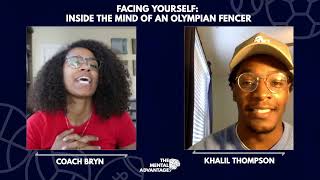
Olympic saber fencer Khalil Thompson discovered fencing at nine through the Peter Westbrook Foundation, a program that made the sport accessible to Black athletes. He talks about the mental demands of competitive fencing, the unpredictability of matches and refereeing, and how the COVID-19 pandemic disrupted his Olympic qualification cycle.
Chapters
I don't say this phrase. I used to hear this phrase a lot. I don't like saying it anymore because I don't believe people put their lives on hold to go in the Olympics because you're centering the things you do in your life around going to Olympics. Your schedule is based off of your training times. You take time out of work or you do a lot of things to support you going there. Was a hold, though. There's no games for a year.
There's nothing. Yeah, absolutely.
And you're just sitting there thinking. And when you— in that entire year, you're thinking to yourself, you're taking like— I was taking like 45-minute showers just thinking about fencing. Wake up, first thing you do when you wake up, fencing. Having nightmares about losing.
I'm excited for you to see this week's episode. But before we get to that, I have a message for you. If you're a parent of an elite athlete or a coach of a high-performing team and you want— you're looking for some help or assistance with making them more mentally resilient, perform with more confidence, be more consistent, anything like that, then this is for you. I have an 8-week program all designed to address exactly that, to help your athlete be at their best on a more consistent basis and not get tripped up by those little voices in their head and down on themselves for mistakes, but performing like we know they can. So what I want you to do is don't delay, schedule a— just grab a time on my calendar through this link, and let's set up a time to talk about your specific situation and how what I'm offering in my 8-week program can help. Okay, so it's brindresher.com/freeconsultation. So click this link, Grab a time on my calendar. I look forward to talking to you. And now on to this week's episode. Hello, hello, hello, everyone. I am so excited about today's interview because as I have stated on previous ones, I am committed to bringing all of the sports to the Mental Advantage podcast. And today we have one that I have to admit I have never seen live in person, which is fencing. All right, so I'm so excited to talk to today's guest, Khalil Anthony, who recently fun fact, was at the Tokyo Olympics. So we're going to be talking about that and more. But how you doing today, Khalil?
I'm good. I'm good. How are you doing today?
Absolutely fantastic. I'm here in sunny California. What part of the world are you in?
I'm jealous. I'm in New Jersey right now. We actually have some sun right now. Surprise, surprise. Normally it's cold by this time, but now it's very sunny. I feel overdressed. I'm wearing sweatpants and a sweater.
Hey, it's cold in my house. So even though I live in sunny California, I'm always cold.
So that doesn't count.
No, it doesn't count.
That does not count. I'm sorry.
Now, I think it's customary when you live in New Jersey to ask what exit on the Turnpike or off the Jersey— are you on the Garden Parkway?
You don't Closer to the— I'm actually by the turnpike, but sometimes I forget.
Okay. I used to live in Jersey, not Jersey City. I used to live in Elizabeth for like— I only lasted 9 months. That's how much I love New Jersey.
So I live— I live— so I live very close to the George Washington Bridge. You know where Fort Lee is?
Yes.
So I'm from Teaneck. I live like right next to— right next to Fort Lee.
Nice, nice, nice. Yes, it's a whole different mindset to live in New York, New Jersey area. So absolutely, it is. Yeah, happy to have you. Okay, so, um, I don't— okay, I know a few things about fencing. I know the words epee, foil, and then from the movies, en garde, which I'm sure you never say. So, but maybe you do, so you'll inform us. But Khalil, Obviously, you're also a man of color, as we can see, a Black man. Yeah, I'm just like even more jazzed that we're talking about this because I'm like, I bet you there's not as many Black kids in fencing at a young age. So tell me about your start in this. Was this your first sport and how the heck did you find your way into this sport?
So first, it's called an épée.
It is called épée. Excuse me.
Épée. That's what the accent is. I don't fence that weapon. I fence saber.
Okay.
And fun fact, we do say en garde.
We do say en garde. Okay.
We do. But a little bit about myself. So I started fencing at the age of 9. And actually at that time I was also playing baseball. I was in a little league. I was not very good. So I was in the outfield. Wasn't really athletic. I was very short. And then my eyesight got really bad. So these are prescription glasses. I'm not— but when I fence, I wear contacts. So one day my mother was taking my sister to our local recreation center, my older sister, and like in typical parent fashion, she showed up early and there was a fencing class and my mom was like, oh, this looks cool. You're going to do this in high school. She's like, I don't want to do it. And they— or I don't know the full details of that conversation because I wasn't there for that. Sorry. And then I— and we— so we started fencing classes. I'm sorry, I skipped a part. So she starts in high school and the fencing coach there is another woman of color. Her name is Sarah Lawrence and she says, "Oh, you should go to this fencing club in New York City. It's called the Peter Westbrook Foundation. And so it's a great place. Saturday mornings you can go and they fence." So Saturday morning, I was 9 years old, my sister, no, I was, I started like 8, 9-ish. Like my birthday's in February and it started in September. So my mom's like, "All right, your sister's going." We're going to New York City. You're going to come too. And then when I get there, I just see all these people and my mom's just like, you're also going to join the class or you sit here with me in this corner. I was like, I don't know what I want to do. She's like, it's from 9:00 AM to 12:00 PM. I was like, I'm going to go do the class. So I do the class and at first I'm just like, I don't want to do this because I wasn't one of those kids who loved Saturday morning cartoons. I loved hanging. I was in a church choir. I can't sing anymore, though, so I won't ask you to sing.
Okay.
No, not at all. And then the end of that. So I do it for a full year, and then at the end of the year, I watch my sister get this other class after. And that class goes from 9:00 a.m. to 12:00 p.m., and then there's another class, 12:30 to 2 PM. So I'm watching, I'm just, I'm at a fencing club all day and I'm just watching my sister fence. But I, what I'm looking at, I'm like, this is the coolest thing ever. So much so that like my, I started in foil, uh, it was completely different weapon than saber. It's in saber, we, it's just what you would expect for most swords to look like. It has like a guard that goes around your hand and you can, it's like a cutting weapon. So you can hit with the sides of the blade. Foil is the one everyone makes fun of and they want to like poke and jab and stuff like that. But you can't— you only hit with the point in foil, but you can only hit the torso. So it's like a limited target area. So I'm in a foil class and I'm not even paying attention at all. I'm just watching the saber fencers. I'm like, this is the coolest thing ever. It's aggressive, it's fast-paced, it's things I like. So the last day, last day of the foundation, it's normally there's a celebration, that's it. No fencing, boom. But for the older kids, they have the 12:30 class after. So I'm still there and I'm just sitting there watching in admiration. And the coach comes up to me, he's like, hey, do you want to do this? And I was like, are you serious? And he was like, yeah. I just looked at my mom, I was like, can I please do it? She's like, yes, you can do it. And normally at the time, no, because when I played baseball, I knew I wasn't athletic and I knew I didn't have that in me. I didn't know if I didn't have it in me, but I was just like, it just wasn't for me. Yeah, I couldn't see it. Like, they got to a point where, like, one time I was at bat and I couldn't see the ball being pitched. I got hit in the jaw. Oh wow. Yeah, so like, it was at some point where I was just like, yeah, I'm not really into this fencing. I was like, yeah, I'm all for this. Nice. Um, and, and I'm happy that I stuck with it because at first I really was like, I don't want to get out of bed because I gotta get up early. And you know how parents are, like, the parents are like, it's 8:15. 8:17. I'm just like, look, like, I can't put on an entire outfit that fast. Like, I'm tired. So years go by and I stuck with it. I've been fencing since I was 9 years old. I'm 24 now.
Wow. So you definitely have the 10,000 hours in your thing. Now, you said that saber is more exciting. Thank you for explaining the difference between a saber and a foil, because I was definitely— or an épée. Is it called an épée? The saber is called the event?
No. Okay, so there's 3 weapons. Okay, so there's saber, foil, and epic. Okay, is— and each weapon is based off of, uh, each weapon scoring is different. Okay, because you have— you can hit different parts of the body. So saber, I, I found saber, you can only hit the upper part of the body, so anything from your waist up, so wrist, arms, torso and head. Okay. Foil only is only the torso, so you can hit the chest or the back. Epee is a completely different weapon. It's same thing, you can hit with the point, but you can hit the entire body as well. So you can hit somebody on the foot, you can hit someone on their knee, um, still hit somebody on the head, even though most like people really don't do that. But yeah, um, so those are the difference— that's the differences in the weapons. I'm sorry, what was the other question?
No, no, no, that was part of it. And then so you said there's 3 different weapons, it was about the epee and the saber. So you said they're separate weapons Can you get hurt fencing?
Can you get hurt fencing?
No, I'm not saying an injury from like, you know, maybe I'm, you know, my arm, or I'm exacerbating like my back leg because I know there's a whole thing about like, you know, that. But yeah, I mean like, yeah, you can get— yeah, but not from actually being getting punched. I mean, a hit with the epee, the foil, or the saber.
I mean, the most you can probably get now is like a bruise. Okay, got it. Some of this, I mean, you could get cut. Like I have some, I have scratches because like the blades also break. Ah, okay. Like they're, it's thin metal, but they get strong enough to like bend, but at some point like the wears out, and then they can break and sometimes you get cut. Most of the time though, like it's pretty rare, like super rare for you to like really get seriously injured by the weapon, but you can still get hurt like you can. Lose your footing and twist your ankle. It's a— fencing is a, actually, is a combat sport. So like you're fighting another person. So at some point, we started two opposite sides of a strip, in the middle of the strip, and you're coming together. So in saber fencing, you hit guards a lot. So hitting hands, I'm left-handed. So it happens way more often than other people. So you— I've hurt my wrist before, I've hurt my ankle. Some people slip and fall and like they hurt. I know somebody who tore a muscle in their knee.
Oh, wow.
I've had a concussion before. Yeah, you can get hurt. Okay.
All right. Well, I just want people to know because in case anybody's out here trying to say fencers are soft, just so y'all know, it's still a combat sport. And like you said, I imagine like, you know, with the boxers and everything is you're going against the will of another person. So there's a lot involved there. So you said you've been doing it since you were 9, 8, 9 years old and kind of got into it because your mom put your sister into it and all that. When did you start to like— you found it fascinating, but when did you start to see— would you say that— well, let me say this. Would you say that your, your skill like kind of determined your, your time you put into it, basically your rise? Or would you say that there was a natural giftedness when you said you weren't athletic before in baseball that you kind of saw that you did have in fencing? How would you say that? Would you characterize like your growth in that, in that journey?
So there was, there was a, there's a move in fencing. It's called a parry riposte. So parry, you block and then riposte, you hit your opponent. So my, in my first one of my first classes, I, I don't like being poked. Like, that's my biggest thing. I hate when people poke me. And I started, so I start in foil and That's all it is, is poking, right? I mean, you could do more things like you— like, we have— there's cooler moves as you get older, but I don't like the feeling at all. So I would just— I would block every time, but I wouldn't do play. It wasn't instructional, like, I didn't get to that. We didn't get to that part yet, right? Um, and I just started doing it and they were like, you're supposed to hit them. I was like, okay, boom boom. And they're like, oh wait, the ref— the teacher was like, wait a second, you haven't We haven't gone over that yet. That's really— that was really nice. Um, there was that, but I would say that like at some point, like, there was like a feeling, like some things just click in my— clicked in my head when I was younger. But there's other things, like there's the aggressive part of the sport that I had to learn. I'm not an aggressive person by nature. Um, I wasn't super competitive. I was actually also the slowest person in my class, so like I had to like, there were situations I was put in that I had to because at some point you're, we say someone's running over you because it happens. Like people go on these runs of scoring 4 or 5 touches in a row and you feel demoralized and at that point it's like, yeah, what do I do to come back to this? And at some point you have to realize I'm just going to go back at you. Yeah. And that's one thing I had to learn. Another feeling, like I do have some feeling I would say, but it's for the most part though, like it just took a lot of work, especially when you asked me like 10,000 hours. Fencing is a sport that changes quite often.
Hmm.
Say more about that. So as you get older, like most sports, as you get older, you learn different tactics and stuff like that. And you have to learn how to play the game. So at one point, the talent goes so far,, then you put the work in. And then when you get to like a senior level of fencing— when I, I started that, when I was— my first senior level tournament, like internationally, it was— I was 19. That was the eye-opener. And then seeing guys— I'm one of the shorter guys on the circuit. Okay. I'm only— and I'm 5'9", but I don't look it, but I'm one of the shorter guys. And I'm also fencing adults, so I'm fencing like guys that are Okay, the oldest dude at the last one, which was 42. Wow. Another guy, one of the guys who medals was 36 maybe. And then there's dudes my age who are doing well, but at some point I'm looking at you like a little kid and they treat you like a little kid. Right. So you have to step your game up that way. Then there's rule changes and every referee sees things different. So you may have an idea what have what just happened. The other person you're fencing may have another idea. The referee may have another idea, and the video replay camera will show. So you have different perspectives of what's going on. Only person who calls the action, we call points actions. So whoever called, whoever, or we call them touches also, whoever saw the touch calls the action and they award it to whoever has the priority. Okay. And in that moment, it's based off of the referee's interpretation of the rules and what just happened. So you also have to figure out how to fence against that. And there's— and then there's like lighting changes of how scores— so there's a certain time you can hit somebody. Oh my gosh. It's— yeah, there's like— and then like the ways things are called changes. Like you have to like evolve with the change, with the sport.
Yeah. So you have to constantly be like educating yourself, informing yourself. Obviously you're training and then depending on your opponent, you know, like what, how up to speed they are. So you're, you're also battling that. So you said your first international, well, let me ask you this. Obviously, you've been in competition before that international competition. So maybe before that, do you remember your first competition in fencing? And can you remember like the biggest moment for you that was like, oh my gosh, like, this is like, you know, and how you felt?
First competition, right? So I'll give you my first competition ever was a small tournament in Jersey City, and I came in 6th out of 7. I was so mad. I was just mad. Like, I've never— because like, this is also like, I wasn't a super aggressive person, but I hate losing, right? Like, I didn't— like, I still don't like it. Yeah, now like, losing is part of the game, especially at this point. You lose more. It's another thing you learn. But I hated it. I hated it. I was like, there are 7 people here and I came in 6th. I was one away from dead last. I didn't care if I was like 12 years old. I did not care. First national competition, I lost. So we have direct elimination matches and brackets. So if there's a tournament size of like 100+ people, you gotta go through X amount of people to win. I lost in the round of 128. Wow. 15. So in our elimination matches go to 15, I lost 15-5. So I was so bad. I was just like, at first I was like, what just happened? And it was like, oh, and at that point I'm like, oh, it's a national competition. I lost. I lost to this person, they must be so good. Right. And then I was with my coach, who— Aki Censerelli, he's a 2000 Olympian in fencing. And I was just like, I don't ever want to do this. I don't ever want to feel like this again. Right. And he's like, no, you're going to feel like this. You're going to feel it again, but it's okay. No, he didn't say that, but he was just like, it happens.
It happens.
Yeah, exactly. It's part of the sport. You lose bad. It happens. Now it matters about how you come back from it. So we worked on that. Actually, a couple years later, I fenced that same person. I won 15-10. Oh, nice. Justice. I forgot who it was.
Yeah, but you remember that you beat them. Okay, so obviously you don't like losing and you remember your first match. So you had some losses leading up to it, but obviously, like you said, working on it. You mentioned your coach, so that was where I was going to go next. What do— this is obviously called the Mental Advantage podcast. What did, if anything, you know, when were you introduced to the mental side of fencing? Or, or when did you start to realize, like, you know, how you had to mentally prepare for a match? Or, you know, did you have any natural inclination towards that? Or was there coaching to help you with that? Like, how did you kind of—
I'm sure through that process, my coach helped. Like, so I always believe, I believe now that your coach can only give you a hint. You don't fully learn until you experience it yourself. And I'm one of those people who, when I was younger, I was very hardheaded, so I had to learn through experience. So first I want to say the Peter Westbrook Foundation is honestly one of the greatest places I've been because I grew up like at 9 years old, I'm growing up in a room of people who went to the Olympics for fencing. Wow. And all of them are Black. So most of the coaches, most of the— not every coach went to the Olympics, but most of the coaches did. And we have Peter Westbrook, the first African American to medal in fencing. Nice. Bronze medal. Starts a foundation just because he wants to create opportunity for inner city kids. Nice. Then there's other Olympians. My coach was one of the first kids to be in the foundation. That was 30— we're on 31 years now.
Wow.
Yeah. And honestly, there's been somebody representing the foundation at the Olympics since Peter. That's fantastic. Peter's a 6-time Olympian. Then there's Keith Smart, Aaron Smart, Ivan Lee, Camara James, Ibtihaj Muhammad, Zinga Prescott. There's just a lot of names and just coming from a place, and I said, I think I told somebody this once, but it's amazing because one, you had a different perspective at the Olympics. 'Cause the first time I saw fencing Olympics was 2008. Right. So I'd been in the foundation for a few years already, but now I'm watching the Olympics. I'm like, I know somebody that's there. And it wasn't just like a thing I did with my family to watch. Now it's just like, oh my gosh, like this is a good, this is, I know somebody who's there who's, And then they came home, two people came home with medals that year, 2008, women's foil team, men's saber team. And I'm just watching and I'm just like, it's amazing to be around Black people succeeding like that. But for me growing up, it was normal. These are people I can easily accessible people. And it's inspirational. It's one of those things like when you're around it so often, it's like, I want to do this too. I want to be there. So I didn't really think about the Olympics until I was I didn't have that dream until I was 13 because that was the first time I saw that level of fencing in person. And when I saw it, my teammate, my current teammate Darryl Homer, um, and this other, uh, French fencer, um, who also, he's Black, they both were in like the top 8 of the tournament. One of them, um, the French guy went, uh, his name is Bolad, he went to get second place. I watched it and I'm just like, all right, cool. There's still other Black people still fencing. I'm like this. It's just seeing other Black people succeeding in a sport and you're just like, yeah, this, this seems like this is a good fit.
That's awesome. Like, you know, of course there's a lot of talk about, you know, having ambition and some people like, you know, I've had previous guests that said they saw the Olympics on TV and they're like, I want to go there. And they got really excited. But for you to come up in an environment, first of all, one would assume me being that one, that not a lot of Black people are fencing, right? So, but for you to come up in a, like you said, in a foundation, in a place where that was just normal, so you didn't think it was abnormal, right? You weren't thinking about the Olympics, but then you saw people that, you know, had done it. So it made it more possible for you to do it and believe you could do it.
And they went through the same, they went through the same process that I went through. It's like they were the ones in the Saturday morning class with somebody teaching them how to fence. Funny thing, actually a lot of my friends now I met through the foundation. Oh, fantastic. It's like a familial environment. Actually, one of my teammates I met through the foundation. I've known him since I was 13 and we both just went together our first time. And it's just a great thing. It's just great. We always say that representation matters and like this, it proves it. It's like, you know, you see people you don't feel comfortable in certain spaces until you see somebody that looks like you. Yeah. And you see other— when a kid is able to see somebody that looks like them succeeding in something that you wouldn't think about, because when I was a kid, I wasn't thinking about that.
Yeah.
At least before I started fencing. And that's what we need. I think that's important.
Yeah. I always find it fascinating how certain people get— like, just the story of you, like, you know, your mom and your sister in the class. And now it's like, you know, just that journey. But like, what are the odds that you're going to go to that, right? In fencing instead of like Oh, they have a swim class at this, or they have, you know, whatever they had at the community center at the time. So I just think it's just fantastic that programs like this exist and people are, you know, putting that in the areas where kids can find it because that's what it is all about. That's why the only reason we don't see more kids of certain colors in certain sports is just because they haven't been exposed to it. And then, you know, you find the people that, like yourself, who are naturally a fire for it, right? Like, you know, because maybe I see a fencing class as a kid and I'm like, not for me., but you see it and you're like, that looks cool.
So, well, it's difficult because when you start up, like having things like this is very, like you need to, it's not just having the program, but you also have to allow the accessibility for people. So without any access, without having the funds to start a sport, like that's, fencing's not a cheap sport. You know, and I was happy it's affordable. It's affordable classes. They give equipment. So really you just show up. Your only job is to show up and do the work. That's it. That's great. And that's a beautiful thing is that, you know, I would say that it's like saying, oh, you have, yeah, you can come here, but can you pay? Can you contribute? And like, no, like if you help people out, like that's the best way that they actually are able to, you can see the passion and you can actually give somebody a true opportunity.
Absolutely. That is making things accessible as well. Not just right representation and all that, but I'm making them accessible because like you said, a lot of the sports that we don't see a lot of communities of color penetrating has a lot to do with finances and the disparity. Making it accessible, and this is true of tennis and soccer and swimming and things like that because it's just like basketball, there was one at the park. Everyone can play basketball at the local park. But recently in Malcolm Gladwell's Outliers book, they talk about that with hockey. You don't see as much because it's just there's not one everywhere. You don't see a hockey rink down the street from your house, like, oh, I'm gonna go play hockey, you know, just because it's Saturday.
It's funny, I actually read that in high school. Yeah, I read that book in high school, and I was thinking— because I remember it's also the— there's a part of it we're talking about birthdays. And it's funny, I actually have a February birthday.
I know you said that. I forgot to circle back to that.
When is your birthday?
February 3rd, 1997. I'm February 11th, so February birthdays. I mean, anyone watching this, if you don't have a February birthday, I have to say this, Khalil, and I'm going to pass this on to you to pass on to your people. February is not only, um, in my mind, the best month. We are the most efficient month. We do more with 28 days what takes everyone else 30 or 31. So we're pretty awesome, actually. Every once in a while we give them an extra day because we want them to feel more normalized, but we only need 28 to be amazing.
So, yeah, what's actually funny is that February is my busiest month because I have a tournament on my birthday, around my birthday every year. Every year I'm in Europe for my birthday, like, for a tournament. I rarely celebrate my birthday.
Well, because you're always practicing, right? Okay, so let's talk about— yeah, and competing, right? Let's talk about this idea also of international travel. So being exposed, obviously in a sport that, you know, while there are competitions here in the United States, the big stages are probably overseas. So let's talk about what does that do for the mind and the environment, you know, to you going through a sport where you get international exposure? Because, you know, traveling for some kids from New Jersey, right, to another country is kind of like, a non-event, you know, and I'm not from Detroit and it was also a non-event.
It's a lot. So I grew up in a, I grew up in a very diverse town, um, majority Jewish, but I went to the public schools here and it was mostly Black, Hispanic, um, those minorities. Um, um, I also grew up like pretty cultured, so like I'm hearing people, I'm like going to get some Jamaican food. There's an Indian spot here, Jamaican, Caribbean food. I eat a lot of different foods. My favorite restaurant in town actually is a sushi place. Nice. So I think the biggest shock for me was when I went to my first national competition though, because I was like, that was— again, I'm in a fencing club, but most of the time I'm there is majority Black people. I go to school, I'm around mostly minorities. When I went to a first national competition, I'm really actually paying attention. I'm like, I'm a minority in this room. Wow. Yeah. So that was new. And then my first international, my first time going overseas for a competition, seriously, was I was 15. I went to Poland. And I was like, I was one of 3, 2 or 3. I didn't have 3 black kids there, period. So I'm just like, and my mom didn't go 'cause I grew up in like a single parent home. So my mom couldn't, was already missing work for national competition. She couldn't come with me to Europe. So like one of our coaches went with us and it was just like, I'm just like, wow. This is new. Um, you mean some— you mean people who you're probably the first Black person they've ever met? Like, something like that. And it's, um, and for that, like, I've been doing that since I was 15. So, like, I have friends in Europe, but now, like, also the way I think sometimes, I'm just like, I have to think in a different perspective. Because when you're, like, as a Black man in America, I shifted sometimes. I don't shift my mentality because I always know no matter what, I always know my surroundings, where I am, something like that. And it's just even more now. It's just like, hey, I really stand out. Yeah, I see different perspectives. I just see different perspectives around the world sometimes. And I'm just like, I always come home and I'm just like, I love being Black. That's awesome. It's different. It's different because when you go to Europe at 15 years old without your parents, you got to mature quickly. And it's also coming back home and it's like, I'm doing a lot by myself to pay for all this. You better not be acting up. Yeah, it is like you have that thought in your mind where it's like there's so much you learn from a younger age. I learned there was like so much sacrifice being put in. So for me, I was just like, I got to do the best that I can. Not just for myself but also show like my mom is like, you know, this is a really good investment. Because at some point you have to realize, like, you do realize also that like fencing isn't— it's not, it's not promised. Sports isn't promised. You have one injury and boom. And when you're young, you think you can do whatever. I used to go to practice and not stretch after. Now I'm just like, let me do whatever I can to prevent this injury. That's true. We always Oh, go ahead. But I also learned that because I wasn't the most studious kid in high school. School for me wasn't like my place. I wasn't happy there. And at some point, like, when— if I did bad on something, if I didn't get the grades, well, I was— no offense—
you're out for like a month. Oh, wow. Yeah, I had that. They actually— I had one instance that I ran track in college. I didn't go as far in the sports world as you did. But in high school, I remember I had a D in math and they were like, yeah, you can't, you can't go to track if you don't get your grade up. All of a sudden I shot up to an A. I just didn't like the class. And I've learned, you know, I'm not speaking ill of math. I was just a lazy student. And like you said, maybe there was just parts of it I didn't like. I definitely liked the social aspect of high school. I didn't have a terrible experience, but I wasn't so maybe studious as I could have been.. And they said, you're getting a D in math, no track. I was like, okay, yeah, you can't threaten track.
So got an A, you know? And mine was like, I just wasn't doing homework. Ah, yes. And like, I had like a bad, like a couple quizzes that I was like, eh, on. Yeah. It was just like a, I was like, uh, I gotta turn this around. So I just like go harder in both. But again, like this is a maturing that there's like a whole different maturing process because now you have to realize is that like there comes a cost if you aren't doing this, if you aren't focusing, if you aren't focused, there's a cost in fencing, it's a cost in school. And then when I'm meeting different people across the world, like you gotta change, not change how you think, but you have to recognize like who the person is in front of you, where they're coming from, and just like treat them for who they are.
Yeah, absolutely. I love that. Okay. I wanted to go back to the mental side of fencing because I don't know much about it. What is the mental preparation going into a match? Or what, what's kind of going on? Talk me a little bit through the mental game of fencing for those of us that don't know.
Yeah, so you, you actually were asking about this. So my— I start mine well before the competition. I feel like if you started at the competition, you've already you set yourself up for failure. What's the phrase? Proper preparation— the 5 Ps. I just go by the 5 Ps. Okay. Um, what was it? Preparation and opportunity is success. All right, that's the other one. So for my thing is like you have to train yourself in a way where your body— when you have to train your body to be able to withstand the length of winning a competition. Yeah, because for fencing even though it's elimination, like we have rounds where we're in groups. It's kind of like the People's World Cup where we're in groups. Yeah. And then after that, there's a ranking based off how you did. And then there's, based off of that ranking, it's the elimination. It's gonna go to the elimination. We do all that sometimes. And nationally we do it 1 day. Overseas it's 2 days. Okay. At the Olympic Games, it was just 1 day. No first round. It was just whatever your ranking is. Days. That's the elimination bracket. So you have to prepare your body to be able to withstand a full day of competition. Like the longest I've ever had, I've had a 12-hour competition.
Oh wow.
Geez Louise. And I was, when I lost, the competition was still going on. So I lost in like the round of 16. So I got 9th place and it was still going on. I've had like 5-hour competitions, but you have to, that's also, it's faster paced. You have to, get that together. In an actual match, you have to prepare yourself because every other match is going on simultaneously and there's a lot of noises. So you hear lights flickering, you see lights flickering, you hear the beeping going off from the machines, you're hearing other refs. So every referee, it says ready fence, it says en garde, ready fence. So if you start early in fencing, you can get in trouble. You get a warning and then the yellow card, which is another, like, looks like a serious warning. Yeah. And then a red card, which is a point against you. Like soccer. Saber fencing. Yes. Saber fencing is a fast weapon. So a big thing for us is that start after they say, right after they say fence. So you have to lock in and make sure you're focused only on what the referee is saying. When they say ready, that you can start on time. But if you— you can easily— the other referee next to you, okay, or next to you can say it and you start early and you're in trouble. That happened to me once and I almost lost the match. Wow. Um, but also that happened because I wasn't solely focused on the—
on that moment.
You don't want to be focused on winning. Like, you, you go in, you prepare, you say, hey, I want to win this one. Okay, cool. But what do you have to do to win the tournament, right? What rank, like, you know, like, how do you perform? At some point, it's like, no matter how you finish out the pool, like, you do have to realize, like, there's a certain level of— there's a certain person you're gonna fence. So, like, if you do really bad in the first round, you're gonna fence somebody who did really good. That means that person's probably on fire that day. And frankly, anyone can lose. Um, I've gone to tournaments as the number one seed, and I lost my first elimination match. Oh, wow. National, like, I've got— I've come out after like one of the last seeds and I've, I was beating people that were higher ranked than me. It all depends sometimes that who's doing what that day. So you just have to stay locked in and believe in yourself. Yeah. And then you have to think, you don't— you look at the— it's easy to look at the brackets too and be like, okay, I'm facing this person, who's the next bout? And next thing you know, you were so focused on that next bout like, oh, this is the way I got offense. You lost to the first person. Yeah. Um, so you take it again, you take each bout one, and you have to take every point one at a time. It's the hard— it's because some— a lot of times touches just don't go in your favor. You think it touches, the referee's like, no, there's no point at all. Uh, this person touched.
Yeah.
Now, like, so you have to, like, roll yourself, like, hey, this person's in the flow, I'm not in a good place right now. I need to get myself out of this pocket and start fencing. So there's a lot of self-talk. I talk to myself when I fence. And you have to tell yourself, I'm going to do X, Y, Z right now. Boom. But I still have to remember, okay, this is what they just did. This is what they're probably thinking about doing. So this is what I'm going to do just in case. But if there's not, then I have a plan B. It's not as actually complicated, but it's not as complicated as it seems because it's just like you got to have plan A and plan B. 'Cause not everything, your idea isn't going to work. And fencing has taught me 1 1 will not always equal 2. 1 1 equals what happens in that moment.
And sometimes it is 2, sometimes it's 5, sometimes you don't even know the answer.
You don't even know the answer. Yeah. But it just happens. That's just how it is though. And you have to expect the unexpected and you just have to stay ready. For anything that happens. And then the crazy thing is fencing is like our weapons, like we have to connect our weapons to cords that's connected to machines. So even your cords can be messed up. Yes. You just didn't warm up the right way. Your body feels off. Like there are days where you will have like a hot, you're just hot. And then like that one match you sink and that's it. And that's it. Like, yo, I don't know what just You're just like, I got it. Yeah. And it's just there. I read this in this book. I read this in this book called The Inner Game of Tennis. Such a good book. There's self one and self two. There's self one and yourself two, your brain and your body. You can't— the optimal moment that flow you're feeling is when both are in sync. When you think too much, you're scared and your body can't react. If you're only reacting to everything and not thinking, you're not going to be able to process what's happening at that moment. You need to have both working together and working together in tandem.
So much goodness there. You said a lot. You said there's everybody, you know, you said, of course you want to win, but what do you have to do to win? So always working from the end backwards, right? What's your plan? Staying present in the match. Because a lot of times we're looking ahead, like, okay, well, this guy's a 15 seed. I'm just going to use an example of maybe some language people might understand. So I'm probably gonna, you know, it's like the NCAA tournament, off one playing the 15 seed, we already know the number one's gonna go through. So we're gonna have to play who? Oh, the winner of that two games. So now you're looking ahead. And what happens sometimes the number one seed gets knocked out.
This is the crazy thing about This is the crazy thing about fencing, right? So most like international tournaments, the top 16 ranked people before the tournament don't have to fence the elimination rounds. Oh, wow. So they— and that's why it goes on to the second day to a bracket of 64. Most competitions, like a regular competition, that doesn't happen. So you could be the number 1 seed You can be the number one seed going into the tournament, go to the first round, lose like 2 or 3 matches. I'd say in a competition, only like 100, about 150+ people, you're coming in after the first round is like the 30s to 50s. Oh wow. So whoever then, like, people are just like, oh, what happened to this person, right? In your head, you're just like, All right, that part's over the day. I gotta turn up. Yeah, that actually, um, I think there was one tournament I fenced, I lost one match in the first round, and that put me at like 16, 17, somewhere in the teens. And in my head too, I'm injured, I am just like, I gotta turn up. I don't know who I'm gonna fence, I don't know who I'm gonna fence, right? I don't know when I'm gonna fence, doesn't matter., but I just know that someone's gonna think I'm off my game today. I gotta go harder than I wanted to. Not want to, but I gotta go harder now. And that's just how, and that's the thing is like sometimes you're just not feeling it some days. Yeah, of course. Got it. It's the days where, and then you start to remember like the days where you're in the gym and you don't, you're just not lifting right. You're running track, you're running, you can't hit that time.
You're just not hitting that time. Just not hitting it.
You're not hitting that time. Right. You're not getting the leg, your leg isn't coming up over that hurdle. Right. Like for me sometimes in practice it's just like, I can't hit, I can't finish my attack today. My defense is not good. I'm just not feeling it at all. Especially for like the middle of the strip. Like a lot happens in the middle of the strip. I don't know what's going on. My strategy's not working. I had no feeling. Because that's the one thing about fencing is, which, like, the pandemic— during the pandemic, that was like the really hard part is fencing. You have to fence other people. You need to have that feeling of another person. You can only— you fence because everyone has like— we say it's like a different rhythm. So everyone fences differently, but everyone moves differently. Like, they have their own individual quirks.. So it's so you can only do so much with you by yourself. Yeah. You can work on your technique, you can do that. But that point, and that's the part where you work on your mental game. Yeah, absolutely. Because I'm like, I used to hate running and then I got to a point during this pandemic, I'm running, like I was running 3 miles under 30 minutes. Oh, nice. Like, I'm not a distance runner at all, but like at that point I was just like, and I'm running hills. I'm like, I'm just going. But it was really just like, you have to push yourself because the hard part, the hardest part of anything, even the race is the last part. And qualifying for a team in fencing is a season-long process. So for us, we don't have a one day, a one day show up and do your thing. It's accumulation of results of an entire year from, April the year before the Olympics to April of the year of the Olympics. So pandemic hits, we have to extend it another year and we were almost done. Oh wow. And at that point we were almost done. We were like 3 tournaments away. And then when the pandemic hits, it's like, okay, we have a month break. 30 minutes after that call, US closes its borders. Oh, wow. So now we're just like, all right, we don't know what's going to happen. A couple months later, we find out the Olympics get postponed. We're like, we're just like, and I'm just like sitting in my room. I took time off from school. I didn't have a job. So I'm really just sitting at home and I'm just like, I needed to take a personal— you got to take a mental break because that season-long process is difficult. First, it's the one where people are fencing their hardest because it's the Olympic Games. Right. It's the one where people are just like, they're putting a lot. I don't say this phrase. I used to hear this phrase a lot. I don't like saying it anymore because I don't believe people put their lives on hold to go in the Olympics because you're centering the things you do in your life around going to the Olympics. Absolutely. Your schedule is based off of your training times. You take time. Take time out of work, or you do a lot of things to support you going there. Um, that was a hold though. When there's no games for a year, there's nothing. Yeah, absolutely. You're just sitting there thinking. And when you— in that entire year, you're thinking to yourself, you're taking like— I was taking like 45-minute showers just thinking about fencing. Wake up, first thing you do when you wake up, fencing, having nightmares about losing. And fencing also is that the people we travel with to these competitions, like there's 12 of us going to the competition overseas. So there's 12 people trying to qualify for this team and only 4 slots. So at some point you have a gauge of like, who's gonna make it, and then you have a gauge of how close someone is and when it's gonna happen. So it didn't come down to us till the last tournament. So that's like, this is a 2-year process. Wow. And from April 2020, or yeah, for us we started in May, so May 20— May 2019, May 2021. Wow. Yeah, it's a long time. A long time, but it's also— at first there was the mental break at the end, of course, because there was no way. Like, the obsession— the obsession wasn't gone, but at some point it was just like I couldn't think about it. Yeah. And now I'm driving myself crazy because I physically can't do anything. Um, at that point I realized that mental toughness— that's when like mental toughness really came into play for me, because there were moments where I was just like, I don't know if I could do this.
More from Bryn


Who else hype for this upcoming season with Caitlin Clark and the Fever with all these great adds?







How to be nicer to yourself: Stop putting yourself down either out loud or in your head


Winning At The Net Game of Sports & Life No Matter The Score - Episode 60 w/ Jordanne Scott