Grit & Gratefulness : Leaving IT All On The Court - Episode 32 w/ Stephanie Watts
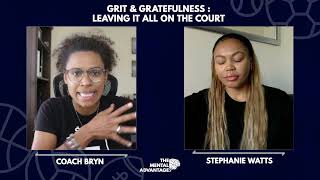
In this episode of the Grit & Gratefulness podcast, host Bryn Drescher sits down with WNBA player Stephanie Watts to explore her path from early basketball experiences to the professional league. The conversation covers her upbringing on the court, the pivotal injury and rehabilitation that tested her mental resilience, and the broader role of sports psychology in shaping identity, perspective, and mindset. Watts shares candid thoughts on handling social media scrutiny, the pressures of online criticism, and offers practical advice for young athletes about early specialization versus playing multiple sports. The episode also delves into the WNBA draft process, the challenges of relocating internationally, and the importance of family support. A rapid‑fire segment reveals personal quirks—favorite snack, ice‑cream flavor, superpower choice, and even toilet‑paper preferences—adding a light‑hearted human touch. Throughout, Watts emphasizes mental‑health advocacy, urging young athletes to seek help, reach out, and stay present, while providing her Instagram handle for direct contact. The discussion concludes with an invitation for teams and coaches to engage her for mentorship and mental‑health workshops.
Chapters
Now, a lot of people have mental health professionals, like, you know, sports psychologists, things like that, but athletes don't go talk to them usually, right? Unless they're kind of like— now it's gotten better, but do you recommend athletes go talk to them even before the problem, or are you kind of like, I mean, I think it's good that they're there and you need them when you need them? And I'm, I'm okay with whatever you decide because I want you to speak from, you know, the authenticness of, you know, where you're coming from.
I think everybody, whether you're an athlete or not, should talk to a mental health professional. Like everybody in life, like whether how you're feeling, regardless, like if you're feeling great, I think everybody should talk to a mental health professional, like especially athletes though, because you face so much pressure being an athlete. But I think it's just so important to be able to talk about those things with someone who's qualified to talk about those things and can help you just think through things in life, whether, you know, and it doesn't always have to be you're depressed or, you know, anxious or this, that, but just to talk to someone about how you're feeling how you're feeling, I think is just so important and something that, you know, we don't, you know, we'll train and, you know, train our bodies, but, you know, we take our minds for granted sometimes.
I know, like everybody says, you know, sports are 90% mental, but then it's like, well, show me where we're working on the mental game in this practice schedule. I'm excited for you to see this week's episode, but before we get to that, I have a message for you. If you're a parent of an elite athlete or a coach, of a high-performing team and you want— you're looking for some help or assistance with making them more mentally resilient, perform with more confidence, be more consistent, anything like that, then this is for you. I have an 8-week program all designed to address exactly that, to help your athlete be at their best on a more consistent basis and not get tripped up by those little voices in their head and getting down on themselves for mistakes. Performing like we know they can. So what I want you to do is don't delay, schedule a— just grab a time on my calendar through this link, and let's set up a time to talk about your specific situation and how what I'm offering in my 8-week program can help. Okay, so it's brindresher.com/freeconsultation. So click this link, grab a time on my calendar. I look forward to talking to you. And now on to this week's episode. Hello, hello, hello again, podcast listeners of the Mental Advantage Podcast. We have a great guest today, and she is actually currently down under, all right, in the good old country of Australia. So we're going to be talking to Stephanie Watts today. How you doing, Stephanie?
I'm well, thanks for having me.
Fantastic, fantastic. So Stephanie, I know that you play the sport of the ball love the basket, basketball, okay, or you're a hooper. Tell me a little bit about how you got started in basketball. Like, who introduced you? Was it your first sport? You know, how'd you fall into basketball?
So my whole family played. My dad played at LIU. We're from New York. My two older brothers played. So I found myself just wanting to do everything they did. So, you know, my older brothers was at practice, you know, I was on the sideline dribbling. And then when I got old enough, I was hopping into their practices. So then My dad started coaching my team when I was younger. And, you know, it's just really a family thing. So that's how I got started.
Nice. It's kind of like basketball royalty, right? Like, like, you know what I mean? Like, it's just like it gets passed down from generation to generation. So you said you were playing with the boys at a young age. Do you recommend that for like young ladies as they're coming up? Because, you know, there's all this thing about women's basketball, men's basketball, men, women's versus men's basketball, what do you think about becoming a better basketball player? Do you recommend that?
I think definitely. It makes you tough. When I was really young, my all-girls team, we played in a boys' league. So I think, you know, just it makes you tougher. Playing against boys is definitely good for girls, you know, especially, you know, they're a little bit more, you know, quicker, athletic. So, you know, when you're playing against girls now, you're, you know, it feels easy. So I think playing against boys, especially at a young age while the ball is still the same, is definitely helpful for young girls. Nice.
So obviously coming up in basketball, you, you know, you had a lot of mentorship from your father as well as your brothers. Would you say that you already were naturally gifted or would you say that it was a little bit of both? Like kind of like, you know, the work ethic that you put in and the time, or you were just like already noticed you were kind of ahead of the competition?
I think I was pretty athletic. I think that's genes, but I think also from like a young age, I just loved basketball. So I found myself always in a gym, you know, after high school or middle school practice, I was going to my brother's practice to practice more. So I think like it all kind of rolled together. And I think definitely a big part was work ethic and how much I was in the gym is how I was able to do so.
Did you ever sleep with your basketball? Is that a thing? I don't know.
I didn't. Okay.
No, they're pretty dirty after, you know, all the time that we play, especially indoors and outdoors. As far as your father being your coach and not anything against— I'm sure you have a wonderful father. Is that a difficult situation to be in, being coached by your dad or, you know, and him being your dad, you know?
Yeah. Yeah. I feel like with our personalities, we can laugh about it, but at the same time, like, You know, there were times when I was younger and, you know, he's telling me something during the game and I'm just like, mm-mm, I don't want to, you know. When it's your dad and you hear him all day, every day, and it's just like you get tired of his voice. So it's just kind of like that dynamic and you feel like, you know, he's picking on you more, yelling at you more when you're younger. So things, little things like that. And then now, you know, we look back and crack up, you know, I'd be like, okay, well, if I'm playing so bad, don't sub me in, you know, and it's your dad, you know, like you can say anything. Just little stuff like that, definitely. You know, my mom was mad at him. For, you know, yelling at us and still talking about basketball while we're at the dinner table, that type of thing.
Yeah, some households you have to have that rule, right? Like, no basketball at the table, right? Nice. When you got— when did you start— like, obviously you always loved basketball, but when did you start to get, like, I mean, serious about it, if that makes sense? Or was there a moment? Was there a shift for you at any point where it was like, okay, this is, like, the thing? For me. Yeah.
So like when I was growing up, I played soccer, lacrosse, tennis, ballet, tap dancing. Like I did it all growing up. So then at some point, like when I was missing, you know, basketball because I had a ballet rehearsal or because I had, you know, lacrosse practice, my dad was like, well, you should probably like, you know, get more serious about basketball if you want to be good, you know? Yeah. So I think today it makes it like a lot of people back in the day played every sport and that was okay. But I think today when you want to get really good and hone in on one sport, it's hard when you're like, you know, watering yourself out playing a whole bunch of different things. So me and my dad kind of decided that I was just gonna stick with basketball when I was probably— when I was young though, probably like 4th grade.
Nice. So 4th grade, like, you know, really making that decision, because I think a lot of, you know, young athletes or people kind of like, well, why do I have to choose? Like, you know, I have an athlete right now that she does not want to choose, and I was like, I don't know of a 3-sport athlete in college, but if you want to try that Um, but yeah, so your recommendation is to pick something these days because it's become so professionalized, right? Like the whole club circuit and stuff like that.
And I think it's all dependent upon your goals. Like if you want to have fun and play every sport, I think that's like something great too. Like I think it's so nice to be able to experience different sports. I loved ballet, I love tennis, I love lacrosse. So I'm glad I had those opportunities. And if you want to continue with that, that's fine too. But I think you have to understand also, if you do want to play at the highest level, it's tough doing that with multiple sports. So I think it is, you know, important to make a decision if you are serious about one over the rest.
There you go. Now, when we've heard before that multi-sport athletes have like an advantage sometimes, like bringing that into the other sports. Now you said ballet. I definitely would not think like from ballet to basketball. In fact, if you write a book, I need you to title it that, and you can pay me royalties, of course, uh, from ballet to basketball. But, uh, what did you— what would you say, if anything, that you felt you brought in from those other sports into basketball?
Um, I think for me the biggest thing was like at soccer practice or at lacrosse practice, we were running so much. Like, so that got— I think that really got me in shape because I think like those type of shapes are different than even basketball shape. Like, we ran, ran. So yeah, I think 'Cause I, and me personally, like I was always more serious about basketball, so I wasn't as serious about the other sports. But I think, yeah, the conditioning from the other sports definitely helped me with basketball.
Yeah, there you go. So you obviously, like you said, you decided to kind of like, you know, cut all the other sports off, focus. 4th grade, you went through, I'm assuming junior high. When did you have your first like, big moment on a basketball court that you were like, you know, kind of like, yeah, this is like exactly what I want it to feel like?
So when I was in New York, my team, we were undefeated for 2 years, back-to-back state champs. Like it was all, you know, in the papers and the news in New York. So that was like my first time, like being on the news and the newspapers and my family was excited. And I thought it was so cool that I was getting interviewed on the news in like 3rd, 4th grade. So that was like a really cool moment for me.
Nice, that's awesome. And who were your heroes coming up? Who were your basketball heroes at that time?
Um, honestly, only my brothers and my dad like basketball, and my mom of course too. She wasn't as into basketball, but you know, us growing up, she became more and more into it. But basketball-wise, just my brothers and my dad. Like, I wanted to be like them. I wanted to do everything they did.
So nice. So you weren't like looking at the Kobes and the— I mean, I've been, you know, I mean, obviously I don't know exactly the generation time and all that. I know you're younger than them, but I just, you know, I don't know who the contemporaries are that you would have been like looking up to. Um, okay, cool. That's great to not have like— it wasn't too high. So as you're going through sports, when did you, if anything, become aware— since this is called the Mental Advantage Podcast— become aware of the mental game? Like kind of like, uh, yeah, maybe this there's a little bit more to this than just the physical?
Honestly, probably not until I got to college. When I went to college, I had like my first major injury, a knee surgery, cartilage transfer. So that was like a really big surgery. I was out for a full year, like, you know, on crutches probably for 5 months before that, then, you know, didn't touch a basketball for a full year. And, you know, unless I was dribbling in a chair or something like that. So, and you know, it's tough, like, you know, some people were like, with that injury, people don't come back from it, this, that, and the other. So like, I was, you know, going through a hard time for that year. So I think that was when I really was introduced to like, you know, your mental health and, you know, staying on top of your mental health as an athlete.
Yeah, absolutely. I mean, injury recovery is so important to so many athletes 'cause like, as you've mentioned, basketball was so important to you, right? Your heroes were basketball players, obviously your family members as well. And, you know, you already were like, okay, I'm burning the ships. Basketball is the thing. So when you can't play basketball, what would you say happens to somebody like you who so identifies with it?
In the beginning, you're just like, well, now what? You know, it's my first thing. Like, okay, well, I go to the gym. Like, you know, I go to school, I go to practice, and then I go back to the gym later. And like, that's really just my life. Like, that's all I ever did. So when I couldn't do that, I was just kind of like, you know, and I think in a rut for a while, like figuring out like, well, what do I like to do outside of basketball? You know, things like that.
Nice. Now, did somebody give you that tip about what do you like to do outside of basketball? Or was that something that you just kind of came to after like, I don't have anything else that I can do. I mean, I can't do basketball. So, you know, you were kind of forced to think that way.
I think I was just kind of forced to think that way. And it like, it didn't happen quickly. Like I still, you know, wanted to go to the gym and just sit in the chair and dribble and, you know, and I'm just like, okay, you can't, like, I'm not playing basketball right now. Like I'm in a full leg cast. Like figure out, you know, what else do I actually want to do? So I started spending more time with, you know, friends and things like that that I couldn't do before. So.
What would you say would be the advantage to going? And I know this is an interesting question, right? 'Cause obviously being injured, no one would ever want want that, but is there any part of you that is like that? What is the grateful for that period of time? Because it maybe gave you, if anything, like, you know, a different perspective.
I think the biggest thing for me was I learned so much watching the games on the bench. I learned like, because I came into North Carolina as, you know, playing 35 minutes a game, like as a freshman. So like, I never watched the game. So to like see the game from the sideline is just a whole different perspective. Like, I feel like I learned so much about basketball in that year than I did maybe, you know, in the rest of my years of college. Like, watching the game and just being able to, you know, get that coach's perspective helped me so much and helped me learn.
Nice, nice. A coach's perspective. What would be the advice that you would give to others that are playing 35 minutes a game? Obviously you wouldn't tell them to go out and get injured, but what would be your advice to them to maybe get that perspective without necessarily having to to, you know, go through the difficulty of an injury?
Film. Film wasn't something I was big on until college. So not even my first couple of years at college, I wasn't huge on film. I watched it, you know, with the team when I had to, but just, you can't watch enough film and seeing, you know, where you can improve, what you could have did better, decision-making. So I think getting that aspect from film is also helpful.
Nice, nice. Now your position is a point guard, is that correct? Or am I— do I have that wrong?
More of a shooting guard.
More of a shooting guard. Excuse me. Yeah, nice, nice. So as a lot of people do, um, a lot of people do go through injuries, right? And I kind of want to stay with this for a second because I, I love how it gave you a perspective on basketball. But since I work with athletes on the mental game, I do want to talk about what it gave you a perspective on Stephanie. Do you remember what, if anything, that it did for you?
Trying to, it was years ago.
Yeah.
I mean, I think it's like when I really realized like, you know, you're more than just a basketball player. Like basketball is something you do, it's not who you are. So I think it kind of helped me with that aspect because like, you know, before it was just like, you know, I have a bad game, a bad practice. I'm, you know, thinking about that the rest of the day because that's what I am. I am basketball. Like, so I defined myself through basketball. So I think when I had an injury, it kind of, you know, made me realize like, okay, you know, basketball is more so something you do rather than who you are. Mm.
That's such a good message. Such a good message for everyone to really listen to. It's funny, I was on a call with Earl and some of, you know, the people that you know. And I was like, I just want to say, guys, basketball is not life. And they were like, "What? No, no." I was like, "No, I'm telling you guys, basketball is not life. I know that it is a big part of your life, but it is not life." And that's so important.
And that's so important to be understood at an early age because I think with the seriousness that I was talking about, about honing in on one sport, sometimes, you know, people take that to the next level. And, you know, kids are stressed out about college scholarships at a young age and things like that when it's just like, I was fortunate enough to grow up with a dad that, you know, even when college coaches were trying to come to my games at a young age, he's like, we're not doing that. That's not the focus right now. Like, we're worried about having fun. So my dad wasn't even allowing college coaches at my game when I was too young. It's like, you just put too much pressure on the game of basketball. Like, you know, you're supposed to just play and have fun when you're young. Like, you're in 7th, 8th grade, why are, you know, coaches don't need to be come watching you and things like that. So I think nowadays people are, you know, focused on like, okay, how am I going to get a scholarship? Or, you know, what do I need to do? You know, things like that. And it's just like, you know, relax, have fun, love the game, and, you know, it'll love you back.
Mm, that's so powerful. I, I, I cannot tell you how refreshing that is to hear because of course, right, it's like, you know, this is the same thing that happens with academics, right? They're taking AP classes and trying to stack their schedule. Everything's all about this end goal of college and then this end career. What do you think— and I know you're saying it's all about having fun— but how would you advise someone like yourself if you were to talk to your younger self? And not if someone who doesn't have maybe a dad who's who's kind of running defense for you like that. What would you advise to somebody who's a phenom like yourself, who's like, you know, the coaches are trying to pluck them, like to stay that focused, you know, stay focused on fun and enjoying the game, you know, throughout their career. You know, how would they set it up?
That's, I mean, I think it's all about knowing yourself, like, you know, doing, doing what you need to do because it's not always to say like, you know, go to the gym when you feel like it or, you know, just all about fun. Like, you know, I still had a strict schedule. Like, I'm, you know, go to the gym when you don't feel like going to the gym. Like, it's not all, you know, you're missing your friend's birthday party because you have to go to the gym, things like that. So I'm not saying it's all like, you know, fun and games. Like, it's a sacrifice and it's tough. But at the same time, I think you shouldn't put so much pressure on the future and what people are thinking or saying and rankings and things like that because I think it that's like your end goal. And you know, you're worried about that, you know, if you don't reach that, you're gonna feel like, well, this was for nothing, or I didn't reach my goals, or I didn't, you know, do that, when in reality, like, you know, you enjoyed the journey along. So I think it's just about enjoying the journey rather than focusing on some all-in goal.
Yeah, yeah. So now that you are obviously further along, you recovered from your injury, thank God. You've got this great perspective of like now looking at the game from a different perspective, decision-making, a coach's lens. What happened coming out of that injury? Like, what would you see? Like, you know, what happened to your game after that?
Honestly, I feel like, you know, I was able to make better decisions. And, you know, with me, like, I took rehab really seriously. And I think that's something all athletes should realize, you know, when going through an injury, a lot of the time, you know, you're like, I just want to play. I don't feel like doing rehab for hours every day and doing all the extra stuff that the doctors are recommending. I had a knee bending machine that I had to use for 8 hours a day. So I'm not sure how many people would have really sat on their couch or in bed and had their knee bent for a full 8 hours every single day. But if they were like, 8's the minimum, I'm doing 9. I was just doing extra knee rehab to make sure I was going to be able to come back from this injury after people were telling me, people close to me, around me were telling me, people don't come back from that and things like that. So I think it's just so important to, to hone in and focus and know yourself and your work ethic and know that, you know, you can do what you put your mind to. Like, if you're, you know, focused and determined on doing your rehab, you know, you're going to be solid. So it's just important to stick with that though.
Yeah, not feed into that fear, right? Like, everyone's trying to tell you what's possible for you, and you just gotta know, like, you gotta know yourself, right? So powerful. Like, yeah, because I've had athletes that have gone through injuries and like sometimes when that's when they come to me is when they're going through the injury time. And I was like, no one gets to determine what's possible for you. Literally no one. Like, even though they tell you, like, they can only give you what they know based on past. The only thing they don't have is what's inside of you. So great advice. And it sounds like you're really talking about process over outcome, right? Like, don't be so focused focused on the outcome, like really focus on, you know, having fun and enjoying the game. Now, as you've gone up in the ranks of, you know, winning state championships, you know, having obviously a stellar high school career, getting recruited, then going through the injury, then going back to, I'm sure, the top of the game, how have you maintained fun even in the process of that when the stakes are higher?
Uh, it's hard. It's, you know, it's, it's not easy at all because I think that's why some people look back and, you know, miss college, miss high school, because, you know, everything was just more fun. And when it turns into business, that's nice because, you know, now you're, you know, making money to play the game that you love and, you know, you don't— can't take that for granted. But at the same time, it really is a business, you know, you're not in it for the same reasons that you were before. So it's, it's difficult. But, um, I think I think what keeps it fun for me is just your mindset and just knowing like why you play basketball and just not forgetting that and not losing that no matter what the people around you are saying, no matter what, you know, people on Twitter and social media are saying, reminding yourself like why you play basketball and you know, why you love the game and just having fun with that. So.
Yeah. You brought up social media when you're, you know, when you were playing and like obviously playing for Carolina, which is a, you know, high-profile school, is that something that like you pay attention to? Like going to Twitter and, you know, obviously having the good games and then the bad games. Like how do you manage that as an athlete or what advice do you have for those that are kind of going through that to kind of navigate it better?
Yeah, that's, yeah, that's, that's, it's tough. It could, because like when you're an athlete, And especially, you know, at a high level, like that becomes your identity. So you feel like, you know, like I was saying before, when you have a bad game, like, you know, you let that eat you up and you let that feel like that's who you are. And I think it's just remembering, like, you're just so much, you know, you can't say it enough, you're so much bigger than the game of basketball. Like that's literally something you do. Like it's not you as a person, it has nothing to do with who you are as a person. So I think it's just remembering that and, you know, ingraining that into yourself that, you know, if you have a bad game, everyone, has a bad game, like, you're, you know, you're thinking about it 3 days later, but you're really the only one thinking about it 3 days later. Like, no one's, you know, really on that.
That's true, right? Most, most fans are not thinking about the game after the game, right?
Some are. I mean, I'd say some, some, some definitely are, but, you know.
Oh no, yes, yes, I said most, most aren't, right?
But I mean, a lot of people, like, if you followed me this year, like, Even this year, I got drafted high, but I started off the season shooting— I wish I had the number, but I couldn't make a 3. Like, and my whole career was based off 3-pointers. Like, my whole entire career was based off 3-pointers. But I was just coming— I had 2 actual knee surgeries in college, so I had to redshirt twice. So I redshirted the year before I came back this year. I had redshirted that full year, didn't play a game of basketball. So when I came back, I was I couldn't make a shot. So, you know, everyone on Twitter is like, you know, stop shooting this, that, or the other, you know? And I'm just like, okay, I need to stop getting on Twitter. But, you know, you see that kind of stuff and it's just like, sheesh, like, you know, you're a person too. So you're going to, you know, read that and, you know, not always be able to just ignore everything. But at the same time, you know, you have to be able to look past that too and know like the people on Twitter, like they don't play basketball. They don't know anything about basketball. Like, you know, it's all a process and it's all a journey. Journey.
Yes, absolutely. Okay, so when you weren't— when you were in, you weren't— like you said, you're rusty, you're coming back, you're not making the threes. What did you do to kind of— besides conditioning, what did you sort of— you mentioned mindset. What did you have to do besides like, okay, I'm gonna, I'm gonna shut down Twitter, I know I'm rusty. What other things do you feed your— how do you feed your mindset to kind of stay on that positive path of like, this can be fixed, this is just a season or a period or whatever the case is.
Yeah, it was tough because sometimes after an injury people like let that define you, like, oh, she couldn't come back from the injury. So, you know, when it's like 4, 5, 6 games in and you're not playing well, they're like, oh, you know, they didn't— they weren't able to come back from the injury. And people like define you through basketball, so it's hard not to sometimes define yourself when that has so much to do with like what you want to do in and your goals. But yeah, honestly, for me, it was hard to like see past that because, you know, in the back of my head, I'm like, okay, was this injury like, you know, is that really—
Yeah.
Did that take a toll on my performance? Like, you know, in the back of my mind, I'm like, okay, I can do this, but it's hard. And for me, like, it was a little bit easier because I had so many people in my corner, like my dad and my family. Like, I could have played the worst game and, you know, my dad's gonna tell me like, why didn't they get you the ball more, this, that. And I'm just looking like, because I don't need the ball. But when you have people in your corner, like, telling you that you can do anything and having so much faith in you, you can't help but have faith in yourself. So it's just like—
Yeah. Keep going.
Yeah. Yeah, it's really getting the right people around you, talking to the right people. I talked to a mental health professional at UNC. So, you know, I think that was helpful for me as well. Yeah, I think it's just getting the right people around you, not listening to the critics, not listening— even if the critics are, you know, people very close to you, people authority around you. Like, it's, it's just knowing yourself and believing in yourself regardless.
Yeah, so good. Have the right team around you, get support from maybe, you know, somebody who specializes in that area. Um, those are great. Now, a lot of people have mental health professionals, like, you know, sports psychologists, things like that, but athletes don't go talk to them usually, right? Unless they're kind of like— now it's gotten better, but do you recommend athletes go talk to them even before the problem, or are you kind of like, I mean, I think it's good that they're there and you need them when you need them. And I'm, I'm okay with whatever you decide because I want you to speak from, you know, the authenticness of, you know, where you're coming from.
I think everybody, whether you're an athlete or not, should talk to a mental health professional. Like, everybody in life, like, whether how you're feeling, regardless, like, if you're feeling great, if you're— I think everybody should talk to a mental health professional, like, especially athletes, though, because you face so much pressure being an athlete. But I, I think it's just so important to be able to talk about those things with someone who's qualified to talk about those things and can help you just think through things in life, whether, you know, and it doesn't always have to be you're depressed or, you know, anxious or this, that, but just to talk to someone about how you're feeling, I think is just so important and something that, you know, we don't, you know, we'll train and, you know, train our bodies, but, you know, we take our minds for granted sometimes.
I know, like everybody says, you know, sports are 90% mental, but then it's like, well, show me where we're working on the mental game in this practice this schedule, you know, like even the teams, like they don't really— so is your team in Australia, and nothing against them, I'm just, you know, do you— is that, or is that being supported in, in the higher levels of basketball that you've seen? Even if you don't want to talk specifically about your team, but are you seeing that support on the higher levels in general?
I don't think it's something that's talked about. I think, you know, if, if you bring it up maybe, and if you're comfortable bringing it up and go to someone and seek help, then you can probably get that help.
Yeah.
But a people aren't comfortable bringing that up and going out and seeking that help. So I think that it should be something that's more widely available without someone having to, you know, go every which way to try to seek that themselves. Because I think as an athlete, sometimes it's hard and it's not talked about. So I think it needs to be more, um, more accessible.
Yeah, obviously the Olympics just happened, and this last year we've had a lot of talk about mental health with Simone Biles as well as Naomi Osaka. What are your thoughts on like, you know, the way that the public responds to those type of things coming from the athlete perspective? And you've kind of spoken about it, like, you know, they don't play basketball, they don't play the sport, but like how people respond to mental health injuries versus like, you know, she's in a body cast or a full body cast. So it's like different, right? She can't play basketball.
Yeah. I think it's so important as a person just to have grace. I think people who know me know, like, I'm just a very compassionate person. I'm always gonna ask my friends, like, how are you feeling? Like, are you okay? Are you good? And that's because, like, I know when I was in those times, like, I needed people to ask me that. So now I look at that and I just try to do that for people and do that for friends. So when people just have so little compassion and grace for people and you always have to know what someone's going through to have that grace, I think that that's just so not fair to athletes because as a person, you know, people go through bad days and have bad days, but as an athlete, you know, you're not allowed to have a bad day. And I think every athlete's heard like, whatever you're going through, leave that off the court and, you know, don't bring that to the gym. And it's just like, that's just not realistic. Like athletes are people. And yeah, I think it's just, it's sad that people have to know like, okay, well I had a death in my family. That's why I'm not like, you know, performing at my top. Like, I feel like you shouldn't have to say that. You should know people, like, are real people and they have lives. Like, yeah, I mean, when I'm going through stuff in my life and people are gonna ask me about this with, you know, my situation with the WNBA or this and that, like, I— like, the night before my first WNBA game, my grandfather passed away. And, you know, people talk about basketball, it just seems so trivial. Like, for months I could care less about basketball. So little things like that are just, you know, so important to recognize as a fan that athletes are human beings as well.
Hex. Yeah, I mean, it's— yeah, and you, you hit the nail on the head when you said like you have to explain, like the fact that they're like, oh well, tell me why this is happening. And it's like, I don't— I mean, you know, even with Naomi Osaka having to say, well, just so you guys know, the reason I don't want to talk to the press is that I've been battling depression. And like she had to say it because people are like, what, you're having a bad day? You got a headache? It's like, no, if I tell you— like, I just, I feel like there's interesting mindset, like knowing the type of competitor that it takes to go as far as you have gone in sport, right? To play the tops of the top. You're not the kind of person that's phoning in a game. You know what I mean? So it's just ridiculous. Like the idea that Stephanie Watts would just be like, "Yeah, I don't want to play basketball today. I just don't feel like it because it's Tuesday." Like, you know, it doesn't even make sense. I mean, that stuff has to get under your skin. Like, you know, when you're in that world and kind of like want to protect you know, each other as well as, you know, your fellow elite athletes.
Yeah, definitely. Like, it's sad to see that, you know, people are throwing so much hate, you know, at people who just want to do what's best for them, their families, their mental health. And it's just like, you know, if someone in the corporate world wants to make decisions that's best for them, you know, no one's paying it any mind. But when it's basketball and there's fans involved, you know, you're supposed to please the fans and please other people that are, you know, watching you and things like that. When it's just like, you have to do what's best for you at all times, regardless awareness of that, what that might look like to the public. And you shouldn't have to go out of your way to explain that, you know, the decisions you make.
Agreed. I, I hope that people that are listening that are fans can kind of get like more of that compassion, right? Like, this is a person, because we don't come to your job and boo you. And, you know, someone said this on Clubhouse, and it— I, I don't know why it had never occurred to me, because obviously I've been working in the athlete space for a little while, but it was like, we tell— you said this, like, they tell everybody everybody leave it all on the court or leave it off the court, right? But it's very difficult when people are tweeting you your highlights and, you know, like, oh, look it, here's a compilation of all the shots you missed, or here's that really bad play at the end of the game. And then they're playing it over and over on SportsCenter, et cetera. And then it's like, hey, but you should just not think about it. But it's like, how do I block it out when it's being piped in, you know, like if I have a bad day at work, nobody's, you know, sending me a video of the replay of that.
Yeah. And I mean, just the things that's going on, like in people's lives off the court, you know, you're expected to come and, you know, operate at, you know, 100% every single game day. Like a game day can never just be a bad day for you as a person. Like, you know, you're, you're looked at as, you know, who you are as an athlete, you know, you can't say like, okay, I'm having a bad day, like this might have just happened to me. Like you're expected to just leave all of that. And as a person, it's just not fully realistic.
Yeah, absolutely. Absolutely. And I think, yeah, and thank you for like speaking to this because people need to hear these things. Like, right? Like we're humans first, right? And we happen to play this sport at a high level. And you need to understand that just like we all have bad days, everybody has a bad day and it's okay. We can be, like you said, great Grace. So, so good. Um, now I, I know with the WNBA, and there's the NBA draft, right? And if you get drafted in the first round, you get a contract, right? And as far as I know, right, with the NBA, the WNBA is a little different, correct? Like, it—
I, I—
tell me a little bit about that process, because as someone who lived through it, like, obviously the moment of draft day, you have your moment, you get drafted by a team, what happens next? How's that work for a WNBA player? Because we haven't had, you know, a lot of exposure to that process.
Yeah. So, um, with the WNBA, the draft happens, um, it's right after your college season basically. So with all in the same like month-ish timeframe. Um, yeah. So you're going back to back from, you know, the NCAA tournament and then the draft happens. And then probably 2 days after that, you're 2, 3 days after that, you're leaving to go to whatever city you've been drafted to. So that's all a pretty quick process. But with the W, there's no guaranteed contracts even for first-round picks. So none of that is, nothing is guaranteed. So you're going to a team with, you know, that could have basically a full roster. So as you're coming in, you know, you're either competing there to, you know, earn a spot on the team no matter when you were drafted, because with the WNBA, since there's only 12 teams, you could essentially be drafted and, you know, 16, 17, sometimes, you know, 20+ people at training camp, only 12, 11 spots on the team. So no matter, you know, where you're getting drafted to, you might be trying to beat out a 4-year vet for a spot on a team. So, you know, it's just that navigating that whole process in the W is a lot different.
First and foremost, is, is there any kind of movement to change that? Because I can only imagine— I mean, I understand earning your spot, I understand not having it handed to you and wanting to not just be given this, but to have done all this hard work in college to be drafted in the first round and know that you might not make the roster. I mean, what does that feel like?
Yeah, I mean, for me it was just like, okay, the draft was fun and all. And you know, it's still like an honor and, you know, one of the big accomplishments in my life to be drafted to the WNBA. I mean, not a lot of, you know, it was, you know, a great experience for me, but at the same time, Okay, this is just the beginning because now it's just about making the team, you know?
Yeah, yeah, yeah, yeah. So you obviously went through that process. Are they changing anything about this, like, to make it— because I know there's some stuff that they're trying to up the agreements to pay women more. Is there any, any movement to kind of change that? Because obviously, why does the NBA get guaranteed contracts? I understand there's more money, but why does the NBA get guaranteed contracts and then you don't, if you're earning— I mean, you're, you're still one of the top 10 or top whatever the first round is. I don't know how many are— how many? You said 12 teams, so 12 people, right? Top 12 in the freaking nation. And then it's like, oh, but you might not make a team.
So, you know, yeah, I think in that sense, um, women's— yeah, there's not a lot of teams because obviously, um, we haven't reached, you know, full equality yet. So, you know, there's only 12 WNBA teams. A lot teams can't even afford a full 12-man roster. So some teams are down, you know, going to 11. Like, so it's just, there's, there's not as much money. There's, um, so that's just kind of the process right now with the WNBA. It's, yeah, it's, um, yeah, it's a tougher process, but I think that makes it even more worth it, the fact that, you know, it's just so hard and so rare. But at the same time, there does— there is a need for expansion because, you know, there's so many great players that, um, aren't getting the opportunities, like even to come to training camp and to get the chance to, you know, try to make a roster. So I think there definitely is a need for expansion.
And I've heard, and please correct me if I'm wrong, that there's actually more money overseas than there is to play in the WNBA. I mean, absent sponsorships and big names, but is this true?
For the most part, yes. For the most part, you're gonna make, as a woman, you're gonna make more money overseas than you are in America for probably, I would assume, the average player. Like.
Wow, that's crazy.
Yeah, insane that, you know, women have to go overseas where there's more, you know, reciprocation and money in women's basketball to, you know, provide and playing basketball.
So as far as overseas and, uh, what's the name of the team that you play for now?
The Sydney Flames.
Say it again. The Sydney Flames, is that the name? Okay, sorry, I just want to make sure I heard it right. Okay, so the Sydney Flames, that's kind of a cool name. You're a flame. All right. Um, is it like star status over there? Like, because I know we don't have that type of treatment here with women's basketball. What we do for some, right? Some big names like, uh, I mean, it's getting better, right? Candace Parker, Sue Bird, Tarassi, and, you know, uh, A'ja Wilson and stuff like that. Uh, but what's it like over there playing basketball? I mean, I know you're away from your family, away from everybody you love, not to say that you don't have friends there that, um, cause I'm, you know, you have a great personality and I'm sure you made lots of friends already, but what's it like playing overseas? Like the good and the not so fun sometimes.
Yeah. So we're, um, we're in training camp right now. The season here was pushed back until December, so we're not going to start any playing any games until December. So we're still in season. So I've been, I've been here, I think a little over a month now. I had to quarantine for 2 weeks when I first got here. So I haven't, you know, been, in the scene too much, you know, having played games and things like that. But I mean, I'm having a good experience with it. Yeah, the team is great. The coaches are great. It feels more— at the same time, it's a business, but it does feel more like family-oriented, you know, there's, you know, more, I don't know, more fun to it, I think, overseas, at least from my experience so far. But, you know, I'm a experience in Sydney, Australia. I think it's a once-in-a-lifetime opportunity, you know, to get to play the game you love, you know, in a, in a different country, you know, then, you know, and seeing the world. So I'm blessed and, you know, excited for the opportunity.
Yeah, absolutely. Now obviously you're focusing on what this great opportunity you have, and then you have people like me who come along and go, hey, so, which, you know, I'm just recognizing the ignorance of this question, but as you're trying to focus on the career that you have, what's it like when people kind of like, "Hey, so do you want to come back to the WNBA? What do you want to do? What are your plans?" And you just got there. So how does that feel? Like, what do you want people to know when they kind of ask questions like that?
Yeah, I think, I mean, yeah. And I don't mind questions and people asking, you know, about where I want to be and what I want to do in the future. But I think more importantly for me, it's just enjoying the journey I'm on now. Like, I just feel so like blessed to have the opportunity. Like I'm getting, you know, my job is to go play basketball, like, you know, in Australia, like, come to Australia and play basketball is your job. And I would have never thought, like, as a kid growing up, like, I would have the opportunity to get to do something like this. So I just feel so, like, thankful every single day, like, that, you know, this is my life and this is what I get to do because of, you know, the sacrifices I've made my whole life when I was younger. So I'm just glad for where I'm at right now. And, you know, whatever comes in the future comes, but I'm so thankful for where I'm at right now.
Yeah, absolutely. Absolutely. So as far as your— you just spoke about gratitude. How important do you think that is for an athlete? Gratitude, gratefulness, not just about like being able to play the game of basketball, but like to keep a certain mindset, any of that. How important do you think that is?
I think that's the most important thing in life, like as a person, like as a human being. I mean, me personally, I just am grateful for like the little things in life and I try to be. And I think at first it was a conscious effort, but now it's just like, I really like am genuinely so thankful for the little things in life. Like when I take a walk and it's a nice day outside and, you know, there's nice scenery and the beaches are, you know, blue. And I'm just, I feel so like thankful that I get to like, you know, like be here and live this life. Like, so I think it's just so important to be thankful for, you know, the little things. Having a good friend that you can talk to, you know, having a family that supports you, like, it's just something like— that's not even the little things, that's the big things. But I think it's just recognizing that and realizing, like, how, how blessed you are for those things that you may not think about every day or realize are such important factors in your life.
Yeah. As you've obviously come up in the team environment, what do you think is the biggest biggest, uh, benefit to being on a team, like, and being around people? Or what— when you say build a team around you, and obviously there's solo sports like tennis and ice skating and, you know, whatever, and then there's the team sports. What do you think is the most important thing for a player, athletes, to remember as a part of a team, or, you know, that they should want in their teammates?
Um, wanting teammates, probably friends, like people, you know, you can come talk to, people you relate to, people, you know, that you enjoy being around and having conversation with, I think is the most important thing. And of course, people you enjoy playing with on the court as well. But yeah, I think those are some of the most important qualities and factors that I've liked in some of my teammates.
Does that translate to on the court? Like, when you have a good relationship, like, it— does things move differently? Have you had a situation with a teammate Not again asking any names, but like where it was like we didn't really jive, but we worked well on the court, or sometimes the fact that we weren't jiving wasn't working on the court?
Yeah, I think, um, I think sometimes, you know, you can get into that in women's basketball where like someone doesn't like someone and, you know, things aren't as smooth. But I think when there's like a good off-the-court dynamic and you're making that effort to know your teammate as people The things you say that might come out harsh on the court, I think when they know you care about them as a person and you guys have a good relationship off the court, I think things on the court can definitely work a lot more smoother when you know that there's that genuine care for one another.
Yeah. So this is a trick question, Stephanie. Who's your favorite person in women's basketball right now?
Hmm, that's a tough— that's a very tough question. My favorite person in women's basketball. Is that just, just women's basketball in general?
Like, yeah, just like women's basketball in general.
That's a really tough question. Um, wow. Let me think about that.
Can I give you a hint who it should be?
Who's that?
Stephanie Watts.
Yeah, listen, that might be my answer right about now.
It should be. I mean, okay, I apologize for shoulding on you, but I think, you know, uh, the, you know, your favorite person in women's basketball should be the person in your uniform, right?
Yeah, 100%. 100%.
Because, you know, everybody— because it's always interesting to me, this whole dynamic, because I love that you said that it was your parents and your mom and your brothers. Because it's always been interesting to me that other people want to wear other people's names on their back. And I understand that that's how they sell the jerseys, but just this idea that I'm gonna wear someone someone else's name on my back has just always been phenomenal. Like, just an interesting phenomenon to me. Like, I want to wear my name on my back.
Yeah. And I think when you ask me, like, who's my favorite people in women's basketball, I think I wasn't even thinking, like, players or coaches, like, as far as their athletic ability. Yeah. Like, advocates, like, people like Natasha Cloud who are advocating for things. Yeah. And using their platforms for a bigger purpose. So I think those are my favorite people in women's basketball.
That's also a very good answer. Of course, there are no right answers here. Just, uh, that's why I said it was a trick question because I was just, you know, saying like, oh, is she gonna say her? But, um, it was kind of like when Draymond Green's like, I think I'm the best. I have to believe that, that I'm the best out there, you know? Like, that's part of the attitude you have to have when you're out on that court. Um, I think that's really important. Uh, the other question I wanted to ask you, and this is kind of a— I've asked, I asked Earl this question, and I know, uh, for those of you that watch the, the podcast episode with Earl, who's a basketball trainer. That's how I came to have the pleasure of Stephanie being on my podcast. So thanks to Earl, shout out to you, coach. But what do you think about all this talk about making women's basketball more marketable, more attractive, more even with men's basketball? I mean, I have my own thoughts, so don't think this is like me setting you up. I'm probably on your side here, but I just want to see like, what do you think about that kind of talk and what do you think?
Yeah, more attractive in what sense?
Because not uniforms, I just mean more marketable or whatever it is, like make it as competitive or like, you know, like the reason that people don't watch women's basketball is compared to men's basketball, right? This is what people are saying. I'm not, you know, and so my thing is like, you know, what do the actual basketball players feel about that kind of talk? And, you know, like when people kind of put that, or even lowering the rims or, you know, stuff like that?
Yeah. I think women should be allowed to play the same basketball that, you know, men are playing and not have to do the extra stuff to, you know, try to lure people into watching. But I do think that there does need to be more exposure. So what we are doing does need to be, you know, aired on the major channels and given the same exposure and, you know, opportunity to thrive as men's basketball. But I don't think we should have to lower our rims and change the game to appeal to outside people.
Yeah, obviously we've met some pretty diehard fans for women's basketball and people are like, I think what I've always said is if you love basketball, then it shouldn't matter who's playing it. It's not about men versus women. It's just, it's good basketball. Women play amazing basketball. Awesome. Thank you for that. I, I did see this on Earl and, uh, Marv's podcast, so I'm gonna ask you because, uh, they asked you LeBron or Kobe, and I need to ask you that on this podcast because I have my own opinions. But I think you and I actually agree. So tell us, is it LeBron or Kobe, or I'll throw Jordan in there because I grew up in Chicago, and so, you know, Jordan, LeBron, LeBron, Kobe, any other greats you want to put in on that list.
But yeah, for me, I think everyone knows I'm taking LeBron all day, every day. It's my greatest of all time. And then, you know, there's a thousand arguments and Kobe and Jordan are obviously great players, amazing players, you know, but I'm still taking LeBron and his all-around game and his will to be my number one.
Yes, I'm with you there. I, I, I mean, I definitely would never put anyone above Jordan because that's just sacrilege from where I'm from. But when it comes to LeBron and Kobe, I'm gonna give it to LeBron, uh, except when it comes to mindset. Not that LeBron does not have a great mindset because he does, I'm sure, but Kobe, man, like, he's the GOAT of mindset, I feel or at least just has more quotes out there. Maybe LeBron needs more quotes.
That's what it is. That might be it. But I think I would agree though. The mindset does just seem different. When I read about people or watch interviews, like I'm watching, even though LeBron I think is the greatest of all time, I'm watching Kobe interviews just to learn more about his mindset and the way he sees the game and his work ethic and how he views basketball. It's just so interesting to me. So I think he has a one of a kind mindset for sure.
Yeah, I mean, just, yeah, that's one thing. Like, I was a Kobe hater. I will be the first to admit that. I've said it before on this podcast. But, you know, because I came up and they would compare Jordan and Kobe, and I'd be like, I don't want to hear it. But once I learned about Kobe's mindset, and being that that's my, my lane, I'm like, oh man, there's just— there's unmatched, you know, there's rare, very rare players that come along that kind of, you know, thought the way that he did and And my biggest sadness about losing Kobe is, besides of course his life and his family and all of those things, it was just what he was going to do for women's basketball. You know, because he was really like this staunch supporter of it. And I just, you know, as much as I know that LeBron is doing his best, I just don't see anyone going at it as hard. You know?
He was just a total advocate in the gym with women at, you know, women's game, supporting, promoting, like doing everything he could to, you know, equal the playing field for women's basketball. So that's something that's, you know, uncommon nowadays and just, I think, won't be matched just with his support and energy and genuine love for women's basketball.
Yeah, absolutely. Did you ever get a chance to meet him?
I know I was in LA for a year when I was at USC and the trainer I trained with trained with Kobe and some of, you know, his girls.. So he asked me a few times, um, do you want to come train with Kobe? And I was like, yeah, I would love to. Like, I'm getting my car shipped in and, you know, 2 weeks, like it was about an hour drive for me. So, you know, I was like, okay, I'll drive down when my car gets shipped in, blah, blah, blah. And within that timeframe. Yeah. So wow. And now I always look back and I'm like, man, I wish I would've went to those workouts. Like I just should have just like took a train or something like that.
You know, just like whatever, like give me a ride. Can anyone give me a ride out there? Yeah, I did get a chance to meet him. Uh, I wouldn't say it would have been on the level that you would have gotten to meet him, but, uh, I, I, mental performance, uh, coaching for an AAU team and they played Kobe's daughter's team. And, uh, uh, yeah, so I got to shake his hand like before the game, like coaches.
That's amazing. I never actually ever got to see him in person, meet him.
Yeah. Yeah, I was like, it was kind of funny because the coach at the time, you know, uh, she's still the head coach, but she was like, yeah, let's go over. Like, like, you know, I'm like, is this something you normally do? Because I didn't want to be like going over there just because it was Kobe, you know. But anyway, I got to shake his hand and his daughter and those guys. I mean, they were 7th graders playing our high schoolers, right? So they were playing up. And, you know, you talk about that toughness and becoming better, and he was definitely going to use the better competition. And I mean, I can only imagine where those girls would have been, you know, if— and I'm sure the Mamba Academy is still going and that'll still continue, but, you know, under his tutelage, you know, there was just— they were just gonna be superstars. And Gigi, obviously, notwithstanding. So yeah, absolutely. But great to meet him in real life because I've never met Jordan in real life, definitely never met LeBron. So meeting Kobe, you know, like, just wow, shake Kobe's hand, really nice, you know.
Yeah.
Um, as far as, uh, like your pregame routine, right? And you say it's all about the process, right? Um, tell me a little bit about what you do, because you did— you said like, you know, it's hard not to, you know, to kind of suffer a bad game, but like what do you do to prepare yourself going into competition that has— you found has helped you and become a better, you know, performer? Um, you know, and kind of keep things into perspective, if anything.
So we always had chapel before a game, so that was like always calming to me to, you know, talk about this life and things like that with that chapel before games, which was always cool. I'll call my family, talk to them, and, you know, I think that's just always so grounding that, you know, however you play, whatever you do, you know, you have to— like, in my 4 years, my family never missed a game, so they're, you know, at every game no matter what. Like, I'm going out to dinner with my family, I'm gonna have a good time regardless of, you know, how I play. So I think for me, um, it was just like calming down and being not so anxious before the game, like, helps me be at my best.
Yeah. When you're, when you're shooting in a game and like you said, things are off and you maybe not are, aren't rusty, what do you, what do you have to tell yourself to like get back in the game or not, or to leave that last shot in the last shot so that you don't take it into the next shot? And I'm not saying it's It's not difficult, but what have you found is helpful?
Just, I think it all comes with experience. So it's just like, you know, the first quarter you could be 0 for whatever from, you know, the field and, you know, you could end the game with still 25 points because there's a second half. Like, you know, just leave the last shot as the last shot. Like, you know, you know that you put the work in, you know, you practice, you know what you're good at. So just stick to that regardless because, you know, that last shot didn't define you. Just next play is always the main goal.
Next play, next play, next play. And what are you doing now, um, understanding, like you said, you're the only person thinking about it 3 days later, what are you doing now, or have you found anything that's helpful to kind of leave it on the court or leave it in the locker room so that you're not carrying it into dinner with your family? Although I'm sure they're going to celebrate regardless, but like, you know, not still be thinking about it. What have you found or what advice do you have for athletes? Even if you're not, you're still mastering it yourself, but what have you, you know, what advice do you have for like kind of leaving it on the court?
Yeah, like you said, still working on it, still, you know, doing that myself. But at the same time, I think just being in the moment, like when you have an off day and time to yourself, like really take that time to yourself, like do things that you enjoy. Like, so you're not like, I'm not saying don't go to the gym on your off days, go to the gym, get some strength training, shots up, but also take that time to do things that you enjoy and get your mind off basketball. Because I think most of the time that anxiousness about like the past comes from like, you know, we're always either thinking about the past or we're thinking about the future and the next game. And it's just like, we never take time to enjoy the present moment that we're in. You know, when you're driving to the gym, don't think about, well, you know, I hope I have a good game or I hope I have a good day at practice. Like enjoy the drive, enjoy the music in your car. Just like enjoy like your present. And I think that's something that, like, we don't do in life, much less as athletes. Like, we're always just thinking about something that happened in the past or something that— what's going to happen in the future when, like, we just don't take the time to enjoy. Like, today's a nice day outside. Like, I get to go, you know, a coffee and, you know, talk to my friends. Like, just enjoying what exactly we're doing in the moment. Yes.
Oh my gosh. You sure you don't want to teach mental performance conditioning, all that stuff? You know, anyway, you want to teach basketball too because you're good at it. So I can't teach basketball, I can only teach the mental game. Um, awesome. That's, uh, so much good. Like, yeah, it's so important to be present. And like you said, you said it right there, like, don't be thinking about the game, like, in, you know, like, oh, I hope I have a good game today, what if I don't have a good game today, like that type of stuff. It's like you haven't even played one second of the game and you're already thinking like it's got to be this way or that way. And it can be really tough. And I remember John Wooden said, uh, that you can play your best and win and lose, and play your worst and win. So it's like really not just about the outcome. 100%. What has been— and I know this is a tough question, but you know, do your best, and if you got more than one, that's fine— uh, your best moment in basketball? Like, you're like, like, you know, what was your favorite moment, maybe?
I think my favorite moment in basketball, honestly, probably getting drafted. I mean, that's just something you dream about as a kid. And you know what, there being so limited WNBA teams, you know, people around you are like, well, you know, it's hard to get drafted. Like, you know, like I told— I'm not even going to say names, but I told, you know, people before the season, you know, coming off my second knee injury, you know, what's, what's your goal this season? To get drafted to the WNBA. I just want to get drafted. I want to hear my name called. You know, people are like, you know, that's a really lofty goal. Like, you know, that's tough to do. And I'm just looking like, wow, like, all right, like, maybe I shouldn't tell them. Like, and they say, like, you know, sometimes outside people can throw off goals. And I think that's so true. Like, you know, so while it's important to speak your dreams, sometimes I think it's important to keep them to yourself too, because sometimes, like, even me hearing that and me being someone who's, like, pretty confident in myself, I'm like, Oh, they don't see me as like, you know, someone that's going to be drafted or, you know, anything like that. So like hearing stuff like that sometimes can, especially depending on your personality, can think like, oh, well, is that not realistic for me? You know, when you believe in yourself, but sometimes other people, a lot of times other people don't believe in you as much as you believe in yourself.
So yeah.
Yeah. So just hearing things like that, you know, when you tell people your goals and, you know, And you're like, well, you know, that's tough. Like, you know, there's not a lot of teams. And so things like that. So it's just believing in yourself.
Yes. Yes. And I mean, congratulations on realizing your dream. I have an interesting question for you, Stephanie, and you may have never thought about this because I know people like to use the word realistic and goals, right? But do you think that your dreams should be realistic?
Um, no, I mean, like, and it's just like, so like, if my dreams were realistic, you know, I wouldn't have had the dreams that I had, like so little people even play professional basketball anywhere. So if I would have said like, okay, well, let me have a more realistic dream, like, so how many people actually get drafted? Or how many people get to go play professional basketball in the country? Or let me have more realistic dreams, like of not being, you know, a professional basketball player when I get you know, I, I wouldn't have had the dreams that I had. So I think if your dreams aren't, you know, big enough for people to question you or to, you know, make you double, double guess it, you know, you're not dreaming big enough.
Yes, yes, yes, yes, yes. If you lived here, I think we'd be friends. I really do. Um, uh, yeah, I, I mean, I'm almost positive because I'm pretty awesome and you're pretty awesome. Awesome together, it works. All right. No, I love this. So what is, this is the last question before we go into the rapid fire questions. What is Stephanie Watts' mental advantage? What would you say is what like gives you that edge over your competition?
Probably so cliché, but just the mental edge, probably. Probably my mindset. Like, I've just been becoming, like, overall, like, I've been through so much with basketball. I mean, like, I had, I had 2 knee surgeries in college. I've been through so much with basketball that, like, I think a bad game doesn't affect me the way it affects most people anymore. Like, just like most days, I just feel so thankful that I get to go play basketball. Like, I'm healthy again. I can go, like, shoot a basketball. Like, I'm happy to be here. So it's just like most people are, like, thinking about the next thing or thinking about, like, like 5 months from now and what they're, you know, this and that. And every game's just, you know, a big deal. And to me, I'm just thankful to be here. So I think I can play with like, you know, a little bit more freedom, a little bit more, you know, loose and less stressed out than a lot of people, just because like, you know, before you have major injuries and I feel like you just see basketball so differently. So now I used to have that mindset, but now like after injuries and not being able to play basketball for so long, I'm just thankful to be here so I can just play for fun and, you know, have a good time doing it. So I love that. Yeah.
So you're like being freed up to enjoy the game because I don't have that stress of like everything is hinging on this. Like, you know, like, hey guys, I'm just grateful that I'm playing and I'm living my dream. So love that. All right, it's time for the rapid fire questions. Are you ready, Stephanie? These are the most personal. Are you ready? Okay, all right. What is your favorite snack? Bananas. Bananas. Okay, all right, here's a question. I've never asked this on any of the podcasts because no one's ever said bananas. I like a banana when it's like turning from green to yellow, but not where you're like peeling it where— I don't know if you ever peeled a banana too soon, but not that, but like when it's a little bit more firm. Some people like them when they're more squishy.
Which one are I'm kind of in between, but if it has green on it, I can't eat it. Like, it needs to be more further along than that.
So like when it's freshly yellow, but it's not got the brown spots on it, right?
It's got brown spots.
You're okay with the brown spots? Okay, got it. You got to have the brown spots. Okay, got it. I've heard, and just so you know, that's actually a more nutrient-dense banana when it's getting a little bit more brown. But when it's green, it's got something in it, something that's good for for you, but I don't, I don't remember. My girlfriend's the nutrition person. So anyway, all right, uh, your favorite flavor of ice cream, if you like ice cream. If you don't, what's your favorite dessert? If you don't like sweets, what's your favorite food?
Um, I have the biggest sweet tooth I think in the world, and my favorite flavor of ice cream is probably like caramel or cookie dough.
Oh, nice. I always ask people— it's kind of— I think I've not thought this through very well, but I'm like, have you ever tried to cook the cookie dough? But I was like, that's they're eating it because it's the dough and not the cookie. So probably not. No one's ever actually tried to cook the cookie dough. All right, uh, if you had a superpower, if you could have any superpower you wanted, or you, you could have any superpower, which one would you want and why?
I probably want to fly just so I could like be in a lot of different places, see all my friends and family, and just see things from a different view too.
Yeah, yeah. Speaking of which, can your family come visit you with everything going on in Australia and how like lockdown it's been, or—
So the country just opened back up, so my parents are trying to, you know, work on, uh, getting out here. So they're just seeing with like how, how everything's going to be with the quarantine process when you get here. So in the next few weeks, they'll probably know for sure, but they're working on booking a trip.
Gotcha. Because I know family's so important to you, so like them being able to be there for you and you having that support. I'm sure that's awesome. Uh, if— okay, so this question is the question that some people have feelings about. You may not care. Uh, everybody has toilet paper. Do you have toilet paper, Stephanie?
I do.
They do use that over there. I hear the bowls go the opposite way though in Australia. They actually go the opposite way that they go here as far as the water when you flush it. But anyway, uh, do you like your toilet paper over the top or under the bottom, and Why?
It's, it's over the top. And if it's not over the top, I feel like there's an issue with, with your mental. But yeah, definitely over the top.
See, some people are passionate about this. Now here's the $2 million question: do you change it if it's at your own house? So like if somebody puts it on the wrong way at your house, do you change it?
Oh, I probably, I probably would.
I probably would change it. Would you change it at someone else's house?
No, I'm not changing it at somebody else's house.
There are people that do, Stephanie, believe it or not. There are people that do. That's a lot.
That's a lot. It's—
it does seem like a lot to me. I'm an over-the-top as well, but I would never change it at anyone else's house. But at my house, I'm definitely changing it. Like, I'm like, why is it like this? This is the wrong way. All right, uh, who is— and you kind of already talked about this because you said, like, you know, you look up to to your family and whatnot, but who's your personal hero?
Yeah, my personal hero. Sheesh. I have to say my dad, just the way he looks at life. Like he just taught me so much perspective on life. Like, and I think just little things like, like one time I crashed my mom's car and I was just so like stressed out about it and this, that, and the other. And he was like, he was just so calm. He was like, well, are you okay? I was like, yeah. He was like, so then those, that's the material things. Like it's not serious, like, and I just wrecked my mom's car. And I think like little things like that just give me so much perspective on life. It's like, as long as, you know, everybody's happy, healthy, doing well, like, you know, nothing, you know, none of that other stuff matters. Everything else is just everything else. It's little stuff. So I think that's where I got so much of my perspective on life.
That's good. It's good to have somebody around you that can help you give you those perspective shifts and kind of widen your, your, your view. Uh, what do you want to be remembered for?
Um, just the way I make people feel. Um, you know, just being compassionate, caring, helping people. Um, yeah, I think one of my biggest goals in life is just to help people, make people feel good, you know, advocate for people who have less. So just someone who cares about others. Yes.
Any final words you want to say to anyone listening, if it was like a young athlete or a coach or anything like that?
I think the most important thing is young athletes, talk to somebody, get the help you need, reach out, reach out to me via, you know, whatever social media, like I'm always here for any young athletes coming up who have questions. I try to get back to, you know, as many people as possible. And I love, you know, talking to groups about mental health and, you know, just staying in the now and not, you know, being so stressed out about the pressures that come with athletics and just having fun with it. So reach out and get the help you need. There's nothing wrong with talking about your mental health because I think that's just something that goes so underlooked in the athletics world. And just to know that everyone goes through things in life, everyone faces mental health challenges and you're not alone. So just reach out for help and phone a friend, phone a professional if you can.
Yeah, absolutely. That's right. And I was going to ask, how do they connect with you? So what are— of course I'll put it in the show notes, but what are your handles and where would you want them to connect to you?
Yeah, the, the main thing I use is Instagram, @swats5. Just shoot me a DM, reach out. Like, I, you know, I try to get back to as many people as I can, especially when it comes to like mental health and, you know, how people, you know, doing things with basketball and growing up, you know, and coaches, you know, I love getting on, hopping on Zooms with teams and talking to to people about whatever it is that they might have questions about young athletes coming up. So just reach out for sure.
Fantastic. Well, you heard it here first. Stephanie's saying, like, if you need help, talk to someone, talk to her, reach out. If you're at a team that wants to get in with Stephanie, obviously the time difference is crazy, but tap in. She'll find a time for you because she's passionate about it. Thank you so much, Stephanie. This was so much fun. I really enjoyed talking to you, and I know that you had a lot of value to offer the audience.
So thank you. Thank you so much for having me. Absolutely.
More from Bryn


Who else hype for this upcoming season with Caitlin Clark and the Fever with all these great adds?







How to be nicer to yourself: Stop putting yourself down either out loud or in your head


Winning At The Net Game of Sports & Life No Matter The Score - Episode 60 w/ Jordanne Scott