Homerun Heart Hitter: How to be a MLB player and be yourself - Episode #1 w/ Nick Swisher
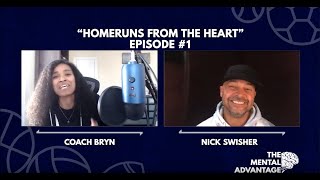
Nick Swisher, a former Yankees World Series champion, talks about his path from Ohio to the majors, turning down Notre Dame football, and staying true to himself. He credits visualization, mentorship from Frank Thomas, and belief from GM Brian Cashman with shaping his career, and discusses how he's carried that authenticity into fatherhood and his charity work.
Chapters
I'm here with the amazing Nick Swisher. First and foremost, I think he would say he's a proud girl dad. He is a two-time Big Ten, All-Big Ten guy. He went to the Ohio State University. As a Michigan State grad, I might take some exception to that. As well as he played for the New York Yankees. He won a World Series with them. He even hit a homer.
Fun fact.
So that's pretty big. As well as he is just married to his beautiful wife, and he's just pursuing the after baseball life. And we're gonna find out more about him.
Welcome.
Welcome, Nick. So happy to have you.
Thanks, Brynn. I appreciate that. How you doing?
I'm so good. I'm so good. First and foremost, we got to talk about this energy. I, I feel like— so I don't know if you know this, but people call me— they say Brynnergy. So they call like my energy. And I thought I had good energy until I met Nick Swisher. So tell me, has this always been a thing, or is this something that you kind of developed over time?
I can always say I've had this sort of juice. You know, it's a lot cooler having this at 40 years old than it was at like 7 and 8. You know, I was getting in a lot more trouble back then. But it's funny because I felt like, you know, my, my entire life I've been told by people to calm down. And tried to like cap me off. And that's been such a turnoff to me, right? Because it's like, bro, like, let me be who I am, right? Like, you know, I'm not out here to have everybody like me. I'm here to be authentic. I'm here to be myself. And so it's funny because back at 7, 8 years old, you're getting in a lot of trouble at school for talking out and like, you know, maybe not listening to your parents as much as you should. But then all of a sudden, at like 40 years old, now it's like starting to kick in where people are like, oh man, like, Bro, I dig your vibe. I dig your energy. Like, I appreciate the way you look at life. And so for myself, I guess in a sense, I'm kind of proud because I've always been the same guy, right? Like, I never conformed to what somebody else wanted me to be. You know, I always just kind of wanted to live my own life and just be me because I've learned through my 40 years, like, listen, everybody is so special in their own way. And for myself to wake up every morning and to be myself, Nick Swisher, just plain old Nick Swisher, is plenty good for me because I'd rather be a first-class version of myself than a second-class version of somebody else.
Hello, come through. I love that. And second of all, you know, that's so true though about how you kind of end up being appreciated for the very things you were really—
100%. Like, I remember all the time, you know, going to detention and things like that, and I'm like, this is the worst thing ever, right? But now all of a sudden I'm in this phase of my life where, you know, I've got my girls and my wife and I'm a dad and a husband. And people are like, holy shit, bro. Like, I need to get on what that guy's on for sure. You know? So for me, it's, you know, I think you gotta be you. I always preach that know thyself, be you. And so for myself, I mean, what would I be if I wasn't, you know, living what I preach, you know? Yeah.
And that's such a, so it's a journey for most people though. Right. So let's go back to that time in 7th and 8th grade, or just, you know, so one thing I noticed when I I was doing some research about you, is you were raised by a former professional baseball player. So I wanted to know, kind of talk about your sports journey. You know, you're talking about 7th and 8th grade being your authentic self. Was that something, like you said, you know, you were getting chided and, you know, disciplined and whatnot. But was that something that your dad was expecting of you to be a certain way? Or, you know, where does that come from, this like drive to be yourself? Or when did you start to have that message come, you know, kind of at early age, or if at all?
You know, I guess, Brynn, like, at the end of the day, I think it's just really just who I am, right? Like, I've always kind of been an optimist, you know, even growing up, you know, from a broken home and my parents divorced when I was in 6th grade, right? When you kind of really realize really what's happening in your life. You know, I moved from Columbus, Ohio, all the way down to Parkersburg, West Virginia, just to get away, right? My mom and I weren't getting along, and so it wasn't like my life was a walk in the park. I felt like I had some some tough things happen. But at the end of the day, I've always just kind of had this passion for life and this just like will to push forward and move forward. And people are always telling me, like, or asking, like, you know, if you weren't a baseball player, what would you be? And I really don't have an answer. At the end of the day, I told them, like, listen, there was no plan B for me. Like, this was it. I threw all my eggs in one basket because I guess I really learned to bank on myself. Because if you can't take care of yourself, how are you going to take care of other people? And so for a guy like me that wanted to do so many great things that came out of a town of 10,000 people, listen, there's a lot of negative people. There's a lot of haters out there. And it took me until I was 26 years old that Frank Thomas, Hall of Famer, looked at me and said, Swish, you think you got any haters? And I'm like, no, not really, man. I think people kind of like me. And he's like, you need a million of them, right? Because if you're— if there's haters out there that are hating on what you're doing, that means you're doing something enough for them to pay attention to you.
Yes, absolutely. So I noticed that you were a 3-sport athlete. In fact, what I found very fascinating was that you were recruited by the University of Notre Dame. Like, who says no to Notre Dame?
Yeah, that's right.
You said no to Notre Dame to play football. Was Lou Holtz the coach at the time?
No, no, no, no, no. That was Coach Davies was there at the time.
Okay. All right. All right. So you said no to Notre Dame. How did you whittle it down? First of all, let's talk about your mental game, kind of being a 3-sport athlete. How did that develop, this idea? And then, like you said, you bet on yourself, but how did you decide, like, okay, I'm going to do these 3 sports, or was it just driven by passion? What kind of—
I think you got to look at the timing of everything. Listen, I'm 40 years old. I'm a little older, right? Like, you know, back in the day when we were in, you know, junior high and high school, whatever the season was, that was the sport we were playing. That's just how it was in the times, right? It wasn't a specialized type of situation. I never even knew what specialized meant until I got to the big leagues, and I was like, oh, that's what a specialist is? Oh, okay, right? Like, at the end of the day, that whatever the season was, that's what we were doing. And so for myself, I always took pride in being that all-around athlete, right? Because whatever you need me to do— you need me to throw you a football? No problem. You need me to sink a J? No problem, right? You need me to do— I mean, whatever it is that you need me to do. I felt like when we were kids, we just did all of that stuff, whether we were good at it or not. We at least gave it a shot. I think now sometimes there's just— there's so much attention around things that sometimes, you know, kids of the younger generation, they're scared to try, they're scared to fail. And for myself, I learned everything about myself by failing, right? Like, nobody learns about themselves when they're kicking ass. Like, life is easy that way. You learn about yourself when you're going through those tough times. And so to be able to have a father who had been there and done that right there in front of me, that never pressured me to do a single thing, only told me, son, I don't care what you do in this world. You want to be a trash man? You be the best damn trash man in the world. And so that's kind of the mentality that I took. That's why I'm a blue collar guy. That's why I kind of look at life with a zest, because I've worked hard for everything that I've gotten in this world. And for myself, it's such a great earned feeling because everything you earn in life has— means so much more to me than the things that have been given to me in my life.
Yeah.
So I try and tell my daughters and try and teach them that work ethic is the way to go because if you don't have that, I don't think you stand a fighting chance.
Absolutely. So I love that. I was wondering whether your dad kind of drove you to baseball, but then when I saw that you played the 3 sports, I was wondering like how much was that? So in that decision to decide to say no to Notre Dame, do you remember where your where your mentality was at in making that decision? Did you struggle with it or were you just like, I know what I need to do? You know, this is—
Yeah, listen, I mean, football was one of my favorites. I mean, one of my favorite sports. I loved it. You know, I played offense, defense. I was the kicker, the punter, the kick returner, punt returner, right? Anything you needed done on the football field, I was there for you. But, you know, I remember going to West Virginia on my first recruiting trip and, you know, I'm such an energy guy and the emotions of the stadium and literally just, ready to rip my shirt off and get out on the field. But I remember going in the locker room after the game, and when these dudes were taking off their shoulder pads, I mean, these guys look like avatars, right? I mean, these guys are monsters, dude, like muscles where muscles shouldn't be, right? And I'm looking at my dad and I'm thinking to myself like, wow, you know, I'm an All-State, you know, safety, right? Like I'm pretty good. But I'm looking at my dad like, wow, man, like this baseball thing is looking real good. 'Cause that's not what I want to be tackling. That's not the guy that I want tackling me, you know?
Yeah.
So I think at that moment, I think it really kind of hit me that like, wow, you know, do I really want to just bang my head up against these dudes for the next 10 years of my life? Or do I want to go with something that I've had a passion for since I've been 5, 6 years old? And I was able— I was lucky to have a dad that didn't force me to, but helped funnel my decision, right? At the end of the day, it was my decision, but it was awesome to have some— I mean, listen, I've been married for almost 10 years now. Like, Life is so awesome when you have somebody to share it with. Like you have people in your world that are able to help you and experience all those things with you. Because my dad was able to help me through that time. Listen, I was 18 years old. That's a huge decision moving forward, right? Like if I made the wrong decision, I might not be sitting here talking to you. So to be able to go through all that and to have my father right there with me, man, like with his arm around me, No, like supporting me the whole way that, I mean, that's what I want to do with my girls. Like, hey girl, I love on you all the way up, whatever you need done. I just want to be here to help support you because, Brent, I'm the type of guy, like, you give me a hug, I'll run through a brick wall for you. That's how I've always been. And my dad was one of those guys that kind of gave me one of those hugs. And to be able to have him in my life, I could not be more thankful.
That is fantastic. And we know how important, like, a parent's support in that process can be. Cause you know, not, we know that the numbers dwindle, right? So we have a higher percentage of participation in athletics at the highest school level, and then you go to the college level. So what I'm curious about is what— so we got through the decision, now we're going to go to the Ohio State University.
Oh, baby, oh wait, I'll take a little Big Ten love right there.
Yeah, yeah, which by the way, you know, you guys consider Michigan your real rival, so technically we don't really register unless it's basketball, of course. But when it comes to football anyway, and I don't even know about the baseball rivalry, is it the same with Michigan?
Is it— I mean, always. I mean, it doesn't matter. It doesn't matter. The team up north, I don't even say it. I can't even say the name.
Got it. So, so the question is, what is the mentality difference once we go into a baseball program in the college and you're in one of the top colleges in the country, right? What's the difference between when you were participating in high school athletics? What's the transition you have to make in your mental game? Or did you notice a difference?
I was a huge fish in a small pond in high school. Huge, right? I was a whale, right? Like, I'm the man, right? And then I get to college and I'm like, whoa, like there's a lot of fish in the pond right now, right? Like, it gets the biggest thing that I try and tell the young kids that I work with is, listen, it's not about being the best on your team. It's about being the best out of everybody. Listen, sports now are so competitive. It's global. It's not just the United States anymore, baby. We're bringing in people from all over the world now. So if you're small-minded enough to think like, oh, I'm the best on my team and that's good enough, right? That's not what I would say would, would be where I would be aiming, right? I've always, I've always shot way up there, right? People are always like, aren't your goals a little too unrealistic? Well, maybe, but at the end of the day, like, that's what worked for me because that's how I know my body works. And if I can challenge myself on an everyday basis. That's how I get better, because I'm always going up against the man in the mirror. I'm always going up against that guy. I'm always going up against the man in the glass, because there's somebody out there working harder than me. Yeah. And I always knew that, right? I knew— listen, I had a grandfather that worked for DuPont as a security guard for like 40 years, right? Standing outside guarding the gate, and that was it. But every morning he woke up and put that lunch pail together, and he went to work, right? I had a father that played in the big leagues for 10 years. Every morning he woke up, went to work, right? So I had people in my life and very influential people in my life that told me at an early age, just by watching them, that if I want to accomplish things that I want to accomplish, I got to get my ass up and go to work. And so that's exactly what I was doing. And maybe my way is a little more driven, it's a little more firm, but that's okay because I can coach differently than how it was for me. That was just how it worked for me there. There was no plan B. There was no other route. This was the route I was going to go forward. And thank the good Lord above that I was able to accomplish a lot of great things, because if it wouldn't have worked out, or if I would have gotten injured— think about that, like how lucky you were to be able to go through things like that, being at the right place at the right time. That's why people are like, bro, you're smiling all the time. I'm like, listen, bro, like, life has been awesome, dude, right? Like, it's been tough at times, but at the end of the day, like people have been looking down on me for sure. And I feel that, and I know that that's why I'm so grateful.
That's awesome. Now you talked about your dad, you talked about Frank Thomas, which we'll get to more of that story in a moment. Um, who were your, uh, heroes in college, or do you remember having anybody that kind of pushed you during that part? Cause you're kind of away from your family. So maybe it's still your dad, but is there anyone else?
Yeah. Um, you know, I guess I could say that we had an assistant coach, right? And his name was Greg Cyprik, right? And like, I couldn't stand him, right? Like, just, we didn't get along. Me and my head coach, we didn't get along as much as well either. But he was always forcing me to do the things that I didn't want to do, right? Like work on hitting the ball the other way or working on your backhands or, you know, all the things that you're horrible at. And as a 19-year-old kid, listen, I'm coming to Ohio State. I'm like, bro, I'm swaggy. Like, I don't need to do that, coach. Just let me pull the ball in the seats right side. But if it wasn't for things like that, or if it wasn't for people in your life like that, whether you got along with them or not, that challenged you in a way that no one else has challenged you— for myself, I look back on that relationship and I'm thankful for him in my life. I'm thankful that he was able to pop in there whether we got along or not, because I'm sitting here talking about 20 years later about how this dude throwing me outside pitches all day long when all I wanted to do is throw me inside pitch like I hit it over the scoreboard, right? Working on the things that you weren't good at. And so for myself, now that I look back on those situations, I'm like, wow, like, thank God for somebody like that. You've got to have people in your life that challenge you in ways that others don't, whether they're a pain in the ass or not. Because listen, you're not going to get along with everybody, but you can learn something from everybody, good situation or bad.
Do you think that part of the reason that you had difficulty with them was your mindset or where you were coming? I know you said 19-year-old, you know, like, this is what you want to do, but do you think that the Nick now would— of course, talking about him in perspective— but would have gotten along with them then? Or do you—
I think I know a lot more now. I'm more educated. I would definitely have— I would have a way more open-minded approach to coaches now than I would as a 19-year-old, right? Because listen, like, at that point, you got to remember, I'm coming just off of my, my parents divorcing. I'm not banking on nobody. I'm banking on me. I don't need anybody. I can do this on my own. And That's where even to this day, you know, I'm 40 years old, my father is telling me every day, Nick, hey, you don't have to keep that stuff in there. We can talk about that stuff. Yeah, you know what I mean? So it's like you, you, you look at yourself back when you're like a puppy, and even till today I still struggle with the same things, you know, being able to, you know, get over those humps of things that have happened early in my life. But once again, listen, like, as bad of a situation as that was for me at the moment, I'm happy that happened to me.
Of course.
I'm glad, you know, we always talk about it in Clubhouse, like life doesn't happen to you, it happens for you. Right. So now there's some amazing things that I could teach others from some of the things that I've gone through. So you don't have to be a meathead about the situation. You can go and you can look at it in a way more open-minded approach and a way more loving approach. Because at this moment, I'm not, I'm not challenging. I'm not challenged up against anybody. Like I just want to be a big ray of sunshine that's just pumping this world full of light. Because right now, more than anything, listen, you know, 2020 has been crazy. It was crazy year. We, people lost like the highest level. They lost people because of this. So you can't say it wasn't a great time, but at the end of the day, it's like, listen, by going through some of those tough times, now we've learned a lot about ourselves. So 2021, we should be ready to attack because we know exactly how to get through something like this.
I cannot, I don't know if anyone is listening to this is not fired up, but let's go, dude. You're right.
Listen to the rest of me. You're giving me that Brennergy right here.
Listen to the rest of the interview, guys. Don't run out the door right now. Nick is giving you that huge pep talk, like, like he's firing us up. So I want to talk a little bit about what you just talked about, which is, is interesting, right? The, the, the sort of behaviors or things we take on when we go through a challenge like that, right? Because it helps us, it gets us through that time. So, you know, like you said, wouldn't change it for anything. Can you think of a specific instance where you had to, or maybe a game or like a pivotal moment, maybe in your college career or even in the MLB, which we haven't gotten to yet, but where you had to kind of like block out that noise and focus? Or do you remember any specific instance where maybe somebody was telling you that or you had to kind of do it on your own?
I can remember something a little earlier than that. Okay. It would have been my freshman year in high school.
Okay.
I had snuck out of the house, right? And I was living with my grandparents at the time. My father was coaching in the minor leagues, and I had snuck out. You know, I think, uh, his name was, uh, Jason. Jason, Jason, uh, Jason Marks picked me up, okay? And we went to a party, right? Well, like, you know, listen, my grandma is— I have her initials tattooed across my heart. Like, I love her to death. She put that term granny law, put it to work on me. But I'll never forget I just left, like I could just do whatever I wanted, whenever I wanted, because I was so used to kind of being on my own in a sense. And I'll never forget, I remember coming back from that party and walking in the front door to my grandfather. I mean, just cocked and loaded, like ready to just absolutely wear me out. And the first thing he said is, you'll never speak to your grandmother like that again. And it was kind of that one moment in my life where I was just like, wow. Like, I get emotional because it was so huge. It like taught me all of a sudden, like, wow, man, like, respect— you don't have any of that, and you need to bring some of that in your life. Listen, he was— they were like, listen, we care for you, we love you, we're gonna be here for you. And I was just like, whoa. Like, having somebody say that to me was just life-changing. So I remember that happening, and from that moment forward, through my 9th grade year, like, bro, I was on another planet. I was ready. 'Cause I was like, man, I got these people in my corner? Wow. And I think that's when it really kind of turned for me that I'm not the type of guy that I don't need you to yell at me, right? Like, I don't need that, right? Like, I'm one of the hardest workers you'd ever want to meet. But if you give me that love, you fire some of that goodness my way, that means a lot to me. Because I remember the first time that I really remember getting that, and it was amazing.
So I want to jump ahead because now that you're saying that, because I was going to take it to the MLB with Major League Baseball, but I do want to talk a little bit about— I know you've played for various teams and we'll talk about the Yankees and all that, but what is the difference in the mindset? Well, no, sorry, that wasn't the question. That was the next question I wanted to ask. What I wanted to know is, since you played for different coaches and you had different levels of success with each team, when it comes to that love Would you say that determined your output at those various different levels? Like, you know, when you go to one team and you feel like they care about you versus the other.
I can honestly say from the places I felt most comfortable was where my numbers reflected that. And for myself, you know, I mean, coming up with the Oakland A's, I mean, it was, we were all just a bunch of young punks, dude. Like coming up through the ranks, like Jason Joby was our hero. We all had long hair, you know, like the whole nine. And we were all just a bunch of kids, so we didn't know any different. Right. You know, I went to the Chicago White Sox for one year in 2008 and really struggled.
Yeah.
You know, I had a hard time on and off the field that year, and I'm very open about that. But listen, like, you know, circumstances happen. Like, but as an athlete, like, you gotta post, right? Like, regardless of what's going on in your life, you need to post. If not, somebody behind you is gonna do that. They're gonna come and take your job. And I'll never forget, once again, it happened again in my life. Right after I left the White Sox, Brian Cashman, the general manager of the Yankees, said, "Listen, we believe in you. We know that last year wasn't the player that you are." And so once again, like, here I am, like, baby, I'm ready to, like, kill for this guy, you know what I mean? And I hadn't even met him, never even shook his hand. But even if it was just talk at the time, he sounded— he believed in me, right? And once again, like, For somebody like me, that means the world to me. Like, you know, that's, that's, that's why I am the way I am, right? I want to love on people. I want people to feel the love because for me it worked better, right? It was a way better situation when the love was there than when it wasn't. So no doubt, 100%. Um, I'm the type of guy that the more comfortable I feel, the better I am. And I definitely think that reflected a little bit in my numbers, uh, on some of the places that I was in my career.
Yeah, that's what I was thinking, because I'm like, I was looking at your numbers in different places and I was like, you know, and obviously when we work on the mental game, knowing what's happening for the athlete and what motivates the athlete, right? Because it's not a one-size-fits-all approach. Like you said, I don't have to yell at you. I need to find a way to, uh, you know, find my way in for Nick. What's Nick's thing?
You know what, and if I could have redone it all over again, I would have been more vocal about that. I would have been more vocal to my leaders. I would have been more vocal to those guys to be like, listen, Like, you may think this is the way to get the best of me, but it's not, right? And I think that if I would have been a little more, you know, knowledgeable about how I am now, right, earlier, you know, I mean, it might have helped a little bit, right? Or, but then again, the whole story might have changed. It would have been different. So at the end of the day, woulda, coulda, shoulda. But I definitely think that if people are out there and they're kind of struggling maybe in a work environment, Speak up, right? Like, let people know who you are, right? Be proud of who you are and the things that you need. Because if we all communicated a little better, everything would be better in general, in my mind.
Yeah, I think that's— yeah, that was one of the questions I was going to ask you is what would you give— what advice would you give to younger Nick? Like, given that, you know, like, at that time— and I think we talked about it a little bit, but like, you know, if you got that message sooner, what advice would you tell, even on the mental game, what would you tell Nick sooner?
I would have started earlier, right? I would have learned earlier. I would have educated myself earlier. I wouldn't have tried to just go on raw talent, right? Like, that can only take you so far. But I'll never forget after that 2008 season with the White Sox, and it was just a crippling year, I remember going back home to Parkersburg, taking one day off, and getting to work. Right. And not necessarily the physical side of it, because I was always doing that, but it was the mental side of it. I was sitting with my best friend's dad, you know, Matt Ward, Pastor Ward. I'm sitting in his like exercise room on the floor, just talking and crying and being like, that was one of the worst years of my life. And we came up with a word and actually have it tattooed down my side, persevere. And that was my word. And that's what got me back up. Because I always wanted— I never wanted to be one of those guys that got knocked down and stayed down. That's just never been my style. I'm a fighter. And so I think that being able to have somebody once again in my life that kind of helped kind of mold me into that, you know, that word at that moment— I mean, I got it inked on my body, like it's permanent, ain't going nowhere, you know. But every morning when I look at that, it takes me back and I know what that meant to me. Yeah, you know, my tattoos are almost like a blueprint of the things that I've gone through in my life. But for myself, I didn't know any other way how to get through some of those tough times in life, you know. And, you know, being able to, you know, have a wife and 2 daughters and like a crazy awesome family now, it's like, man, I, I, maybe I would have told my younger self to maybe talk a little more. Like, don't be scared to open up. Don't be scared to be vulnerable. Yeah, right. That's a word now that, you know, we use a lot, especially, you know, we've heard in Clubhouse a few times. It's like Now I'm like, I can be vulnerable. I'm not scared because I'm secure in who I am. I know who I am now. So maybe I would have told that guy a little, you know, maybe 20 years ago, like, hey homie, like, relax, baby, be a little more vulnerable, enjoy yourself, you know. But hey, we can always live and learn, you know.
Exactly. And, um, for those of you listening, just, uh, want to point this out. Nick has an amazing room on Clubhouse. We're going to talk about it a little at the end, but it's called the Secret Sauce Room.. So he's amazing on there. He's got just as much energy as you're hearing now, probably even more, but at a ridiculous time in the morning. For me, it's 5:30. For the East Coasters, it's at 7:30. No, wait, 8:30. Sorry, my math is not my strong suit. So 8:30. But definitely that's when he's referencing Clubhouse. That's what he's talking about. And they have amazing— it's a 4 former— is Chris— is Thunder a former athlete?
No. I mean, he, in his mind, he thinks he was.
Okay, Thunder is a lawyer, but he, he is basically 4 amazing guys breaking down some stuff and giving the floor to other people, knowing that they don't have all the answers and they're just students as well as masters in that whole process. And so it's an amazing process. So definitely check them out. Um, okay, so really quickly, The other thing we want to talk about is, okay, now you're in the major leagues. We talked a little bit about it. And we're, you know, oh, well, let me end cap the vulnerability conversation. I think that's important that we kind of address that. Obviously, you didn't have those. Nobody was having those conversations with you at that time. And sports have changed to where we can have feelings now as athletes, which is fabulous, which is one of the great things that the mental game has brought in or the attention on the mental game. And so I definitely think I agree with you. It's great now that we're letting athletes have feelings and be three-dimensional people. And we still have some room to grow in that department. So I really appreciate you speaking to that because I think young athletes need to hear about that and need to know that it's okay. So if you— going back to your situation with your coach that you said you would communicate more, even the situation where you would talk more about your feelings, what would you say to a younger athlete that feels like they're not getting the coaching that they want or they're not being motivated properly What would you tell them, you know, kind of given your situation? And maybe it would just be to talk more, but would love to.
Yeah. Well, even for myself, I kind of live that, you know. I'm able and honored and blessed enough to be a special advisor to the general manager of the New York Yankees, which for myself, it's like me and some Hall of Famers. And I'm like, I don't even know how I got this job, but it's unbelievable. I love it. And I'm so honored to be part of the team. But for a lot of the young kids that I'm with in our minor league system, you know, A lot of kids struggle with confidence, and I think, you know, when you're talking to young kids, it's almost like just trying to find like where they fit in, right? You know, for ourselves, we got a lot of young Latin kids coming over that don't speak much English, the whole nine. These kids are 16, 17 years old. So even for these kids coming to a brand new country, trying to figure out where they are, listen, that's the thing about life, right? It's a grind. It's about figuring things out and You know, I feel like you want to help those kids all the time, but then if you're always going in there and helping those kids when they struggle, they're never really living life, right? They're never really like going through anything. So it's kind of that fine line of how much do you really want to help? You know, for myself, I, I'm a lover, right? Like I talk to guys, I pump guys up. I try to make them feel like they're the only person in the room when I'm talking. You know, I just, I want them to feel where I'm coming from. Where I'm coming from, because like I said, I mean, it worked for me and that's the type of guy I am. So that's the type of guy that I want to be, right? There's plenty of other dudes out there, but this is my style and this is how I'm going to go about it. But like you said, I mean, you want to help those kids. You want to be with them all the time, but sometimes you got to let them struggle. It's even like for my daughters, it's like, I don't want to see her trip over the same word time after time after time. But then again, it's like, listen, like she has to figure it out on her own at some point. Because at some point Daddy's not going to be there. And I don't know about you, but like, I'm doing my best to create strong, independent, powerful women. Like, that's it. You know what I'm saying? Like, do your thing. And hey, just a couple of badasses and they can figure it out on their own, you know? But I think that, you know, you want to help them. But at the end of the day, you know, sometimes you have to go through some tough spots in life to really figure out who you are and what you're made of.
Yeah, I agree. I think it's, it's, it's, it's, it's definitely helpful for them. I know when I was younger, I used to try to fight my brother's battles. I mean, you know, at some point he was bigger than me and him throwing me across the lawn when I tried to muscle my brother who played football. But my mom's boyfriend told me growing up, he was like, you can't stop him from falling, but you can help him back up. And so that was something that I had to learn because that's an amazing quote, by the way.
And by the way, how about like those at Not saying old school is a bad thing, but these old school simple quotes, they mean so much. You know, you're like, wow, talk about simplifying it instead of going through like all the hoops, you get right to the point. Like, listen, you're, you know, you're never going to help him from falling down. Like you can't catch him. He's too big, but you can sit there and you can help him back up. And I love that.
What a great quote. Yeah. Yeah, definitely. You can add.
Yeah.
That was really, that was like, I'll never, you know, it's amazing to you, the things that stick with you, right? And it was just like, hey, you can't fight your brother's battles, but you can help him, like, you know, after he's been through battle. And so it was like a really eye-opening situation for me. And obviously this is helpful for all the people that we coach and are involved with. So you're— let's go back to the baseball journey. You're in the major leagues. We've done our year in Chicago, which probably was also bad because it was wintertime. No, I know baseball is not during winter, but I'm just— because it's Chicago.
I'm from Chicago.
Cold, right? But I love Chicago. No, anyone listening, I'm a huge Chicago fan, just not during the winter. Um, but so when we go to— we're with the Yankees, he told you he believes in you. What's— that's— what's the mindset that, you know, takes you into the major leagues? But also, like, when you're going into a World Series, is there a shift, or is it just business as usual?
Huge shift for myself. You know, after that 2008 season, that offseason was really when I started to really kind of dig deep into kind of the mental side. And, you know, I was with my pastor at the time, so it was more of a spiritual thing than necessarily a motivational thing at the time. You know, it wasn't, you know, a psych— a psychologist. It was my pastor just talking about things that were going on in my life. And then from there, I got in the New York Yankee locker room. Now that, in my mind, where I was really around like these true pros, like these guys were like, you know, the Jeters of the world, the Mariano Riveras. We're talking about Hall of Fame, Andy Pettitte, right? Like You know, these guys were like, and these guys were using those guys, right? Like they had those sort of people in their life. And so I'm thinking to myself like, bro, man, have I been missing the bus? Like, have I been missing out on all that? What, what is this, this mental stuff? What, what is that? And then all of a sudden I started digging in. And then if you look at my career from 2009 moving forward, right, it's a totally different ball game because now all of a sudden we started determining what a routine was. Now I'm like, oh, now I know exactly what that is, right? Then we started focusing on just meditating, right? Oh, visualization. Now I'm like, oh my God, probably missing out on all this stuff. I waited till like year 8 to get down with this good stuff. So now it's almost like, you know, it's funny, it's like my dad, you know, he's like, yeah, you know, when you get my age, right? You know, it's like you're trying to tell the young kids now, listen, like jump on this stuff now, right? It's going to help you out. About 10, 15 years from now. But they're all, you know, listen, when you're young, you're invincible, you feel like you can accomplish anything, and rightfully so, because that's how I was. So I'm like, go for it, but maybe sprinkle a little bit of that stuff on there, because at the end of the day, that stuff will really help you, especially when the times get dark, right? Because you know what to go to, you know what your triggers are. When you don't know what your triggers are, then you're just— you're fighting, it's an uphill battle all the time. But then all of a sudden you start to learn who you are and know what really makes you tick and the things that make you don't tick. And then from there, life seems like it's a little easier to get through some of the tough times than it was before.
Now I know you've talked before about Frank Thomas, uh, and you said the power of a routine and meditation. Can you tell me a little bit about what— I know you said that it changed the game for you, but tell me a little bit about that routine that Frank was telling you about and kind of like what your process was through that.
Yeah, Frank really jumped in my life and really taught me what visualization was all about. You know, all of a sudden I show up into the locker room about a month into the season, and Frank's like, hey, sit down, I got something for you. And I'm like, okay. So we're in the video room, he pops it on, it's nothing of— it's a highlight tape of me just hitting home run after home run, diving plays, stealing bases, like looking awesome. And it was literally 5 minutes, and after I got done, you know, I'm pumped up. He's looking at me, he's like, "Like, how do you feel?" And I'm like, "Bro, I feel like Superman. I feel amazing." He goes, "We're gonna watch this every day." And so for myself, I got myself into that moment where I was like, regardless of what my numbers said, it was the mentality of going out there thinking that I was gonna be successful. Because if you go onto a Major League Baseball field thinking you're gonna fail, you've already failed. Don't even go out there. Don't even put the jersey on. But for me, you know, like I was able to learn the routines through Dr. Foot But that visualization came from Frank. And by the way, like Frank's old school, right? Like he, simple things work for him. And so for myself, now all of a sudden we're both sitting there before the games. I got my highlight tape on, he's got his highlight tape on right next to me. We watch it and then bang, we go out to the game. And we had an unbelievable year that year. We went to the ALCS. You know, Frank hit 38 that year. I hit 35 homers. I think he finished like top 10 MVP. Like for myself, I was up there as well. So for myself, I really noticed like, wow, man, like that visualization stuff like really works, even if it's just pumping yourself up for a hot couple minutes.
Yeah, no, 100%. I love that. And like, obviously the results speak for themselves. And that's often the challenge that you face when you're trying to teach somebody about the mental game. It's like, how does that work? And I'm like, well, how's it working without it?
Yeah, exactly. Well, it's like, you know, I mean, you're, you're a coach just, just like I am right now. And Literally, when you meet somebody, now that's our job, right? Is to try and find out how to get the best out of somebody else, how to figure out what works for them, hit them with a couple of different things. And you're like, no, that ain't working, bro. Let's go a different way. Right. But that's what makes it fun because we've gone through so many great life experiences that we can teach people through those experiences. Right. And so I think now more than ever, you know, we need people out there that want to be seen, right? We need to hear people. We need to see people. We need the best Be the best that we can right now, better than we ever have been. So it's like, dude, like, come on, 2021, let's go get this thing. Let's go after it, you know?
That's awesome. So, okay, so obviously lots of people get— well, not lots of people, but some Major League Baseball players get to play in the World Series. Not very many get to call themselves World Series champions, and probably even fewer get to call themselves people who have scored a home run in the World Series. So do you remember it? And can you take me through it?
Britt, I can break you down every pitch of any A.B. you wanted to know about, right? That's just, that's like, I can just roll it right here. I got the highlight tape all up in here, you know? But that World Series run was absolutely epic. And to be able to experience that with my teammates and be able to experience that with future Hall of Famers, and not only that, the city of New York, like, come on, dude. Like, there's no better place to win in the world than New York City. It was absolutely on fire. I mean, listen, Game 6, Alicia Keys, Jay-Z come out singing Empire State of Mind, and I'm like, what is happening right now, man? This is amazing. So to be able to experience that and to be able to accomplish that ultimate goal, and not only to share it with yourself but with your teammates and with your family and the city and the Yankee fans worldwide, like, that's what's great about the New York Yankees. It's such a family-based, you know, organization. And even years later, right, I still feel that same family vibe as I did in 2009. So, you know, just to be able to be part of all that and to be able to accomplish such an amazing team goal like that, because listen, we got dudes on the team from all over the world, all different walks of life, all different thought processes, all different ways of going about their business, and we all got together on the same path moving forward. That's an extremely powerful thing. And so to be able to be part of that team atmosphere, that's why I love things like Clubhouse, right? Because I'm part of a team. I feel like people are counting on me and I want to make sure I'm there for them because I've always been that guy that I can promise you, if you're counting on me, I got you. I'll be there for you. No doubt.
That's awesome. That's awesome. So, uh, you're rounding the bases, you're coming home, all your teammates are there. And obviously you guys win the World Series. You probably remember the last inning, the whole situation. Are you on the field when the last pitch is happening?
I'm in right field. Ground ball to the second baseman, Shane Victorino, actually, buddy of mine. He ground out to my boy Robbie Cano. He threw it over to Mark Teixeira at first base. And that was the final out, Game 6 in the Bronx. And Bren, I can't even explain to you, there's this magical sound that happened. And it was like a sonic boom of joy, emotion, like just love, like all over the place. And I don't know, I got goosebumps all over my body right now thinking about that.
I'm feeling it, and I wasn't even there.
It was such a magical moment, you know? And so to be able to be there on the field and experiencing that, and literally all of a sudden my family comes down, we're hugging on the field. There's like 60,000 people in the stadium. Stands, like it's going berserk. They're playing New York, New York. I mean, just one of those things that you'll get. Like, it's funny because my youngest daughter, Sayla, I don't think she knows I played baseball, right? She knows you're just her hero, because I'll be telling her this story at some point. Absolutely.
She's gonna be like, oh my gosh, you can watch the thing, but nothing will replace being there. It's like trying to capture something that you have to experience first.
It's almost like, man, like you have all the video video and you can see it all. But for myself, I can close my eyes and it take me back there, right there on the spot.
And I think that's so powerful for an athlete to have that in their bank because you can relive that moment at any time and imagine those 60,000 people in the fans cheering on you, even when it's not the World Series.
Totally. Big time. Well, I mean, you know, I mean, like, you know, when you stop playing whatever sport it is, even if it's at the high school level, the collegiate level, the professional level, Listen, like that, all of a sudden the jersey's not on anymore and you're like, wait a minute, like, who am I? And it took me, you know, it took me a minute to really realize that, listen, I'm not a baseball player. Like baseball was just something I did. And I was lucky enough to have people in my life like my wife and my best friend Kate to tell me that and to give me that kick in the ass to be like, listen, get up off the couch. Like Brent, I retired, I gained 15 pounds in a month. I was just down, felt heavy. I'm not a depressed person, but I felt like somebody standing on my chest all day long. And finally it was like, hey man, get your ass up, bro. Like you were just a baseball, something you did. It doesn't define who you were. It doesn't define who you are. And so, once I heard that, then I was like, okay, it's time to get back in shape. Give me about 10 days, drop that 15 real quick. And let's get this thing revving, you know?
Oh, I love that. 15 days— what'd you say, 10 days to lose 50? I think all the women on the call would be like, that would be amazing.
I was on a mission. I was on a mission.
I tell you. So one of the things that, you know, we talk about in the mental game is exactly what you're talking about, that shift from being at the top of the top, right? I mean, just imagine. I mean, it's one thing to go— I mean, all athletes experienced some sort of identity loss going, you know, where it seems it's very common. I want to say all because obviously I haven't talked to every single one of them, but it's very common to lose that sense. But to come from the pinnacle of sports, 60,000 fans, the whole city's cheering you. I mean, I was just on Clubhouse with you the other day and this guy could not stop talking about you, like how you— he's like, oh my God, I don't know what to say, I'm speechless, right? And I don't think I've ever had that effect on someone. But it's something about that. And then you go to a place, like you said, the jersey's not on, but I still have that same mentality that let's go, let's get after it. So, you know, thank you for sharing that. Because a lot of people, I think, need to hear about what athletes go through in that transition because it is tough. And having people that push you back up.
At this phase of my life now, it's so much easier to talk about this stuff because once again, like, I'm not scared, right? Like, I'm not scared to tell people. I'm not— I could be vulnerable. I could be like, listen, Like, this shit hurt. Like, it hurt my heart. Like, I wanted to play, and like, I'm crying at home, and like, you know, it's like, I don't know what's going on, right? Like, what's gonna happen? Who am I gonna be? So many different things run through your mind, but at the end of the day, it's like, listen, like, that just happened to be what you did for a little bit. Like, you know what I mean? Like, I retired at 36 years old. I'm a puppy. I'm like, come on, baby, we got a whole, like, that go I'm going to be 120, you know, with your energy.
I believe that's possible. Okay. So, okay. So we, I want to talk a little bit before we get completely out of the major leagues, because I think there's a mindset shift to becoming a dad. But before we get to that, I will, and a husband and full-time and all that, I want to talk about, uh, you go into the minor leagues. So you decided to come back. So what was that like? And what were you telling yourself through that whole process. Talk me through that situation.
That was a tough time, right? 2016, spring training, right? Like, I had had the knee surgeries at the end of '14, and from there I was glass, Brand. I was getting my knees drained like 2 times a week. And it's not fun sticking needles in your kneecaps and pulling out fluid just to move, right? It's like the fun of the game is just lost. I'm like, bro, this hurts so bad on an everyday basis. You know, spring training, I knew I didn't have it anymore. You know, I knew I wasn't the player that I once was. And so for myself, you know, that spring training, you know, I was with the Braves at the time. They were kind of in a little rebuilding situation. And me and Freddy Gonzalez, you know, Freddy, I don't know what Freddy, but he was just like, hey, listen, we're going to release you. And it was the last week, like it was the last couple of days of spring training. You know, for a veteran guy that had played 10+ years in the big leagues, I had thought, that maybe I would have gotten released maybe a week prior, so I would have at least had the chance to sign on with another club before we broke for camp. But what ended up happening was all the rosters were set by the time I was, you know, released, and I had to, you know, I had a choice. I went home, and what was I going to do? I was either going to retire or I was going to give it one more run. Brian Cashman from the Yankees calls me up and says, hey man, you know, we got a spot in AAA. We got some young kids that we could really use a little bit of you in their life. And, you know, obviously it gives you another chance to play in the big leagues. And I'm like, hell yeah, bro, I will be there, man. You know what I mean? But I can promise you this, Brent, riding on a bus for like 10 hours when you're like 20, 21 is way cooler than when you're 36 years old. I know that, dude. Like, especially with two bum knees. Like, I'm like, bro, this is exhausting, dude. Like, my knees are— they're swelling up. They're like stiff when I get off the bus. So, but you know what? It's like, I loved it, right? I wanted to be around it. And I could honestly say that there were probably not be another organization I would have done that with other than the New York Yankees. Because, you know, I mean, regardless of if I made it back to the big leagues, you know, I knew they had my best interest at heart and it was a comfortable place to be. So yeah, I went for it, right? I wanted to run out that— run out that on that field one more time. Uh, but then again, it never happened. But I'm not gonna pout about that. I'm like, hey man, I made some lasting relationships, met some young kids, had a good influence on some people. And now look where I'm at. I'm like, bro, now I'm smiling, having fun, doing my thing, enjoying it.
And that's what I was thinking. I was like, Cashman, first of all, he was love, right? He was another source of love or someone believing in you. He comes back around and he sets you up for this next phase of what you do now, which is mentor.
And yes, one of those things where, you know, I retired and he called me up. He's like, hey man, I need you back. And I'm like, what do you mean you need me back? I need you part of the organization. I'm like, what do you want me to do? He's like, whatever you want to do, man. Like, we need to have you around. And I mean, it's like, come on, that's like the most ultimate compliment is that people want to have you around. They want you to be there because you add to the situation. You know, you're not, you're not sucking the life out, you're actually adding life. And so for myself, that's just kind of the mentality I want to keep because I'm having a good time right now, no doubt.
All right, well, I only have 2 more questions and then I have a 5, like, quick quickfire situation. One, tell me a little bit about— so we went through the process of the dark days of I'm no longer an athlete, I'm having that hard time, which like I said, so many athletes go through that dark night of the soul of finding out who they are because they're so identified with what they do. And then you go into this new venture of like becoming a dad. So were you already a dad at that point, or you—
so, so 2013, you know, our oldest, Emmy J, she was born. And that was just like, whoa, bro. Like, you know, like sleeping habits and I'm— dude, my wife is so badass. She's so amazing. Like, she was so good early, right? Give me a little time to sleep, right? You know, still trying to go out there and doing what I love. But, you know, now I'm like, you know, she's in Ireland right now. She's filming a movie right now. And it's just, it's me and my girls. And, you know, I'm cool with being Mr. Mom. Like, I got you. You know what I mean? I can do all this. And if it wasn't for the love and the effort that she showed in our early relationship, like, it makes it easy now because all I want to do— there's been a major shift in my home. Listen, I used to be the breadwinner, but that ain't the case no more, right? The tides turn. And I'm cool with that because I'm like, go mama, do your thing, baby. Like, be as amazing as you want to be. We'll be back here. We'll be supporting you, doing whatever we need on our end. But Listen, like, I know people don't know— not many people are able to have a family like mine. I'm so blessed and so lucky, uh, that it's easy for me to talk about them. It's easy for me to be right there behind them, uh, because they've been there for me.
Yeah, absolutely, absolutely. What have your daughters taught you the most?
Oh man, that I'm not nearly as cool as I think I am, right? I love that. No, you know, I think, you know, Listen, I'm like the ultimate athlete. I'm the ultimate, like, deep-down meathead. Like, I want to beat my chest, right, the whole nine. And, you know, my girls, that's not what they do, right? You know, like, that's not— that's not it. You know, my oldest daughter, she's an equestrian. She's our horse rider. You know, my younger one, she's kind of like me. She's more of like the gymnastics kind of like, you know, dance, hip-hop, all that stuff. But, you know, I think for myself, I think patience is one thing that my kids have really taught me. Me. It really kind of calmed me down and really kind of let me be the best version of myself. Because now that I look back on my life without my kids, I wasn't nearly as good of a human being then as I am now because of the things that I've had to learn through them. And you know, from being a parent, it's like, listen, like, your kids teach you a lot of stuff. And for myself, I'm so blessed to have them in my life because I thought I was gonna have nothing but boys. Boys, boys, boys all day long. And that ain't even close. We're talking about having a third and I'm like, mama, you know what it's going to be. I don't even know what to tell you. Like, that's just what I got, you know?
Well, you, I think, you know, God gives you what you need, not what you want sometimes. And I think like you being the, like, you know, Energizer Bunny over here and then getting boys, like, that's just, that's no, it's got to be a girl. We'd be all over each other. It out, or you get, you know, a different kind of boy anyway. So the last question I wanted to ask is, with all this energy, right, and somebody coming from somebody who is known for their energy as well, who— like, what fuels— or not what fuels you, but who fills you back up? Because I know, like, even though you're known as like this, like, man, your energy, but I gotta say that sometimes it can be depleting. And so I'm just curious if you experience that and what kind of like who pours into you or what causes you to get filled back up.
You know, my village is so amazing. Um, it's, you know, my core group of people that I have in my life. Listen, I don't have, you know, a, a, a whole, whole, whole ton of friends. Like, that's, that's not how it is. I've always kind of been a little more, a little more tighter than that. Um, but the people that I have in my life, I know at the drop of a hat that anybody would be there for me at any moment. And I think that's a very powerful thing to have in your life because we talk about it so much. Like, you're never going to be as awesome as you want to be by yourself. It's going to take people in your life. It's going to take a village to help. And I think the one thing that I'm most proud of might be my village and the people that I have in it because I have like-minded awesome people in my world. I don't have time for assholes. That's not what— I don't need that. I don't have time for it. And I think for myself that I think maybe the quicker people can realize that the better people that you have around you is the better you're going to be. You know, my high school football coach used to always say, listen, son, you roll around in a pile of shit, you're going to smell like shit. And I'm like, you know what? I mean, that's a pretty blunt way of putting it, but at the end of the day, he's so right. And what he meant was, pay attention to the people you're hanging out with, even in high school. Right, learning all that stuff. And so for myself, you know, being able to be on some of the coolest places I've been, I've had amazing people that have had my back the entire way. And so I guess kind of that's how I kind of live my life. I want to make sure that I got your back because it's such an amazing feeling having my whole crew right behind me at all times. Because regardless of if I succeed or I fail, who cares? Like, they're gonna love me the same as they did before. And I think it's a powerful thing because some people are scared to do things because they might not be successful or they might show a side of people that, you know, that might be that vulnerable side. But like, check it, like I got some amazing folks behind me, you know what I'm saying? Like my kids, my homies, my friends, everybody. So for me, it's like, listen, like I'm gonna go for it. I'm gonna go for everything I want in this world because I have realized big time that ain't nobody gonna give you a thing in this world. If you want it, strap it up, go get it. You know what I mean?
That's right. Oh my gosh. Thank you so much. Okay. So, uh, we got some questions, so they're super personal. So be ready.
Okay. I'm ready.
Ready.
Okay.
What is your favorite snack or guilty pleasure?
Oh man. Oh man. Ice cream, player. No doubt, man.
Like what's the flavor? What's the flavor?
Oh my God, for sure. Love it. Love ice cream. Sundae situation, right? Like we got the sauces and the sprinkles. My girls love cherries, so we got cherries all over the place. You need a little cocoa powder, right? Like any sort of sauce you want at the Swisher House, we got you covered. Okay.
All right. So, uh, okay. Who is your favorite super— well, let's start the fear first. What is your favorite superpower or what superpower would you want and why would you want Oh man, I'd love to be able to fly, right?
Like just pick up and go, right? Like just go to wherever you wanted to go. Could you imagine how many people you could see on an everyday basis? We could just fly. That'd be unbelievable.
Yeah. I'm a little bit more efficient than you. I like teleportation.
I don't even know. That's good too. That'll work too.
I'm like, I'm there.
You would like run through your hair, like the wind through your hair.
I don't want, I don't want all the buns. Exactly, exactly. All right, so I'm assuming your superhero flies as well. Who's your favorite superhero and when do you remember loving them?
Or— I mean, you know, I mean, listen, Superman had the logo S, swisher, like the whole nine, right?
There you go.
Yeah, I got my Superman, I got my Superman boxers, you know, I break those out every now and then. But definitely, no doubt, Superman wanted to fly, like he had the strength, the whole nine. Oh yeah, that's good.
All right. Uh, what's your kryptonite? I know that's a tough one.
That is tough, dude. Say my kryptonite. Ah, I don't know. I mean, maybe like a pet peeve, maybe, you know, like, I don't know. I'm just thinking I'm going through this phase with my daughters right now about trying, right? Yeah. It takes no effort to try. It takes no skill to try.
Right.
So for myself, you know, the people that are— that don't want to try new things, we do these things called, you know, uh, uh, food challenges. And so my daughters are like the pickiest, plainest eaters ever, right? So we try and do these food challenges to kind of like open their minds a little bit more. But when they don't want to try, just drives me insane because I'm like, listen, it's just— you gotta try it for like one little bite. It's like this big on like a baby fork. You know what I mean? If you don't like it, just chug some water, you'll be good to go. So maybe people that don't try, because listen, man, like you never know what you're gonna like until you actually try it.
Yeah, I feel you, because that definitely can get frustrating. Okay, so what is one— oh, sorry, this is the most personal question. Oh my gosh, I almost skipped over the most personal. I am really fascinated by this whole thing. There are people that like their toilet paper to come over the top, and there are people like to come from?
Over the top.
I know.
Over the top, baby.
I'm over the top too. Of course, we always—
No, you're right. Definitely. Like, when it's under the knee, I'll pull it off. Yeah.
Oh yeah. Oh, so you change it? Okay. See, some people change it at other people's houses.
I don't, but I'm OCD for sure. So like, it's gotta be like we're it's supposed to be, you know what I'm saying?
OK, OK. And then the last one, if you could use one word to describe the mark you want to leave on the planet, what would it be?
Energy. Juice, right? Like love, maybe love, right? Love. I love both of those, yeah. I think, you know, I mean, Bren, listen, like we're in a kind of a tough spot right now in this world. We need to get together. And there's only a few things in my mind that'll really turn things around. And that's love and kindness, right? Like being kind to people. You know, we preach that in our home, work hard and be kind. Those are the two, two rules in our house. Uh, so maybe just be kind, you know, love, energy, maybe all that stuff, you know, loving energy, kind, loving energy.
I love it. Yeah.
You know it, you know it.
You gotta, you gotta, sometimes you gotta break those things down now. Um, are you still doing Swish's Kids?
Swish's Wishes. Swish's Wishes.
Yes. Yes. Okay. So tell us a little bit about that. Cause in case people want to, you know, support you in that journey and how else, where else can we find you?
All that good stuff. You know, you know, my wife and I, we started Swish's Wishes back in, what was that? 2012, 2013. At the time to really kind of help underprivileged kids in any way we could. We were in Cleveland, Ohio, you know, I'm born and raised in Columbus, Ohio. So being able to give back in any way, You know, that was definitely something that we wanted to do. It's kind of taken a little bit of a back burner as of late, you know, life has kind of gotten a little crazy. Uh, but at the end of the day, I mean, trying to do everything you can to, to give back and just to be a part of this new wave moving forward, you know, like trying to keep up with the Instagram stuff, trying to stay on the Twitter stuff and keep yourself out there. Because at the end of the day, you know, I want to be a major league manager one of these days. I want to be a major league general manager one of these So, you know, like, you know, I want to keep this, I want to keep this energy and excitement going because, you know, I don't know whenever it's going to happen. I hope it's later in life so my girls can go off to college, you know what I'm saying? Me and mama can be by ourselves for a little bit. So I just think, you know, I mean, life has been so amazing so far. I want it just to keep going, you know?
Yeah, absolutely. Where can we find you and where, you know, where I know you mentioned all the different social medias, uh, You can tell us a little bit about the Clubhouse room. Go ahead.
Yeah. Uh, you know, you can find me on Twitter @NickSwisher. Uh, we really kind of jumped on that Twitter train early and really got a great following over there. Uh, Instagram and TikTok @YourBoySwish. I tried to get Nick Swisher, but somebody, somebody jacked it from me. And then, you know what? I've really been excited where we connected from was on the Clubhouse app and being able to have that Monday Wednesday, Friday from 8:30 Eastern Standard Time to 10. It's been so amazing. Like, I find myself prepping at night before I go to bed about what I want to say. And, you know, I've been in a lot of rooms on Clubhouse, and the thing that I'm most proud about is the community that we've created. It's not 4 moderators up there lecturing and preaching to people. I feel like sometimes you jump into a lot of these rooms and it's only a few people talking And for me, it's like, listen, I don't have all the answers. I know for damn sure Thunder, 4'4", 6'8" don't have them for sure. So for guys like us, we always feel like we're going to come in and we're going to help the room. But what ends up happening is I got this huge, look, I got this huge notebook. I got, I got stuff written down. Like it's going out of style because I've been helped so much by so many people. I've never even gotten a chance to meet them. I've just gotten a chance to speak to them. Right. And it's just such a great networking platform. And so for us, we want to create a loving, empowering, uplifting room. And I think that's exactly what we've done. It's a completely organically grown room. Nobody's pumping it on social media, things like that. But at the end of the day, I'm like, listen, like I look forward to that. Right. Like I look forward to seeing You brand, right? Melanie, right? Like I could list them all off, right? All the people, you know, Trevor. I mean, you know, all these people that have come into my world over the last month and that in a sense you kind of develop a relationship with. I mean, it's been absolutely amazing. It's filled my heart to like full capacity. And I've been so blessed to be able to be part of all that.
Yeah. I can't think of another place in the world where I could connect with a Nick Swisher so intimately on a daily basis and with Heatherington and, yeah, what's it, uh, D West and Thunder. I can't pronounce his last name.
I'm not— you know, Palaszczuk, right?
Yeah, um, but they're just amazing. So if you are listening and you are not on Clubhouse, get on Clubhouse, get in the Secret Sauce room. They want you. And, uh, the last thing I want to say is, you know, congratulations, Nick Swisher, on your amazing position as a professional MLB manager. General Manager. I already see you there. I know it's going to be just such a great adventure for you, your family, and such a great, uh, you know, kind of full circle moment for you. So I'm excited. I can already see it. And I'm looking forward to hearing more from you. Any final words before we cut off?
No, I love it. Like, I just want to thank you for having me on your platform, right? Being able to be part of this podcast. Like, I felt like ever since I got the chance to talk to you, you're spreading that positivity off into the world, just like myself. It's easy to get along with people like this. Uh, just keep being you, girl. Like, you know what I mean? You're an amazing person. Uh, and I'm honored to be on your podcast.
Thank you so much, Nick.
More from Bryn


Who else hype for this upcoming season with Caitlin Clark and the Fever with all these great adds?







How to be nicer to yourself: Stop putting yourself down either out loud or in your head


Winning At The Net Game of Sports & Life No Matter The Score - Episode 60 w/ Jordanne Scott