How To Be A Better Coach: Cultivate Relationships Not Just Talent - Episode 20 w/Chris McSwain
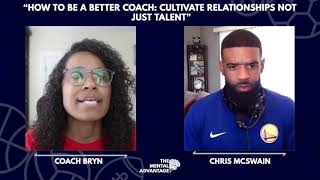
Basketball coach Chris McSwain discusses how social media affects young athletes' self-worth and shares mental-training techniques that improved his team's cohesion during COVID. He emphasizes building relationships over talent, starting with his mother's resilience-building approach and extending to his community programs like Top Flight Elite Basketball Academy.
Chapters
So I think the preparation breeds confidence, and the confidence will help your performance. It's not the, it's not the end-all be-all, but I do think that gives you a little bit more, you know, mental fortitude than somebody who isn't as confident or did not put in the work. You can be a great athlete, and I know so many great athletes that I outperformed or went further than because they were just, they, they just relied on their their skill set or athleticism or size or whatever, and they stop working. And so if you continue to put the work in, like I always say, is try to beat the math. However you can beat the math, you need to, you know, all right, well, so-and-so's working out this much. Well, how can you do a little bit more so you're ahead of them and you've already caught up to them or surpassed them whenever you see them next?
I'm excited for you to see this week's episode, but before we get to that, I have a message for you. If you're a parent of an elite athlete or a coach of a high-performing team and you want— you're looking for some help or assistance with making them more mentally resilient, perform with more confidence, be more consistent, anything like that, then this is for you. I have an 8-week program all designed to address exactly that, to help your athlete be at their best on a more consistent basis and not get tripped up by those little voices in their head and get getting down on themselves for mistakes, but performing like we know they can. So what I want you to do is don't delay, schedule a— just grab a time on my calendar through this link, and let's set up a time to talk about your specific situation and how what I'm offering in my 8-week program can help. Okay, so it's Bryndresher.com/freeconsultation. So click this link, Grab a time on my calendar. I look forward to talking to you. And now on to this week's episode. Welcome everyone to another amazing episode of the Mental Advantage Podcast. I'm excited to be here with our guest today. We have the fabulous Chris McSwain. Chris McSwain, how you doing today, Chris?
I'm doing fantastic. I'm excited to jump on your show and talk about the mind and how how it all works with athletics and beyond that. So I'm excited.
Awesome, awesome, awesome. So speaking of, I don't know if you know the premise of this podcast. We talk to— I know you are an ex-athlete, or I don't know if we ever lose that athlete designation. I always feel weird saying it. How do you feel about that?
I think I'm always an athlete. Even in our team building, we just did a team building at a little putt-putt golf and that, uh, that, that mindset never really goes anywhere. So, uh, even if it's, if it's ping pong or putt-putt golf or any other activity, I'm trying to win for sure.
Okay. All right. Well, good. So we're on the same page on that. Uh, but the, the competitiveness obviously stays there, all of the great things, and we'll get to that because that's so important. Uh, but one of the premises of the podcast is talking to, uh, you know, this idea of the superhero journey, right? And yeah, I love origin stories. So tell me, I know you're a basketball coach now. Was basketball your sport? Was it the first sport you picked up? Tell me a little bit about your beginnings in sport and then how you kind of transitioned into what, you know, basketball being your sport, if it was.
Yeah, well, thank you for the question. I love origin stories as well. It kind of gives you a background to the painting. You could see this masterpiece and you don't know where the background came from, but all the colors that kind of mold together end up shaping who you are. And more importantly, all the blemishes that you have too. I think that's a part of your struggle. I love scars and things like that. My kids will look at me and they say, "Daddy, you got some scars on your knees." I said, "Yeah, that's because I've been through some things." And I think that's an important part of the tale. But to answer your question, I grew up playing multiple sports here in the Bay Area. I still live in San Jose, California. And I used to play everything growing up. One, because my mom was the one who raised me basically since I was 8 all the way up. So she would have to have me in activities so I wouldn't be either getting in trouble or you just, you know, you can just get into a lot of things as a kid, but football, basketball, and baseball were my main sports. But I even did like, I did roller hockey, I did skateboarding, I did a whole bunch of different things because I was just, I just had a naturally good hand-eye coordination. Um, so baseball was actually my best sport growing up, and I played all three sports in high school, but I had to make a decision because AAU basketball and baseball were in the same season. So I decided to go with the much more fast-paced, cooler sport, in my opinion at that time, and I decided to stay with, with basketball. Um, and so after my sophomore year, I didn't play baseball anymore. And then football as well. I played football, you know, four years in high school, basketball four years in high school, but baseball two years. I probably I really should have stayed with baseball because I was pretty darn good at baseball. My hand-eye coordination, like I mentioned, was just very good, and it's always been naturally good. And then I decided to play college football, had a couple opportunities to do that, so I decided to play college football instead of basketball. But basketball has always been my first love. So baseball is my best sport, I played college football, and basketball has always been my love. And Yeah. So that was kind of the journey with sports. But yeah, that's a quick high-level overview.
All right. So I am committed. First of all, thank you for that journey through your beginnings of sport. I am committed to diversity of sport on this podcast. So you had me at roller hockey. First of all, being a person of color, you probably don't hear that as much. Now, obviously, I didn't grow up in the Bay Area, so maybe it was a huge thing in people of color. But how did you get involved in roller hockey?
You know, it's just kind of the habitat that you're in. You know, you grew up in the Bay Area specifically, we call it basically a mosh pit of different ethnicities. And so you're exposed to a lot of different things. That's why I really love being here. It's so diverse. And you're going to see every, every culture in this area. I grew up with, you know, my friends were Black, white, Asian, Indian, Hispanic, you name it. And it was just a beautiful thing because we really grew up to see no color. And so when it came to to trying out something different. It wasn't, it wasn't an easy— it wasn't a hard sell, it was an easy one because that was what everybody was doing. It didn't matter what you look like. And I, I didn't just play basketball because I was Black or African-American, and they didn't play hockey just because they were white or whatever. But all our friends played it no matter what their race was. And, you know, literally all my friends are basically like the United Nations. Like, on my wedding, it was, uh, it was really every ethnicity in my wedding party that was covered. And I think that's such a great thing and a benefit to growing up to where I grew up.
I love that. I love that. I'm biracial myself. I grew up in a predominantly white suburb outside of Chicago, and I have a mixture of friends as well. And I will always think about this kid from college. And it was, you know, I grew up in that environment, so it was so normal for me. But he was from probably the Detroit area. 'Cause I went to Michigan State and he said, one time me and my friend Carl, he was like, "How do you talk to them?" And I was like, "Who?" And he was like, "White people." I was like, "Oh, I don't know, just do it." But it was like, you know, just that whole world of probably being on either side and sometimes feeling that's foreign just for lack of exposure. So it sounds great that you had such a diversity.
And what, you know, what are both races of your mom and dad?
What are they? My mom is white and my dad is Black, but I was raised by my mother. So my— similar to you, like you said, from 8 on, but pretty much my whole life, my mom was my sole parent. So I had very little exposure to— I mean, my mom did make sure that— I mean, I've always known who my father was. We were around him, um, when he would come to town, or she would make sure we saw him. But in general, she was the sole parent.
So yeah, and that's, you know, the reason why I asked that is because my children are interracial as well. And, uh, you know, I don't want to shield them from either part of their life, whether it be white or black. I want them to understand that they are, they're good enough no matter what their ethnicity is. And I say, you know, you've got, you've got a great combination of two great cultures. So, you know, you know, you don't need to choose one. You don't need, you don't need to identify as just one. You are both, and you're always that. I just remember, you know, some of my friends growing up and trying to find that identity of, am I black, am I white? Um, but, you know, from what You know, just thinking about when I grew up, um, a lot of times our parents would try to shield us from different things.
Yeah.
So like, we wouldn't really know about it until we got older, and then when we got older, we started to look at it a different way. Oh, okay. So, you know, for, for, for my wife and I, our, our duty is to make sure we try to expose them to everything. Like, this weekend we're driving and, and the new Drake album had just came out, and We were listening to that on our— we were going to a family friend's house and, you know, there's curse words and things like that. And I want them to be exposed to that sort of thing. I want them to be exposed to that sort of thing so they know a right way and a wrong way. I don't want the first time that they hear these things come from somebody that is not, you know, not their family or friend. And I just remember so many times I would be— I would be introduced to things from other people. And I want to make sure that our family, we introduce things and we have conversations about it and not really try to shuffle things under the rug. But, um, it's an interesting topic. I don't— you know, there's no right answer. No, there's so many different ways to get, uh, get, get things accomplished. But that's just, I think, what we're planning— our plan is to do anyway.
Yeah. And I think obviously we know, uh, from your— what you just shared, and also just in general, when you are in athletics, it forces you to sometimes, you know, interact with people outside of your normal, maybe interactions or culture. You can kind of stay in your small space, but as you start to rise through the levels of sport, it is going to not only, you know, expose you to a diversity of people or places, but also identity. You spoke about, as you were going through athletics, And since this is called the Mental Advantage Podcast, when would you say you started to notice the mental aspect of sport as far as, you know, and which sport did it come through? I mean, because if we know it's present in all sports, or I'm sure you know, maybe the— hopefully the listener does as well. But tell me about when you started to notice it, or was it later introduced to you?
You know, most of it as a young, as a young player growing up, it's a lot of it is unconscious. Like you'll, you'll try to listen to your head headphones before a game or something, or, you know, I was— I didn't like anybody to talk to me before a game. I like to chill and put some mellow stuff on and just be prepared and locked in. So I think it was probably sometime in high school, but it was unconscious. I would do it, continue it in college, but it didn't really become apparent till I started coaching, where it was like, oh, you got to get your mind right. Like, and everybody's, everybody's little ritual is going to be different, and you have to embrace that as a coach, number one. But as a player, I probably didn't recognize it until probably after I was done playing. And, um, and I think that might be true for a lot of people because you just, you don't know what you don't know. But when you start to look back on it, oh, I was preparing myself, you know, you, you just weren't cognizant of the fact that that was going on. But, uh, I would say that I probably learned more about it after coaching. And even to this day, you know, talking to people like yourself, Bren, and, and so many others in this area, in this field of expertise, it is, um, It is not talked about as much. It was always about push through, fight, you know, uh, grind, uh, keep going, you're not hurt, you're, you know, you're all these things. But, you know, your mind is, is the most powerful thing that we have. And, uh, to train your mind in a way to, to optimize your performance, I think if it's done at a younger age— and that's why I'm so happy to be connected with you and the things that you've been doing with your athletes and, and young kids and college kids and even pros, um, it's just so beneficial because you don't don't really know how to naturally explain some of these emotions that are going on. And sometimes you need, you need a little bit of coaching to help you through some of that stuff. What am I feeling during this? What is this? Some performance anxiety that I might be having? And I think, you know, that, like I said, it's just great that people in your field are doing this and really opening up these conversations for people because it's much needed.
Yeah, thank you. Absolutely. I mean, we know that mental— I not to confuse mental performance with mental health, and then even take it as far as mental illness, because a lot of people even confuse that. They're like, oh, it's a mental health issue. Yes, but it's also when it's not mental health, it's mental illness. So we're trying to get to the point of the proactive side so we don't get to the other side, right? But then there's also people that have, uh, pre-diagnosed things and such like that. So we, we understand the different things. When it comes to your time through sport, and like you said, it is unconscious for a lot of us. I remember when I ran track, all I knew was be fast, be good, do what the coach tells you to do, and hopefully finish in the top, get a medal, whatever the case was. When I was out of sport is when I really went in on mindset, and I just wish I knew the stuff I know now, right then. Right. When you were in college playing football, uh, Did you find, compared to basketball, compared to different sports, do you feel like it takes something different in those sports? Like I said, I think it's similar, but I didn't play football. My brother did, but I'm just curious, like, you know, is football take something different than basketball? Or, you know, now from the coach's lens, maybe putting that on and even being in the athlete's seat, what do you think?
I think they're all different sports, obviously, but I do think there are some commonalities to how you approach everyday life. And, you know, just talking about about the journey that I've had. I've seen my mom work 3 jobs from, you know, 8 years old all the way through high school, you know. So I saw her work ethic, and that more than anything taught me, like, if you want to be— if you want to be excellent in something, you have to make sure that you put the time in. If you put the time in, now you're going to be more confident. When that confidence comes, you're going to be able to perform. So at the end of the day, I think if you have the confidence and you're— and I'm not talking about that irrational confidence that a lot of people may have. Some athletes have it, but that, that helps them in a lot of aspects. Like, even irrational confidence athletes, they perform better than, than players that do not have the same confidence. They may, they may not be as good, right? You'll see, you'll see a player, you know, just, uh, take, uh, J.R. Smith. I would say that he's an irrational confidence type of guy, and he, when he was on those Cavs, he would give them so much energy because he thought he He was— he thought he was as good as LeBron, right? You know, and a lot of times, um, and that helped their team and that helped him have a long sustainable career over, over the time. Yeah. And like, if you just look at the top athletes, it's all about their confidence, and a lot of it comes from their preparation. If you haven't put in the work, there's no way we're going to be confident about it. If— right. And, you know, if you're— if, if you're in a class and you've got a big test that's coming up And you didn't study or you're studying at the last minute. Well, you're not going to be very confident when that comes up. So I think the preparation breeds confidence and the confidence will help your performance. It's not the, it's not the end-all be-all, but I do think that gives you a little bit more, you know, mental fortitude than somebody who isn't as confident or did not put in the work. You can be a great athlete. And I know so many great athletes that I outperformed or went further than because they were just, they, they just relied on their, their skill set or or athleticism or size or whatever, and they stop working. And so if you continue to put the work in, like I always say, is try to beat the math. However you can beat the math, you need to, you know, all right, well, so-and-so's working out this much. Well, how can you do a little bit more so you're ahead of them and you've already caught up to them or surpassed them whenever you see them next?
Yeah, Kobe once said that it was simple math just to be really at the top of your game. And then you also have the expression, talent, you know, hard work beats talent when talent doesn't work hard.
Yeah.
So it doesn't matter. Like, you know, there's several people, and I know one of the books you recommended to me when we had our pre-conversation when we first were introduced to each other, thanks to Jason Holzer, who's on the 4D Ethics Podcast, you mentioned It Takes What It Takes. And he mentions Russell Wilson in that book. Actually, you know, the quarterback that they initially had who he was gonna play behind was more athletically what you want as far as a specimen when it comes to a quarterback in college, in the professional, but only one played in the Super Bowl. So like you said, it's the— it's not the— it's not what they say, it's not the size of the man in the fight, but the fight— the size of the fight in the man. So it's, it's having that that vision, that hunger. And like you said, getting those role models like your mother and being able to translate that and saying, look, she was like, do or die. This is what I got to do. I have a child to take care of, got to put food on the table. I don't have another option. And I'm sure you felt similarly at times in your sport.
Yeah, absolutely. I mean, there's times where, you know, she was down and things were difficult, but she never made any excuses. And she also had polio when she was young. So, you know, her leg is the size of your wrist. And it's just amazing because you see that and you like, if I'm struggling or something, I can't, you know, mope and be down when somebody has a disability. And so she never even parked in the handicap parking spot. She would always walk. No, I'm good, I'm gonna walk. Or, you know, even this weekend we were hanging out with her. She has a cane now because she's in her 60s, but, you know, she, she walks. And it, it looks like it would be hurting all the time, right? But she makes really no excuse. And so, you know, that's, that's really the thing is like you have to really train yourself to put yourself in those situations of struggle Don't, because the only way that you're going to stretch yourself is, okay, struggling. If you can't, if you can't lift this weight, well, guess what? In 3, 3 months you might be able to, right? And so constantly always putting yourself under stress to, to, to better yourself. And, um, you know, the, the athletes that do that over and over, and the lot— the one other thing that I want to mention is the reinvention of yourself. You can't be the same You can't do the same thing over and over. And, you know, if you expect— you're not going to expect the, the same results over and over. You have to really change. Um, and so you're gonna have to reinvent yourself maybe 2, 3, 4, 5, 6 times. Like, especially for, you know, yourself, once your, once your career is over.
Yes.
Then you got to reinvent yourself again. And so many, so many people, because they don't have that mindset, they've only been singular focus for so long, it's hard for them to transition. And so that's why I'm so glad to see athletes pursuing other endeavors earlier because that is, that, that is so important. The people who identify things that they're interested in and do those passions, like this podcast for you and, and the podcast that I do. Yeah, I do it because it's fun.
Yeah.
Um, and you meet great people like yourself, but that was, that's something new, but it's another interest that you have, and you never know when this interest can actually turn into something bigger than that. So I think reinvention of yourself is always the key to long-term success in any field.
Yeah. Now, you know, you've transitioned out of sport. So tell me a little bit about that process for you. We know a lot of athletes go through the dark night of the soul, and I want to talk about exactly what you're talking about, this reinvention, a little bit about there's no plan B type stuff. You know what I'm talking about, but we'll get to that in a moment. I really want to talk about your journey as you transitioned out of sport. Did you have that dark, like, night of the soul that a lot of people go through, or did you already know to diversify your identity, sort of reinvert— what I called, uh, diversify, you call reinventing, uh, where you had that idea?
Um, so I was, I was fortunate enough because I'm a, I'm a forward thinker. I'm always like trying to— I used to play chess a lot when I was younger, and so you're setting up moves for later on. So for me, I knew, I knew I wanted to, to coach, uh, I knew I wanted to coach. And so while I was in college, I was working all the basketball camps for the city that we lived in, and every summer. So I got some money and got to do something that I enjoyed. Nice. When we came back for winter breaks, I would go coach at my high school. And so I would be there for that 6-week period or whatever, and I would be coaching at my high school. And this was basketball at the time. And, uh, and when I was up in college— I went to college up in Oregon— during the offseason, I would coach middle school teams. I would always put myself in situations. And so what you've done is you've created a bunch of different contacts, uh, for later on. And if you do a good job, you know, people are always going to remember that. So I always tried to make sure I could do the best job I possibly could. I made sure I was like— these kids might have been in 7th grade, but I was coaching them as they were professionals. And I, you know, come in with the practice plan, detailed, all that. So you would— I was preparing for later on. I didn't know what I was what I was actually doing at the time, but I just knew that if I set it up right, you could possibly have something later on. So then as soon as I graduated, I got a coaching job, but I also got a sales job. The sales job allowed me to coach. And as I kind of, you know, moved my way up the ranks in the company, I decided to go back and get my master's degree in education because I knew, look, I love this sales job. It pays me really well, but I don't know if I'm going to be able to do this for 30, 40 years, even though the money's good. What am I passionate about? Okay, well, I want to teach and coach kids. Because I knew that there was like a handful of coaches that really made an impact. And then there was coaches that also made a negative impact. And I wanted to make sure that I put a positive impact in these young people's lives because it's so important. It could have went left for me so many times, just like so many other people. There's so many examples of what could have happened had this gone just one inch or whatever, you name it.
Right.
Just could have gone a whole different way. But I always like to set things up for the future just in case. So I got my master's degree, but I didn't even use it until 3 or 4 years later, but I already had it just in case. So when the school that I was coaching at now, Valley Christian, had a teaching job opening, I was ready to come in and take that over as well as the director of basketball and still be able to do some of the, the businesses that I wanted to run and stuff like that. So I was fortunate to, to know what I wanted later on, and I've always been I'm the person that says, okay, what do I want to do? And here are the steps. I don't know what the steps are to actually get there, but I'm going to reverse engineer it and figure it out from behind. If I figure it out from behind, I just got to find my way over there. But I do know, okay, I want to get to Disneyland. How are we going to get there? There's going to be multiple different ways you can get to drive, fly, you can walk, you can ride a bike, however. But we're going to find our way there. I know I need to get these things along the way, but if I can kind of pinpoint some things on this map, all right, Check that off, check that off, check this off, get some more experience. Boom, boom, boom, boom. And then you put yourself in a good position based on the relationships that you've created over that time.
Yeah, absolutely. I— okay, so we talked about— there was a question I want to ask, so I'm going to ask it now, but I still want to come back to the diversity of identity.
Yeah.
The, the big thing that you talked about was good coaches and bad coaches. And I mean, of course, I'm not painting all coaches with either brush, right? We know that you, you know, like, you don't know what you don't know. You already said that, right? When you being now in the coaching profession, kind of skipping ahead, what's the biggest mistake you feel coaches make? And did you fall prey to this? And what helped you make the shift?
I think the biggest mistake now is not, uh, not seeking out authentic relationships. You know, I think that is the biggest mistake. I was definitely a transactional coach early on in my career. There were times where, you know, I kind of went over the board as far as like what I would say, especially when I was younger and first couple years in. And it took, you know, a really close friend of mine to kind of say, hey, that's not you. And I, and I kind of changed from there on. I never wanted to be that, uh, that type of codes, but you're around it. And, you know, a term they use in Hollywood is playing at somebody. Um, so like, if, if, uh, Will Smith is the, the hot actor, okay, I'm gonna pretend— I'm gonna start sounding like him so I can potentially get roles and things like that. And that was, that was, that was what I was taught a lot of the times growing up. And, um, you know, I, I felt— I fell victim to it early on. And, uh I'm good with saying that I've moved on from that because— and I've learned and I've gotten better. And I just think that is a very important piece, is creating great relationships with these players. And if you do that, you're willing— you can, you can see more of who they are. They can see more of who you are. And, you know, when I was growing up, our coaches, you know, they would coach us and that was pretty much it.
That's all we knew. Yeah. Yeah.
Yeah, but now you got to show them, you know, bring your family around, bring your significant other around, put yourself in situations where it's not just about the sport or what they can do for you. You really— you guys are working together, and you can get more out of them by creating that really strong foundation. And that would be the thing I think most coaches are missing these days. They don't remember all these wins and losses. They remember how they felt. They remember where they were at. They remember who they were with. They remember those times, those special times that you— that they have with their teammates. And then if a coach really opens up, I think that just opens up so many more opportunities for growth. And we're coaches. We want to help these people live a better life. And hopefully, if you demonstrate these great qualities, they're going to, you know, help somebody else along the way because of their experiences in your program. And I think that, for me, is going to be the most important part. No X's and O's. It's strictly relational and building that foundation.
Yeah, I love that because I was going to ask you, how do you do that? But I think you went into it bringing your, you know, the human side of yourself and showing your players the 360 view of yourself, right? Showing them all the facets, obviously within professional, uh, in some instances. I mean, I'm not— I'm not— I think that's up to the individual what you determine that as. Some people keep themselves quite at bay, some people don't. So I, I always think about, uh, you— are you aware of the Love Language, uh, quiz? Yeah, any, any married man, probably his wife made him take it, but I'm just stereotyping. I'm stereotyping. Oh yeah, I know that one. I know it.
Yeah.
So what is your love language? I'm just asking. Uh, your number one, you know?
Uh, I would say respect would be— would be okay.
That's not one of the ones on the love language quiz though, right?
But I'm just— for, for me personally, you, you like respect. Okay, is respect in, uh, and that— what is yours?
Uh, mine is, uh, words of affirmation. So I need validation. I need to hear, right?
That's my wife's. She's affirmation, positive affirmations.
For sure. I need to hear you're doing a good job. Even if you're gonna gimme some vinegar, I need some sugar first. Right. You know, I need to know like, okay, you're doing a great job and here's some places you can improve. I believe, you know, that that would go a long way if players, if coaches also paid attention to not necessarily doing the love language test, but that sort of assessment of how does my player need to be communicated with. I think in the old days it was kind of like, it's my team, you fit in. And I know with some of these successful programs, when you're going to Alabama, you're going to Michigan, you're going to Oregon, or, you know, when we're talking football, basketball, obviously Duke, Kentucky, all these great dynasty programs, it kind of is this sense of, uh, this feeling of, well, I'm playing for Coach K, for example. I know he's, he's retiring, but it becomes this whole idea of like, oh my gosh, like I've got to get in where I fit in. But I think why these guys have been successful so many times, and women in on the Tennessee side and such, in some instances is that they took the time to make the adjustment, to build those relationships and learn the language of their player to translate what they wanted. What do you think about that? And how much of that do you feel like you're doing now? Or is that something, you know, you could still improve on?
Yeah, well, if you think about all of the, the great coaches, just think about Giannis, uh, for, for a quick second. And him and Coach Bud have a really great relationship. Yeah, everybody was talking about how he was going to get fired at the end of the year if they didn't win. And, you know, him and Giannis embracing, and Chris Middleton, they're all— we saw that, we saw that bond that they had. These three are in a, in a huddle right after a championship celebrating their accomplishment that they were able to finally attain. That right there says a whole lot about who he is and the types of bonds that he has brought in with his players. You know, Gregg Popovich, the same way. He'll often have dinners with them and wine and things like that. You know, Brad Stevens is very similar. Pat Riley is a family-oriented from the top down in Miami Heat culture. That's built in, it's ingrained. And then you look at, let's say, uh, the Patriots for instance, and Bill Belichick is a fabulous coach, like probably the best football coach that has ever lived, but Tom Brady don't fool with them right now, you know, you know what I mean?
Right?
He's not fooling with them. And he said he's had more fun with Tampa Bay than ever before, and he's only been with them for one year. This is gonna obviously gonna be his second year.
Yeah, when, when, uh, just sorry to interject, but I I want to point that out when you were talking about great coaches, because one thing I noticed about Tom, as well as the coach of Tampa Bay, crediting the team in their win, right? Like, and he went over his coaching staff, the coach did. So I thought that was a great way to show, like, you know, that humility versus like, yeah, you know, it's all about me.
So, oh yeah. And I heard this from somebody that came on my podcast, and I've just stolen it now, but there's two types of individuals, there's two types of coaches, there's two types of parents, you name it. The ones that are humble and the ones are going to be humbled. And, uh, that, that for me is, uh, has always like remained in my head ever since that conversation because it's so true. You know, you can— and it goes back to the, the power, um, of remaining neutral in a lot of situations. You know, um, Bill Belichick, as good a coach as he is, he doesn't have— and from what they say, doesn't have the same type of rapport. And I don't know him, he might have great relationships with certain— but they they, they, they, they don't get a chance to be themselves a whole lot of times. You know, it's the Patriot way. You're gonna do it this way, you're gonna do this. Yeah, we're gonna win. But at the same time, you don't have the— you don't have the same opportunities as somebody like Pete Carroll, for instance. Pete Carroll is one of the, uh, most winningest coaches, and he is a— he is definitely a multi-dimensional coach as far as creating those relationships. And, you know, he took it right on the chin when he said it was my— it was my duty to call that pass play, not, not Russ's it wasn't the, it wasn't the offensive coordinators. You put that on me. And, uh, he had to, he had to live with that for a long time. And I've, I've read most of his books and stuff like that, but it's, uh, it's hard to be, be, be that person that's willing to— but that's what leadership is.
Yeah.
You know, the leader, leader has to, you know, go out in front when it gets bad or stay behind when it gets bad. And you, you have to be the one to, uh, take onus for it. And I think, um, I don't even know if we answered your original question, but, um, I just think that leadership in that, in that capacity is extremely vital for successful organizations.
Um, so yeah, well, it was just about, uh, learning the language of the player, right? So like knowing how to get the most out of a Tom Brady, right? So to hear Tom Brady doesn't want to talk to Belichick, it gets like, well, that's interesting because you won all these rings with him. But for whatever reason, Tom's like, yeah, I don't want to play there anymore. I don't feel like that's home for me. And so that is an interesting paradox.
So to answer your question, what do I do? So like, we'll get the team together and I'll take them out in fours. They can pick anywhere they want in the preseason. We go have lunch or dinner or whatever. And we don't talk about basketball. We talk about how's their school going, this, that, and the third. How's the family? You know, what are you, what are you interested in, um, moving forward? And stuff like that. You learn so much more about the, the players. You know, you find out, okay, a couple of them have, uh, have basically their stepfathers are their dads. They don't know who their dad is. Oh well, I, you know, my dad was in my life too, but he hasn't been there. My mom raised me, right? So and so. So you, you, you get to touch on so many different things that you never would have found out. Like, I found out so so many, so many fun facts about the players when you do this. And, um, I learned this from one of my former AAU coaches, like, and I, I went and coached with him. I was his JV coach for a number of years while he was— and I watched him do this, and his players really fooled with him every single year. Like, they would say it didn't matter what type of coach he was, whether he knew what he was doing or not, they rocked with him. And that, that showed me, it's like, hey, you got to make sure that regardless, this is going to go by quick. And so at the end of the day, I want these, these kids to invite me to their wedding or let me know when they're having children or stuff like that. That's way more important, way more important than, um, you know, if we win these games or not. And yeah, winning is, winning is for sure important. It definitely is important. Um, but creating these and cultivating these relationships, in my opinion, is way more important than any of the wins in life. Losses.
I love that when you said, right, like they don't remember the wins and losses, because I couldn't tell you, right, exactly what happened. I mean, I know how we finished in high school, I know certain things, but I don't remember each individual meet or race or anything like that. But I do remember the fun days on the, on the track, right, having difficult workouts. All I remember, my memories are all about my experiences with my teammates and my coaches, not about the specific individual individual races or meets or anything like that for track. Basketball only lasted 2 years, so I don't have much other than unfortunately bad coach stories. But those are— but it was— it's an interesting thing. So when we go back to that, when you talk about talking to them other than basketball, which I talked about this on a previous podcast about the mental health of your athlete and how we generally start to pigeonhole these people, even if they don't want to be pigeonholed, pigeonholed, we start to pigeonhole them. I had a coach that I spoke to, I think she coaches volleyball at Arizona, and she was saying that even before, like, she would go places and people would introduce her as like this volleyball player, and she was like, well, can you just let me, like, let me mention it? Like, don't make me the volleyball player at the party, or, you know, like, oh, she's like the top basketball, or, you know, top prospect. She was like, I don't— the people don't let you get out of that identity. Identity. So what do you— when you talk about, and obviously it's helpful to talk to athletes about other than their sport, like you said, I'm interested in you as a person, not just basketball. However, sometimes the athlete only wants to talk about basketball or only wants to. So what's your advice for helping the athlete shift the focus, uh, oh, you know, to diversify? I call it diversify identity because they they— a lot of athletes perceive Plan B as like, oh, you're just saying if I don't make it. So I like to call it a multi-phase plan, right? It's like, okay, basketball is one of your main facets of that plan, and also you are interested in podcasting like we talked about, you're interested in whatever. So how do we help the athlete shift that focus and, uh, be able to have a multi-phase plan so they don't feel like it's a fallback plan.
Yeah, so I think one of the questions you would give the athletes is present them, give me 5 things you're interested in. Oh, I like sneakers, I like art, I like, I'm very good at math, blah, blah, blah. And then you can have conversations on each one of those things. So tell me about mathematics. Like I haven't done, the last math class I did was statistics, but these kids are taking statistics as sophomores now in high school at the school that we're at. So you can just start bridging the gap between those sort of things. Things. And you could really share, share your experiences too, you know, talk about when you're in high school and, oh, this happened, or my coach did this, or whatever. And then just, you know, you can just be, just be vulnerable with them. And I'll also ask them, like, uh, when the seniors are done, we'll have a, we'll have like a senior dinner, and we'll, we'll go to dinner, or they'll come over to the house, and we'll just sit and we'll talk. And I'll ask them specific stuff like if there was something different that I could do personally as a coach, what would it be? So now you're learning about like this is direct criticism, right? But it's beneficial. You need criticism to kind of grow. And what better criticism than right from your players? So one of the years I learned learned that, Coach, you're too open and honest with us. They said that. And like, we know about it, we, we know about the playing time, we know who's gonna play and who's not. You don't need to let us know. Because I, I, I want them to understand that it's not, it's not a personal thing. I'm just trying to do what's best for the team. And, um, you know, so that in that particular year, they felt like we talked about it too much. Um, but in other years, maybe they thought— and that, like you said, the love languages, everybody's going to be different. Exactly. So our, our point guard at that time, she was a very, like, a dominant personality. So you could tell her whatever, she— it don't matter. Yeah, like, so to her, it's like, come on, we got it, I'm gonna be fine anyway. But, uh, for everybody else, it may not have been that way. So it's, it's just really getting to know who they are and, um, letting, letting kids be who they are too. And, uh, with like no expectations, just let them, let them be who they are. If they're silly, let them be silly. Understand that you have to— it's, it's not their duty to just comply with what we want, right? We have to meet them too, you know. Um, so I think to, to answer your question, ways to get them out is number one, just be vulnerable and be, be open to share with them and ask open-ended questions that they actually have to respond to, not yes or no, right? Like, oh, so what really interests you about, uh, art? Tell— have you done any recent art? Blah, blah, blah. And then they, they might get ignited by a subject like that because you're genuinely curious. Like, that's a great thing too. Like, I can tell your curiosity, and when we switch roles, you'll, you'll be able to see mine. Yeah, genuinely curious to understand the way you think about something, and something that you say is going to resonate with me, and I'm going to take that and I'm going to run with it. Oh, that's a good one. Just like the person— I can't remember who it was— I said, you're either, you're either humble, they're going to get humbled. I remember that. I've added that to my arsenal, and now it's just a part of me because that fits with what— who I am. And, um, maybe you find something that fits. It's like a puzzle with some of these players. It may not fit that way, but if you meet them this way One of the young ladies that I had as a life coach that came on, Kendra Aaron, I do remember her name.
Okay.
She— and you should have her on. She's, she's on the same wavelength as well. But she, she told me, you know, how she, how she comes in. She sees a player that's not in a good mood walking in the door. She's like, what do you— what is your— what is your mood choice today? Or how do you— how are you going to attack this day? You can continue with the way you walked in, or you can change that. It's up to you to change it. But I'm going to be the same person. I'm here, I'm ready to work. You just, you show who you're going to be today. Uh, it's your choice. And, uh, that, that has stuck with me as well. So each one of these things, it's almost like a selfish thing, to be honest, Bren, because, you know, agreed, every time I, every time I jump on and have one of these long-form conversations, I'm taking stuff. From the other people. And it may not be the same way, but you, you may change the way I look at it and be like, oh, okay, cool, I can use that. And hopefully we can share that with somebody else.
Yeah.
And then they're able to see, and that, you know, that's just going to be the continual, continuous circle of life. Um, and yeah, it's a lot of it is a selfish thing because you're going to get more out of the situation than not. Like, if you're, if you're just a curious person naturally and ask a lot of questions. Yeah, well, people, people love to talk, talk about themselves in particular too. So it's okay for you to kind of put somebody else on that pedestal, um, and tell them, man, there's some great things you're doing. Because sometimes you're your only cheerleader, and to hear it— like you talked about, you know, positive affirmations— it feels good when somebody's— when somebody thinks you're doing a good job and gives you strength to continue.
Yes, those dopamine hits, right? Like, um, I love what you said. First of all, yes, absolutely, positivity feeds. And we're going to talk about positivity in just a moment because I have some issues with Trevor's book. I'm just going to tell you right now, I'm almost done with it. I've got about— so I'm curious to see what you're— if you had any critiques about his book. However, uh, when— what I love about— what struck me when you talking was this idea of coaching the team you have, not just coaching the sport. So in other words, recognizing that, look, this is what I have. These are, you know, here's, here's the sport we're playing, and here's the arsenal of resources that I am employing at this time. So meeting them where they're at and finding ways— and I love the open-ended questions. It's so important because it's easy to ask yes or no questions, and that's almost like you're way of, uh, hearing what you want to hear. If, you know, that's called leading the witness, right? Like, we're gonna work hard, right? Yes, right. But when you ask a player, like, what's important to you about while we're playing basketball, you're gonna get a very much more rich, nuanced answer than a yes/no. So I think that's awesome. And I love, uh, what's her name, Kendra?
Yep, Kendra.
Kendra talking about, yeah, what mood, or where are we at? Like, you know, even if you do it on a scale from 1 to 10, What's your mood? And then what you do next is going to determine who you decide to be today. So that's fabulous. Yeah, when it comes to neutral thinking, you mentioned it. I do talk to my athletes about the 90/10 rule. Life is 10% what happens to you, 90% how you respond to it. I do believe everything is neutral in the regard of we have a game, there is a result, and how I perceive that game sort of charges it positively or negatively. Negatively. My criticism of Trevor is calling it neutral thinking, but it really is looking at things that are neutral and then still putting them in the positive versus negative category, because he does speak pretty extensively about negative thinking, and I think positivity gets a bad rap. I'm interested to see what are your thoughts about that, because I'm like, you know, saying I'm gonna go to the Super Bowl to me is not a neutral thought. That's a positive thought.
Right.
You know, now he's talking about pie in the sky, saying it, but just like, if I execute my game plan, I'll end up at the Super Bowl. But that's still, to me, positive thinking. What do you think about that?
Sure. I think, uh, it's interesting because his dad was, was a positive think guy.
Yes.
So, um, I think just in general, as kids, you kind of want to do things a little bit different than your parents, and it may it may be the same language, uh, just a slightly different dialect. And so I think, uh, what he was saying is, yeah, you're, you're not wrong. It's— and it's every— and it's how you digest it, right? So I think, um, there's a lot of positivity in what he was saying. You can't be as successful as he is or any of the athletes that he has without positively right, hoping for these outcomes and, and doing all the steps necessary that it actually makes sense in the long run, that you can actually accomplish these things. I think, uh, I think the neutral thing is more of a mindset, like, I gotta remain neutral, I can't get too high or too low. And so, um, I think that for me, when, when I read that, like, yeah, all the— mostly all the stuff that he was talking about is positive, but But, um, I just think he tried to, tried to just sway away from what his dad was, what his dad was, what his dad would be doing.
Yeah.
Um, and just kind of make— trying to create your own lane, you know?
Yeah, um, absolutely.
But so, yeah, I don't disagree with, with you or him. I just think it's the perspective. And it's just like, uh, it's just like certain foods that you eat. Some foods I might like, but others you might not like, or Trevor might not like. And so you eat what you you, you digest this however it works for you best. And so I'm taking only the things that I need from that book.
Absolutely.
And, and you might take something different, and, you know, Jason might take something different, but we're all taking something from it, from those different thoughts, because it's just a different way to look at something. Um, you know, my undergrad is in psychology, so you talk about Piaget's theory where you're looking at something from this direction, and then And then you come around and you look at it from this perspective, and now it's completely different. Then you zoom out and then you can see the whole 360 view of what it is, right? And so, you know, everything, everything's about your perspective. And what I like is you can choose what your perspective is going to be. And more importantly, just like our, just like our attire we're wearing today, we can also change that, right? We can change our perspective. As soon as the facts change too. So who knows, in 10 years we might talk about how negative, negative thinking is going. I don't know how negative thinking would be.
I'd love to see that one.
But I'm sure there's some people out there that are coming up with different theories, and it may have— oh, that does actually make sense. Yeah, you can, you can, you can make a lot of things come to light if you just tweak it just a little bit. And I think for For Trevor, that was his little thing. I'm going to be a little bit different than my father, and this is how I think, not necessarily how my dad thinks.
So no, absolutely. And I want to— for those of you listening or watching, uh, on YouTube and listening on Apple or Stitcher or wherever you're consuming this podcast, I want to make sure you know the book because it is really good. It's Trevor Moawad, M-O-A-W-A-D. W-A-D, I think. I think that's correct. And he is like a top performance specialist. I'm gonna say, you know, uh, I don't believe he's a psychologist, but he, uh, has worked with IMG Academy, and that springboarded him into working with some of the top names in sports— Nick Saban, uh, you know, Bill Belichick, uh, you know, I mean, I don't even know if— anyway, he's worked with lots of people in football. Russell Wilson like his main client, but he has so many top names that he's gotten the privilege to work with in basketball and football in particular, as well as other sports, soccer with the US Olympic— the US soccer team, excuse me, the under-17s, I think. So it's, it's good to hear his perspective because it's called It Takes What It Takes. So if I didn't say that, that's the name of the book, go grab it. I listened I'm listening to it on audiobook because I'm also part of a book club where I have to read a certain amount of pages a night, so I can't add, uh, currently Trevor's book to the— so when I'm in the car, I'm just listening to it. But thank you for that recommendation.
And I wanna— and I wanna mention, uh, the relationship that he created with Russell.
Oh, I know.
That's the reason why this whole thing works. Yeah, because it's an authentic relationship. I believe they're best friends, and I believe He was in Russell's wedding, and Trevor was going through his relationship struggles and stuff like that, and he was vulnerable with Russell. And so they've got a bond that is not just beyond— not just client, you know, and guru, right? It is a complete friendship. Um, just the full amount of trust in one another, and they care about each other beyond whatever it is they do. And I think that is also kind of what we've been talking about too, is just creating authentic, real relationships. And you see what happens when you were able to put these things together in that context. You can really do great things once you're in relation with people.
Yes, absolutely. Uh, what I liked about his book, uh, was it was reaffirming for me because I teach literally almost everything he's talking about, and I haven't had quite the breadth of the clientele that he has had. So it was very like, oh, basically, yes, this is great, fabulous. I'm, you know, so I, I'm, I'm— thank you for bringing that book into my life. It has been great. I want to get back to you as a coach because we're not here to talk about Trevor. If we have him on the podcast, we will talk about him, uh, and I am going to reach out to him because I really do want to have a conversation with him. You are a coach and you coach both men and women, or women?
Uh, yes, both. Um, so I, I currently coach, uh, varsity girls at Valley Christian High School, but I also have a club, club program called Top Flight Elite, and we I have boys and girls 4th through high school. And, um, so I've coached boys and like my first— this is what, my 18th, 19th year coaching? My first like 8 years I was coaching only boys, then I started coaching girls, and then sometimes I do boys for club, and then high school I still do girls.
So, all right, so knowing that you have both genders and top-level athletes, what do you find is the biggest difference between a male and a female athlete, if at all, when it comes to mindset, is there anything different?
Yeah, I would say there is a difference. The biggest thing is, is how you challenge them as far as coaching is concerned. But I'll get to like the differences I see in gender. Yeah, but challenging them, you can challenge a boy or a young man in a different way then you can challenge a girl. Now the challenges are still the same, but you're gonna have to— you're basically gonna want to have to find the language that works best for, for that gender. Um, the game, in my opinion, is still the same. Um, the dimensions are still the same. The athleticism is probably a little bit more pronounced on the boys' side. Yeah, but the girls are darn near catching up. The girls are probably a little bit more analytical and listen better, probably execute better.. And I think overall, being, being a coach of both, they listen more, they're more receptive to understanding how they can benefit from doing it a certain way. And coaching is, in the simplest terms, is changing behavior. So you want to change behavior to the positive outcome, and you're going to have to, you're going to have to do these certain steps in order to get that positive outcome. Boys might be a little bit less receptive because they think they can do it their way. But, you know, a lot of it is the same. But I would just say the approach on which you challenge them is going to be a little bit different from a, from a male to a female. And I do think that boys do crave relationships, relation with the coaches, more than they would let on. And I do think, you know,, as a, as a male coach or a female coach, you need to, to, to make sure those relationships are validated with dealing with, dealing with the young ladies. Um, but I, I thoroughly enjoy both. There's, there's great, there's great kids on both sides. There's terrible kids on both sides as far as attitudes go. Yes, yes, yes. So that, that, that just happened just like in our society. There's a lot of great people, but there's also a lot of crappy people too. Yeah. Um, but, uh, I, I really, I really enjoy pouring into, to young people no matter what the, the gender or age is. And if you can just be a positive influence on their life in, in, in any direction— like, the great athletes are usually going to be great. They'll find a way out to be great. Okay. But can you impact them beyond on just the sport, and that is the most— again, the most important part of it. Now don't get me wrong, because if you're listening to this and you're like, oh, he doesn't care about— no, no, no, no, the X's and O's and the, the discipline and all the fundamentals, right? The fundamentals, it's all a part of it. But you, you can't lose the, the 360-foot degree angle on what you're trying to accomplish. Why do we get into what we're getting into? Why do you do what you're trying to is, is to help people exactly figure out whatever it is. And there's people that you probably reach out to, there's people that I reach out to that are mentors of mine that I'll reach out if I got questions. Hey, I'm kind of going through this, you got any advice? And they'll give you your best and they'll try to help you through it. So we're all trying to figure this thing out every single day. And, um, I think that it doesn't really matter what gender you're coaching, you just have to understand approach necessary for that particular person or individual.
Yeah, I think absolutely exactly. There's no one size fits all for either gender. So don't put them in boxes, right? Oh, this is a girls team. They feel this way. This is a boys team. Again, coach the team that you have and the players that you have. So coming back to that, that's fabulous. And thanks for saying women are better listeners. We already knew it, but now you heard it here, folks. Anyway, so I'm just kidding. Just kidding, just kidding. Um, all right, now we're talking about, uh, one of the things that I wanted to come back to was when you're coaching, what do you feel like today's athlete is the hardest thing they're facing? They're facing, right? There's a lot of talk about extrinsic versus intrinsic motivation, but given that you've seen over your career, you said 17 years of coaching. You said 17, right? I'm not making that up, right? All of a sudden I'm saying, did he say 11? I don't know why that just came to me. I want to make sure. 17 years of coaching. What do you feel like is, has it changed what athletes are facing or what do you feel has been the common thread that athletes are facing that, you know, they have to overcome to be great or to be competitive or whatever.
I think the main thing is just all the, uh, the external hype of whether it be a, uh, you know, 15-second, uh, Instagram Reel or a minute TikTok or whatever it is, always trying to be in the limelight. And, uh, all that stuff looks good It's the best version of whatever it is that they're doing. You're not seeing all of— you're only seeing the positive things. And I think we need to see more of the negative things. I think the kids need to see that because they look at so-and-so, oh, they're doing this, they're doing that. And so they're always in constant comparison with whatever else is going on out there in the world and in their circles. You know, they have so many more friends, friends But a lot of times they've never even really met these people. They've, you know, they've just— they're friends on social media. And I think that would be the biggest thing, is the biggest hurdle. Like, you know, we'll, we'll see the team and they're on their Instagrams and they're commenting on so-and-so's picture and, and that, oh, did you see this? Did you see that? And it's like, people need to understand that it should— they shouldn't worry too much about what everybody else is doing, because really nobody's concerned with what they're doing either, you know. Right. We're all, we're all the, we're all the superstar in our own action movie, right? And so if somebody says something or they posted this and you're trying to catch up to that, like, I just think that is the biggest thing for them to try to overcome these days is just the sense of their own self-worth and not putting it all in in what everybody else thinks outside, because there's probably only a, a small percentage of people that you actually know that really care about you, right, if you're going through something. And so I think if that small, small group looks at you in a certain way, then that's what you should— that's what it's like. If they look down upon you or, um, or they're supporting it, those are the ones that really matter. It doesn't really matter if all those other people that don't know you, support you, or don't support you. Um, so I think that's the biggest thing, is just the external social factors that go into today's life where everything is examined and overexamined, and then that can kind of, that can kind of get into your own thoughts.
How do you, as a coach or a leader that might be listening to this that is charged with, you know, youth or even people, how do you believe coach or a leader can help with that? Because I've been told in some instances you got players that have their phones out at halftime. Like, and so walking into the locker room, I couldn't even imagine having, I mean, you know, having a phone. I know some of us didn't grow up in a time where we would have a cell phone, but you know, having a phone out or, you know, just being casual during a time that my coach was talking to me, for example.
Yeah, again, you know, you have to adapt to— you have to adapt to the times. It is like a lot of the NBA players, they'll pull their phones out at halftime, and I've heard coaches on different podcasts discuss why they either allow it or they don't, you know. But if we, if we put a hard stance down and we put a line in the sand and we say, okay, You don't have, don't have your phones in locker rooms. Well, what's going to happen when that player pulls it out? You got to be willing to react. So instead of like, uh, placing non-negotiables, I would say, um, I would say something like, hey, we're not gonna have our phones during halftime. Anytime else you want, any, any other time you want to have your phone, cool, whatever, right? Uh, but but we're not going to just have them in the locker room, or we will allow it if this is the case, you know, stuff like that. So I think you, you have to meet them not halfway, but you have to definitely like think, no, well, what, what is really important? Is this— does this impact winning? Right. Um, and if it does impact winning, then, you know, maybe you, you draw a line in the sand. But I think the looser you can be and let that— and let them be the ones that are, are the police of it, because you don't want to have to police everything too. Hey, you're in charge of anybody has the phone. And if, like, a team captain, somebody pulls their phone out, you decide what's going to happen. And so you put it back on them and you give them ownership of the team. Because at the end of the day, the teams are gonna— the teams are the ones that are playing, you know. We're just kind of the directors. And however, however they're going to improv out there on the court, like, we can, we can say this is how the game is going to go, and it's going to go a completely different way. It's up to them. So the same thing there, like Um, I don't, I don't address the phone thing, and like, they just know, okay, if I'm talking, make sure your phone's not out, stuff like that. But, um, if, if you ask me in '04 when I first started coaching, absolutely no phones, blah blah blah, all that stuff, right? You gotta grow and learn with the times, and if you don't, you'll get left behind. Uh, and I would rather, I would rather them, I would rather them execute what we're saying? If, if having— is having their phone out gonna let them execute better or worse? I don't really know. So should we be worrying about something that is so insignificant? I don't know. Um, but in that case, if they did have their phone, hey, let's just not have the phones out, and I'll keep it at that. I wouldn't say anything more than that. Let's not have the phones during halftime. Y'all want to have them before or after? Cool. 'But this is how we're gonna rock with it.' And just don't put any, uh, you know, full demands, because then they gonna—
then you're gonna see—
yeah, yeah, then you're gonna see, 'All right, well, what are you gonna do, coach?' Because somebody will just do it just because. Say, 'Really?' And you know, you gotta— you kind of gotta, like, in my opinion, make it like a joke.
'Really? You're gonna pull the phone out right now?' Yeah, you know, come on now, after the Yeah, please, please tell me what's going on on that Netflix series, uh, right after I get done with this halftime speech. Yeah.
Oh, or, or I'll say something like this where, um, hey, I just want to make sure you're okay. Is your family, everybody okay? They're good? Okay, got it. Um, so just put your phone away, and then if it's not, just let me know and you can go out and take a call or something. So just something like that where you kind of defuse the situation I think is a, is a real— is a trick that I've learned, uh, more recently.
Yeah, no, I love that. Being flexible, adaptable, and like you said, meeting them where we're at, which seems to be the theme that we're going down here, right? We gotta meet them where we're at. And as you said, is it going to affect the outcome we're trying to produce, or a better performance on the court or on the field or whatever sport it is? And if not, then we need to pick battles, just like everything in relationships. Since we talked a lot about the richness of relationship and coaching being one of those paramount things to getting better performance, we're gonna have to pick our battles in order to get that. And I think also, just like, you know, like I was thinking of even like a culture where you're just like, hey, listen, some teams do this, some teams do that, you decide, right? You tell me. But if you can tell me that you, you know, I mean, it's been proven that multitasking doesn't work. So if you can have your phone, you know, silenced and away while we're talking, and then like you said, after or something like that, then, you know, I'm not gonna make a big deal out of it. But I can't tell, so I'm just gonna— I'm gonna leave it to you to make your decisions, right? So I like that too, like having their choice versus it being like, this is my decision. So, and I love the check-in as well. Are they okay? So we're getting close to the time of wrapping this interview you up. So I want to ask you a few other questions. One, what is, uh, the biggest tip that you have found to drive intrinsic versus extrinsic motivation? Because we have talked a lot about, like, there was a question about the pep talk, right? How powerful is the pep talk necessary? Because it feels great, but does it sustain for the full 60-minute game or whatever the cases. So what do you think on athletes— how do, as a coach, motivating athletes on an extrinsic or intrinsic level, or how do you distinguish maybe driving?
I think on an intrinsic level is, uh, seeing it more often. So like, if, if you— if, if I'm a coach, I'm going to tell my player, hey, I want you to write on your bedroom door every time you leave, I'm the best player in the state, and you just write that, or you see it every single day. So I think if you start to, to see things, and then you start to believe it, and once you really start to believe it, that's when you can kind of take off. So I would say, um, be your own, be your own best cheerleader. Tell yourself a lot of different positive things in, uh, in relation to whatever it is, and, and really, really pump yourself up a lot of the times. Man, say, I'm great today. I was awesome today. You know, uh, a lot of times we just, we focus on, oh man, I didn't do this, I didn't do this. But what did you, what did you do? Um, so for me, I think that would be the most important part, is like, whether it be positive self-talk or just being able to see it, or, you know, write, write little affirmations to yourself and kind of post them wherever around the house or your bathroom or room, and you just start to see them. And, and And hopefully that just changes your whole mentality on— you're seeing things as more good rather than more negative. And that would be, that would be something I think about as far as intrinsically motivating athletes for their performance.
Okay, now you are, uh, what was I thinking? Oh, we talk a lot about the 90/10 rule. We already said it on this podcast, but everybody in sport, unless you're— I think it's Vince Lombardi, it's like sports is 90, you know, 10%, whatever he said, physical, and then the other percentage is mental or whatever it is. But everybody knows it's the 90/10 rule, right? How much practice time— because this has been my big pet peeve— hardly anyone devotes actual practice time to the mental game. We spend 90 99.9% of our time on the physical game, and we kind of expect the athlete to get out of their own head, figure it out. Like you said, the old school days. Now you've talked a lot about relationship, you talk a lot about what you prioritize to help the athlete to know what's important. Do you devote practice time to the mental game, and how have you seen that pay off?
Yeah, so, uh, 2 years ago, not last year, during, uh COVID, right? 2 years ago we had a, uh, a mental performance coach on our staff, so he would come to most, most practices. He— we would, you know, kind of plan out the week. His name is Shay Coleman. You should probably have him on. He's getting his doctorate in this sort of thing right now, but really good dude. And so, you know, hey coach, can I have 15 minutes before, after practice? Oh yeah, you got it. So we'd incorporate them into the practice plan, or we would do it after practice, and it worked out really well, you know, and the team, the team was closer. They were able to, you know, transition easier from task to task because now they're thinking and being more thoughtful about what they say, how they do, you know, that sort of thing. So it worked really well for us. We're going to be using the 4D Athletes program with our, with our team this year. This year. Nice. And you're right, like, it's, um, it's something that I think needs to be more. But then you, as a coach, you got this pull where it's like, oh, we need to do offense, we got defense, we got to do, uh, you know, a side out of bounds, baseline out of bounds, press, press break. There's so many things that you're trying to do with the limited amount of time you're just never going to be able to get to. But I think if you can, you know, take 10 minutes a day out of the practice. Say this is what we are going to dedicate to this. Getting back to Kobe, it's changing the math. Well, 10 minutes a day multiplied by however long our season is, you're going to see, uh, you know, however many hours that turns into be. If that was worth your team, you know, getting closer as far as bonding, whether that be having them communicate better obviously, hopefully affecting their play in a positive way, getting more relational with one another or the coach. That is worth it in my opinion. And truth be told, I would— I need to make sure we do more of it. Yeah. If we're really trying to do it the right way, it has to be even more. But I do think it is important. I don't really know what percentage you would put on it. It's just— yeah, it's invaluable in my And it's like marketing too. You don't really know if it's really working until your business is selling a lot of products, right? You just don't know. Like, yeah, did that new Apple commercial with the cool new music get me to buy their product? I don't know. I mean, they don't know either, but they keep pumping them out. And so, yeah, it's kind of hard to quantify because you can't quantify it, but I do know the way it feels. And I do think it makes you feel better as a group when you take the time to implement some of these things that you're talking about.
Well, I, I obviously— yeah, it is hard to draw it back, right? Because, you know, if I'm teaching you the press break and then I see you execute the press break, how well did I, you know, get the— what's necessary in that play? So I can see it play out right before my eyes. What I can't see is the intangibles. However, if I have— which is something that I do with my athletes— take some sort of barometer of where they're at at the beginning and then look at where they're at after. And then of course, obviously, um, although all stats can't measure everything because somebody can have a great game and not really rank on the stat sheet or the balance sheet sometimes, uh, because they can be, you know, the off-the-ball things. But I think it's really great to have that to give athletes the opportunity to see, like you said, the closer bonding you're going to get. I always say, if you don't tap into a player's mental game, you're leaving performance on the table. There's some potential that you're not tapping into. So I think it's, it's, it's important. So I'm happy to hear that you guys had a mental performance coach, uh, and also that you're, uh, going forward with more of it. And like you said, yeah, can I do more? And It's like, well, if I could sacrifice a certain amount of time to see it pay off, yeah, it is a risk. But, you know, I think 9 times out of 10 it's going to pay off in the way that you want it to. But that's hard. It's hard. It takes also a lot of— um, have you seen Ted Lasso?
No, I haven't. I've been hearing a lot of good stuff about it though, actually.
I just watched it because it literally, like, 4 or 5 people that were coming on my podcast mentioned it. But there's a particular episode where Sports psychologist is brought in and he's having a hard time because he's always been like the, you know, the one that kind of motivates the players and does the thing. And so it does take a certain type of humility on the part of the coach too, to let, allow that outside voice to come in because it can be scary for that coach as well. And I think also someone like myself has to have that in mind, but know that like through collaboration is where, you know, the most creative genius happens. And so together we can get the most out of our athletes, then it's a win-win for everybody. I agree with you 100%. Yeah, absolutely. Okay, last question, and then we're gonna go into the rapid-fire questions.
Okay?
Okay.
What is your mental advantage? Um, it's a good question. I just think, uh, like I mentioned earlier before, watching my mom go through all the things that she went through raising me that has created a mental advantage that I think is— I wouldn't say unmatched because there's other people that have the same type of like drive and stuff like that. But I just think when hard things come in my life, it's easier for me to kind of get over them and accomplish them and understand that like I may fail a a lot, but I don't need— all I need to have is a few wins or win more than I lose. And, and usually that is the case. I don't win, I don't win in life every single day. I don't win as a parent every single day. I don't win as a coach every single day or as a teacher or a business owner, right? But I win more than I lose, and that has been, been something that I've always taken. I don't need to win every, every, every time. Like, you know My son right now is almost 4 years old. If he doesn't win, I'm not letting him beat me, first of all. Like, if he's gonna beat me, he's just gonna beat me. He's gonna have to earn it. Yes, exactly. So he gets upset every time he doesn't make it, one of the shots, or, you know, can't hit this, or can't figure out this puzzle. He gets frustrated, and I'm— and, and I, I want him to feel that frustration, honestly. I want him to be able to get over that in a way that you're just able to cope better. I want him to go through really difficult things. Um, I— he just— he's in karate and he was going for his yellow belt, and I kind of wanted him to fail. I kind of wanted him to fail the first one, but he passed and he did great. But, um, he's got to fail a lot. And I think I failed a lot in my life, and that's the way— the reason why I succeed. And I know that I'm not going to succeed in anything, but I just need to succeed in most things. Yeah. And I think that's the mental mindset that I've had my entire life. Um, I don't know if it was naturally in me, um, or I viewed it from the people that were around me and helped raise me. Um, but yeah, I've been blessed, super blessed in that, in that category. And also, um, My mom instilled me with so much confidence, you know, you can, you can do it, you can, you always can do it no matter what it is. And she made me step outside my comfort zone so early when I was young. When I was 16, she went and got me a job. She said, you're gonna, you're gonna help out, I'm gonna get you a car, but you're gonna get a job. So she went and got me this job, um, at this place called the Winchester Mystery House. And it is a, um, it is a, uh, 140-room Victorian mansion, and they give tours and they say it's on it and all this stuff. Yeah, I had to memorize an hour and a half script. Wow. So, uh, but it made me— I can get up and public speak in front of 10 people or 10,000, it doesn't really matter. Awesome. Because I was, I was getting those reps in early on. So like, I didn't know that that would help me where I'm at now. Or if I needed to memorize something, I can, I can memorize it. And then you have to put your personality into it as well. And I was only 16 giving tours to toddlers all the way to 90-year-old, you know, men and women, um, and everywhere in between. And you had to be— you had to be on that whole hour and 15 minutes. And, uh, I think it, it taught me grit. It taught me how to work hard. It taught me how to, to show your personality. And I was— I was probably at that time more introverted. And I would say just depends on the day. I'm mostly extroverted, but some days I'm introverted. Yeah. And so I think that's where my mentality came from. So I give, I give, I give most, if not all, the credit to, to watching her and her putting me in different situations to either succeed or fail and understanding that I was going to be okay in either one of those results.
That's fantastic. As you were talking, I heard confidence, adversity, and resilience. And then excellence. So care, which goes with this whole thing, right? At first I was car because it's a vehicle, but then I'm like, we gotta add the E because it's all about the love. But I, I think, yes, your mom deserves a lot of credit. And you, as you said, it could have gone either way in many situations, but you chose, uh, to win. I don't know if you've seen Sarah Blakely's, um, interview about celebrating failure failure, uh, and not fearing it. As it— like, this is one of the reasons— I don't know if you know who she is, but she's the founder of Spanx and multi-millionaire woman, right? And she has this whole talk about her dad, uh, making her not afraid of failure. So you may want to try that with your son. I'm not a parent, so, you know, take that with a grain of salt. But I think it's something that I tell all of my audiences about, because when I heard that, I was like, yeah. Because school just makes you so afraid to raise your hand, because it's like, nope, next, instead of celebrating. Yes, you gave it a shot, you know. So, you know, having that mentality would be awesome. Yeah, for sure. Okay, so we've got the rapid fire questions.
Are you ready?
I'm ready.
Okay, favorite snack, what is it? Favorite snack, I'll say a protein shake.
Nice, what brand?
There's so many.
It's called Isopure.
Okay, Isopure.
Are you a chocolate or vanilla guy?
So right now this one is cookies and cream that I have, but they have a chocolate version and they have a vanilla version. Okay. They're not a sponsor of mine or any of my affiliations, but I do love it. Isopure, um, it's, uh, it's like one of the lowest carb type of proteins, um, but it tastes like a milkshake.
So nice. Okay. All right. And Isopure, maybe you should sponsor him, so reach out. All right. Yeah. Your favorite flavor of ice cream since you talked about a milkshake.
Is it cookies and cream? Nope, just vanilla. Vanilla ice cream. Vanilla bean. Yeah. Okay. I like it.
I like to keep it simple. Yeah, I call that the gateway drug of ice cream because we all started with vanilla. Nobody brought home like really fancy ice cream the first time. We all kind of graduated to the fancy stuff, right? Sure. All right. If you could have one superpower, what would it be?
And why? Uh, I always wanted to fly. That'd be pretty cool just to be able to fly. Um, and so many, so many of the superheroes are able to have that ability. So I just think if I wanted to get somewhere quickly, I could fly over there. Um, I don't think I would want to be invisible because I think that's just a little bit weird. You can kind of just snoop in on people and stuff like that. So that's a little bit weird to me. So flying.
But what about you? I've always thought the invisibility is for the criminals, right? Right? Like, because they're like, I want to be able to rob a bank. I'm like, see, there you go. Yep, that's, that's, that's the one.
Uh, let me ask you yours.
What is your favorite? Uh, I'm a teleporter, actually. Well, there's two. I've kind of come up with a different one. It's not really anyone's superpower that I know of, but, uh, teleporting is my number one because I don't even want to fly. I don't want the bugs in my teeth or my hair. I'm sure I'm flying faster than a speeding bullet, so maybe the bug can't get on me, but I I just want to get there. I don't really need the journey. I know it's not— of course there's something to be said for enjoying the journey, but if I'm going to Japan, I want to spend all my time in Japan, not on the plane, you know what I'm saying? And I know we're flying, but you get the point.
So you just optimize the flying then?
Yes, exactly. Now my other one is to be able to talk to all languages. So like plants, animals, people, like I want to be able to just speak to everything.
So that's That would be a good one.
That's a good one. That's a good one. All right, uh, this one's interesting. Not everybody has an opinion on it, but so far everyone has had a thing. People are quite kind of passionate about this that I've come across. Uh, as far as toilet paper in your house, do you like it to be over the top or under the bottom?
Uh, over the top. I think, um, it's just the ease of use to get it down.
Okay. Okay, all right. If it's wrong, if by chance someone puts it wrong on the roll, do you change it?
So does it, does it, uh, does it deter us from winning? I don't think so. So I would not change it. There's other things in the house that are more important to the family dynamic than which direction the toilet paper is in. So yes, I would prefer it on the, uh, on the front side or top. Um, but if it's going the other way, it's not as bad. I would rather— much rather have a clean house and everything else kind of in order rather than just that. So yeah.
Okay, nice. So then that means you don't change it at other people's houses either, so that's helpful.
Oh yeah, we're definitely not— no, I'm not touching anybody's stuff.
Uh, there are people that do.
Yeah.
Oh, I am not one, but there are people. I will change it at my house, I'm gonna be honest. I will change change it at my house. I'm not gonna make a stink out of it. I'm not gonna call a meeting and, you know, I'm just gonna change it. But if it's— I'm a— I'm an over-the-top— I'm like you. I'm not— I'm not as passionate as other people, like, oh, the original patent picture, and like making an argument about it. I'm just like, look, I like it over the top. I don't really care whether it's the right way. I just know that's the way I like it.
Now I'm gonna— I'm gonna look every single time just to make sure where it's at.
Well, it has been brought to my attention it might be a first world problem. And when you have other things going on, it may not be so important. So that's why you probably never noticed. I was like, oh yeah, maybe I never thought about that with racial implications and class. Just because some people just don't care how their toilet paper is. But I do, when I do it with speaking events, I do ask my audiences if some people just have it on the back of the toilet or wherever, because everybody doesn't have it, you know, in a fancy place.
This may be too much, but having— since we do have children, we have wet wipes always. So that's important. Yeah, but you'd have to get the disposable ones because we were flushing the wet wipes down the toilet. And yeah, the plumber said you have about 5,000 sheets of— it wasn't 5,000, but it was a lot. So yeah, we had to get that fixed at the house.
Got it. Got it. Who is your personal hero? I think we already talked about her quite a bit, but you can mention it again.
Yeah, I would say my mom, but my grandmother is another one. If I didn't have to mention my mom, my grandmother, she's 92 years old. She still lives on her own, still has all her own faculties, has a dog that she walks on their trail every single day. Like, she's just— she's an ultimate— she's the matriarch of the family. And a lot of the stuff that we've done has trickled down. Um, and, you know, most of her grandchildren are, are doing pretty well, and, uh, her children are doing great. And, um, so I would just say, yeah, she, she was, she was the original, and everybody else is kind of the remix.
Um, but yeah, Grandma Elise Shanks. Nice, nice, nice. And what do you want to be remembered for?
Uh, just as a good person, as a good steward, and somebody that cared about more— cared about people more than themselves. And, you know, as coaches and, um, and life coaches and mental performance coaches that, you know, we're, we're hopefully doing it for selfless reasons, although there are some selfish things that come with it, um, because you feel good by the work that you do, uh, and, and, and, and most people should, but But for the most part, it's giving up a portion of myself to hopefully help the betterment of humanity. So, and I want to be remembered for a fantastic father. Like if my kids grow up and they have the same admiration I do for my mom, then I did a good job. And yeah, always, hopefully just being a good person overall.
Absolutely. All right. One of the things that we didn't get to that I want to give you time to mention is your academy, because we talked about the whole, like, you know, being interested in other things. And one of the things is you, you help with that because of the percentages of kids that aren't going to make it to the big dance in whatever sport it is. Tell us a little bit more about that as we're closing out.
Yeah. So we, we have a couple different things. We have a Top Flight Elite Basketball Academy, and that's that's, uh, 10 through 18, uh, travel basketball program. We also have football as well that we recently started past couple years. Baseball we've had too. And, um, yeah, we just— a bunch of great coaches mentor these kids and, and coach them and teach them a lot of life lessons through their, their particular sport. We also have a gym that we own called Splash Lab where kids come and train and learn how to shoot like Steph Curry. Klay Thompson and everybody else that can shoot the ball well. So yeah, those are the, those are the things that we're doing. And we just, we did it because there's so many great people in our lives and we just wanted to make sure that we could do the same thing for other people and give back to our community.
And that's kind of how it all started. All right, Coach, you can't coach them all. I don't know why that was the way I wanted to say it because I was I was thinking of Pokémon, you can't catch them all. But what would you say to any young athletes or, you know, coaches that might be listening to this podcast as final words?
I would say in all scenarios, be yourself. Make sure that you are authentic to who you are. Um, try to find out who you are first, you know, before you, before you kind of go with the norm or what everybody else is doing. You may not like that, and that may not be the path for you. And the path that is least traveled is probably the one that you need to be going on. So I would say just be authentic to yourself, be who you are, treat people in a nice way. You never know what's going to happen down the road or what door can open because you, you either created a relationship or you, or you terminated a relationship or didn't even start a relationship. So be open to that sort of thing. But at the end of the day, be authentic to you, know who you are, and be okay with being vulnerable, as well as asking questions of people that don't really know you, or that you don't really know. And if you do that, you're going to open so many more doors for yourself.
Um, and, uh, yeah, yeah. Where can we connect with you?
Uh, you can connect with me on LinkedIn, Chris McSwain. Um, that has been the platform that's been great, uh, during this last couple of years. But I'm on Instagram, Chris Chris underscore underscore McSwain, and that's the same thing for Twitter too.
So, uh, yeah, that's where you can find me. Fabulous. Well, this has been a great conversation, Chris. I really appreciate you, and, uh, probably want to have you back and we'll talk some more basketball on the higher levels as well.
So fantastic, Bren. You're doing a terrific job. I'm so, uh, so thrilled to be on your show, number one, and you know, you're doing something that is so great and you're going to be impacting so many different lives. And who knows, you're probably going to be the next Trevor Moawad, but you'll be, you'll be your own. Yes, of course. Obviously. But yeah, just keep doing what you're doing. If you haven't heard it today, I'm just so thankful to have met you and connect with you. But you're just doing brilliant work and just continue, continue to do that.
Thank you so much.
More from Bryn


Who else hype for this upcoming season with Caitlin Clark and the Fever with all these great adds?







How to be nicer to yourself: Stop putting yourself down either out loud or in your head


Winning At The Net Game of Sports & Life No Matter The Score - Episode 60 w/ Jordanne Scott