How To Be An Agent Of Change : Lessons From The World Of Sports Management Episode 56 w/ Maggie Ntim
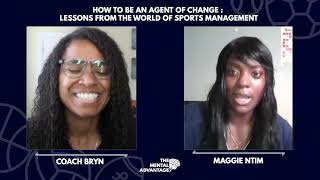
In this episode of the Mental Advantage Podcast, host Bryn Drescher interviews Maggie Ntim, founder of Trinity3 Agency and one of the few Black female agents in soccer. Maggie explains that an agent’s role is a hybrid of scout, negotiator, marketer, planner, and personal support, often handling everything from contract details to wedding planning. She discusses the biggest surprises of the job—managing egos, navigating international leagues, and language barriers—and emphasizes that many skills, especially relationship‑building, can’t be taught in school. Maggie shares her path from a marketing career and a sports‑management degree to becoming an agent, highlighting the lack of female mentors in the U.S. and the resistance she faced from a male‑dominated industry. She outlines how she breaks into representation by focusing on youth and college talent, using gut instinct, and leveraging niche knowledge. The conversation covers gender pay equity in women’s soccer, the impact of NIL deals, and the importance of community involvement and goal‑setting for athletes. Maggie describes her proactive mental‑health approach—regular check‑ins, Zoom meet‑ups, and personal visits—to support players’ well‑being. She also talks about her “mental advantage,” driven by doubters, faith, and purpose. The episode ends with rapid‑fire personal questions, revealing her favorite snack, superpower, and the hero who inspires her—her grandmother.
Chapters
reality of what it is to be an agent?
Yeah. So the reality of it is really, you're kind of like that, you're everything wrapped in one. Um, you're the recruiter at some point, or the scout where you have to scout talent. You have to be able to negotiate contracts. You have to be able to oversee everything that's going on with that athlete. So, you know, you're, cause you're pretty much speaking on behalf of the athlete, right? So you're everything mixed in one. Sometimes you're the planner. I mean, I have athletes— I have an athlete that's getting married, and I find myself helping to plan their wedding. And, and I actually enjoy it though. But you know, you're a little bit of everything. You're the marketer. You're, like I said, you're the marketer. You're— if there's a problem medical-wise, just overall, you, you are everything to them. Um, at least the good ones are.
Yes, I'm excited for you to see this week's episode, but before we get to that, I have a message for you. If you're a parent of an elite athlete or a coach of a high-performing team and you want— you're looking for some help or assistance with making them more mentally resilient, perform with more confidence, be more consistent, anything like that, then this is for you. I have an 8-week program all designed to address exactly that, to help your athlete be at their best on a more consistent basis and not get tripped up by those little voices in their head and getting down on themselves for mistakes, but performing like we know they can. So what I want you to do is don't delay, schedule a— just grab a time on my calendar through this link, and let's set up a time to talk about your specific situation and how what I'm offering in my 8-week program can help. Okay, so it's Brynn Drescher, www.ashleykoch.com/freeconsultation. So click this link, grab a time on my calendar. I look forward to talking to you. And now on to this week's episode. Welcome back, welcome back, welcome back everyone to another episode of the Mental Advantage Podcast. I am excited. I know I feel like I say that every week, but this week's guest is different. I've never had an agent on the podcast. Obviously we've talked to athletes, we've talked to trainers, We've talked to coaches. We have not talked to an agent, which is a very important component of the process of athletics, particularly professional athletics. So I'd like to welcome Maggie Tim. Is that correct? Am I saying that correctly?
In Tim.
In Tim. So it is In Tim. I didn't know if the N was silent. I should have asked that.
It is. The N is silent.
Yeah.
Awesome.
Okay. So Maggie In Tim, and welcome to the podcast. Tell everybody a little bit about yourself and then we'll get into the questions.
Yeah, well, I'm Maggie and Tim from New York City, from Queens to be exact. So salute to everybody from Queens and Brooklyn, Harlem, Bronx, and all those good places of New York City. Yeah, I mean, where do I start? Like you said, I'm an agent. Business owner, marketer, kind of got my hands in a little bit of everything. Yeah. And yeah, I'm excited to, to be here. I'm excited for this opportunity. So thank you. Oh, absolutely.
We're so glad that you're here. And notice that she did rep Queens specifically because you've got to be specific about those boroughs, right? You can't just be like, I'm from New York, right?
Because everybody—
where, where are you repping? Right. So awesome, awesome, awesome.
Yeah.
Welcome. Okay. So the first thing I like is I always, in the introduction of the podcast, I talk about superheroes and everybody has an origin story. So how did you get— were you an athlete at one time? How did you get into the world of like sports agents? Right. So you can kind of take us through a brief synopsis of that.
Yeah, kind of sort of. Was an athlete, but not really. Played basketball primarily, probably like elementary days, and then, you know, stopped, but was always into sports. So like basketball, you know, soccer, those were always my loves. Growing up in New York, being a Knicks fan, used to watch basketball games with my grandfather, and my uncle taught me how to like play, and I wanted to shoot like Reggie Miller, so I had to work on that. But couldn't play, you know, soccer because we just couldn't afford to put me through that. And, but it was always another passion of mine and then started to kind of learn a little bit more about some of the other sports like football, well, American football, we should say, and baseball and all those different sports. But I knew that because I couldn't grow to be the athlete that I wanted to be, the business side was always there, like wanting to work within the sports sector. Case in point, part of the reason I went to undergrad for business and then went to grad school and pursued a master's in sports management and will be, you know, soon pursuing a degree in sports law. So, yeah, so you know, it's the passion has always been there. And I just, I'm, I'm happy that I'm able to be able to make some type of impact within athletes' lives. So, yeah, absolutely. Absolutely.
So, um, being an agent is an interesting job, right? Because obviously your, your job is— well, let me, let me, let me, let me say what I think it is and then you tell me what it really is, right? Because I think there's probably some misconception, right? So, right, because some people have these views of agents as kind of being the money person, but like, you know, kind of out for only the money, right? And then there's the other side of it, which is kind of like, I don't want to put it this way, but just, you know, just for misconception, not that I believe this, athlete babysitting, right? Like you got to kind of be with kid gloves and I got to be careful of the egos and all that. What's the reality of what it is to be an agent?
Yeah. So the reality of it is really, you're kind of like that. You're everything wrapped in one. Um, you're the recruiter at some point, or the scout, but you have to scout talent. You have to be able to negotiate contracts. You have to be able to oversee everything that's going on with that athlete. So, you know, you're, cause you're pretty much speaking on behalf of the athlete, right? So you're everything mixed in one. Sometimes you're the planner. I mean, I have athletes— I have an athlete that's getting married, and I find myself helping to plan their wedding. And, and I actually enjoy it though. But you know, you're a little bit of everything. You're the marketer. You're, like I said, you're the marketer. You're— if there's a problem medical-wise, just overall, you, you are everything to them. Um, at least the good ones are. Yes, because at the end of the day, you work for the talent. The talent doesn't work for you. So you have to be everything. And like I said, the good ones, right? There are some that may see it as like just a money grab. It's just a transaction and that's it. And it's— and there's more to it than that.
So, yeah, so speaking of that, like, um, and I'm— thank you for speaking to that. And I know you're one of the good ones. That's why we have you here, because you're awesome and you're one of the few Black females that are in the world of football, and we're talking about the biggest sport of the world, soccer, right? But before we get to that, because I totally want to talk about that, before we get into that, what was like the biggest surprise about being an agent that you didn't, you didn't know? Like, you know, something you encountered, you're kind of like, wow, I didn't see that coming.
Oh man, so many. I would probably say it's a mixture. So it's, it's dealing with so many egos, um, but also to breaking through, breaking through when you're dealing with the different leagues. Um, and especially like you said about football being like the major sport, number one, um, global. So it's a global, so it's, there's a lot, there's dealing with, um, the international piece of it. So dealing with people within Europe. So now you got language barriers, you have, um, contracts are different as well. Leagues are different. So what may happen in America is not going to happen necessarily in Europe. Um, so dealing with all the different changes and challenges, um, players— sometimes you have to make switches. I've made changes, and we'll kind of get into that, you know, as we talk more about just dealing with some of the— facing some of the challenges and having to make those tough decisions. Yeah. Um, but I would say it's a little bit of that. Yeah. It's like dealing with the talent, dealing with the different contracts. It's very— it's different, especially in this sport. It's very different.
And, you know, after going to school and I know you said you're going to go to sports law and obviously that helps you understand, but is there some degree of like, you can't have learned this in school, this is on-the-job training type stuff?
Yeah. Dealing with people.
Yeah.
People, you can't go to school for that. You can't be taught that. So if you don't understand too, that it's so critical to have relationships, it's going to be tough. Um, if you're not a relationship person, if you're not a person that, that kind of has that outgoing personality where you can talk to people, this isn't for you. This isn't for you. It's part of being an agent is you have to get out there. You have to network with people. You have to put yourself, you You have to put yourself out there, put your name out there, um, because you can let your players do it for you, but who's to say if it's all going to be good? Yeah, you know, so you got to be like— those are things, those people skills you cannot be taught.
I love that. It's so important. I mean, this is what we hear from the coaches, we hear from the athletes, right? They just want to feel like, you know, a real person, and there's— it's all about relationship. I mean, you You can't just boil it down to business or the sport. It's like, how am I relating to this person? Because in order to be able to represent them, work with them, get them what they need, and also have them be happy, it has to be a good relationship, right? It's almost like dating, right? But not really. Not in the right.
Yeah, it's sort of like that, right?
There's some courting and then there's some like, okay, are we going to make it official? Because I mean, most people keep their agent around for a really long time, right?
If you have that relationship, if it's a great relationship and it's not just transactional. Yeah, I mean, we, we've seen it. We— if we, if we talk in the sport of soccer, football, um, Cristiano Ronaldo is a good one. I think he's been with George Mendez since he was like a teenager. Wow. And they've been rocking ever since, and it hasn't— and which is very, very good because after a while when you start to make a lot of money and things like that, you'll see different things where the agent just starts kind of doing things that's out of the ordinary. And I think with those two, their relationship is one that I've always admired, um, in this sport. Because I mean, me, you know, having to know George Mendez, like, he's, he's, he's awesome. Um, had the pleasure of meeting him a few times and he's just phenomenal. So, um, when I look at what they do, I'm like, yeah, That's, that's the goal. That's the type of relationship you want.
Hashtag goals, right? So that's awesome.
Yep.
I mean, yep. I mean, I don't know if George saw the vision in the beginning, but it's like you have that and you're like, this is probably—
yeah. Yeah. I mean, most, most, most agents, the good ones, most of them tend to be visionaries too, you know? And that's kind of, that's part of the role as being an agent too. You have to be like a visionary. You gotta be able to see that talent. Oh my gosh. Like, that's a talent that is special.
Yeah.
So you just, yeah, like you have to have, you gotta have it all put in together.
So if I wanted to break into being an agent, which I'm not interested at this time, but so don't talk, don't worry. I'm not coming for anything. And not that there's not enough to go around. I know. But if you wanted to break into being an agent and you talk about that visionary piece, right? Like, do you recommend, cause you know, a lot of people say, oh, I want to like go sign Cristiano Ronaldo. Right. And like you're saying, they got a super solid relationship. That's going to be tough.
Right.
So where do you recommend when you talk about visionary, should we be looking at college? And then obviously on the global stage, we're talking about the 16Us and the 20Us and all the different levels, right. Of club soccer here in the United States. And then, you know, the different levels of Premier League over there and, you know, and all around the world. So where do you recommend that one should be instead of, you know, should they be going for the big dogs or where should they start?
I think, I think every, every agent is different. Their eye for talent is different. I think, um, it really, it also depends what you watch the most of and what you know. Everybody can go for the top, right? It's hard to get there. So for me, it's, I look at the youth primarily. Um, and there's so many talented players that it's hard to say which one is gonna go. Yeah, sometimes you just kind of know, like your gut, your heart will tell you, like, okay, I think this one is gonna go, I think this one is gonna be it. Um, so for me, it's mostly youth. I, I watch college soccer a lot, so that's kind of where I focus. Um, the current players too sometimes. Yeah, because Current players mostly probably done went through 4 to 5 different agents throughout their career. So sometimes too, they could be changing, they could be wanting something new. So it's, it's a mixture of like, just once again, putting yourself out there to let them know like, hey, I'm an option too, if you are looking to switch. But I think it's mostly what you, what you know best, what you can speak to best. Because there's nothing, there's nothing worse than like a person who only watches like MLS, Premier League, but they're, they end up with an academy player. And can't even pitch that academy player to a club because they really don't know, you know? So it's important to kind of find that niche and then take it from there. Yeah.
I love that. And I think one of the things I felt like you were saying too, is be a fan of the sport. Like you really need to be a deep— and like, it's not just like, oh, you know, like we, we talked about being a good agent is not going for the money grab or just seeing dollar signs. When I look at, you know, cause obviously everybody wants Cristiano Ronaldo, everybody wants Kristen Press.
Everybody wants a big name. I mean, it makes your job easier too as an agent.
Right, right. So of course that's, that's not— does make you unique. It's kind of like when I tell my players, like, I want to win. I'm like, okay, so does everybody else. What's your real goal here? Because that's not, that's not specific enough, right? So when you— so I like that, be a fan. Also, like you said, like, you know, and look up and down, right? And then start to learn the leagues and the different ways that they interact. And like you said, you said, so that you can be a better pitch, uh, being able to better pitch your players so they can be on the pitch, huh?
No?
Okay, that's right. So they could stay on the pitch, right? Okay.
Yeah.
So, uh, we know, as you— we've alluded to, uh, soccer is the world that you spend most of your time. We just call it here soccer in the United States because we always got to be different, but it's called football everywhere else. Okay, so, um, Talk to me about, like, you know, obviously you're a Black female. The world of soccer, not exactly teeming with a lot of us, a lot of faces of color. Not exactly right, especially as you go up the, you know, some of the players, it's getting a little bit more prevalent, but definitely not as you go up the thing. So talk to me about that process. Like, you know, was that daunting for you to like, you know, we talk about the mental advantage, like to go over and decide to kind of penetrate that world.
Absolutely. Like I said, I've always been a fan of it, but I just couldn't play. You know, my family wasn't able to put me through the academy, so they were kind of like, pick up a ball and shoot, you know, kick it around or something. For me, stepping into the world, before I came into it, I was working corporate and had a couple of jobs and was at Coca-Cola and was dealing with the World Cup and U.S. soccer. And it was great. But the passion was always like, man, I need to get into this. And I have to go in through the marketing side, because I spent about 10 years in marketing and so sponsorship marketing to be exact. And, you know, breaking through, I was seeing all of this and I was like, man, and as I would talk to agents, I noticed they just really didn't understand the marketing side. It was like a foreign language to them. They thought, okay, if I'm Cristiano Ronaldo, the deals will just always come. But I'm like, not everybody has a Cristiano Ronaldo. So what are you doing for that player on the marketing side? And so I said, man, I'm going to go through the process to become an agent because I've always wanted to do this and I've always wanted to do it within soccer. It was either soccer or basketball, maybe even baseball, but baseball didn't work out. So I said, okay, let me do it within soccer. And I looked and searched for women agents, and I came across one in France, um, who was awesome, but she didn't look like you and I. Yeah. Um, in America, I couldn't find one. Couldn't find— not even— it's not even about it being a Black or Latina or Asian Even Caucasian women, I couldn't find one in America. So I'm like, where are the, where are the women? There's got to be female agents. And there were a couple in London, but it just wasn't, it wasn't happening in America. And so I said, man, there's no one that looks like me that could understand. So I would then turn to the men and, you know, reached out and didn't get feedback. But some of the great agents in Europe really were supportive and helpful and shared great advice. And that's where I got a lot of my advice from. And I had one particular agent, super agent who told me, he's like, look, you're in America, you know, if you're gonna do it, do it. Yeah. You know, he's like, I think you got to do it and take it slow. You know, all it takes is just one player to believe in you. Yeah. And I went through the process, and when, um, I hired my first client, um, on the soccer side, uh, Hugh Roberts— shout out to Hugh— um, Hugh said He was actually doing a podcast and wanted to interview me just on some like, hey, networking, I read about you, blah, blah, blah. So we start talking, we do the interview, then he's like, look, I'm actually looking for an agent. And I'm like, but you do know I'm new to this.
Yeah, exactly.
You do know that I'm a female. Let's just get that straight because I don't want to hear anything later. So he's like, I know, I know. I said, okay. We started working together, um, We still work together now to this day, have a very great, great relationship. I mean, we've basically become family. Um, he's gonna get married soon, and I'm like in the process of helping him with his fiancée, you know, like we're putting that together. So it's— and we've been through at least 3 contracts now, and it's been phenomenal. He's like, Maggie, you know, to have a woman, a Black woman at that, um, represent me and be able to get me a contract that I doubted, you know, he, he doubted it. He didn't think it would happen, but it did. He's like, he's like, I can't tell you how much I appreciate you. And so I think with that helps me out so much because I've had people tell me it's not going to work. Yeah, it's not going to work. You're not going to be able to do it. I've had— I received a lot of hate emails from agents, other agents in Europe that, you know, oh yeah, starting out was rough. It was rough. It was like, you shouldn't be doing this, leave this to the men. Um, also got into a couple of racist things, but you know, I'm just like, man, they don't know who I am. They don't know me. They don't know me. And I tell people all the time, you know, in my past, the companies I've worked for, the bosses I've had, you know, working for companies like G-Unit Records, which is 50 Cent's label, having a chance to work with him, I feel like he prepared me so much for just life, you know. And so, um, I'm like, man, they don't know the, the ambition, the drive that I have, because it's bigger than a dollar to me for this. This is passion, this is my love. And so there's no way that anybody's gonna stop me from doing this because this is God's plan, and I'm just basically walking in purpose, and it's gonna take a lot to stop me. So, um, I'm still here.
I love that. This is so important that, you know, people that are listening about that adversity and overcoming it, being resilient, right? So like coming into a field where you couldn't even find a mentor that looked like you, not even— I'm sorry, didn't just look like you, was the same gender. And then, you know, top that off, you add that. So then it's like, you know, it's kind of like if it doesn't exist, you have to be the first. So that's fantastic.
Yeah.
And obviously the industry— yeah, the industry was resistant. There was like, nah, nah, nah, you know, don't be coming in here. That's one thing that's been, you know, the world of soccer has been a certain way for so long. Right. And because it's all over the world, you're dealing with an old boy network that goes back. I mean, soccer is one of the oldest sports too. So we're talking about, you know, a lot, a lot, a lot of that whole patriarchy and, you know, mass masculine energy and stuff like that. So I mean, kudos to you for sticking with it. Like you said, they don't know you. They don't know what's inside of you. So it's like, okay, yeah, we'll see, we'll see.
And I love that you were honest with your first client too.
You weren't— you just were like, yo, I'm new, like, I don't want no issues. Like, if you want—
but you know what he said? But what he said to me was that I've never come across a Black woman in this space from the agent side. So he's like, this is new. Even talking to people from U.S. Soccer, they were like, you, you're the first to do this. And You know, many people ask me, what does that feel like? Yeah, I'm just like, it's not about— it's not about being the first, it's about who comes after. That's what I care about. So it's like the work that I do every day, it's like, am I doing it right? Because it's like I'm on the chopping board, you know? It's like either, either we're gonna say she was good or she— right, loudly. And you know, I don't want any of that. So, right, um, so you know, it's, it's, it's all those things. And yeah, like you said, just being honest with with my client and all my clients, really everyone. Everyone.
Well, yes, that was one thing I liked about you when I heard you on Clubhouse. You always seem like a straight shooter, right? And you're nice and personable. And I think it's wonderful that, you know, he and you have that relationship. And just like you said, it only takes one. And, you know, it's interesting because, you know, it's only one, right? But it feels like it takes forever to get that one. But once you get that one and then they are happy, then the rest— because, you know, I've, I've been going through that myself with, um, you know, wanting to get more pro athletes, and they're like, you just need one. And I was like, I know, but yeah, how do you get that one?
Yeah, um, so I've had a lot of referrals in the past, and, you know, when it came down to pitching clients, it was mostly like brands and stuff like that, so I didn't really know how to pitch an athlete on joining, so it was quite a challenge. But I had to do it when I signed my first, um, women— woman footballer. Um, and so I had to, you know, pull some strings, make some phone calls, really do a lot to try to get this player. And I had to convince this player to come out of retirement because I felt like she retired too early. She wasn't ready. I was like, look, you, you still have a lot left in you to play and be, um, you know, and be successful. So it was like dealing with that whole thing, and, um, you know, once I got through it, it became like the norm with every other player. But it's still a challenge because the reality is I'm going up against bigger agents, bigger agencies. So it, it's not the easiest. Um, I would say to future agents or just agents in general wanting to pitch players, do your homework. Do your homework. Know everything you can about that player, um, and really present yourself in a way that you can stand out. Um, be honest, but also to let them know, like, it's not saying you have to bash the other agents, but let them know why you are the perfect fit for them and, and give them something to remember you by.
Oh, so give me, give me an example of that, what you just said there. Something to remember.
So for me, um, part of the requirements to sign with Trinity 3 Agency is two things I look for: marketing and, um, just community aspect, right? So in other words, my players have to be able to participate in one community event for their team, one for just their own like hometown where they come from.. And so that's a little bit different. It's not the norm, for one. And for two, I tell the players all the time, look, can you call your agent at 2 in the morning and know that they're going to pick up or they're going to call you right back? Is your agent going to go hard for you in terms of just creating those marketing plans for you, really making sure you're doing well on the pitch? So it's a lot of those things that I kind of leave them with. And also, too, I think for me what has helped is because I'm a female, But also too, um, I came from entertainment, you know, I came from the music world, so I didn't, I didn't come from playing soccer as an athlete. So I think a lot of times people always remember that, they're like, oh yeah, she, yeah, she's coming from a whole different space but has worked within soccer in terms of marketing, but she's coming with something different.
So I see that as an advantage too, because sometimes I think what some people don't don't think about is when you have seen something over and over and over and over again, you have blind spots. You don't think you do, but you do. When you're new and hungry, you see things differently. And of course you're still learning the ropes and there's definitely a lot a veteran can teach you. But a new person is like, wait a minute, what about this? And you're like, I never thought about it like that. And bringing the wealth of, like you said, of the entertainment side over of like, ah, this is how we used to do it over here. And you're like, oh, we don't do that in soccer, but who says we can't?
So exactly, exactly.
Yeah, so that's fantastic.
Awesome.
So you gotta, gotta be open to those perspectives, athletes, right? We got to be open to like seeing things differently, and that's fantastic. Okay, so when we talk about, like you said, uh, you've got male athletes and you've got female athletes, um, do you have international as well?
As, um, on the—
okay, so you have on both sides. So let's talk about What do you feel like as— I mean, you are female, but you know, we don't have to make that a big deal, but dealing with the different genders of talent and the different dynamics of what it is to be a professional male soccer player and a professional female soccer player, talk to us a little bit about that kind of dynamic.
So different. So different. I'm not even going to touch on the international side. I'm going to just stick with the with America real quick with this. So the salaries are so different. I know, as you know, you know, the NWSL, U.S. Women's Soccer, they, they fought so hard for equal pay. We got that for the NWSL. They now have a CBA. So now the minimum—
what does CBA stand for so people know what that means?
Collective bargaining agreement. Okay. And so, um, now that they have that It's good. Still a lot more work to be done. And I say that because the salaries— like, there's no way that you go to school for 4 years or 3 years, you're getting, um, you're at a D1 school, you're getting a top-notch education, and you're coming out making like $20,000. Yeah. As a professional athlete? No way. Yeah, no way. So, um, it's, it's looking at those issues and trying to change that. And then on the men's side too, some of them, if they're lucky within MLS, they have reasonable salaries. But USL, which is United Soccer League, that's the second division for the men's side. I have players within that league. And, um, yeah, it's, it's very different too. Um, the salaries is one thing, and then working with them, I noticed for me at least, just my experience and being very candid, is that the guys are so easy to work with. The women are too. I'm not gonna say all. Yeah, I've had my share. I've had great ones like the ones that I have on my roster now, and I have some that we just had to part ways because sometimes the reality and what they wanted just wasn't— it wasn't reality. Got it. And, and I can only do but so much. And so I think with that, sometimes with the men it just seemed a little bit easier because it's like all right, boom boom, this is this, this is that. And I, for me, I want it to be where it's easy on both sides. But obviously for the women, we have so much work to do within this space that, you know, it will come to that in due time.
But yeah, have you seen— so like, yeah, we're talking about, obviously we know with the advent of the NIL, okay, so when we talk about going down to the college level, right, and For those of you that don't know, name, image, and likeness is what NIL stands for. So as you go down, so like, you know, Maggie already alluded to the fact that the women's soccer finally got equal pay on the NWSL. I mean, not NWSL side, excuse me, the US soccer side, right? So we're not talking about the professional leagues. So we're, you know, we're still working on that, correct? Their collective bargaining agreement does not extend to—
No, it's in motion now. Yeah, it's an option now for NWSL, but there's still so much more work to do in terms of salary.
There's still more there, right. But in terms of when the actual women's league, like the US soccer, men's US soccer and women's US soccer, like when they do the World Cup and stuff like that, that's gonna be even. But, you know, yeah. Okay. So when, which is amazing. Like that is a huge step forward. And, you know, we bring up Venus and Serena and their fight for equal pay in tennis. And, you know, it's happening across the board. It's, you know, we haven't gotten there with women's basketball yet. And, you know, I know it's something that's in the works because the biggest, and I know they've had new agreements, they've done some things, right? But I think the biggest challenge that most, that they're always hearing is, oh, well, more people don't watch women's soccer, right? And then it's like kicking an egg, right? 'Cause the broadcasters don't,, you know, in the sponsors and all that. So what, as, as you go down to NIL, right, as we're starting to get these kids sponsored sooner, um, are you starting to look at college athletics as, or I mean, maybe you already were, but is that something now that you can go in and get a deal? Cause now you can grow with that athlete.
I'm so glad you brought that up. So absolutely. Um, I've been taking my time with it. Yeah. Um, Because, you know, so throughout my agency, Trinity3, we do more than just athlete representation. We do, you know, management of talent. So whether that's athletes, entertainers, and a bulk of the agency was started based off of sponsorships and being able to work with brands and work with companies to put brands and talent together. So whether that's an athlete or an entertainer. So when I look at my portfolio of brands that I work with and I look at the athletes, and especially on a college level, I'm like, man, there's so many that we can work with. Yeah. Um, and so, and I, me being a fan of like basketball, soccer, like, you know, pretty soon you'll see we have some, um, basketball clients that's going to come on on the NIL side. And then really on the soccer side, I've been really wanting to do a lot, especially with the women. Yeah, more so with the women in college. And so I have a few that I'm in talks with, and you know, we're gonna see where this goes. And it's, and it's a process because I started off educating players, you know what I'm saying? That's what's so important, to educate them on, on NIL, what that really is. Yeah. Um, and so, yeah, so to answer your question, absolutely.
Oh, that's great, that's great. And I— so when we do talk about NIL and we talk about sponsorships, they— I believe there's some talk about the equal— that's a great way to level the playing field through sponsorships, right? So we go with a Casey Krieger, right, coming out of, with football. And, you know, all of a sudden it's like, man, they just look, oh, let's put a bunch of sponsorships on that athlete because now it doesn't really matter so much of what's the upside of all the pay, but it's like, oh, there's this national lens on her. So how do you balance that where you don't just, you know, like we look at Mikey Williams coming outta high school, he's got millions of followers. We don't know if he's gonna be good. For the— you know what I mean? So what, what's your advice as far as that's concerned?
Because how do we balance that looking at, you know, the long-term longevity of that athlete? Yeah, I think it's— once again, it's being that visionary, having, having an idea. I mean, you brought up Mikey Williams. Mikey Williams is phenomenal. We don't know what he's going to be like the next step, whether he's going to go to college, whether he's going to go pro. We just don't know. Um, and we don't know whether he's going to be as good as he is now. Right. And so I think it's one of those where it's working with the talent, it's working with the brand to kind of figure out how— at least for me, my thing is working with brands that want to really invest in these athletes long term.
Yeah.
So once they're done with college, I mean, yeah, once they're done with college and they go pro, or they're done with high school, like, it's really wanting to work with them as creating a partnership and not just having it be a one-off deal. And so, and it's special talent. Once you start working with that talent and you kind of build that relationship, you know them, the trust is there. After a while, you'll know, you'll have an idea.
Yeah. So when we talk about that, obviously dealing with athletes, we're talking about some egos, we're talking about emotions, we're talking about a lot of different things. And I Obviously on the mental side, this is where, you know, obviously the advent of talking about mental health. And I know, you know, about the recent suicides that have happened with the high school athletes. And, you know, we don't know exactly what the cause was. And, you know, but when we are dealing with like a Mikey Williams, you know, these different athletes, and how much do you factor in that mental capacity or not capacity? I don't use that word, but, you know, their mentality. And what you see? Because, you know, I could be really good, but do I want to deal with you?
Right. Um, you know, I've dealt with this a few times with my roster. Um, I check on my players probably once or twice a week. Um, and for some, they're not used to that. They're used to the agent maybe calling them around renewal time or something like that. And I do that because, like you said, with that, that the mental health is so important, right? And so I check on them and I'm asking questions. And what I also do is like, I try to do like a once a month meetup, like on Zoom or something like that, just to kind of get that face-to-face interaction and see, you know, is everything okay? You know, because I've dealt with this. I've had a player tell me everything was okay, and then later on it was a major, major, major issue. Wow. And I'm just like, why didn't you tell me? Why did I have to find out how I found out? Yeah. You know, and, um, I said, don't ever feel like you can't. I was like, I always reiterate that every time I talk to each and every one of my players, and I want them to know, don't ever feel like you cannot pick up that phone to call me for something. And, um, I do that also because, like, I myself have, have gone through that.
Yeah.
You know, I have my days where I don't want to be bothered. I have my days where I, I don't mind, um, and so I know what that's like, and I put myself in their shoes, and I'm just like, yeah, you know, it's something that I always want to make sure they're good, good, like good. When I ask them like, are you good? Don't tell me, oh yeah, I'm fine. No, you're good, good, like is everything okay? You know, so, um, and that's also why too I try to fly out to the cities they're in, check out a game, sit with them, have lunch or dinner with them, you know, all the time, just to, you know, make sure things are good. Because it's important, because they, they go through a lot.
Yes, a lot. Especially, right, like, I mean, there's a lot of time on the road, um, you know, you could be isolated, people don't understand.
Sometimes it's playing time, not getting enough playing time. That can that, that can really mess with a person's mental.
So, oh yeah, so you have these athletes, and this is really important, right? They play really top of their game for so long, and then they get up to a level where everybody's good, and so they're used to being the best. And so sometimes when you're not always going to get the same amount of playing time or you're not going to have the same role, that can be quite a downshift for an athlete.
Yeah.
So what, what would you say— and I mean, like you said, you go through it yourself, but obviously being that it's maybe not— not to say that it's not common with the agents because you know more agents, right, and what that is. But what kind of told you to start doing that? Was it the advent of kind of the talk around mental health, or is this something you naturally, you know, just knew to do?
And I was actually doing that naturally from, from the time I started. Um, and, and to be honest with you, just in general, that's the type of person I am. Yeah. Person is in, in my life, they're going to hear from me at some point. Um, I'm going to check on you, whether it's social media. And that's a good thing too, like with a lot of my clients too, like I always interact with them on social media. So it's kind of like the phone call or that text message is just icing on the cake, but the social media helps me a lot too, to see that they're okay, they're doing well, they're doing good, they're thriving where they are. Um, And so, yeah, it was just, it's a natural thing with me. That's great.
That's great. I think that, that, you know, that would be so important. So when we talk about signing with Trinity Three, um, is that I'm saying that correct?
Right.
You are, you are. It's not Trinity Free Three, right?
Yeah. Okay.
All right. Now when I sign with Trinity Three or I'm interested in, like, maybe I want you because I heard good things about you. Um, what attributes, you said the community aspect. Mentality-wise, not just health-wise, right? What are you looking for in an athlete?
I'm looking for one that knows themselves. Um, they're ambitious, they're goal-driven, because I'm very ambitious. So it doesn't work when someone who's ambitious works with somebody that's not, because to be honest with you, all it's going to do is bring me down when I'm trying to pull you up. Yeah. And you And you don't want to— you don't want to be in a position where you're— you want so much more for that person, but they don't want that for themselves. And so there's a lot of things that I look for, like, like I said, the— their drive, their ambitions, their work ethic. Um, another part of this is goals. So my agency, we, we— when we first sign on a client, we do an assessment. So we ask them to share 10 goals, 5 for what they want to do on the field, 5 for what they want to do off the field. And my team and I, we read through them, and I read through them thoroughly. I have a pretty good memory, so I know what, you know, each person wants. Because what that also does is it holds me accountable to make sure that they're achieving those goals. And when they're not really putting too many goals, it makes me wonder, like, man, is it that they just don't have the confidence in themselves? Do they just don't, you know, believe in themselves as much? Do they not see like they have all the potential in the world? But when I read them and I'm like, man, they got goals, like big goals. And I think the exciting part is going back and being able to check off some of those goals. Like, because for me, I'm a person who lives by that since I was a kid. I had a manifestation journal and I write down all my goals. And to this day, I go back to it and I could check check, check, check, and to see like that the list is getting smaller and smaller of what I need to accomplish, it just shows me that I've done great work, you know, throughout my career. And so for them, that's how I want them to see that, like, man, I set these small goals and we're already there. I mean, I was telling one of my clients, um, yesterday, I said, man, if we look at on the field I said, sis, there's only one more thing left because we didn't accomplish 4, but we accomplished more than even— some stuff wasn't even on there, but we accomplished more than what you wanted. And I'm just like, you're on your way. Yeah, awesome. On your way.
So yeah, that's got to feel really good. And I love that you said like ambitious, driven, um, clear, like knowing themselves. How do you— so you do the vision, you do the, the the, the goal thing, and you, you said like, I don't want to push you, I don't want more for you than you want for yourself. So that's really important. What, um, how do you check for how do they know themselves, if you don't mind me asking?
Like, how do you— it's a good question. Um, I think sometimes that'll just be through conversation. Yeah. But it also goes back to the goals. Okay.
Right.
So my goal— because it gets them to think about what do they really want, right? And when they're hesitant, that lets me know, like, they're not— either it's not that they don't know, or they're just not thinking about it. Got it. So now it gets them to think, you know, it gets them to open up their minds and think a little bit more and, and really figure out, like, man, I know myself, I know what I'm a fan of. So I know I'm a fan of this brand, and I would love to one day work with this brand.
But I then come with the questions of why do you want to work with the brand?
Love that. Or when you're doing what you're doing on the field, what's your why? What's your why?
You know, one of my favorite things is that you also have them have the off-the-field goals because— oh yeah, field goals— because we know that obviously athletes are very focused, almost too focused sometimes, on everything that happens on the pitch, on the field, whatever. And there is going to be a pro— a post-sports life no matter what.
It's in inevitable.
It doesn't matter if you're Cristiano Ronaldo, if you're the 15th guy on the bench, there is a time where you will no longer be a soccer player, right? So I think it's important to, like, yeah, like you said, like maybe you want to start foundation, what other things, so that we can get those.
So that— and that's something that we've done already with one of our clients. Um, we're getting ready to do that with another. There's a couple of other cool projects in the works with a couple of these clients, so I'm super excited for them, um, because I always tell them, look, align your purpose with what you're doing on the pitch with what you want to do off the pitch. And when you align the two, it will all come together. And aligning those two is what— that, that defines your legacy as an athlete. That defines your legacy.
Yeah, I think it's so important that you're having them think about that, right? Like, because some people don't like to think about any kind of pro post-sports life, but it's like like you said, legacy, right? It's not just like, what are you gonna do now? But how are people gonna remember you long after you've, you know, put on the uniform? Okay, so the other, a couple last questions. So as you know, or maybe don't know, I work with athletes in the mental game space. Yes. One of the things is I talked to David Meltzer, who used to be, I think he's the guy from, you know, Show Me the Money, Jerry Maguire, right? And so, he talked— I talked to him about like, how does somebody who's a mental coach, right, work with an athlete or get access to like your clients? Do you think that's something important, right, on a— because I'm, I'm seeing it more on a reactive basis. Like, I talked to an agent, he's like, well, if my players think it's important, like, yeah, we'll go get it, right? So how is Trinity Three addressing that piece? And I mean, obviously knowing that you You know, like you said, you're already taking the proactive approach and checking in, but you're also very busy doing what you need to do on the agent side. So what are you doing or what, or what, what advice would you have for approaching an agent? Or do you think the agent is the contact?
Is there a better way? Um, I think doing it how, how you've been doing it, that's your formula. Yeah, right. So we don't mess up the formula if it's work— if it's working. Um, but I think also too is, is maybe talking to the agents to make sure that they know their players, make sure that their players are well. Sometimes if an agent has about 100 players, it's hard for him to tell you what's going on with each and every one of them, right? I have a very small roster and I keep it that way because it allows me to deal with each and every one of their needs, right? The only time someone could possibly tell me something with my player is if my player didn't tell me. Gotcha. And it's only because maybe they don't want me to know, because I always ask, are you okay? Is everything good? And I mean everything from the physical, the mental, emotional. And when they tell me everything is great and it's going good, they're like, you know, we, we wouldn't hesitate to pick up a phone and call you That lets me know that, okay, they're in the right space. And if ever is something major, then I know they will let me know.
Do you think that, um, well, being in the world of sports and like you said, you keep your roster small, so maybe not. Uh, but you said you do more than just provide the agent services where you're doing management and, uh, different things. Do you feel like agents maybe would be well served to proactively address the mental aspect by having somebody or connecting their clients with it, like, you know, making it a part, like you said, of the process. Like, yeah, my athletes need this. So, and, you know, proactively, because I understand, like, if the athlete wants it, then you're gonna go get it. But if the athlete doesn't say it, right, and, you know, get to where we have a problem, which is what I feel like we do in the world of sports, it's like, oh, he's got a mental health problem, she's got a mental— let's get them with somebody.
Right.
But what if— what about the part of like developing them with that?
What do you think?
Absolutely.
I love that idea. I think it's like having a PR. It's like having a publicist. I have one in-house that works with me on things. May need them for something, may not, but it's always good to have them. And so I do like that aspect. And I think nowadays with the way everything is going with the world, how the world is, um, it makes sense. Yeah, it definitely makes sense to have it, um, a part of the companies. Um, I think the leagues as well. If the league— I think most professional leagues should have it as well. Yeah, they tend to, but they do. But we don't hear much about it. We don't hear much about it until there's an issue.
Until there's an issue.
Exactly right. And so, so to your point, yeah. Yeah, I think it would be very helpful.
Yeah. Because one of the challenges that we've seen is that, and you hear this, and at least I've heard it from football, and sometimes when it's the team's psych, like, let's say sports psych, right? It's like, I don't know if I want to tell them because they're employed by the organization.
Right.
That's true. So it's like, I think it would behoove agents to have somebody that's there in-house, like, give it— yeah, in-house, because then it's like, this is something that we keep keep over here. This doesn't have to be something that's shared with the organization unless it was a situation where we had to wrap around and let them know, but the player— with the player's consent, of course. But I think it's interesting because, you know, of course mental performance and sports psychology is two different things, but a lot of times the way that we've been responding to it is more on a reactive basis. There's a problem, let's address it, versus like, let's give them the skills because they're going through a lot, like you said. And, you know, you got people pulling them in 5 different ways, family, relationships, you know, and then even the business aspect. And, you know, most of the time it's like, hey, just, you know, stay tough, you know, keep your, keep your head level, you know, these are the type of things. And, and I don't, you know, it's like there's not actually any skills training at that level. So it's very interesting sometimes, like, you know, like, let's, like, how do you proactively approach it? So just always curious if agents are open to that because a lot of You know, like, I don't know. I don't know.
You know, I haven't—
I'm new in that world, so I'm not going to make it seem like I've done with a ton of it. But, you know, and they were like, oh, talk to the trainers. But when you talk to the trainers, trainers say, talk to the agents. So it's like, there you go.
It's like a back and forth. They just go here, go there.
They're just giving you the runaround. Exactly.
Exactly.
So you're just kind of like, okay. So, you know, yeah, go, you know, and then, and then like you said, it is that one, but breaking in, right? Like once you get your guy or your girl, then it opens up. But it's getting that one that, you know, can be challenging. So anyway, um, so when it, um, when you are— I don't know, you've, you have been an agent, but you made— and you talked about having that player come out of retirement. How, um, have you had any athletes that have transitioned, like, to the— they're about to leave the sport? And what do you guys do regarding that?
Yeah, um, I've had one, um, Brandon Miller, who recently announced his retirement a few months ago. And, and we, you know, we have a pretty good like relationship now where it's just more like on business. So it's like being able to help him out with things if he needs help with stuff, any business moves that he's trying to make, um, and just really helping him get through that process. And so that's been pretty cool. Yeah, that was my first, my first.
Nice. So yeah, so basically the agent relationship should transition to all the—
Yeah. Okay, got it.
Okay, awesome. So it like helps with that. Well, fantastic. Okay, so one more question and then we're gonna get to the rapid fire questions.
Okay, sure.
What is Maggie's mental advantage?
Could be a little bit more specific with that.
Well, in other words, like What do you find helps you handle your job or be the boss that you are in, you know, in that world? Like, what helps you navigate that in a way that makes you, you know, unstoppable?
I think it's my drive. It's, it's, it's the— my drive. It's the doubters. Yeah, a lot of the naysayers, the people that tell me you'll never be able to do this, or you'll never be able to do it, you'll never be successful. Those voices are always in my head as a reminder that I'm walking in my purpose. So it's a mixture of that, and then it's my faith, having strong faith that I was put here on this earth to do amazing things, and this is one of them. And, you know, that's a daily reminder. You just got to keep going. Awesome.
Awesome. All right, well, it's time for the rapid-fire questions. Um, these are the most serious questions of the entire podcast.
I hope you're ready, Maggie. I hope you're— I'm ready.
All right, all right. So what is your favorite snack right now?
Oh, you know, I love Hershey's, like the, the Kisses. Or the bar? The Kisses, the bar, the Cookies and Cream. And I'd probably say that and like Reese's Pieces and the Nestlé Crunch. It's so— I have such a bad sweet tooth, it's like, oh my gosh. I would say those. And definitely I cannot live without, um, my Cookies and Cream ice cream.
Häagen-Dazs, to be exact.
Häagen-Dazs.
I was gonna ask you the brand because, you know, we need to know where do we go get the good stuff.
It's Häagen-Dazs first, then it's Breyers. But it's Häagen-Dazs cookies and cream.
Häagen-Dazs is first. Okay, got it. Yeah, I have a friend that says I don't have sweet— I don't have a sweet tooth, I've got sweet teeth. That's how much I like sweets, right?
Yeah.
All right. If you— and we already talked about your favorite flavor of ice cream, so that's cookies and cream. Okay. Do you have a favorite super—
oh, sorry.
If you could have any superpower, what would it be and why?
Wow, superpower. My superpower, my superpower would be to change, like really change the world, really change the world.
Are you doing that through mind bending? Are you doing that through, uh, reading minds? Are you doing that through like superhuman strength, flying, you know, that type of stuff?
I'd probably say reading minds. Reading minds. Yeah, reading minds. All right, reading minds.
I had Michael Gervais on the podcast, and you know, he works in the mental space, but he was like, yeah, reading minds. I was like, I get that from you.
Reading minds. Because I, I, because I can, I can be in the same space with someone, and like, I was blessed with that, where something would give me a hint that this is not good. It's the body language. But if I'm able to read the minds and really change things, yeah. Okay, awesome. That's the superpower that I would want.
Fantastic. And do you have a favorite superhero?
Um, not really.
Nope, not, not into—
okay, no problem, no problem.
Not really.
I can usually—
I mean, yeah, that's okay.
Everybody doesn't like Superman. Superman is like—
Superman, yeah, I'm a Superman fan myself. Some people people don't like him because he's an alien, because they're like, you know, that's why they're more Batman people. But it's okay, you know.
No Superman. If I had to choose one, it would be Superman.
Yeah. All right, see, Maggie, I knew we would get along.
See? Yeah.
All right, all right. So this question, I like to ask it. My, uh, some of my friends say it's a little bit too, uh, like first world problems, but if you have— well, I know you have toilet paper at your house because you're human, um, but do you like to have it on the roll over the top or under the bottom, and why?
Wow, I've seen this. I saw it somewhere online. I've always questioned, I'm like, why do people ask these questions? But then it made me think about it, right? I would have to say over.
Yeah, see, over. Now why, why do you, why do you feel like you're an over?
Do you have a preference of that as far as that? Because I feel like if it's under Um, the last person that uses it sometimes could have it hanging, and I have a bad pet peeve of seeing that. I don't believe in wasting paper. I don't believe in wasting anything. So, um, I just like it over the top. I just feel like it's a lot easier to just, you know—
over has been the most predominant for all of the people I've had on this athlete, you know, focused podcast, athletics, you know. So maybe that's the thing, you know. But yeah. I'm an over myself. Now here's the two most important questions. If I'm at your house and I put it under, are you going to change it when you go to the bathroom and notice that?
I'm definitely gonna notice it first. Um, if it happens one time, I'm not gonna say nothing, but if it happens the second time, I might be like, um, you know, yeah, can you put it the way that I like it? Right. Okay. Yeah. Like, I know it's okay to see things and touch it, but please don't, don't touch, leave my toilet roll how it was, please. Um, I don't come to your house changing stuff, so please don't do that here. So that was the next— and that's, and that's why I said if it happens the first time, I don't say nothing. Yeah, second time I'm gonna say something. Okay, sometimes you got to tell people because that's gonna turn into a habit, and if you don't let people know those things, they're gonna feel like they can always do that.
Absolutely. And that was the next question I was going to ask you, was whether you would change it at someone else's house, because some people will.
But yeah, I said no. Oh no, I might just take a look at it. Yeah, but I'm not going to touch it.
But I'm not going to touch it, right?
I'm not going to touch it. I may bring it up to you to say, hey, have you ever tried to do it the other way? You know that I may make that suggestion, but I'm not going to touch it.
But I'm not going to change it.
Okay, I love that. I love that. Okay, I was raised not to touch people's stuff, so don't, you know, you know, there you go. That's why I'm so adamant about people touching my things, I'm like, please don't. I don't know if you were never raised that way or told this, but you shouldn't touch people's stuff without permission.
Actually, without permission. Exactly.
Yeah.
So, uh, who is your personal hero?
Wow. I'd have to say my grandmother. Why? Like, when we talk about Superwoman, I, you know, not just because she helped raise me, but I watched her like literally be the head of the household. And many people said, oh, but she was married. But she was married to someone that just wasn't— he was a great man, but he just— she just, she just possessed all those skills. Yeah. To be able to work come home, clean the house, cook, take care of the kids, make sure everything was in order. So she has taught me that, um, from a young age. And even now at the age that she is— she's what, 75— she still has it in her.
Got it.
Still has it in her. And I'm like, man, if, if, like, to me that's the epitome of like a very strong woman that just does everything, everything.
Which means when I say everything, I mean everything, which makes sense why you're like that.
She's a baker, she does it all. So, you know.
All right, and then the last question: what does Maggie want to be remembered for?
Wow, um, really making an impact, making— have Making an impact in people's lives. Like, you know, I've done a lot of things in life that I was either the first, or, you know, it was like some stuff that just was never done. But, and it's all great, but it's like just making an impact. That's what means a lot to me. When clients and people tell me, thank you so much for helping me either change my perspective on things and I see things clearer, or for helping me overcome challenges, for helping me become a better businesswoman or businessman, for helping me give back to the community I come from and where I play and making a difference in these kids' lives. Like, that, that's what I want to be remembered for. That's fantastic.
All right, well, that concludes all of the questions. The last thing is, where do you want people to find you, reach out to you, connect with you?
Yeah, um, so I'm, I'm pretty active on social, so on Twitter it's, um, Agent Maggie and Tim on Instagram is Maggie.inTim. Um, and so you definitely find me there between those two outlets. And yeah, reach out, interact.
Well, thank you so much. This was a great conversation. I really enjoyed it.
Thank you. No, thank you so much. I thank you for what you're doing, and, um, please continue to do it because it's so needed. It's so needed. So I, so I thank you. For the opportunity and just for all that you've been doing, especially for the, the world of sports and for these athletes and agents. So thank you. I'm truly honored for the opportunity.
Thank you so much, Maggie. I appreciate it. It's such a pleasure having you on, y'all. That was Maggie and Tim, and we'll see you next time.
More from Bryn


Who else hype for this upcoming season with Caitlin Clark and the Fever with all these great adds?







How to be nicer to yourself: Stop putting yourself down either out loud or in your head


Winning At The Net Game of Sports & Life No Matter The Score - Episode 60 w/ Jordanne Scott