It's Ok Not To Be Ok: Mental Health Is The Goal - Episode 53 w/ Coach Bryn
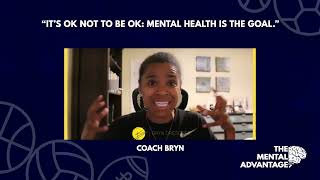
Coach Bryn Drescher responds to four student-athlete suicides in 2.5 months by rejecting toxic advice like "just get over it." She argues feeling pain is normal, suffering is optional, and urges genuine check-ins with athletes who look fine on the surface.
Chapters
On the other side, I think it's just also like, just know it's okay. Whatever you're going through, it's okay to feel the feelings. There's this great quote that I love, which is, "Pain is inevitable, suffering is optional." So it's not— and I don't say that to say that, you know, "Get over it," right? Because that's sometimes the way that when we do explain— like, I've had athletes send me messages after talking about the suicides, is that they had moments where they went to their coaches and they were like, "You just need to get out of your head. You just need to get over it. You need to be more mentally tougher." That is not the answer that we want to share.
I'm excited for you to see this week's episode, but before we get to that, I have a message for you. If you're a parent of an elite athlete or a coach of a high-performing team and you want— you're looking for some help or assistance with making them more mentally resilient, perform with more confidence, be more consistent, anything like that, then this is for you. I have an 8-week program all designed to address exactly that, to help your athlete be at their best on a more consistent basis and not get tripped up by those little voices in their head and getting down on themselves for mistakes, but performing like we know they can. So what I want you to do is don't delay, schedule a— just grab a time on my calendar through this link and let's set up a time to talk about your specific situation and how what I'm offering in my 8-week program can help. Okay, so it's Brynn Drescher, www.theresa.com/freeconsultation. So click this link, grab a time on my calendar. I look forward to talking to you. And now on to this week's episode.
Welcome, welcome, welcome back to another episode of the Mental Advantage podcast. Now today is May 17th, which my episodes usually release on Mondays. I'm recording this on a Tuesday, and I wanna let you know why. Things have been a little crazy in my life, and so I do a solo episode every other week. Those of you that have been following the podcast, you already know, and I wanted to talk about some things that recently have been sort of weighing on me, but also as it relates to you and what you might be going through, right? So if you've been paying attention to the news in the world of sports, particularly college sports, We lost 4 student athletes to suicide, um, you know, publicly, nationally. I mean, I'm sure there's more, unfortunately, but 4 that we lost in the last 2 and a half months. Okay, May, like I said, at the time of recording this, depending on when you're listening to it, is Mental Health Awareness Month. And I don't know if it's because we're coming out of a pandemic And I know a lot of stuff was brought to the surface through the process of this pandemic and sort of dealing with— while most people, the world was focused on fighting this virus, right? A lot of people were fighting a lot of personal battles on their own, sort of things coming to the surface because it took away a lot for us, right? Like we couldn't watch sports, we couldn't, you know, go out and socialize. We couldn't even, you know, a lot of the things that maybe were distractions or supports for us, they just all were taken away of some sorts. And while most of us might be watching this, uh, or listening to this might be adults, right? And you would assume that we might have healthy coping mechanisms and ways to deal with things. It was hard for a lot of people, particularly younger people who really don't have like that social aspect is like their whole world, right? Like, um, Special events got taken away, graduations, proms, you know, parties, social, you know. And when we live in a world, right, that is becoming seemingly more digital, it may feel like it was a lot on these athletes. So we have 4 athletes in the last, like I said, 2 and a half months that committed suicide. We have a soccer player, a softball player, a runner, and a cheerleader. Okay, I share that because I personally know myself and many other people that are adults entrepreneurs are going through sort of a lot of different things in the month of April as a lead-up. And I don't know if this is left over from the pandemic and we're just kind of all figuring this out. And as the world is starting to come back to normal, which I don't really like that word, um I think there's just a lot coming to the surface for people. There's a lot of shifting. There seems to be a lot of changing in people's lives. And maybe because the last 2 years felt like we were on pause, okay, um, it just— we're not dealing with the shifts as maybe as well. We're not weathering the obstacles, the storms, the way that we maybe would. Now obviously these 4 athletes athletes, you know, sadly, who took their lives isn't the first time. You know, I don't want to make it seem like athletes have never had these experiences, but I want to say that it's okay not to be okay. So for me, who's a generally positive person, works on my mindset regularly, you know, this has been an interesting time navigating emotions as personal things are happening in my life and just being as vulnerable and transparent as possible without, you know, feeling like I have to share everything. It's just, it is one of those things where I'm glad that I have the foundation I do mentally, and I know that's not always the case for everyone. And so I've had days where I've shed a lot of tears, um, just felt just unmotivated, um, haven't had the same desire, hunger that I had before for doing certain tasks. And I know this is just a season in my life as I'm moving through certain, you know, personal challenges and moments. And there's like a, you know, something on the other side of this. So as Winston Churchill says, if you're going through hell, keep moving, because, you know, like, this is just a, a period, a moment. And I want to just say that if you're watching this and you're feeling some sort of down, one, I want you to know you're not alone. You're not alone, okay? Um, and a lot of people might be feeling similarly, and that doesn't mean that if you're feeling fine and you're having mental health— something, you know, you're having a really good month or anything like that, that something else is going to happen. It's— everything's okay, you know, however you feel is perfect. I'm not projecting onto you that you have to feel a certain type of way. But I, I think it's also important that people understand that typically when we go through battles, we go through personal things we tend to isolate more. So already we're feeling maybe alone, uh, going through difficulty, and then we sort of withdraw and isolate more. And this is the time to plug in, to reach out, to share what you're feeling, um, to know that you're not alone. And so when— and I keep bringing up the athletes because they were going through difficulties, and these were people that were happy, so smiling on the outside, having a lot of seeming as someone who has a lot of strength, um, you know, seemed like they had it all, all that type of stuff, right? And I think it's— excuse me, I have a yawn coming there— I think it's just something I want to share is that there's different types of, you know, uh, challenges when it comes to emotions and mental health And so one, we need to know that people who are always smiling and laughing and seem to be the strong ones, gotta check on them, gotta make sure that we're checking on them and we're not always looking for them to check on us, to hold us up, right? As someone who is seen as strong and positive and just inspirational, I need those checks too. I need somebody to call me and say, hey, I just want to let you know I'm here for you. Do you need anything? What's going on? How can I support you? Like, that's important. That's important. Conversely, on the other side, I think it's just also like, just know it's okay. Whatever you're going through, it's okay to feel the feelings. There's this great quote that I love, which is, pain is inevitable, suffering is optional. So it's not— and I don't say that to say that, you know, get over it, right? Because that's sometimes the way that when we do explain— like, I've had athletes send me messages after talking about the suicides is that they had moments where they went to their coaches and they were like, you just need to get out of your head. You just need to get over it. You need to be more mentally tougher. That is not the answer that we want to share with these athletes, with these young people, as their brains are still developing all the way up to 25. And so coping mechanisms, resources may not feel as real or available to them. So it's really important that when someone presents and tells you they're not okay, which we talked about this before, before when the Naomi Osaka thing was going on, Simone Biles. And these— I'm so grateful for these athletes to speak out. And we still need growth. We still need growth in general in life around mental health to know that it's okay not to be okay. It's okay to have a moment. It's okay to go through this period, whatever it is. And it's— what I want is for it not to be something that you do alone, that you reach out, that you share, that when you have those moments of feeling like you want to pull back and kind of isolate, that that's when you lean in, that you reach out. And then if you're watching this and you're not feeling that, that you're doing that to the people around you. Hey, I just want to let you know, no matter what, I'm here. Hey, is everything okay? If someone is making a lot of money, very successful as an athlete, very successful in their business, they have a strong identity as a celebrity or as being a leader in their field, or whatever the case is. It's important that we talk to people about more than just those things. Hey, how's your sport? How's your whatever? That's usually typically the conversation. So finding a way to address, to talk about, to, uh, see this person as a fully fledged human being and not just the facade, the mask that they may wear on a regular basis to make it seem like everything is okay. I'm often referencing and thinking about the Miss America who unfortunately jumped to her death on January 29th. And things that we say like, she was so beautiful, she had everything. And I think we have to really work on not speaking about this everything concept, right? That everything is looks, everything is success, everything is money, because that's not everything, obviously, because it's not saving these people. It's not making them warm at night or feel valued or heard. In a lot of these last letters that, unfortunately, these unfortunate lives lost too soon, um, it's a lot of, I didn't feel like I had a purpose. I felt like I was letting everybody down, that I was disappointing people. That I just needed peace. I had been struggling with these feelings for so long, and I just want relief. I just want to go, you know, away. And so I want to share with you that if you are at all going through something, reach out, send me a message, okay? My Instagram is @brindresher. You can email me info@brindresher.com. Reach out to me, okay? Reach out to me. Send me a text, 323-405-9351. I think it's 405-9351. Text me, send me a message, reach out if you're listening to this and you need something. Because the interesting thing is, is that suicide, they say, is a permanent solution to a temporary problem. And in the sense of, I understand it doesn't feel temporary. I understand it feels heavy and it feels like it's never going to change. And often, if you look back at the moments of your life when you're going through difficulty, if you can— now, obviously, people that are in the throes of this despair, depression, things like that, they may have a hard time with that. And so I'm in no way making you wrong if you can't find those. But I encourage you, as you're going through these difficulties, that you use a tool. One tool that I would recommend is gratitude, because that helps you kind of climb the ladder of emotions, right? As well as just, um, looking back and seeing those moments that maybe hurt really bad, and then what was on the other side of that, right? Was there happiness? Was there joy? Was there moments, right? Because ultimately, this is a moment. Ultimately, it's a moment. I can't speak for what each individual that took their lives was going through, but it was a moment. And if we could help any of these people have perspective, we can save lives. So while I understand, as you are listening to this, watching this, that you may feel a sense and a pang of sympathy for these athletes and their families and even empathy need you to reach for the greatest level of yourself to reach out. Take this as an action, as a warning sign, as a red flag, not to be on high alert and to worry that your child is going to experience the same thing, or your athlete, or your friends are all hurting. Not to go on high alert of like, you know, mission critical, we gotta, you know, put everybody, you know, bumpers on the lanes because we don't want anyone to fall into the gutter. It's just being aware with care and compassion, but not with, you know, fear and anxiety. Does that make sense? So I'm not encouraging you to sound the alarm and, you know, wake everybody up and get them, you know, all riled up. It's just finding ways to talk to people about more than just their business, their sport, their, you know, the thing that they most identify with, whatever that is. Knowing that if you're personally going through something, it's okay not to be okay. And last but not least, just being kind to ourselves and know that it's just a moment. This too shall pass. This too shall pass. I cannot think of a time in my life when I was going through something that felt like it was so heavy that there wasn't a bright side on the other side of it. So please reach out. Reach out to your friends, reach out to someone if you're going through something. And if you're not going through something but you have people in your life, just check in on them. Let them know that you're there to support them and also just listen. And then if there is a mental health professional or someone that you can help and connect them with, if you don't feel like that's your— that's within your purview, then do that. And know that you're not always going to know You're not always going to be right on time, but sometimes just a small kind text to somebody in your life to let them know they matter can be just what someone needs. So I just want to say sorry for this podcast being late, but with Mental Health Awareness Month, we just have to be real and talk about what we're going through because it helps other people be seen and heard and understand that they're not alone. So you're not alone. I'm here for you. I'm gonna keep cranking out content every Monday with new podcast episodes. We'll be back with another powerhouse guest next week. Thank you for listening and have a wonderful rest of your day, week, month that you're listening to this. See you next time.
More from Bryn


Who else hype for this upcoming season with Caitlin Clark and the Fever with all these great adds?







How to be nicer to yourself: Stop putting yourself down either out loud or in your head


Winning At The Net Game of Sports & Life No Matter The Score - Episode 60 w/ Jordanne Scott